Details on the history and culture are taken from Wikipedia, web pages of the touristic sites, and commentary by my guide. Photos by the author except where noted. I had hours of delay inserting photos on wordpress, some too small, some enormous. I am posting them anyway and hope to correct later.
Many friends had raved to me about the beauty of Istanbul, but political strife and occasional terrorist activity had discouraged my interest. Stories of recent calm and flattering magazine articles about the city led me to reconsider my wariness. A major incentive was discovering that Turkish Airlines flies directly to Istanbul from Mexico City with business class rates less than I had paid from New York to Italy. I had investigated my favorite tour agencies, Tauck Tours and Alexander + Roberts, but their itineraries spend more time in the interior requiring additional airfare. I prefer the culture of big cities to the scenic countryside, and I had no desire to take an aerial balloon ride, the big attraction in Cappadocia. The weather history for early September looked good, a time when I have to flee Cuernavaca due to a nightmarish church fair adjacent to my house, with rockets blasting day and night and traffic chaos due to the closure of a main boulevard.
A web search led me to an agency in the UK called Out-of-Office that curates bespoke tours that would allow me to choose my own itinerary in Istanbul alone, including airport transfers, hotel, a personal guide, and itinerary suggestions (details in “If You Go,” below). I booked a package from August 31, the day the church fair launches, until September 8, arrival back in Mexico September 9.
The flight to Istanbul took 17 interminable hours due to a two-hour layover in Cancun to take on more passengers. The food and beverage service was one of the best I have enjoyed with any airline. I arrived on time at 10 am September 1, but delays with my luggage and not finding the driver made for a stressful morning, described later. Four ATMs in the baggage area denied me Turkish lire (TL) but I found a cooperative one in the outer lobby.
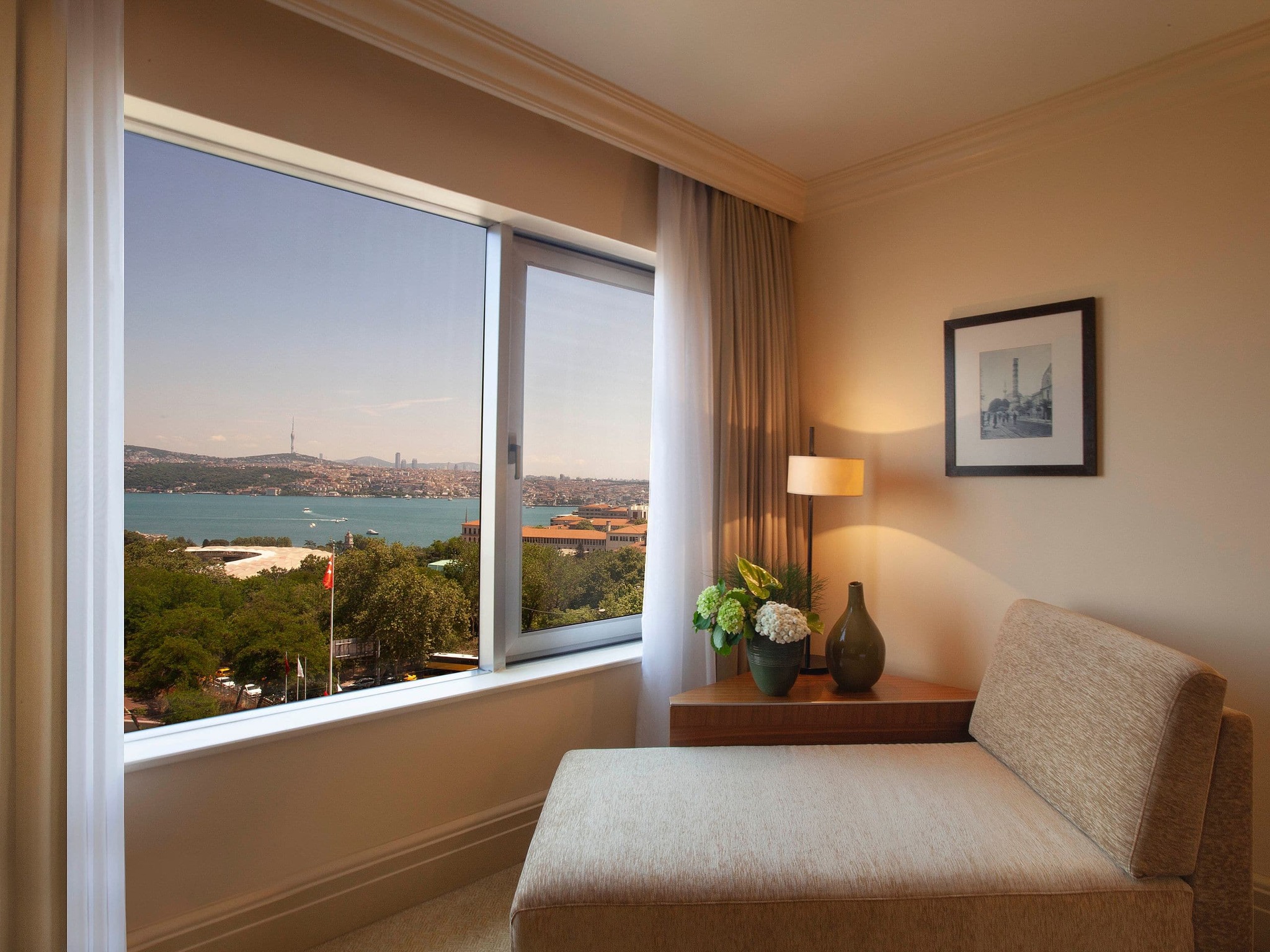
Despite arriving before 3 pm, my room was ready immediately at the Grand Hyatt in the Taksim Square district, details under “If You Go,” below. When flying long distance through multiple time zones, I don’t schedule anything the first day. I napped for an hour, showered, and went to the pool, not needing lunch due to a large breakfast on the plane. The pool is huge with many deck chairs, but the water was a bit chilly and I lasted only a half hour with my aerobics. My room was a deluxe double with sea view, and I did have a partial view of the Bosporus. I spent the rest of the day catching up on U.S. and Mexican news on high-speed internet, and it was dark by 7 pm, so I had supper in the hotel rather than exploring the neighborhood. Later I read U.S. and Mexican news online and hit the bed early, knowing I had a busy day coming up.

Monday September 2
The Grand Hyatt offers an enormous breakfast buffet including an eggs-to-order station. I need time after breakfast for personal issues, so I was glad the guide suggested we meet in the lobby at 10 am. Booking a private guide for three days was the best thing I did in planning the trip. My guide, Tarik Ozkalkan, is a young Turkish citizen with a business degree and an additional two years of tourism school. He had given up hotel management because he loves to travel, and he certainly found a career that he excels in. He introduced me to the physical and cultural highlights of Istanbul with a wealth of historical and religious knowledge and excellent English. And his pleasing personality led to us bond quickly, providing a delightful companion I have not enjoyed in previous solo travels. His contact information is in the “IF YOU GO” section below.
Istanbul is the largest city in Europe and the 15th largest in the world, with so many different districts that I can’t imagine anyone navigating it without a guide. We began with a taxi ride to the old city, starting at the ancient Hippodrome of Constantinople, now a spacious plaza called Sultanahmet Square, radiating to many of the most important historical sites. The scene of horse and chariot races and social events, it was first built when the city was still Byzantium. It was expanded after the Roman conquest by the Emperor Septimus Severus in 203 CE (Historians have replaced BC and AD with BCE, before the common era, and CE, common era). The Emperor Constantine refurbished the city in 324 CE, renaming it Nova Roma (New Rome), but it came to be called Constantinople. He greatly expanded the hippodrome providing seating for 100 thousand spectators. Only two columns remain from the ancient race course, including an obelisk brought from Egypt by the Emperor Theodosious and erected in 190 CE. Much of the marble seating was taken to build the nearby mosques and palace. Near the obelisk is the German fountain, a gift commemorating a visit to the city by Emperor Wilhelm II in 1898, disassembled, shipped, and reconstructed in the Hippodrome in 1900.


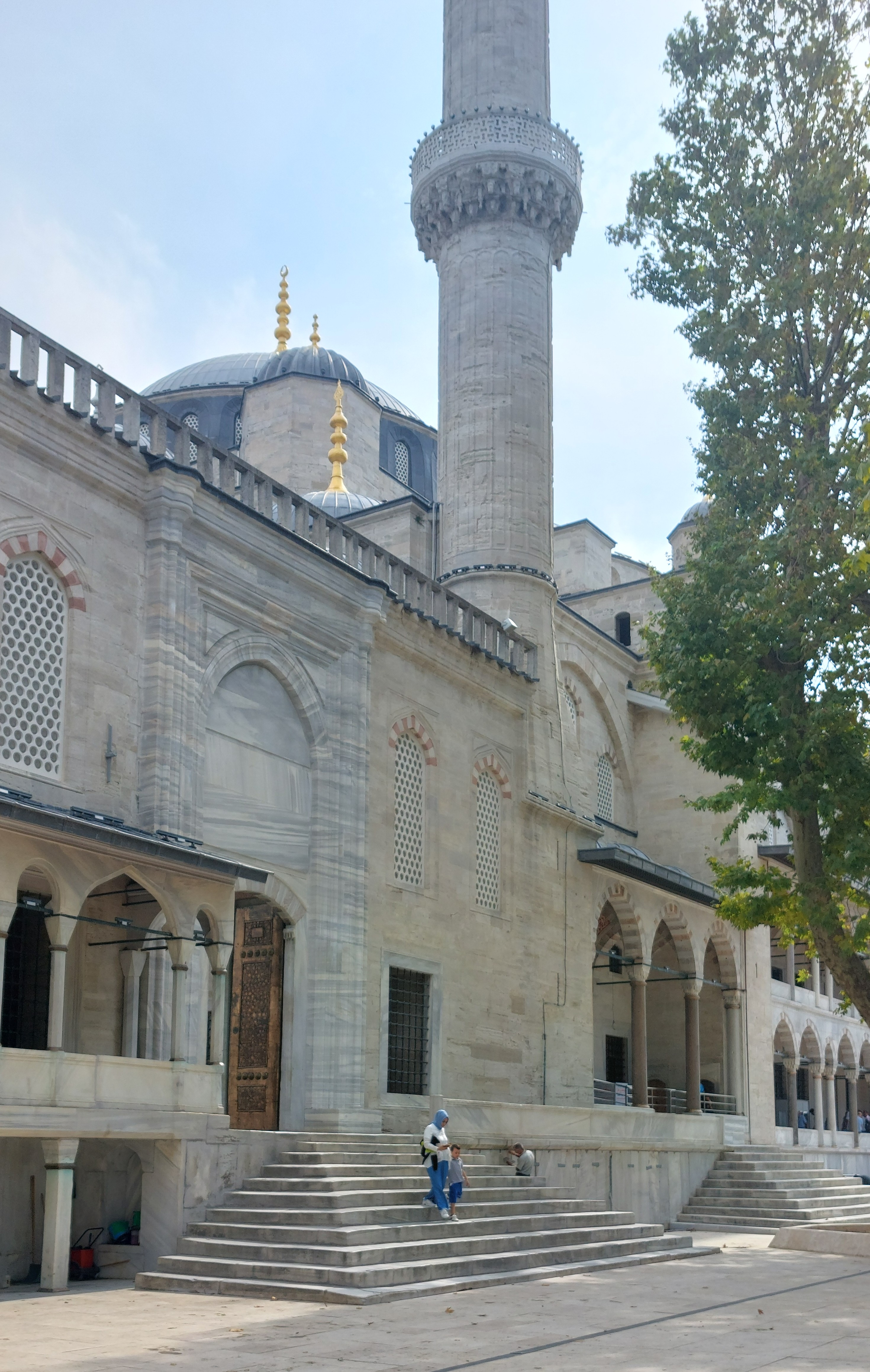
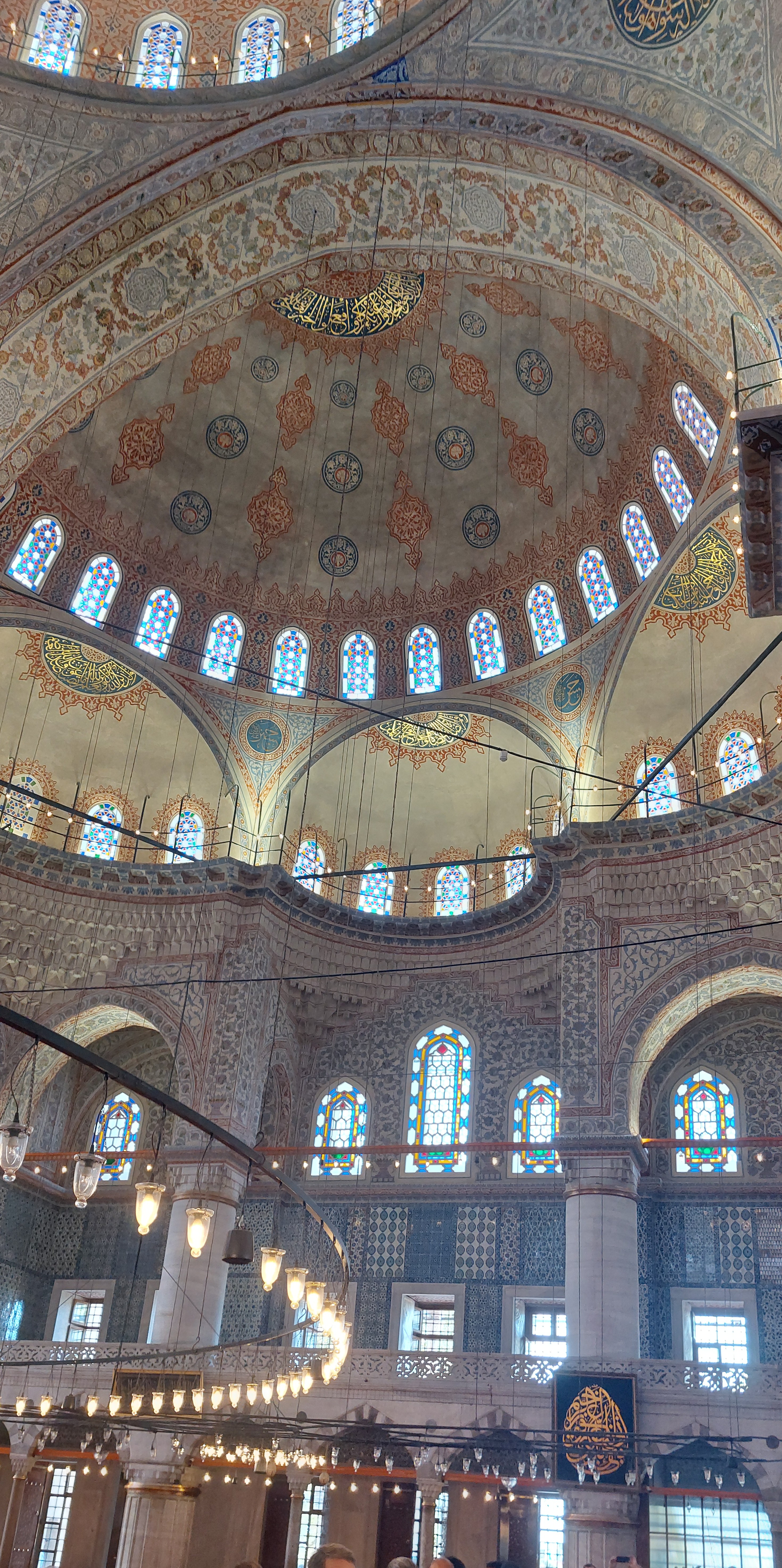
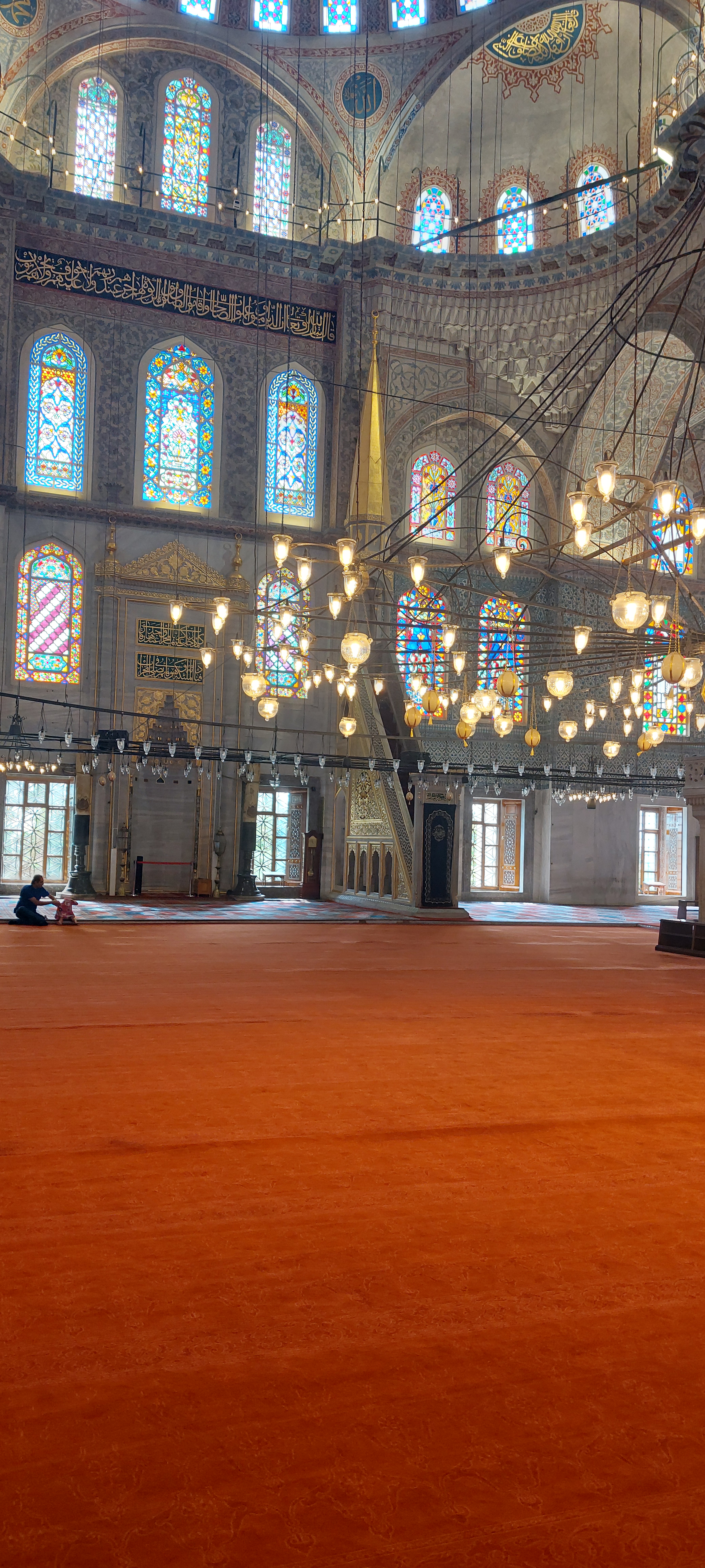
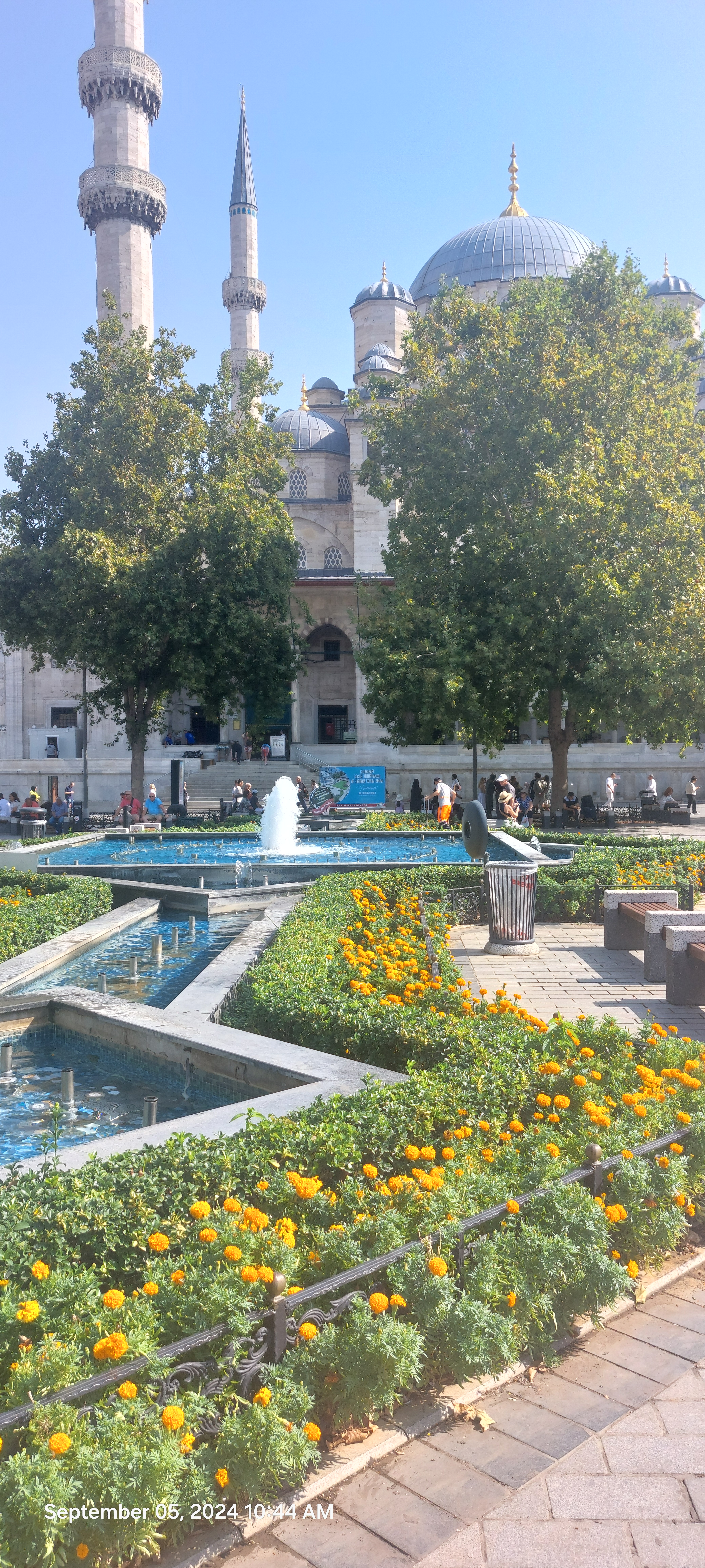
Arguably the most famous buildings in Istanbul are the Hagia Sophia and the Blue Mosque, both UNESCO World Heritage Sites. Entering the landscaped floral grounds of the Blue Mosque from the square, one is awed immediately by the dazzling colossal dome and six minarets. Constructed between 1609 and 1617, the mosque walls are adorned with thousands of decorative tiles, many in blue. It is still a functioning religious center, one of over 1700 mosques in the city, so tourism is detained during the five prayer times.Tarik knew the times when best to visit each venue, and the next one he steered me to was the Topkapi Palace.


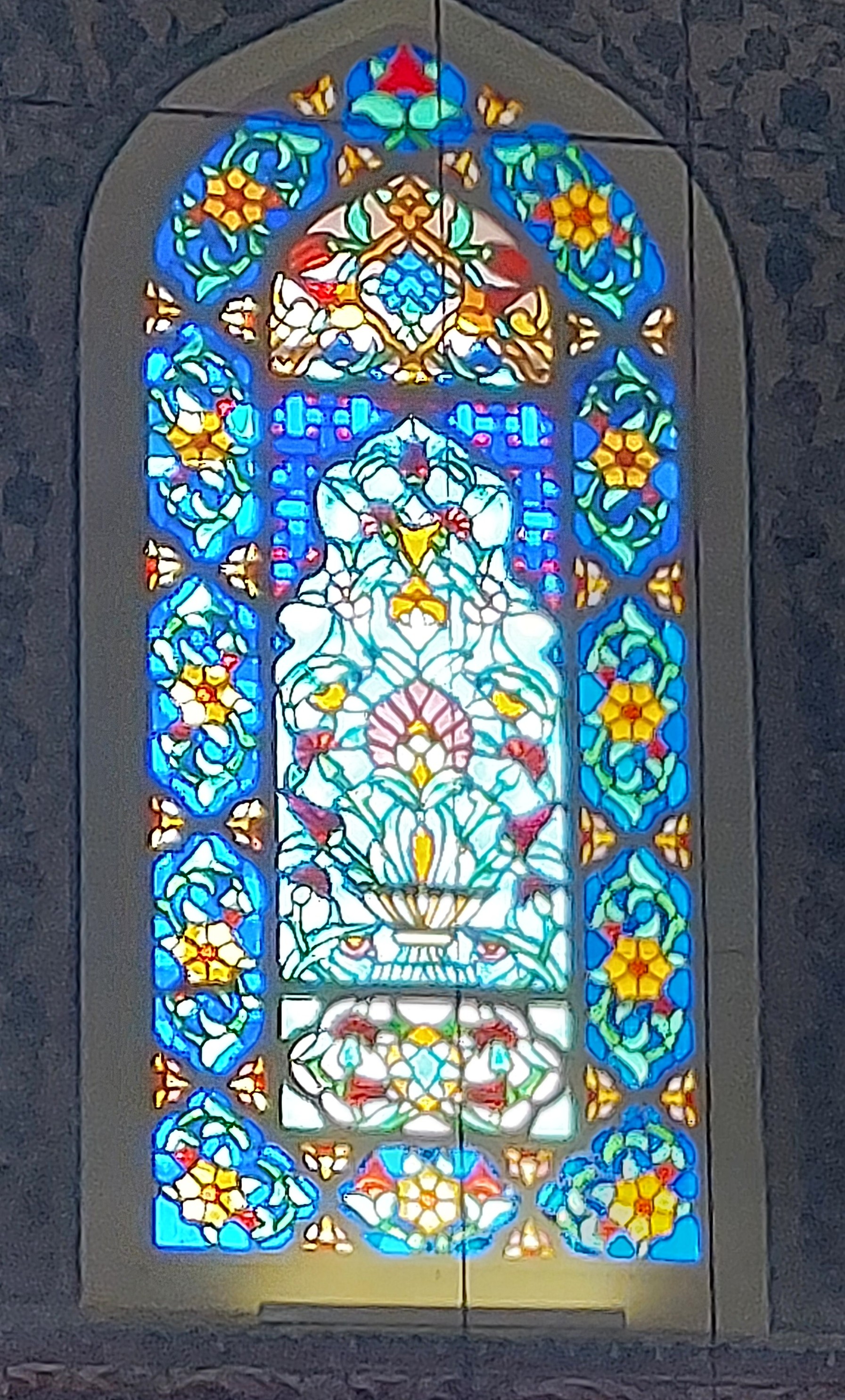
The Topkapi Palace
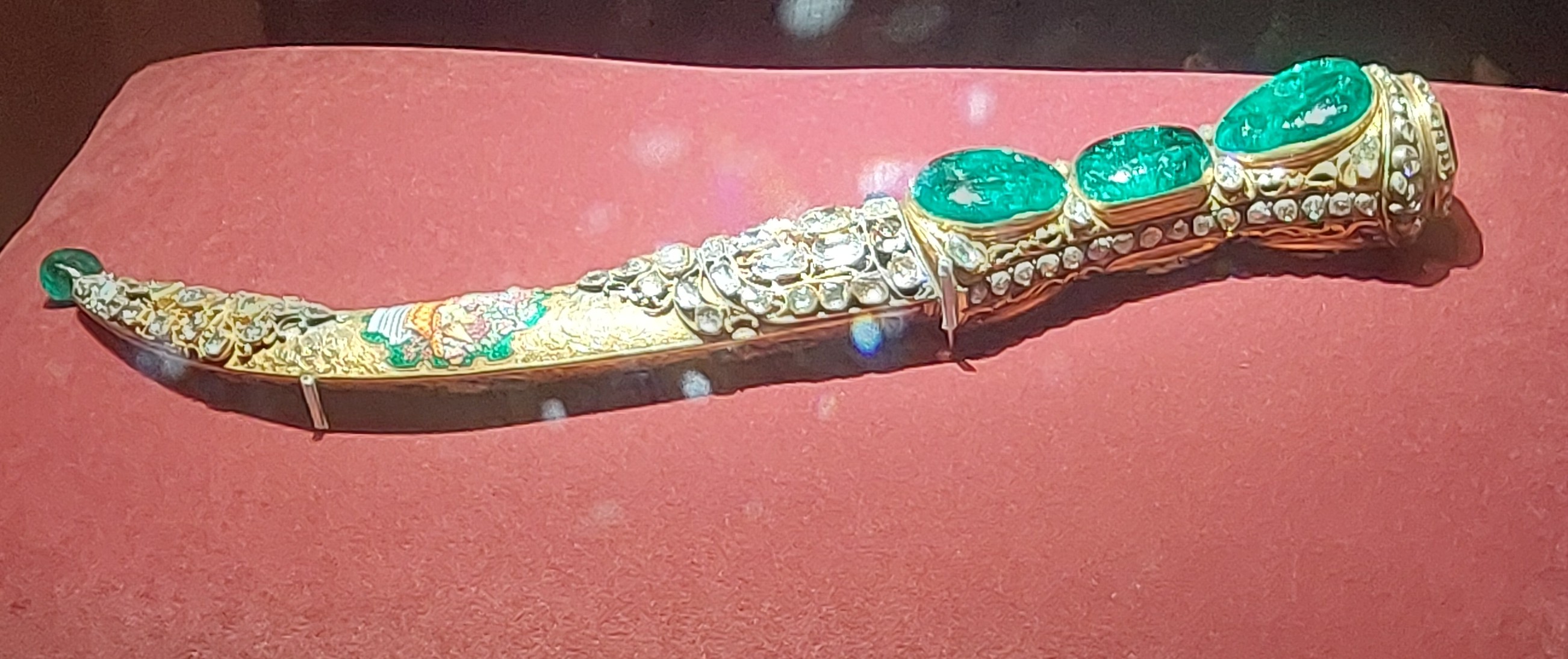
Another UNESCO World Heritage Sites, the palace, now a museum, was the administrative center and residence of the Sultans of the Ottoman Empire from the 1460s until a later Sultan built the Dolmabahce Palace in 1856. One can visit only a fraction of the 285 rooms, 46 salons, and 68 bathrooms. Despite hundreds of visitors, there was a line only at the Treasury, a section one might miss without a guide. The jewels bedazzle one, particularly the Topkapi dagger with its diamonds and emeralds. Most westerners might have a misconception of the Harem, a large section of every palace. It was the home of the Sultan’s mother, his wives and concubines, and their children. The decorative baths and meeting rooms are still in excellent condition. Of course, guide Tarik recited the names of many of the Sultans and some of their achievements. I had not known how the wives were selected from among the concubines: those who bore him children.
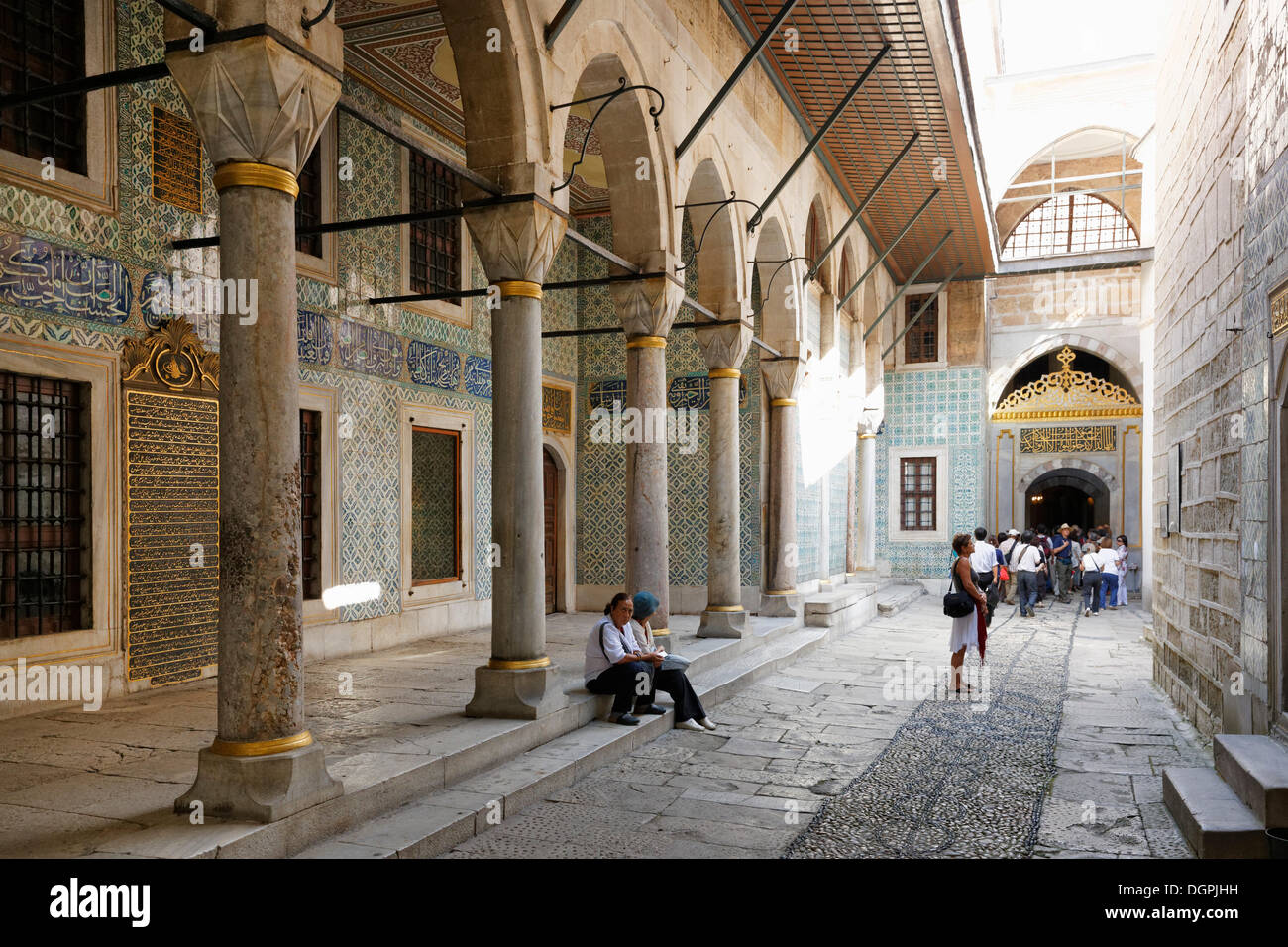

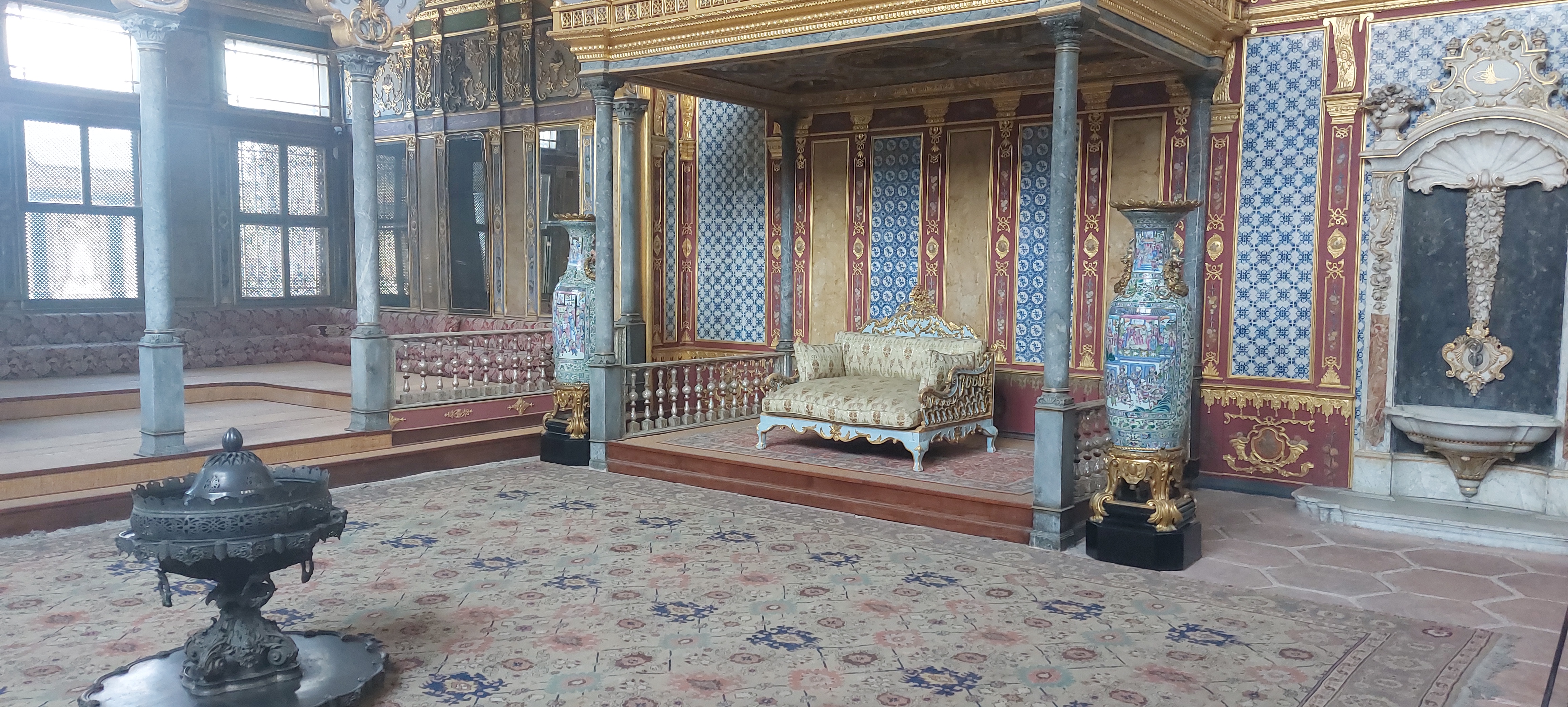
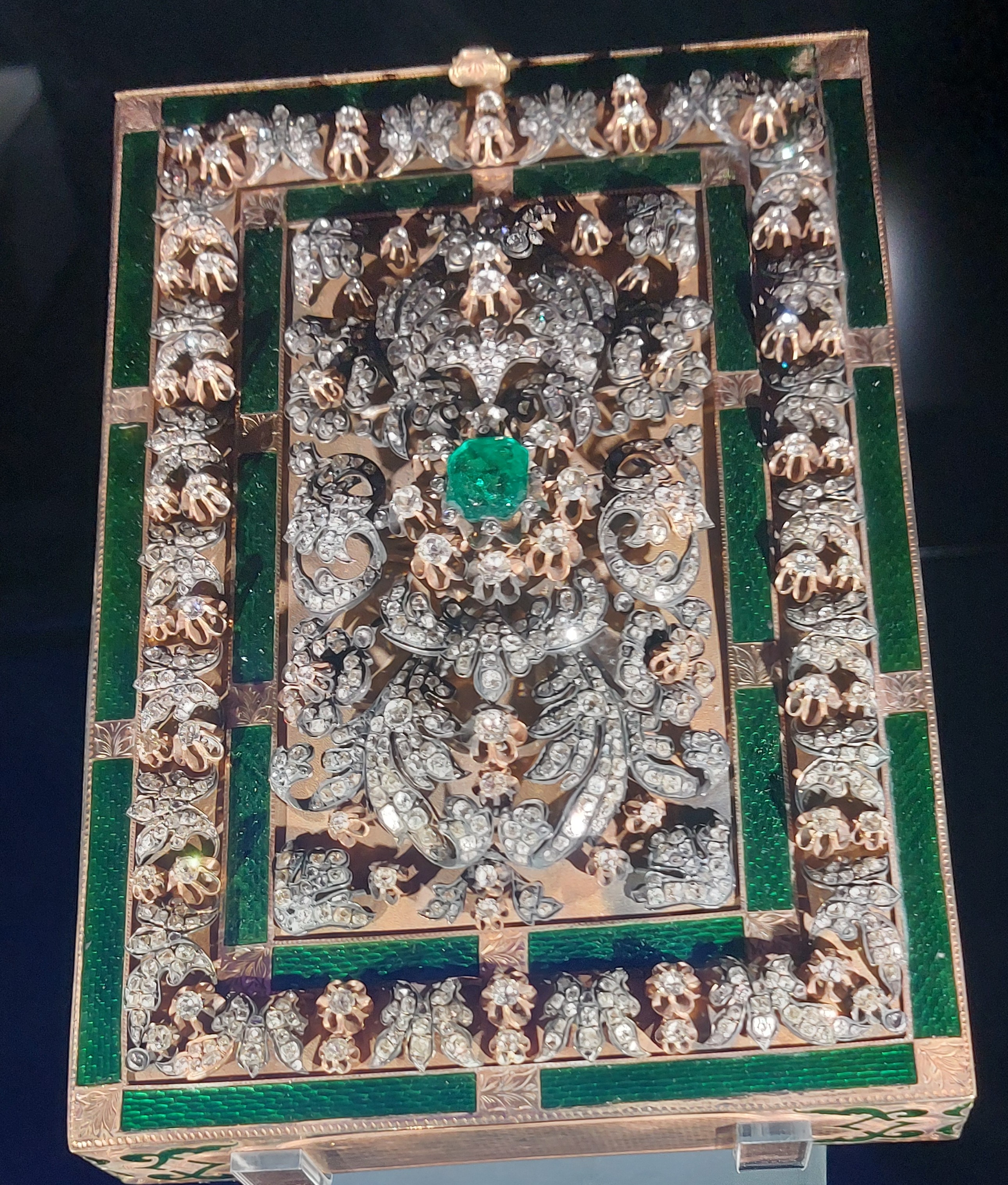
While the stunning Hagia Sophia is quite close to the palace, there was an enormous line from cruise ship excursions, and Tarik suggested we see the Cistern first, have lunch, then return to the mosque later.
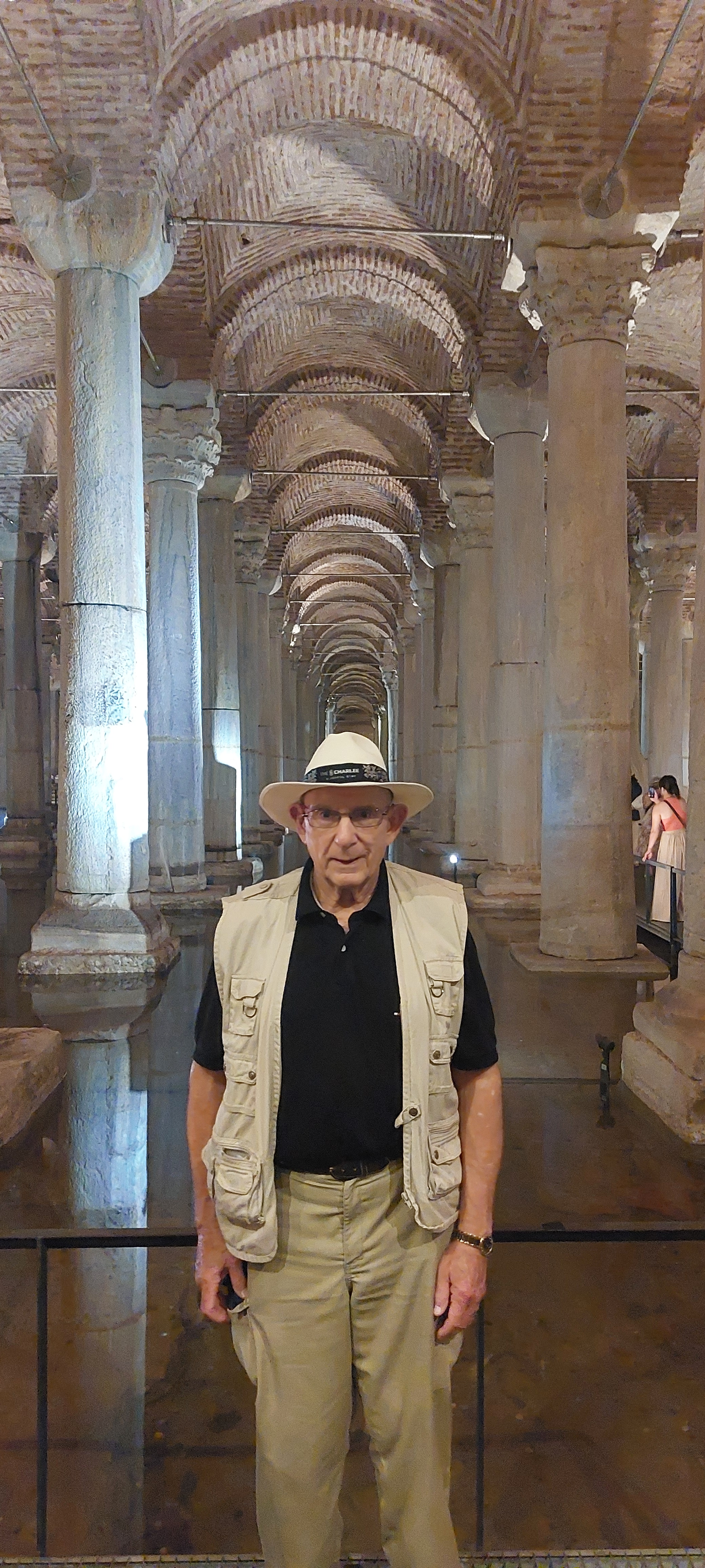
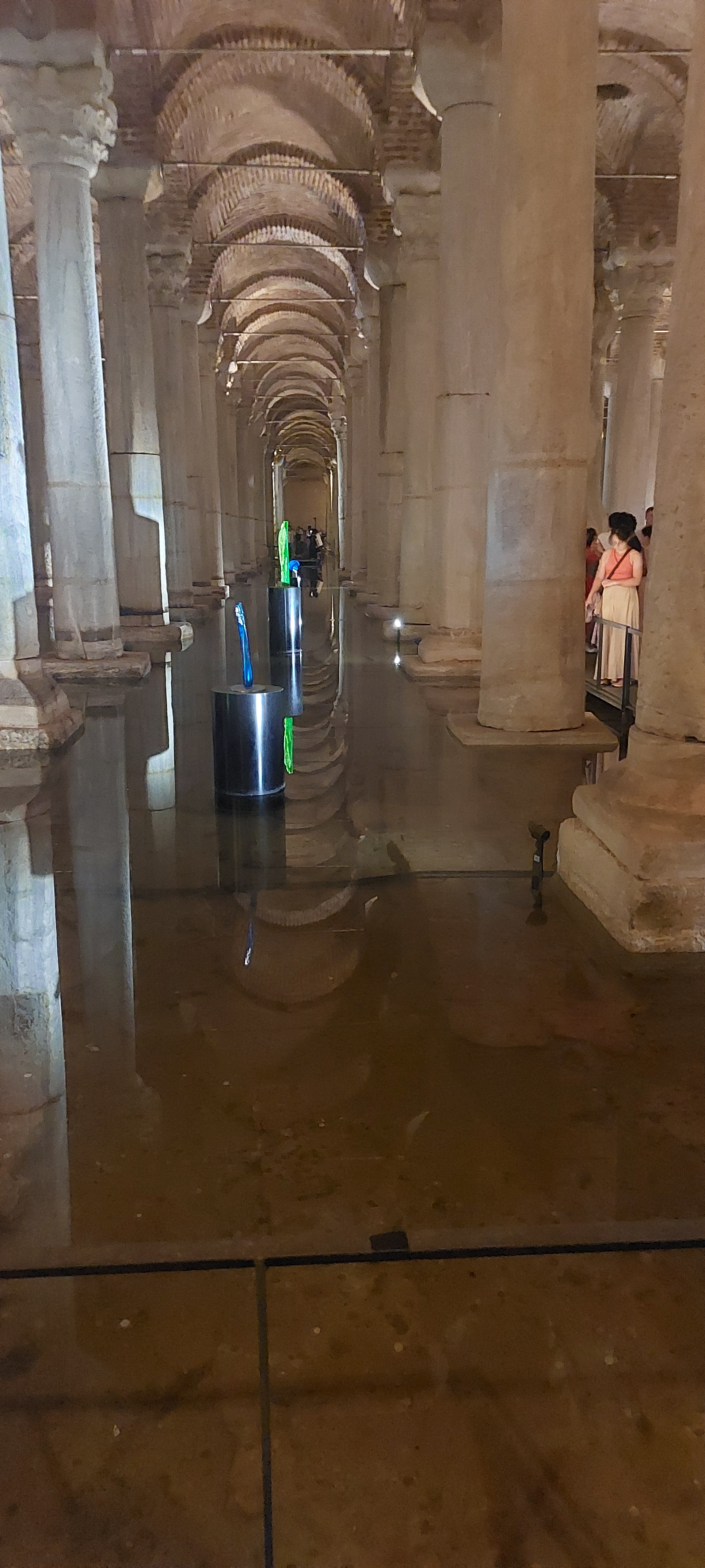
It was just a short walk to The Basilica Cistern, built in the 6th century, its name derived from a Roman basilica above it. The Roman basilica was not a religious but a legal and commercial center. Reportedly constructed by seven thousand slave and renovated more than once, eventually it had a capacity of 2,800,000 cubic feet of water. The ceiling is supported by 336 marble columns each 30 feet high. The water was brought by an aqueduct from a spring in a forest outside the city. It supplied water to the palaces and administrative buildings and important residences in the area. Today the water level is low and it is more of a tourist site with a number of artistic works spread among the columns. One does not need to spend more than 20 minutes there.
It was nearly 2 pm when we exited the cistern and both Tarik and I needed some lunch. He knew a small café nearby called Lale (Tulip) specializing in Turkish dishes and famous enough that Bill Clinton visited. There was no date on his photo on the window. The waiters knew Tarik, welcomed him warmly, and even responded to his request to charge my phone depleting rapidly with all the photos.
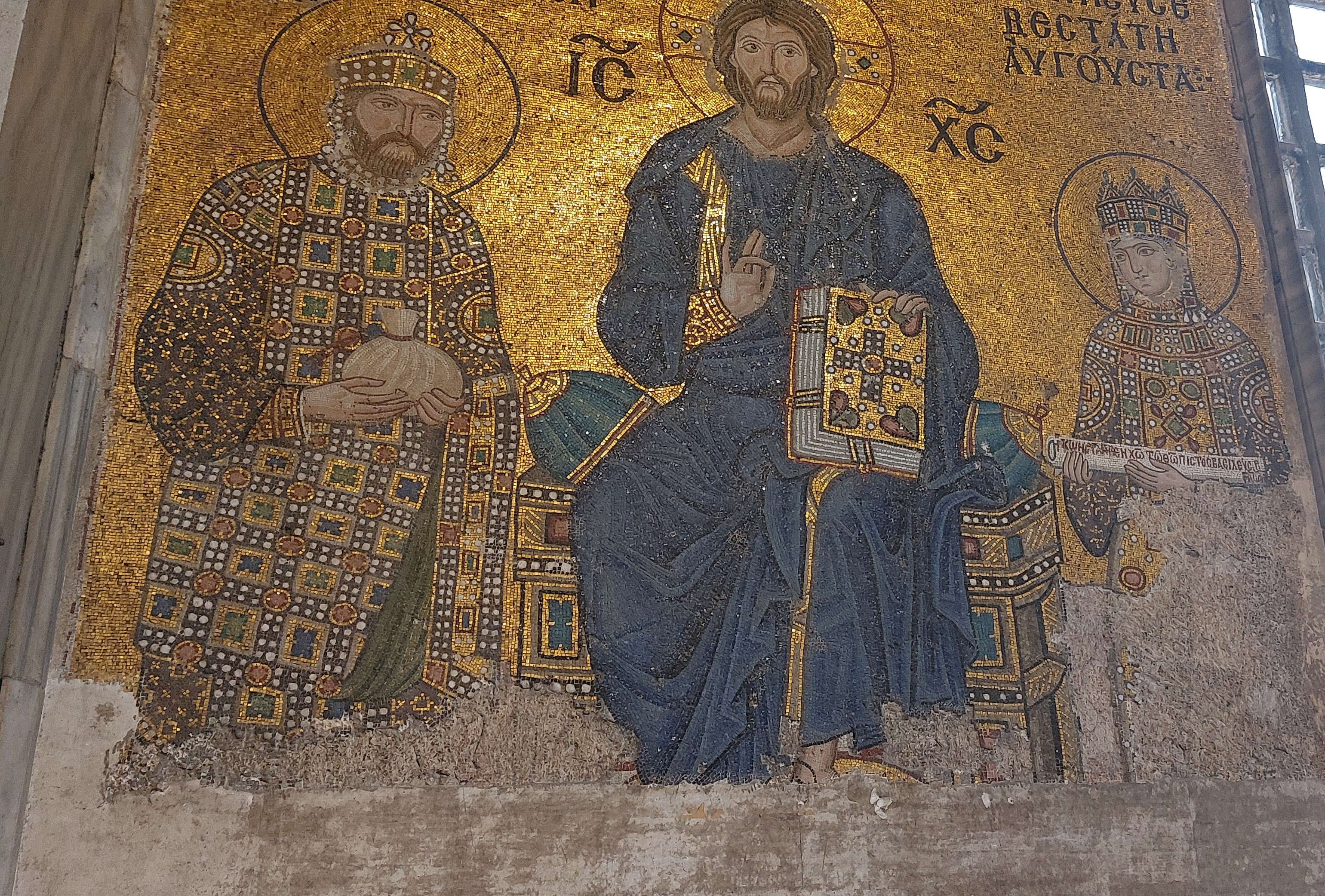
After lunch, as Tarik had predicted, the cruise ship passengers had departed and there was no line for us to enter the Grand Mosque Hagia Sophia (Holy Wisdom). First a Catholic church, then it became a Greek Orthodox church from 360 CE to 1453 when Constantinople fell to the Ottomans. For a thousand years it was the largest cathedral in the world. In 1453, Mehmed the Conqueror converted it to a mosque until 1931 when it was closed by a secular government and declared a museum in 1935. In 2020 a more Islamic inclined state caused a stir when it reclassified the building as a mosque; so once again it is a prayer center and the most visited site in the city.


After touring the Hagia Sophia, Tarik walked me through a maze of streets to the Grand Bazaar, the oldest and largest covered market in the world, built upon 61 streets with 22 gates and 4000 shops. The oldest date painted over a shop is 1461, although the market did not reach its current size until the beginning of the 17th century. As many as 400 thousand traders and shoppers visited it daily at its peak. Ottoman control of an enormous region covering parts of Europe and Asia made it a center for trade caravans and control of Mediterranean commerce. Some of my friends who have visited rave about it and lingered there. I am not a shopper and, having already walked for miles, I asked Tarik to move on after half an hour.

With the crush of traffic in the area it was difficult to find a taxi and we didn’t get back to the hotel until almost 5 pm. It was a very long day but we were able to see almost all the venues in the Hippodrome area and move to another district the next day. I dined in the hotel rather than walk to Taksim Square, then downloaded photos and took notes for my blog. Reviewing my photos, I could hardly believe all we had seen in one day without any rush.
Tues September 3 The Dolmabahace Palace
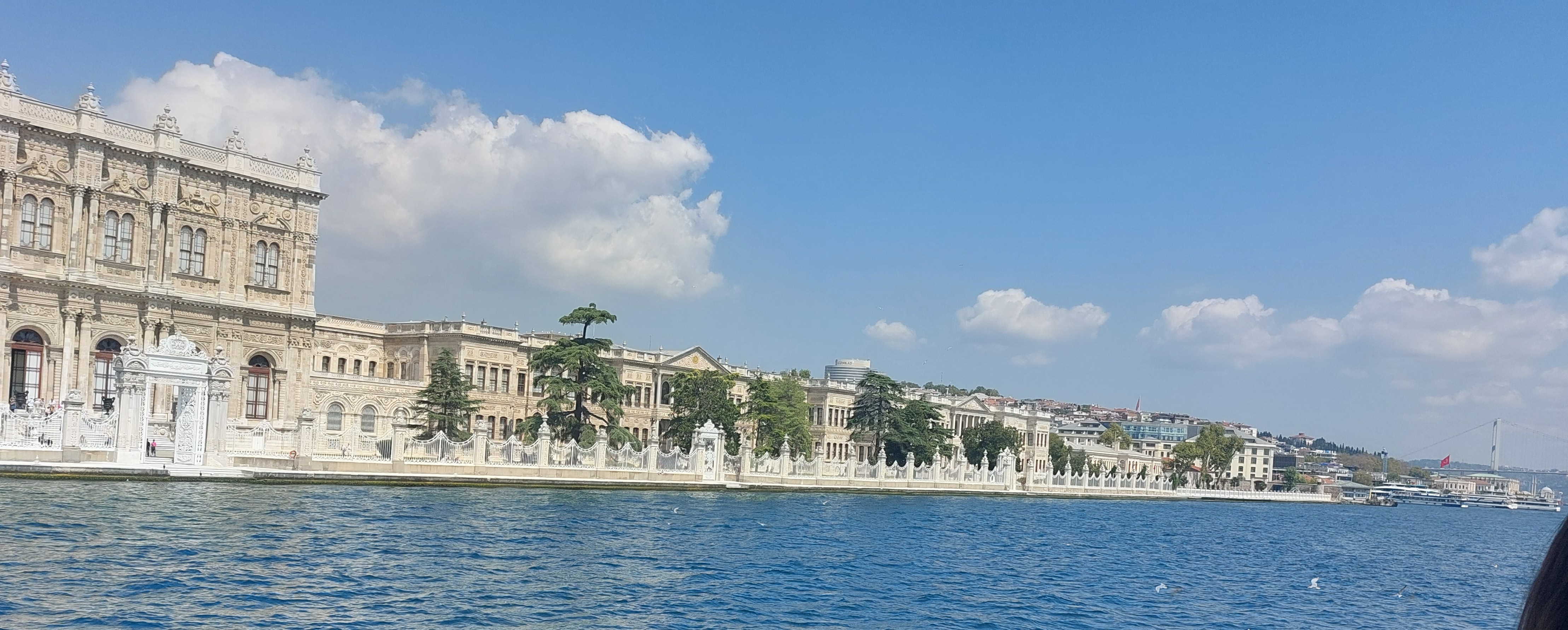
For the second of our three-day tour, Tarik programmed a different district of the city. We began with a taxi to the Dolmabahace Palace on the Bosporus coast, built by Sultan Abdulmejid I between 1843 and 1856 to replace the outdated Topkaki palace as the administrative center of the Ottoman Empire. It became the residence of the sultan and his mother, seven wives, a score of concubines, and 56 children. Architects and interior designers who worked on the Paris Opera were hired at enormous cost. The construction was financed by the debasement of the currency and foreign loans which led eventually to default of Turkey’s public debt and foreign financial controls. Six Sultans lived in the palace until 1924 when ownership was transferred to the new secular republic and its first president Mustafa Kemal Ataturk moved in. Ataturk died in one of the rooms of the former harem in 1938. The largest palace in Turkey, it covers over 11 acres, almost the size of six football fields. Not all the 285 rooms and 46 salons are open to the public, so two hours was sufficient for a walk through. Alas, no photos are allowed inside, but the upside is that means one’s walk through is not obstructed by scores of visitors taking selfies. I would have liked a photo in the grand salon where an enormous chandelier of 400 Bohemian crystals hangs, a gift from Queen Victoria of England.

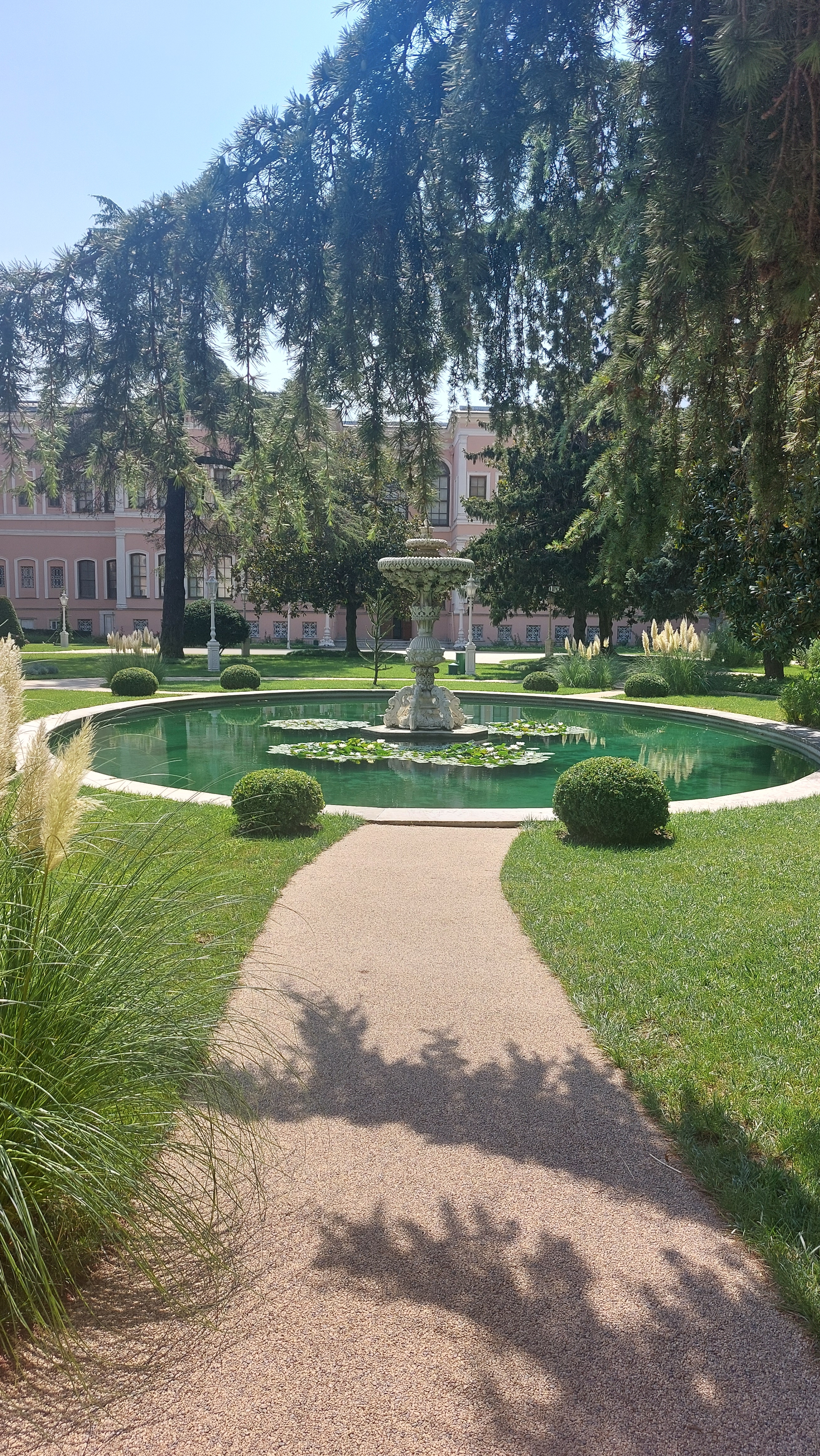
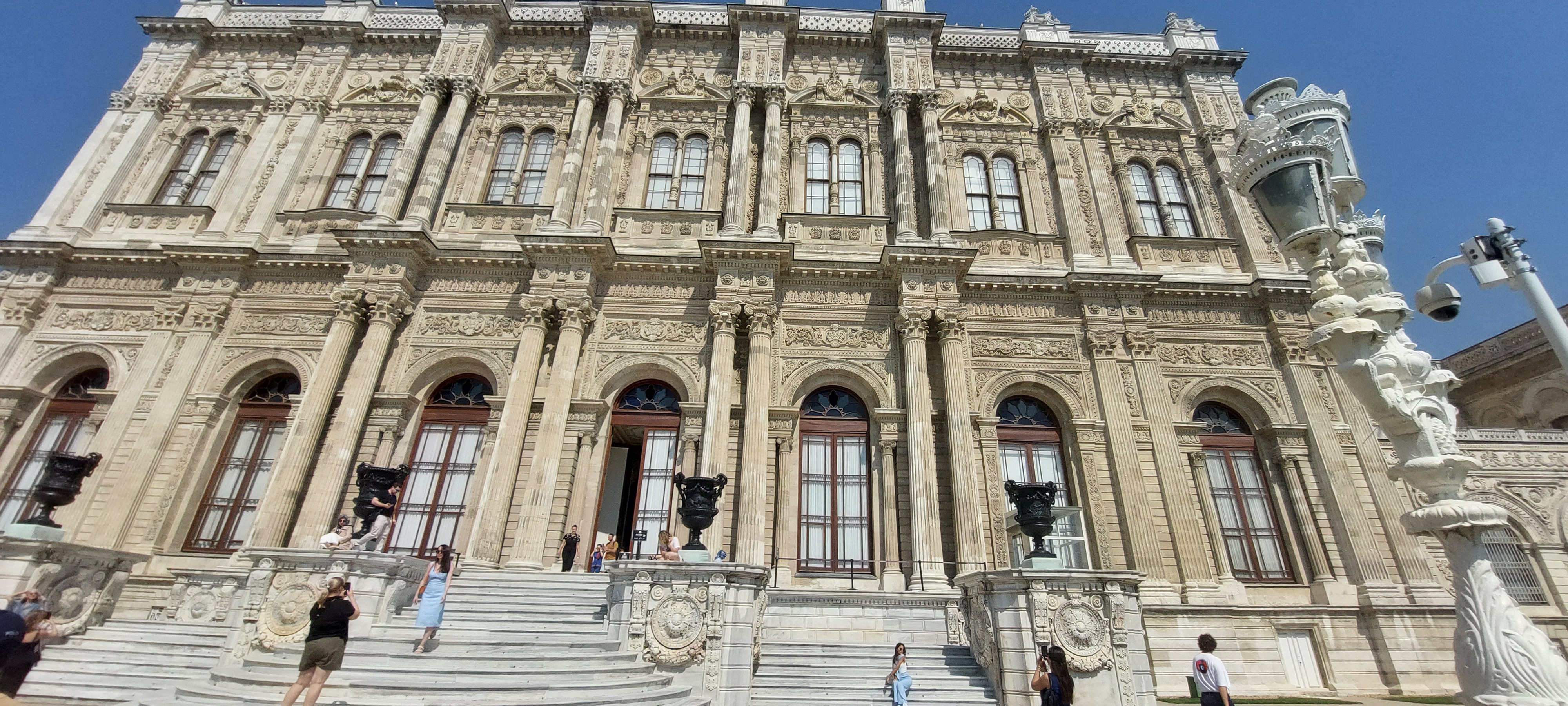
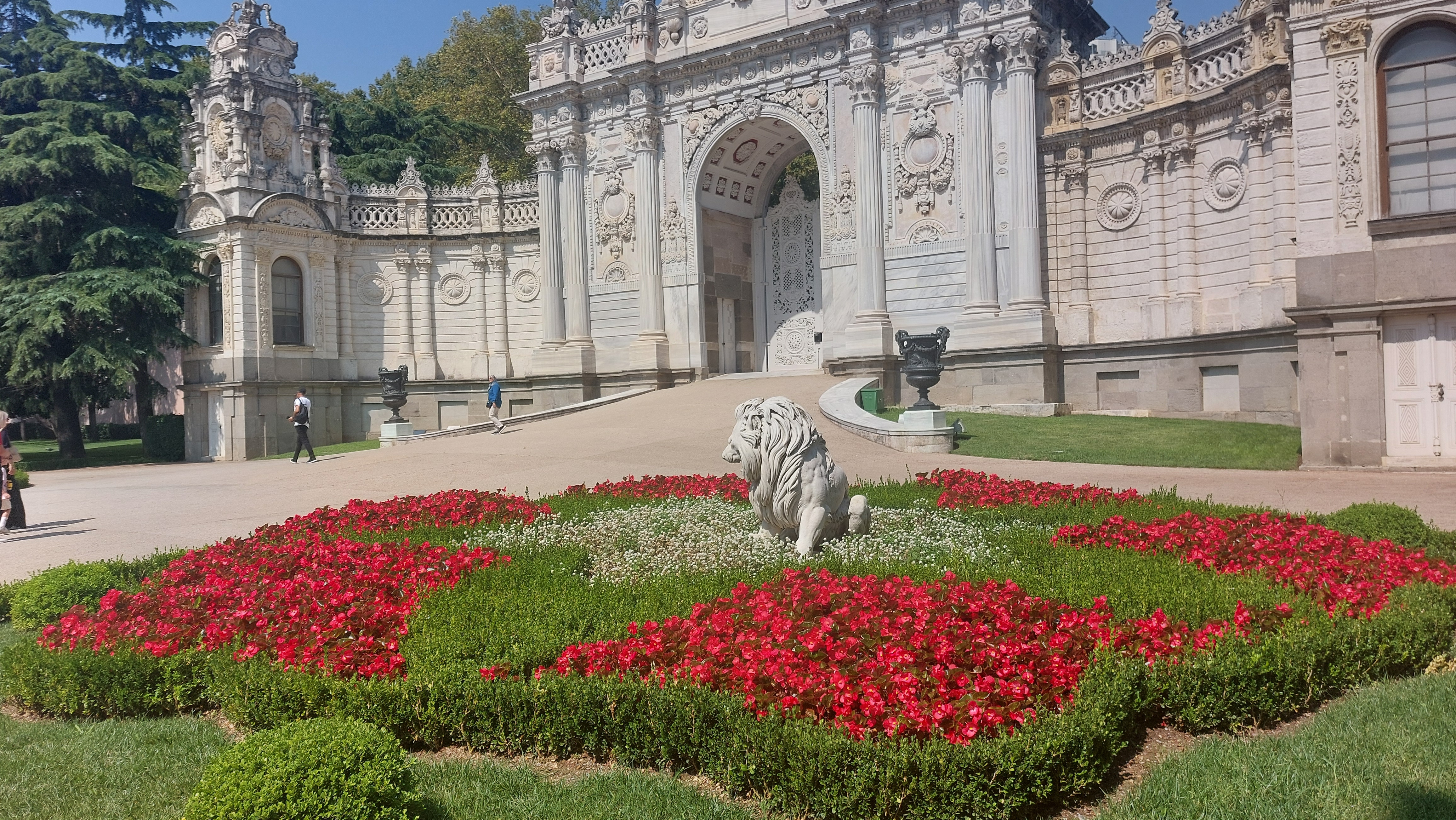
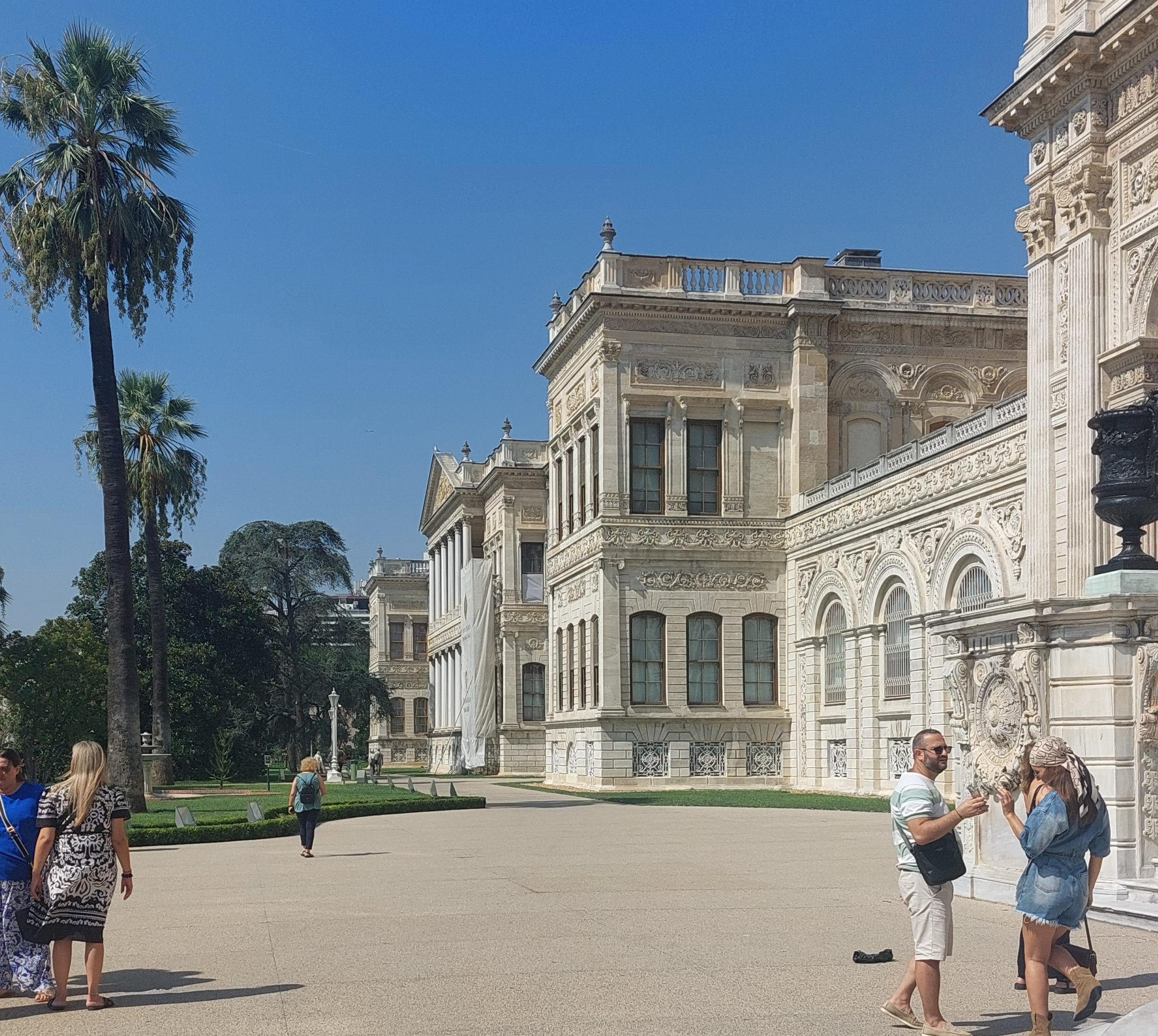
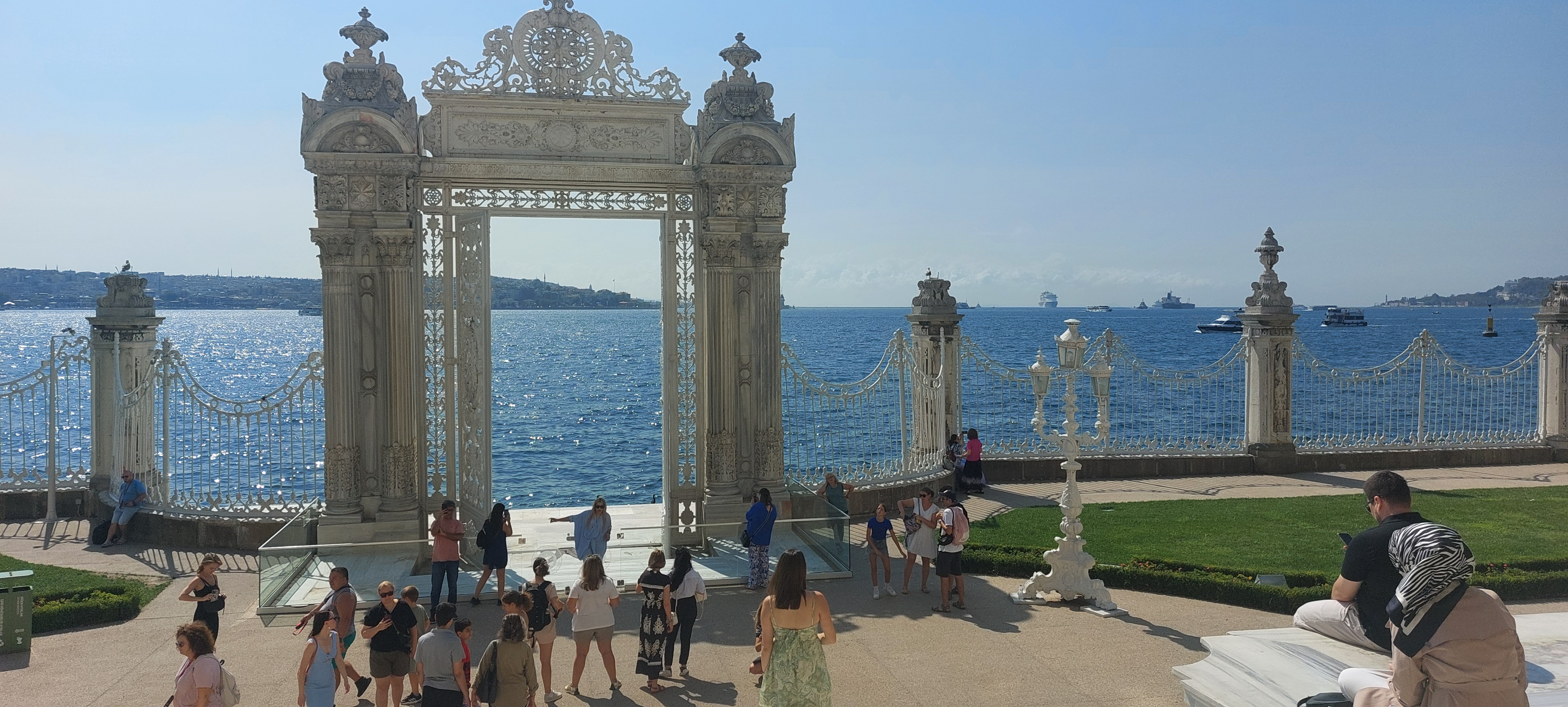
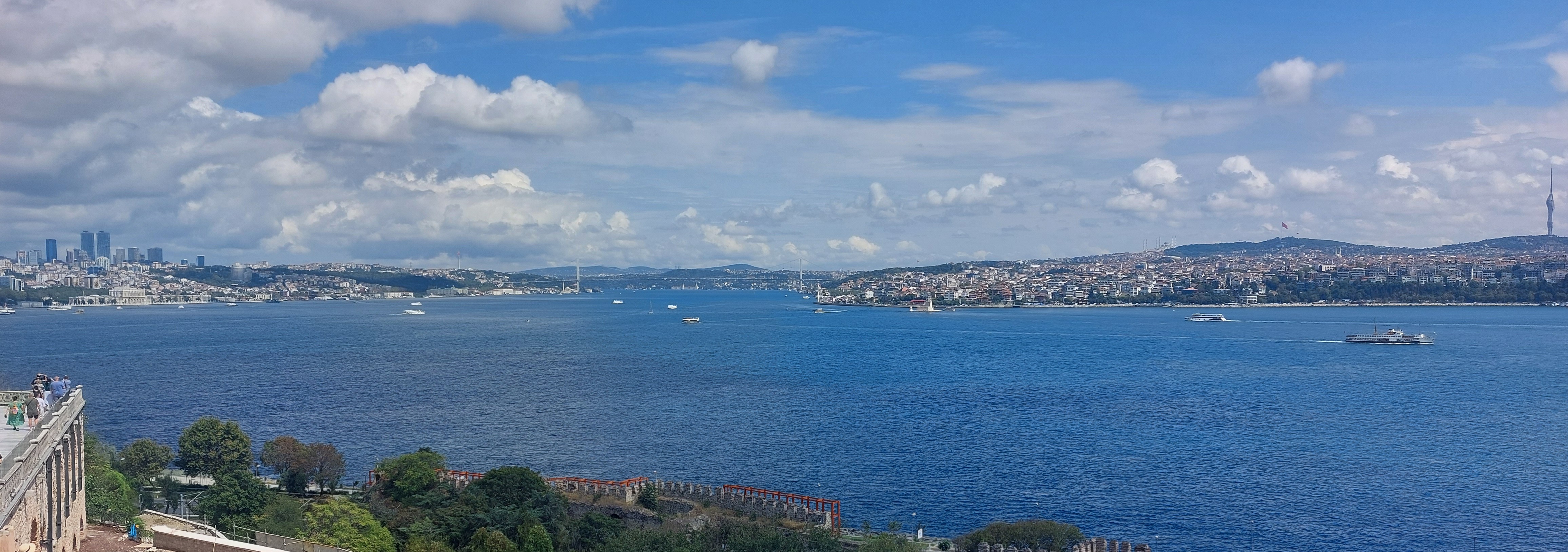
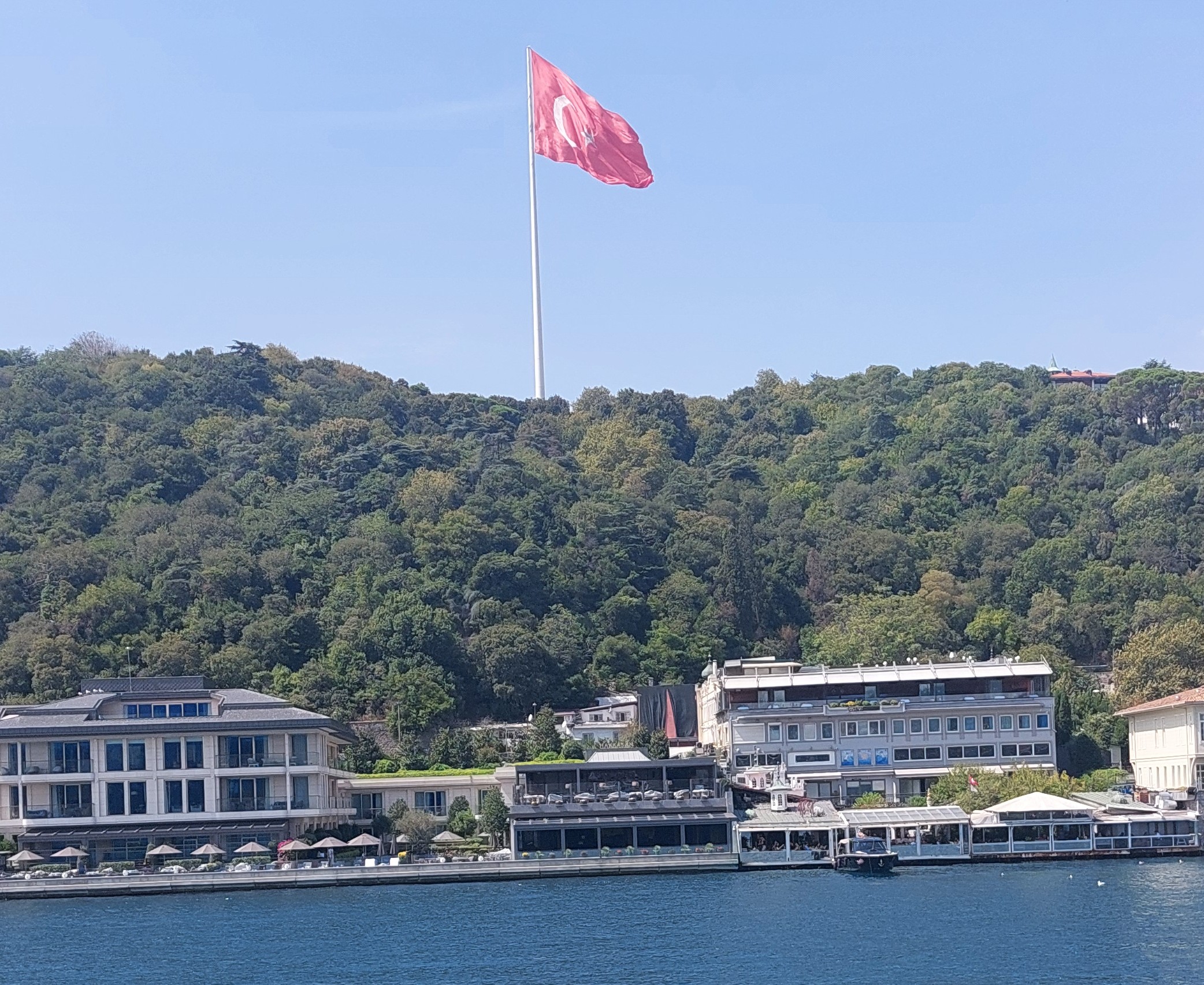
After two hours walking through the immense palace, including several staircases, I was grateful that guide Tarik had scheduled a relaxing time on an excursion ferry on the Bosporus. Inexpensive commuter ferries cross the Bosporus frequently from the European to the Asian side of the city, and dozens of excursion boats and yachts of varying size and price cater to the thousands of tourists. I was pleased with the guide’s choice of vessel and his advice on where to sit to get the best views during the one-hour voyage.
The Bosporus connects the Black Sea and the Sea of Marmara and separates the European and Asian continents. It is 31 km (17 nautical miles) long, with widths varying, the widest 1.8 nautical miles. The Golden Horn is an estuary off the strait that provided shelter to the Ottoman fleets for centuries. Scores of petroleum tankers, grain vessels, and smaller ships traverse the strait. The scenes along the shore, seen from the ferry, are delightful, with deluxe hotels, mansions of the super rich, mosques, fortresses, and other vessels.



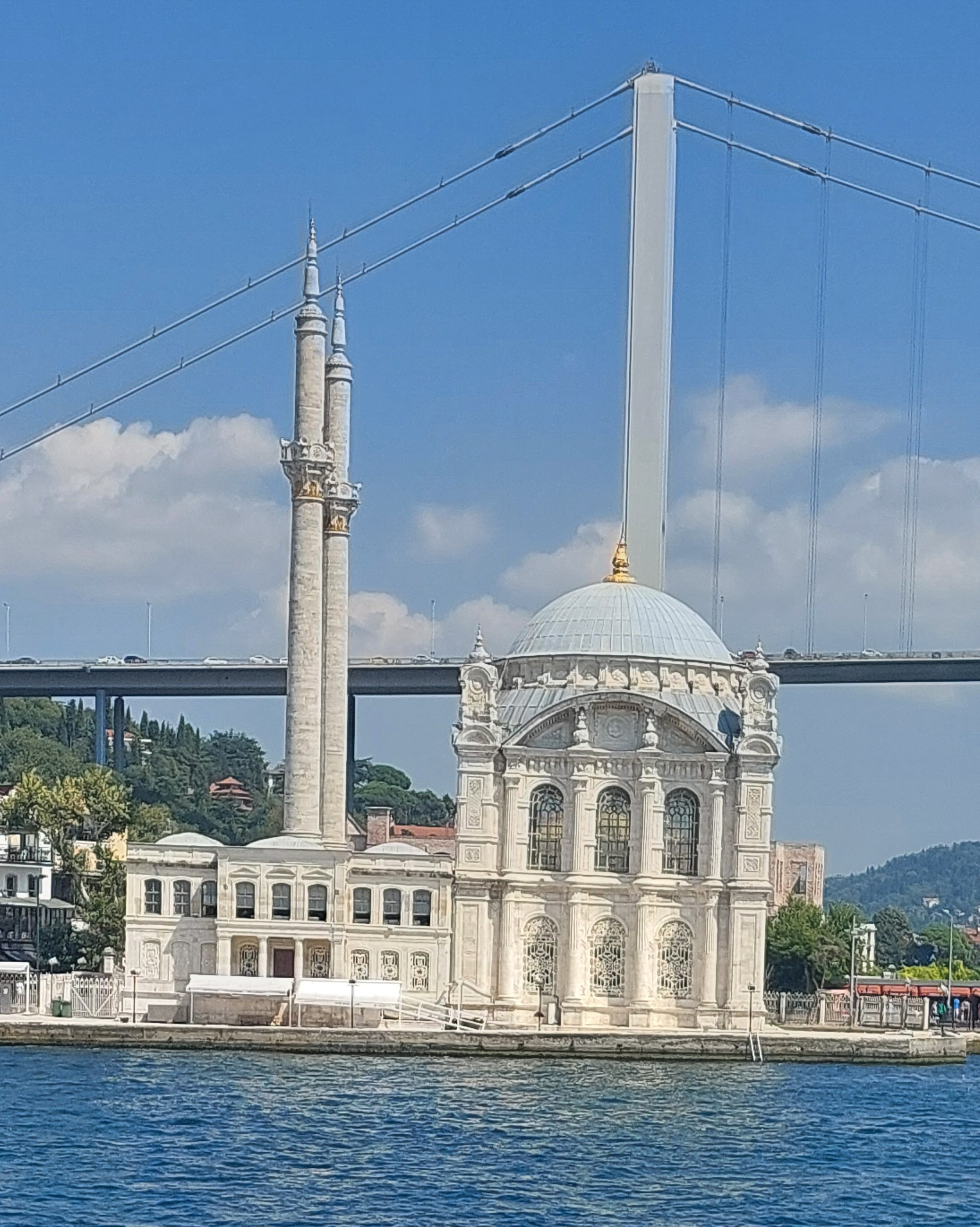
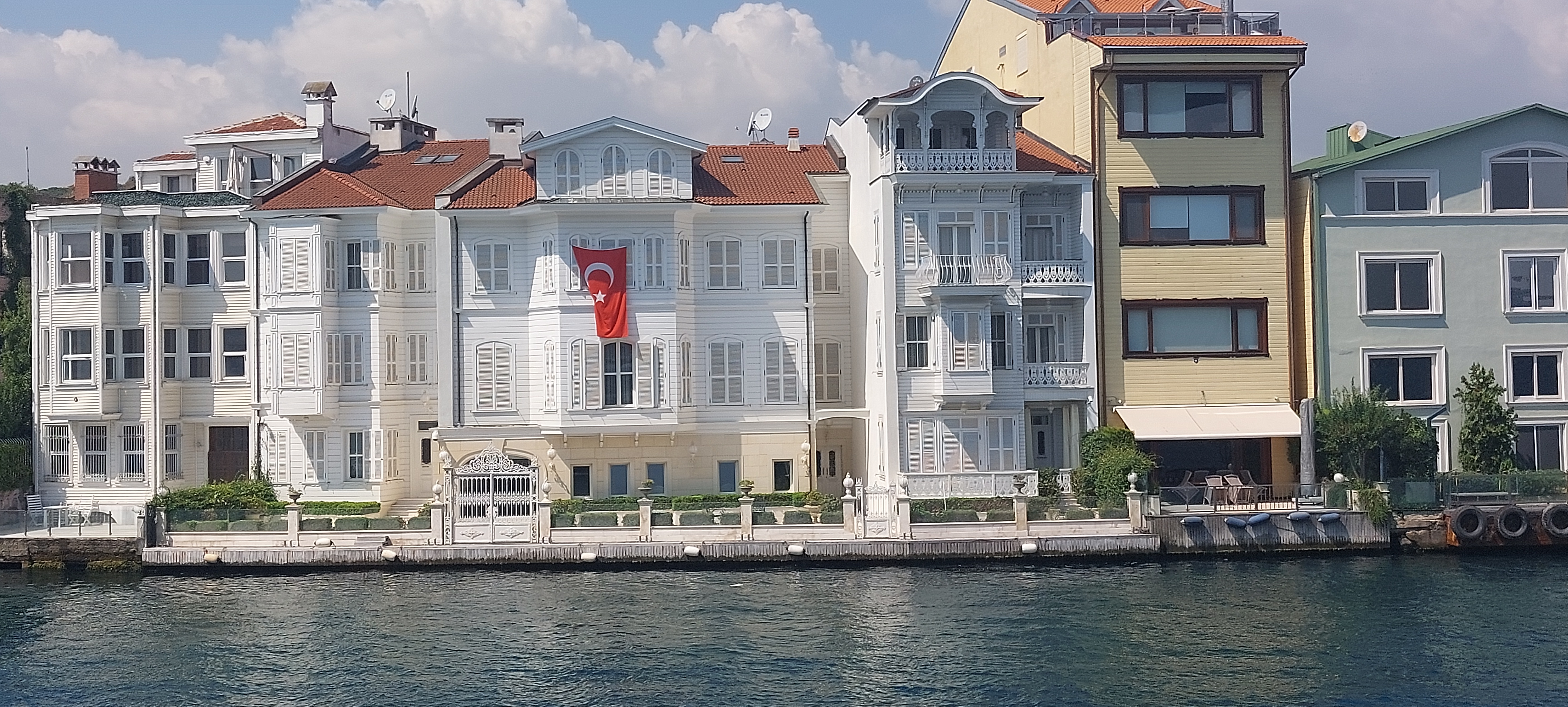

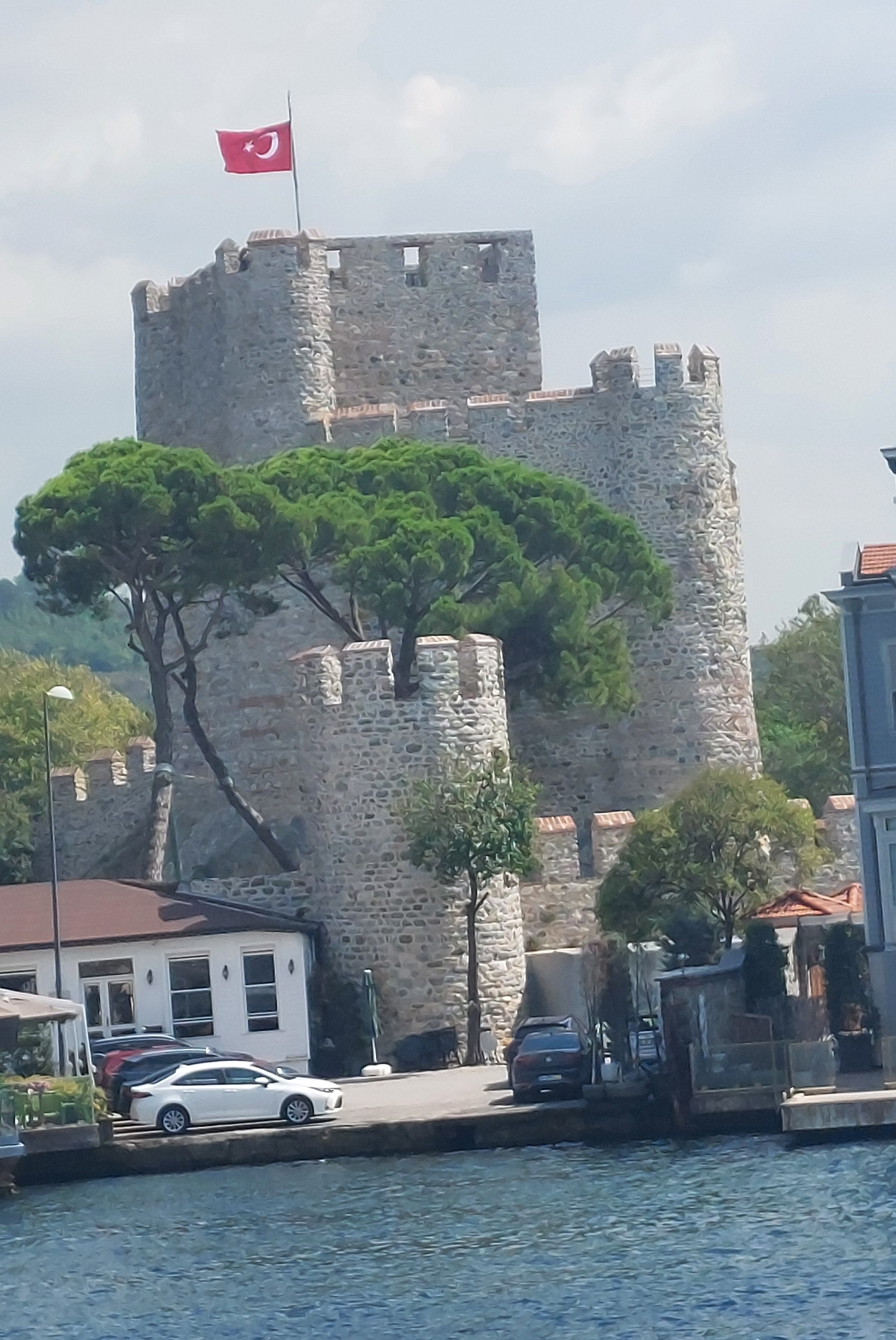
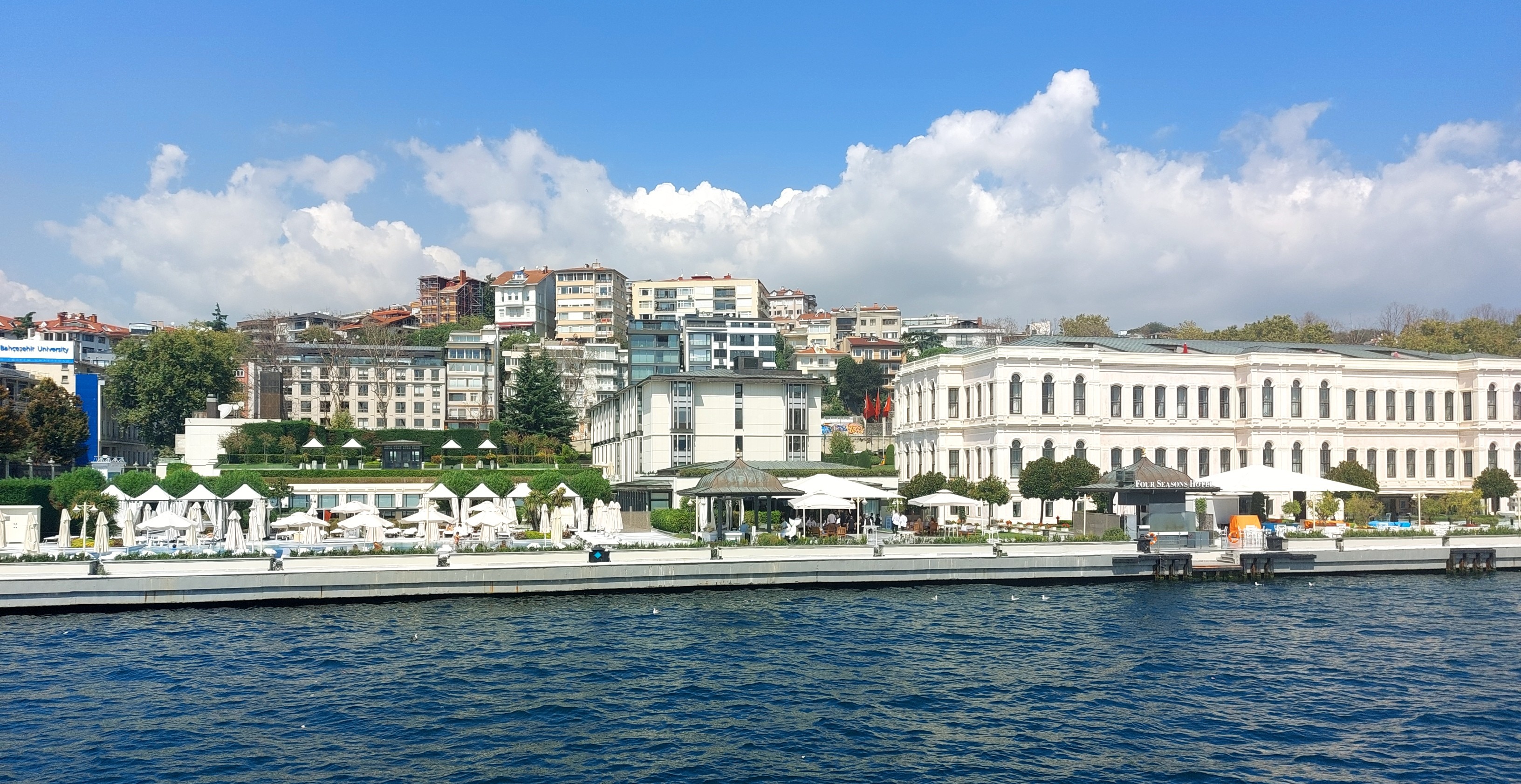
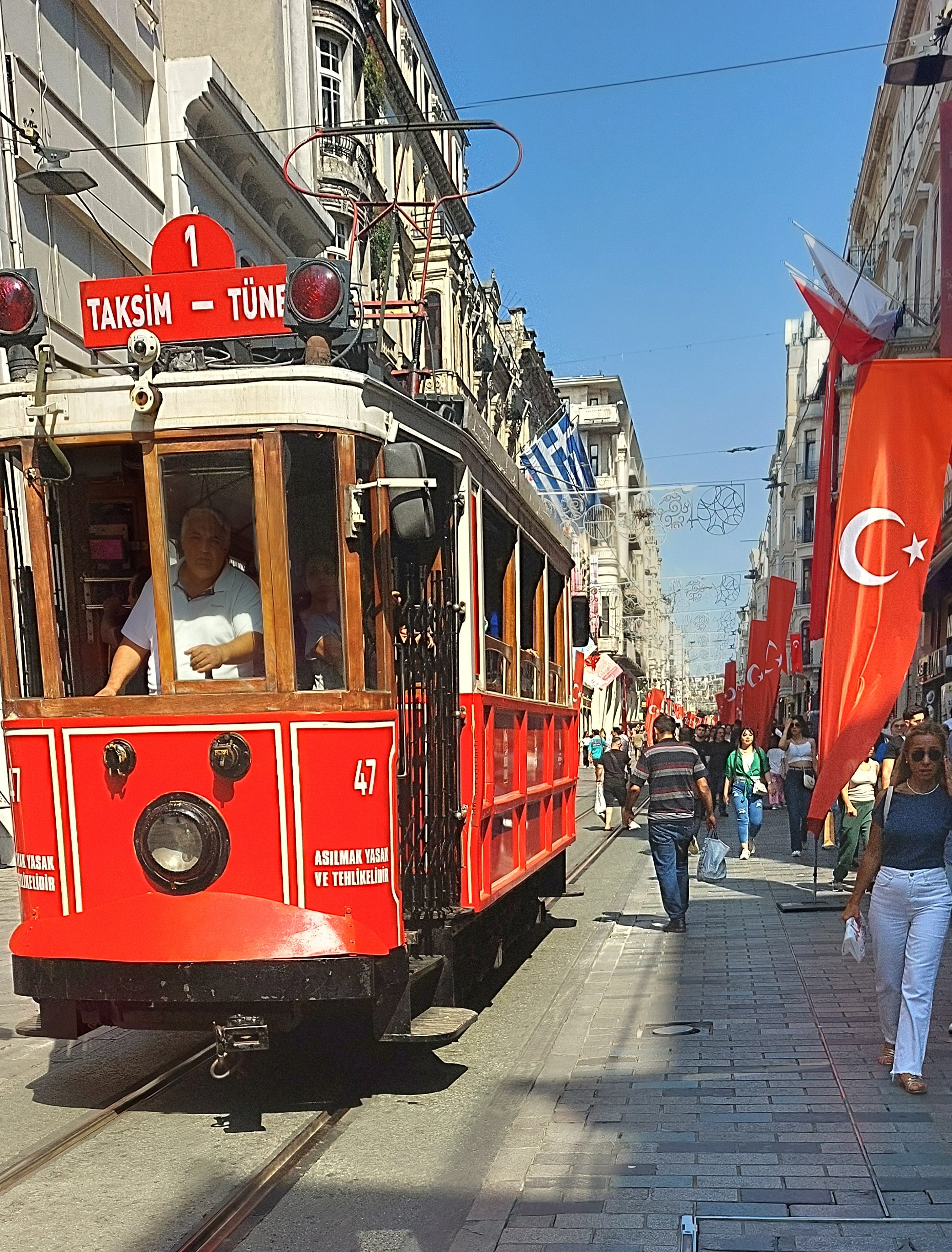
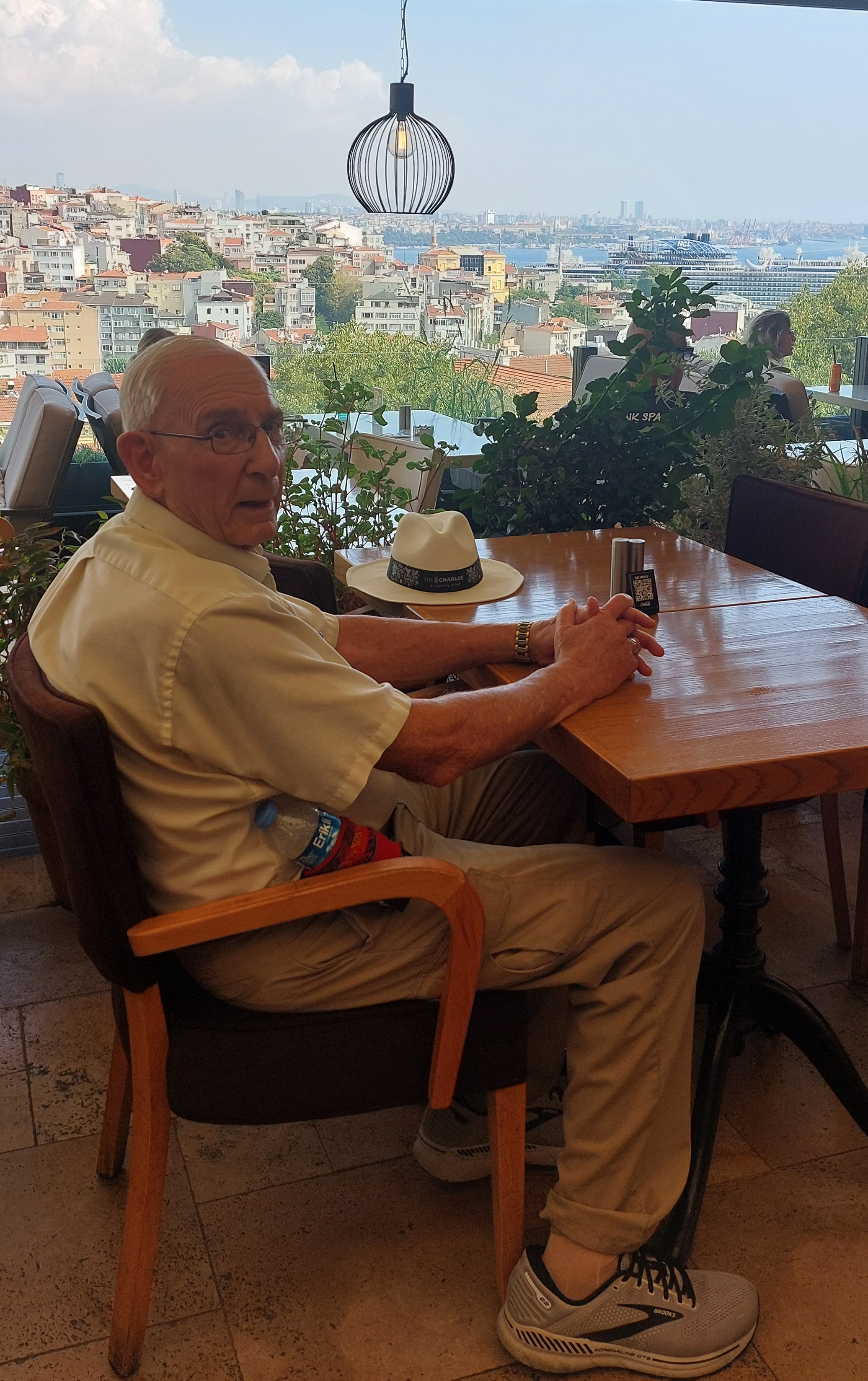
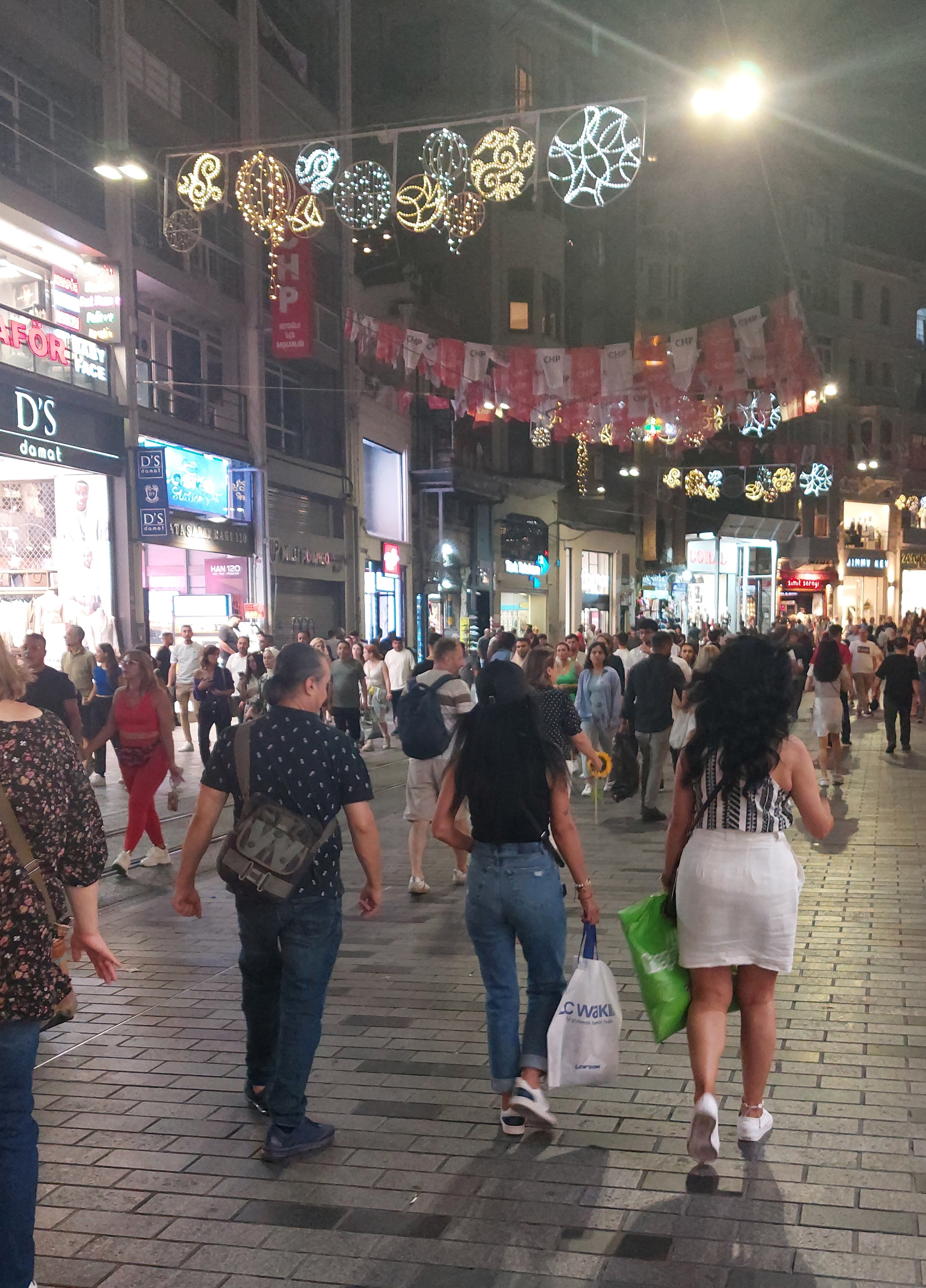
From the ferry dock, guide Tarik led me to a metro station and after just a few stops we reached Taksim Square, the city’s main transportation hub. The huge plaza, like Beijing’s Tiananmen Square or Mexico’s Zocaló, had been the scene of political demonstrations until they were outlawed by the authoritarian Erdogan regime. Not very photogenic, it is crowded with residents and tourists making their way to adjacent streets, particularly Istiklal Caddesi (the c in caddesi is pronounced as a j; addresses are often listed as Cad. and the number). Istiklal (Independence) Avenue is a pedestrian street, except for an ancient trolley that occasionally scrambles the crowds to the side. It makes Manhattan’s Times Square seem uncrowded by comparison. Just short of a mile long, with hundreds of stores and restaurants, it bustles with humanity day and night. Tarik led me to Midpoint, a restaurant at Cad.187, with a second-floor balcony view of the city and the Bosporus. I would have loved a beer with my Turkish lunch, but it would have knocked me out given fatigue and the heat of the day (about 85 F). It provided a restful space to relax and sip a lemonade. I was glad we lingered there for over an hour before Tarik pushed on to the Spice Market.




THE SPICE MARKET
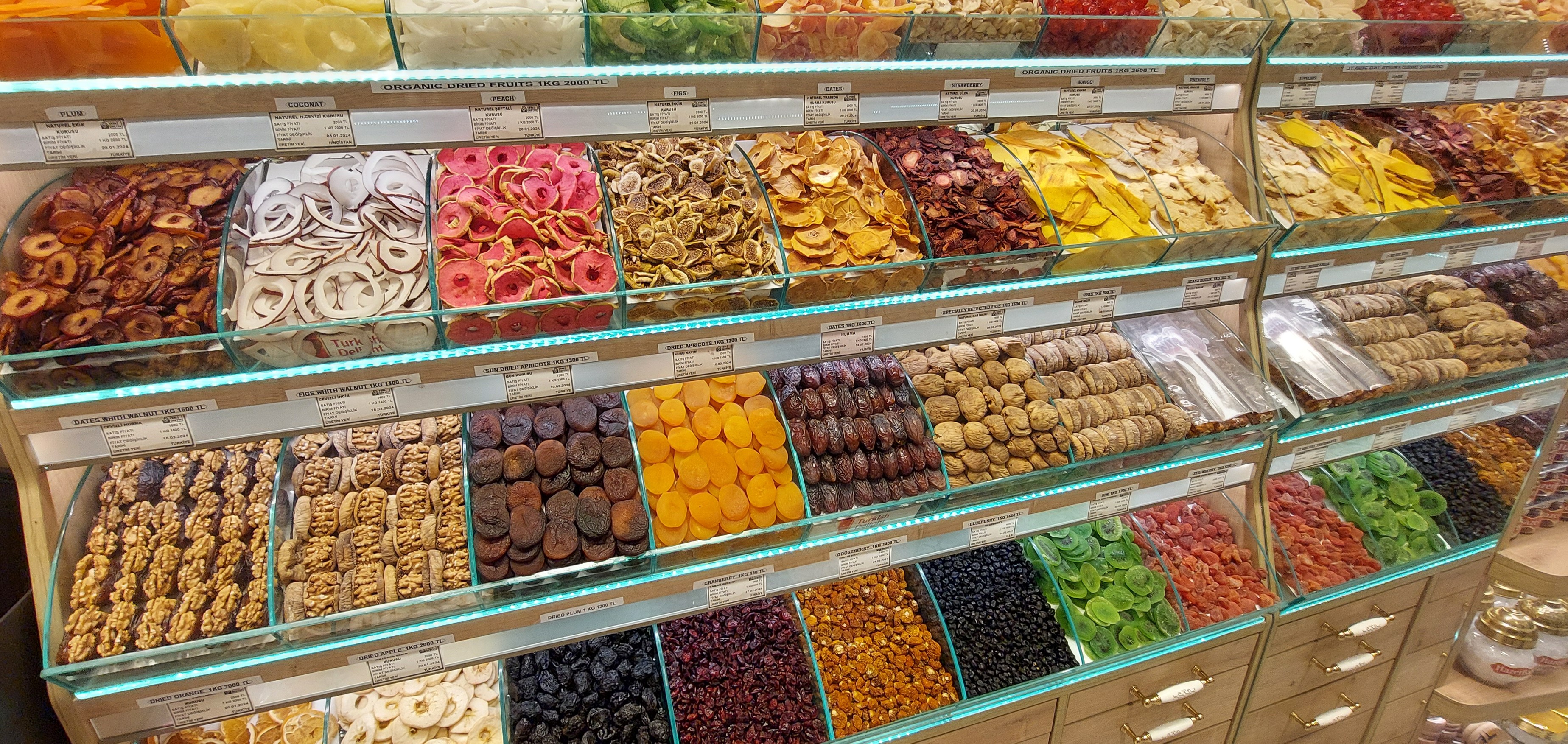
You may recall that Columbus hoped to find the spices Europe depended upon, scarce because commerce had been cut off by Ottoman control of the region. Ships from many nations brought their spices to a port where warehouses and commercial stalls sold them to merchants and the public. The demand for spices declined in modern times and more and more shops today feature Turkish Delight (a candy and nut confection), and many varieties of sweets, dried fruits, and nuts. The shop keepers are a bit aggressive in pushing visitors to sample their merchandise. After one shop keeper forced various samples on me, I succumbed to a “big” purchase of 200 grams of candy- coated peanuts. After seeing the Grand Bazaar, the Spice Market holds no magic and I entreated Tarik to cut the visit short.
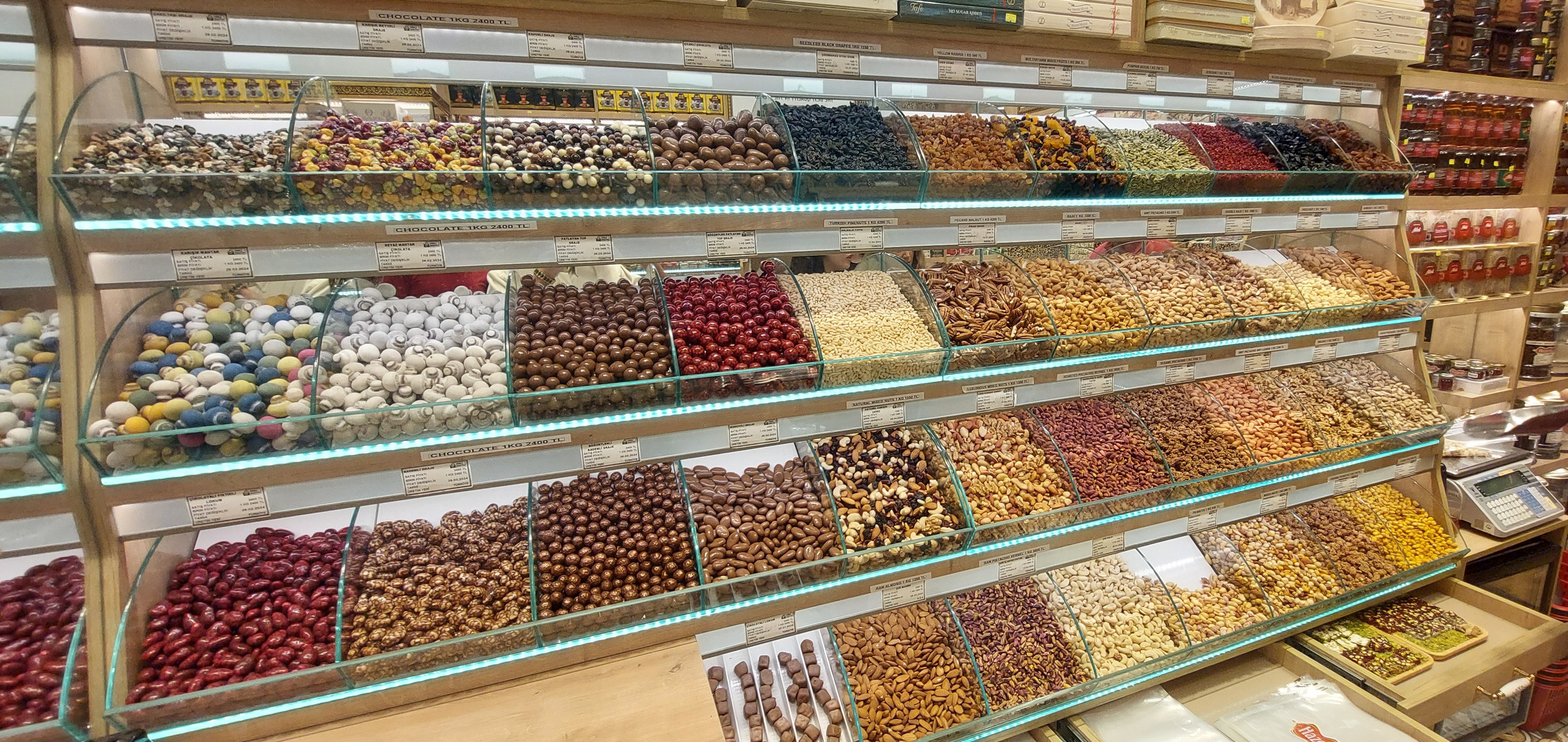

It took some time to find a taxi in the heavy traffic, and it took half an hour bumper to bumper to reach the hotel at 5:30. After another long but fascinating day, Tarik went off on his motorcycle and I collapsed on my hotel bed. Later I edited dozens of photos and posted some on Facebook, my way of communicating with friends and family, but also to remember everything I saw so I can illustrate the blog correctly later. Not hungry after a big lunch, I got some ice to add to my Johnny Walker and made a very light supper of my candy-coated peanuts.
Wednesday September 4 The Süleymaniye Mosque
On the third day with guide Tarik, we set off at 10 am for the largest mosque in the city, built upon a high hill with a sensational view of the city around the Golden Horn. It is regarded as the best work of the imperial architect Mimar Sinan, responsible for numerous mosques and palaces in the city. Most of the work was completed between 1550 and 1557 for Sultan Suleiman the Magnificent. It lacks the ornamentation of the Blue Mosque, perhaps because the sultan was more inclined to the Koran’s admonition of simplicity and humility. The Sultan planned to be buried here along with his wife, so there are two enormous mausoleums adjacent to the mosque, the Sultan’s being the largest in the country. It is adjoined by the tomb of his wife Roxelana who played a prominent part in the events of the regime and took up many pages of the history I read before arrival. Behind the mausoleums is a cemetery for the soldiers and grand viziers of the regime, with some tombstones adorned with turbans recognizing their importance.


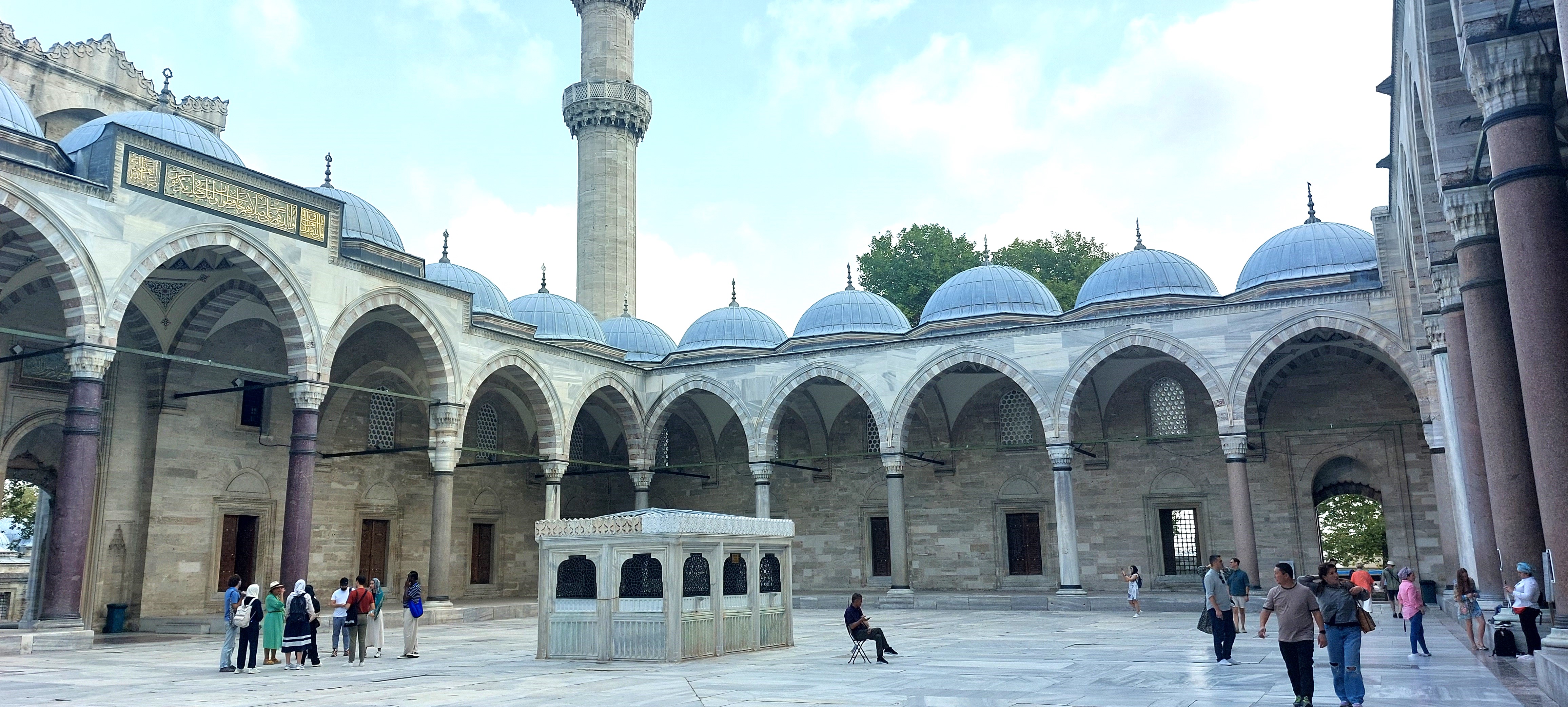
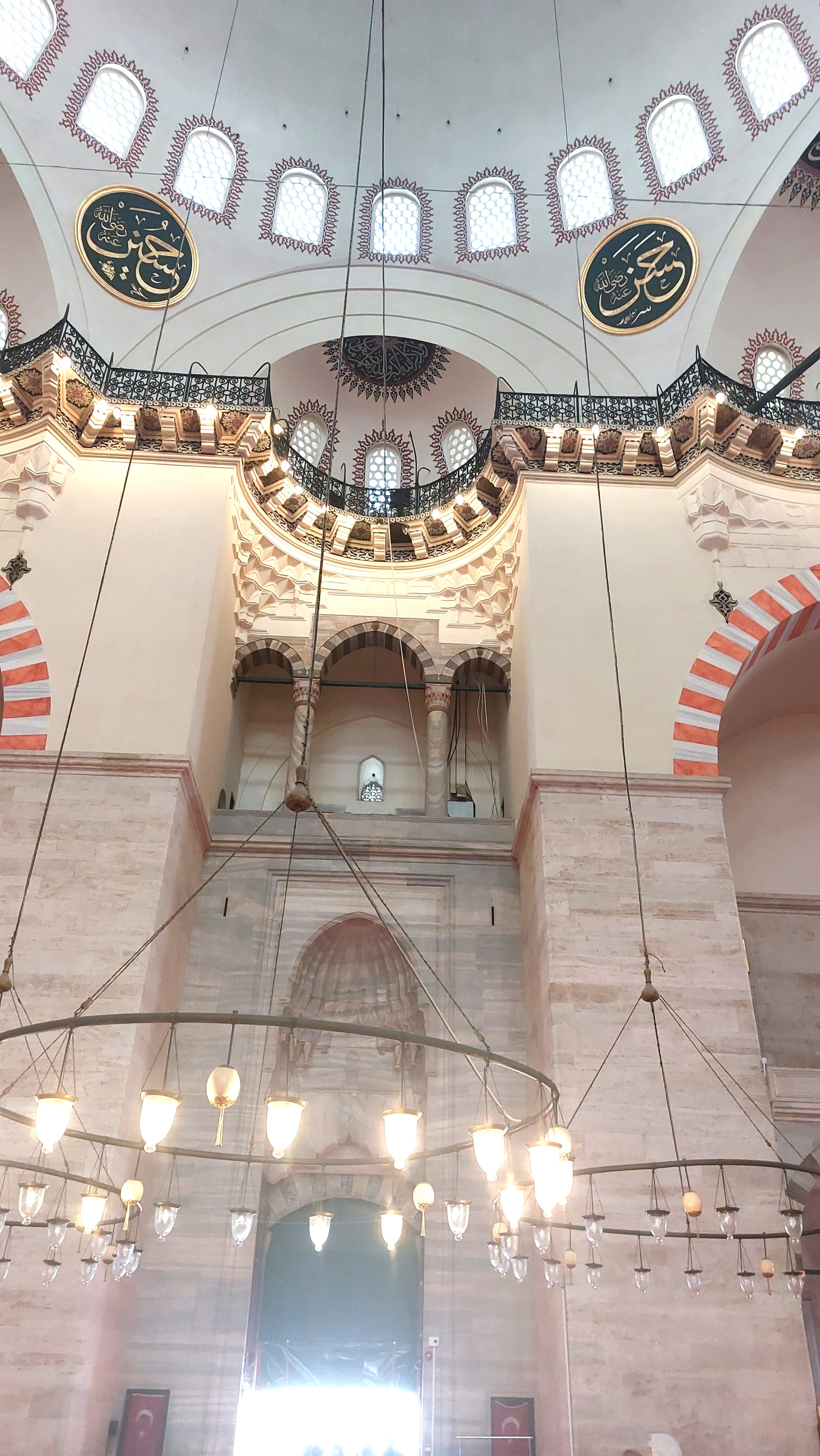
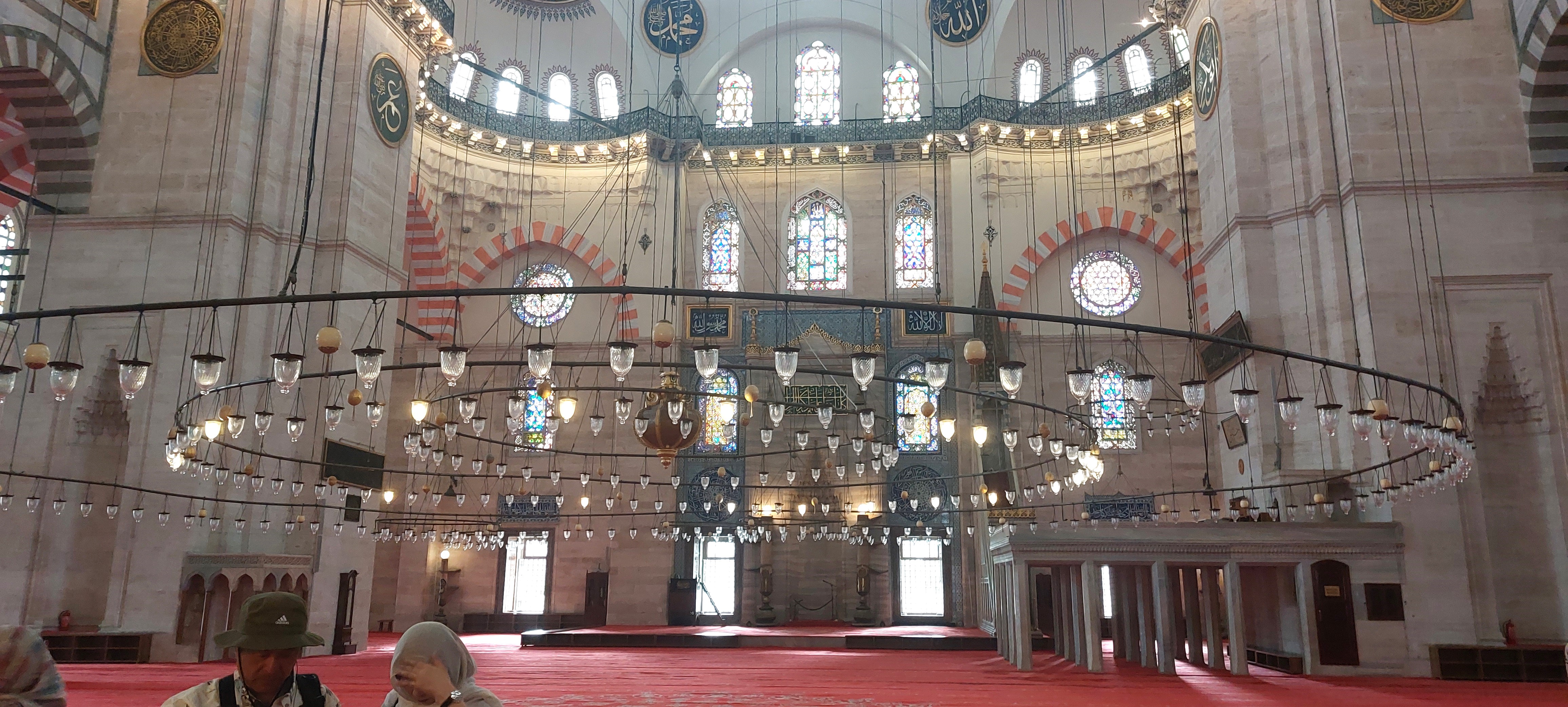
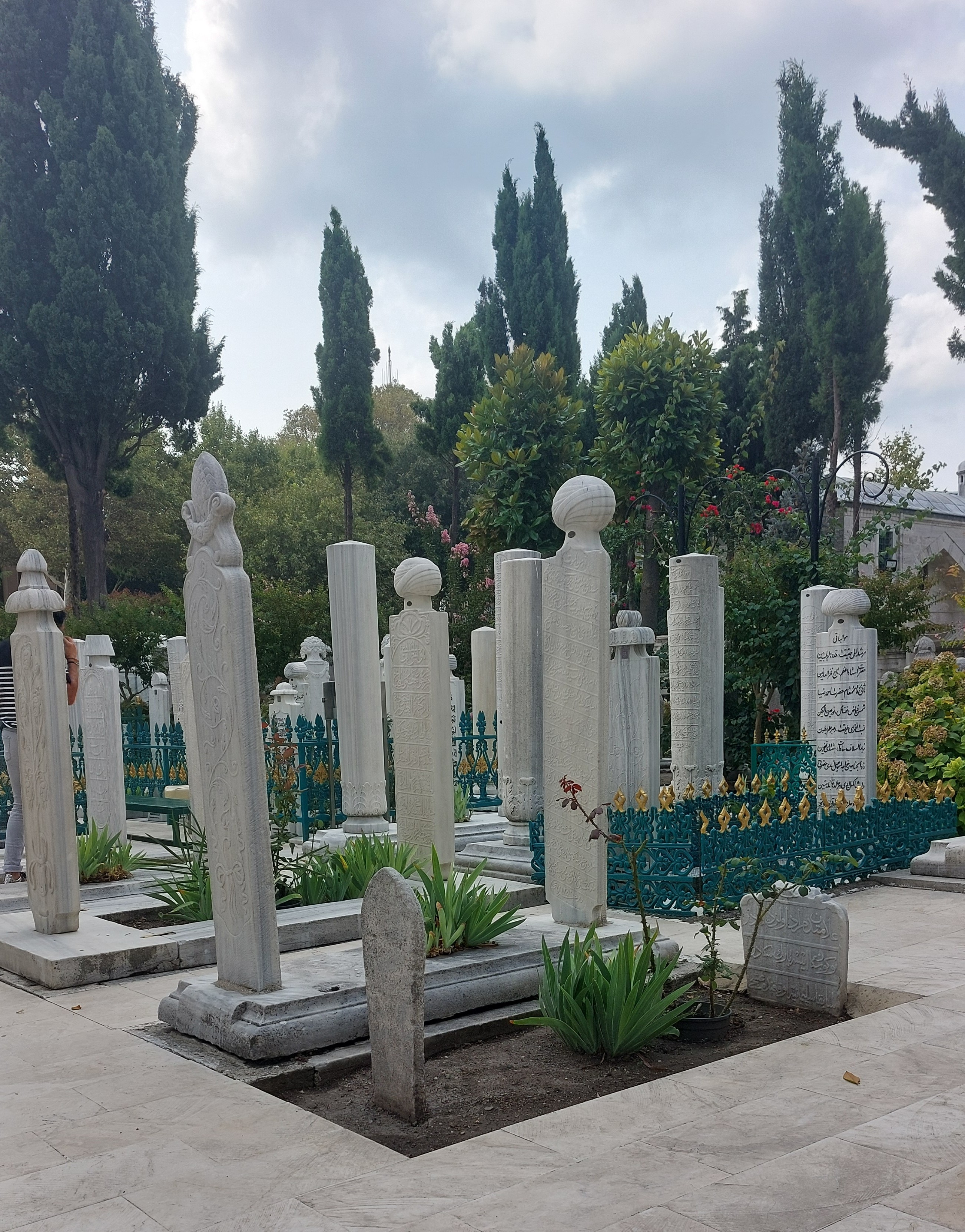

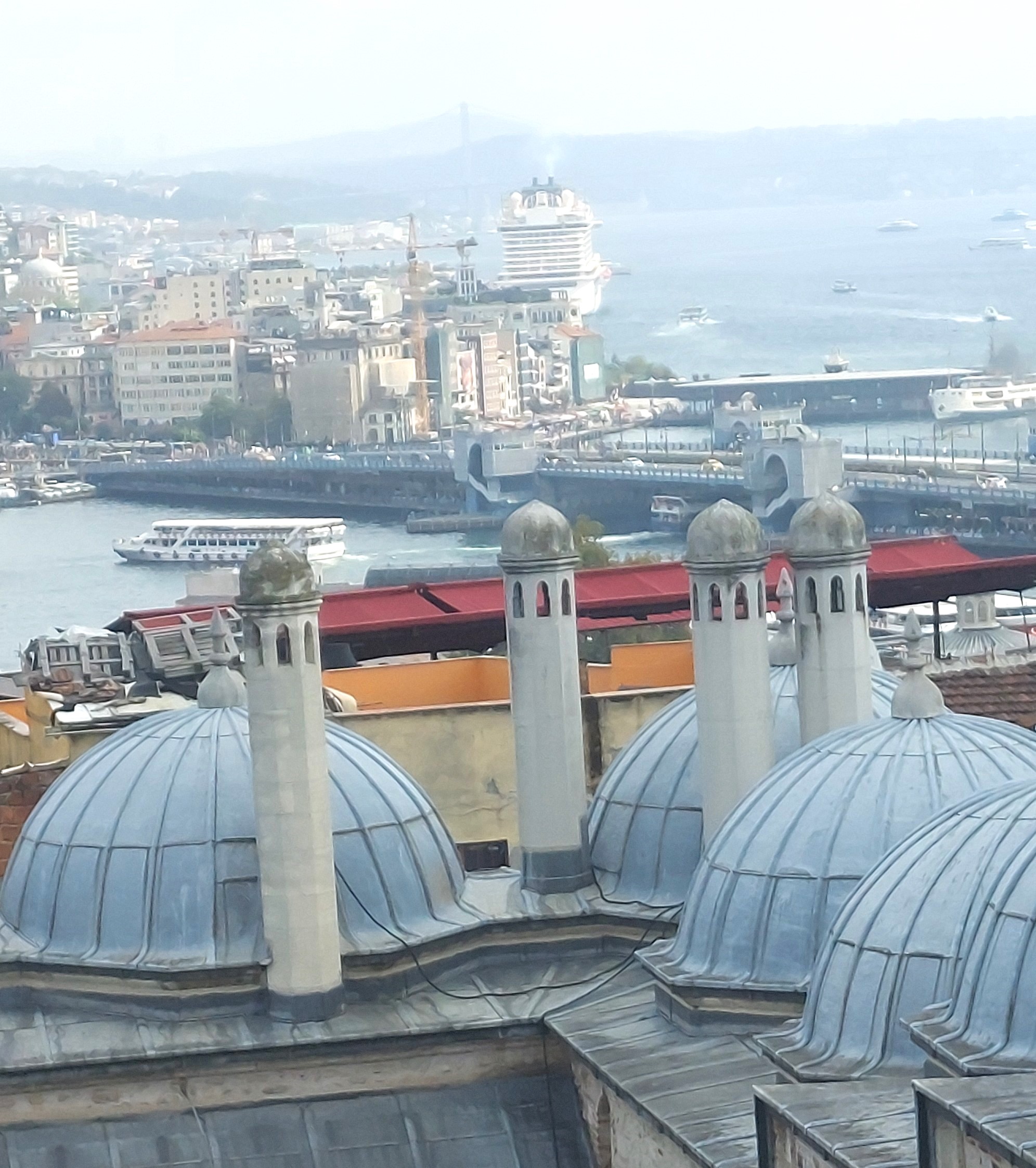
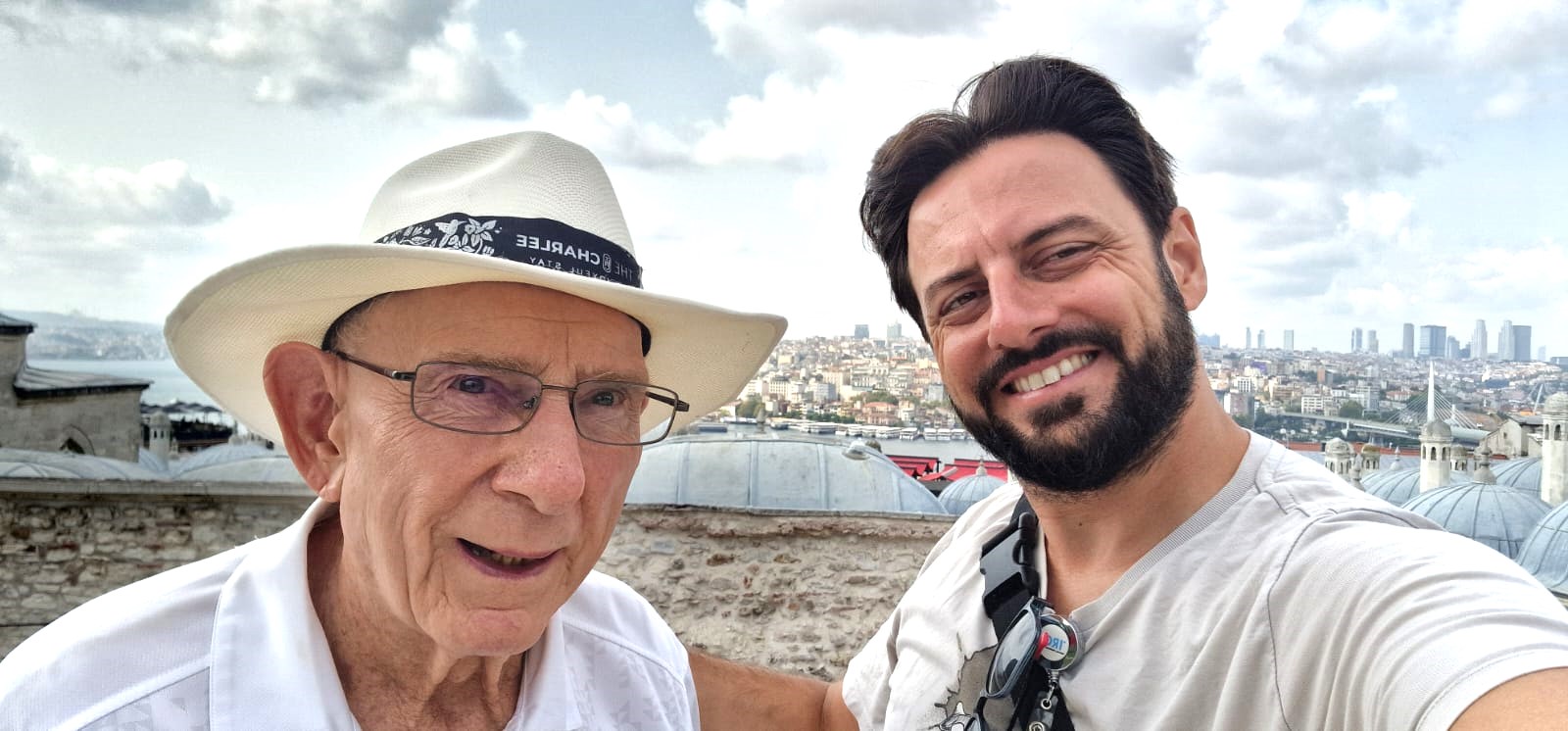
After walking about for over an hour, we took a cab to another high hill and an overlook named for Pierre Loti, a French expat writer (d. 1923) whose name is on the coffee house famous for its view of the Golden Horn. I chose lemonade over coffee and we rested up before taking the cable car down to shore where a tram runs through the area.

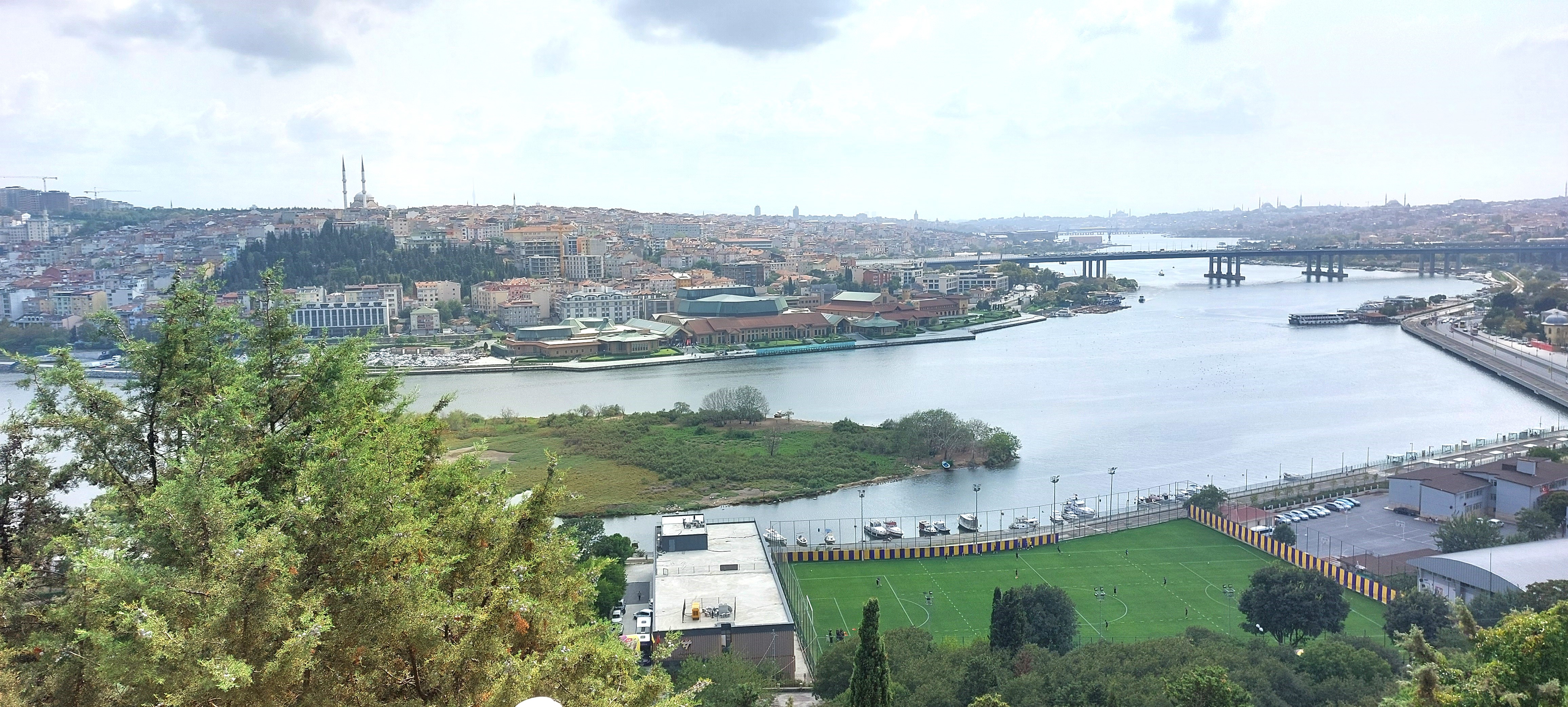

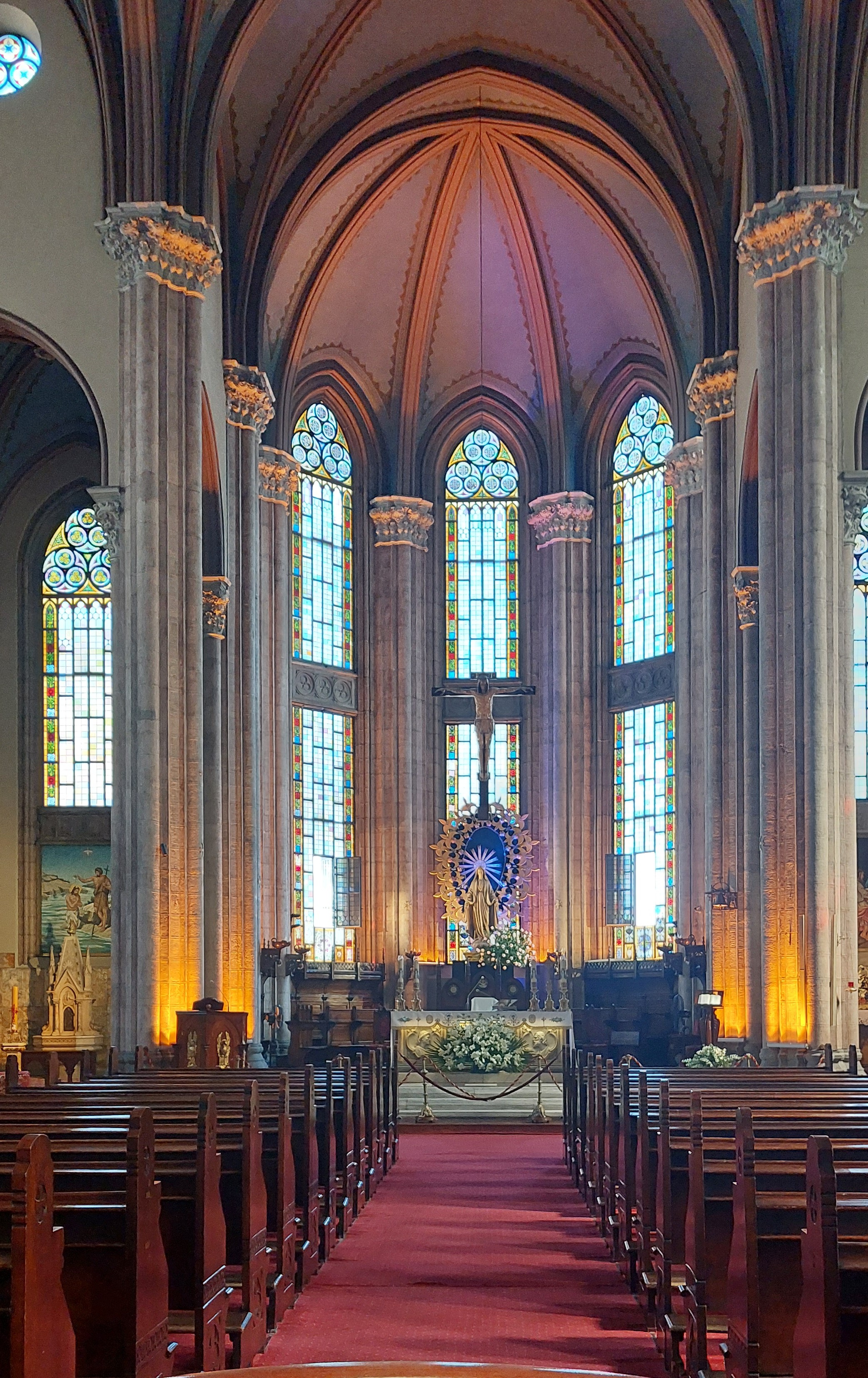
We got off the tram in the Balat district, long a locale for foreign colonies, whose monuments include synagogues and churches of different faiths. The Iron Church, built by Bulgarians to St. Stephan is famous because the entire structure is made of iron. The charming district has many colorful buildings and numerous coffee houses and restaurants. We tarried too long here waiting for a mediocre lunch. Tarik was anxious for me to see the Orthodox Cathedral of St. George, but I demurred, wanting to get on to the next area of the itinerary.
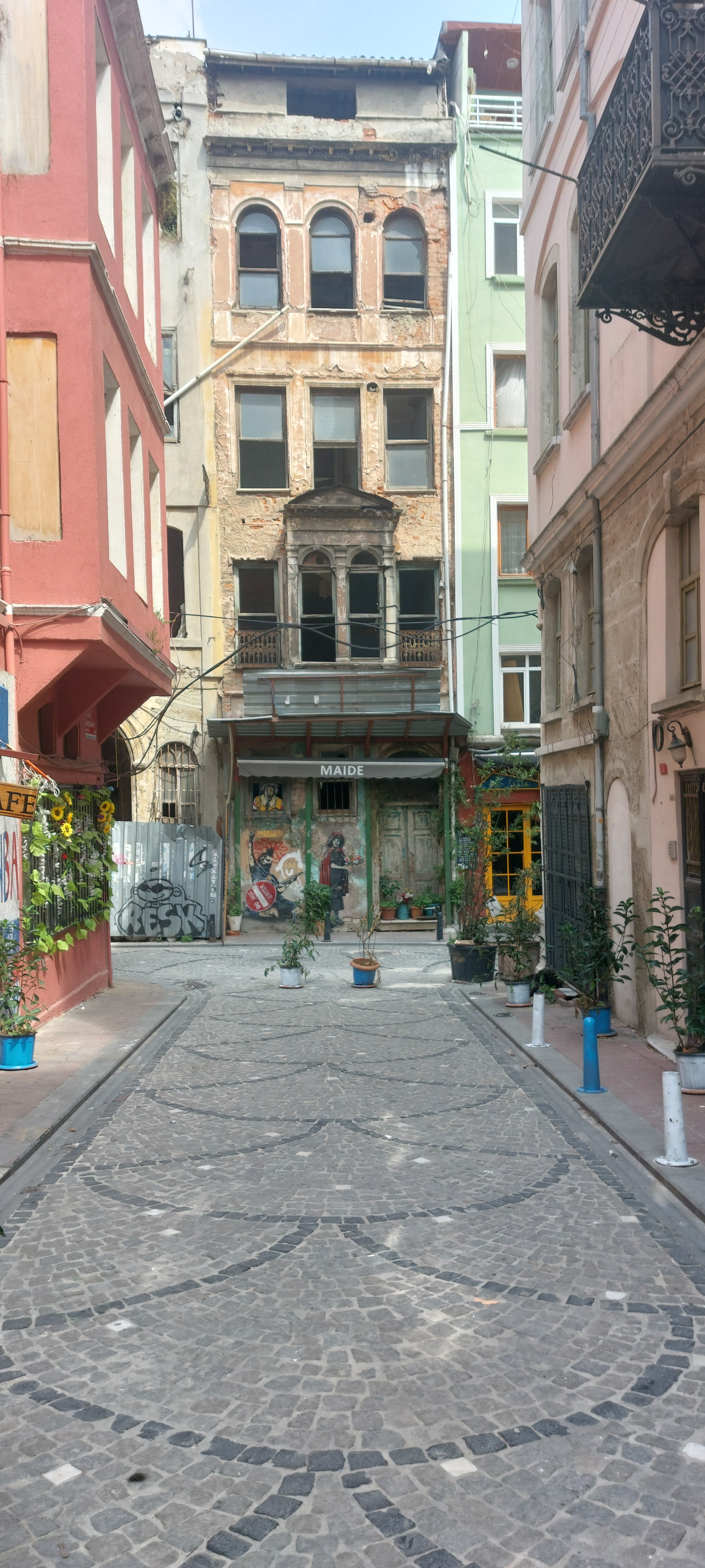


We took the tram to the dock for the commuter ferries to Kadikoy on the Asian side of the city. I would recommend skipping Balat altogether and having lunch and more time in Kadikoy. We took the tram to the ferry port and waited only a short time for the next commuter ferry which docked on the Asian side in about 12 minutes.
KADIKOY, on the north shore of the Sea of Marmara, was known in ancient times as Chalcedon. It had been occupied by several cultures until its conquest by the Ottomans. A majority of the city’s population lives on the Asian side, and Kadikoy is the most expensive residential sector. But one is struck immediately by the commercial nature of the port area. The streets are lined with food stalls, souvenir shops, produce and fish stalls and, as the photos below show, it really resembles another market.
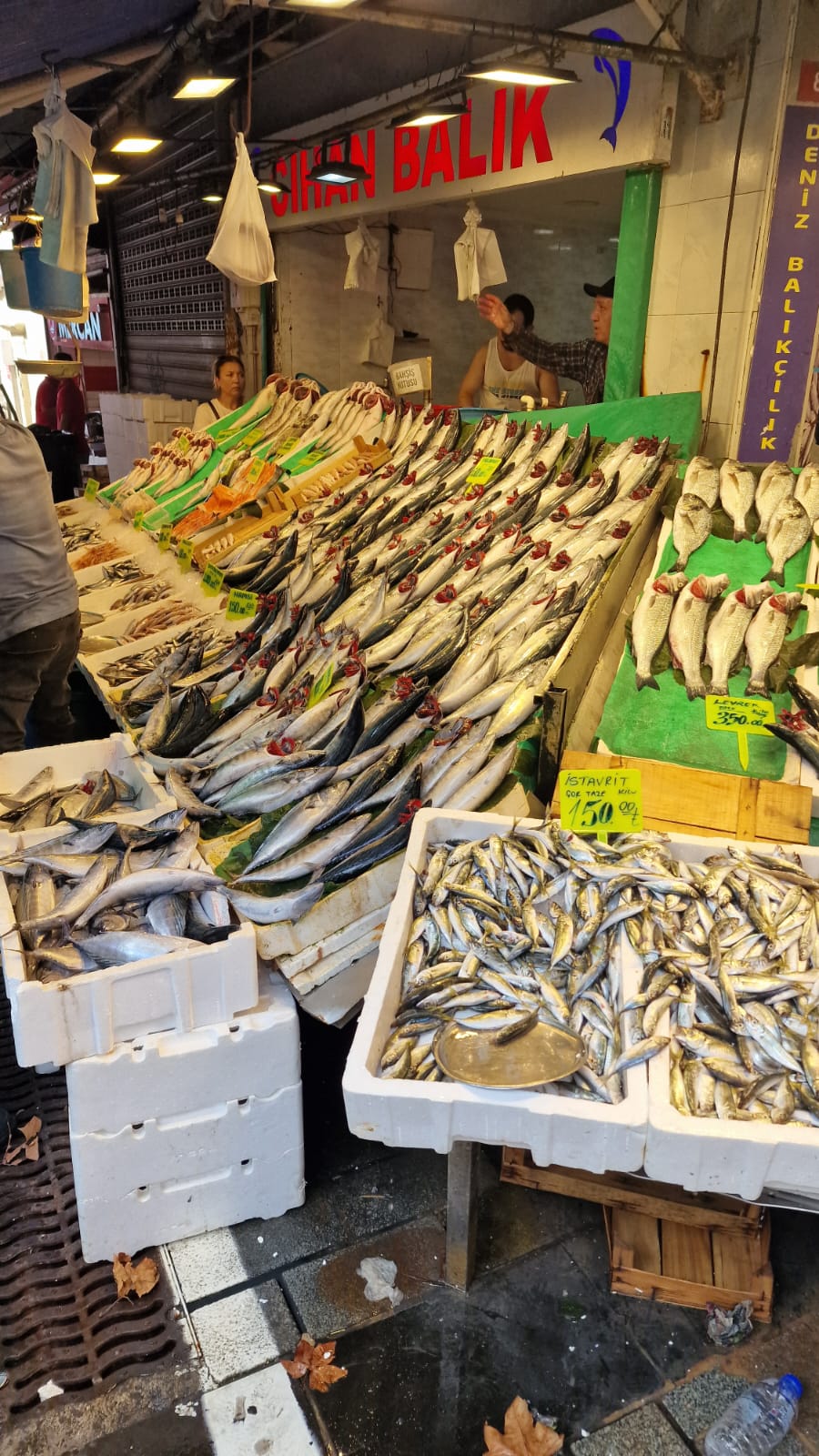
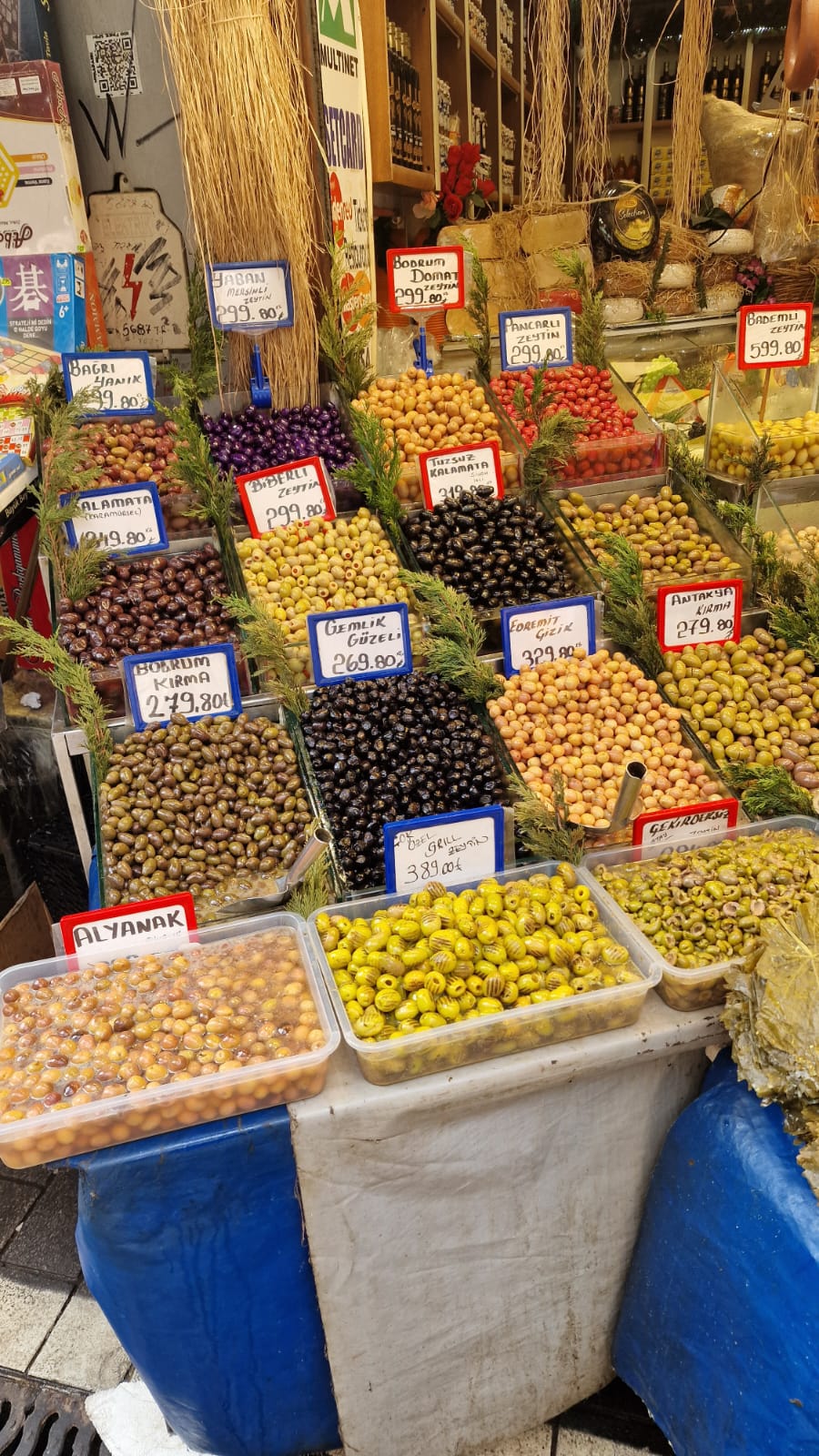

After walking about the district, we stopped in a café to rest a bit and hydrate, lemonade for me. (I don’t drink coffee after breakfast precisely because it makes bathroom stops more frequent. Tarik knew the clean restrooms at each of our stops, all of them with modern toilets with seats).
Shoppers would probably keep the guide here much longer, but it was getting late and I was feeling saturated and asked Tarik to cut the visit short. By the time we caught a ferry back to the port and found a taxi, it was 5 pm before we got back to the hotel. I bid guide Tarik a warm goodbye, grateful for showing me more of Istanbul than I had anticipated. We stayed in touch on WhatsApp for the next few days due to his kind offer to answer any questions I might have. I don’t think I could have enjoyed Istanbul without his knowledge of its monuments and the shortcuts between them. His enthusiasm, his conscientious guidance, and his congenial personality were a priceless bonus.
Thursday September 5 “A Taste of Two Continents: Istanbul Food Tour”
After the three-days with a personal guide, at the agency’s suggestion I booked a small-group food tour. Then I reserved the remaining two days for museums and gardens I prefer to visit alone. I couldn’t pass up the plentiful buffet breakfast in the hotel but ate lightly since a Turkish breakfast was on the tour itinerary. The tour was booked by the agency in the UK through Viator, who used a local tour operator, Yummy Istanbul. I imagine one could do a web search and book directly with the operator, but I recommend omitting the tour in lieu of so many more cultural things to do in the city. To me it was a wasted day.
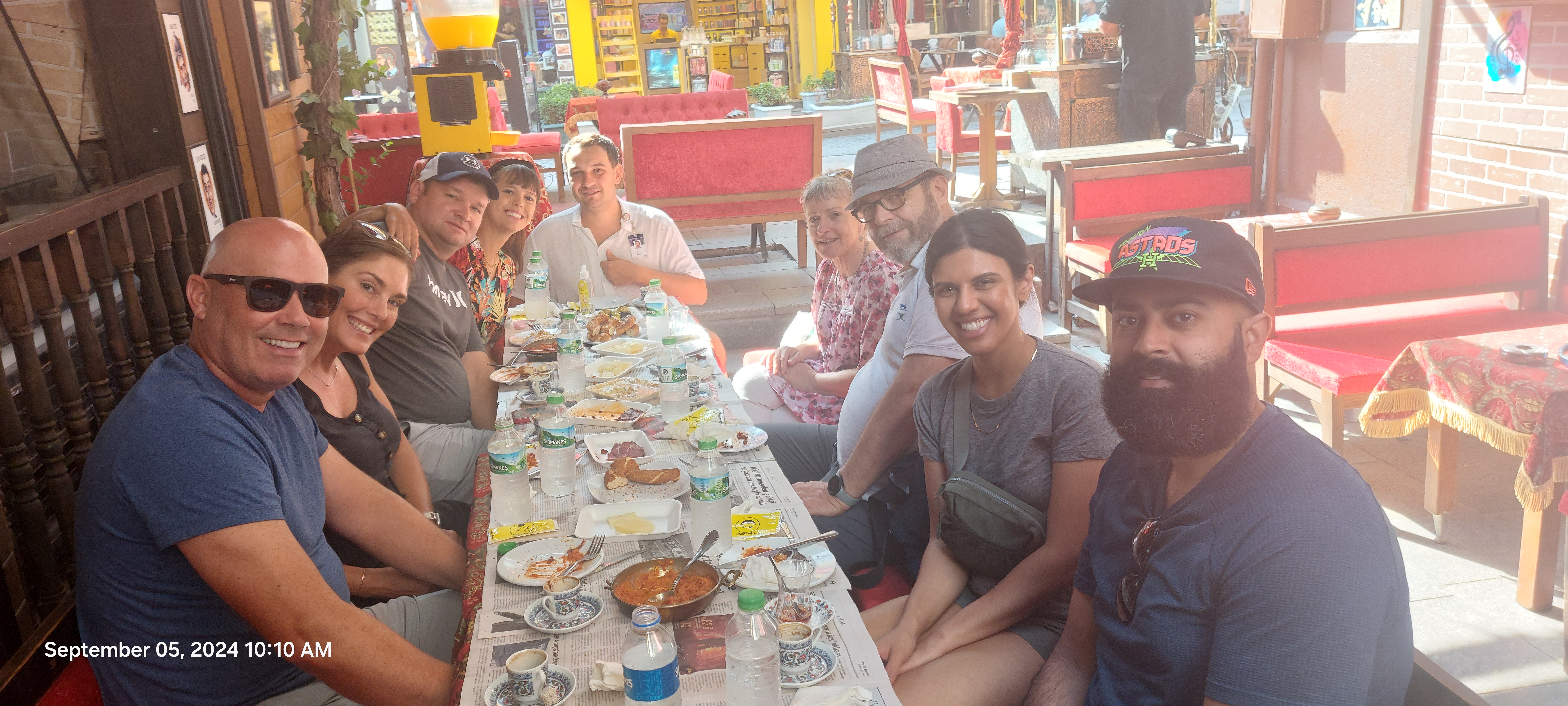
The instructions I received said to meet at 9 am at a coffee shop near the New Mosque, a 20-minute cab ride from the hotel. The driver’s app did not show the coffee shop but he dropped me at the given address. On early arrival at 8:40 due to warnings about rush-hour traffic, I was disconcerted to find no such coffee shop. It had been demolished. Wandering the street back and forth without luck for fifteen minutes, I phoned the number given for the local agency and got only voice mail, learning later that I had phoned the company owner in Australia! I was about to give up and return to the hotel when I saw foreigners standing in front of the Legacy Ottoman Hotel, where their cruise ship information told them to meet. I had failed to check phone messages, not expecting any, and later found that the agency in the UK had sent me an address correction the previous night. I was not a happy camper when guide Sinan arrived, introduced himself, and asked us each to do the same. The other participants were four friendly couples, from Australia, South Africa, Denver, and Houston, nine of us in all plus the guide. We stood on the sidewalk in front of the hotel for ten minutes, making pedestrians move around us, and I strained to hear the guide over the noise of passing vehicles. Finally, we moved down the street to a quieter spot, another five minutes of blah blah, then a short walk to a plaza in front of the New Mosque where benches would have made for a more welcome meeting spot, unless it were raining. That would have compounded my already sour mood. I can’t imagine doing this tour in the rain.
For some time, we stood in front of food stalls near the New Mosque for samples of olives and other small dishes. Finally, we walked to a sit-down restaurant for a breakfast I would never make part of my morning routine. At least there was a somewhat adequate bathroom. I won’t describe all of the little dishes we tried throughout the tour. We were near the Spice Market and spent a half hour there, another repeat I could have foregone. Then we were very close to the commuter ferry to Kadikoy, and we repeated the trip I had made with my guide the day before. We stopped in front of several food stalls, one offering all the cold mussels we could eat standing up. Another standup spot offered a gooey chocolate pastry I declined. We did have three more sit-down occasions. The first lunch was a kabob wrap and a pizza-like pastry. Next, we had second lunch dining on Doner, tender and delicious plates of meat sliced from a spit. Finally, we sat down in a pastry shop for baklava with goat-milk ice cream and coffee or tea. Most of us were more than satiated, and several people complained about all the walking and standing that I had become accustomed to.We didn’t finished noshing about 3:30 on the advertised half-day tour. By the time we got back to the ferry and reached the European shore, heavy traffic made it difficult to find a taxi. Finally, I found a driver but he refused to use the meter and demanded about double what I expected to pay. (News articles I had seen noted a huge shortage of taxis in the city and numerous tourist complaints about overcharging). I was grateful to get back to the hotel by 4:30. I had not expected the “half-day tour” to consume the entire day. I was appalled to learn that two of the couples had chosen this ship excursion as their only activity in the city, missing out on everything else I’ve described above.
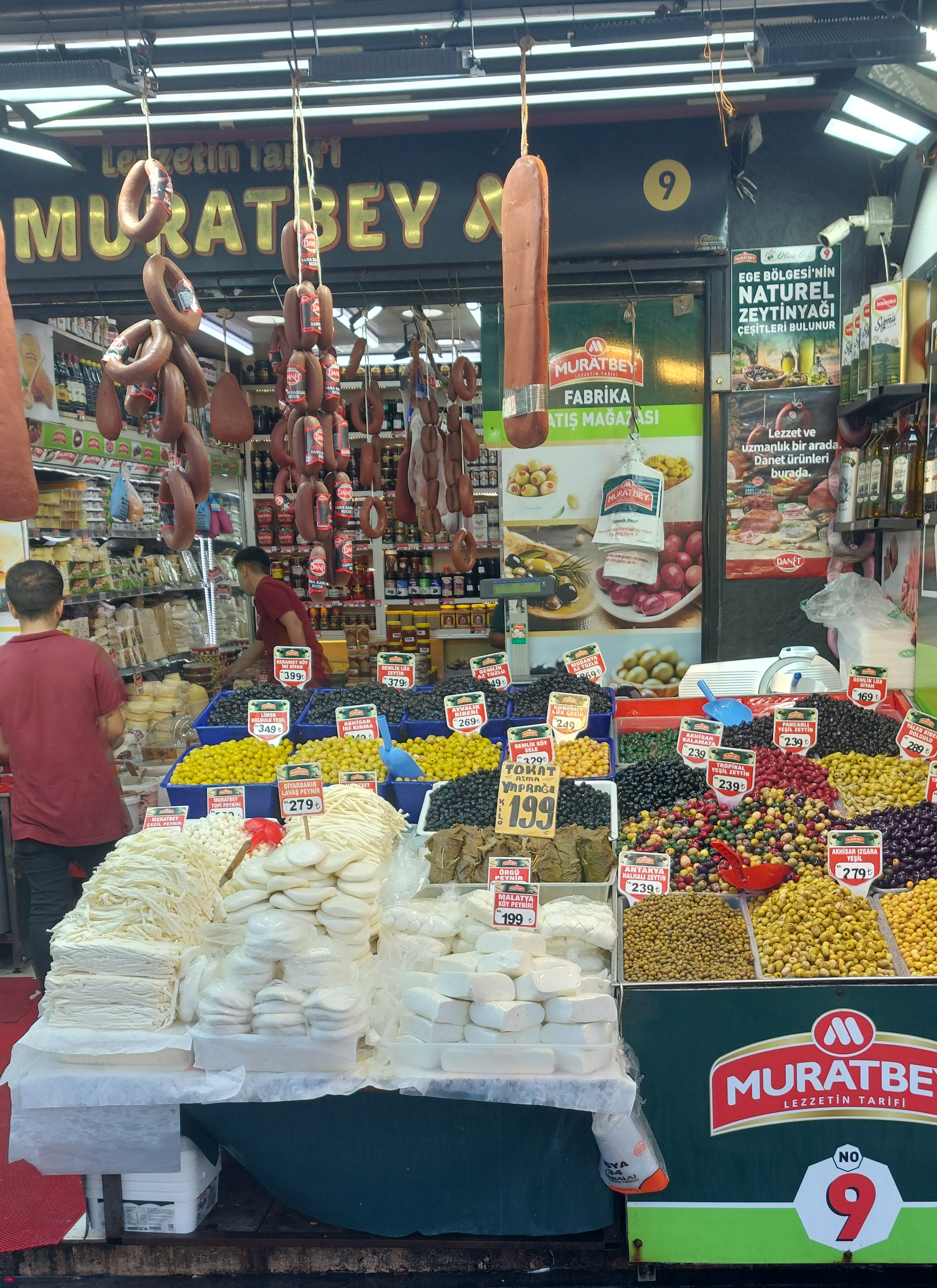


I had no energy left to enjoy the hotel’s lovely pool. After a good rest editing photos and typing up my notes on the day, I wanted to get out and explore the scores of restaurants around Taksim Square. Many outdoor venues appear to have been cloned, and all have photos of their numerous dishes. I couldn’t imagine how the restaurants could offer so many dishes and keep them fresh. They don’t. I had a good Turkish beer to wash down my overcooked chicken schnitzel. At least I found numerous ATMs where I could replenish my Turkish lire.
Friday September 6 The Istanbul Archaeology Museum
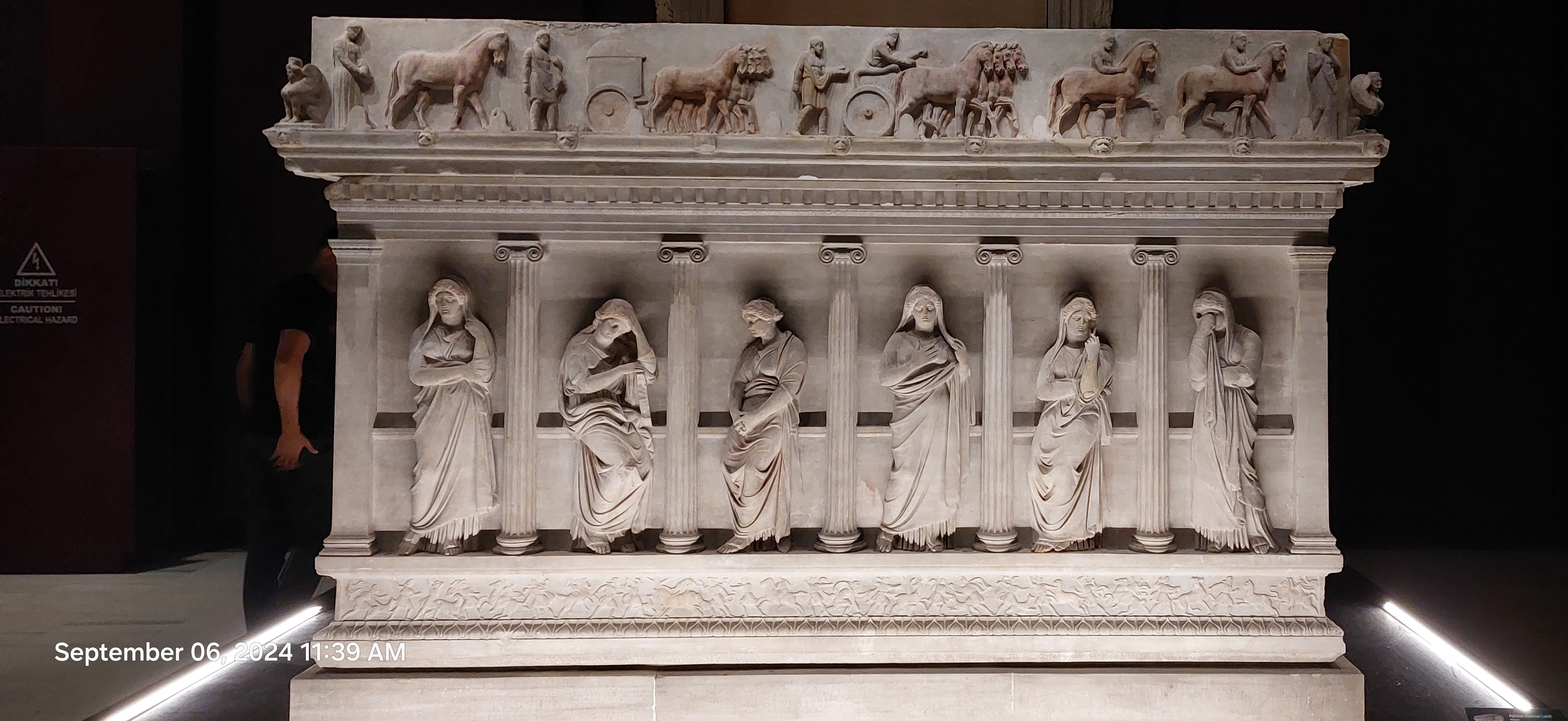
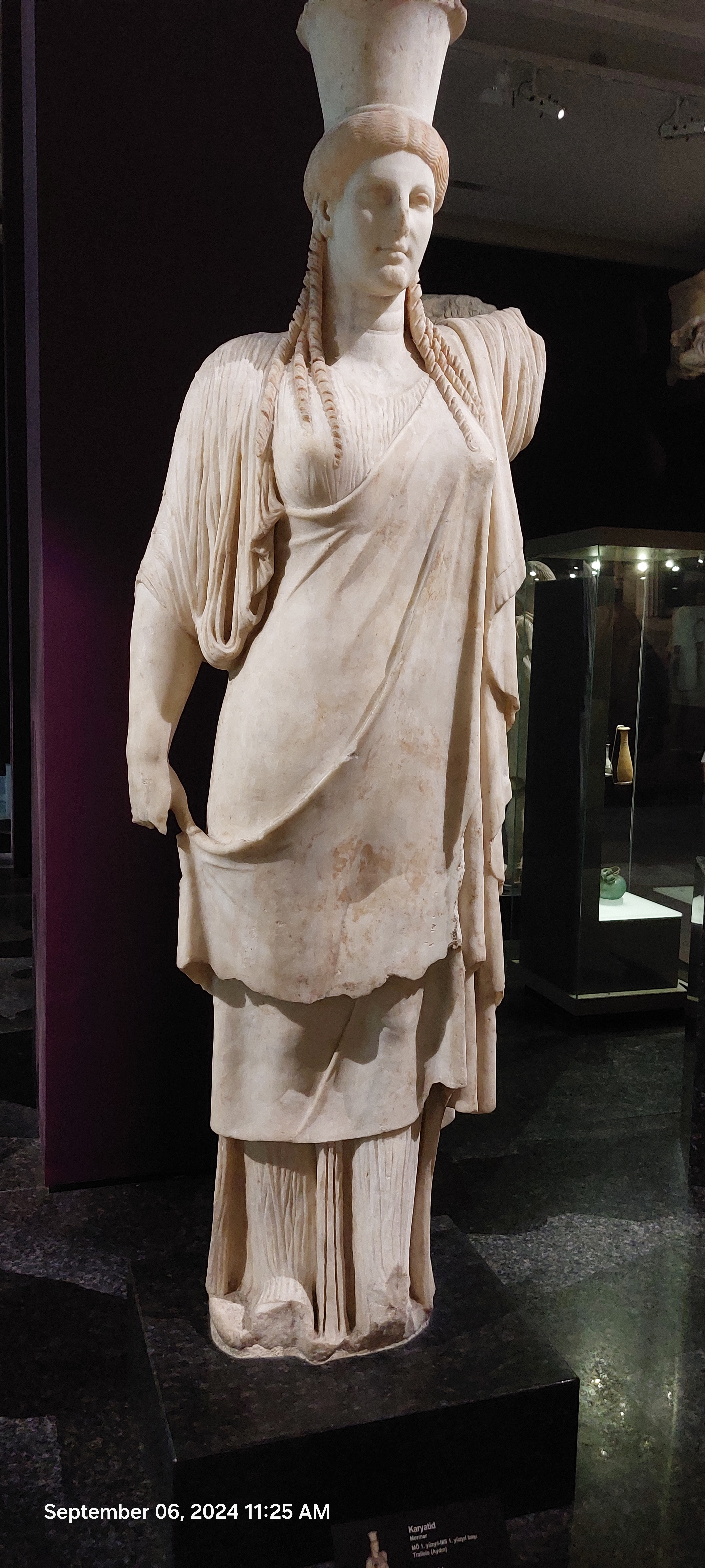
I had saved two days for museums and gardens on my own. From the descriptions online, I knew which one I would like best. The Archaeology museums are a group of three but one was closed for renovation and the other did not interest me, knowing I would be saturated after the main building. The museum is near the Topkapi Palace, but traffic in the area was so heavy the cab driver dropped me off about 500 yards away telling me it was close by. I had to ask directions twice before finding the museum, rather hidden at the end of a cobbled street. The 550 TL entrance could be paid only in lire. The museum more than lived up to my expectations and I could have spent more than two hours there had I been interested in minor ceramics, glassware, and coins. Below are photos of just a fraction of the awesome monuments and sculptures.





I had read that one of the nicest gardens in the city, Gülhane Park, was near the museum. The oldest and largest park in the city, it was once the outer garden of the Topkapi Palace. Alas, the few flower beds held only some fading begonias. In fact, there were few flowers in any of the gardens of palaces and mosques and I realized fall is not the time to find flowers in Istanbul. A spring visit to the city would have been more to my liking but didn’t fit my calendar. I read that in the last three weeks of April the city holds a splendid tulip festival. Anyway, I decided to forego visits to three other gardens I had scheduled.

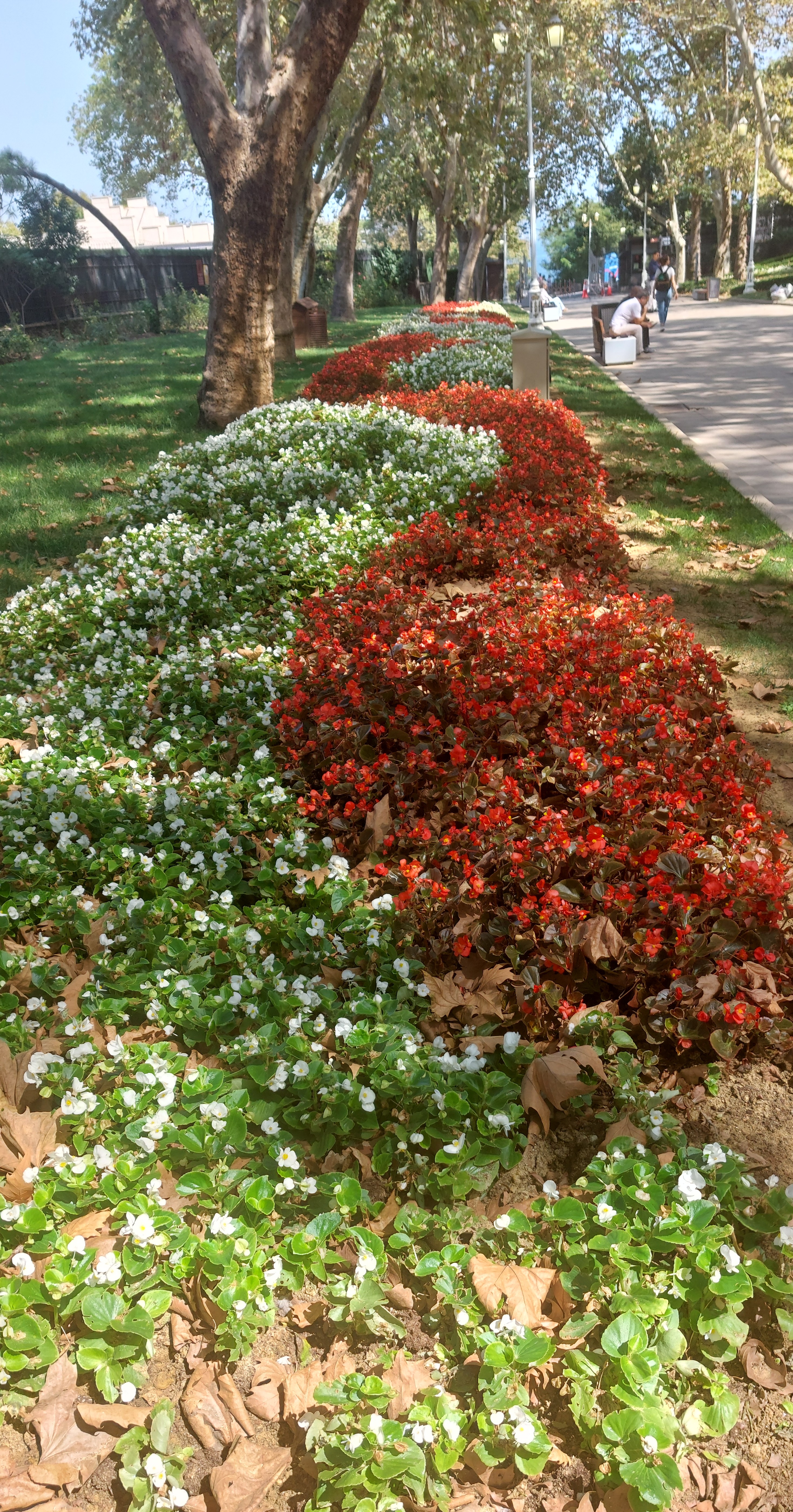
I walked through the park for about 300 meters to the north exit which emerges pleasantlyu on the Bosporus not far from a restaurant guide Tarik had recommended. It took a while to hail a taxi and the driver was not happy for such a short fare, but I offered 200 TL and he was happy to drop me at SUR BALIK, famous for seafood which I had yet to enjoy despite being on the Bosporus. In fact, Tarik had pointed out the restaurant during our Bosporus excursion. The staff seemed delighted to receive me, although they were busy putting another catch of the day in the refrigerated display case. The second-floor dining room was almost empty at 1 pm except for about a dozen Japanese tourists and their guide. Later a very large Japanese group came in and went to a third-floor dining room. I took this as validation that I had picked a good spot for lunch. The delightful view of the Bosporus added to the value for price. The seafood salad was mostly squid and octopus with a few token shrimp. The main course was a huge grilled seabass with potato and vegetable, leaving no room for dessert. This was my only fine dining experience since I ate mostly at the hotel or walked to the many restaurants at nearby Taksim Square.
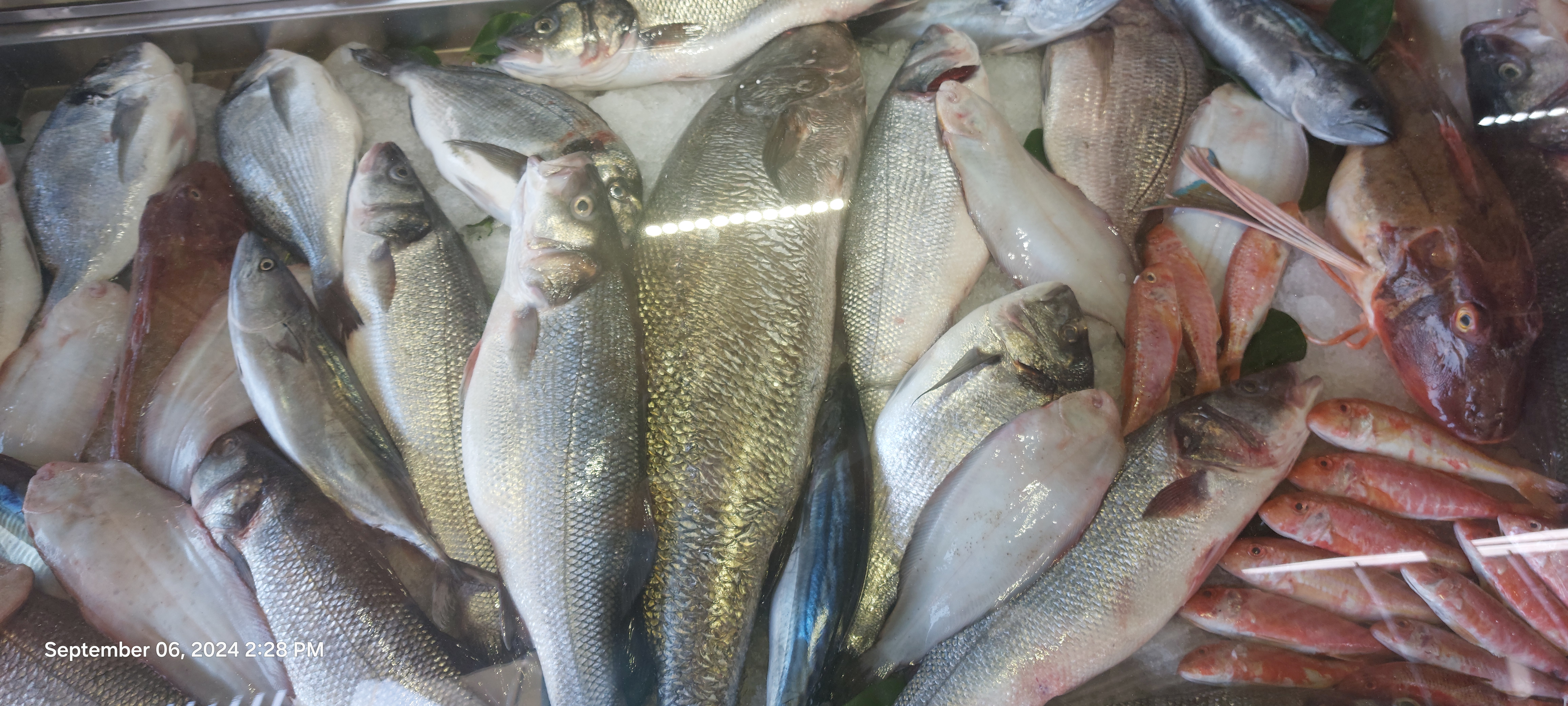
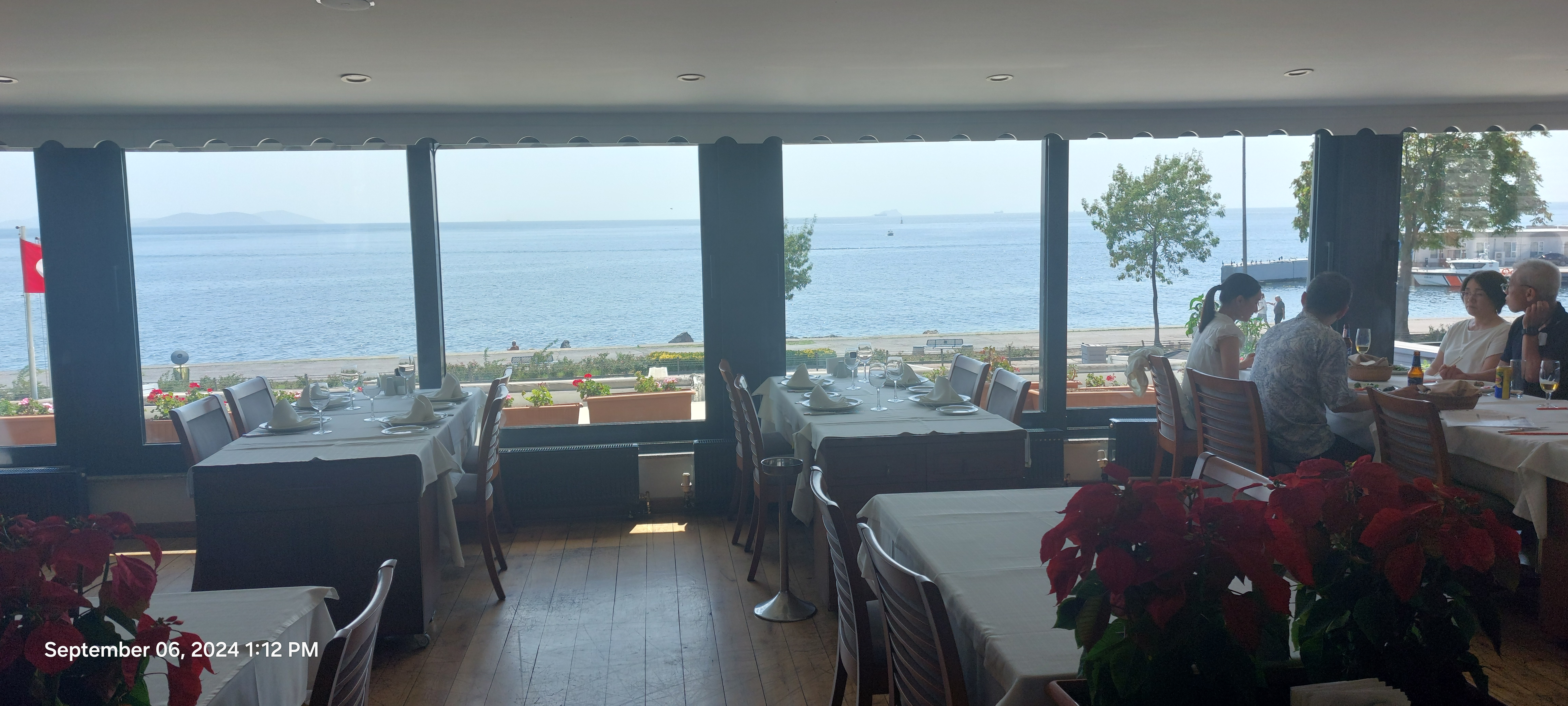
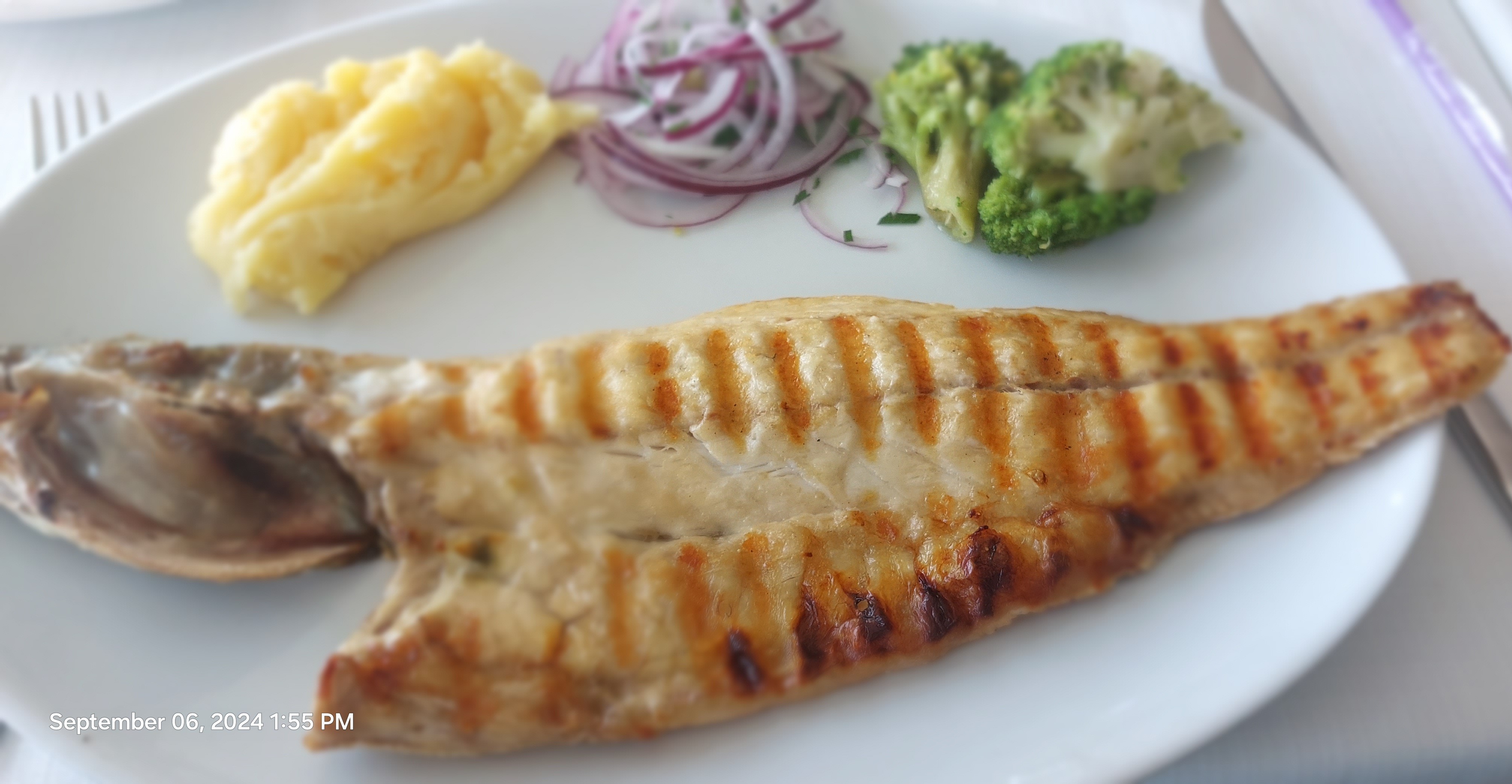
Few taxis passed on the boulevard outside and a staff member rescued me from the sun, giving me a seat while he phoned for a cab. I was glad toback at the hotel earlier than usual but sad that it was overcast and windy, making the pool uninviting. I wasn’t hungry in the evening, but I knew I wanted to try one rooftop restaurant as part of my visit. A friend had raved about Nostra Casa, but it’s located in the Blue Mosque area and, at dinner time, the traffic would mean as much as 45 minutes each way. I showed the concierge a list of restaurants I had found online and he told me I could walk to Restaurant 360 in twenty minutes. He kindly phoned in a reservation for me. It took ten minutes just to walk to the end of Taksim Square where so many streets intersected I had to ask which one was Istiklal Avenue. Caddesi 163 was a long way down the avenue so it took me more like 35 minutes to arrive. The rooftop restaurant on the eighth floor of an apartment building (the elevator only goes to the sixth floor) is not very elegant but the terrace view of the city at night more than compensates. I knew to expect high prices and was willing to splurge. The gin tonic cost the equivalent of 15 dollars for the gin and three dollars for the tonic water. I had no room for an appetizer and chose just an entrée, slow roasted cherry duck, which appeared to have been roasted two or three times it was so dry and chewy. Adjacent to my table was a party of about a dozen diners, everyone but one smoking heavily. The women were dressed elegantly, the men slovenly casual as if they were Americans. My American Express bill shows the lire converted to 74 dollars, not really value for price. Before I departed, a female violinist made the rounds of tables, her repertoire not to my liking. At 9 pm, Istiklal Avenue was still wall-to-wall pedestrians. Tired after a long day, I spotted a taxi on a side street and was glad to pay an overcharge to return to the hotel. It was still early enough to post some photos and read the news headlines.



Sat Sept 7
I was happy with six days in Istanbul, but I had booked seven days. Saturated, I didn’t care to see another mosque, palace, or museum and decided to rest for a day, delighted that the agency had booked me into an excellent hotel with a great pool. I spent a relaxing day with a work out and reading by the pool, a nice siesta, work on my blog text, and meals in the hotel.
Sun Sept 8 Last day in Istanbul and return to Mexico.
I savored a relaxing breakfast, then went to the desk to request a late checkout, pleased with an extension to 2 pm. While my flight didn’t board until 7:45 pm, several friends had raved about the terrific
turkish Air business-class lounge, hence my early arrival at the airport. I could pack leisurely and delay my shave and shower to just before checkout, knowing I had a long day/night ahead. I had saved lire for generous tips to the maid, bellman, and driver. The driver was punctual and I was at the airport in about 45 minutes. The airport was voted “Best in the World” by readers of Travel and Leisure magazine. I can’t imagine why. On arrival, one has to walk long distances to get to passport control and find the right baggage carousel among over 20 in the mammoth hall. On my return, I had to pass through a security check of luggage before entering the lobby, search to find the poorly designated business-class check-in, walk long distances through endless duty-free shops to get to another security check and passport control, and finally the VIP lounge. I had never been in a lounge that large with hundreds of people lining up around food tables and few empty seats with tables. I had a decent but not spectacular lunch, and didn’t drink the wine or champagne knowing I had a long flight ahead of me. Alas, I could not access either of two internet sites, getting a message that my device did not have a legitimate configuration. I was sorry not to be able to read the newspapers online or communicate with friends and family, but at least I had a good book on my kindle. The walk to the boarding gate seemed nearly a mile, helped by occasional moving walkways. Boarding was chaotic with coach passengers in the same line as business class, and all of us stuck in the jetway with no movement for at least 15 minutes. I was relieved to finally get to my seat and relax, although it took over an hour after takeoff to get a glass of scotch. The meal was lavish before lights went out for sleep, and I skipped the hot breakfast offered an hour before landing. The return flight was 14 hours instead of 17 because we skipped Cancun. At least I ended up in an airport I am very familiar with having been there well over 100 times. We landed punctually at 2 am, after 3 by the time I cleared passport control and retrieved my luggage, too late to return to Cuernavaca where the church fair had not yet terminated. I had booked my favorite four-star hotel, The Bristol, near the US Embassy, and I collapsed in a penthouse suite (79 dls) at 4am. I had a nostalgic visit to favorite haunts in the capital and went back home to Cuernavaca two days later with the church fair over and ten tons of garbage cleaned up. As a friend always remarks, “great to go away, and great to come home.”
IF YOU GO
BOOKING: I did not want an extended trip into the interior of Turkey, just seven days in Istanbul. A gay friend recommended Out of Office agency in London which offers tailor-made programs or, what one could call a bespoke tour. https://www.outofoffice.com. While headlining gay travel, the agency is hetero-friendly. I was not interested in gay venues, but I was attracted to their personalized planning. The office was conscientious in maintaining contact (with time differences considered) and responding to queries. They booked features I requested and made additional suggestions.
AIRFARE: If you can connect to Turkish Airlines, I recommend it. You can get miles with your United or Sky Miles account.
AIRPORT TRANSFERS: One can find numerous private drivers online. Out of Office booked my transfers with a local agency. The confirmation read: “Upon landing…you will be greeted by your driver…” But the airport does not allow people holding signs with passenger names. I was not told that one needs to have an active cell phone for text messages or WhatsApp and my phone was turned off due to over 20 hours in transit. I could not find my checked bag, not knowing that priority luggage had been taken off and put in a separate area without forewarning. By the time I went to baggage claim and the clerk told me where to find the bag, I was late for my pickup time and there was no driver to be found. And I could not find the agency phone number in my papers due to poor organizing. My fault. Due to the delay and no phone call, the agency gave the driver permission to leave. The official at a taxi booth in the lobby told me I could get a better price with public taxis outside, and a driver quoted me just 30 dollars (plus tip) for the 40-minute drive to my hotel. (Given inflation in Turkey, some drivers prefer dollars to Turkish lire). I suggest skipping the private driver and going immediately to the safe taxis outside.
HOTEL: The agency booked me into the GRAND HYATT ISTANBUL in the Taksim Square district. https://www.hyatt.com/grand-hyatt/es-ES/istan-grand-hyatt-istanbul. I had a “Double King with Sea View.” The room was spacious with a large modern bath with both tub and shower and a large desk for my laptop. Internet service was excellent, and there is a business office if you don’t carry your own laptop. The pool is large and well maintained with an adjacent gym, spa, and snack bar. The included breakfast featured numerous tables with fruits, juices, cold cuts, cheeses, salads, hot dishes, breads, cereals, and pastries, plus an eggs to order station. The coffee is excellent. An ice machine is located on every floor. Several deluxe hotels like the Intercontinental are in the same area. If you win the lottery, the super-deluxe hotels on the shore of the Bosporus include the Peninsula, the Four Seasons, the Ciragan Palace, and the Mandarin Oriental.
GUIDE: One can find private guides online, and a reader can’t avoid ads from Viator agency. Out of Office booked “Best of Istanbul-Three Day Tour.” I believe they worked with Viator. You could save money and be guaranteed one of the best guides by booking directly with Tarik, his link below. I have used scores of guides in hundreds of trips. He is booked almost every day and is sometimes with clients outside the city, so you can’t wait until the last minute. I’m sure he will remember me. His English is almost perfect.
Tarik Ozkalkan tarikozkalkan@gmail.com +90 536 493 0283
TAXIS: The Hyatt valet outside the door called yellow cabs that arrived within a few minutes. Most fares were 250 to 300 TL, about 7 to 10 dollars. Large black vans were parked nearby at a higher price. Uber is coming to Istanbul, but affiliating with the yellow cabs. On a few occasions, a driver declined a destination, then offered to go without the meter for 500 to 600 TL.
MONEY EXCHANGE: I never get foreign currency before I arrive in a country, finding the exchange rates outrageous. ATMs in the airport are not much better, but one should get enough local cash until machines offer better rates in the interior city. I passed numerous ATMs before arriving at baggage claim, tried four, but none would give me lire. But machines in the outer lobby near exchange houses worked fine. Once in the city, one can find numerous ATMs near tourist sites.
RESTAURANTS: The Grand Hyatt restaurant and the pool-side snack bar are a bit pricey but portions are generous and I dined there often when I was tired from the long walks. Scores of restaurants are on side streets off Taksim Square, a ten-minute walk from the hotel. Most are very much alike with huge photo-illustrated menus with more dishes than one could expect to be fresh. They weren’t.
PLUMBING: Many of the older buildings still have just a hole in the floor for people to squat over, not easy for some elderly people. In Morocco I had to use one urgently, lost my balance, and fell backward. That’s already more than you care to know, but you will understand why I was so grateful to Tarik for his strategic rest stops.
BOTTLED WATER: The hotel offered 4 bottles of water in the room. Stores and stands on the street charged 10 TL, 29 cents for the 7 oz bottles. Restaurants charged more for larger bottles with meals, still or sparkling, depending on the size.
BEER: I only tried one Turkish beer, EFES, its name denoting the archaeological site of Ephesus. I liked it.
HISTORY: John Freely, Istanbul, The Imperial City (Amazon kindle book).
If you would like to receive automatic notice of new blog posts, click on “Follow” on your device (“Seguir” in Spanish) and provide your email. Thanks for getting this far.


 Jim Horn News