All photos by the author except one. Click on the photos to enlarge them.
I have seen just about all of the major tourist sites in Italy, some like Rome, Florence, Venice, Tuscany, and the Amalfi drive multiple times due to my 20 years as a tour operator. The Dolomites don’t interest me since I am not a hiker. Years ago one of my Italian booking agents told me she bought a condo in Bari, a city in Puglia, (Apulia in U.S. travel literature). I had never heard of Bari then, but the recollection led me to do a web search, and it appeared to be an off-the-beaten path region worth exploring.
I was never thrilled flying to Italy from JFK during my visits to family and friends in Western New York. Business class fares to Rome are about 5 thousand dollars, not counting connecting flights. Delta’s international terminal at JFK is unpleasant, to be kind. When I learned that Aeromexico was flying non-stop Mexico City to Rome, it was worth looking into. A business-class fare listed for only 2800 dollars, the round-trip connection to Bari included. Research completed, I booked a ticket.

Aeromexico’s business-class service to Rome from Mexico City’s terminal 2 is excellent. At my age, flying coach across the pond is unbearable in a seat with insufficient recline, and someone sleeping on top of you. I was worried about a tight connection time with only two hours between arrival in Rome and departure for Bari, so I was relieved to discover that Aeromexico has a code share with Italian Airlines, ITA, and my luggage was checked all the way from Mexico City to Bari. As it turned out, the ITA -connection was delayed one hour. One slight drawback: I can barely tolerate the 8-hour flight from JFK to Rome; from Mexico City it’s an interminable 12-hour flight mitigated by excellent food and beverage service and a comfortable lie-flat seat. A train ride, then a long walk to the domestic terminal, then a long wait until boarding was a bit tedious with insufficient sleep and jet lag. One has to sit in a huge waiting area until ITA announces the boarding gates to its scores of domestic takeoffs and landings. Then you rush to the gate and stand up for half an hour in the boarding line. Luckily, business-class boarding was a bit more efficient since coach-class was treated like a cattle drive. It’s only a one-hour flight Rome/Bari so the mediocre beverage service and a bag of mystery chips was no problem. Luggage did not take too long to arrive and taxis were easy to find outdoors, 28 euros for the 20-minute ride to the hotel on Bari’s beautiful lungomare, a spectacular seaside promenade.


Europe is now more expensive due to the declining dollar. Last year the euro and the dollar were on a par. This year the ATM in Italy charged me $1.15 dollars per euro. That makes a five-thousand dollar trip 750 dollars more expensive. (I’m sure I spent more than that but prefer not to count). Meanwhile, the U.S. dollar has fallen 8 percent against the Mexican peso so far this year. The collapse of the dollar has been costly to travelers.
BARI
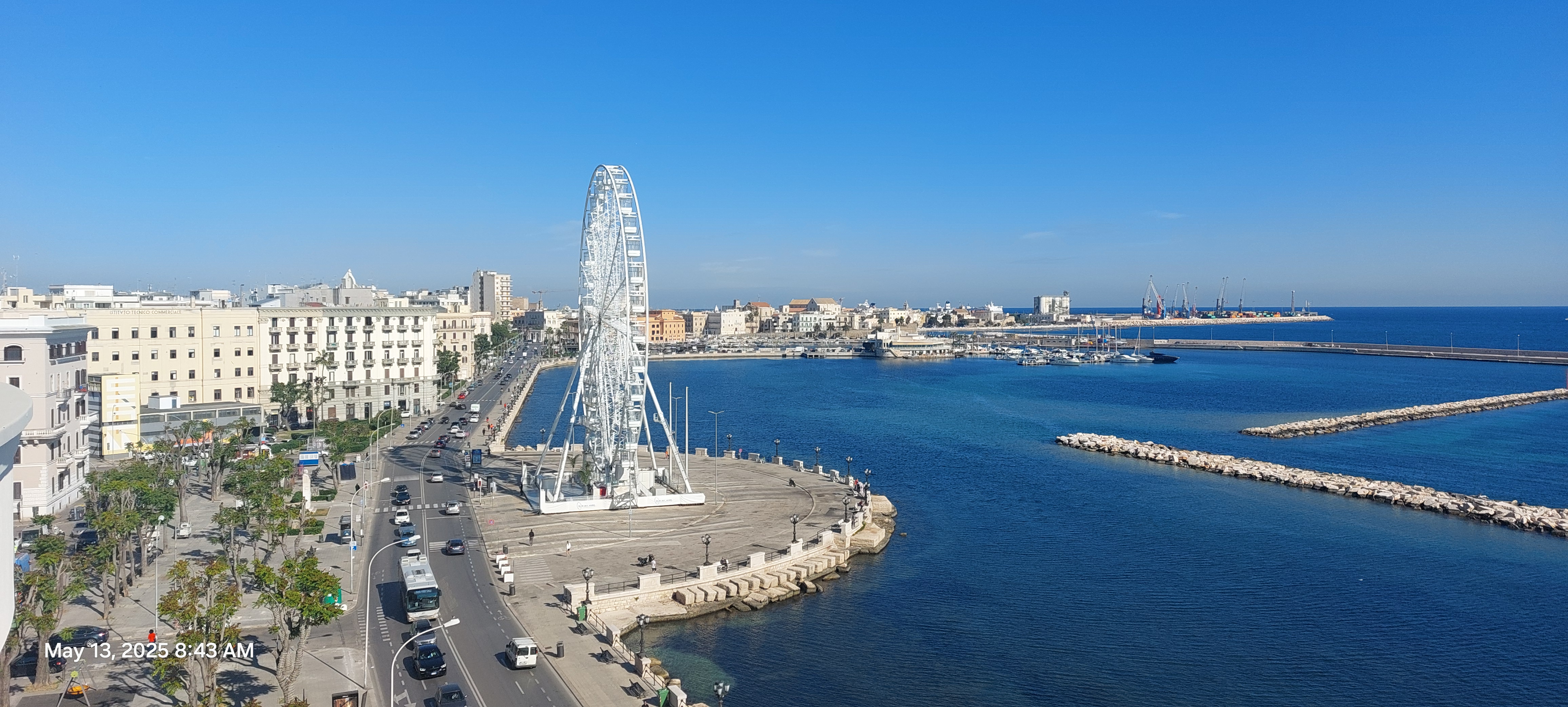
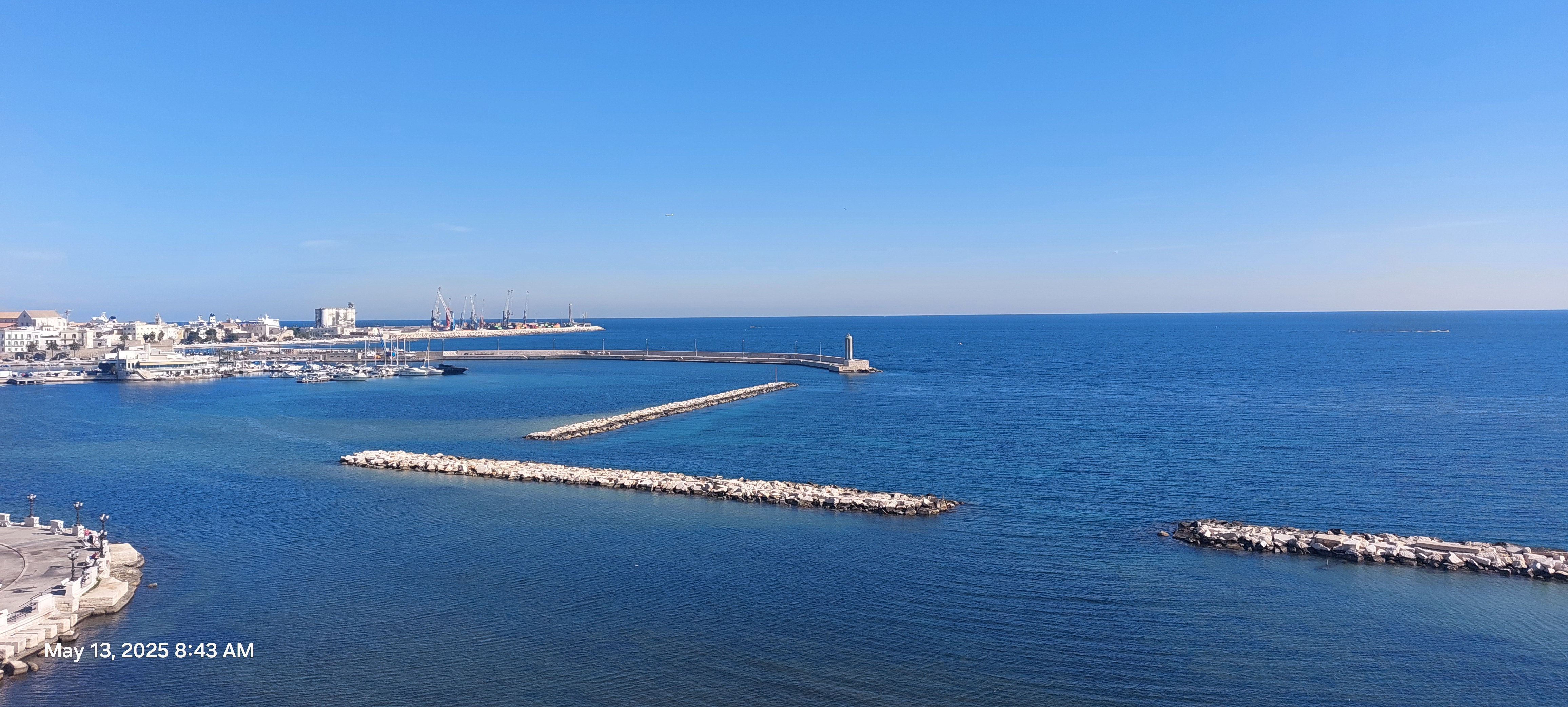
I chose to reserve a king room with a balcony view of the Adriatic at the Grande Albergo delle Nazioni. I had expected warm temperatures in Italy’s far south in mid-May so I booked a hotel with a pool, but highs were in the mid-60s to low 70s farenheit all week. Thanks to a chilly breeze off the Adriatic and cold nights, I never dipped in the pool or enjoyed a nightcap on the balcony. Still, it was great to wake every morning to a bright sun on blue water with a stunning view of the lungomare and the Adriatic.
The room décor appears not to have changed since the Eisenhower administration, but the bed was comfortable with plenty of closet space and a safe. I almost never use hotel fridge-bars, packing my own scotch, and buying a liter of water locally to supplement the two small courtesy bottles. The multilingual staff at the reception desk were pleasant and helpful, with no need for a separate concierge.


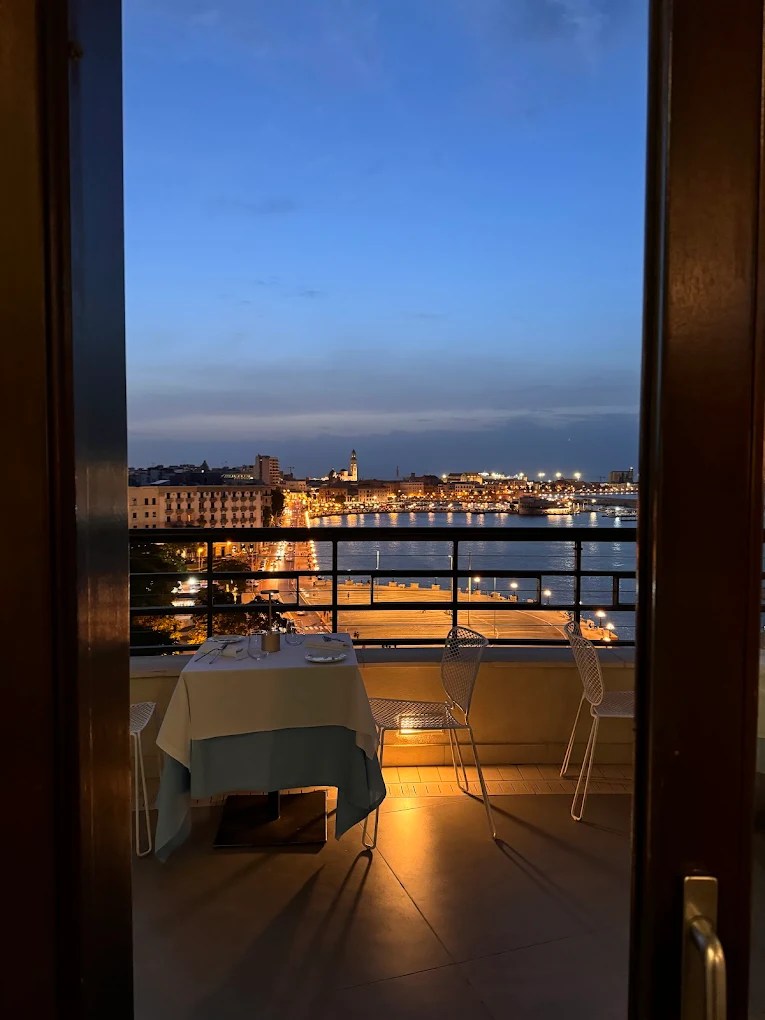
I love a relaxed breakfast when traveling, and the hotel buffet was lavish with hot and cold dishes, my favorite cold cuts, and a huge pastry table with temptations I don’t allow myself at home. At night, the breakfast salon becomes a gourmet restaurant, Polvere di Stelle (Star Dust), reservation required. I was pleased to be able to get a table for dinner and not have to leave the hotel so soon after arrival. The restaurant is upscale with a pricey menu, but not as high-priced as I found in the Lake District. Hotel guests enjoy a free cocktail and a ten percent discount on meals. An Aperol Spritz or a glass of Prosecco cost only €8. Wine by the bottle is not an option when I am traveling solo so I didn’t bother to peruse the wine list. Food and service were superb and a grilled seafood platter was a delightful introduction to the region’s specialty.

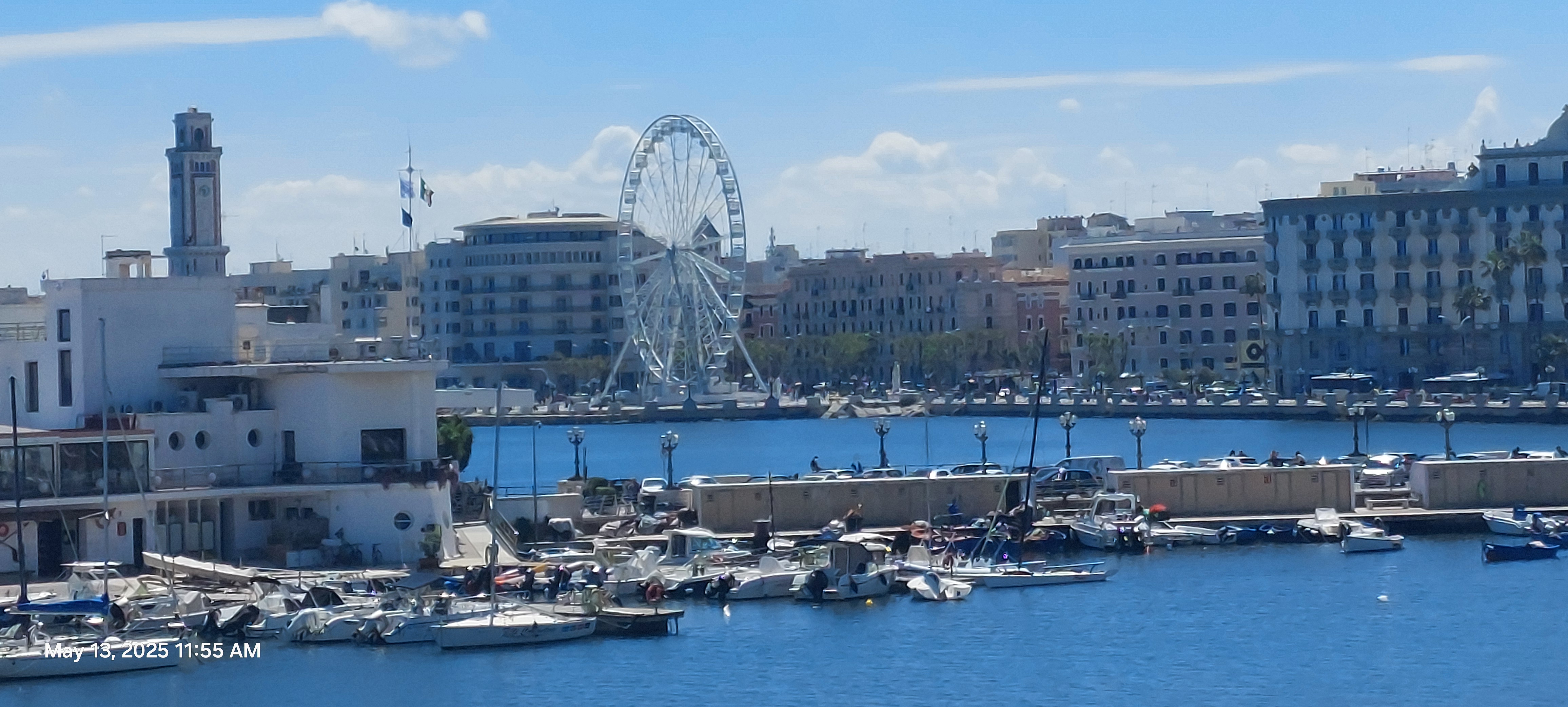
The main attraction in the city is Bari Vecchia, the old Bari, where ancient walls surround the medieval historic center. I could walk there in about 12 minutes but took much longer enjoying the great views of the Adriatic and snapping photos along the lungomare, one of the longest and most beautiful promenades in Italy.



I had printed my own guidebook, copy/pasting from articles on the web and studied the section on Bari before setting off. The first day was mostly exploring the quaint narrow streets, not entering the most prominent sites. But I walked right by the archaeological museum so I decided to take a peek. It features some of the vestiges of the many cultures that controlled the city from Greeks to Saracens to Normans to Spaniards, and more, but no single piece grabbed my attention. I had seen Greek ceramics in many other museums, and the uninspiring fragments of other cultures didn’t make the visit very memorable.
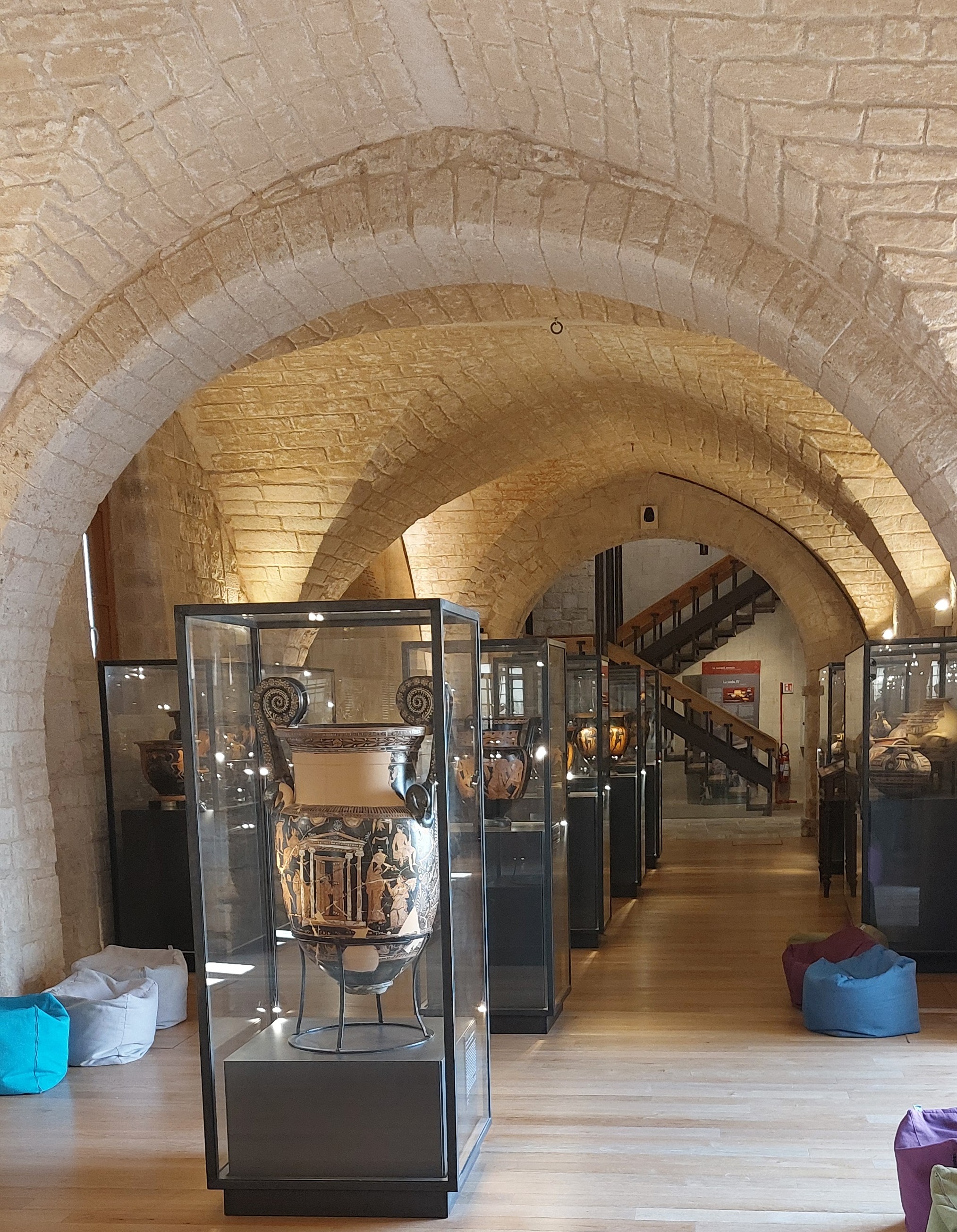
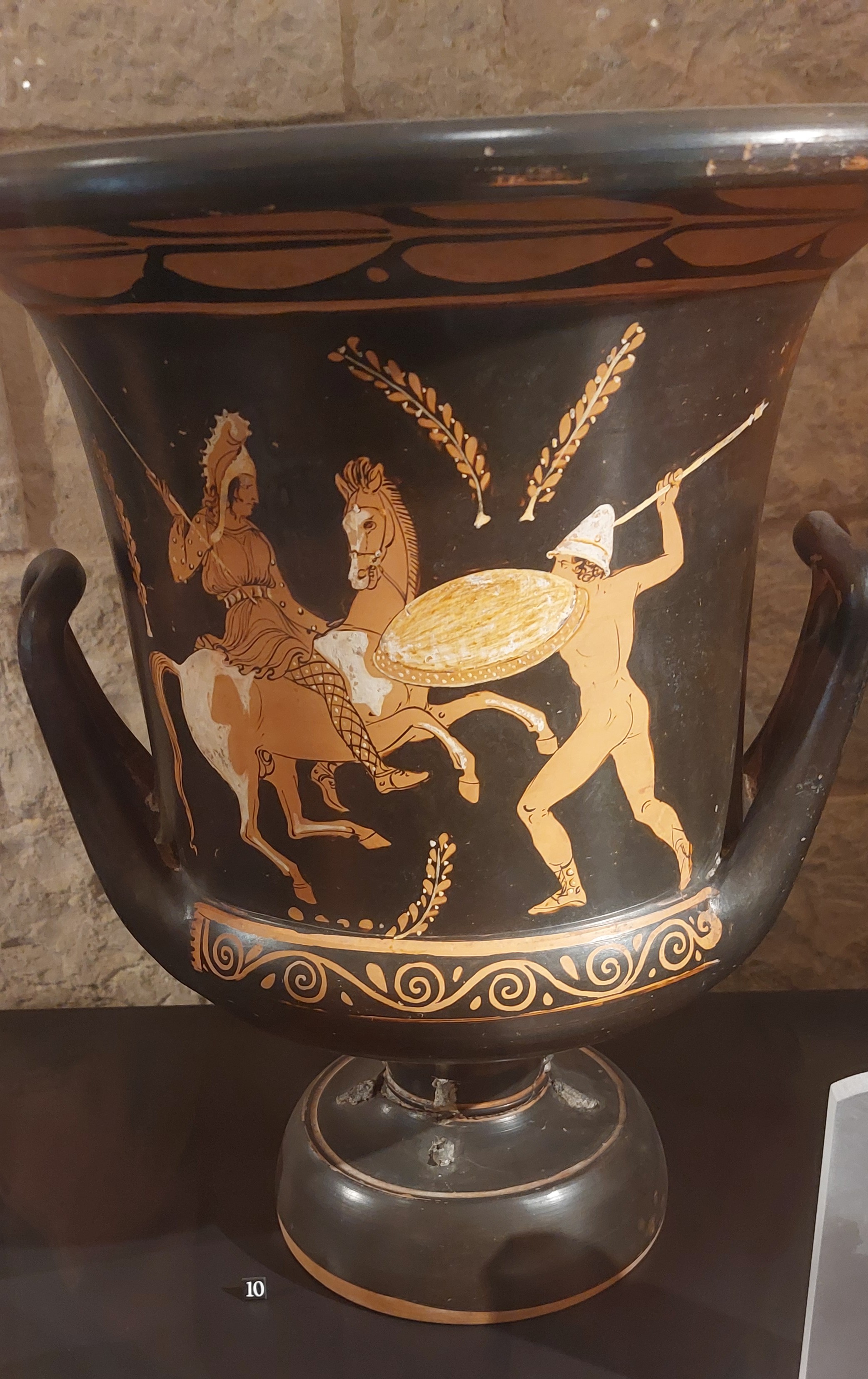
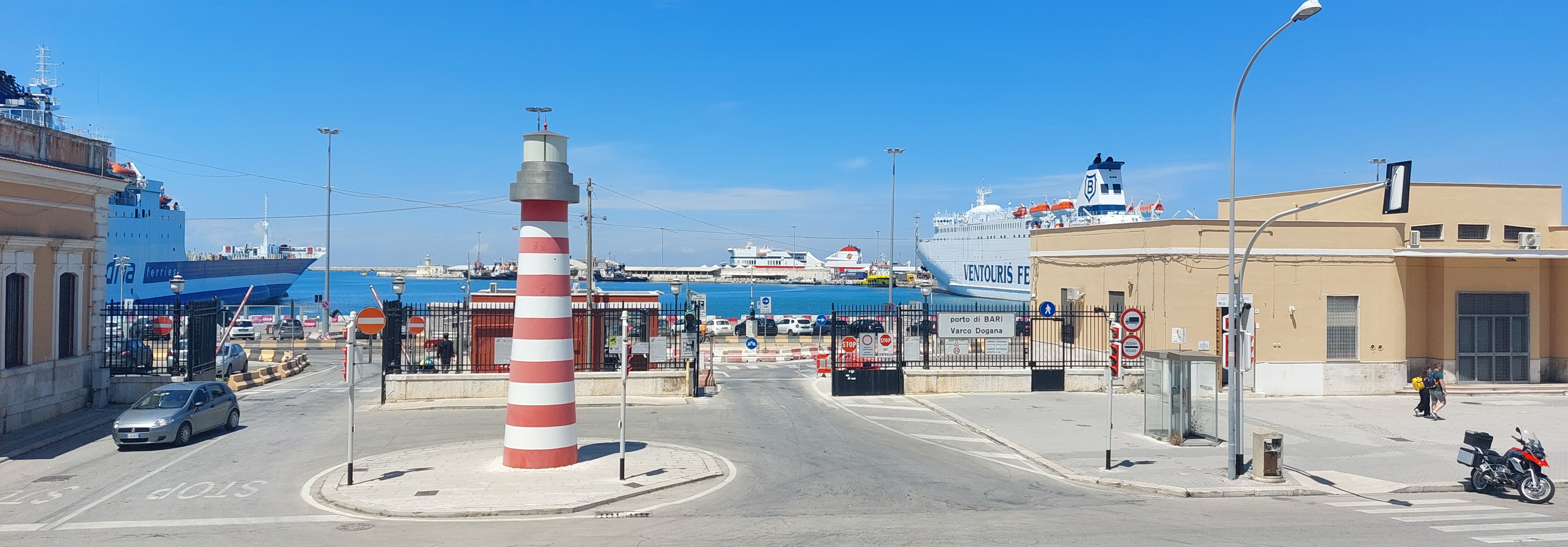
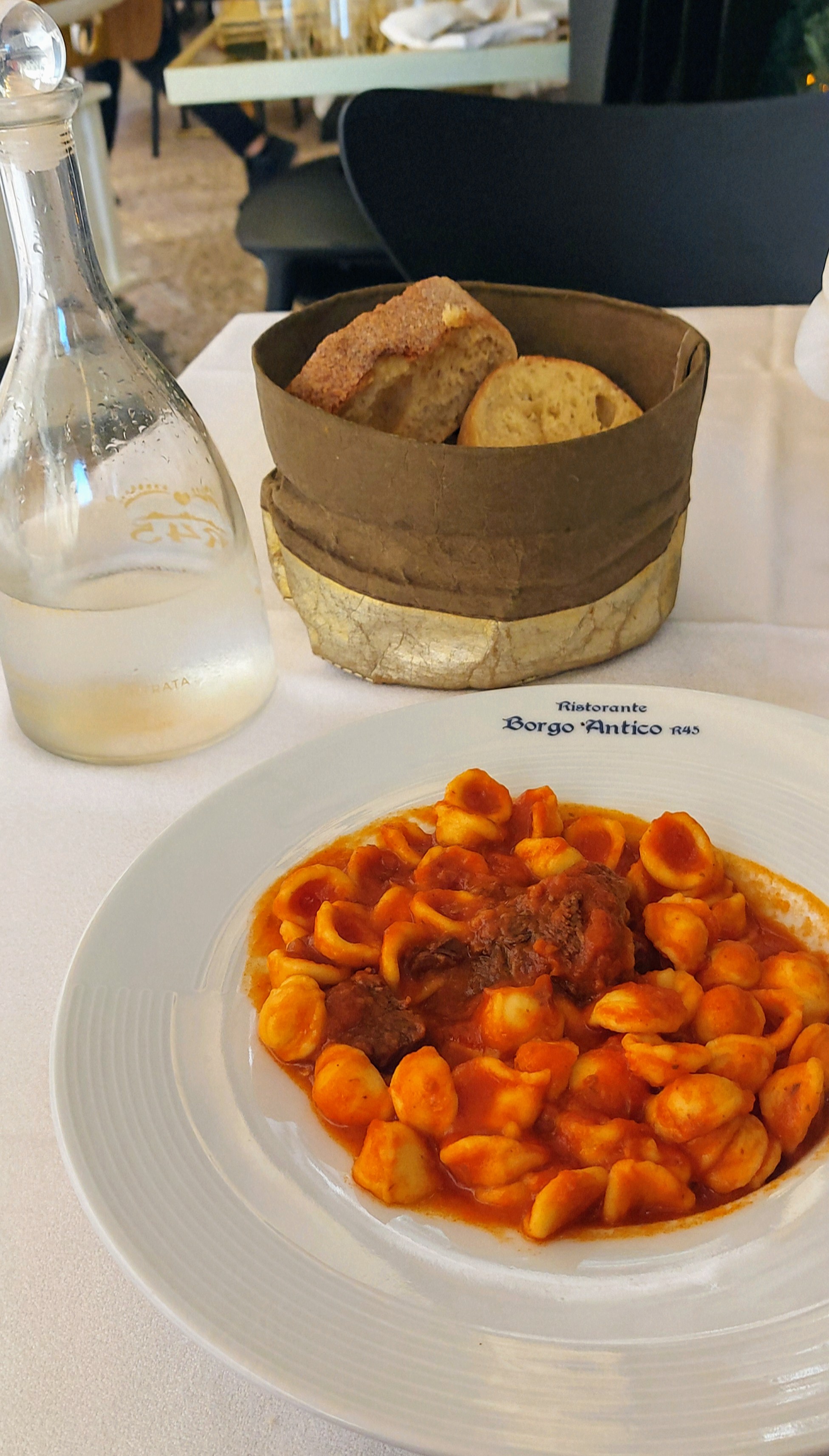
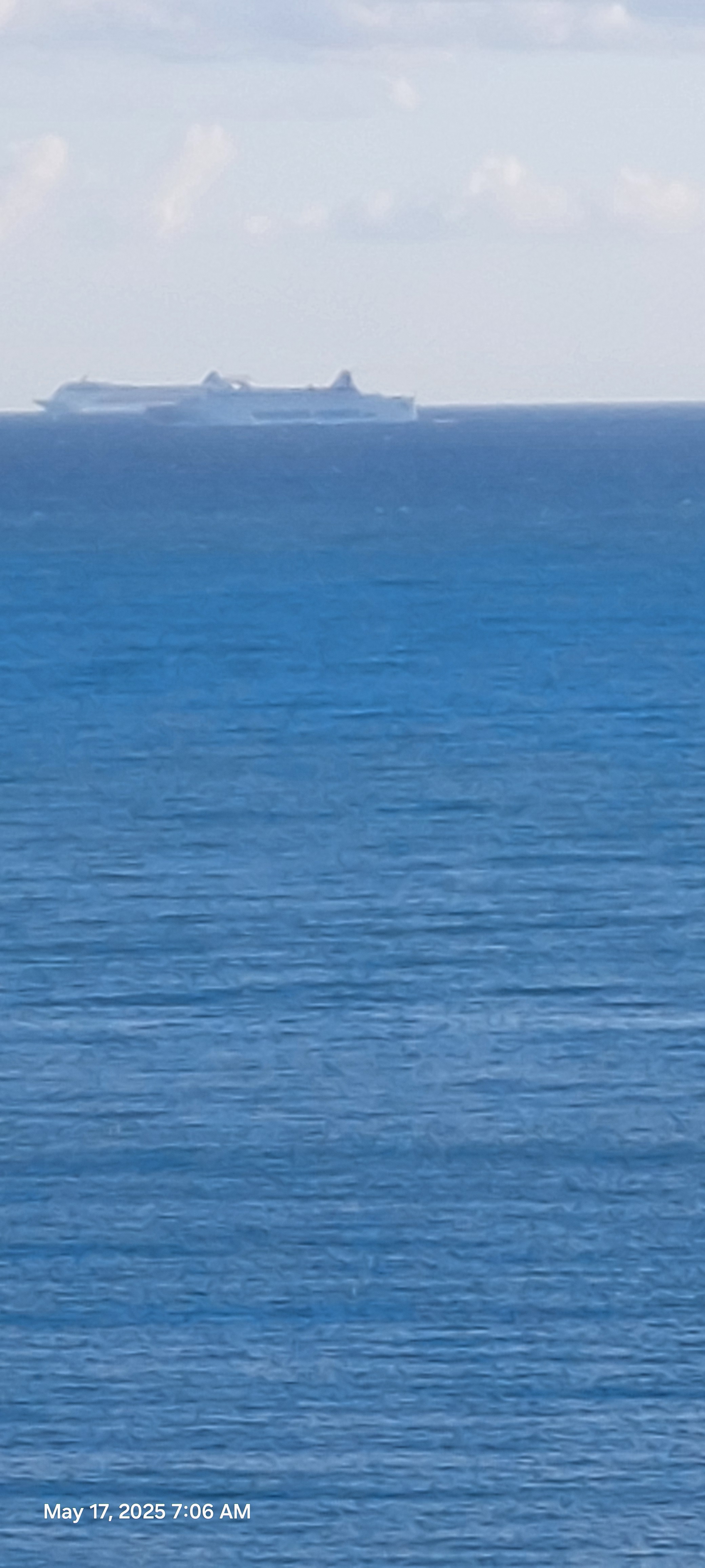
I walked some of the medieval walls, then strolled past the typical ticky-tacky souvenir shops. I didn’t see in the alleyways the nonnas (grandmothers) allegedy making orecchiete (little ears), the traditional pasta favored in the region, though some sources accuse them of displaying store-bought pasta. I walked to the port where I saw huge ferries that crossed east to Greece, Albania, or wherever. The huge cruise ships dock at a different port far enough away that they have to bus excursion groups into the historic center. I saw multiple groups of 35 to 40 people following a flag bearer/guide. I passed scores of side-walk cafes with menus posted in front and chose one with attractive white table cloths and bud vases. Orecchiete on the menu was offered several ways and I chose that with a ragu di Bari. The meat sauce held chunks of beef similar to short ribs in tomato sauce. To me, the pasta was much heavier than any I had tasted elsewhere. But I still had room for my first gelato of the trip, stracciatella. I had read that international chocolate prices have soared, perhaps why the amount of chocolate chips seemed stingy compared to previous tastings. I tested that theory several more times during the trip and concluded that chocolate content has definitely decreased, at least in this region.

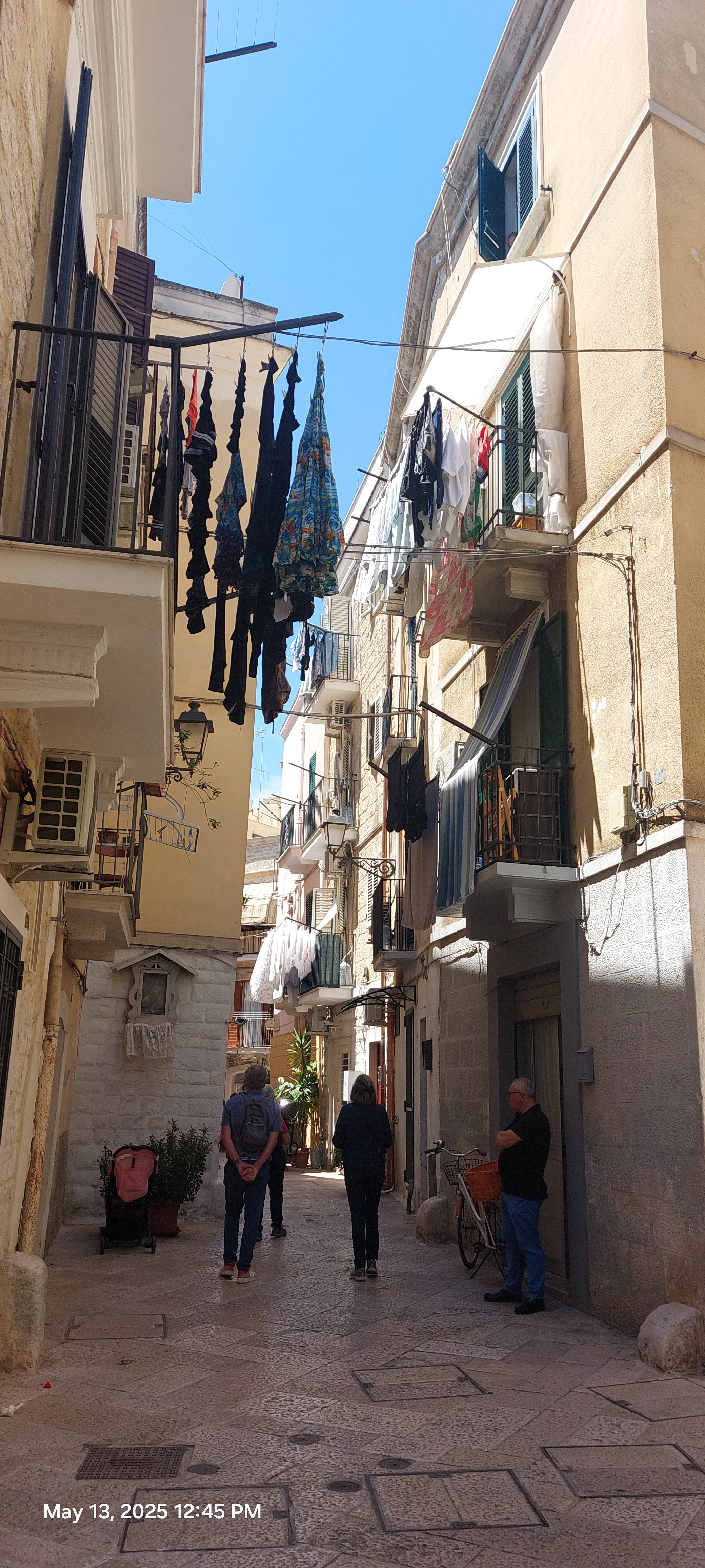
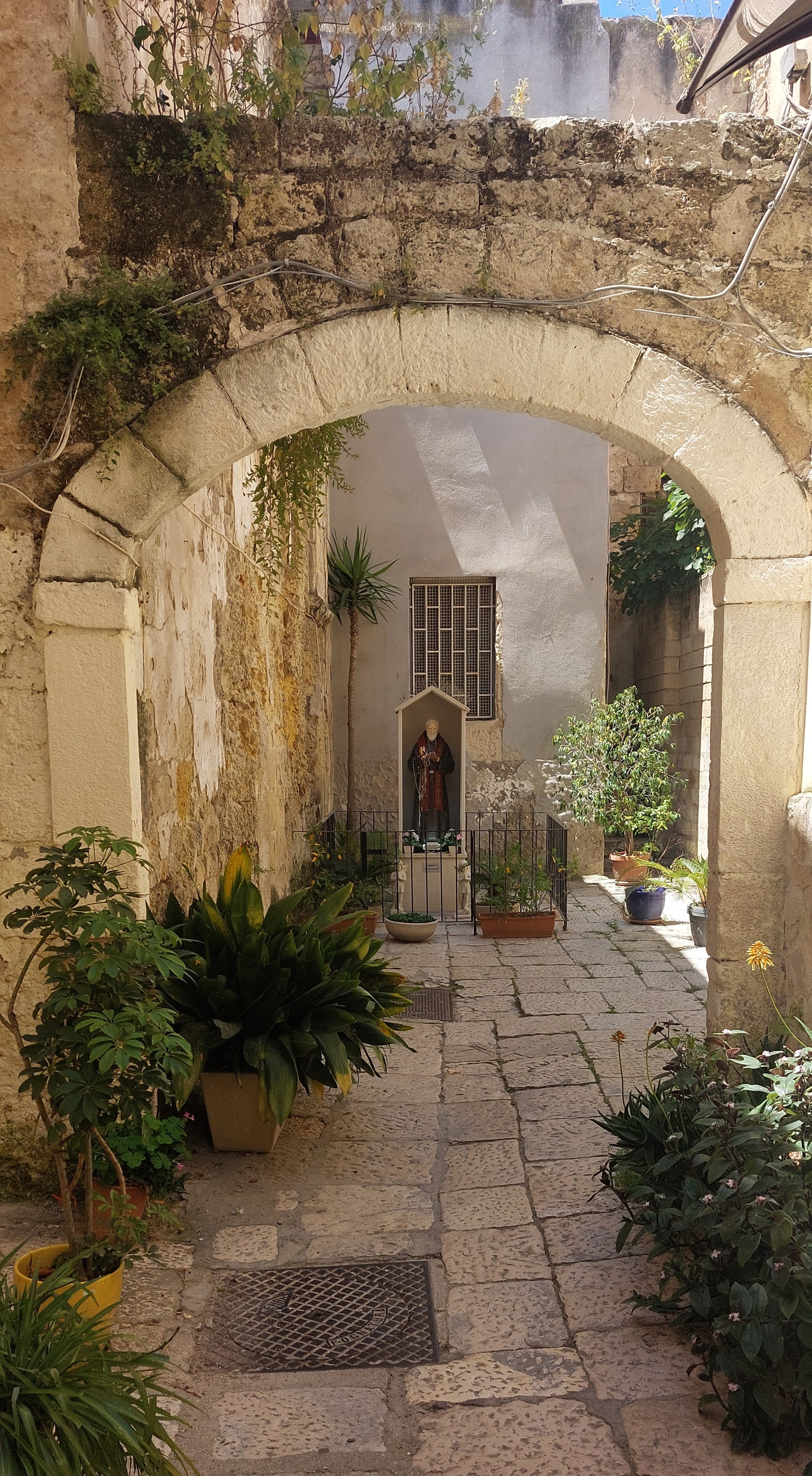


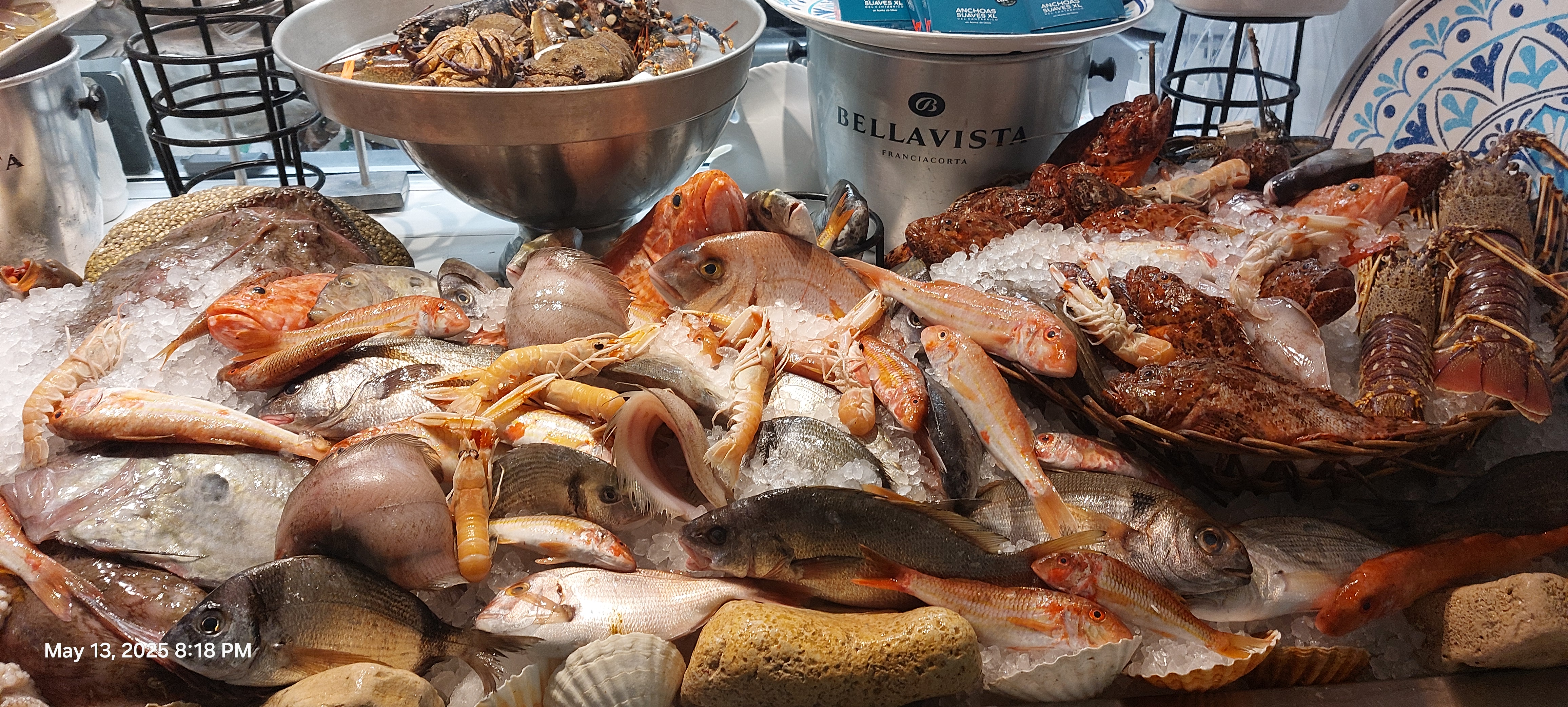
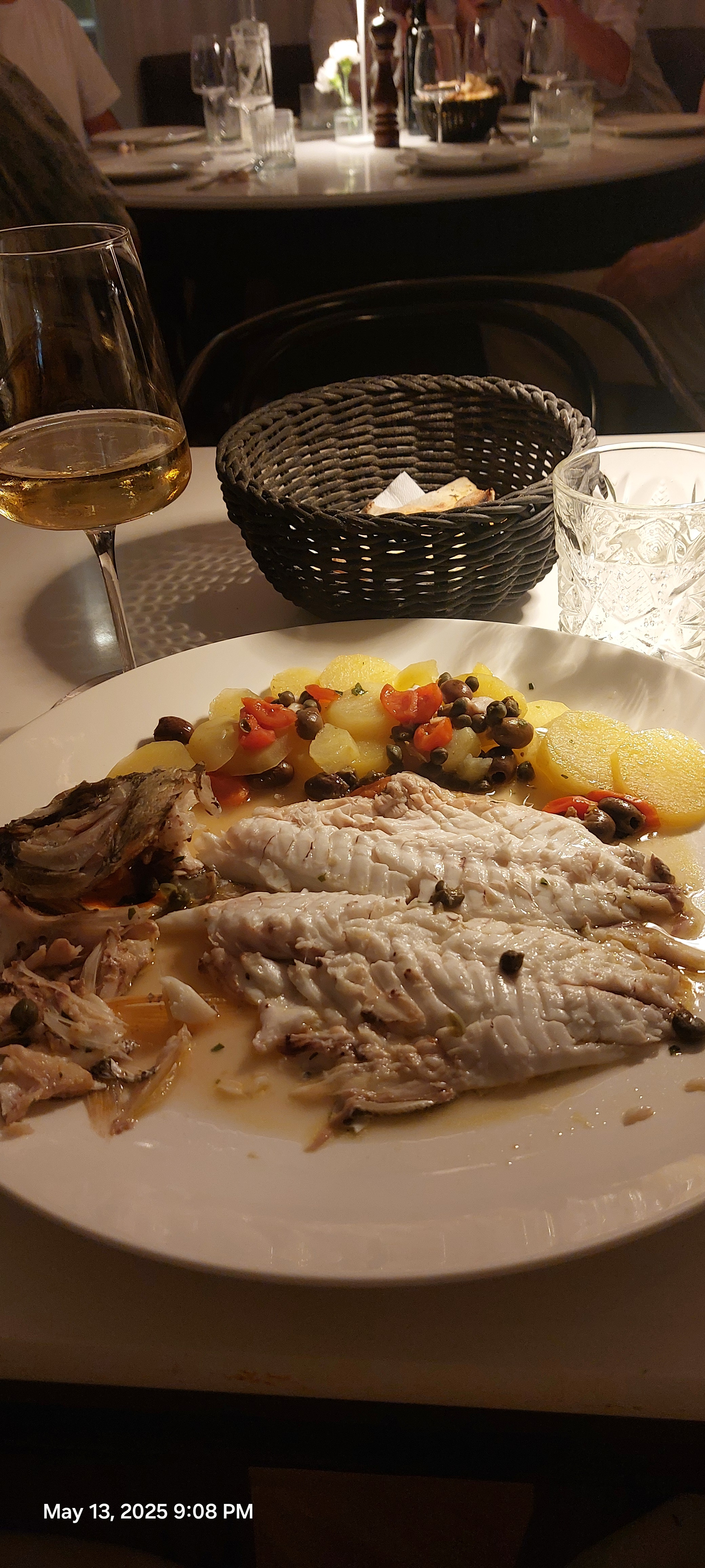
For me, jet lag obligates a siesta after lunch, then time to catch up on world news, transfer photos from the cell to the laptop, and record notes to remember the photos by. I would have enjoyed the pool but the chilly wind deflated the temptation. I didn’t care to take taxis to restaurants outside the hotel district and preferred to stroll around reading supper menus posted outdoors. Within a ten-minute walk along the lungomare, I spotted an elegant restaurant, La Battigia (Water’s Edge) with a phenomenal display of the day’s Adriatic harvest. To start, I chose a mixed platter of octopus, calamari, and shrimp, then a secondo of seabass baked in a wood-fired over, filleted at the table. Between courses, the waiter surprised me with a free bowl of calamari in tomato sauce so I ended up with a heavier dinner than expected. No room for a dolce. All restaurants in the region charged 2 to 3 euros for a small basket of dry bread, although one could ask for butter or olive oil. La Battigia’s bill included a €4 coperto for a basket of delicious focaccia from the wood-fired oven. I was not unhappy with the final bill due to the value for price, and the no tipping policy on restaurant bills in Italy is a delight.

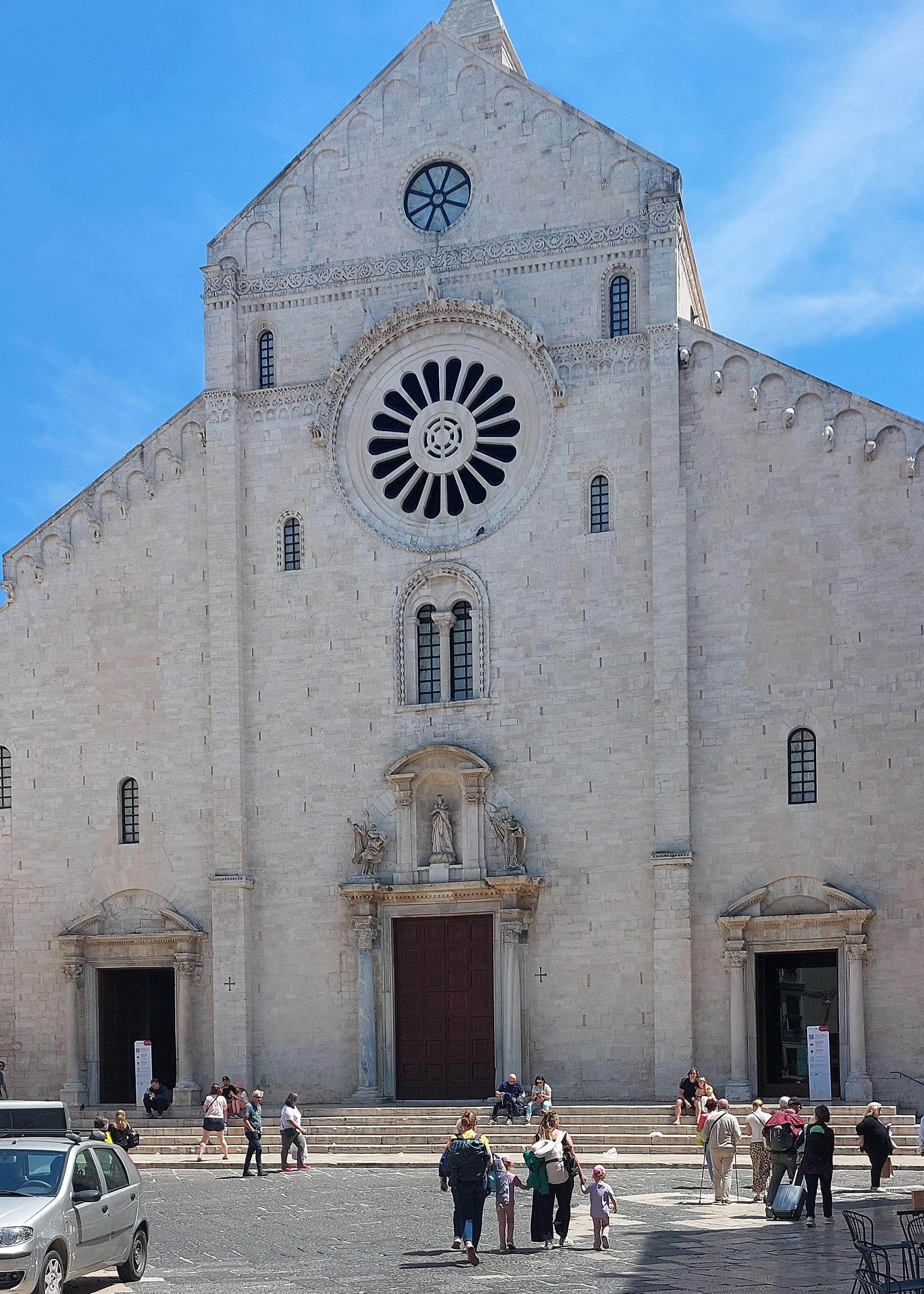
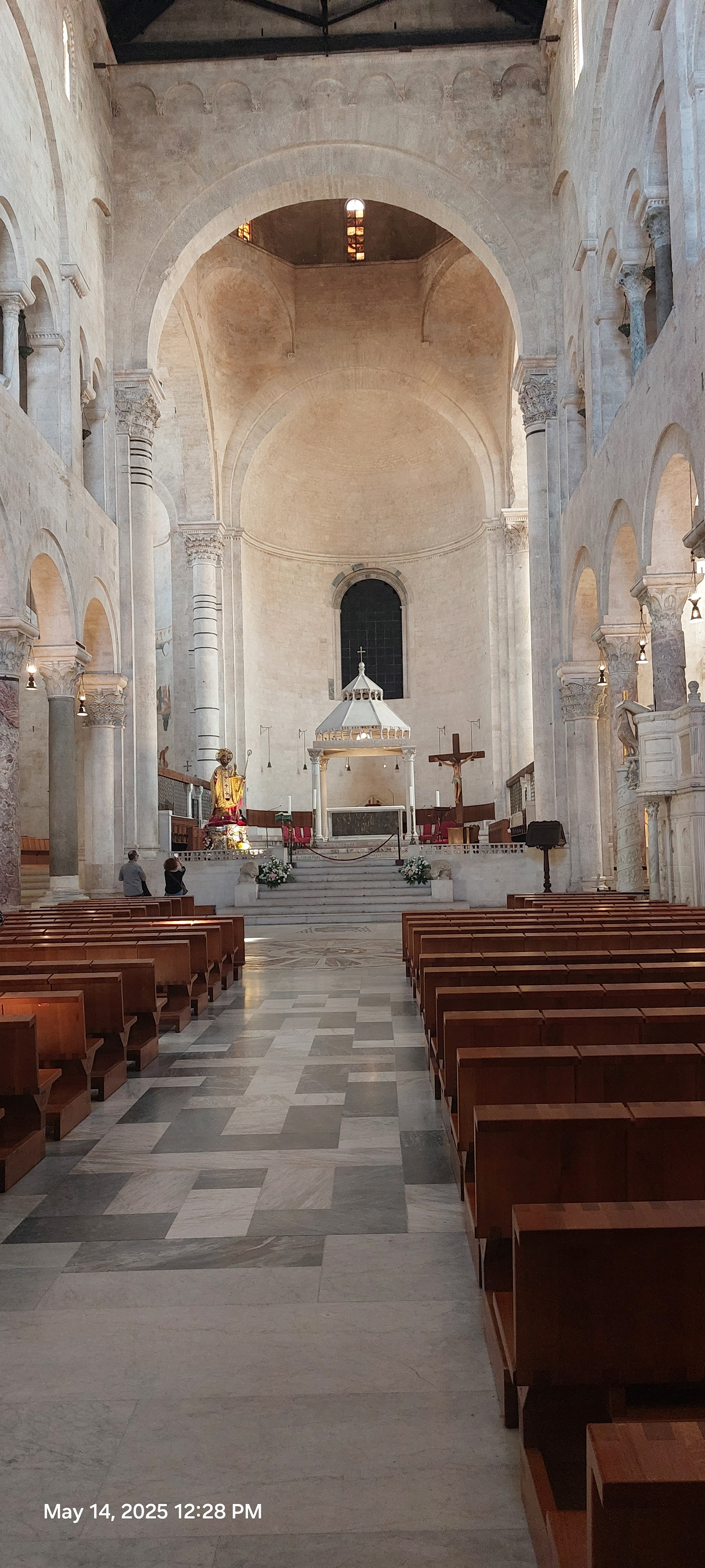
After another sumptuous buffet breakfast the next day, I returned to Barri Vecchia with plans to explore more of labyrinthian streets and alleyways, and enter some of the recommended places. All the tour agendas I had read included the Norman-Swabian castle and two churches, the Duomo (cathedral) and the Basilica of San Nicola, dedicated to Bari’s patron saint whose legend eventually merged into Santa Claus. Reminded of the excruciating scores of stairways I once endured on castles along the Rhine, I just admired the exterior of the castle and sought the duomo. As European cathedrals go, this was not worth the €9 entrance fee, even with the mediocre museum included. After that, my tired old legs led me skip the Basilica San Nicola, imagining that Saint Nick would not regard the snub as a peccato mortale. I walked back to the hotel, stopping for a slice of pizza (it’s too thick in Puglia for my taste), and enjoyed my practice of siesta, photo-editing, and note taking before dinner. I enjoyed La Battigia so much the previous night I decided to return, ordering a plate of fried baby-squid followed by a pasta with langoustines.
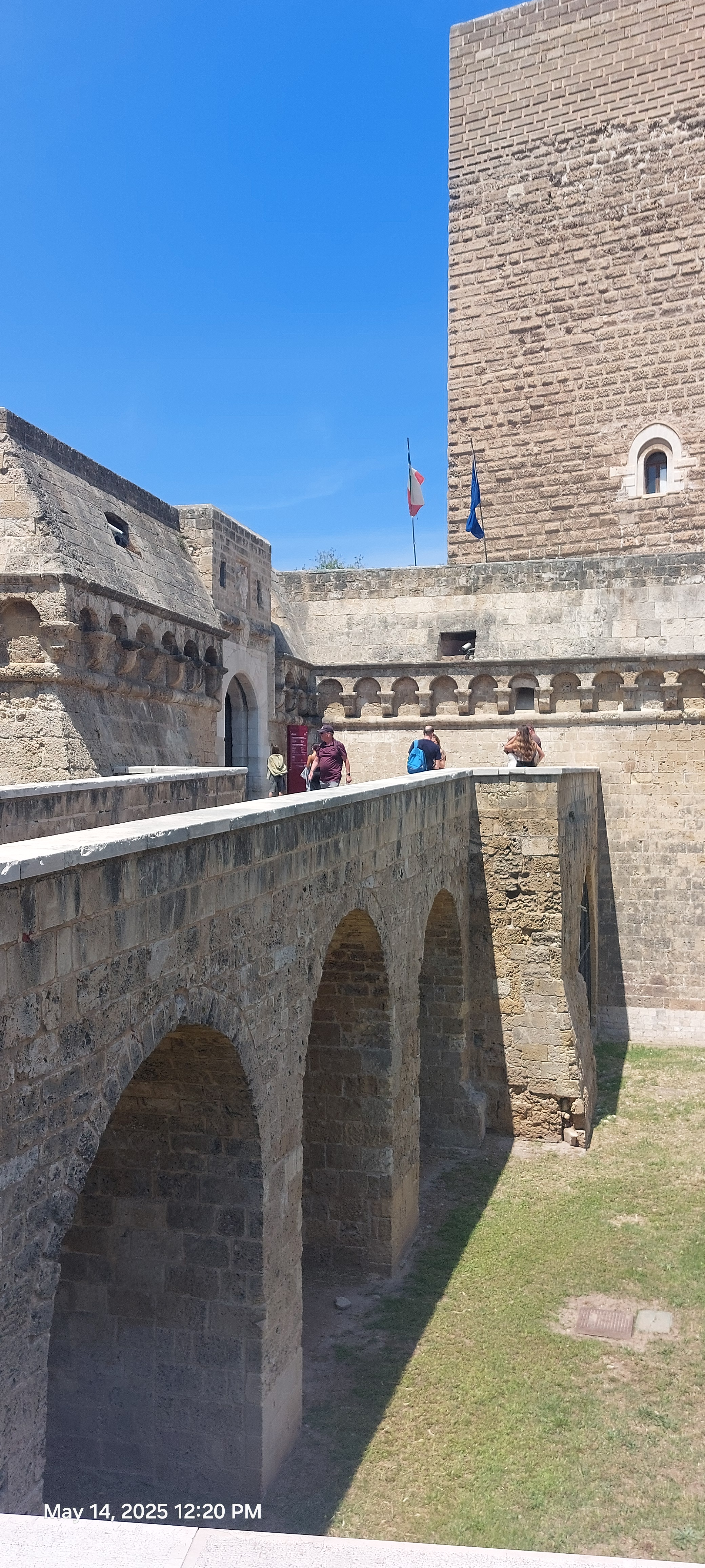
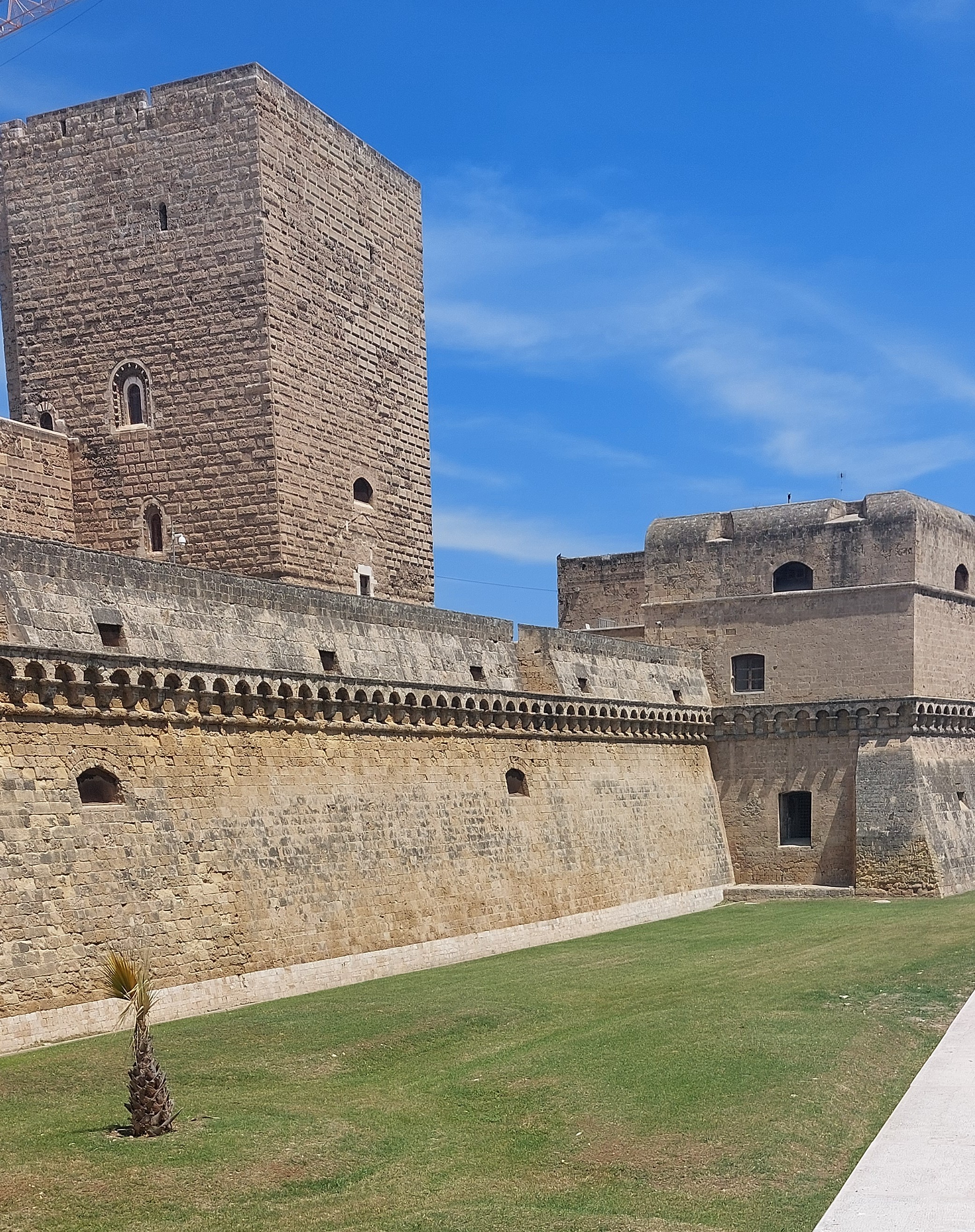
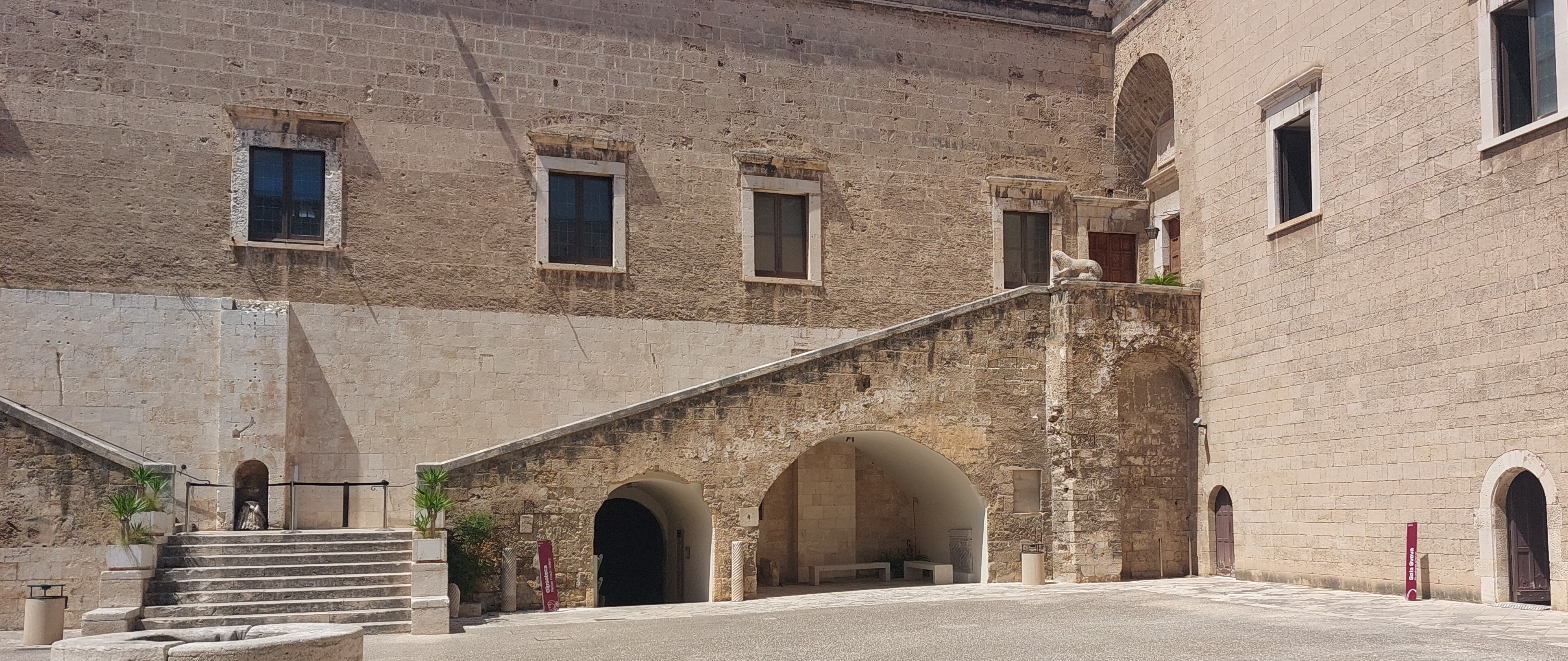
My sight-seeing interest had waned by the next day, with nothing compelling on the agenda. Against my better judgment, I returned to the Norman-Swabian castle, “one of the icons of Apulia,” built by Norman King Roger II about 1132. Over centuries it was destroyed and rebuilt by other invaders, finally ending up in the hands of the King of Sicily. Later it became a prison, a military barracks, and now just an exhibition venue. (Wikipedia). After paying the €10 entrance fee, the clerk told me that only the first floor was open, the upper floor closed for renovations. No value for price here, although I wasn’t disappointed at skipping staircases. At least the castle provided one of the few public toilets in the historic center. My attention span diminishing, I was thinking of giving Saint Nick a chance but thought better of it in favor of an early lunch and restful afternoon. My usual intellectual curiosity was waning, and I decided five days in Bari were too many. I did enjoy a return to the hotel’s top-floor restaurant at night where I splurged on a small lobster appetizer and a baked whole seabass.
I could have booked one of the expensive day trips sold on Viator, but I had already reserved two nights in the most popular of those destinations for the next day. The last day in Bari was the only overcast day with occasional showers and a stiff wind at times. I decided to do “retail therapy.” I love the phrase even if I am not much of a shopper. The receptionist circled an area on the tourist map starting at Via Cavour, a ten-minute walk from the hotel in the “new city.” I did enjoy looking in huge display windows of both casual and Gucci-class stores. The formal men’s suits and the gorgeous women’s gowns showed off the Italian flair but, other than a wedding or special event, I can’t imagine where one could show off such beautiful outfits. I seldom get a chance to wear even a sport coat in tropical Cuernavaca.

POLIGNANO A MARE
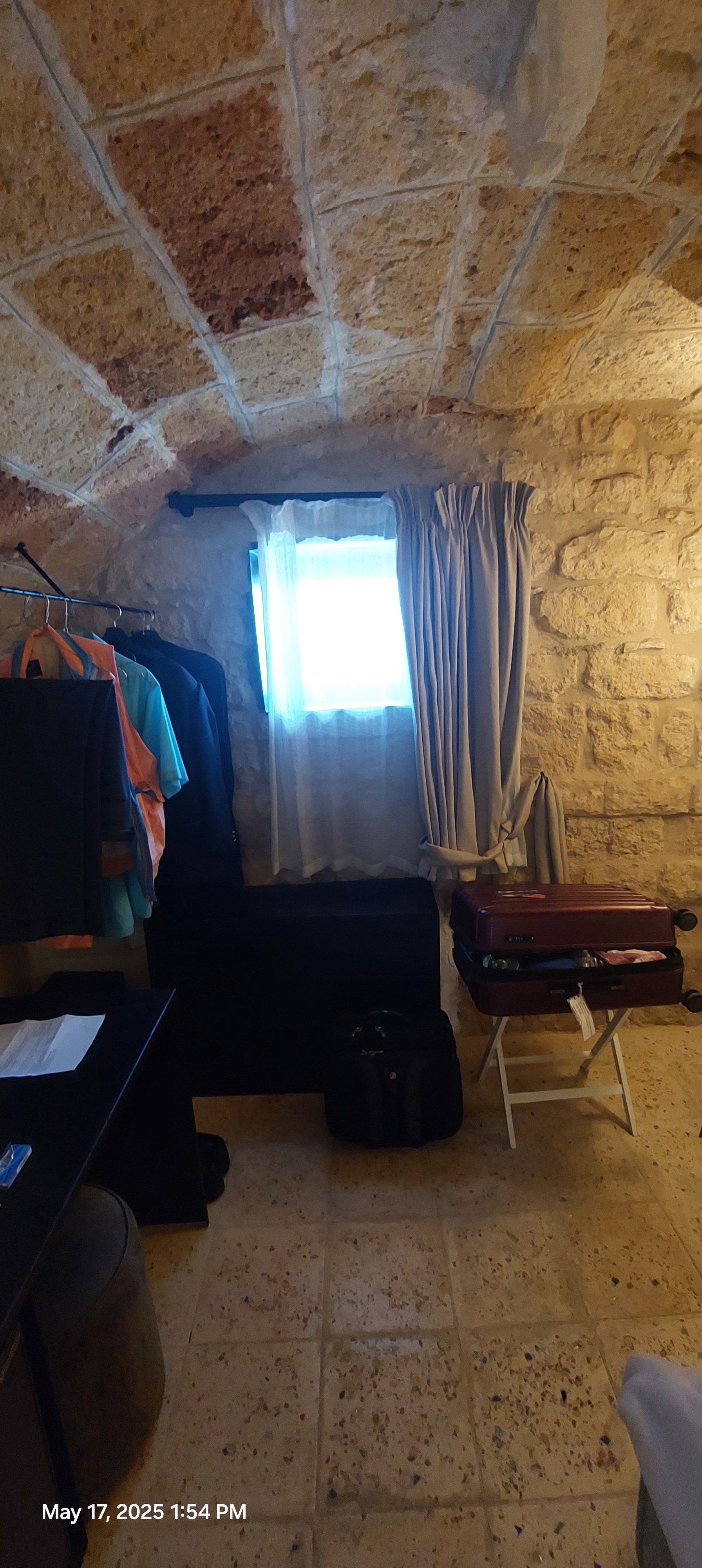
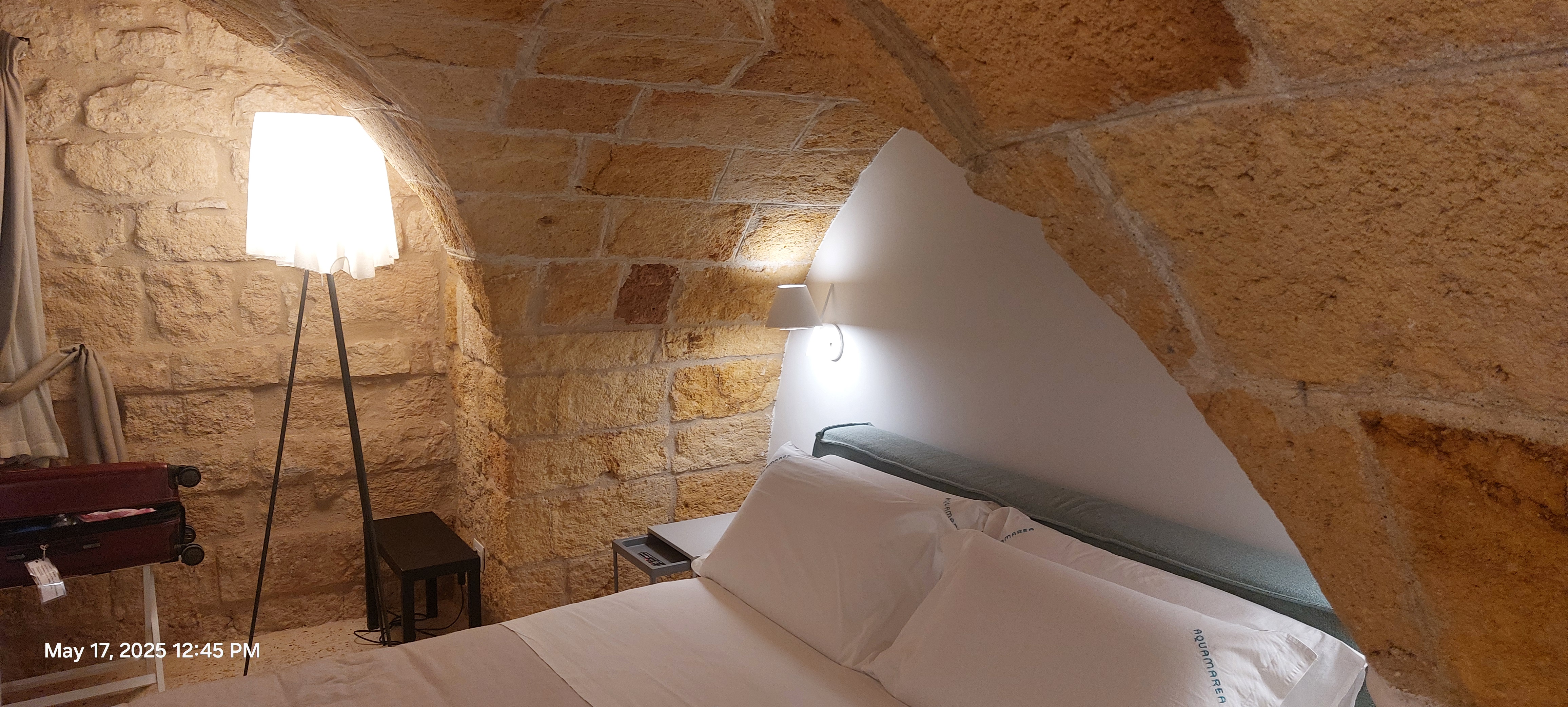
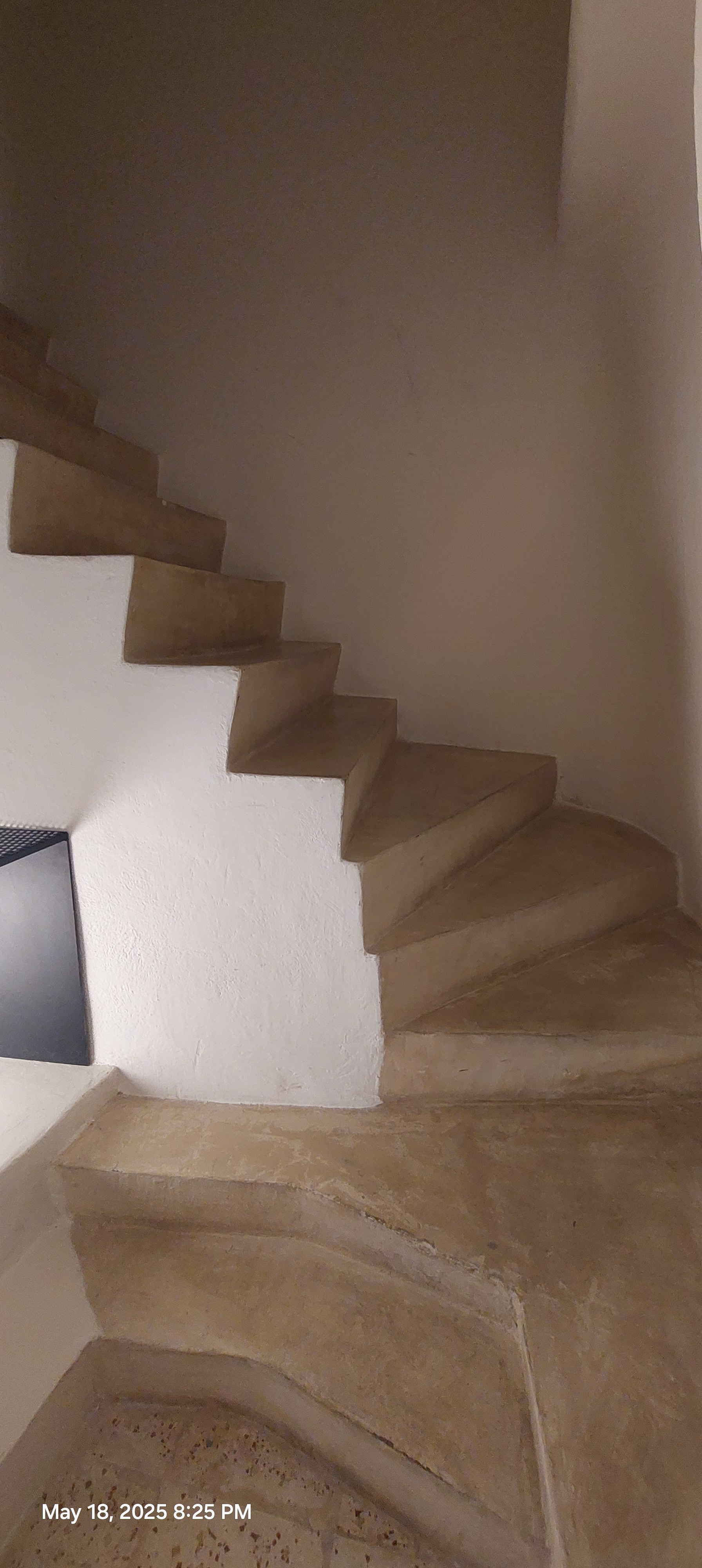
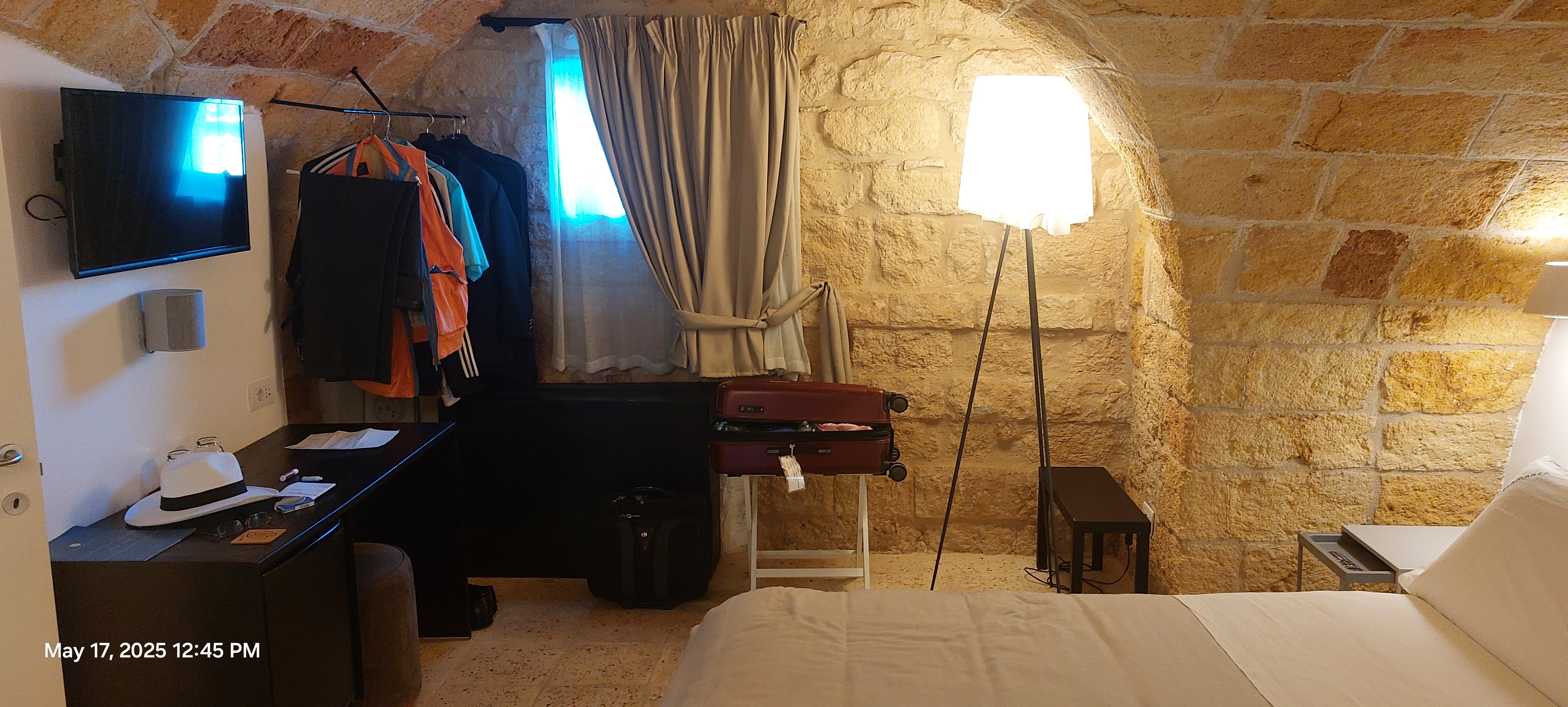
In my web search for “what to do” in Bari, all the agencies promoted a day trip to picturesque Polignano a Mare, so I had booked two nights there, thinking you can’t know a city on a day trip. The hotel arranged a driver for the pleasant ride of 35 minutes, more enjoyable for me since it was my first long conversation in Italian with loquacious driver Gerry (Geronimo). The hotel I reserved, Aquamarea, i,s located within the walled city of narrow streets, off limits to cars, so Gerry phoned reception to get arrival instructions to a nearby piazza. A hotel staff member, Cristiana, and another woman led me from the piazza to the hotel and helped with the luggage. (Wheels don’t work well on cobbled streets). The description of Aquamarea on Booking.com did not say there were only four rooms, nor was I aware that the room I booked was down a staircase into a cellar. I had read descriptions of so many hotels before booking, I neglected to look at all the photos or I would have seen the stairway and other photos that would have concerned me. My “deluxe” room might be a charming grotto to some; for me it was a claustrophobic cave. The narrow staircase had a railing only part way and, as an octogenarian, I am wary of falls that have had drastic consequences for several friends. The “sea view” in the list of amenities was a small window about two feet square, the only natural light in the room, and you had to go right up to it and strain to get a partial view of the water. Due to my crestfallen reaction and the upper rooms occupied, Cristiana took me to see a spacious room in a neighboring hotel for 200 euros more, or she said I could have a room for the same price in another hotel, “not nearby.” I decided to swallow the disappointment for two nights and later regretted the decision.
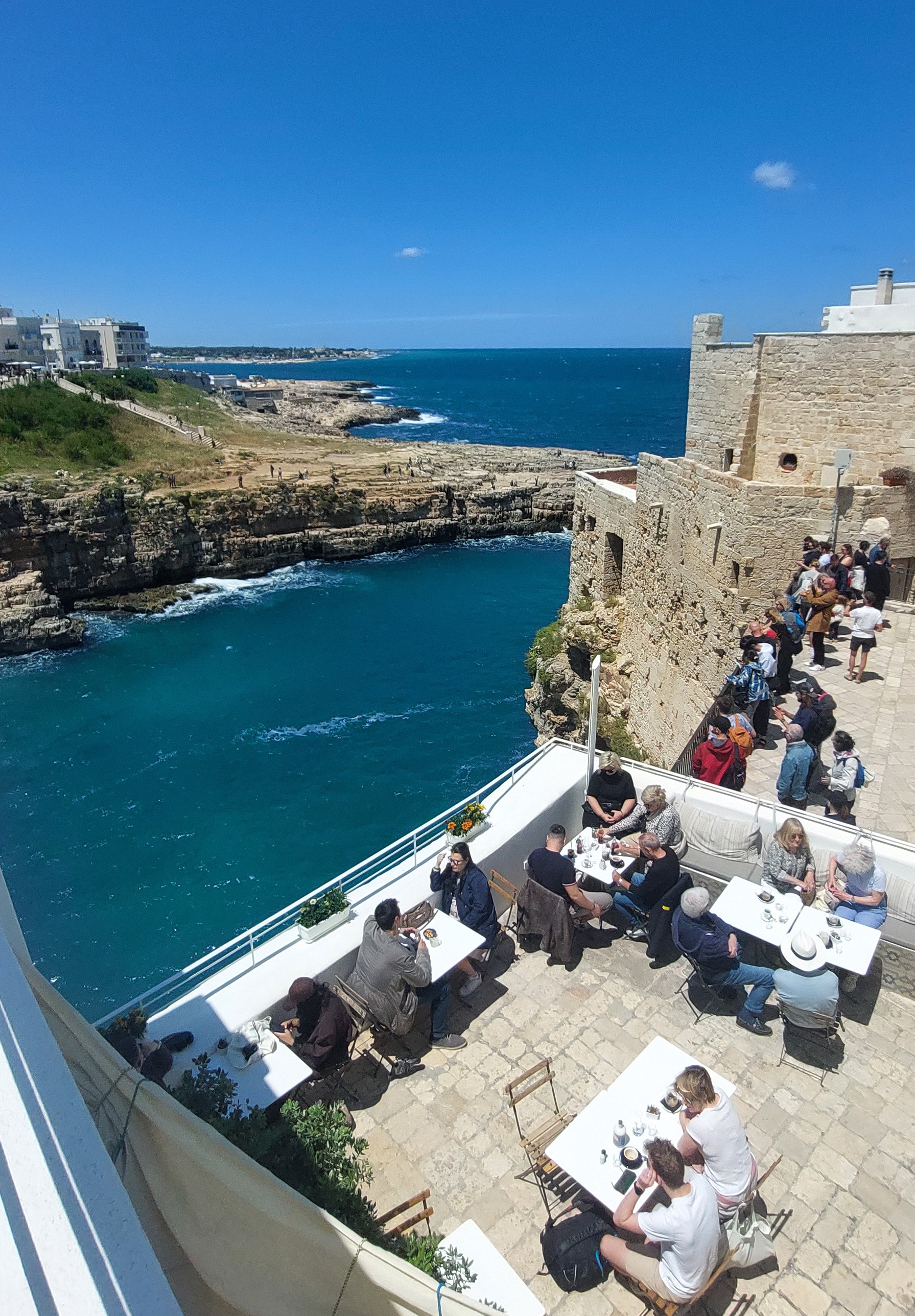
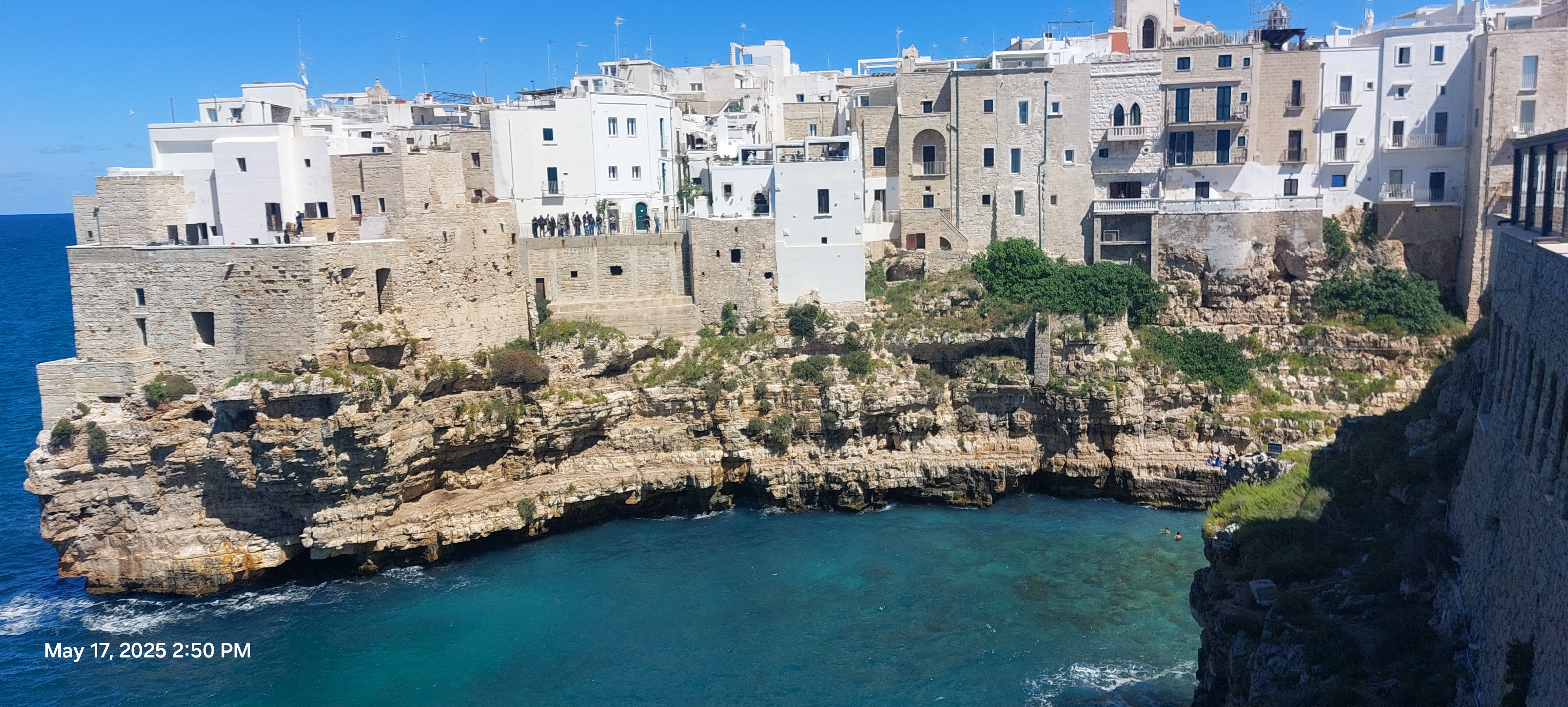
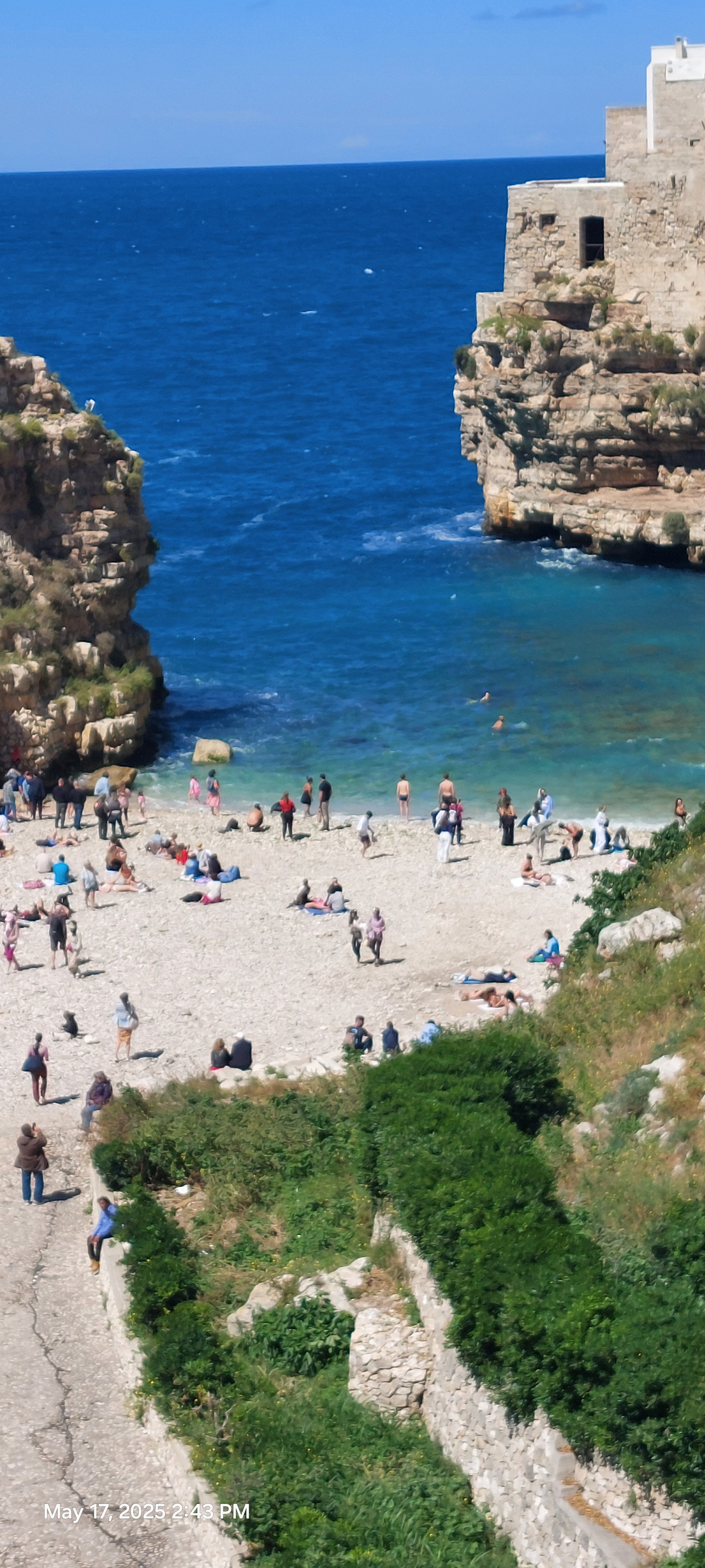
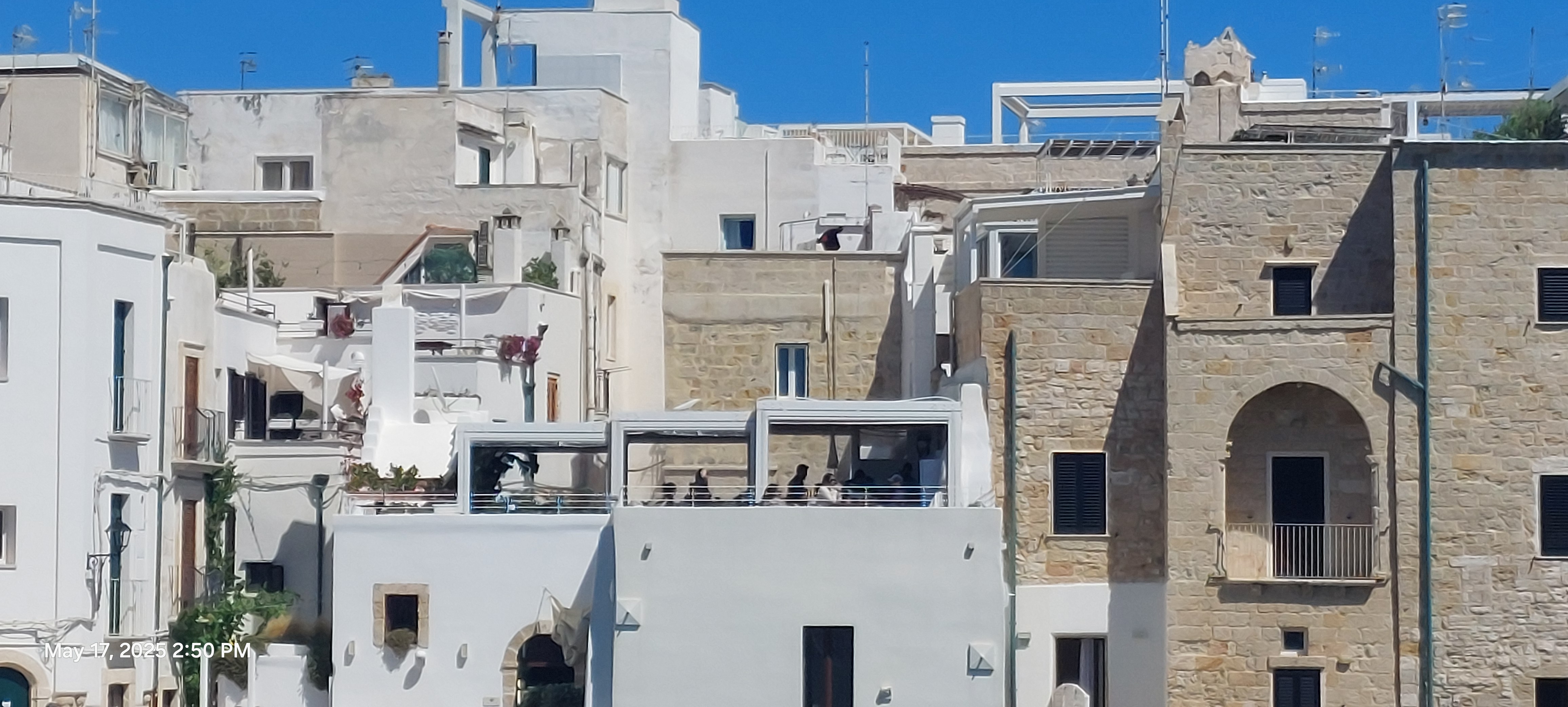
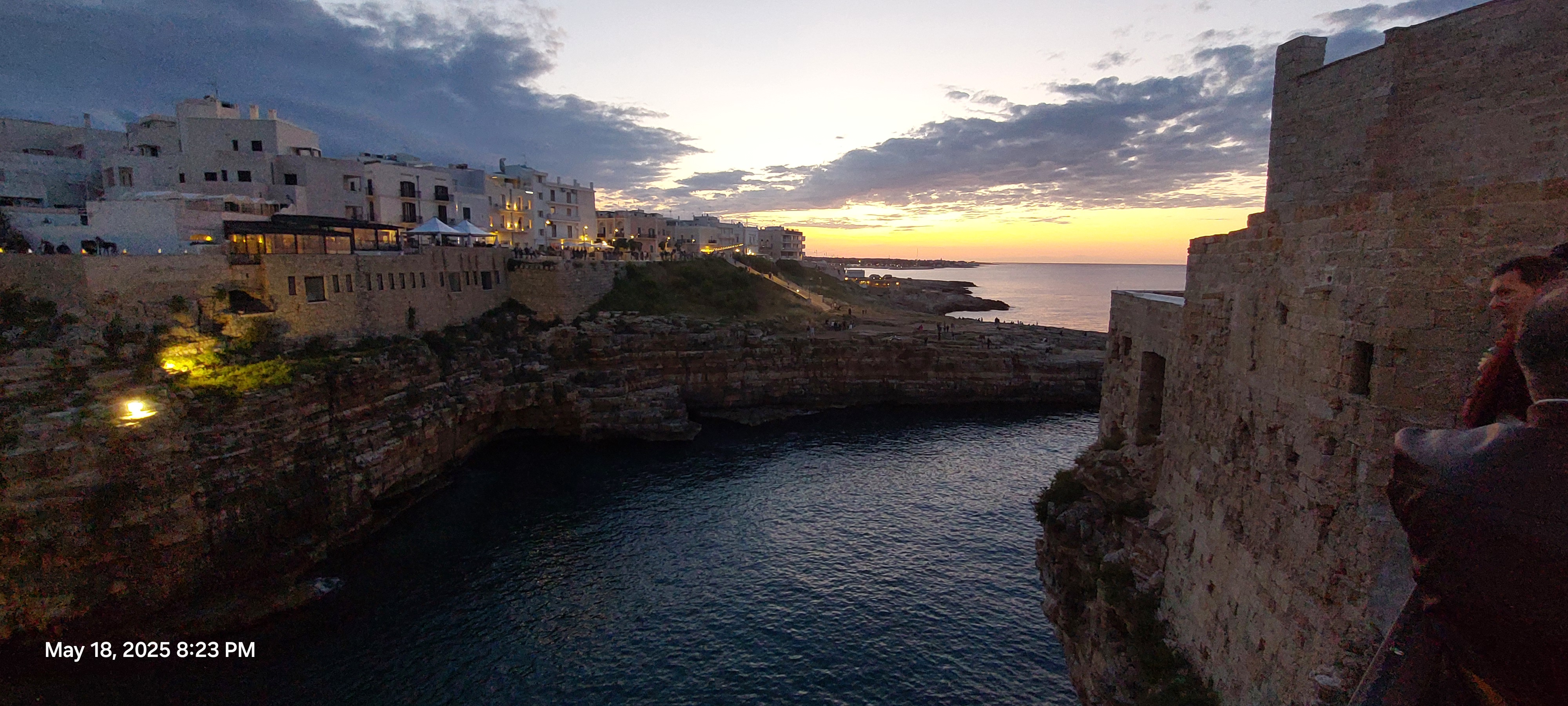
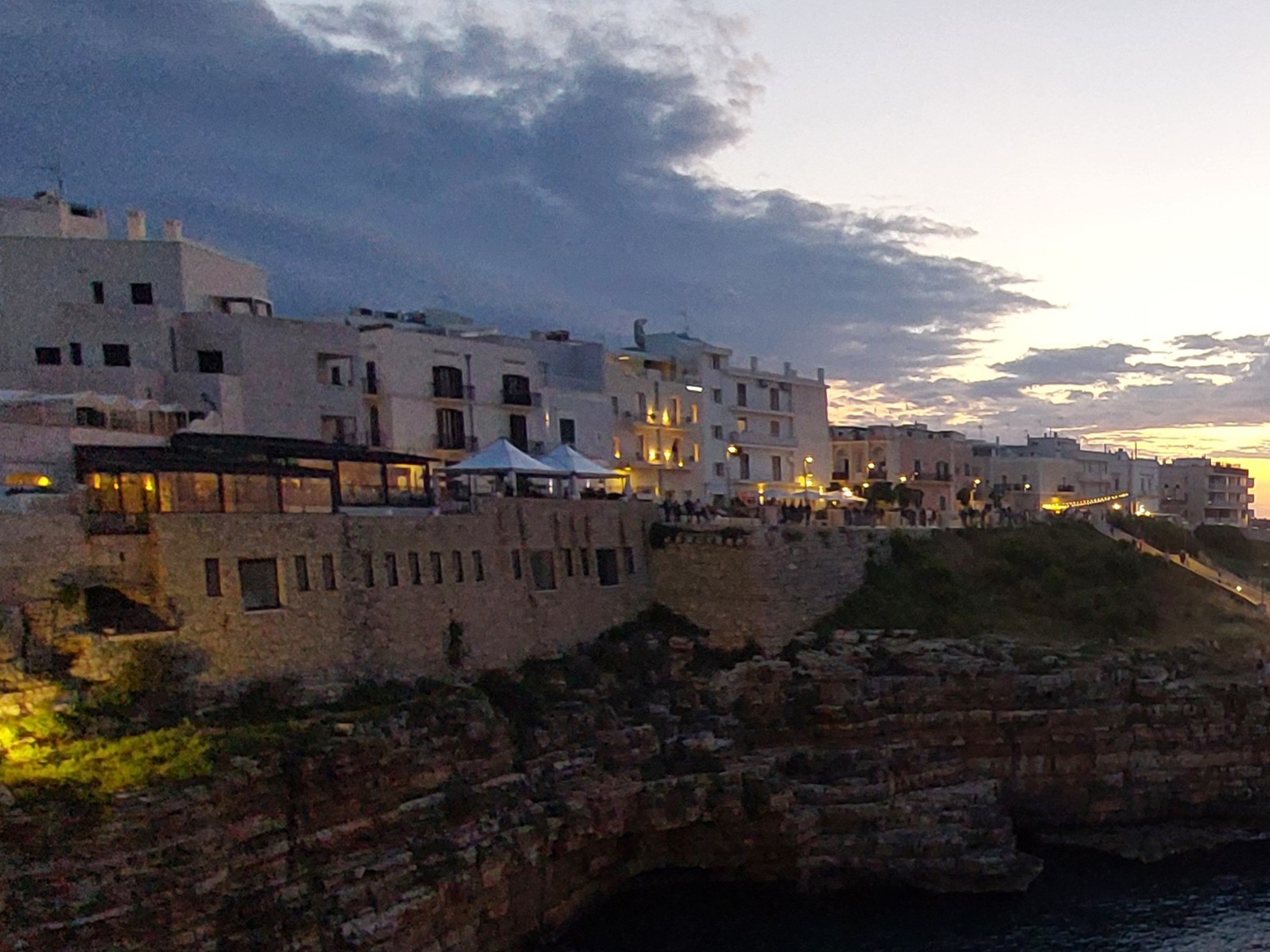
The roof-top restaurant and the main-floor breakfast terrace both have an awesome view of the Adriatic and the city’s iconic Monachile beach. The breath-taking view helped me understood why the hotel gets excellent ratings in the search engines. The city is drop-dead gorgeous, and the raves online are not exaggerated.


Cristiana turned out to be more than the receptionist. She served as concierge, recommending the places to see and where to eat, even making the restaurant reservations and messaging me the directions. She also made and served the breakfast, scrambled eggs, a huge croissant sandwich of ham and regional cheese, and a delicious local pastry. She also arranged a driver for the next leg of my journey. She really went out of her way to make my stay pleasant, so I understand why she was devastated with my negative review on Booking.com. I was just incredibly disappointed with my lodging.
Cristiana gave me a coupon for a free drink in the small rooftop restaurant but the wind was so chilly I declined to have lunch there. After unpacking, I took an orientation walk around the labyrinthian streets past the main piazza to the bridge overlooking the iconic Monachile beach. The bridge was constructed over an ancient Roman span. Beneath it, a long-winding stairway with scores of steps leads down to the tiny but splendid beach where some people were braving the 65-degree weather and icy water to swim. I could see some of the sections of the stairway did not have railings, and the sheer distance down made me satisfied with the view from above. Several cafes next to the bridge offered sit-down meals and I settled for a light lunch at a table overlooking the beach.
After lunch I explored more of the ancient city. Wandering the narrow alleys was not much different than in Bari Vecchia: lots of little shops and cafes, delightful arches leading into charming courtyards, colorful blooms hanging from whitewashed balconies, lots of little shops with ceramics, women’s scarves and jewelry, typical souvenirs. By late afternoon, still feeling jet lag, I needed a siesta. The room had good wifi reception and I could do some work before dinner.




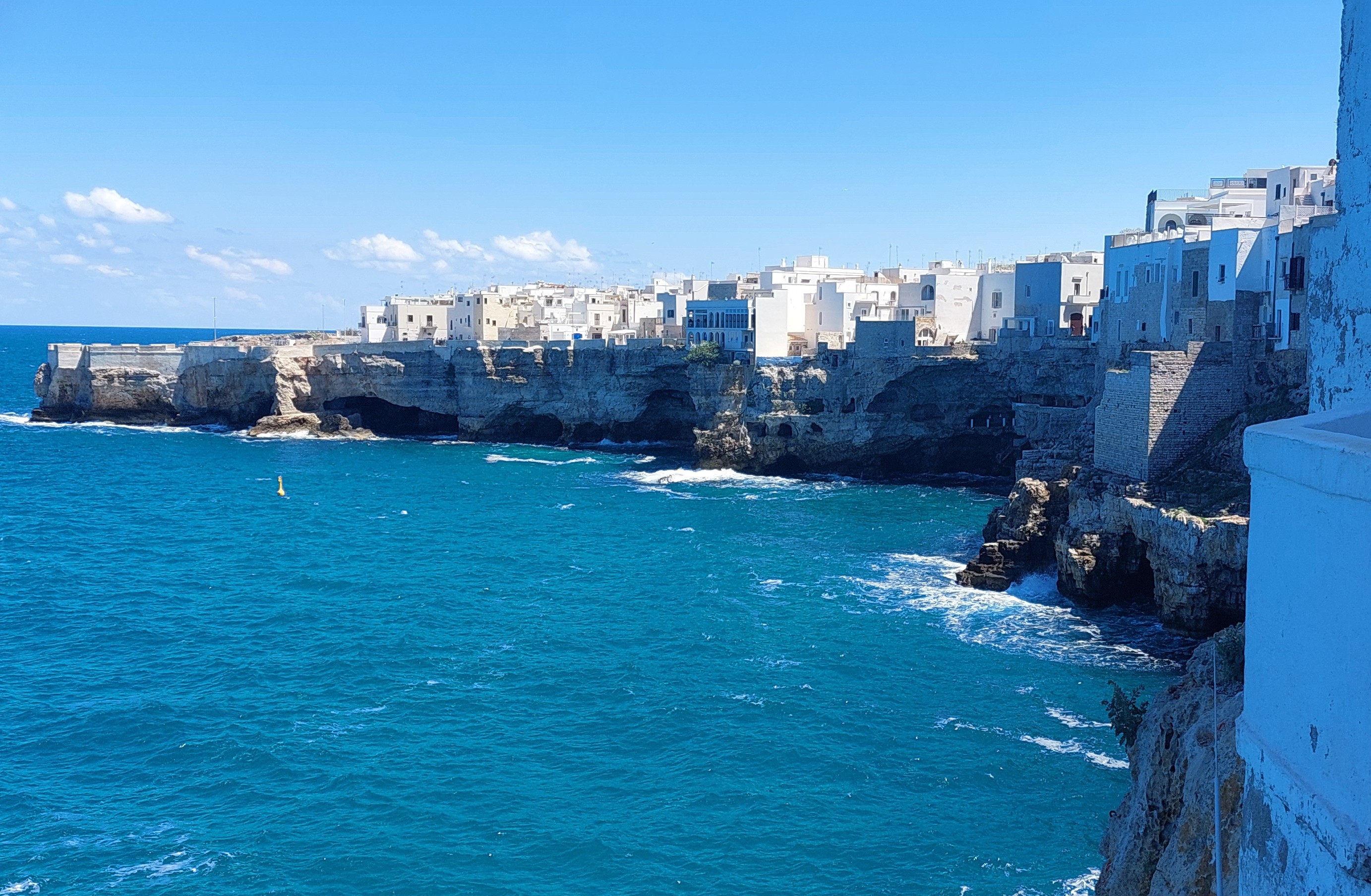
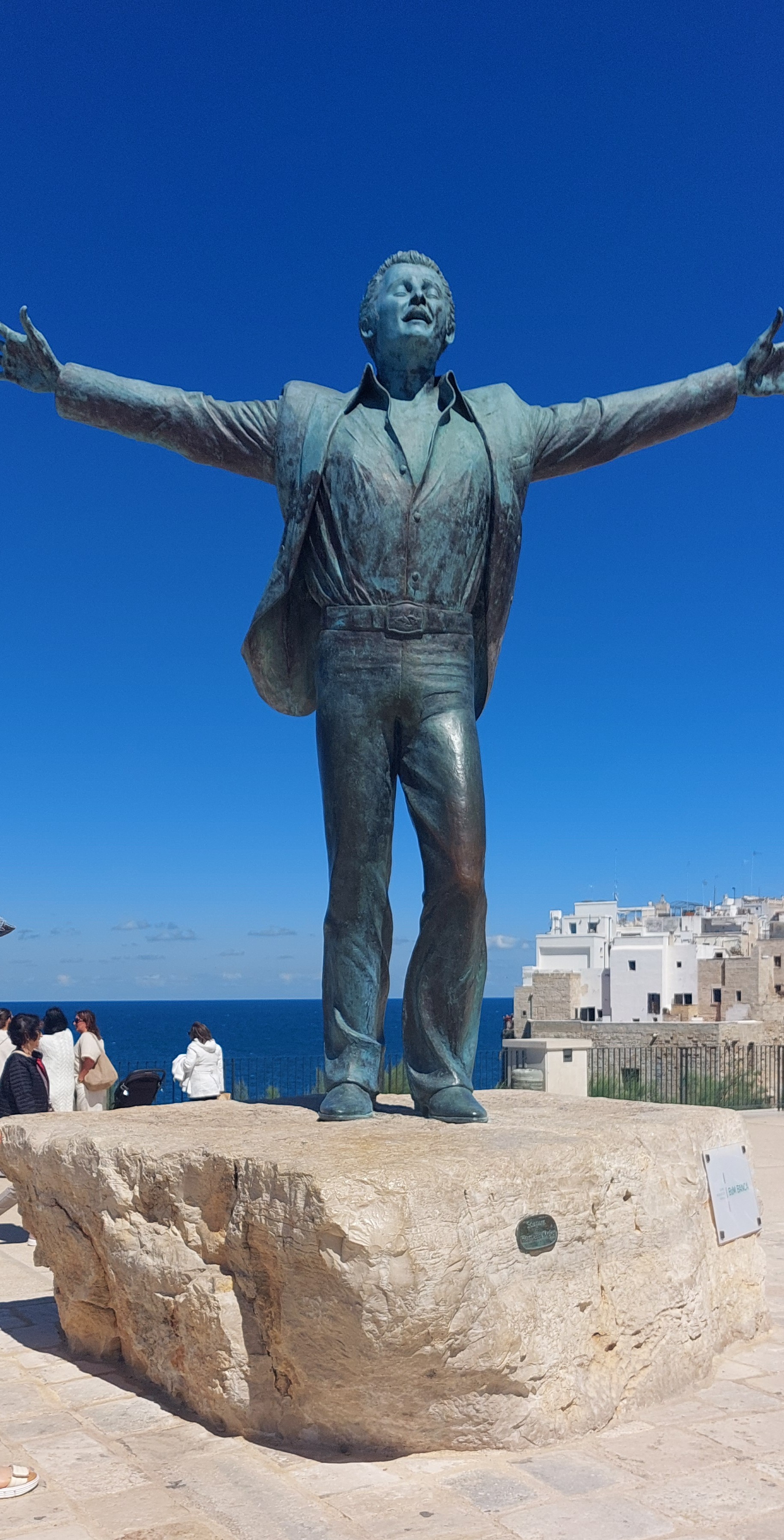
The restaurant in the piazza noted for “the best pasta” was completely booked so I had to wander reading menus to find a dinner spot. I erred in picking Prelibatorio. The music was so loud I had to remove my hearing aids. I chose a regional specialty, spicy spaghetti assassina. Unlike typical boiled spaghetti, this one is cooked in a cast iron pan, gradually adding the liquid like a risotto, with a picante pepperonci powder. It was not too spicy for me, but so salty I didn’t enjoy it. After that, I consulted Cristiana for a restaurant recommendation for Sunday night.
On Sunday morning after a nice breakfast of fresh strawberries and a huge croissant sandwich of ham and local cheese, I explored more of the city. There was an outdoor market in the piazza just outside the walls, the stands offering mostly women’s jewelry, ceramics, nuts and jams, and souvenirs. By early morning the crowds began to arrive and the whole historic center was mobbed. In some places you couldn’t pass the herd in front of you and had to wait for a clearing. I hadn’t expected the cruise ships in Bari to send so many busloads adding to the thousands of local residents of the region enjoying a Sunday excursion. There were lines out the door at some gelato shops. I should have scheduled my stay midweek, but even leaving town on Monday morning the tour groups had begun to arrive. Of course, there would not be crowds if the town was not so spectacular, and surely there would be fewer people in the cold months, but I don’t do windows or cold. I thought I had picked a region off the beaten path, but I doubt there is such place if it’s anywhere near a cruise ship dock.


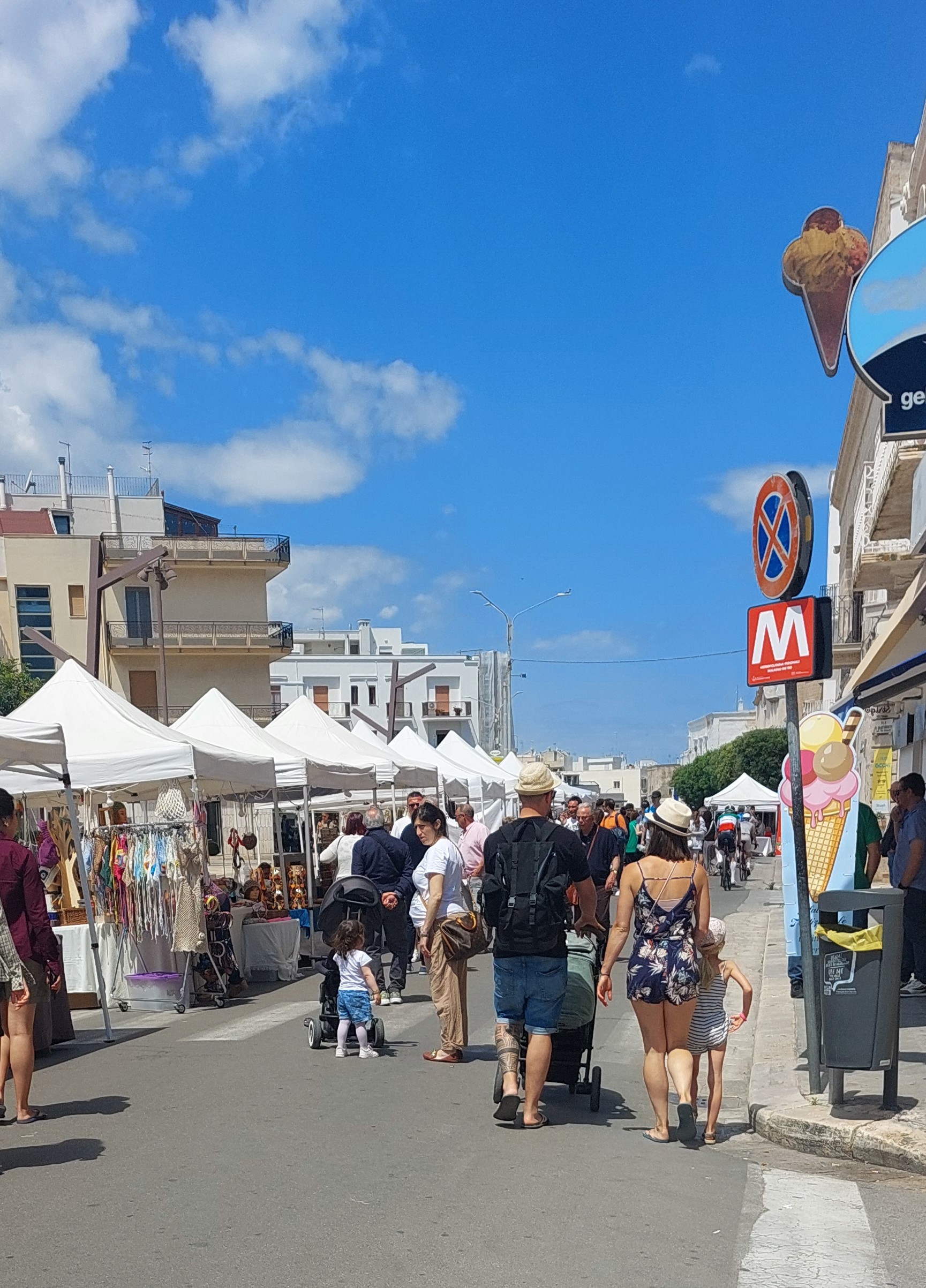
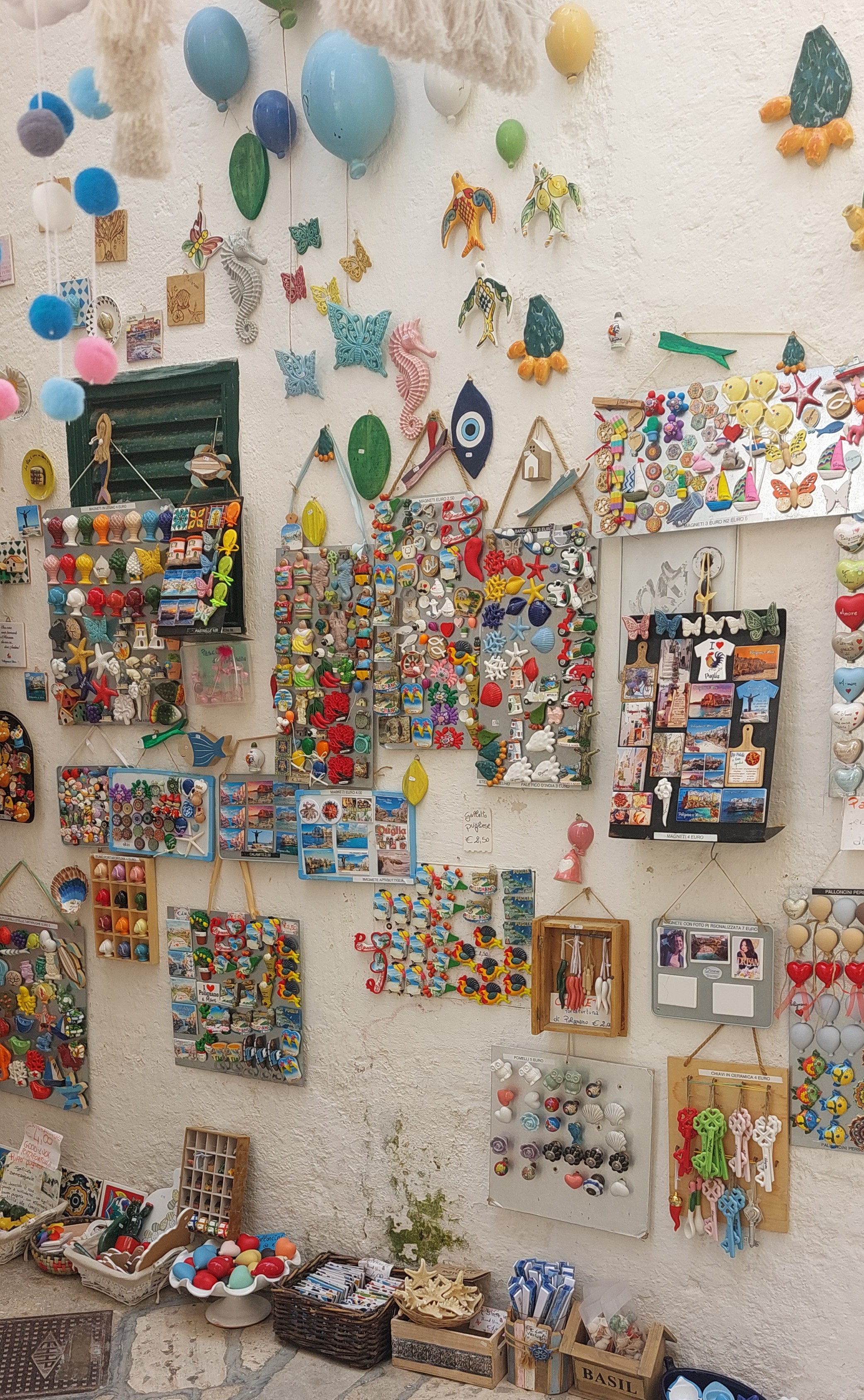
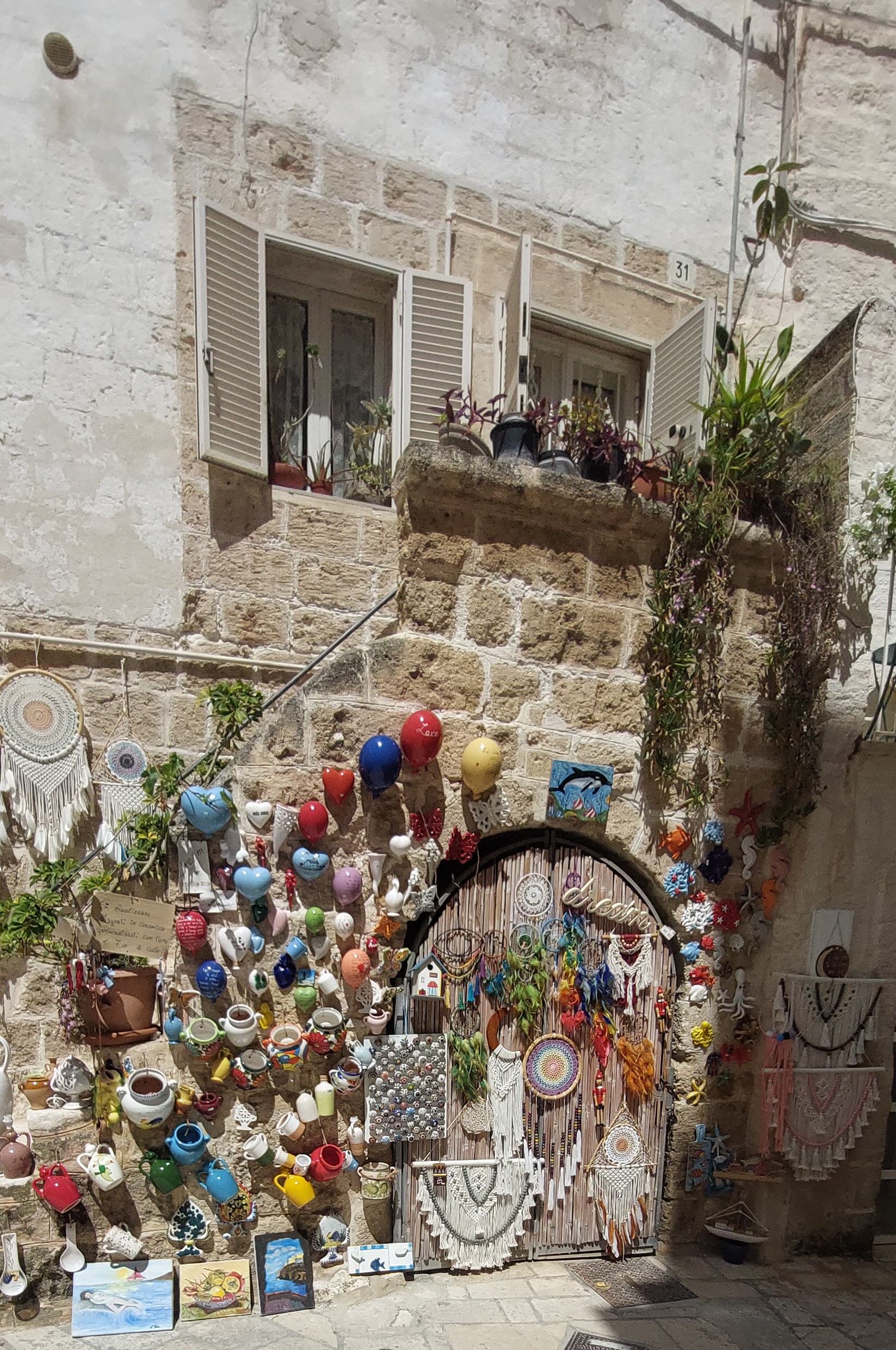


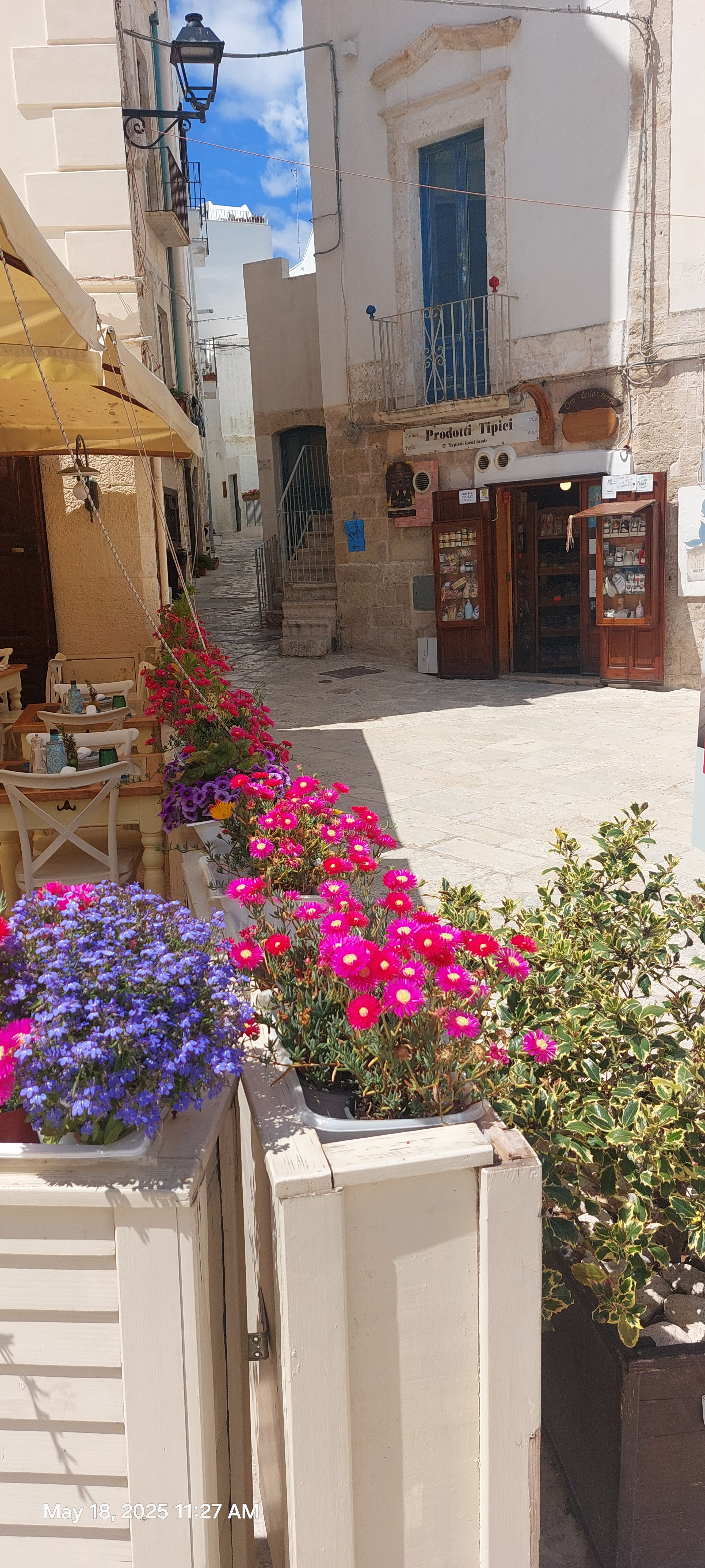
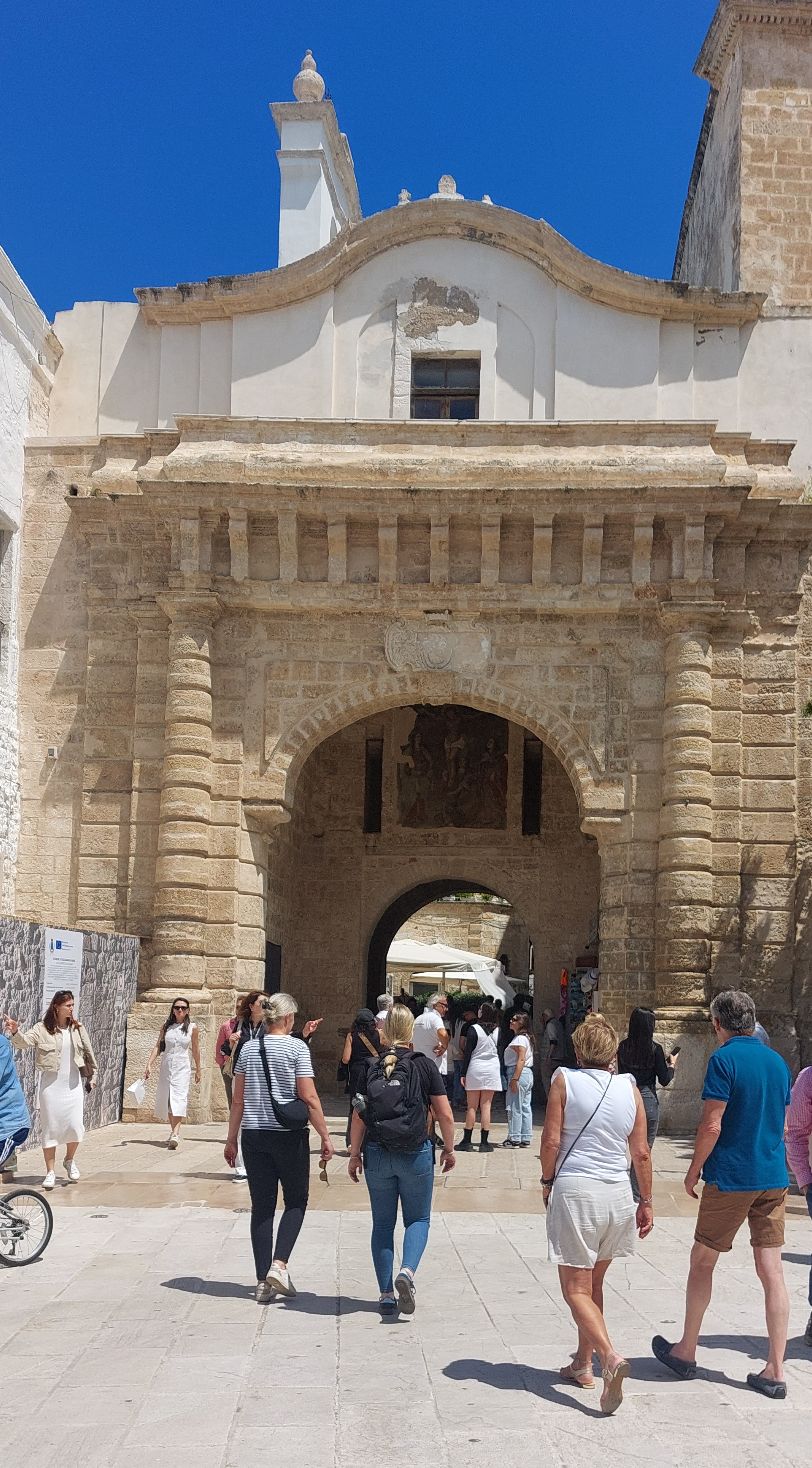
Cristiana made a reservation for me for supper a short walk from the hotel. Gru had mostly outdoor seating and it was a chilly evening. The plates would be cold before you took a few bites. I was offered one of a half dozen seats at the bar overlooking the kitchen, so I could actually converse briefly with the chefs who had their hands full with orders from outside. I had a small starter of seared scallops and a plate of gnocchi with mussels in a saffron sauce.


I didn’t leave the hotel until 11 am the next day, presuming a late check-in time at my next destination. Cristiana walked me to the piazza where the driver she had booked for me arrived punctually. I was surprised to see so many tourists on the streets on a Monday morning, including groups following the cruise-ship flags.

LECCE
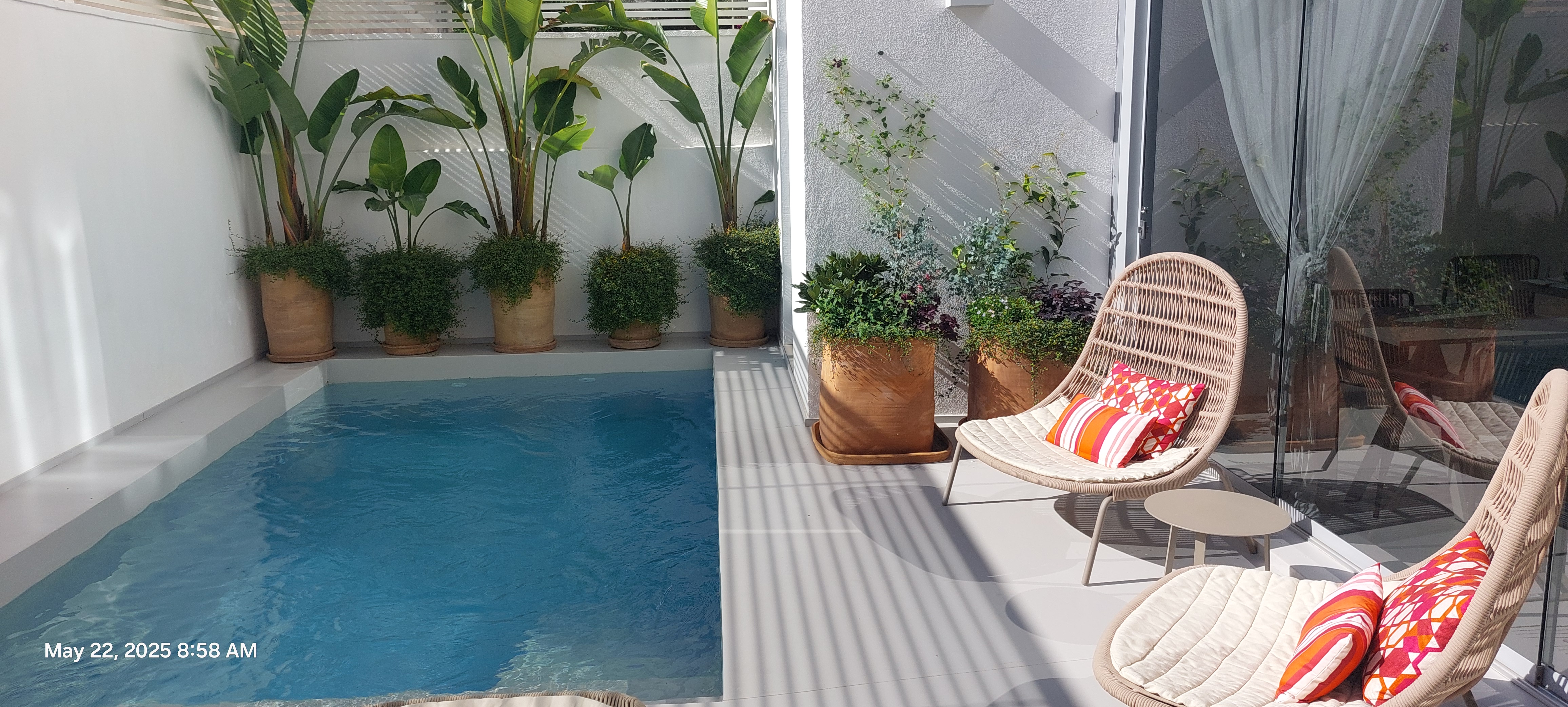
My third destination, Lecce (lay-chay), was a two-hour drive from Polignano a Mare. The taciturn driver, Fabrizio, showed no interest in chatter, answered my questions briefly, and never asked me a single question. I got another surprise checking into the boutique hotel Palazzo Console, a ten-minute walk from the historic center. The booking information did not say there are only five rooms, and the only one available on my arrival has a spacious living area but the bedroom is upstairs! Elderly men get up in the night and certainly don’t want to go down a flight of stairs with each trip to the bathroom. With no other choice, we settled on a solution appropriate to antiquity, a chamber pot, in this case a plastic bucket in the bedroom. The host Alberto was a superb concierge, helpful with suggestions and directions to major sites, clearly illustrated on a city map. The breakfast room overlooks the unheated pool, with a nice menu of choices delivered by constantly smiling Mari. The personal attention is superb and mollified my disappointment with a two-story room.


Lecce, capital of the province of the same name, is another Bronze age settlement, subsequently overrun by other cultures. Rome seized it in the 3rd century BCE and some Roman ruins are tourist attractions there, the amphitheater, some columns, and a theater. It was sacked by the Ostrogoths, later the Saracens, Lombards, and Normans. Charles V of Spain and the Holy Roman Empire occupied it in the early 1500s and added the walls and a large castle to defend the city against the Ottomans. The Baroque period (early 17th to mid-18th century) predominates in the architectural style of the historic center, characterized by ostentation, intricate ornamentation, and grandeur. It became part of the Kingdom of Sicily which joined the new Republic of Italy in 1860.
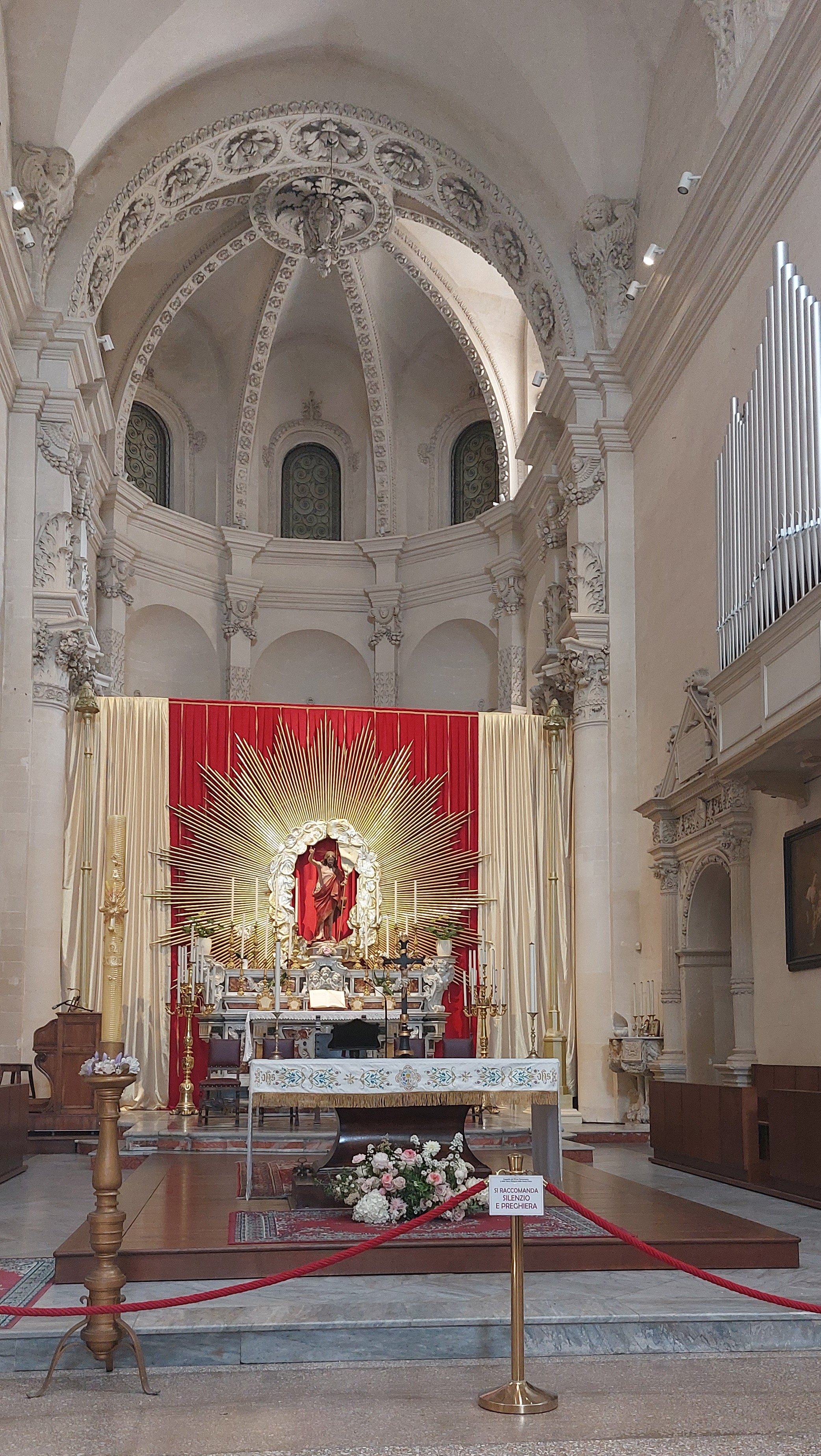
There really isn’t much to do in Lecce other than admire the spectacular architecture, or visit some of the 24 churches if one is inclined. Alberto raved about the Duomo (cathedral) and the “must see” Santa Croce (Holy Cross). I had to pay a €7 entrance in each of those two churches, although I could have seen many more churches with a €40 ticket. I skipped the cathedral tower that attracted an entry line of young people. I went back to Santa Croce with its spectacular baroque façade, more impressive outside than in. Two churches were just fine with me. My walk took me past San Matteo and Santa Chiara but I only tarried long enough for a photo.
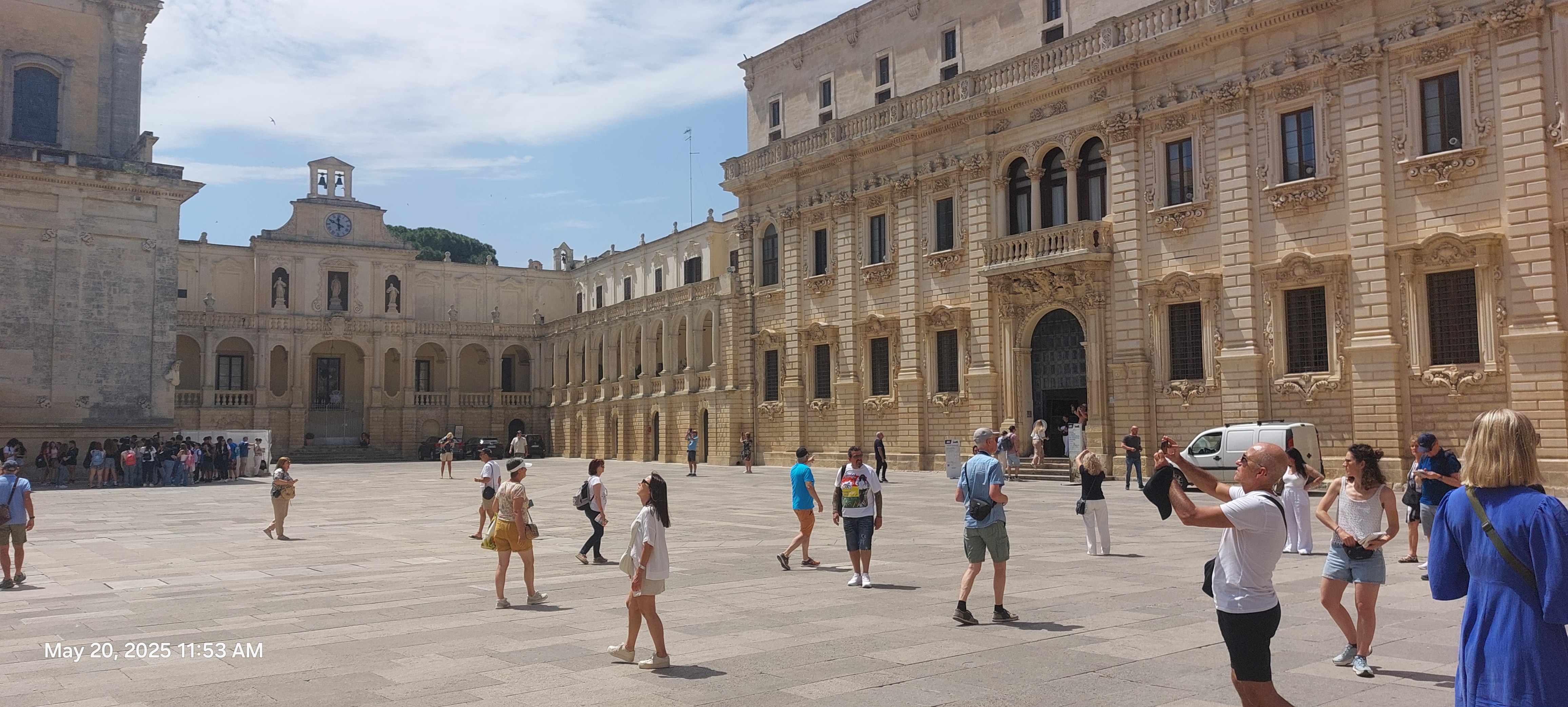
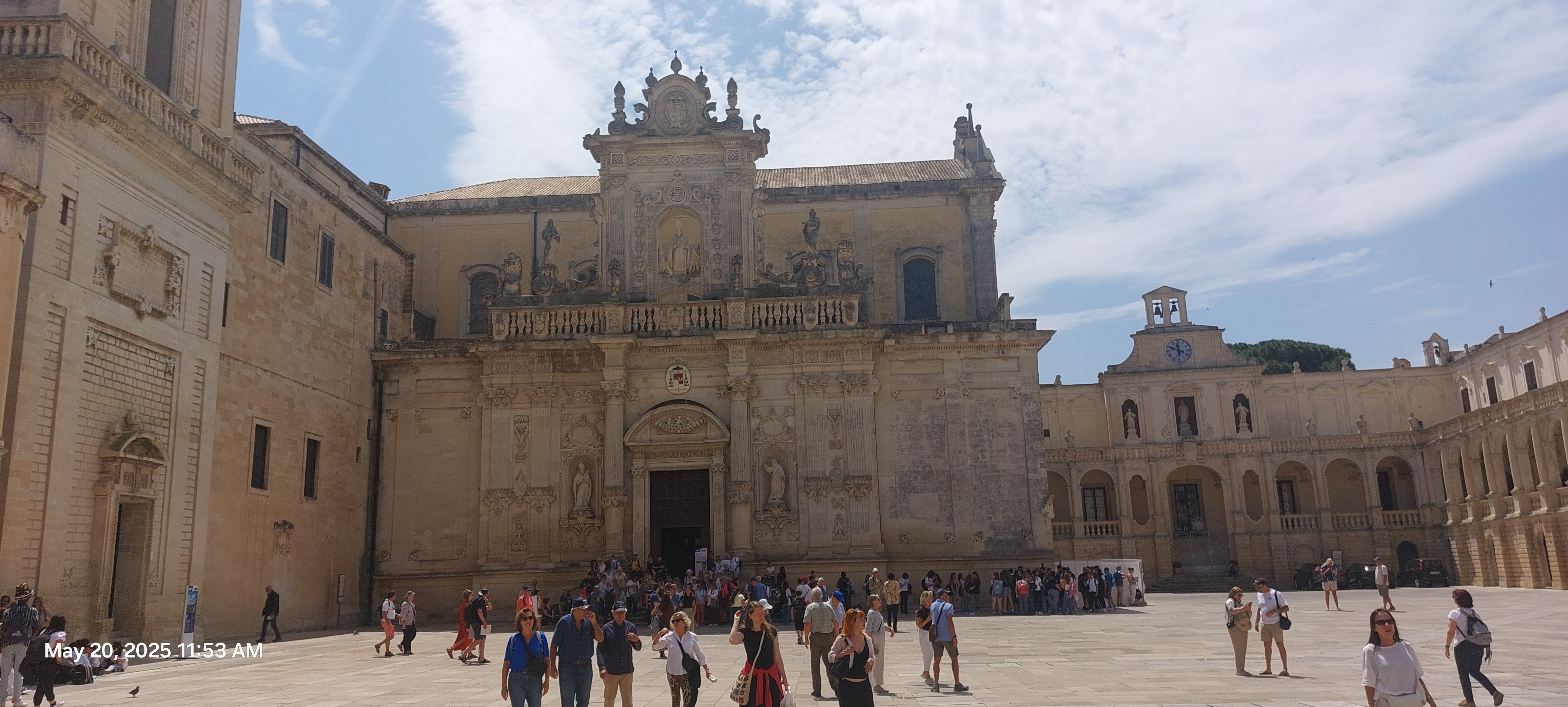
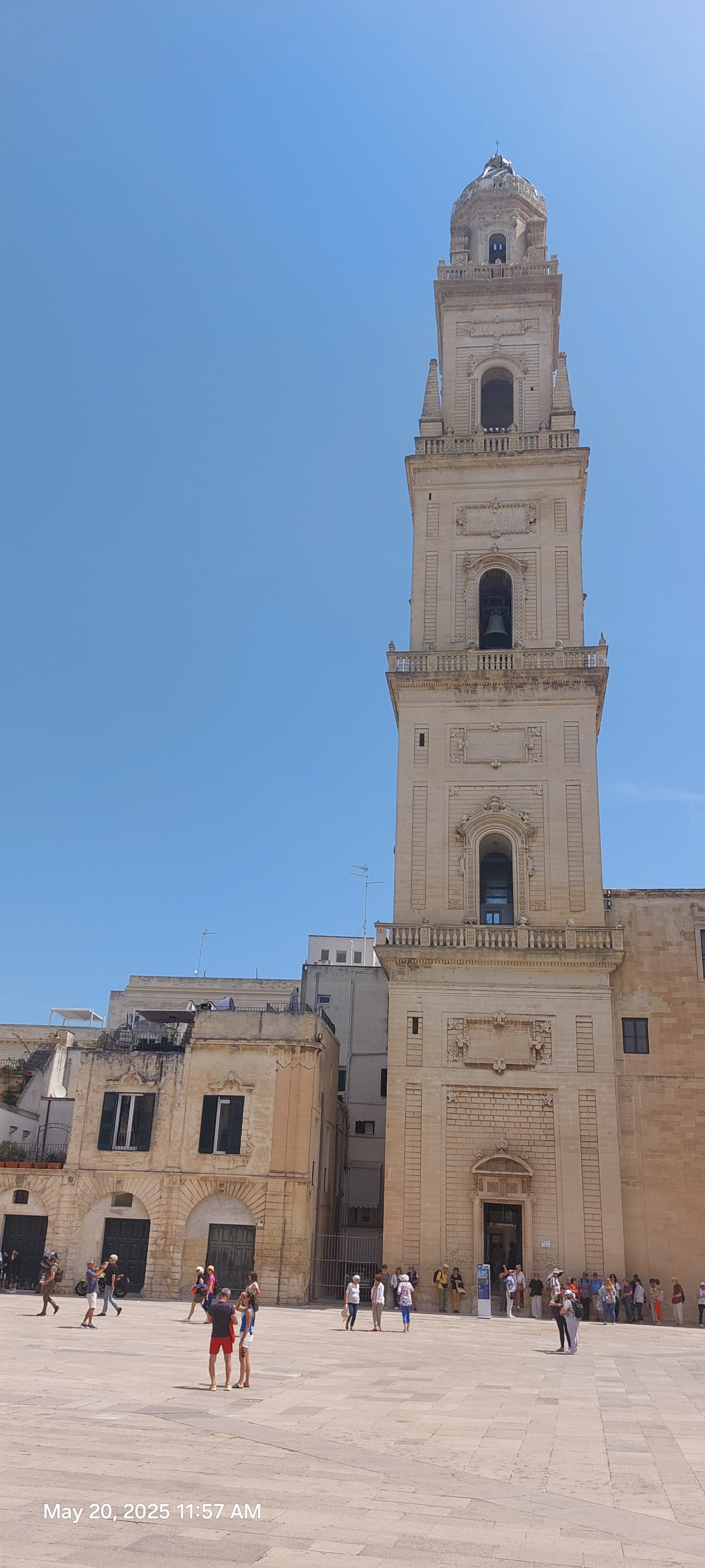
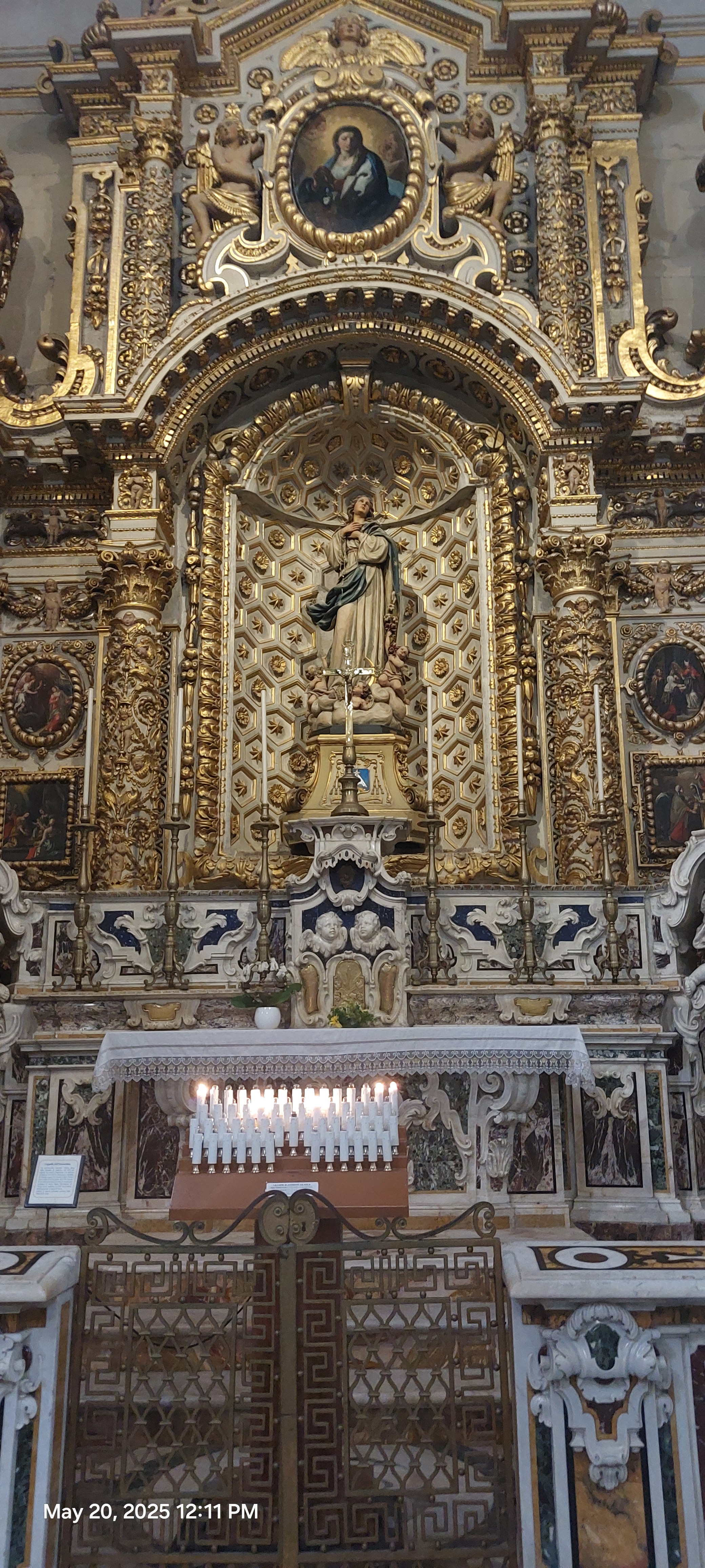

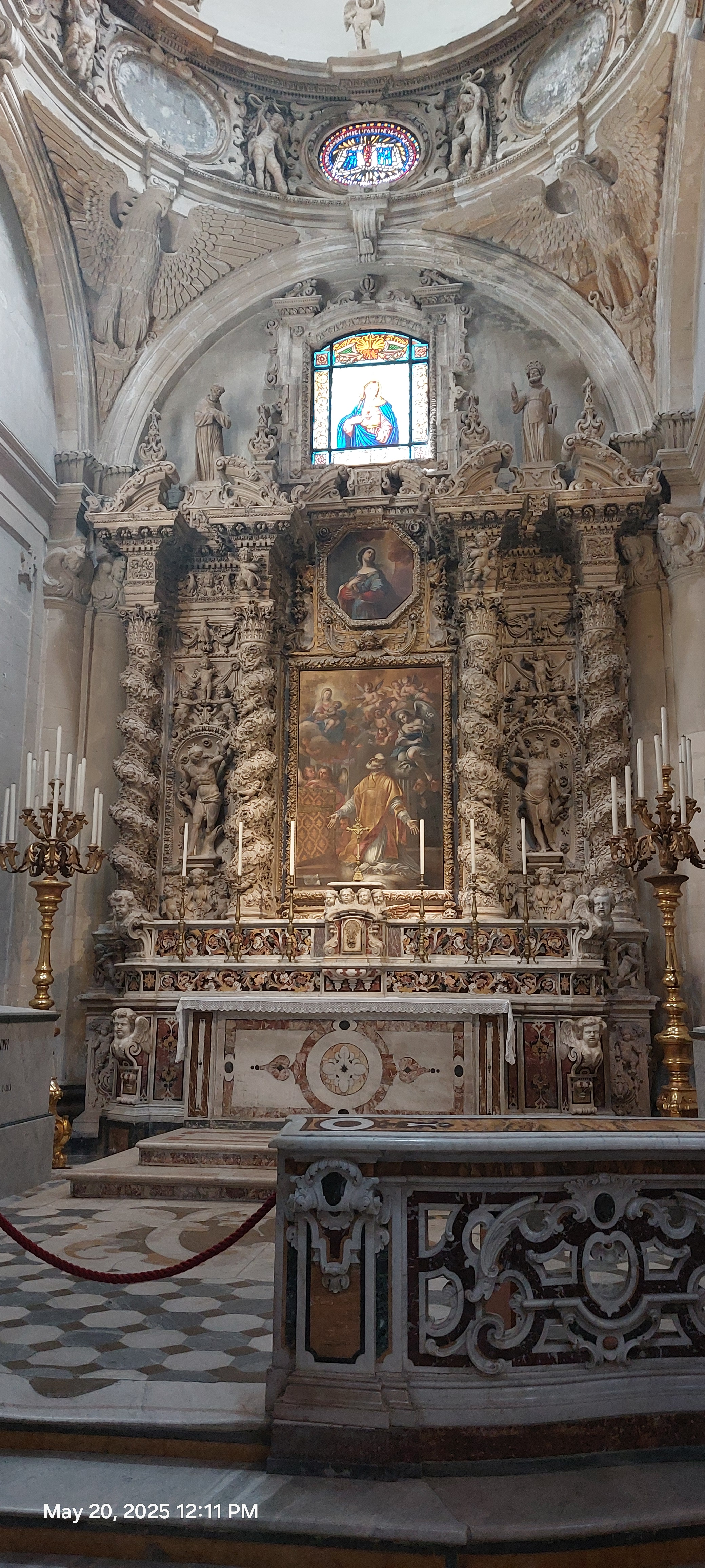

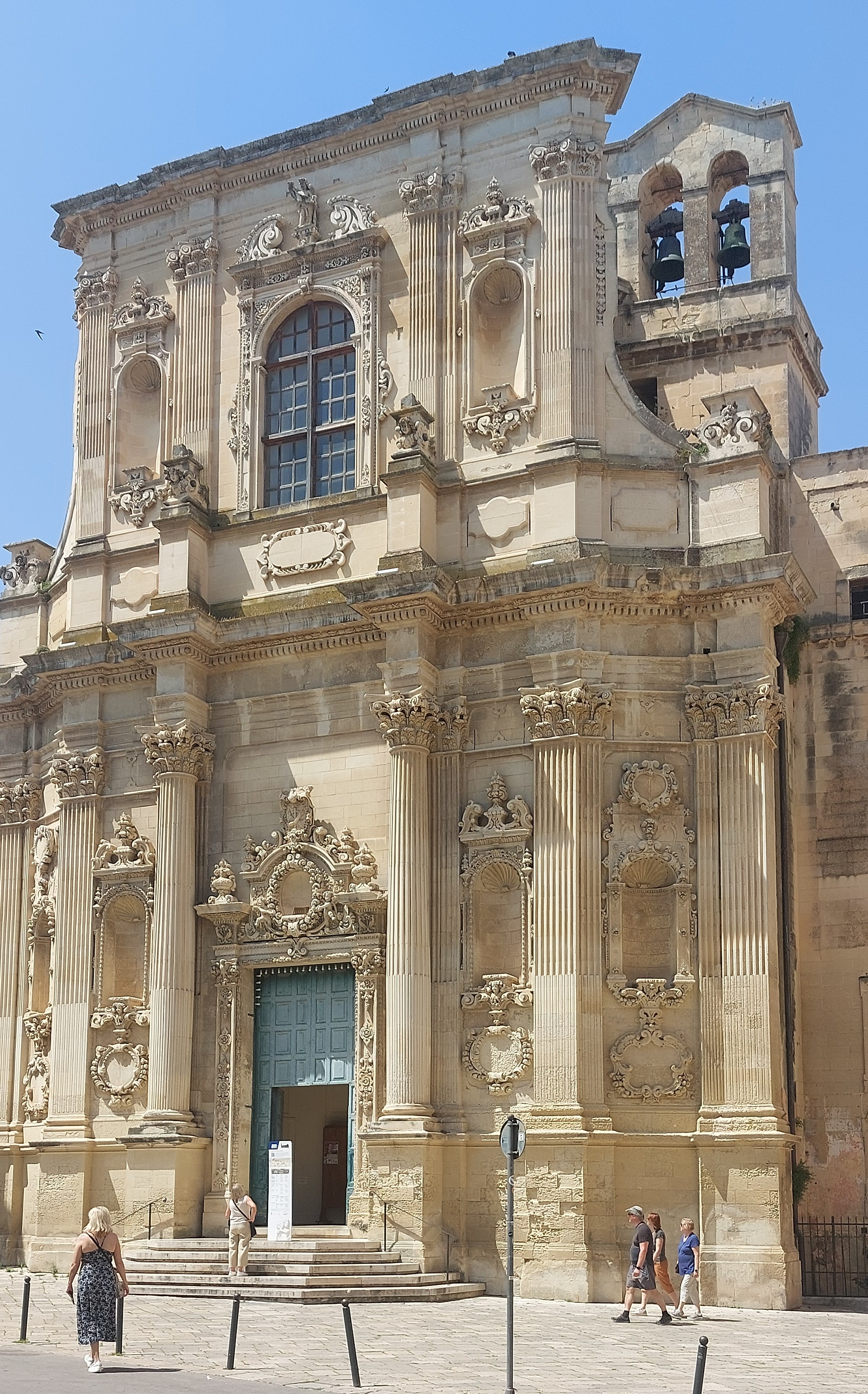


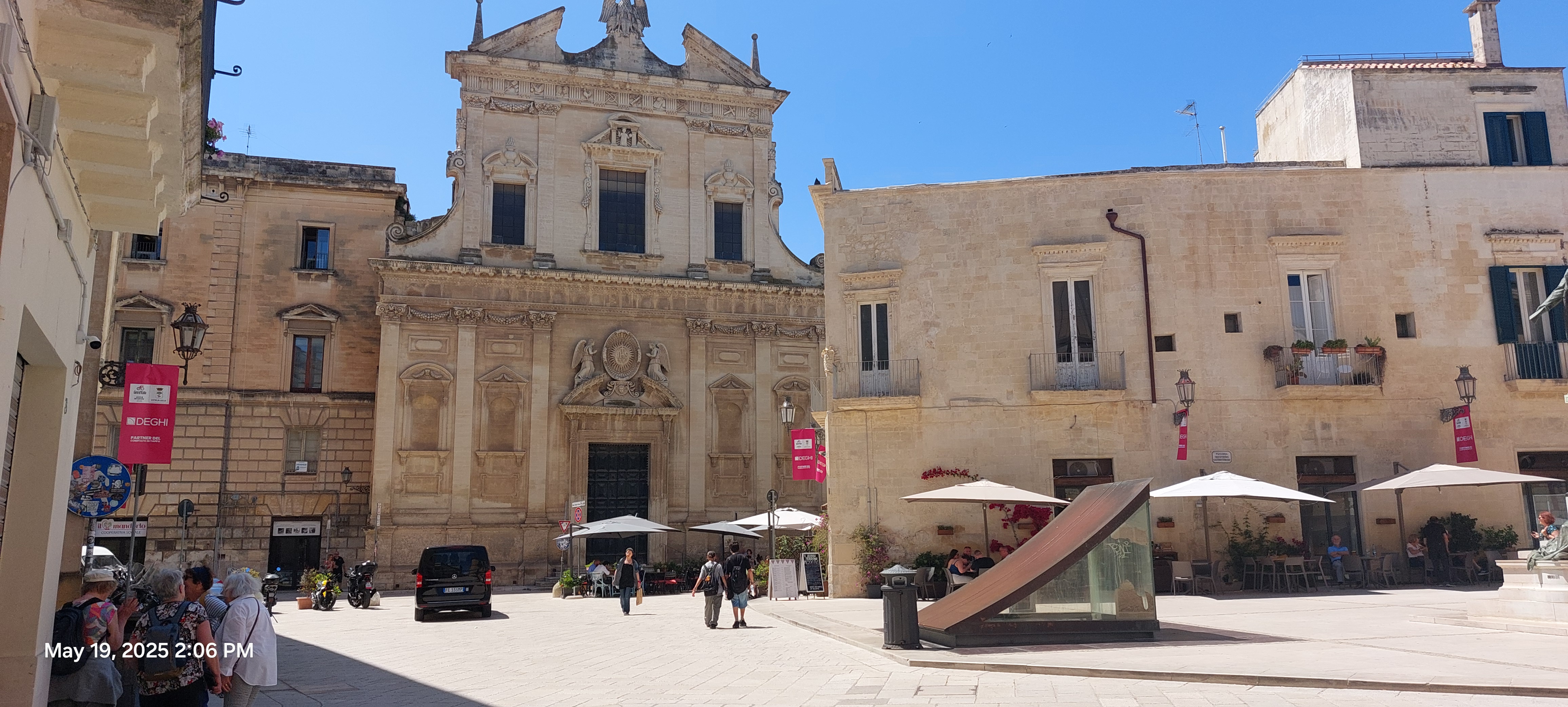
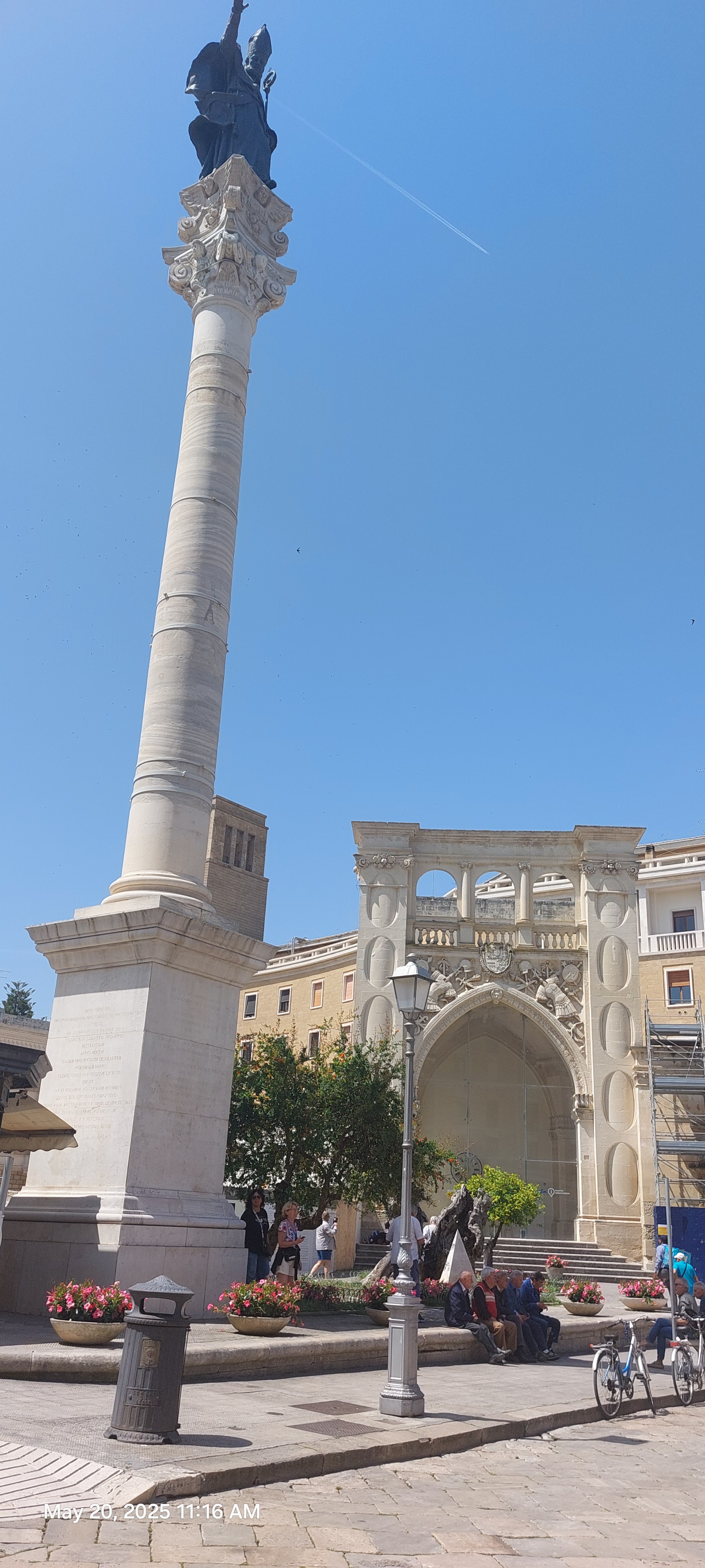
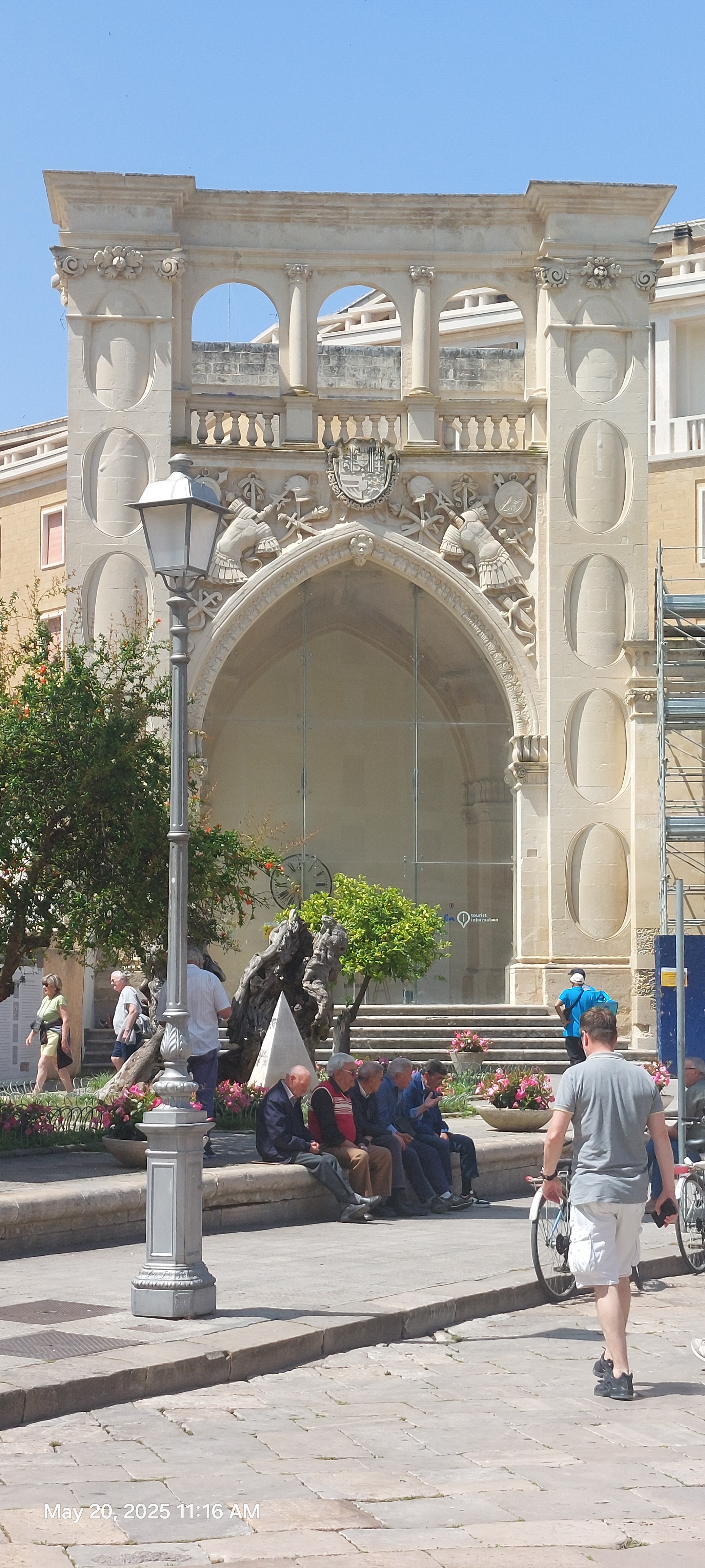
Ttwo days strolling the historic center included visiting the main piazza, Sant’Oronzo, two of the four archways to enter the walled inner city, the Roman ruins, and the narrow alleyways. I decided I have seen enough castles for a lifetime and skipped the one built by Charles V. By the third day, I had seen enough. I could have reserved expensive excursions to some other sites in the region, but I was saturated. I spent the last morning window shopping in the modern city, and hoped for a swim, but the overcast day was too chilly for an unheated pool. I used the afternoon to catch up on world news and work on my blog text.
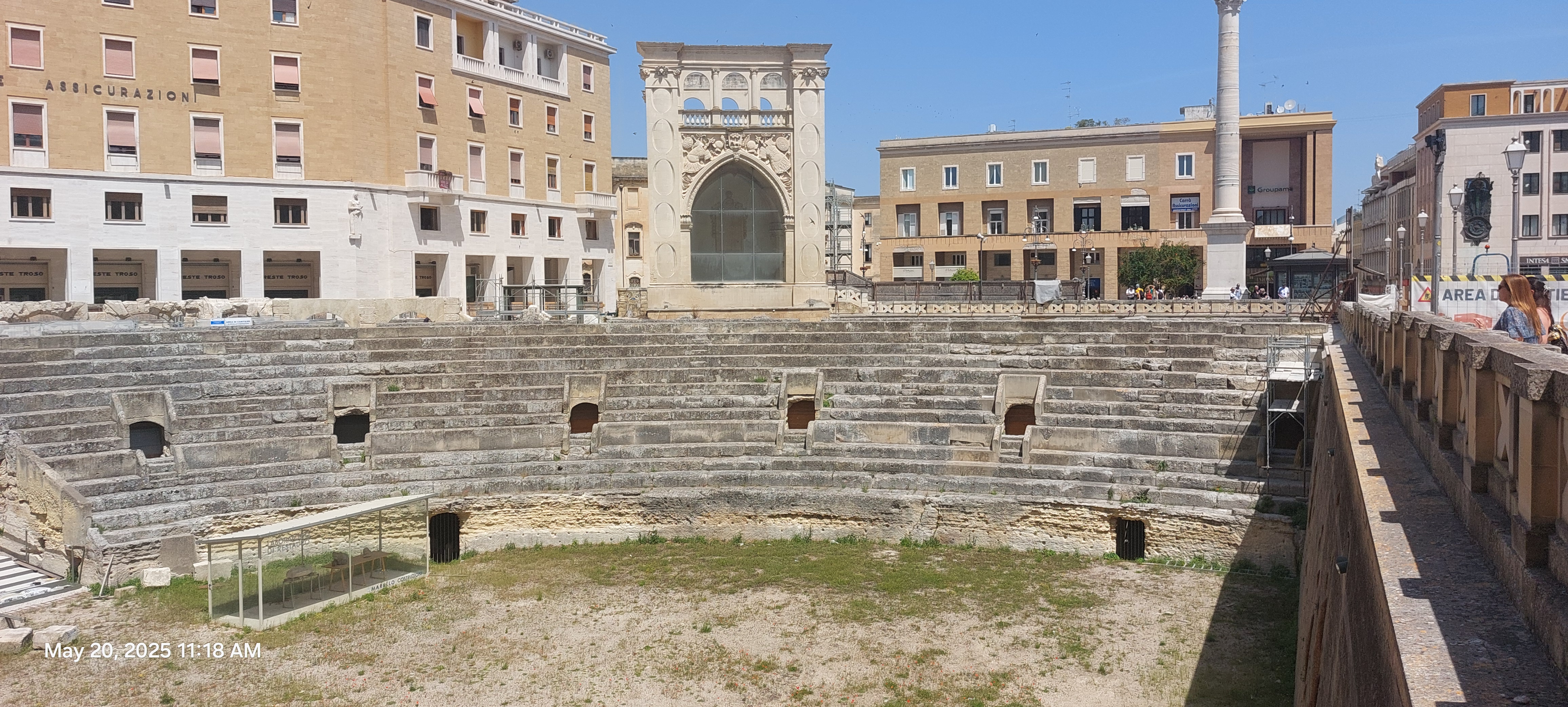


For meals in Lecce, I had lunch in the historic center, just picking out a shady sidewalk café after reading menus at several. The first evening Alberto reserved for me an upscale fish restaurant ten minutes from the hotel, Vico del Gusto, crowded with local diners. After so many nights of fish and seafood, I craved some red meat and foolishly ordered a steak to follow the excellent stuffed mussels. I told the waiter it was so tough and grizzly I didn’t like it. “Sir, our specialty if fish,” he remarked in stern Italian. I begged his pardon and he did not charge for the meat. The next night Alberto sent me to a small family-run trattoria, just a five-minute walk from the hotel. Le Zie, Trattoria Casareccia was very crowded with local diners. I had polpette to start, three very large delicious meatballs, next a baked lamb that was bony and overcooked. The nocciolo (hazelnut) gelato was great. The tables were so close together I ended up conversing with a couple from Somerset England, unable to explain or make excuses for U.S. politics. I felt so much at home I asked Alberto to repeat the reservation the next night. Another diner had told me the orecchiette in tomato sauce were excellent so I ordered that with the polpette appetizer at the same time, combining the two dishes. Again, I found the orecchiette heavier than I like, so I don’t understand its popularity in the region.
My return flight from Bari to Rome May 22 didn’t depart until 3:30 pm. Alberto reserved a driver to pick me up at 11 am for the one-hour 50-minute drive. Alas, Antonio was another uncommunicative driver who never asked me a single question, and answered my questions perfunctorily. ITA did not announce the departure gate until half an hour before boarding and, again the poor passengers in coach were packed into a small boarding area. The flight was punctual, business class unimpressive, and just a brief beverage service. On arrival in Rome at 4:30, it was far too early for a gate number for an 11:20 pm flight to Mexico. Fortunately, Aeromexico passengers can use the ITA VIP lounge, so the abominable seven-hour layover was a bit more bearable. I had a good book and web news on my laptop. There was a buffet of cold dishes and a few hot offerings including 4 kinds of pizza, better than any I had eaten during my travel. Boarding went smoothly for business class and we were served a huge dinner at 1:30 am Italy time with generous pours of scotch and Prosecco. I ate lightly from the breakfast menu at 10:30 am Italy time (2:30 am in Mexico). Landing in Mexico City at 4:20 am, I was one of the first passengers through passport control and luggage arrived faster than usual with few flights arriving that early. My reliable driver Vicente was waiting and we were off to Cuernavaca, arriving home at 6 am after 27 hours in transit from Lecce. The seven-hour layover in Rome and the 12-hour flight were predictable and unavoidable and made for a tedious finale
The web information on my destinations had raised my expectations a bit too high. I expected less- crowded cities and was surprised by the crowds except in remote Lecce. I have had it with small boutique hotels where you can’t change your room if dissatisfied. The Grande Albergo delle Nazioni in Bari was more to my liking, and I do prefer a morning buffet spread to a small ala carte breakfast menu. I have to reconsider splurging on hotels with pools and rooms with a balcony when weather history is not consistent. I had the same experience last May in Lombardy and the Lake District, where cool and rainy weather made the pools and balconies unusable. I certainly met my three goals: to explore areas of Italy new to me, to eat well, and to improve my Italian. The language improvements were the most satisfying part of the trip. It is so empowering to be able to talk to local people in their own language and so gratifying to get so many compliments. Virtually every receptionist and waiter wanted to know how an American came to speak Italian so well. I didn’t tell them my secret: only using expressions you know how to say, not conversing about philosophy or auto mechanics, and avoiding expressions that require imperfect and pluperfect subjunctive. Memorizing a thousand verb endings is tedious, but how gratifying to be able to enjoy experiences otherwise unattainable.
Thanks for reading. Ciao. Happy Travels!


 Jim Horn News
Greetings Jim,Great article, excellent photos.SaludosRodolfo