For the last few decades, I have always left beautiful Cuernavaca in September. There is a church fair adjacent to my home for ten or more days, celebrating the miraculous appearance of the Virgin de los Milagros in 1720. The main street is closed to traffic, creating chaos in adjoining streets, and making driving anywhere near the area a nightmare day and night. Rockets burst over my home relentlessly. No Mexican fiesta is complete without lots of noise. Rather than sit at home and curse, it’s a good time to get away and September is usually a nice month everywhere. I usually go back to Western New York to visit family and friends and take advantage of my medical insurance for routine care. As long as I am in New York State, I often fly to JFK airport and spend some time in Europe. This year, I decided to visit parts of the U.S. that friends have raved about but I have never seen. The biography of J. Robert Oppenheimer, American Prometheus, told of his love for New Mexico and led me to this destination. Photos are mine unless otherwise noted.
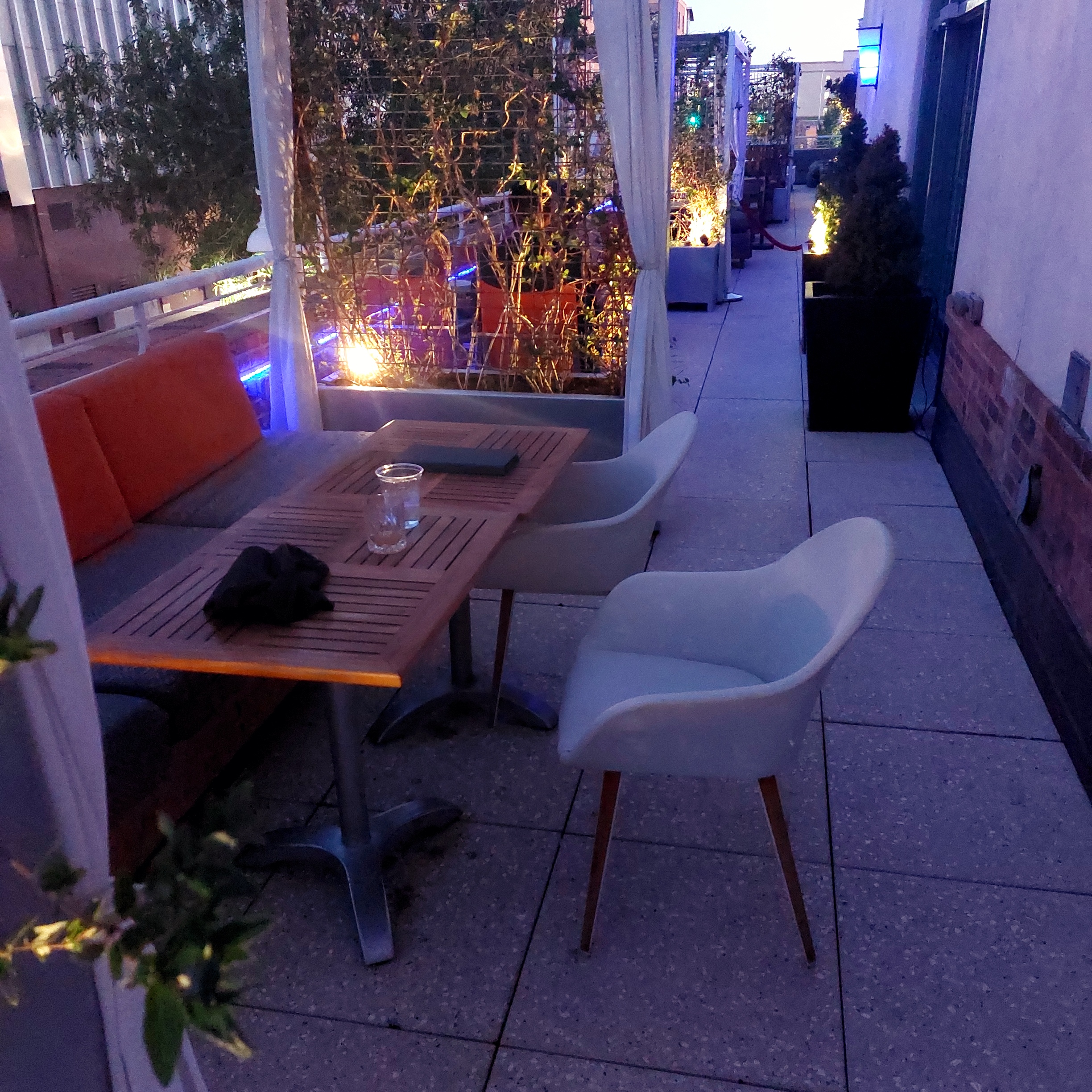
Some western cities serve the small Santa Fe airport, but I had to fly into Albuquerque so I decided to spend two full days there before heading to Santa Fe. The airport is attractive, modern, and only a ten-minute cab ride into the city. My flight from Mexico City on Delta had to go via Atlanta, a long way east to connect to another flight a long way west. Given the late night arrival, I booked three nights at the excellent Hotel Andaluz downtown. My deluxe suite cost less than a standard room in mid-town Manhattan and I enjoyed my stay. The restaurants are bit pricey and bar prices in all my destinations were high. With two fingers of Johnny Walker Black at 19 dollars plus tax and tip, I could understand why the bar was empty. The outdoor cafe on the mezzanine is a delightful place to dine at night. There is very little nearby except the convention center, but taxis and Uber rides were very inexpensive with fast service.
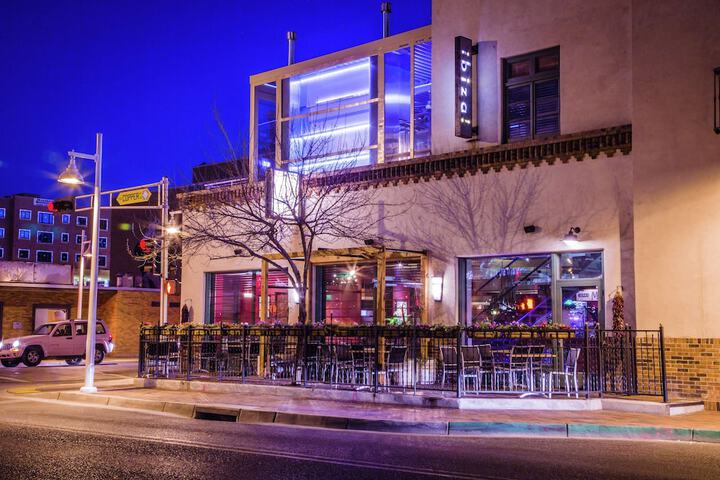

Albuquerque, ABQ, is the most populous city in New Mexico, larger than the capital Santa Fe. It was founded in 1706 and named after the Viceroy of New Spain (Mexico). It was one of the outposts of the Camino Real stretching from Mexico City to New Spain’s northern-most regions. New Mexico became part of the United States as a territory in 1850 after the 1846 war with Mexico. Every American should read Amy Greenberg’s history, A Wicked War (2012). In the treaty of Guadalupe Hidalgo the U.S. took two-thirds of Mexico’s territory. New Mexico was granted statehood in 1912. There are still many residents of New Mexico who can trace their heritage to original colonizers from Spain. The city is probably most famous for its October balloon festival, but a cab driver told me it is crazy then and one has to be at the park gate by 4 am to escape the later mobs.
Monday September 4, Labor Day
I had planned to do museums and the botanical garden the first two days and perhaps the Sandia Peak Aerial Tramway that all the travel literature insists is a must. The Tramway is closed on Tuesday, so I had to do it on Monday. The site is about a 15-minute drive from the city center, into the adjacent Sandia Mountains. The Uber rides were about 22 dollars each way plus tip and the tram ticket for seniors was 33 dollars making for an expensive half-day trip.
Built by the Bell Engineering Company of Switzerland in 1966, the tram was once the longest in the world. Since the longest is now in Armenia, I will not be riding that one. I am a bit nervous on cable cars since I have acrophobia. I took the cable car up the mountain in Stresa Italy on picturesque Lake Maggiore in 2016. In 2021 the steel cable broke and a car fell resulting in 14 deaths. Such disasters are rare but not unheard of. Anyway, I decided to be brave.
The ride to the top reaches 10700 feet in fifteen minutes, providing spectacular views of the surrounding Sandia mountains and distant ABQ. One has to reserve a time slot and buy a ticket online, making a cell phone necessary if you don’t have a printer. I suspect the lines were longer than usual due to the holiday, and I had to wait for three boardings about twenty minutes apart. The car holds up to fifty passengers, and it held capacity for my trip, making it hard to get good pictures, so I copied some from the Tramway web site.


For my second day in Albuquerque, it was a choice of museums or the botanical garden. I knew I would visit museums in Santa Fe and it was a gorgeous sunny day, so I decided on the ABQ Biopark that includes the botanical garden, an aquarium, and the zoo. My ticket to the garden included entrance to the aquarium. The garden covers 15 hectares, 36 acres, and I found it worth the visit.
One begins in a large park-like area bordered by flower beds from which one can take paved paths to various specialized gardens. I started at the Spanish garden, then the rose garden, and the Japanese garden.


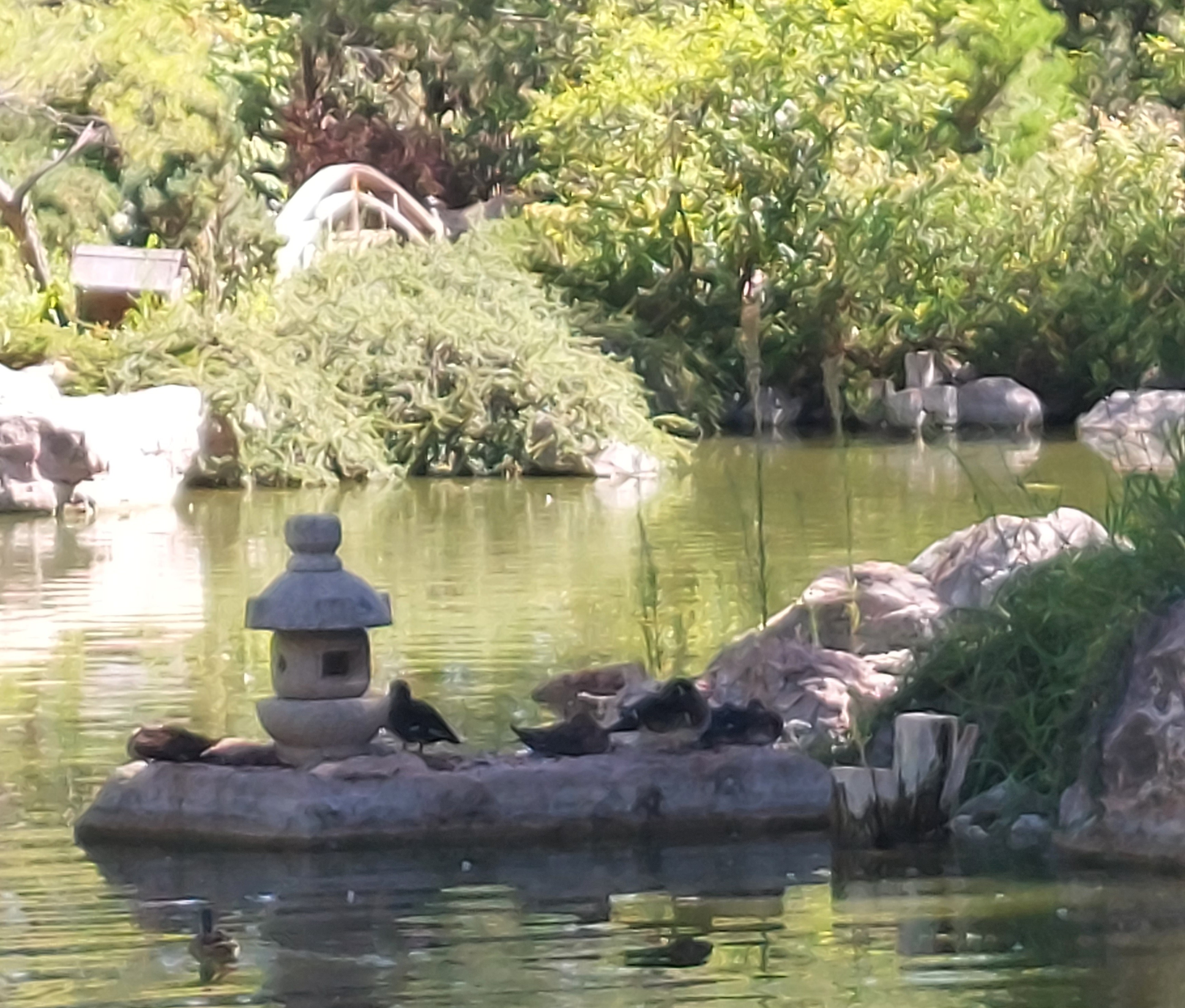

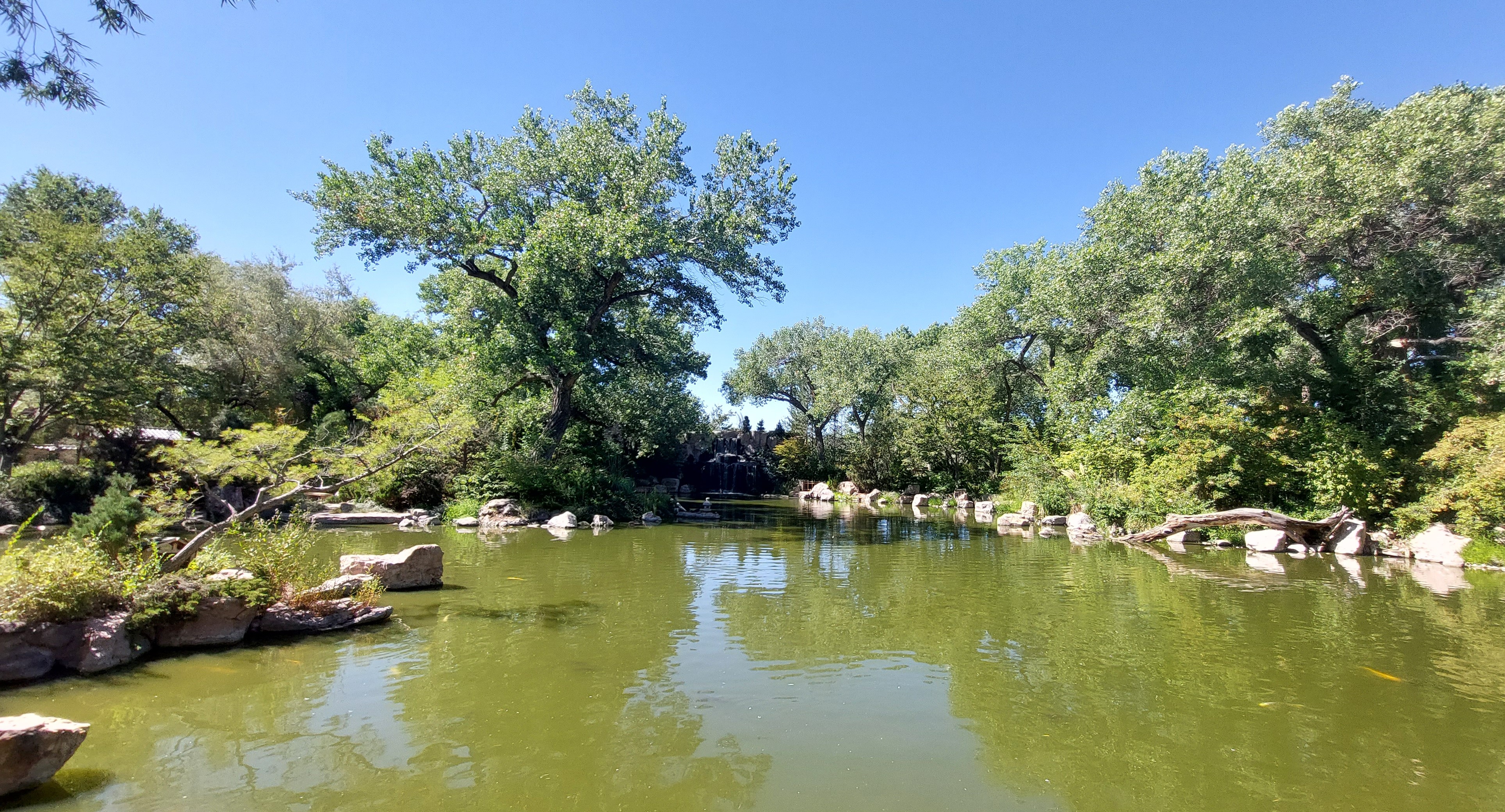

The spacious glass conservatory has two wings. One wing features plants from Mediteranean-like climates like Mexico and California, including many that I have in my garden in Cuernavaca. The other wing has North American desert plants, various cacti and succulents.
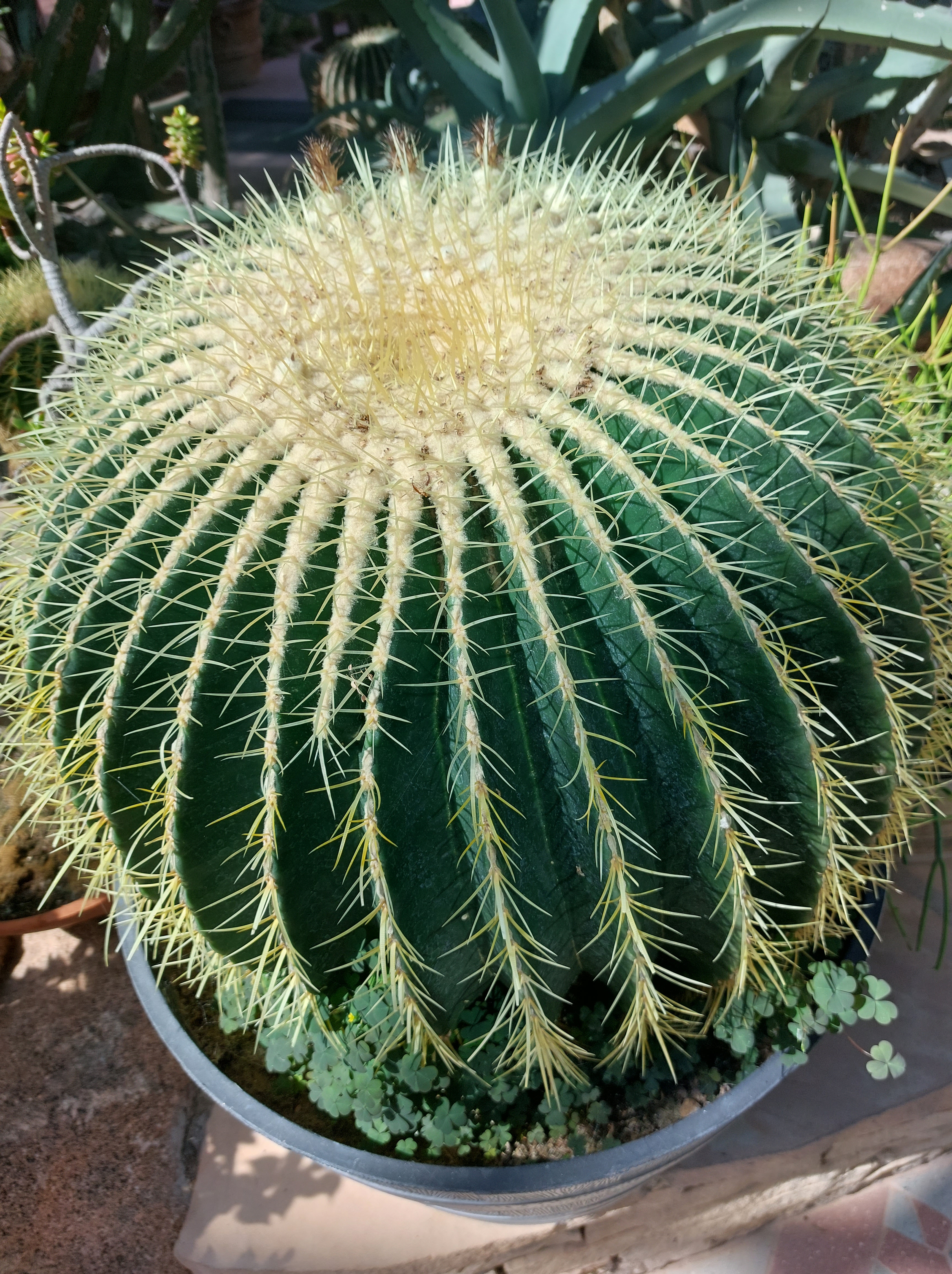
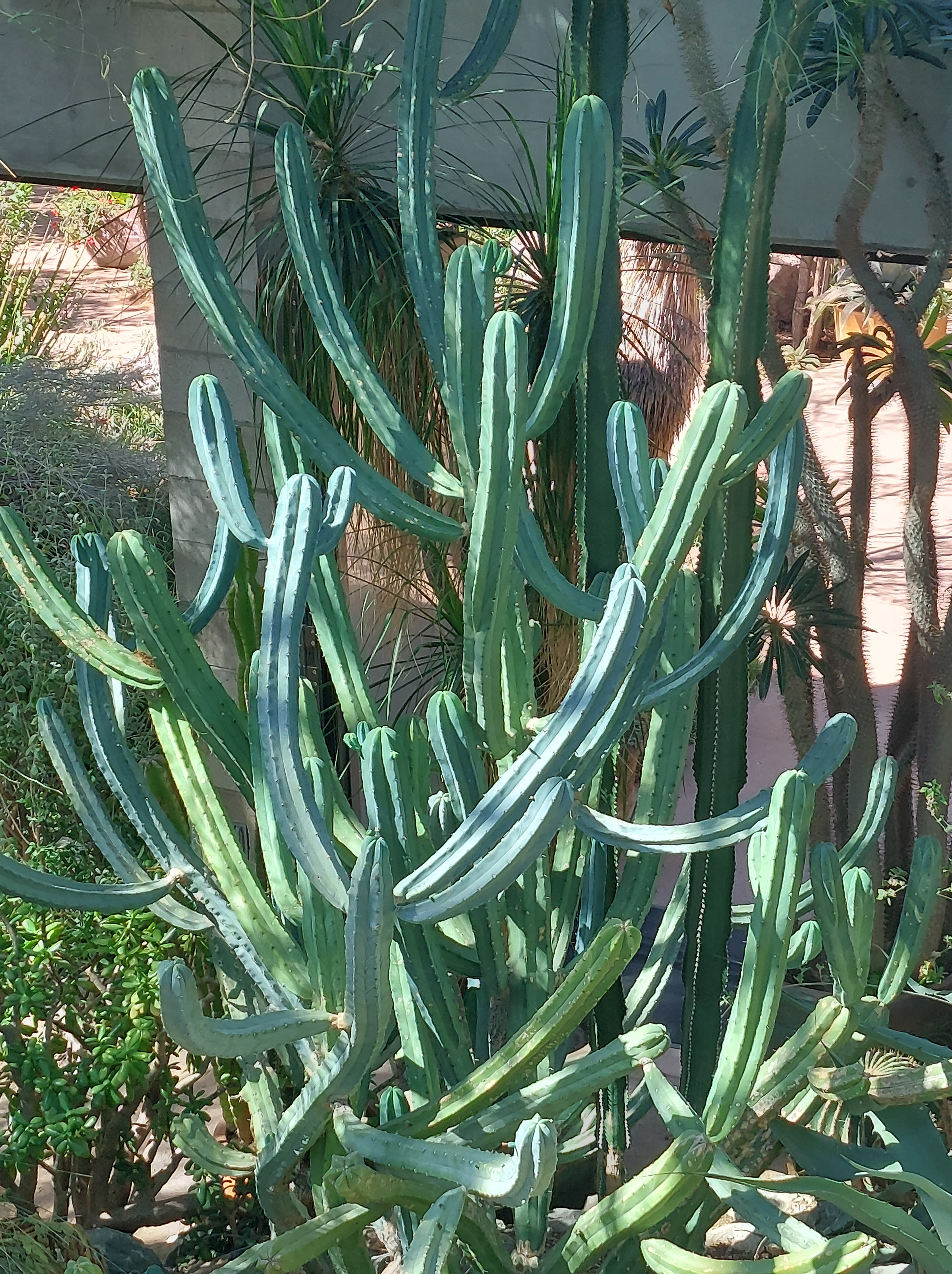

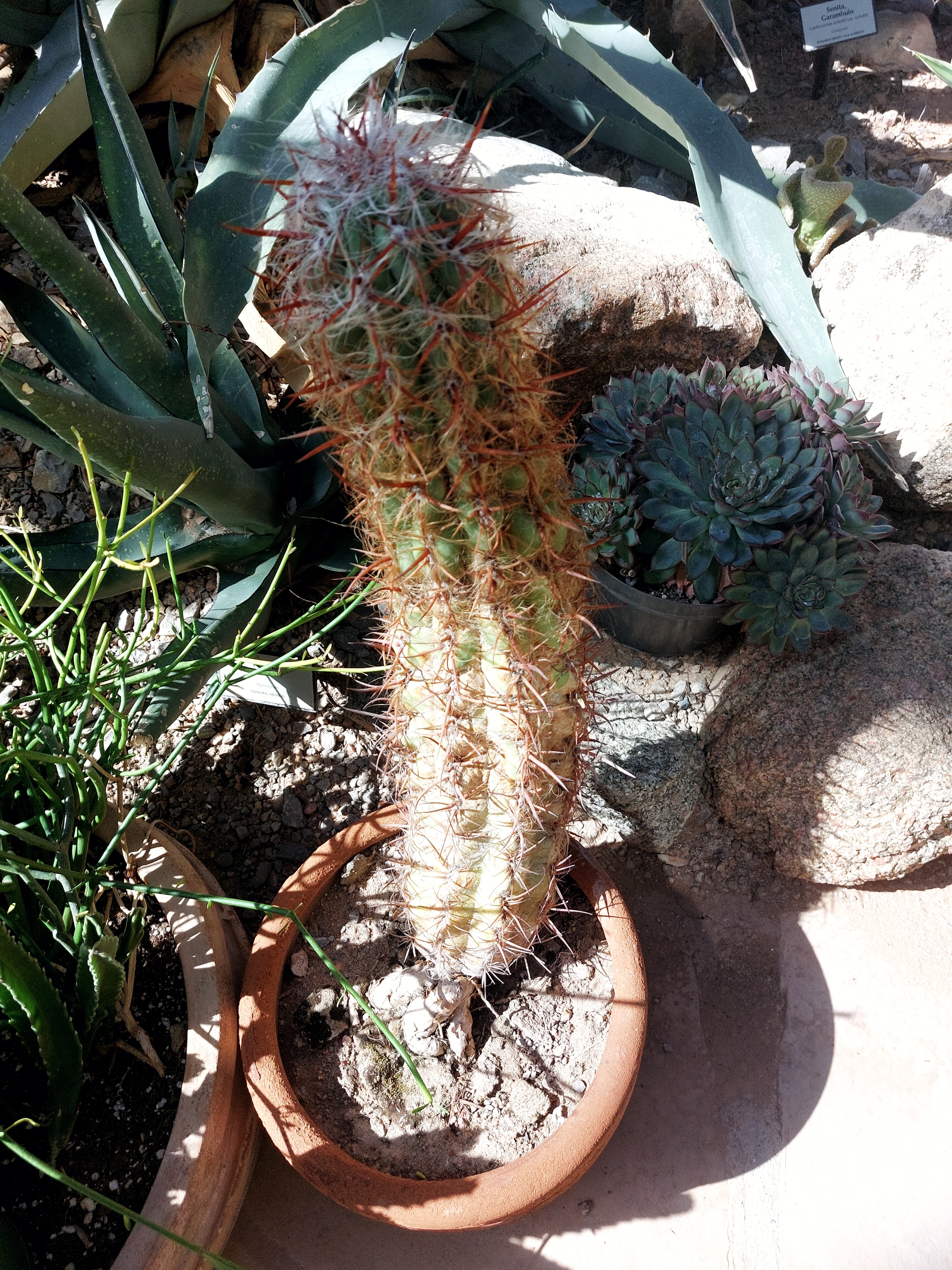
After a lengthy walk admiring the floral displays, I headed to the disappointing aquarium. I had not intended to include fish in the desert, but admission was included, so why not? It is quite small and features fish of the Rio Grande and New Mexico rivers with a small habitat for river otters once extinct but now restored to the state’s waters. While one cannot compare it to the great aquariums in places like Boston and Monterey, it’s a fun place for children.


In both the garden and the aquarium, I have never seen so many children including dozens of strollers with infants and toddlers and even one mother nursing an infant only weeks old. There were many large Latino families with as many as five children, but I didn’t photograph people. The shuttle to the zoo was not operating and it was a long walk with the temperature now in the high 80s or low 90s. I was tired and dehydrated and opted to return to an air-conditioned restaurant near the hotel for lunch. For dinner, I enjoyed the lovely outdoor patio restaurant in the Hotel Andaluz, whose menu offers full dinners or tapas.
SANTA FE
I could have taken a bus or train from Albuquerque to Santa Fe, but an Uber driver gave me a bargain rate to take me directly to my hotel there. The drive took only an hour and was not particularly scenic. I arrived before the 4 pm check-in time at La Posada de Santa Fe, the deluxe hotel I found online. I justified the extravagant splurge with how much money I had saved by not taking my usual fall business-class flight to Europe. My suite was ready by 3 pm, time enough for a siesta followed by water aerobics in the pool next to my room.
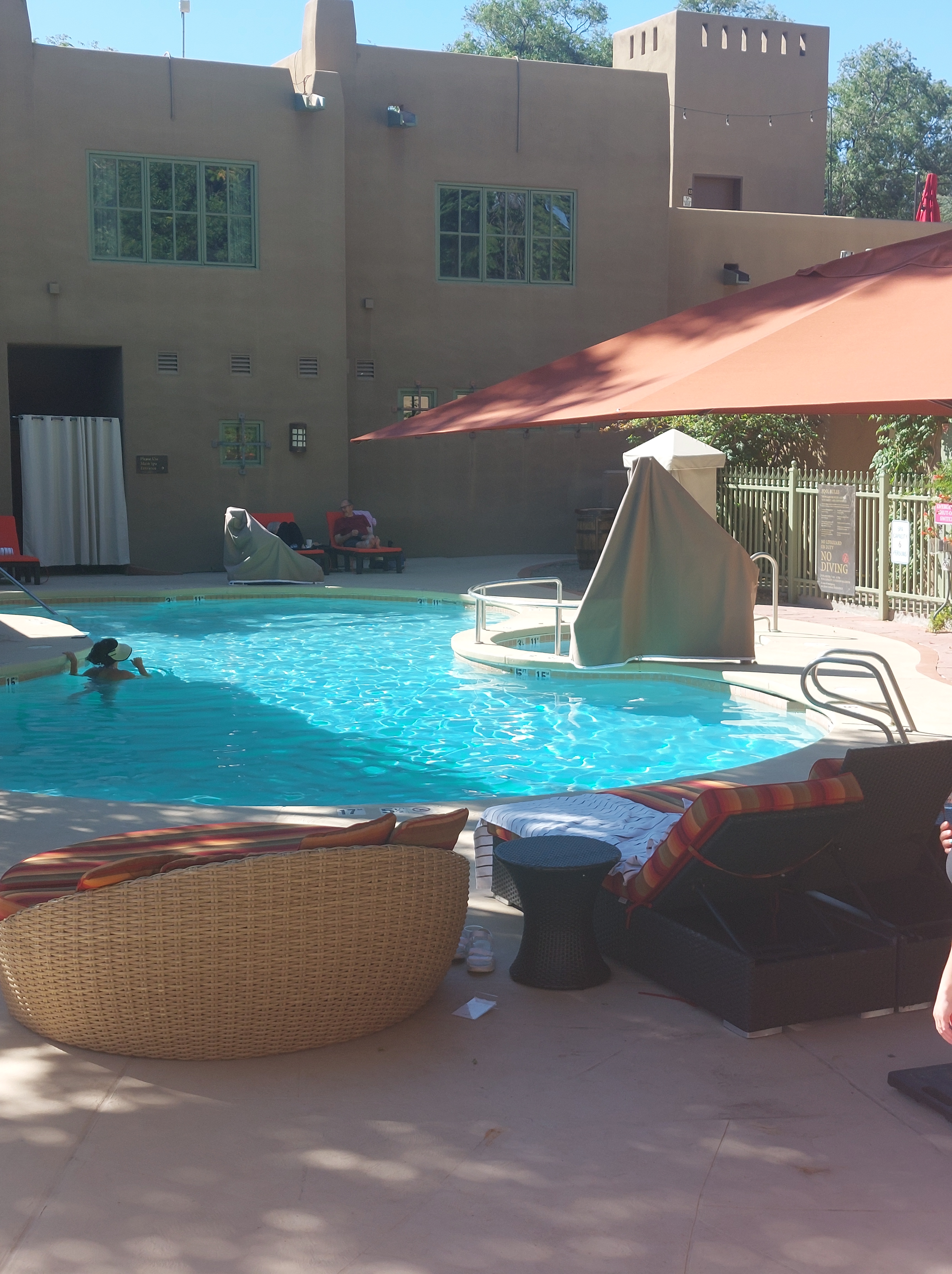
La Posada de Santa Fe is walking distance of the main plaza. It resembles a pueblo village with numerous villa-style suites. The grounds are beautifully landscaped with several hundred flowering potted plants. One can dine indoors or out. I have only stayed once in a hotel as expensive as La Posada, and that was for a room overlooking Copacabana Beach in Rio de Janeiro for the New Year’s Eve fireworks show, one of the most spectacular in the world. The Posada is a splurge but offers value for the money, except perhaps on the weekend when rates surge. I sent a complaint to booking.com that my price quote showed the total price for my five days but not the huge difference between midweek and weekend fares. I would have planned my dates better to take advantage of the lower weekday rates. As one might expect in a resort of this quality, dining is quite expensive. Breakfast and lunch with tax and tip average about 30 dollars. Dinners are quite expensive: a pork chop dinner on the menu listed at 52 dollars and a half chicken 32 dollars without beverages, tax, and tip. The mornings when I didn’t have time for a full breakfast, a coffee and bagel with cream cheese cost 16 dollars with tax and tip. Staying here would be prohibitive for many with families. There is no fast food nearby. I ate in mostly locally popular cafes recommended by the shuttle drivers with one big splurge, The Bull Ring, reputedly the best steak house in the city. The photos of the Posada below show why I felt the splurge was well worth it.




Georgia O’Keeffe Museum
Friday September 8, I enjoyed this beautiful museum. The artist’s home, Ghost Ranch, is much farther afield and requires a longer reservation time plus transportation. To limit crowding at the museum, one buys a ticket online for a 15 minute time slot. The night before I reserved the 11-11:15 am time slot. The hotel shuttle got me there early but the museum was not crowded so I was allowed to go in at the 10:45 slot. I do not get a thrill looking at the artist’s easle, or the paint-spotted apron she wore. But the paintings are wonderful with detailed captions along side each one. Here is a sample, all oil on canvas.


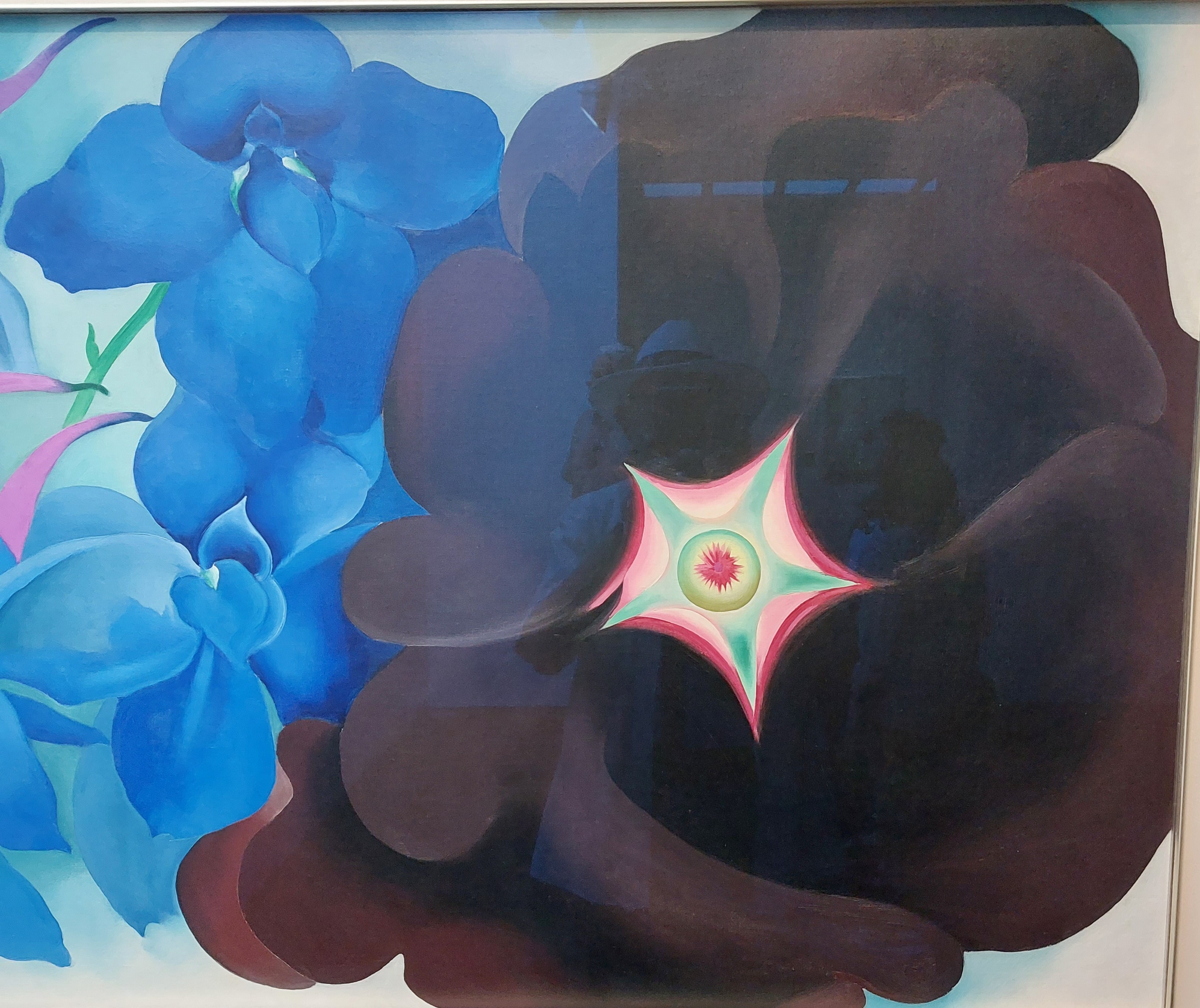
The rest of the afternoon was a loss as far as tourism goes, but I had read online that free flu shots were available at CVS, Walgreens, and other sites. They will not be available in Mexico until late October or November. There is a CVS at a plaza a 15 minute walk from the musuem. Alas, one had to reserve online, and there were no more spots available this week. I called the shuttle and returned to the hotel to search for another vaccine site. First I stopped for a light lunch at the popular Palacio Restaurant two blocks from the Posada and I enjoyed superb chicken enchiladas. The serving was huge, including beans, pozole, and pico de ga. Back online I found a Walgreens with a 4 pm time the same day. I tried to get an Uber starting at 3 pm. There is no Taxi service in Santa Fe. After an hour with no Uber driver responding, I phoned the pharmacy saying I would miss the appointment. Luckily it was a slow day and I could arrive late. I begged the hotel shuttle driver to take me, normally not allowed outside a two-mile range. He drove me there cheerfully and I phoned a half hour later and got a return ride. What service. But with no taxi service in the city and Uber notoriously unreliable, one has to stay in a hotel with a shuttle service or rent a car. The car would be sitting idle most of the day if you wanted to enjoy the resort, and driving in Santa Fe is confusing with so many one-way streets. The Shuttle at the Posada is included in the resort fee, although gratuities are expected. The drivers are the most agreeable people on the Posada staff and they can provide tourist advice as good as a concierge service.
Saturday September 9, a full day on Museum Hill
Museum Hill is within the Posada’s shuttle range and I headed there to enjoy the splendid venues it offers. It was another beautiful day with blue skies and mild desert heat, the same every day during my stay except for my departure day when there was a light shower. Before it got too hot, I headed first to the Santa Fe Botanical Garden.
The Botanical Garden cannot compare with the one in Albuquerque, and it is much smaller than most of the gardens I have visited in multiple cities and countries. It’s 20.5 acres are mostly scrub land with plants selected that can survive the desert climate. But the trails make for a pleasant stroll with some flowering species as well. You can see it all in less than an hour.
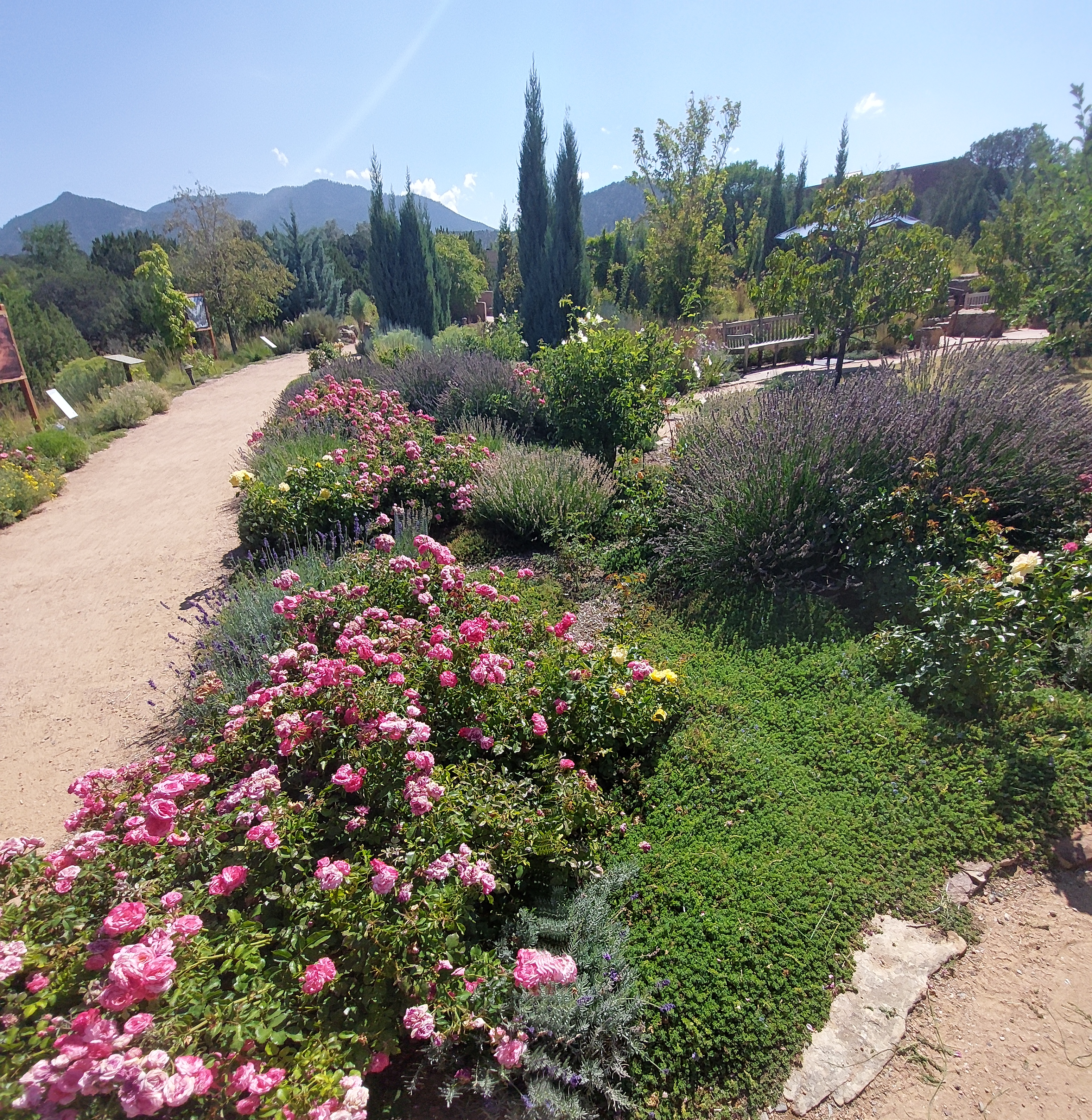


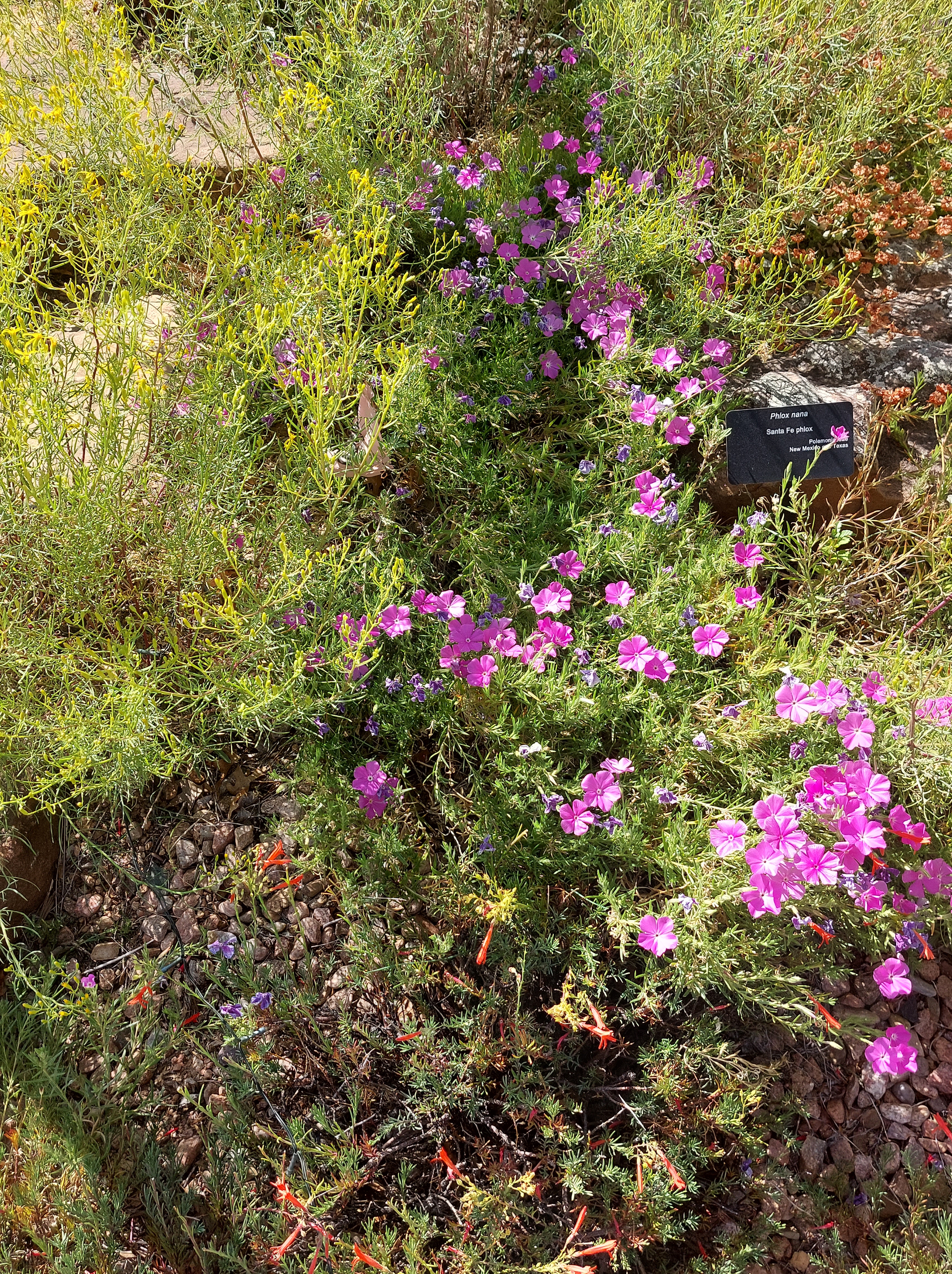


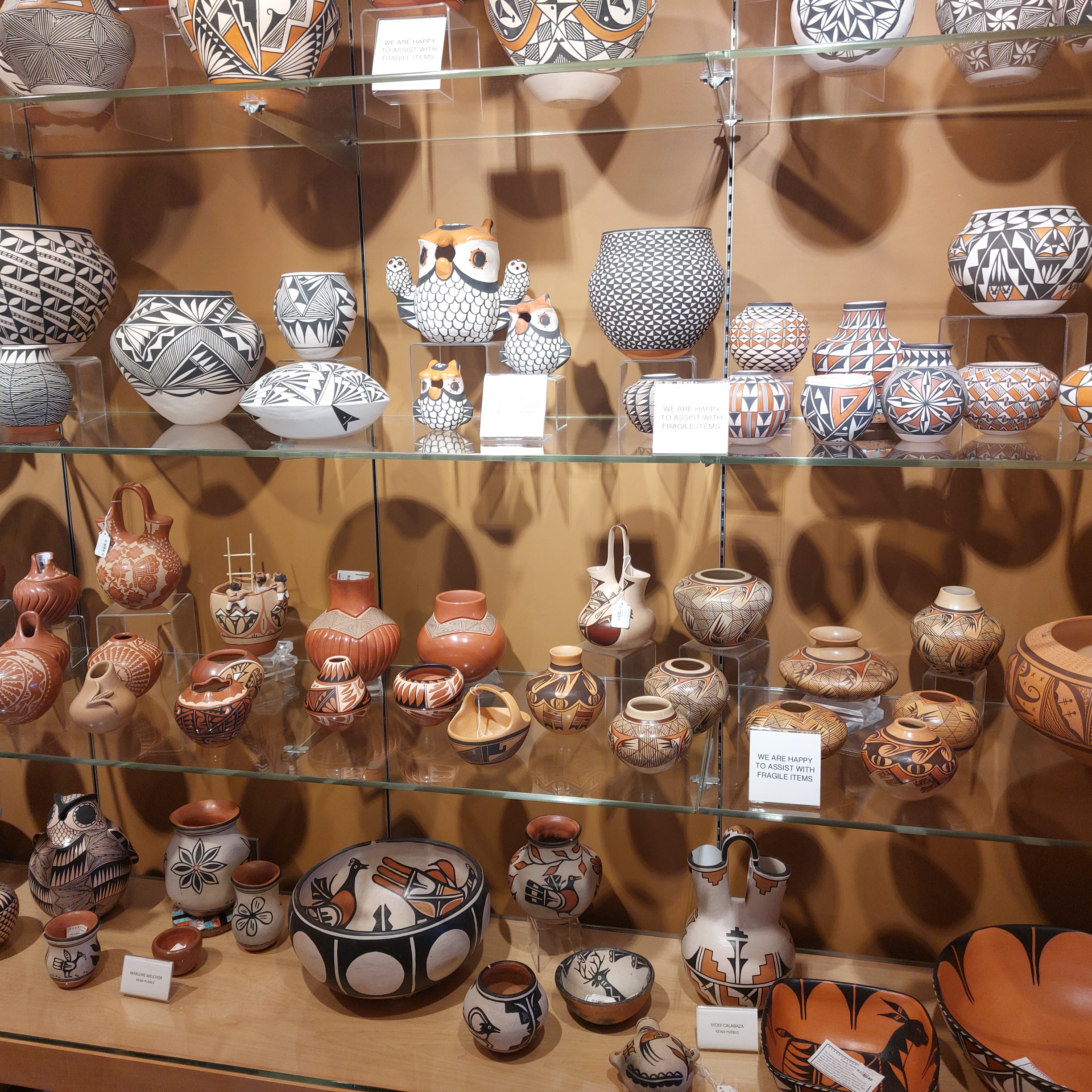
After the garden, I took the elevator up the hill to the plaza that holds two excellent museums. I started at The Museum of Indian Arts and Culture. The collection of ceramics includes both ancient and contemporary. There are examples of native dress and jewelry, and video interviews with current residents of the pueblos, some depicting how they perform their crafts. One would need quite a bit of time to watch all the videos to their end. I was most impressed with the displays of native weaving of both rugs and wall hangings from the Diné culture (the Navajo name for themselves). I could understand why so many visitors to the area want to own one.



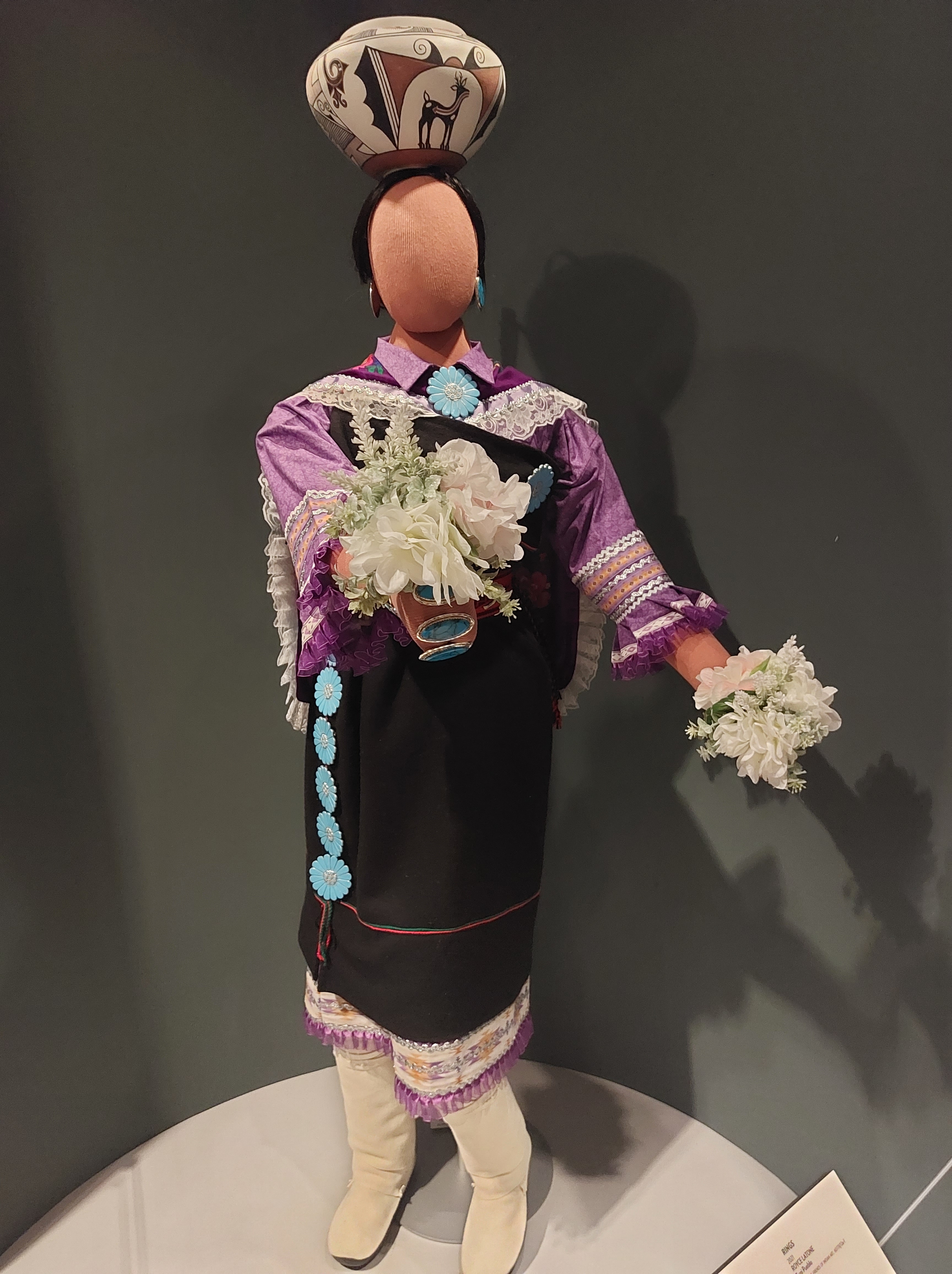
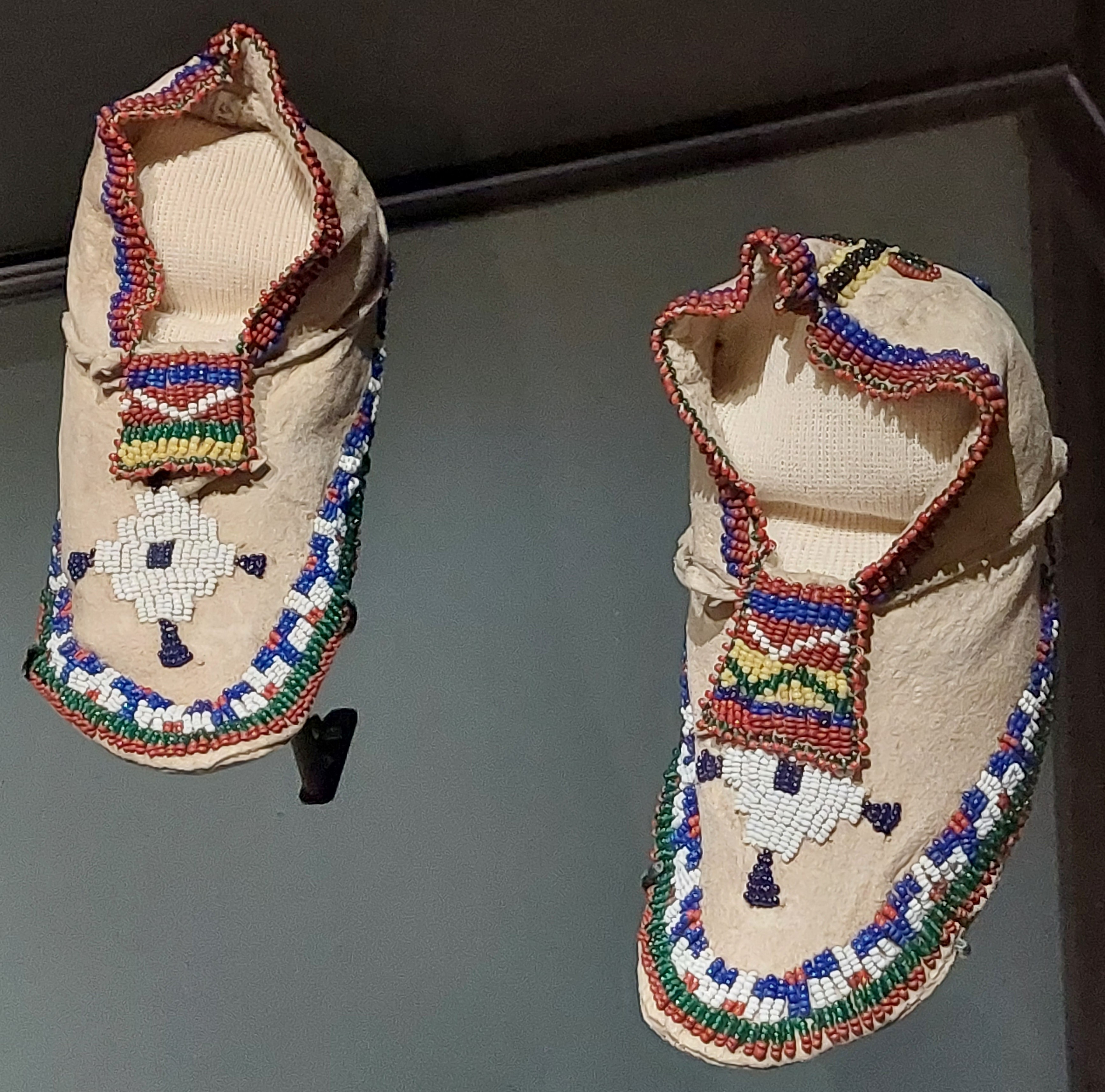
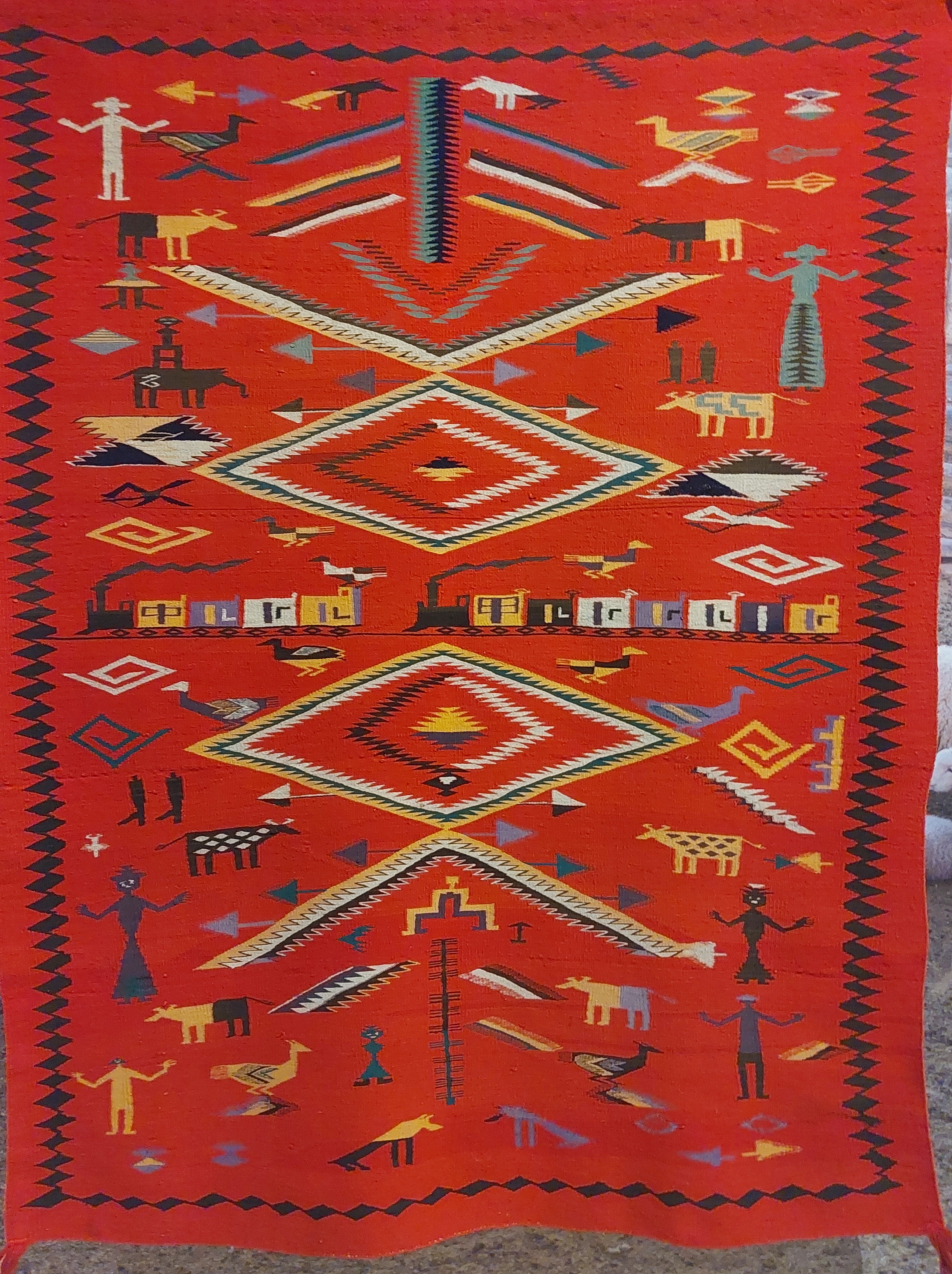
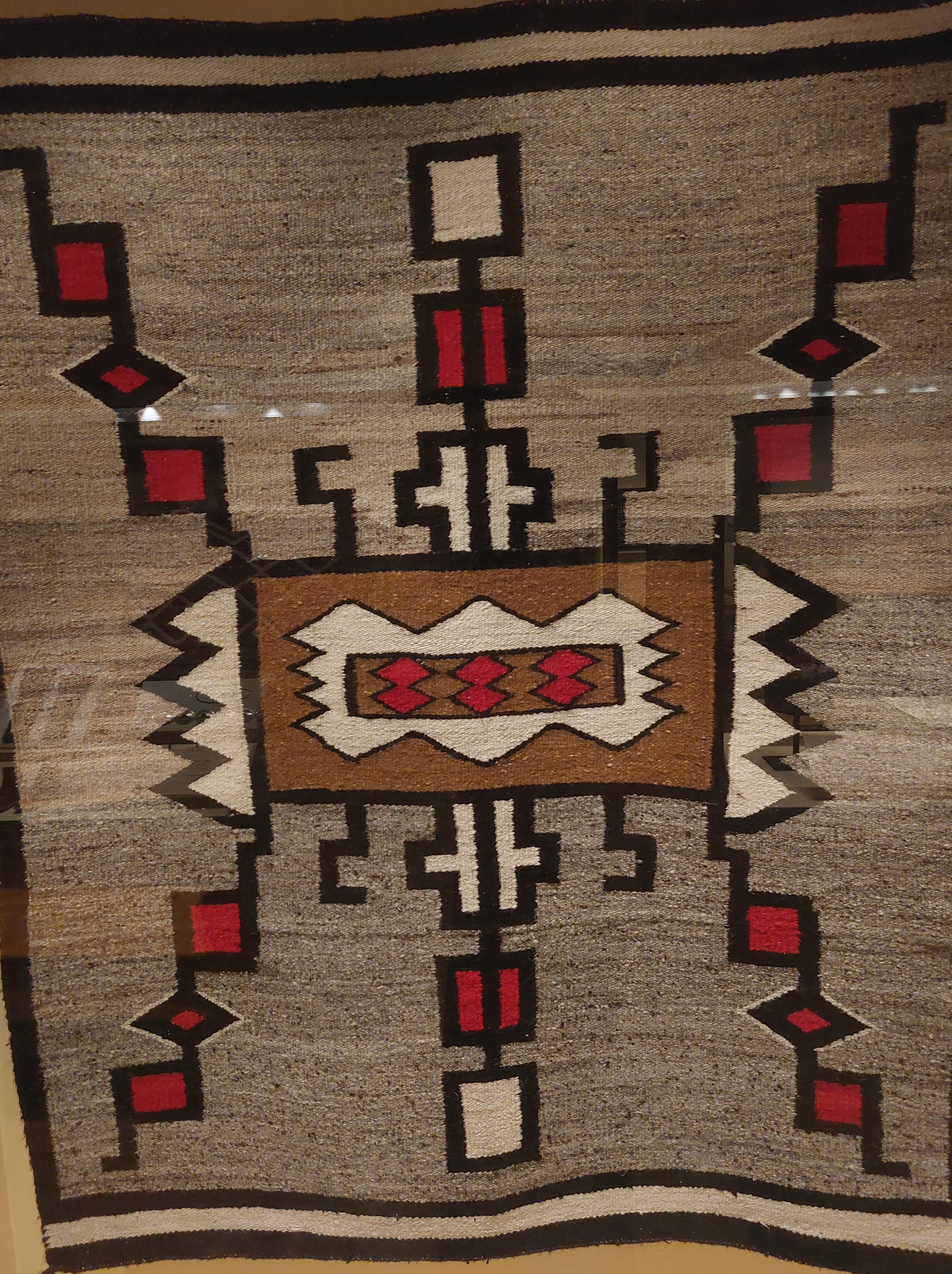
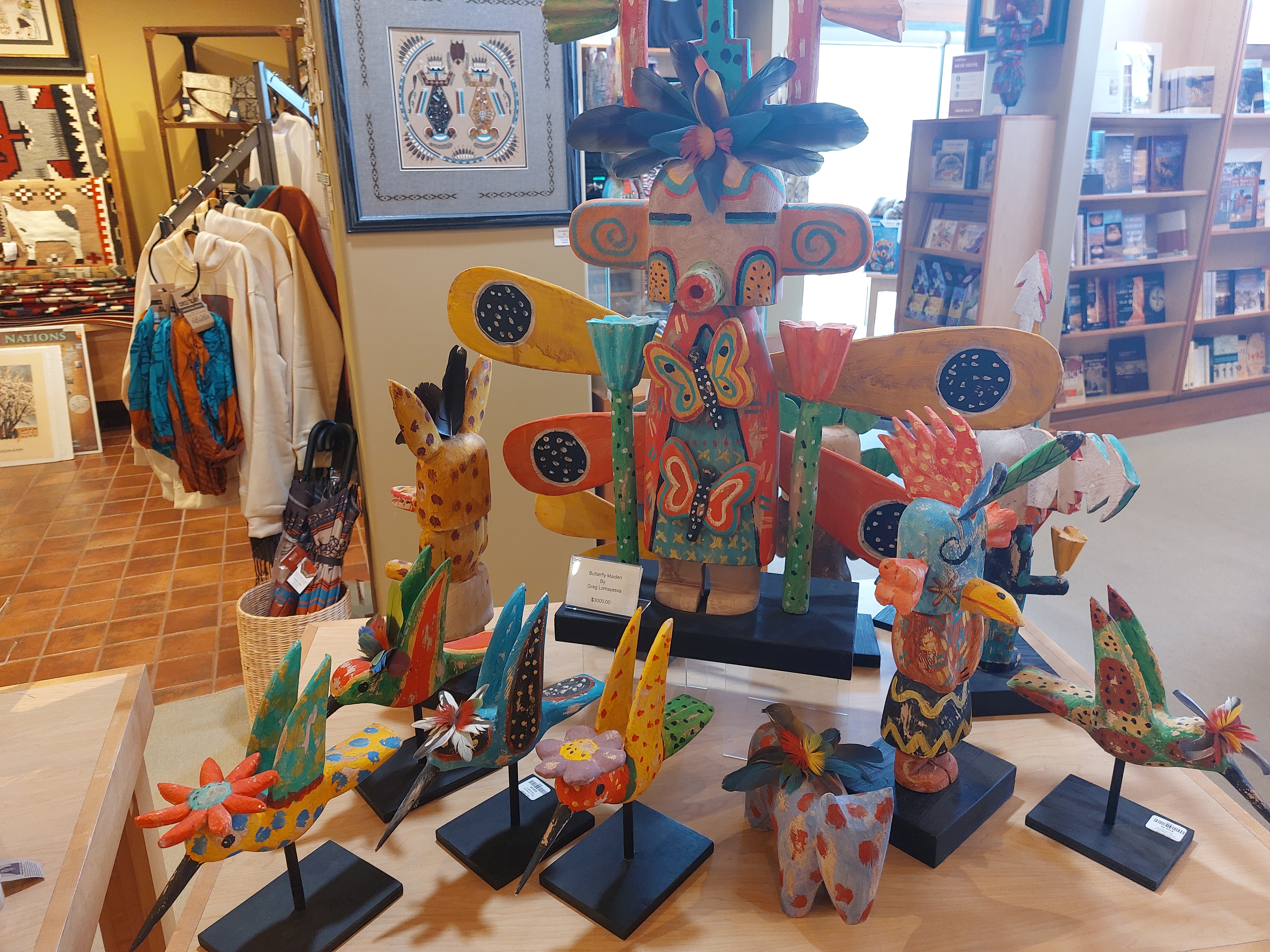
The International Folk Art Museum occupies the other end of the plaza. It holds a magnificent collection of over ten thousand items. In the plaza as one approaches the musuem there are currently on display colorful alebrijes, huge fantasy figures usually found as small wood carvings especially in Oaxaca and larger papier maché in Mexico City. Inside more figures are displayed as part of the current exhibit of cartoneria (cartón = cardboard), similar to papier maché.

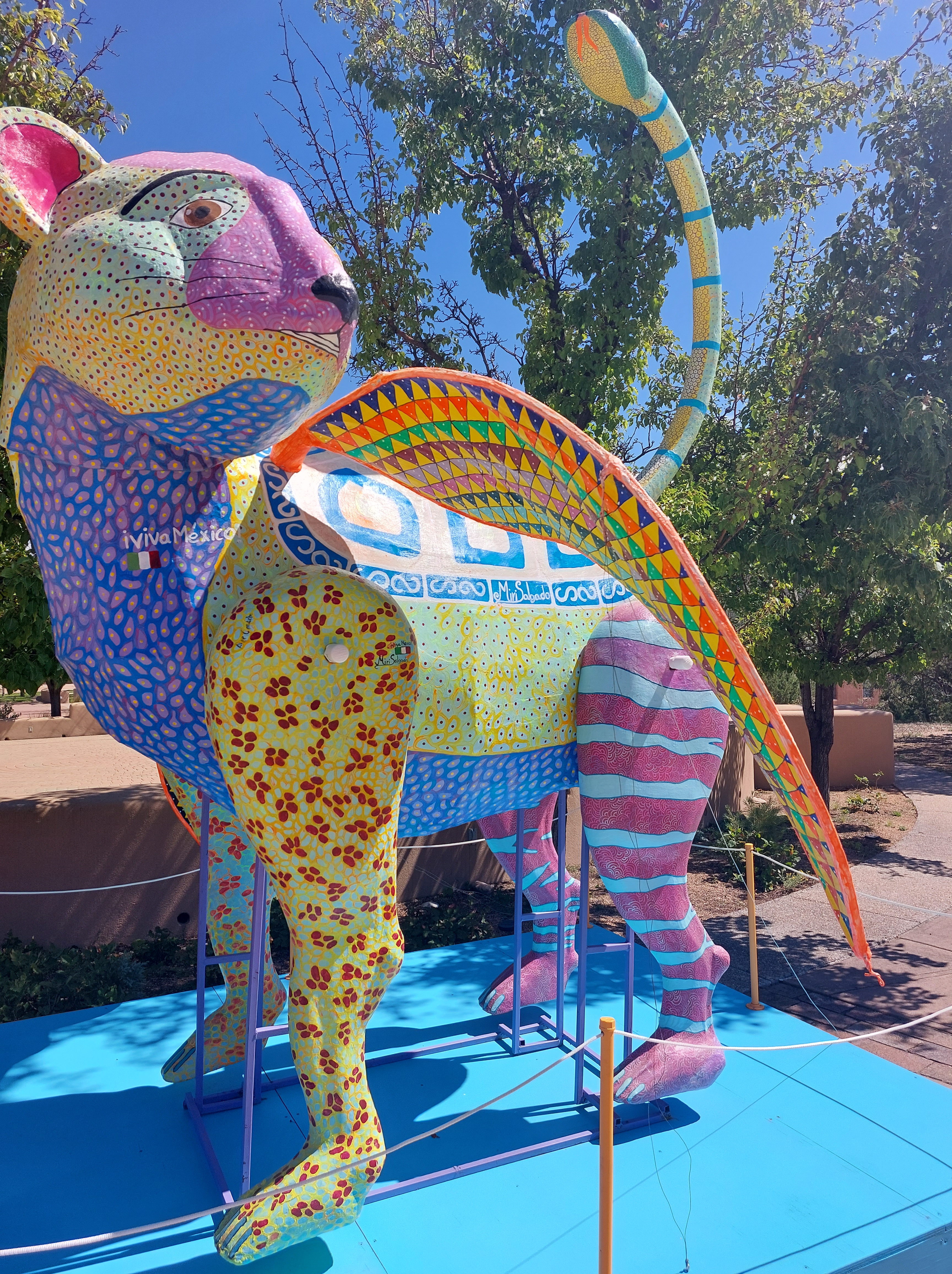

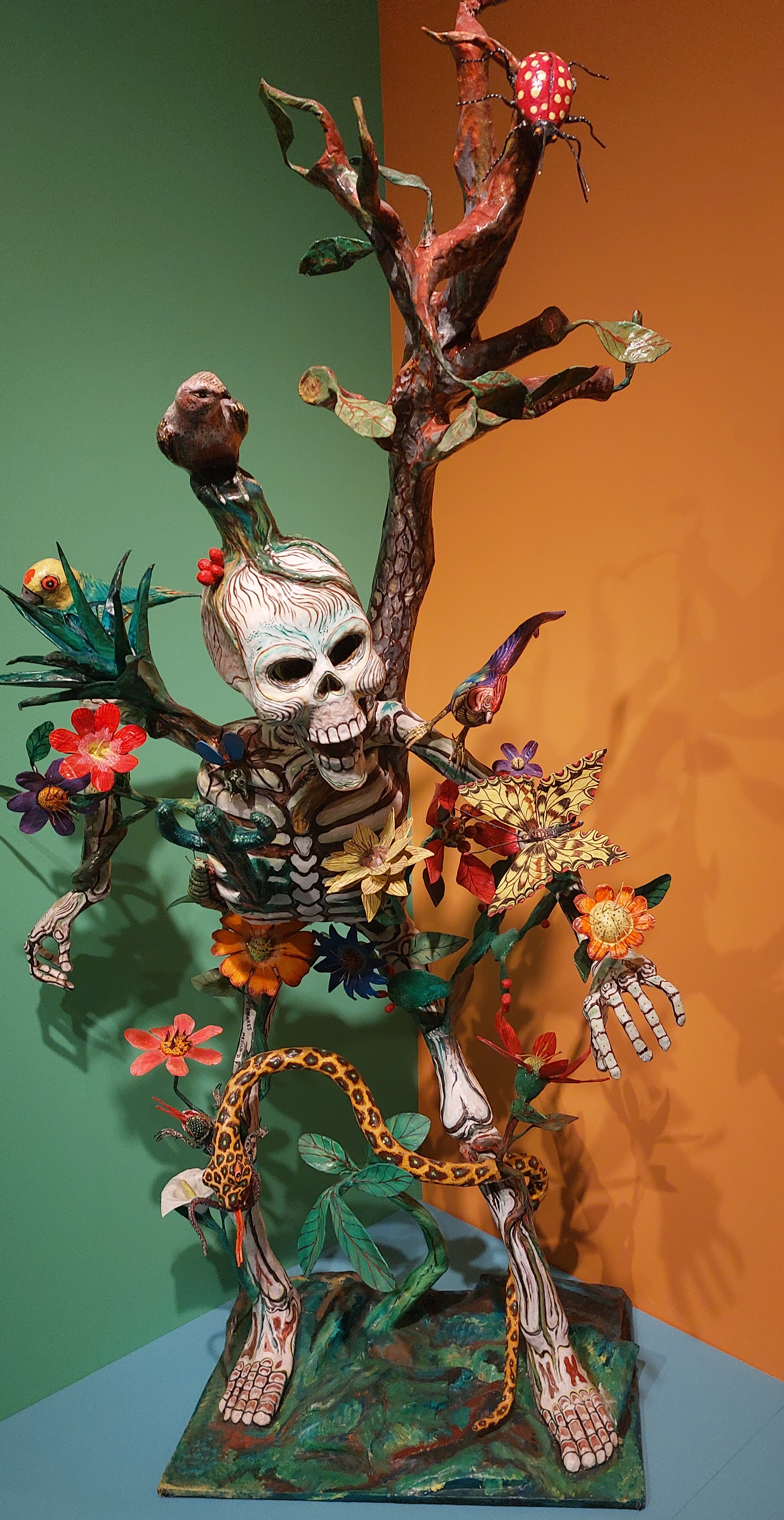
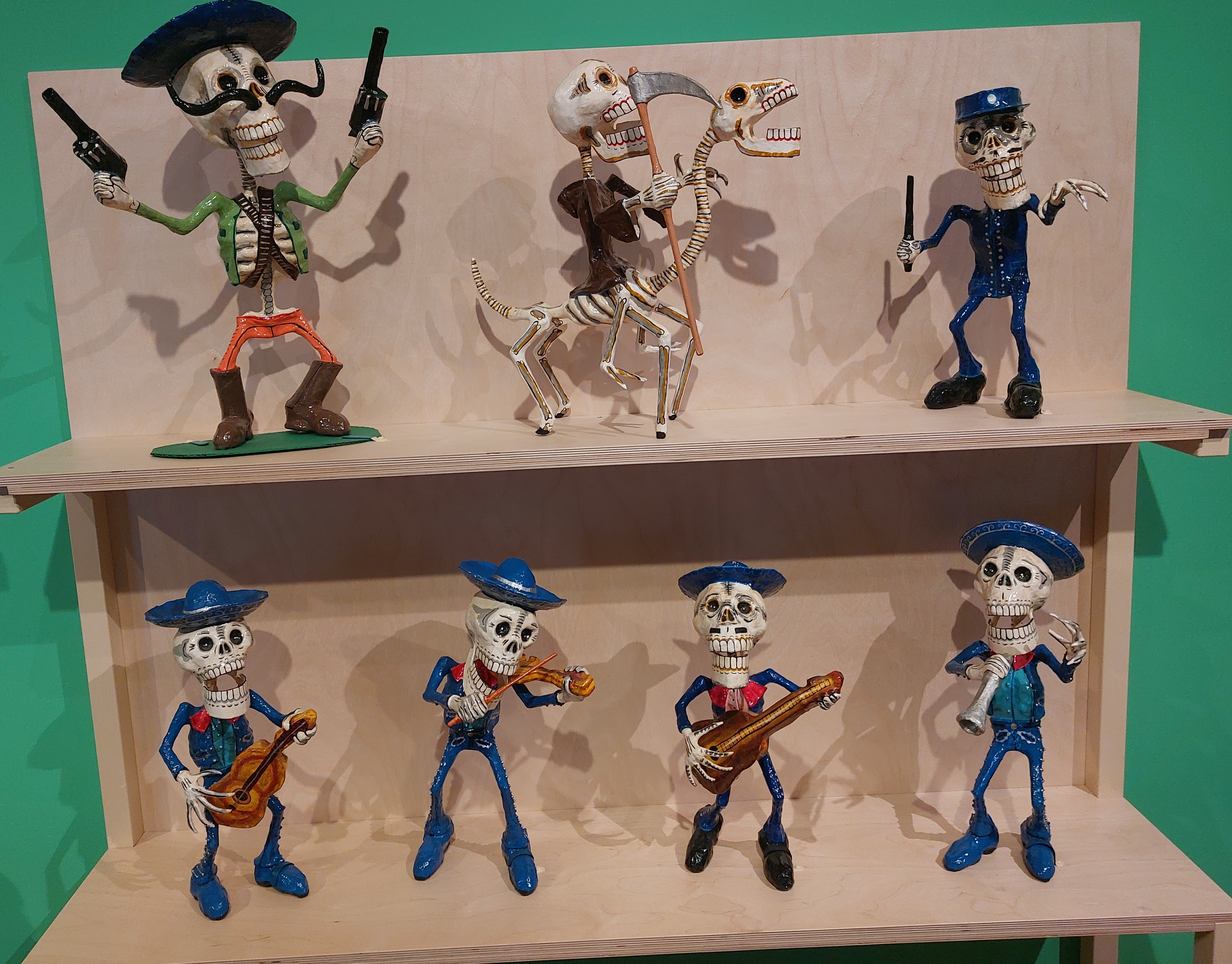

Inside, despite small exhibits from Japanese culture and Alaskan winter parkas, the Mexican collection predominates and surpases the wonderful Museo de Arte Popular in Mexico City. There is a room full of dioramas, fanciful reproductions of village squares and scenes of weddings and funerals. The gift shop is as impressive as that at the Museum of Indian Arts and Culture. Between the two museums on the hill is a delightful cafe with reasonably priced delicious meals. You need to plan plenty of time if visiting the botanic garden, two museums, and the cafe. The day on Museum Hill was one of the highlights of my stay in Santa Fe.
September 10, A Guided Tour to Taos.
I didn’t want to leave New Mexico without a visit to highly regarded Taos. I spent a long time searching online for tours. I didn’t want to rent a car since I would not know what I was looking at without a guide. Most tours wanted a minimum of four participants, and one offering of a solo tour cost 500 dollars. Finally I found Southwest Adventures, an agency that tours various locations around Santa Fe, swadventures.com. But they had only one Taos tour confirmed for September 10. I was reluctant to wait until my last day in fear that weather or some event might result in cancellation. Since the weather forecasts looked good, I decided to book and I’m so glad I did. I can’t imagine doing this day trip without an excellent guide. Monique Schoustra was the driver and guide in a comfortable van with two couples traveling together. The five of us hit it off delightfully and Monique charmed us all with the depth of her knowledge. I found the drive more interesting than the destination. I finally got to see the Sangre de Cristo mountains, the southern terminus of the Rockies that Oppenheimer loved.
Our first stop in about 30 minutes was the Sanctuary of Chimayó, an adobe church dating from the early 1800s. A small room off to the side holds a pit containing the “holy mud” that some pilgrims used to eat but now just rub on their bodies. The site gets about 300 thousand visitors a year, mostly during Easter Week and other Catholic holy days. The mud today is not original but dug from the nearby hills and blessed before it refills the pit. The site has an excellent shop selling art and crafts, and the public rest rooms are clean.




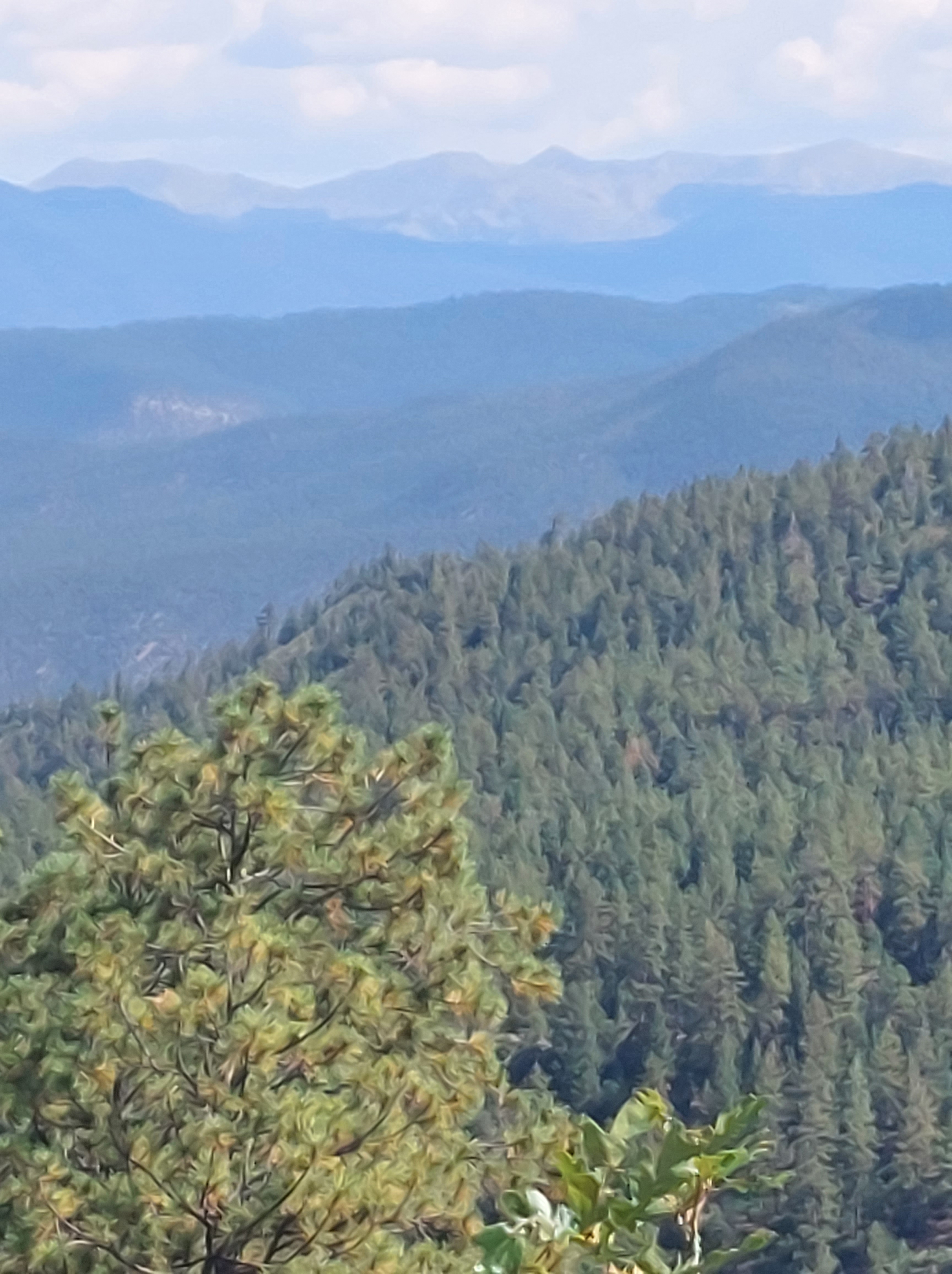
For most of the drive we were in the Carson National Forest, 1.5 million acres, named after Kit Carson. The views from the highway make the drive one of the best parts of the tour.



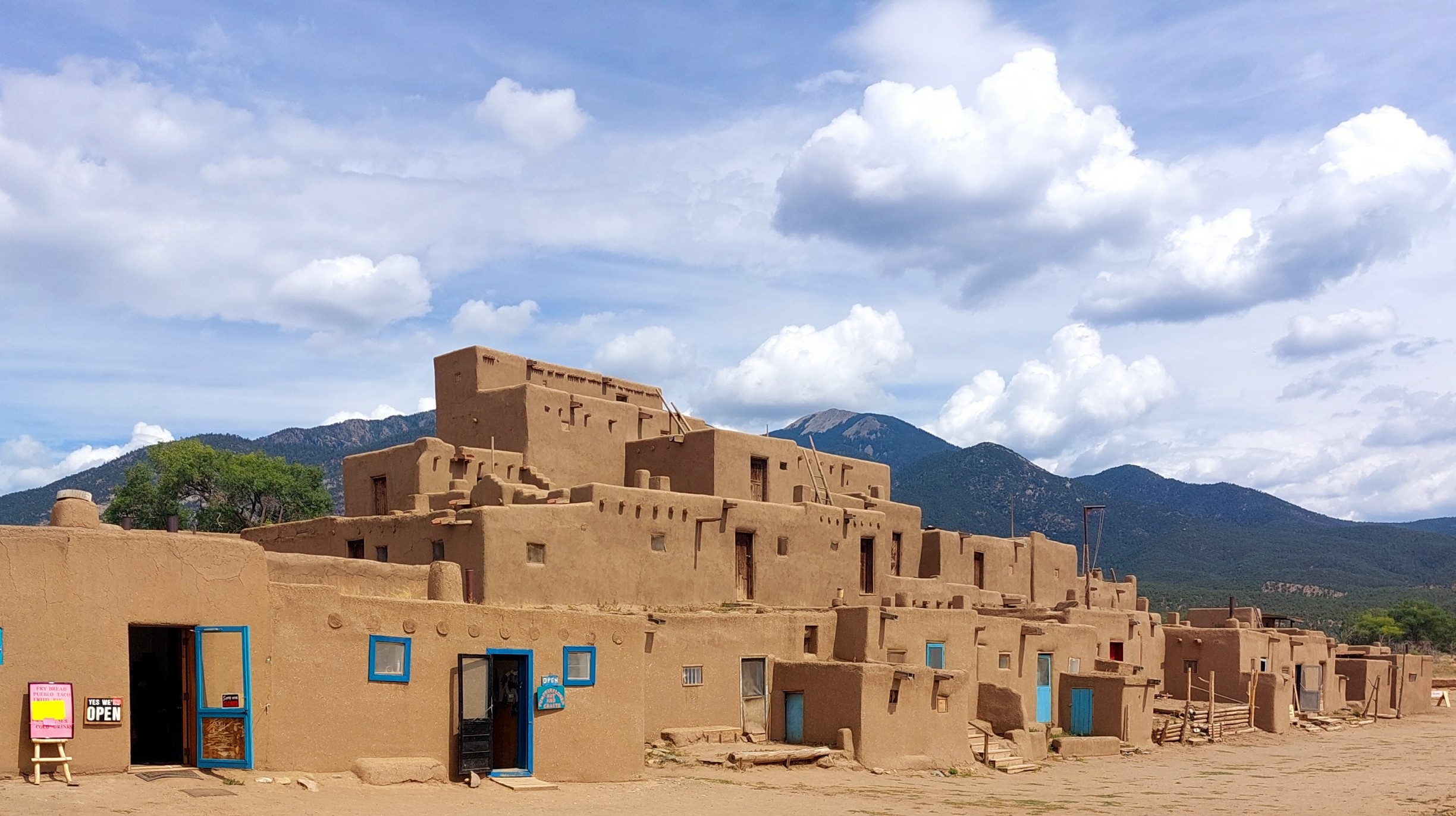
It was still before noon when we got to Taos and we decided to visit the Taos Pueblo before lunch in the town. Monique paid the entrance fee (25 dollars, 22 for seniors) and we used a printed page for a self-guided walk of 45 minutes. One can sign up for a longer tour with Taos natives. The pueblo is a UNESCO World Heritage site, the oldest continuously inhabited community in the US, dating from about 1000 common era. Many of the habitations are shops and visitors are welcome to enter to see the interiors. I chose not to photograph people.
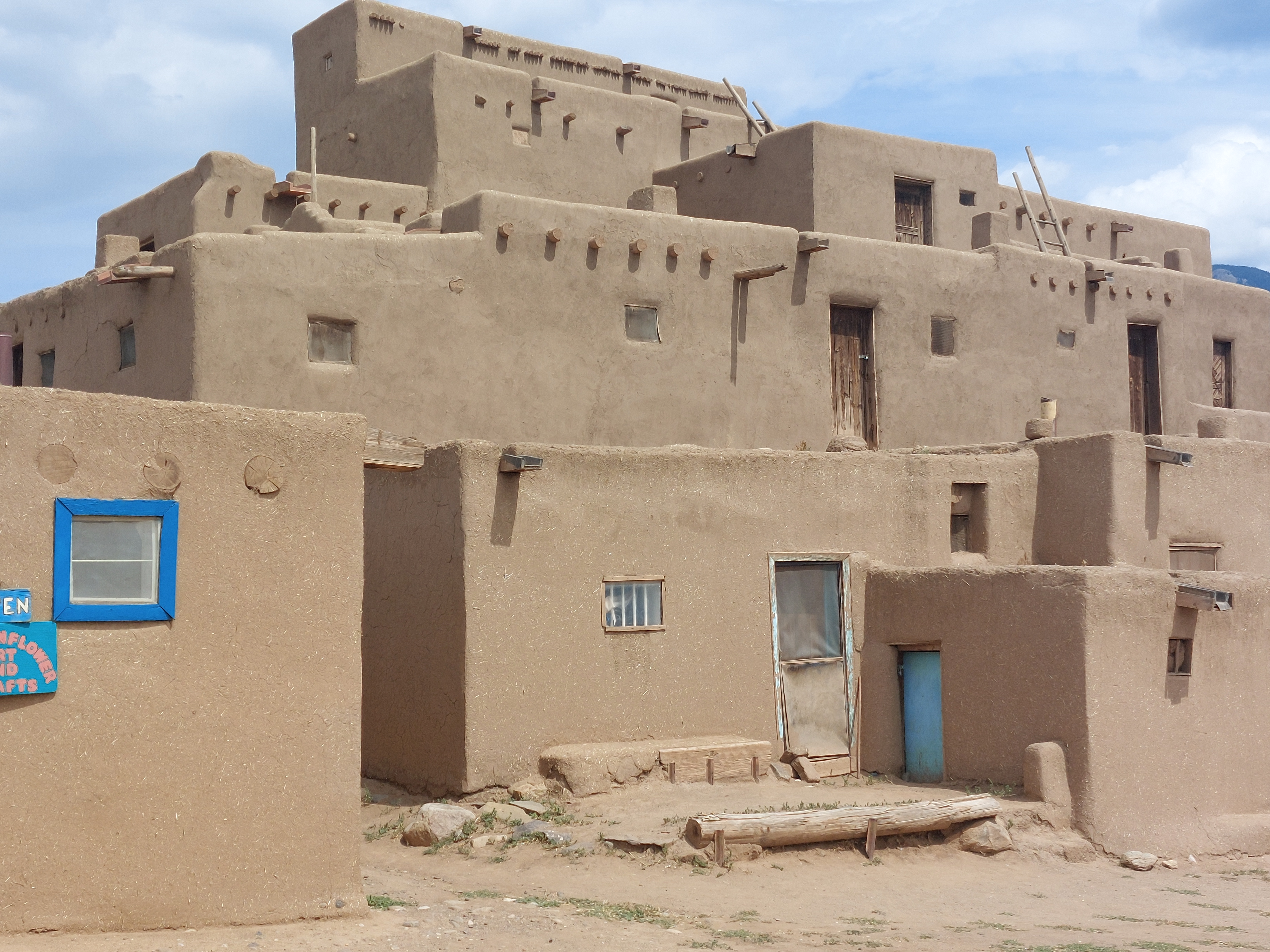
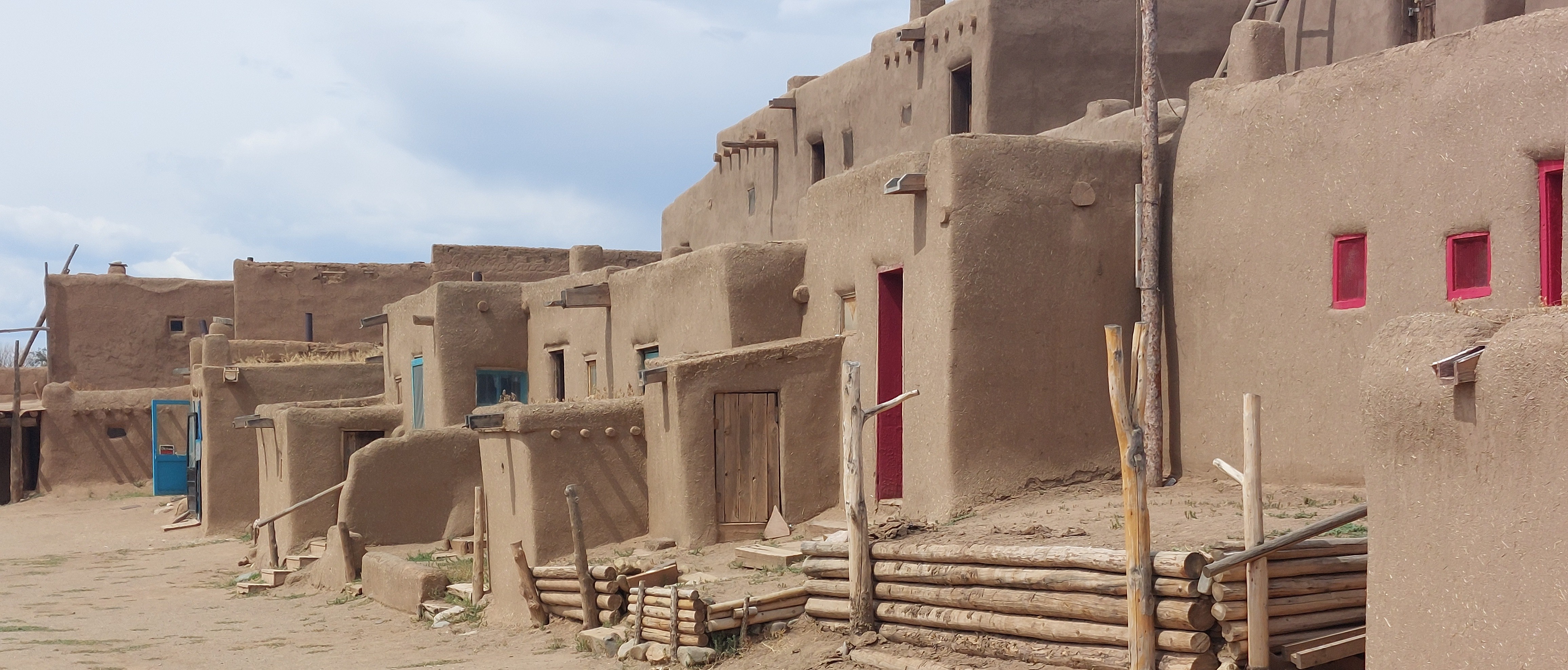


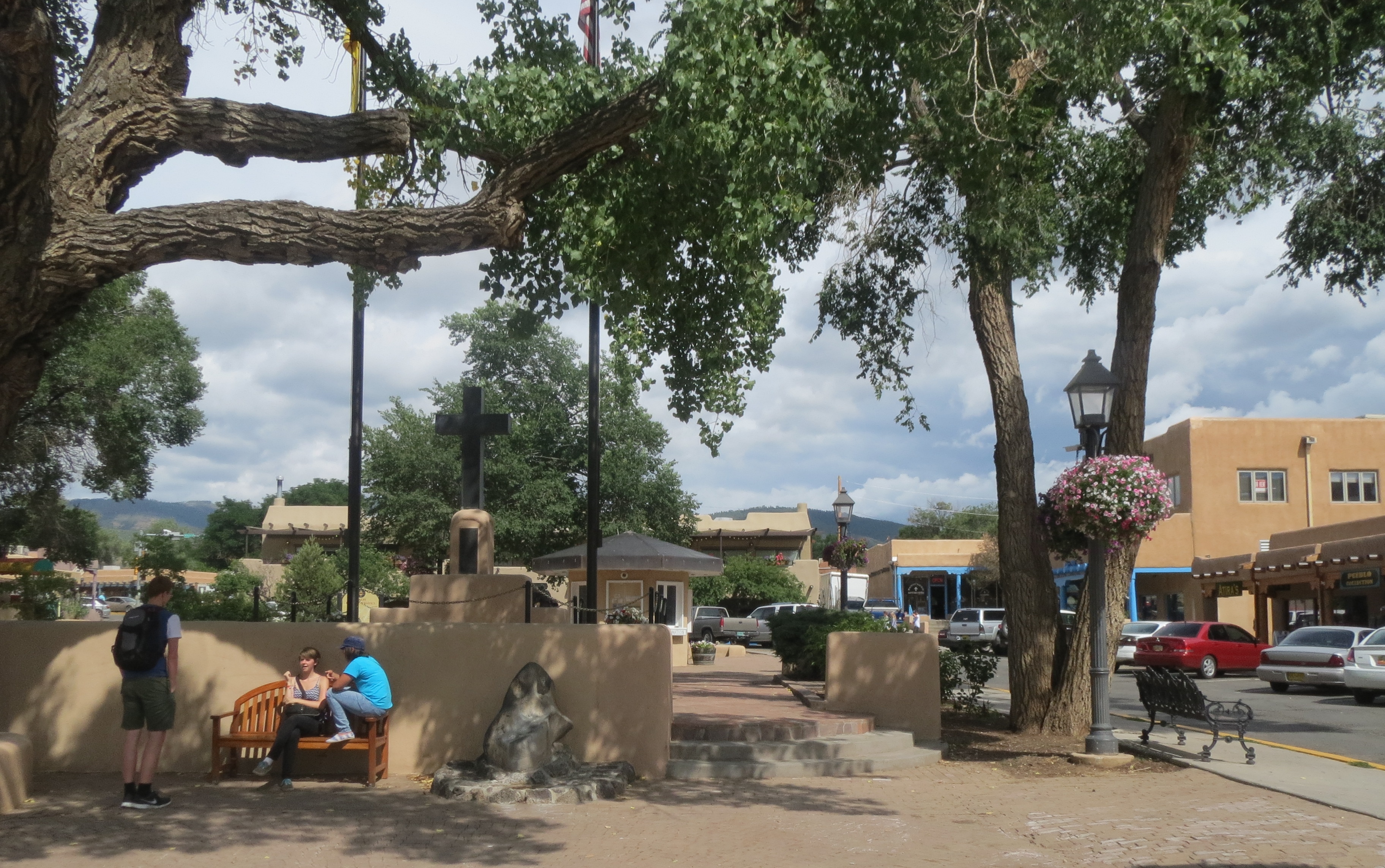
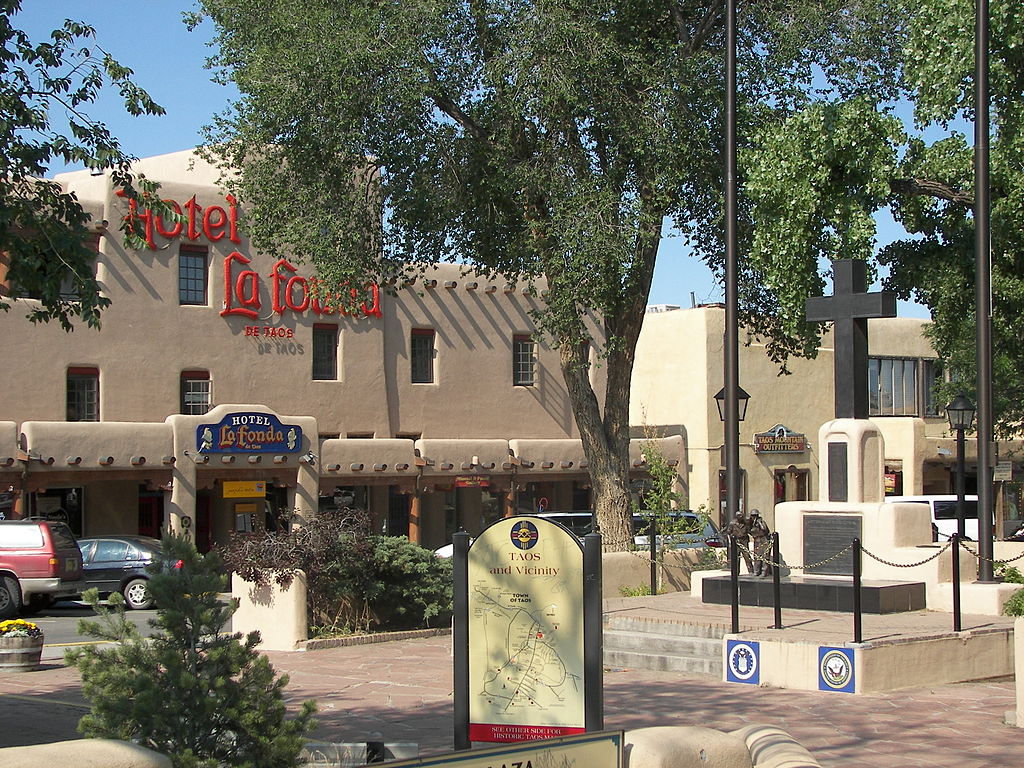
We arrived in the town of Taos about 1:30 and Monique pointed out places for lunch, then parked near the main plaza so we could find the van later. Alas, the plaza is being dug up for reconstruction and was not at all photogenic. The town goes back to the early days when New Mexico became a territory in 1850 and a state in 1912. It became an artists’ colony in the early 20th century. Nearby one can hike, white-water raft, fish, or contract a balloon ride. In the winter it becomes a sport’s center with four ski resorts within an hour’s drive. The town boasts three art museums and 80 galleries. We had no time to visit those. The two couples on the tour stayed on in a hotel there so they had time to explore more. There are a number of homes of famous artist residents and also the Kit Carson Home and Museum. He was a famous explorer, trappper, guide, soldier, and US Indian agent, a hero of 19th century dime novels. His halo was burst by changes in attitudes toward the treatment of the Indians depicted in Dee Brown’s Bury My Heart at Wounded Knee, first published in 1970 and later made into a movie. The book details the vicious murder of Indians and the destruction of their cultures. A more thorough story can be found in Hampton Sides, Blood and Thunder, An Epic of the American West, New York: Doubleday, 2006. I own that book and will reread it soon. There is no way one can explore the town and the pueblo thoroughly without spending a few nights. From what I saw, it has become too commercial for me and I am not one to go art-gallery traipsing since my walls at home have no room for any further decoration.
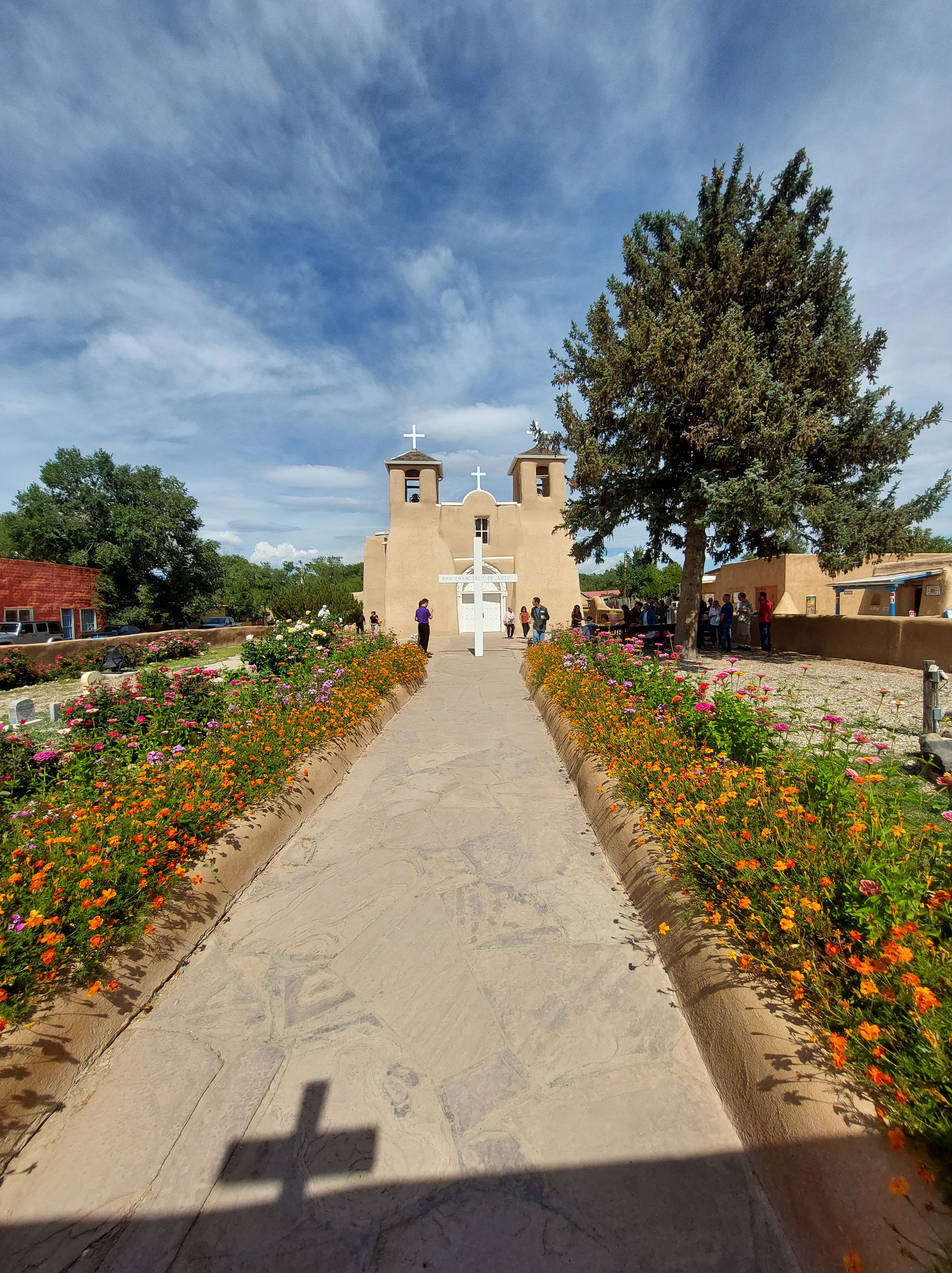
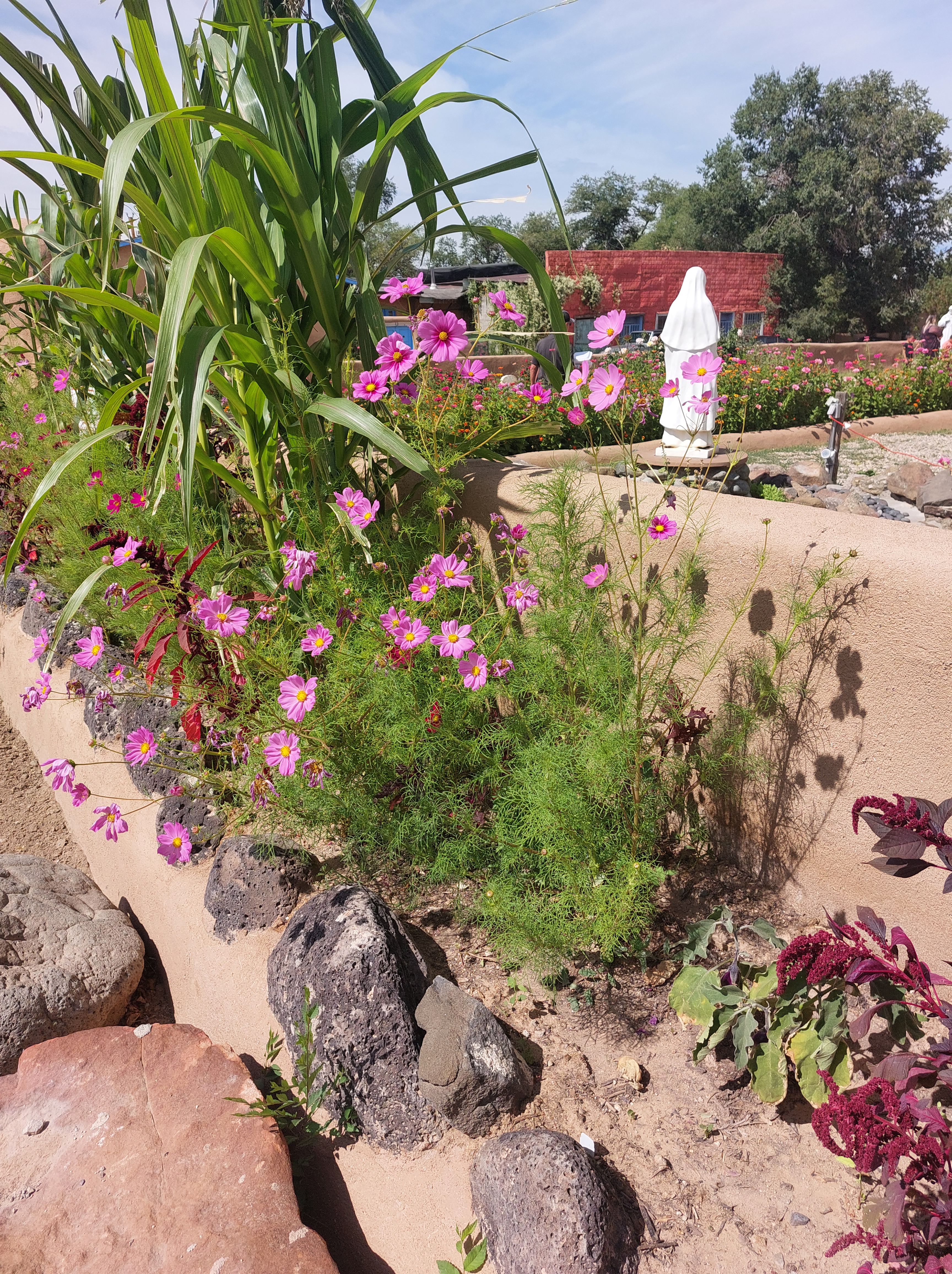
We also stopped at the San Francisco de Asis church, allegedly the most photographed building in the State. Georgia O’Keefe painted it. It was too crowded outside due to a coffee and pastry event so we stayed only long enough for some photos.
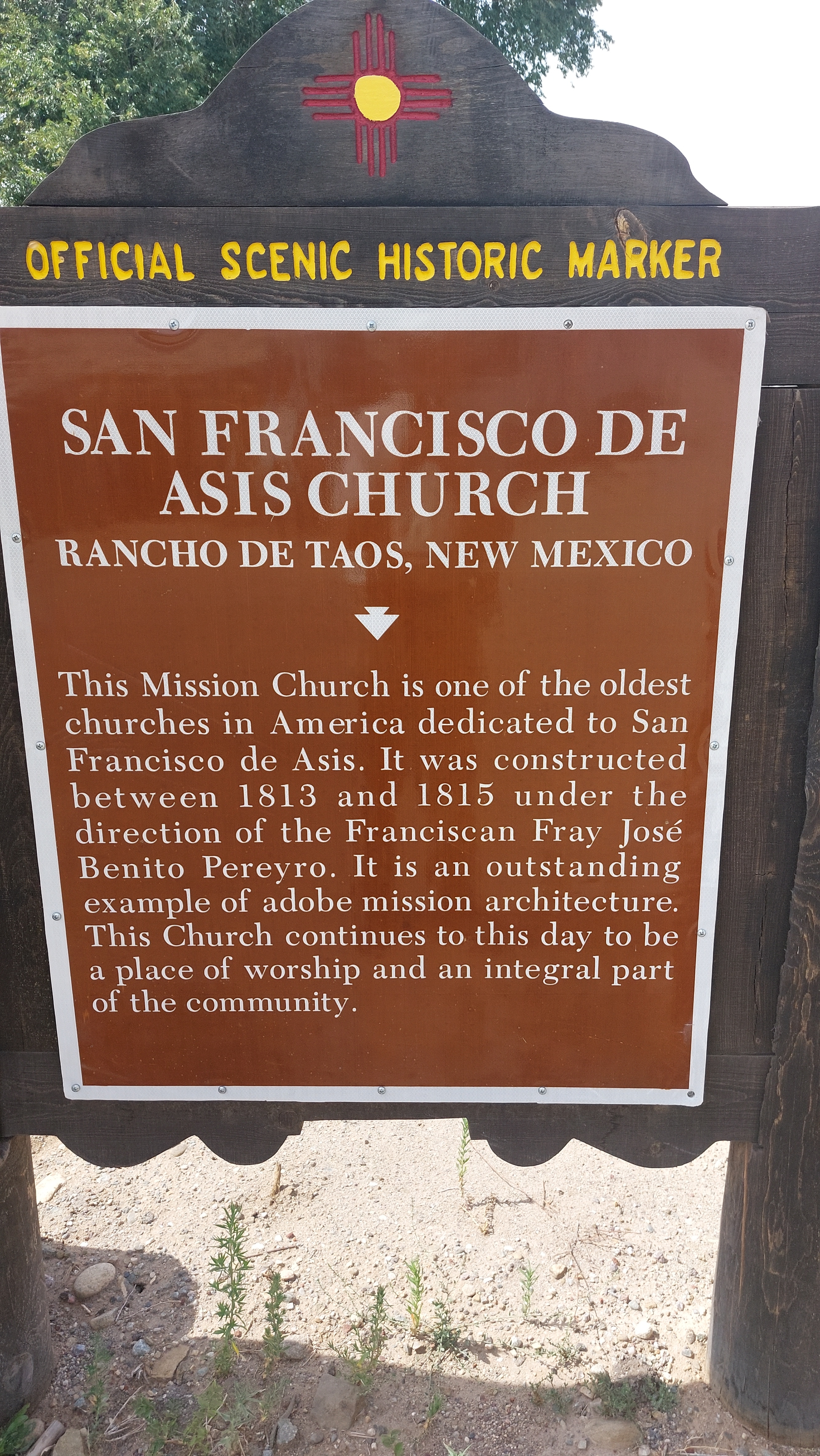

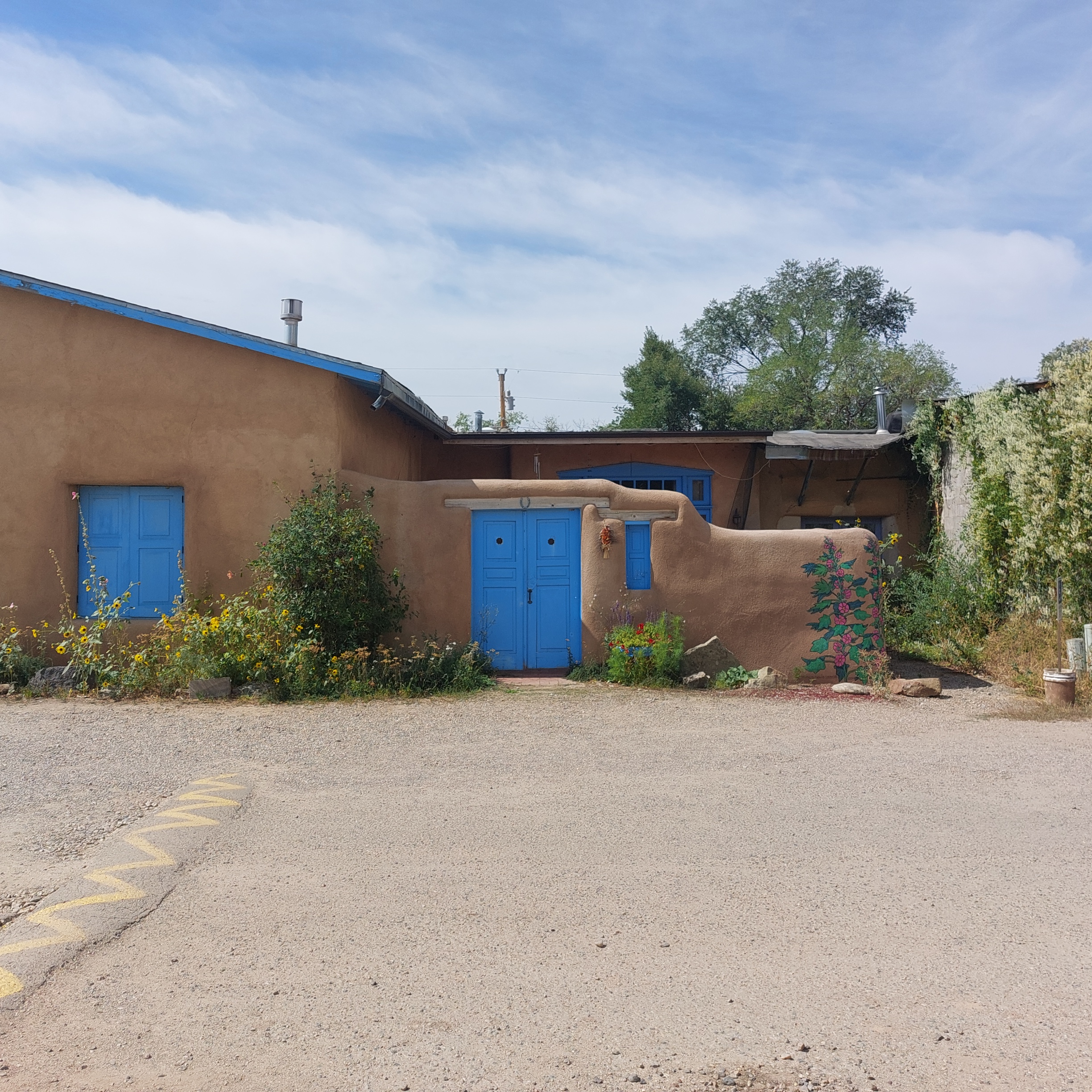

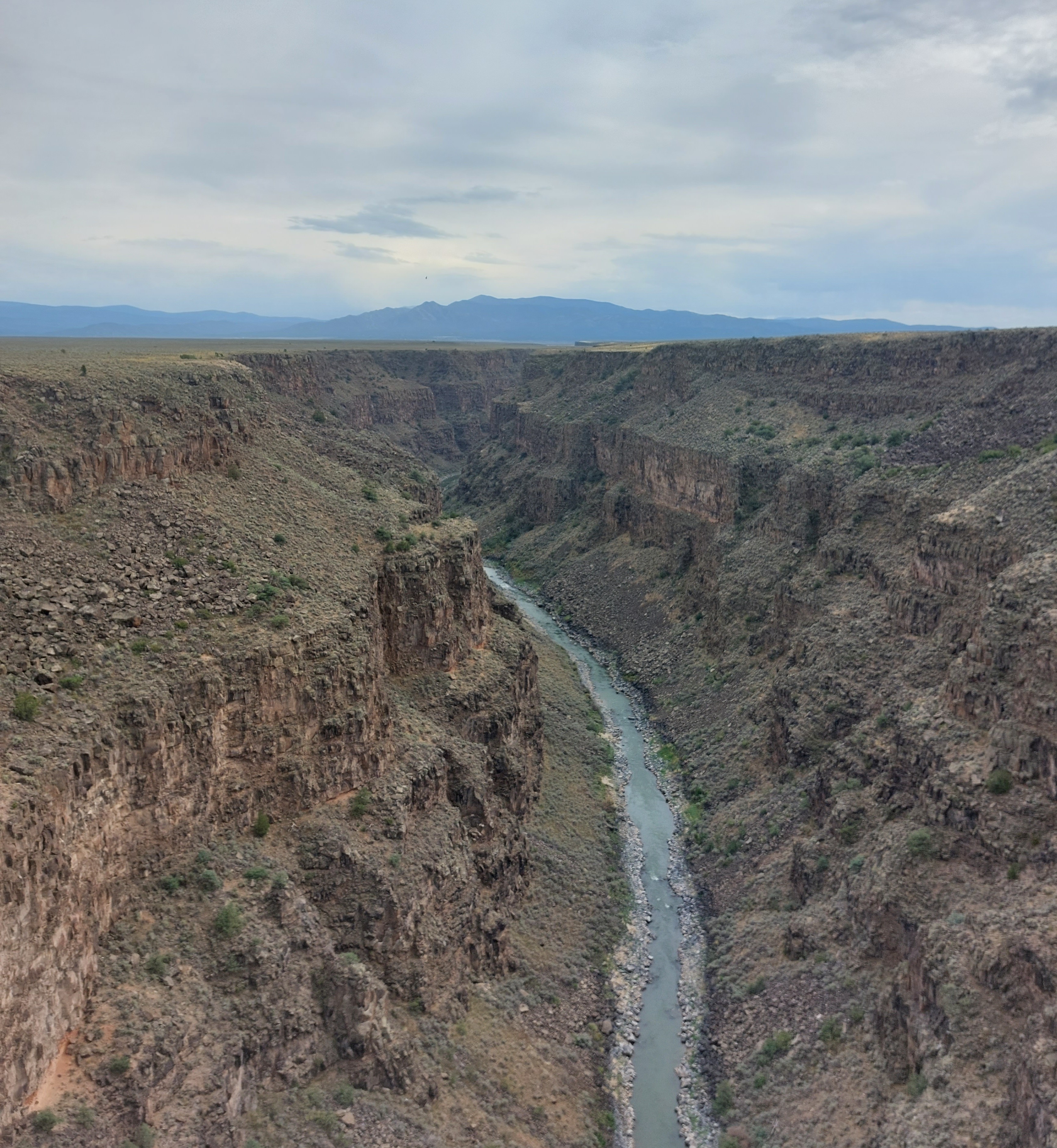
After lunch, Monique drove us to the Rio Grande Gorge bridge She parked on the other side and we walked the bridge with really heavy winds of at least 50 mph. As if the heights were not scary enough! We drove back into town to drop off the two couples at their hotel, so I was the only passenger going back to Santa Fe. I took advantage to learn more from Monique, and her wealth of information made for a great tour. I got back to the Posada just before 5:30 pm.


I had to pack for my return flight to Mexico from ABQ on Delta via Atlanta with an 8:15 am pickup at the Posada. Finding a reasonable car service was another hassle with prices as high as 250 dollars for the one-hour drive. The Posada reception had cards for several options, of which the best was “Certified Airport Transportation Service,” www,certifiedcarservices.com that charges 130 dollars plus gratuity. The driver and part-owner Bryce arrived early September 11 and I could relax on the drive while he chatted about how he gave up his career in Los Angeles and retired in New Mexico expecting to offer occasional rides but now keeps constantly busy. My flights were on time, my reliable Mexican driver was waiting, and I was back home in beautiful Cuernavaca before 10 pm.
I did not plan the New Mexico trip as an exhausting attempt to see it all, and I wanted to have some time to enjoy the amenities of the Posada de Santa Fe. If you google “what to do in….” each city, you will be overwhelmed with options. Your choices may well be different than mine, but I think I have conveyed a good sample of what these destinations offer. If you have never been, I hope you will add them to your future travel plans.
Feel free to leave comments and corrections (non-trolling, please) in the text. If you wish to receive future blog posts automatically, click on the link “Follow” (“Seguir” if you are in Spanish mode) and add your email. Happy Trails to you.


 Jim Horn News
Dr. Horn,
I thoroughly enjoyed reading of your travels to one of my favorite states, New Mexico. Perhaps for your next trip to that area, I would recommend traveling to the Four Corners area and visiting Mesa Verde (Colorado) and Canyon de Chelly (Arizona). It is an area that I think you would find worthwhile.
Thank you for sharing your travels with us.
Mary Rivera
Jim, thanks for continuing reports of your travel adventures. I enjoyed reading about New Mexican sites. The Folk Art Museum is one of our very favorites.