This was my longest trip to Italy and hence the longest photo essay, over 5700 words, a half-hour read. You can scroll through the 120 photos quicker.
May 14-28. PAVIA, BERGAMO, BELLAGIO, & STRESA.
After saving Delta miles for years, I finally had enough (390,000) for a business-class ticket to Milan. (Rome required 450,000 miles). I chose to visit places in Lombardy that are driving distance from the Milan airport (MXP) and parts of the Lake District that I had missed on earlier travels.
After four previous visits, I had no desire to return to the city of Milan (an hour from the airport). Instead, I chose Pavia (Pa-VEE-ah), once the capital of the reunified Kingdom of Italy, and Bergamo (BARE-ga-mo) in Lombardy, famous for its medieval upper city, both close to MXP. I had been to Lake Como in 2001, and I wanted to revisit the colorful village of Bellagio that I had seen only on a lake-boat excursion. I had been to Lake Maggiore in 2016 and liked it better than Lake Como, particularly the alluring city of Stresa where an Italian friend who winters in Cuernavaca offered to show me places I had missed.
Since my first visit to Italy in 1995, I never need a reason to return, but I wanted to improve my spoken Italian and, of course, I wanted to dine well. I found a reasonably priced car service from MXP to Pavia, but the driver was Croatian and spoke no Italian.
PAVIA LOMBARDY is 22 miles south of Milan but 54 miles from MXP. Occupied by ancient tribes, it became the Roman town Ticinum, founded as a fortress against the barbarian invasions of the peninsula. The Ostrogoths overran the area and made their capital there from 540 to 553, pushed out by the Lombards who made it their capital from 572 to 774. Various other groups came and went, until the Visconti dynasty seized control of the region in the late 14th century. The rivalry among various counts and lords persisted for centuries until the second war for Independence from Austria in 1859 resulted in the unified Kingdom of Italy in 1860 with Pavia as its capital. It was occupied by the Germans in 1943, bombed by the Allies in 1944, liberated and occupied by the Allies in 1945. Today it is the capital of the Province of Pavia, a rich agricultural and industrial area surrounding the well-preserved ancient city. (All information on places described here comes from Wikipedia or websites of the places visited).
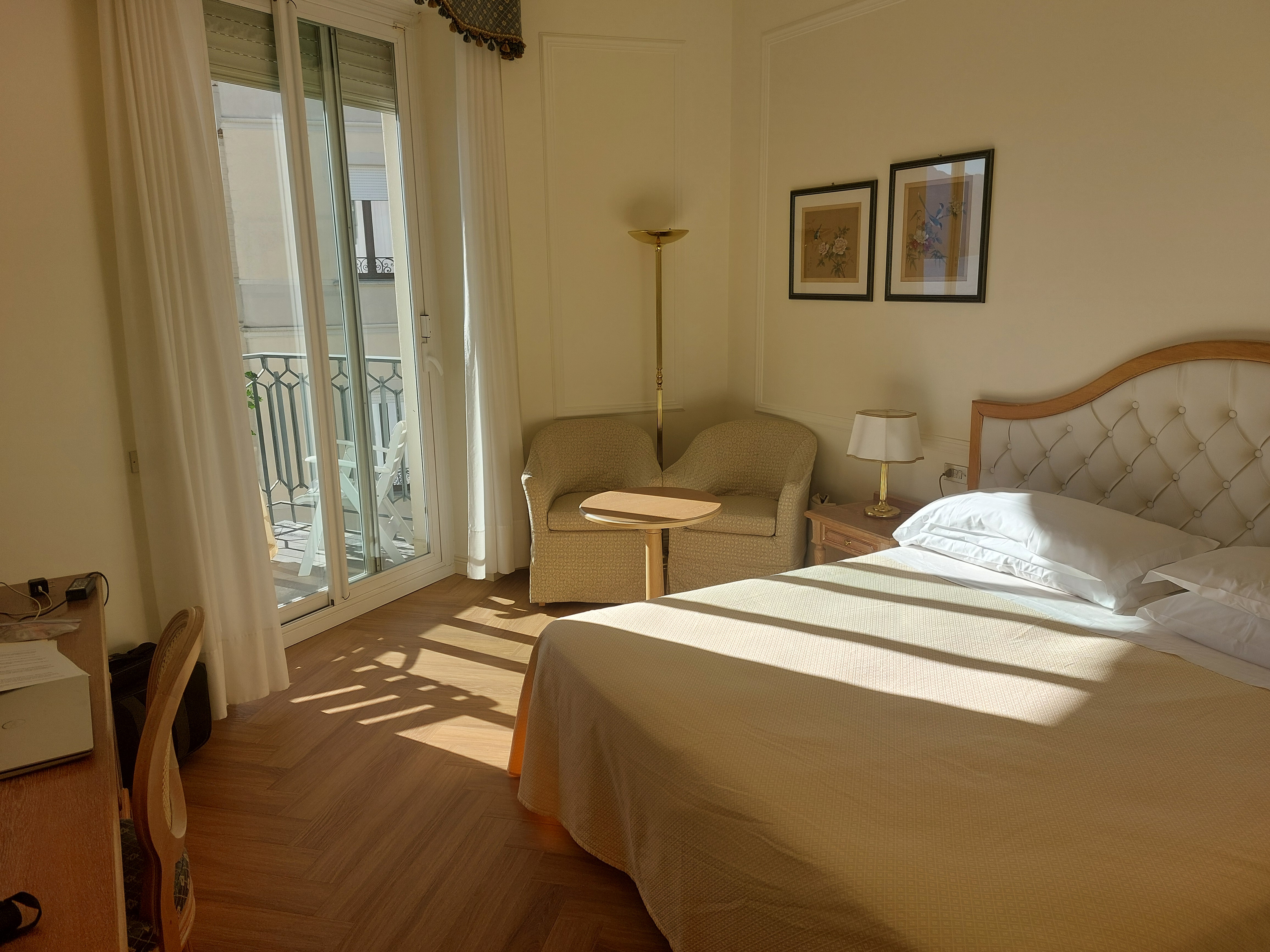
The hotel I chose, the boutique Arnaboldi Palace, is hidden on a side street but only 20 meters from the main street, Strada Nuova. Due to historical preservation rules, there is no sign, just a small plaque next to a plain door on the front of the building. A narrow dark entrance with a one-person elevator had no indication where to find reception, with offices and apartments occupying different floors. On the second floor, I found a wood door with a small sign for the Arnaboldi Palace . The receptionist heard my knock and brought me into a small reception area, copied my passport, and showed me to my room, just a few meters nearby. Other than the grand ball room, there isn’t much palatial about the hotel, but my room was quite comfortable, decorated with antique furnishings, and a bath so modern I had to ask for the house plumber to show me how to use the shower.


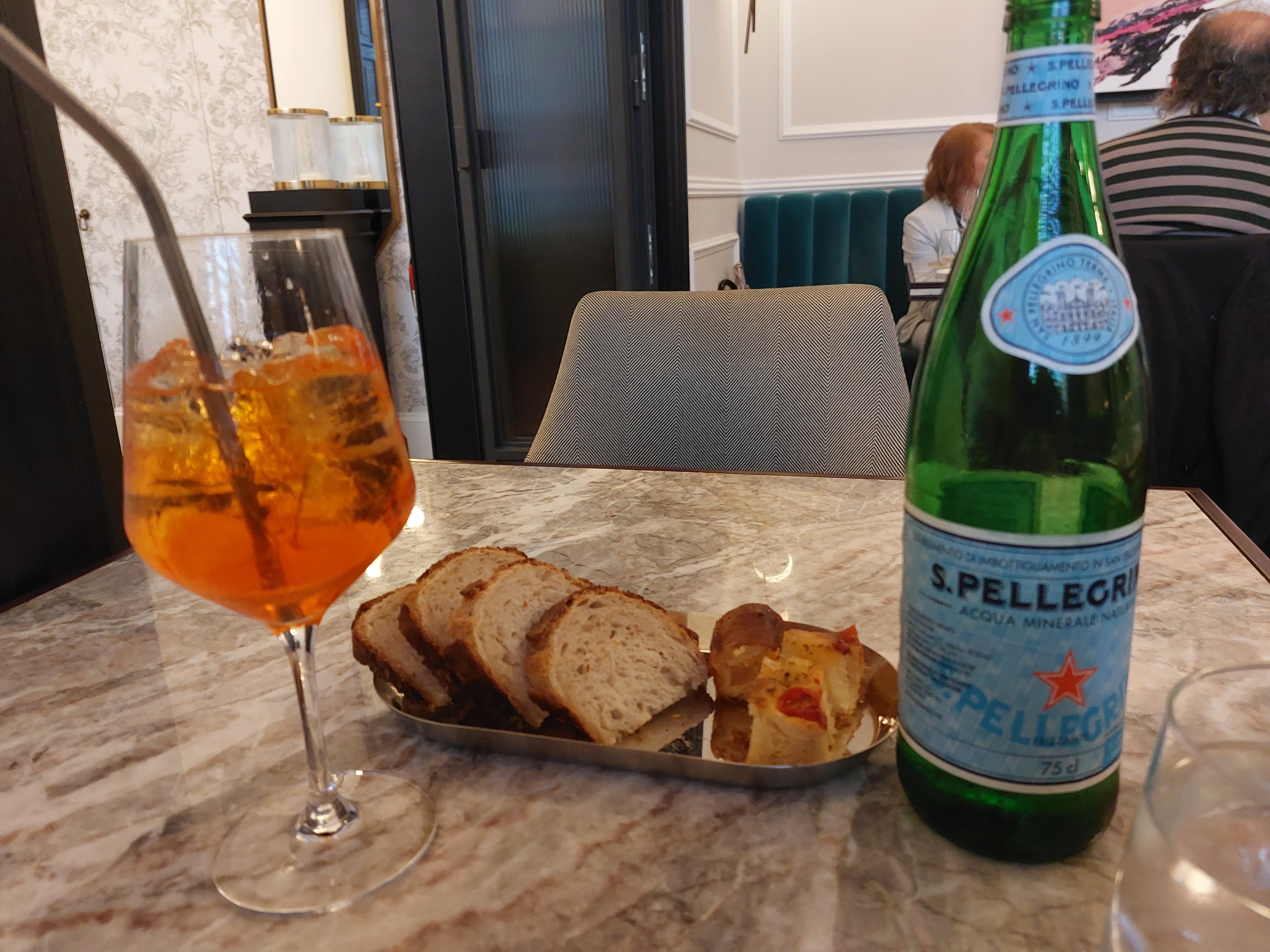
Due to jet lag I don’t plan anything my first day abroad. A light rain discouraged me from scouting the area around the hotel, so I caught up on mail and news on my laptop, enjoyed a nap and a shower, then took advice from reception and found a nice restaurant nearby, Lino Bistrot, where I enjoyed my first taste of Italy: an Aperol Spritz, Pellegrino water, warm fresh focaccia, a wide pasta with veal ragu, and lamb in millefoglia (puff pastry), red wine of course, and a cream tart. Benvenuto a Italia.
On my second day, after a brief workout in the room and a luscious breakfast buffet, I left the hotel for a walk down the Strada Nuova to the Museo Civico, finding it closed until 2:30 pm, its new weekday hours not posted online. So, I walked to the nearby courtyard of the ancient and prestigious University of Pavia, founded in 1261 and regarded as one of the ten best in the country. It was a delight for me to see a university in the historical center of the city, with hundreds of young students pouring onto the streets when classes end.


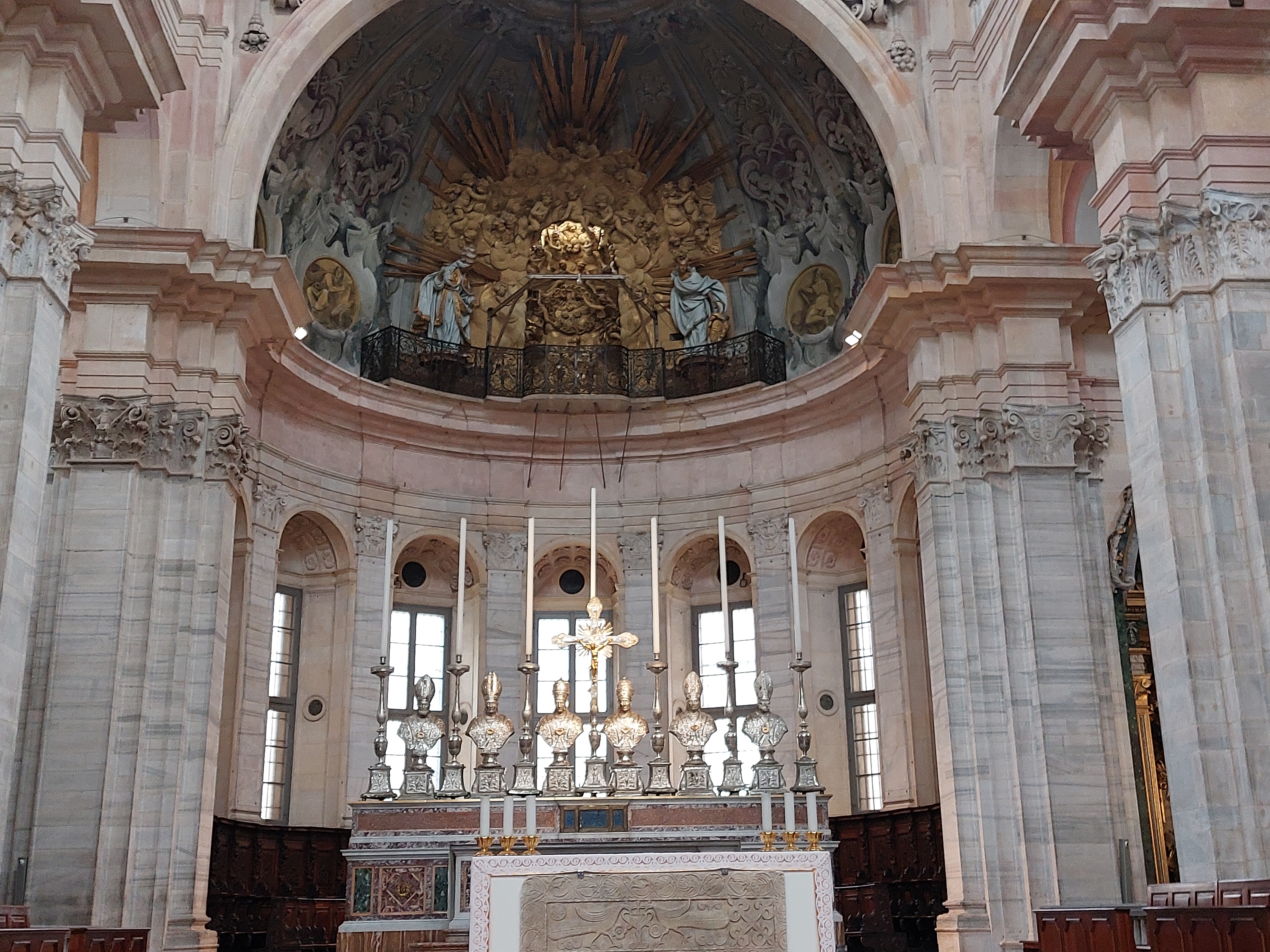
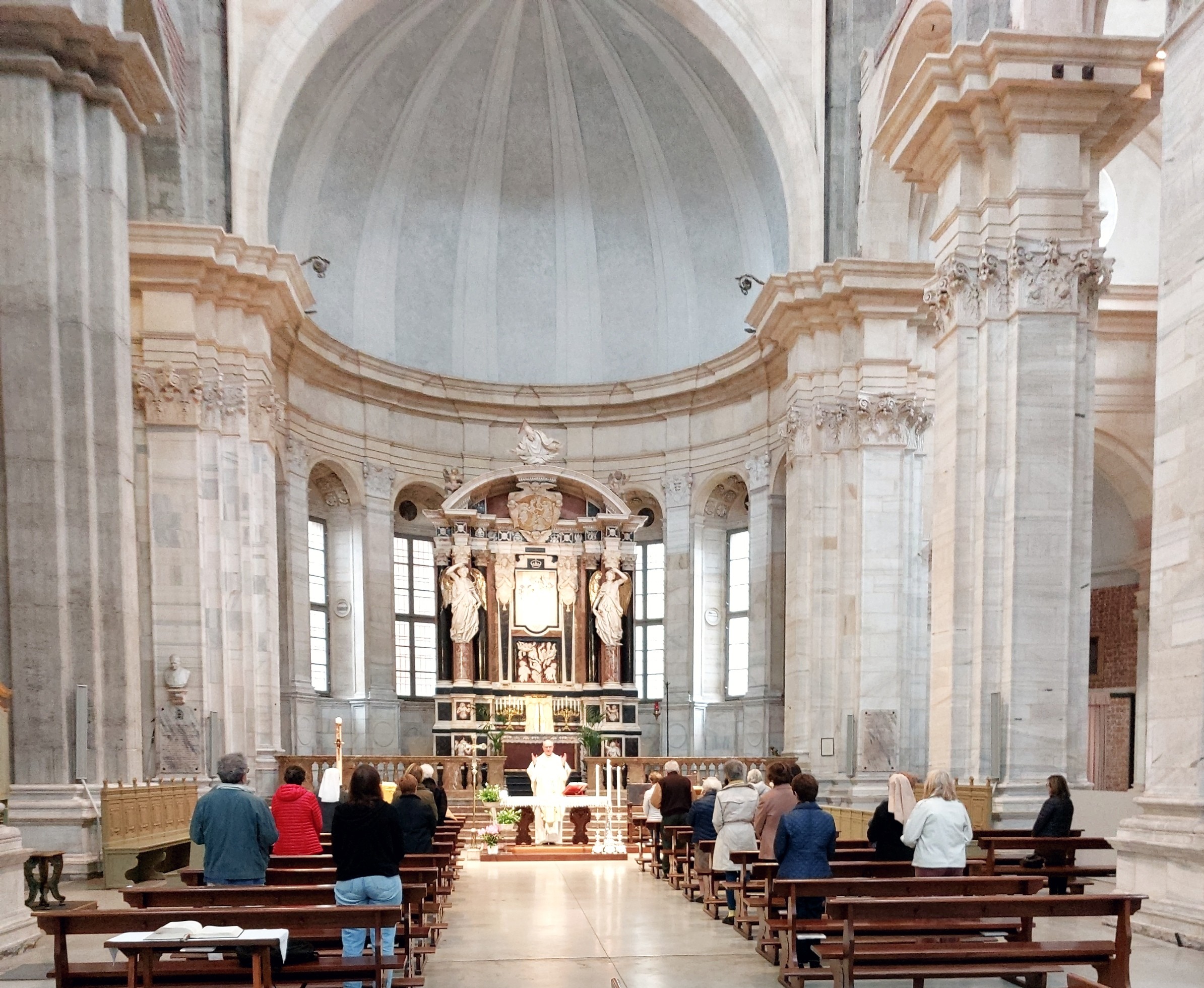
Next, I followed the map to the Duomo (Cathedral), seat of the bishop of the diocese. The unattractive brick octagonal building was begun in 1488 over the remains of two Romanesque churches. Various additions were made in the 16th and 17th centuries, and the dome was not added until 1885. The interior is much more attractive and I found it a great place for a brief rest out of the rain.


From a café on the corner near my hotel, I took a square of pizza to my hotel room to wait for the civic museum opening hour. After a good rest, I headed back to the museum in a light rain. I saw a young man wearing a thermal sweater with a hood; just what I needed for the unexpected chilly weather. I asked him where I could buy one and he said he would take me there. Two of his friends followed behind as he led me a block off the main street. When he started to enter an alley, I knew I had misread his friendliness and goose flesh told me I could be in trouble. While dressed like other Italians and speaking fluent Italian, my guess is they were Roma: gypsies. I bolted from the alley back to the main street and hastened away from the threat, telling them I had changed my mind. They caught up to me at the museum and begged for money for food. Rather than risk an assault, I gave one man €20, he kissed my hand, and they went on their way.
Entry to the Museo Civico is free, but I paid in blood. My glasses were fogged up from the rain and what appeared to be an open door was actually plate glass. I smacked my nose hard and needed first aid to stop the bleeding. The solicitous attendant promised to put something on the glass to alert future visitors. It was a small cut and healed within a few days. I had not counted on a museum day to turn into such a bloody adventure.
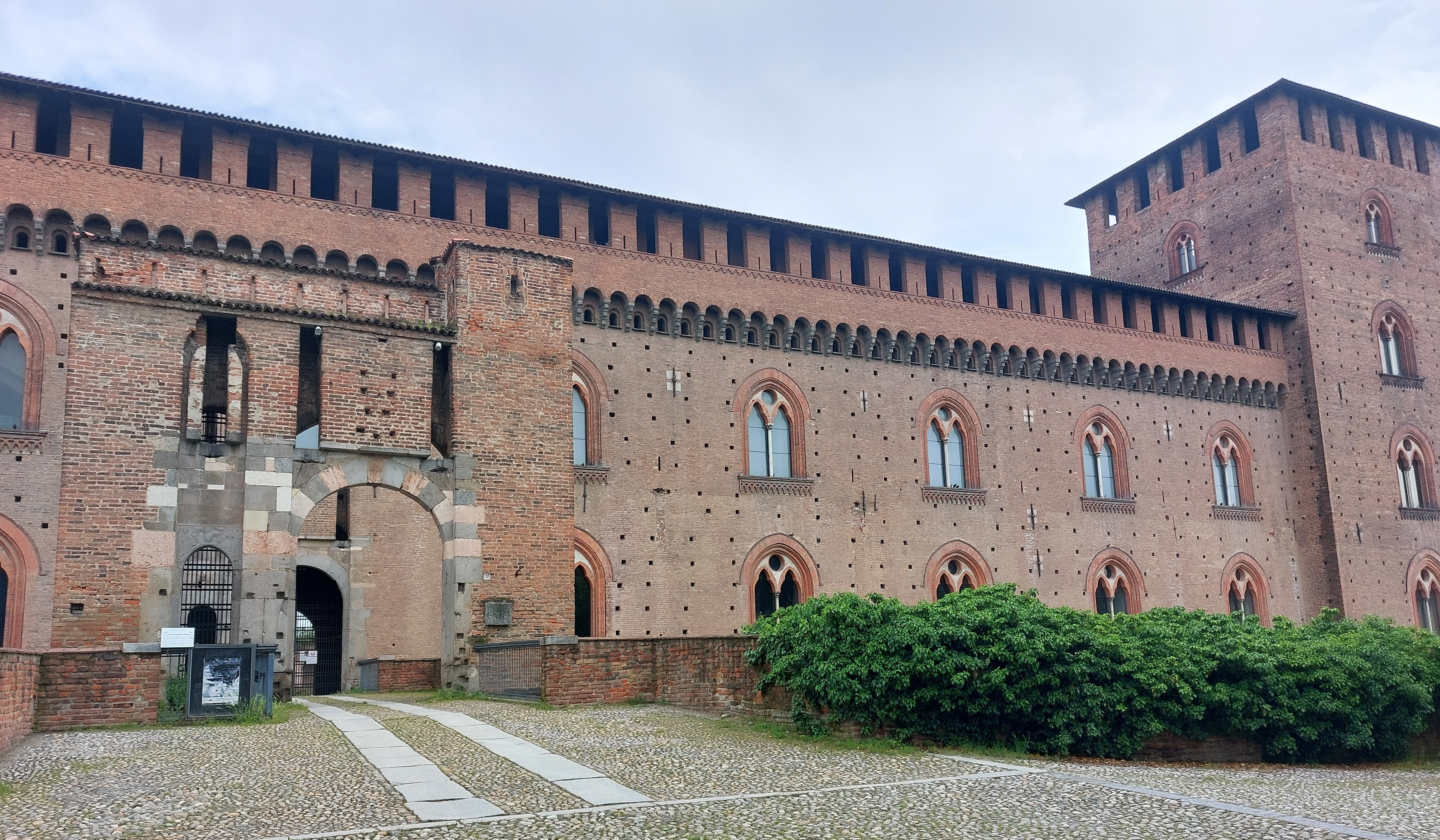
The museum is housed in an ancient fortress castle and palatial residence of the Lord of Lombardy, Galeazzo Visconti, rival of other lords like the Sforza and the Medici. Visconti conquered Pavia and built his residence there from 1360-65. The museum features rooms for ancient archaeology, a large collection of Roman glass, medieval mosaics, and marble fragments from medieval churches and palaces. It’s not world class, but it offered refuge on a rainy day.

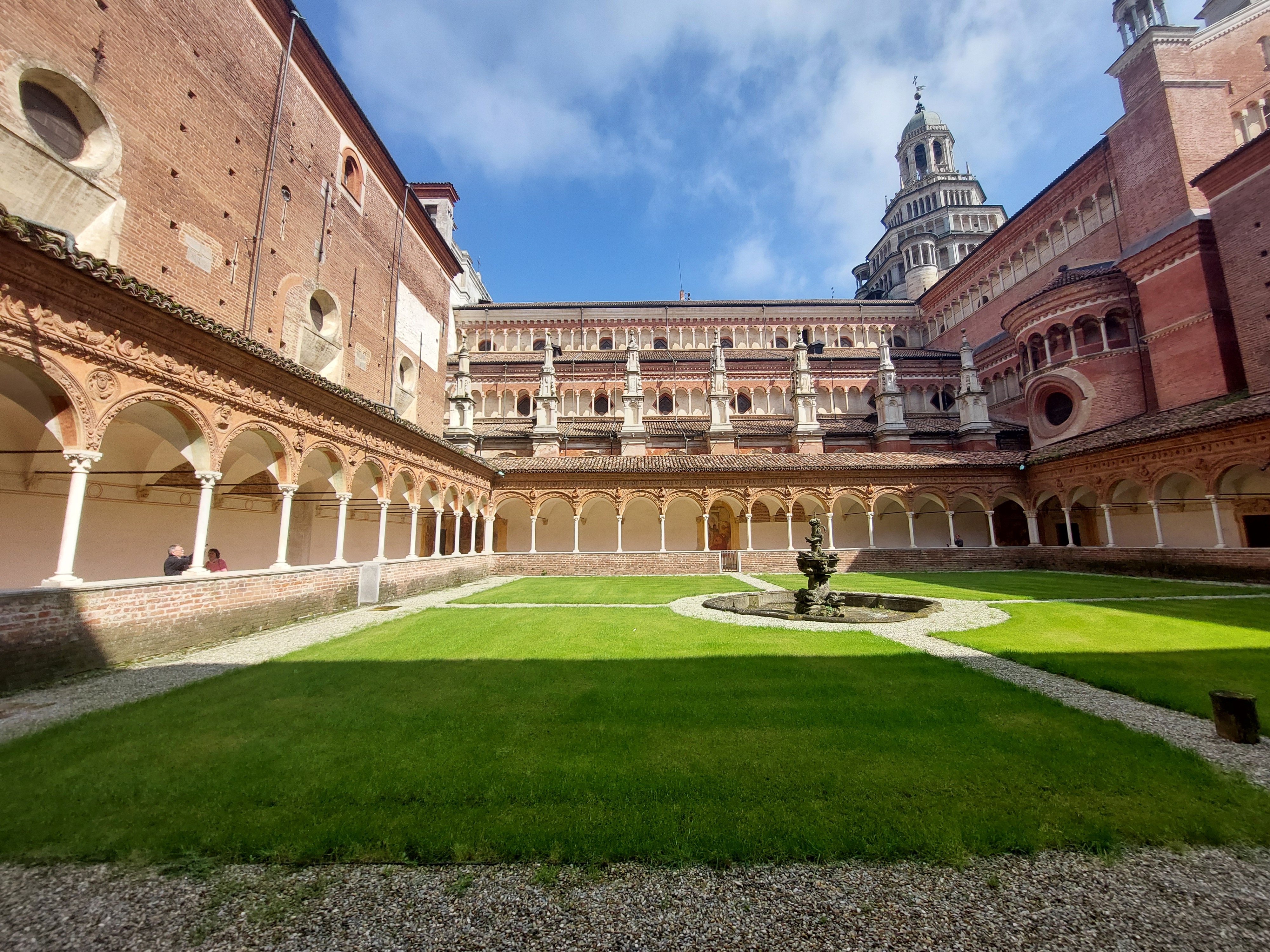
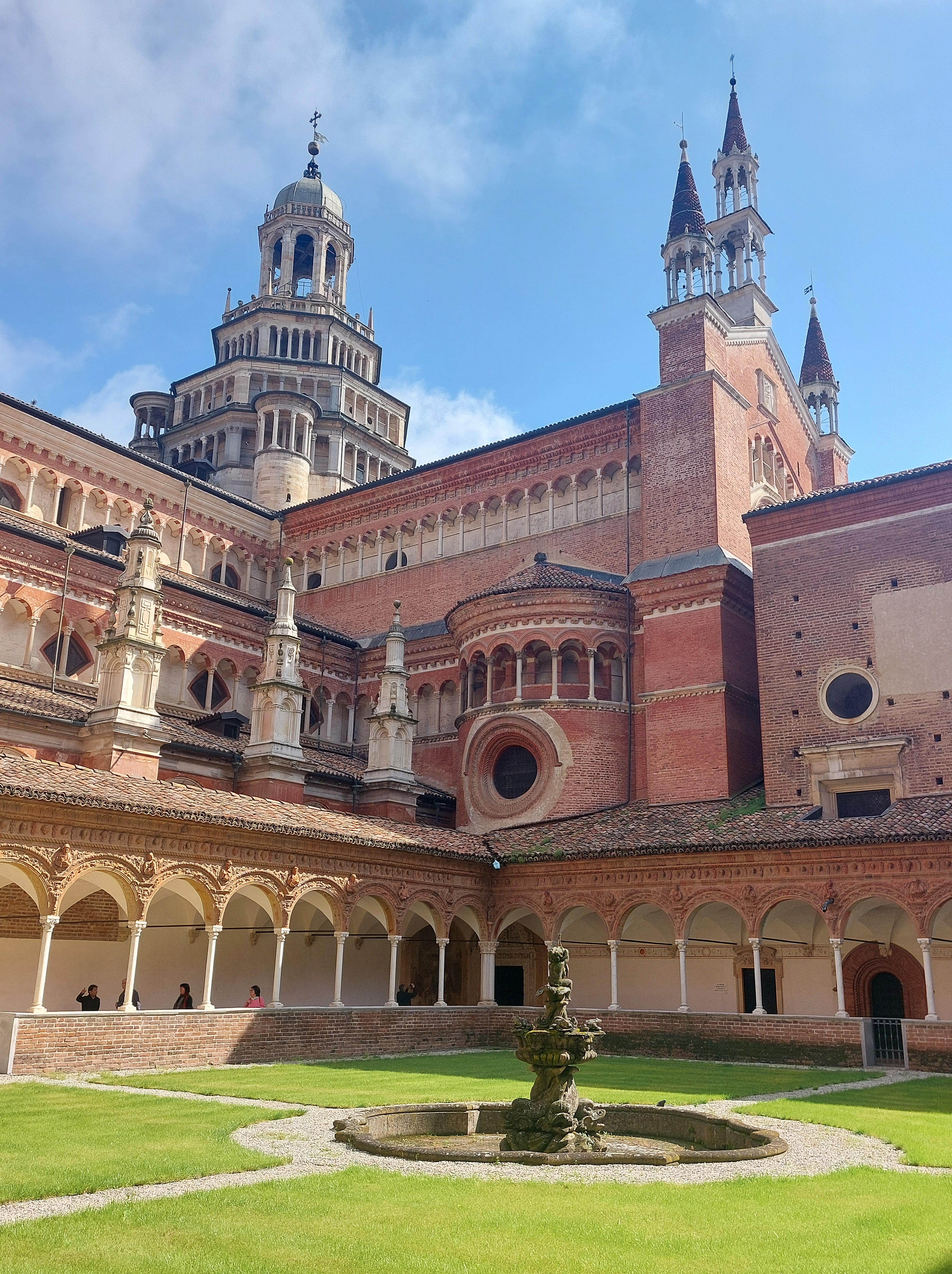
The next day, the chilly gloom lifted and I had a sunny taxi ride to the famed Certosa di Pavia (Chair TOE za, or charterhouse). The site is located about five miles outside the city, a € 30 cab ride each way (There is limited public transportation). The enormous and magnificent complex was begun at the end of the 14th century by Duke Gian Galeazzo Visconti, whose castle in Pavia is the civic museum. The edifice includes a sanctuary, a monastery, and the sepulchre of the Milanese dynasty. It was begun in 1396 and took fifty years to complete, using the best architects, sculptors, and painters of the time. It is now a national monument, property of the state of Italy. A small group of Cistercian monks reside there.




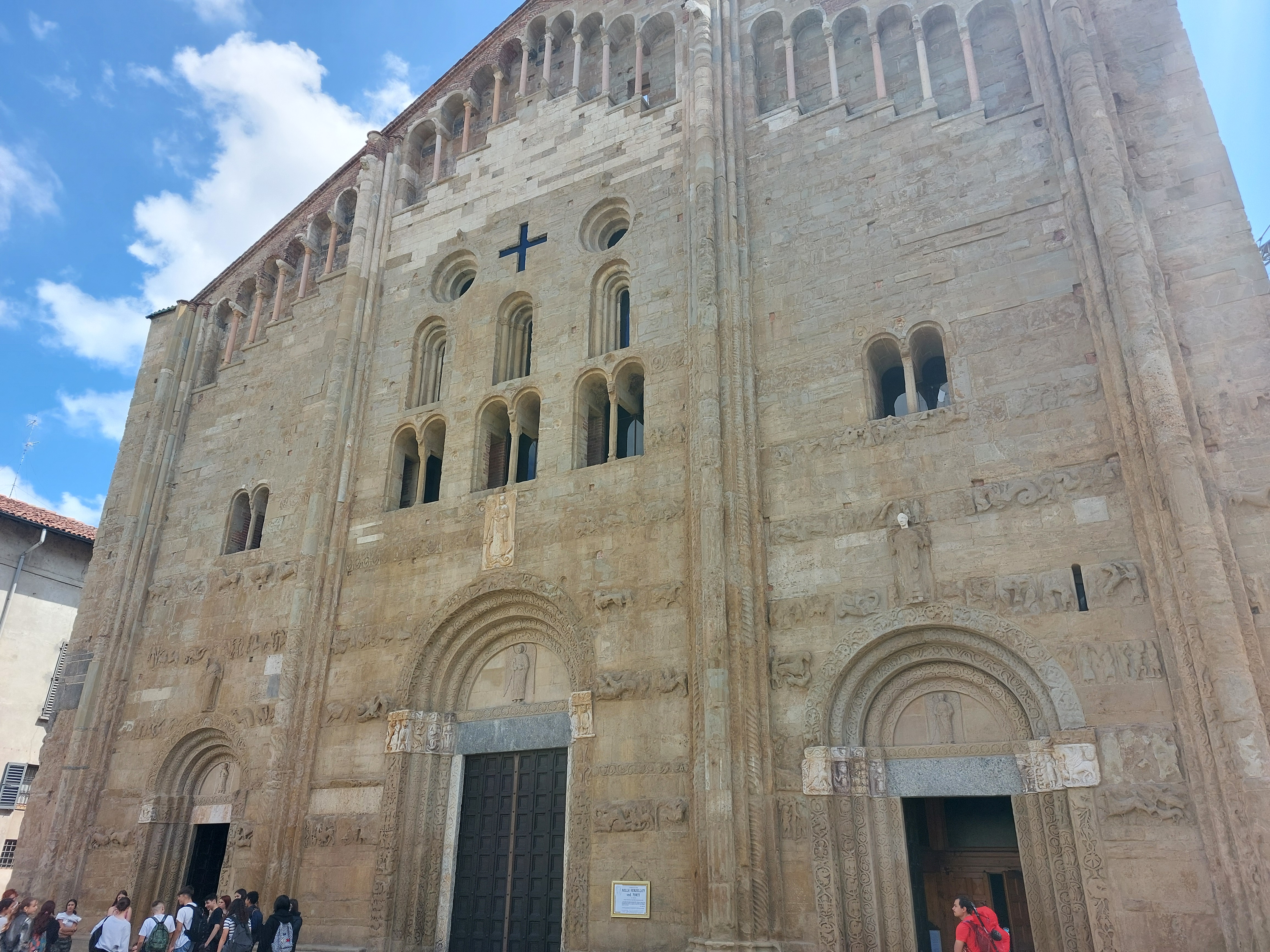
On the return ride to Pavia, my delightful driver Fabio gave me the Italian conversation I had been eager for, and he took me out of the way to show me how to find the basilica of San Michele Maggiore, and the Ponte Vecchio. After a rest at the hotel, I set out walking to the basilica. It was begun in the late 11th century and completed in 1130. It is a Romanesque church made of sandstone instead of red bricks like the other churches in Pavia. Modern discoveries of silverware led authorities to believe that it was the site of a 5th century Christian community with later churches built over it. It was the site of coronations of numerous kings of Lombardy, including Frederick Barbarossa in 1004. Visconti had himself crowned there as first Duke of Milan in 1396. He was buried at the Certosa, except for his heart that is alleged to be somewhere in San Michele.
Walking just a few blocks more took me to the Ponte Vecchio, the old bridge, built over a Roman bridge in 1354, badly damaged by Allied bombing during the Nazi occupation and reconstructed in 1947.

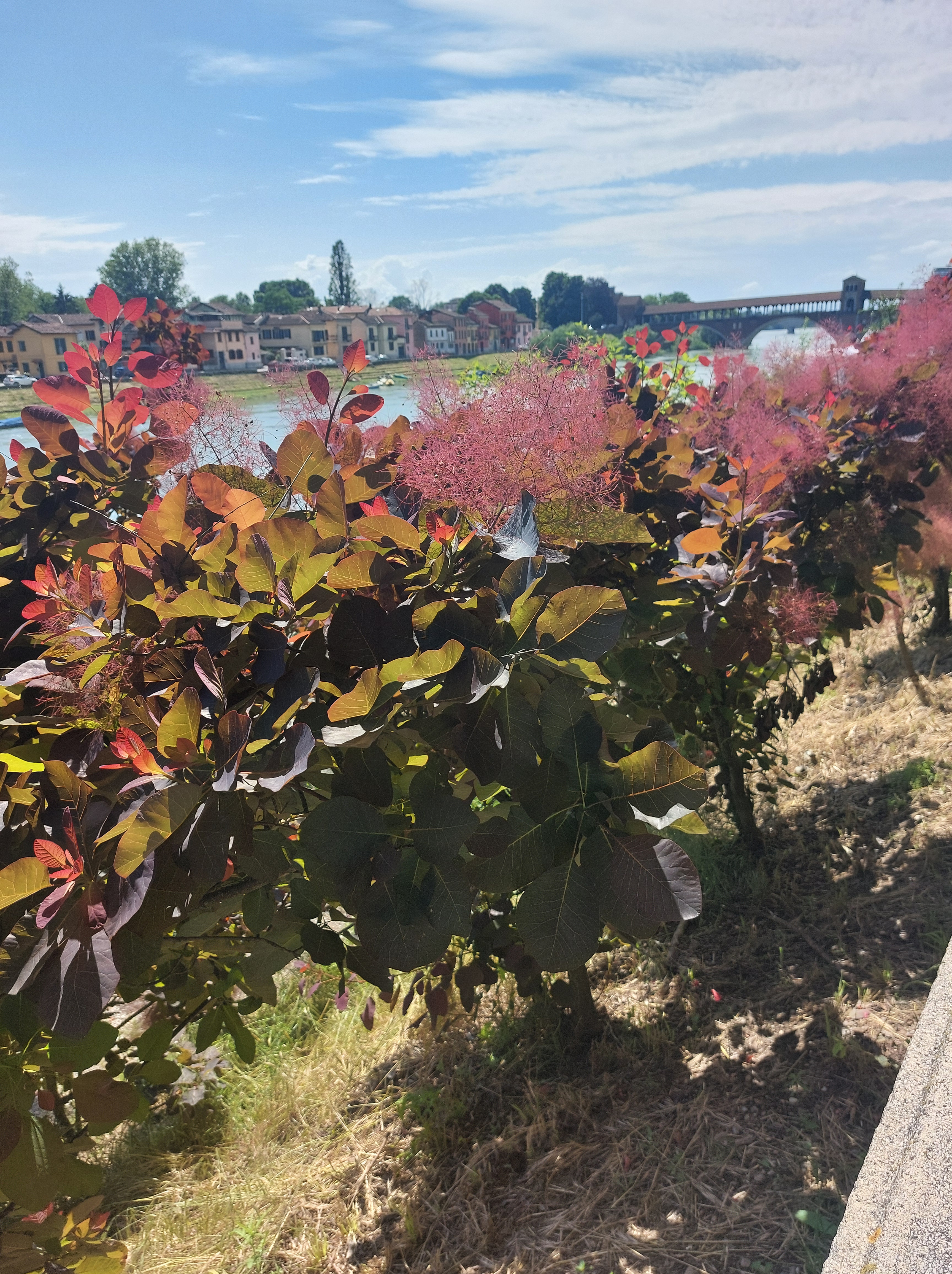
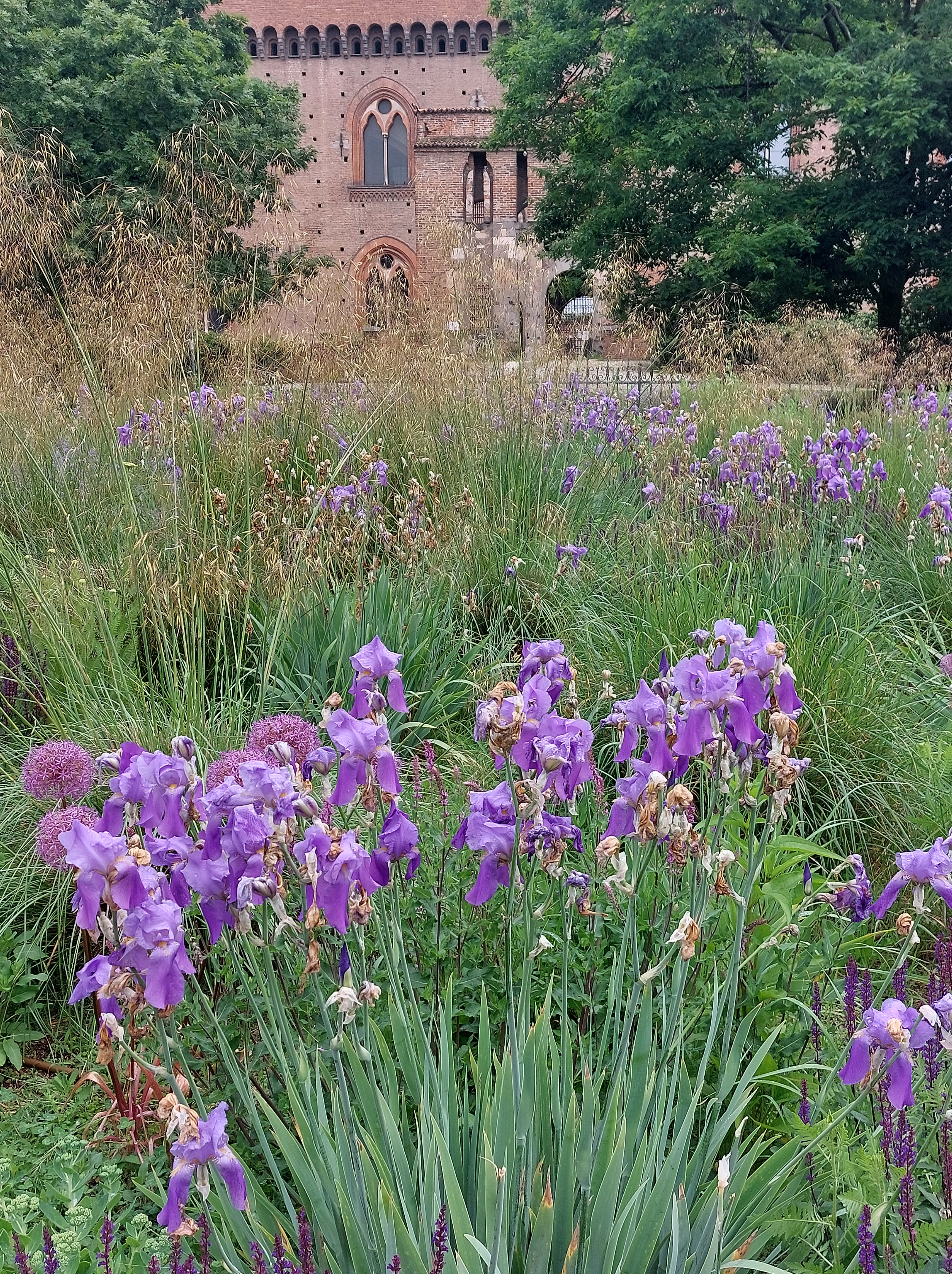
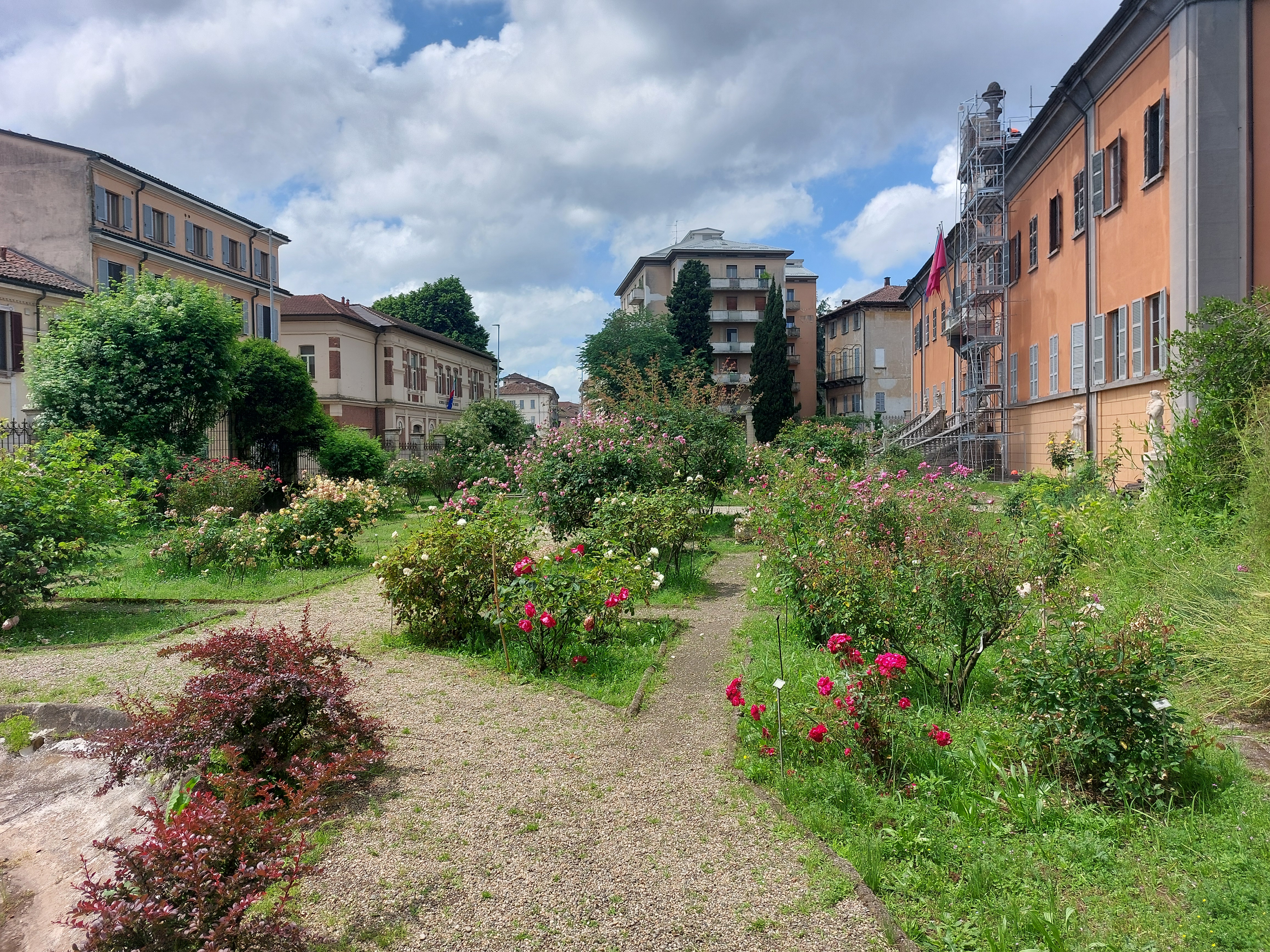
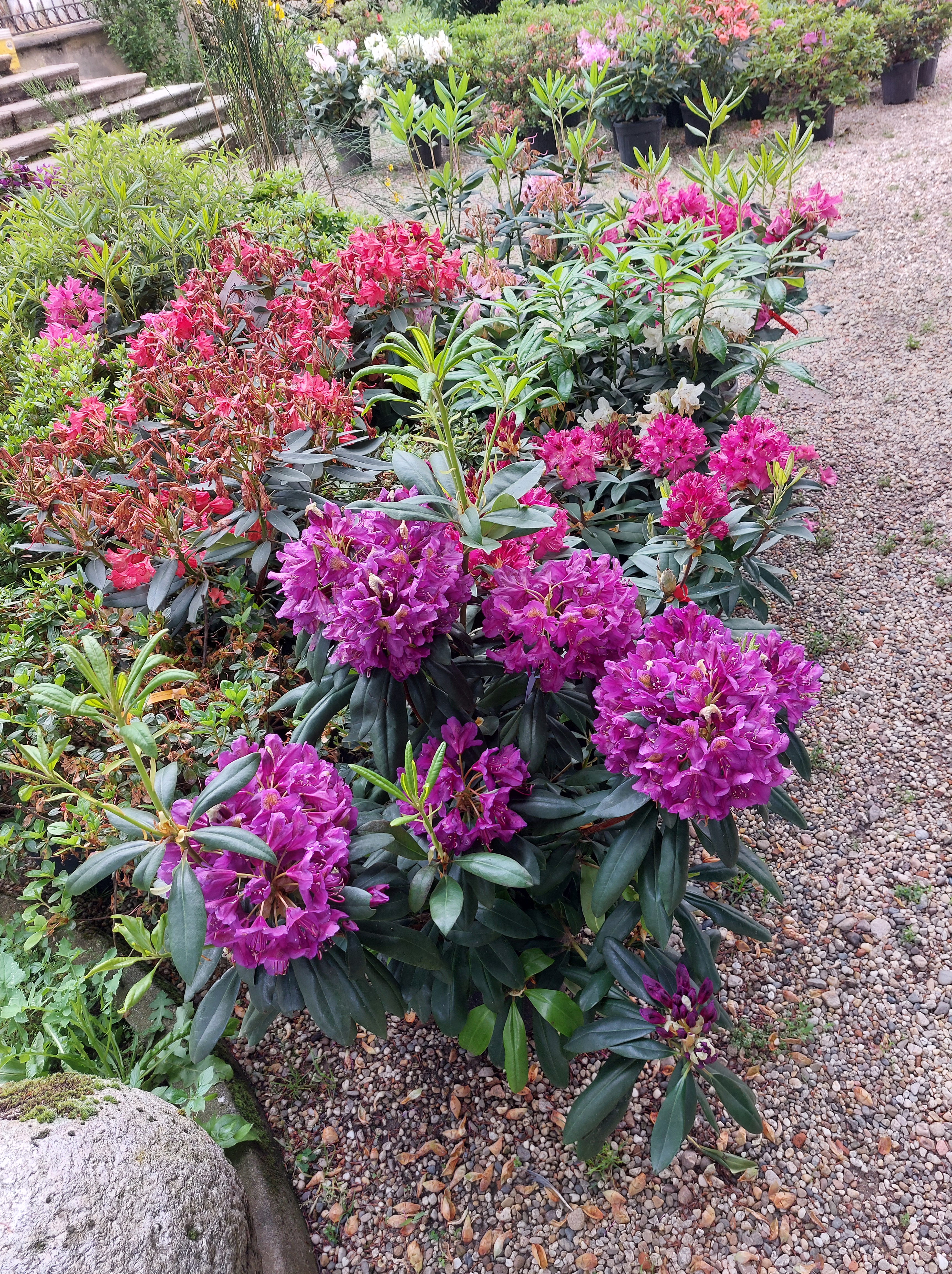
From the basilica, it was about a 20-minute walk to the Orto Botanico of the University of Pavia. The botanical garden is just a small urban plot of a few acres. The tulips, peonies, and irises had long dried up and the roses were fading. The orchid room and the glass house were closed. Scores of non-flowering plants and bushes were well-labeled, but the garden had a look of neglect. That was enough for one day and I took a deserved rest in the hotel before trying another nearby restaurant recommended by the hotel staff.

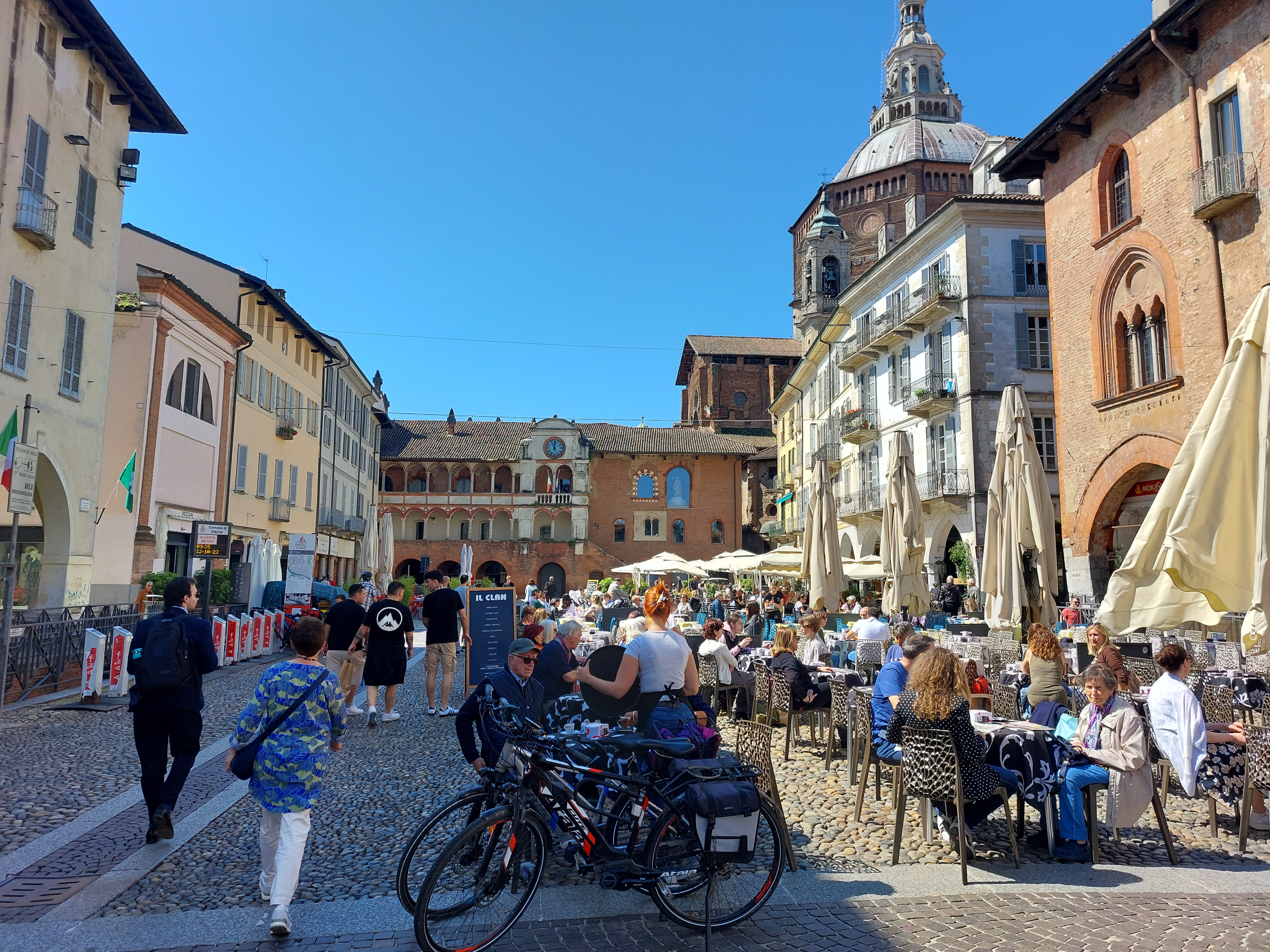
The Pavia city center became quite lively on a sunny Saturday morning with hundreds of people enjoying the piazzas and outdoor cafes. I stumbled on a delightful outdoor market at Piazza Petrarca with everything imaginable for sale. The fresh strawberries and black cherries were so tempting, and the huge array of cheeses and cold cuts made me wish I had a kitchen to repair to.


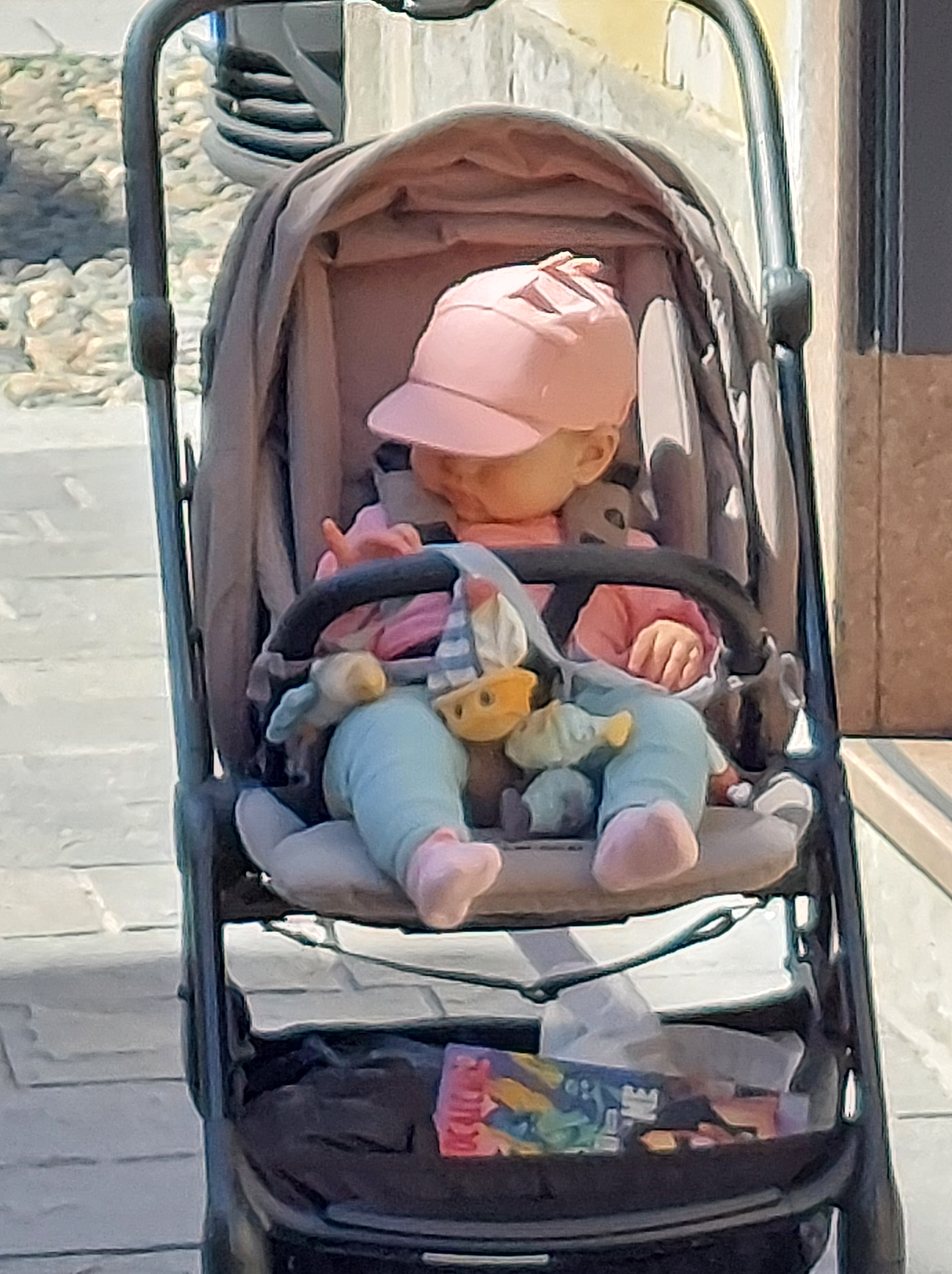
Next, I wandered past the university where a pro-Palestine sit-in had begun peacefully with a tent campsite.


I read the lunch menus outside several cafes until I saw someone eating a huge salad, just what I needed, and a place to rest, followed by a creamy gelato, stracciatella of course. Quite tired still from jet lag and walking all morning, I took the late afternoon for a siesta, then downloaded photos and took notes for my blog. In the early evening I walked nearby to Restaurant Vita, the best yet, where I enjoyed my last supper in Pavia: a spaghetti vongole starter and veal medallions in lemon sauce. Pavia can’t compare to Rome, Venice, Florence, and the other major tourist sites in Italy, but I enjoyed being off the beaten path.
BERGAMO LOMBARDY. On Sunday morning, I had plenty of time to pack after a leisurely breakfast before my 10:30 appointment with taxi driver Fabio, negotiated as he drove me back from the Certosa. His loud, clear Italian and patient corrections made it easy for me to converse, and we were in Bergamo in 90 minutes. After getting settled, I rushed off to the botanical garden since rain was forecast for the next day. One climbs 150 steps to the top of a hill to find a small garden, visited primarily for its grand views of the city. I was disappointed that there were so few flowers in bloom, but I loved the verdant pathways and the views of the lower city and countryside framed by the foothills of the Alps.
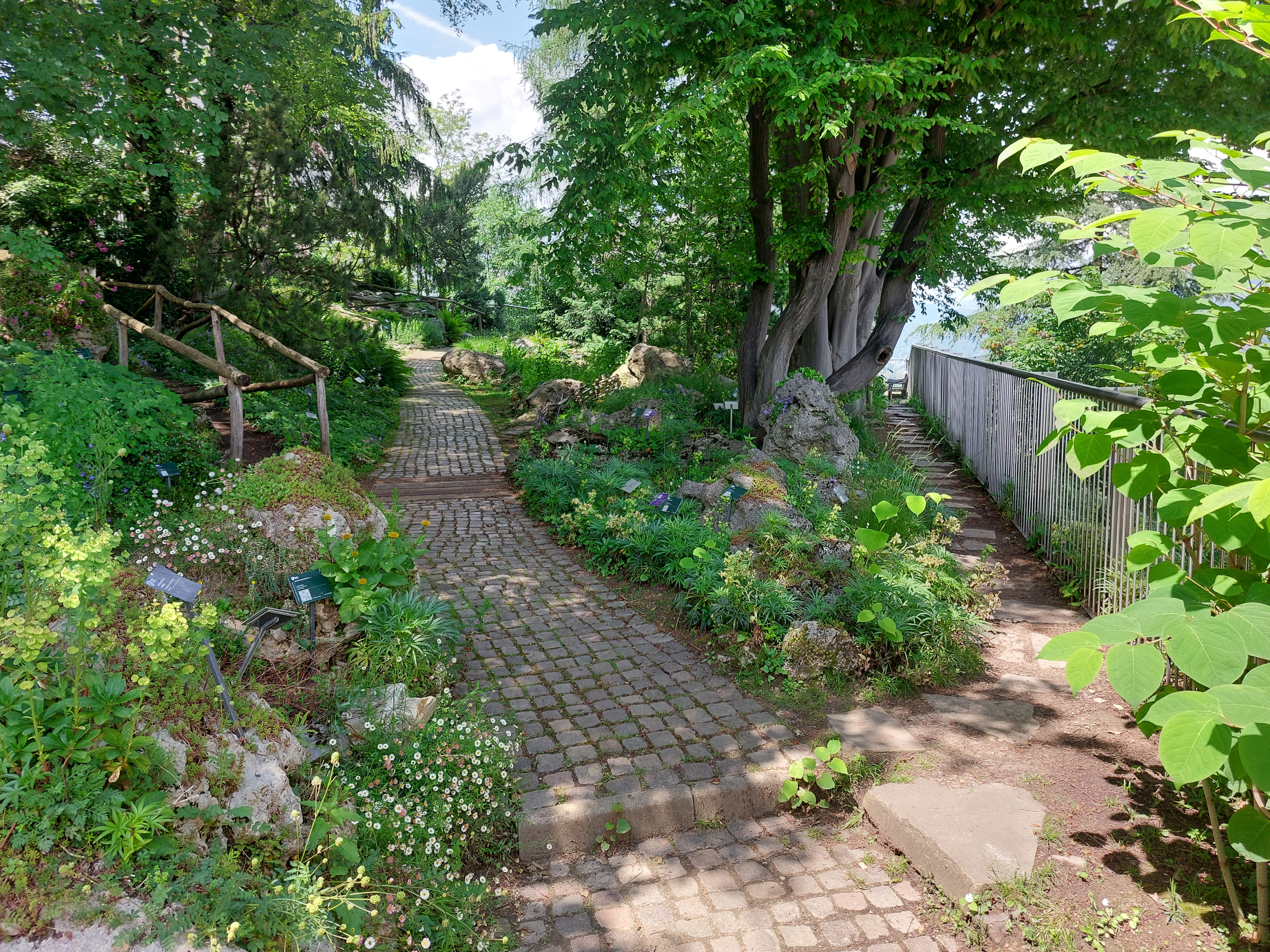
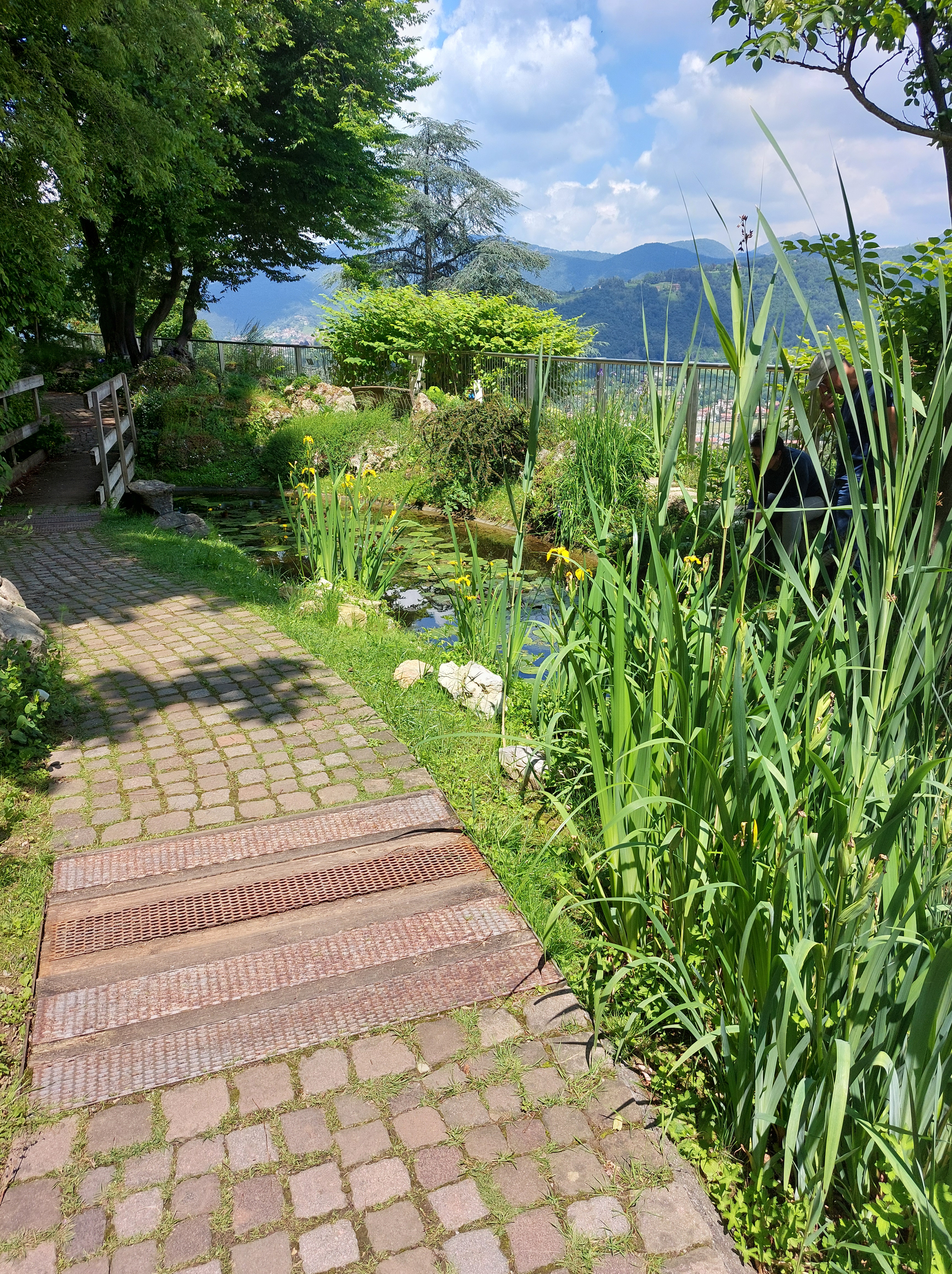
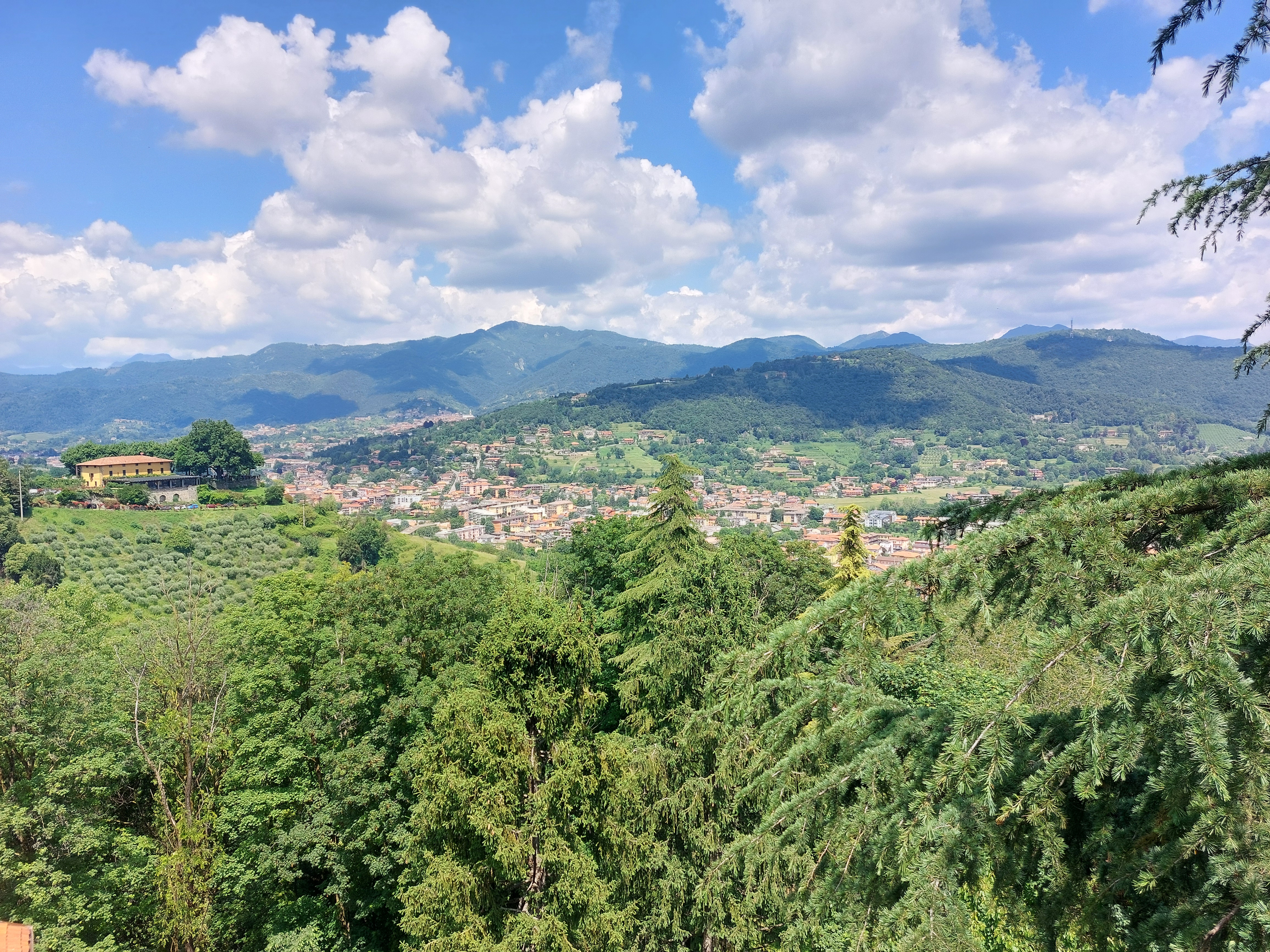


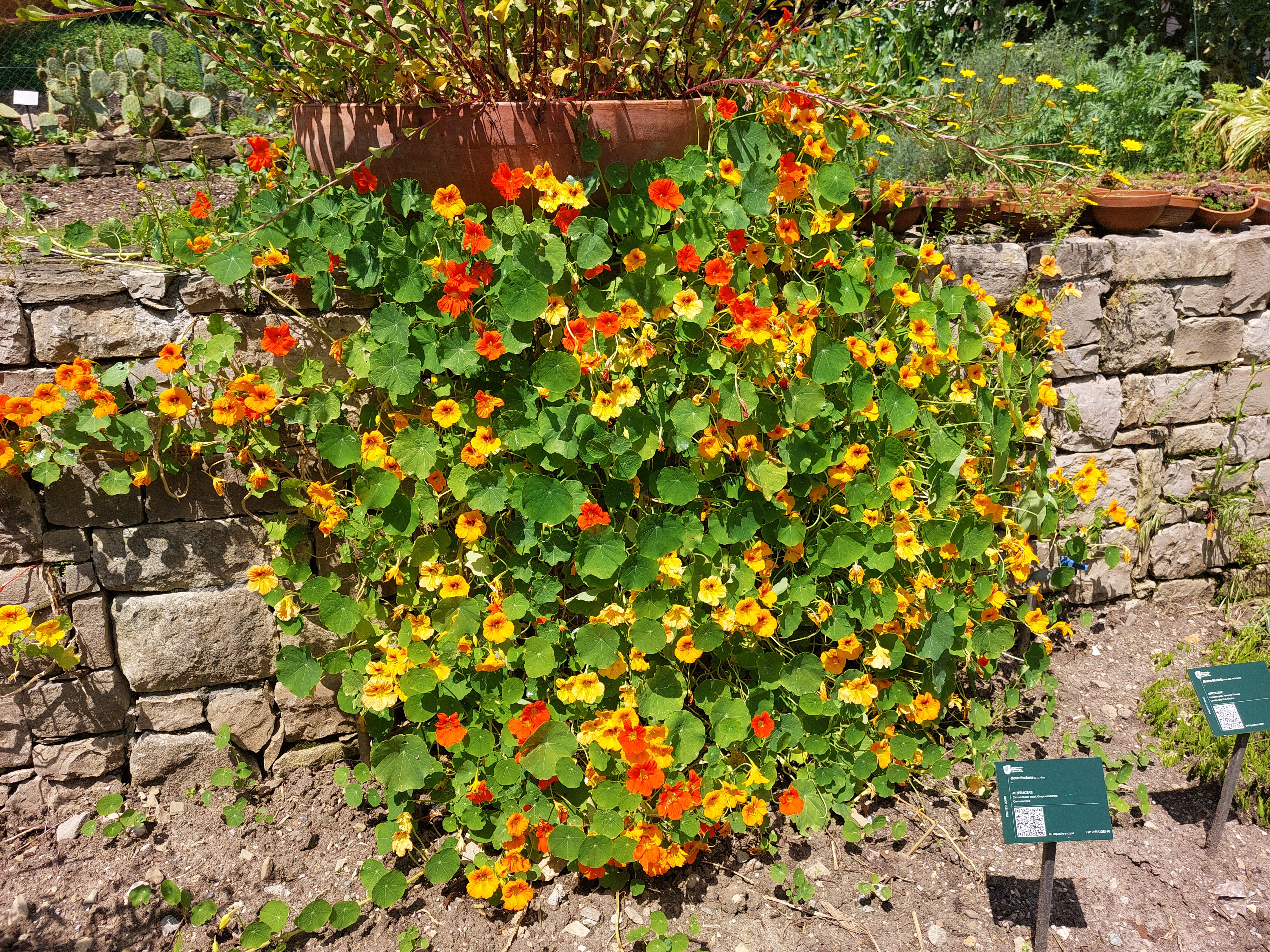
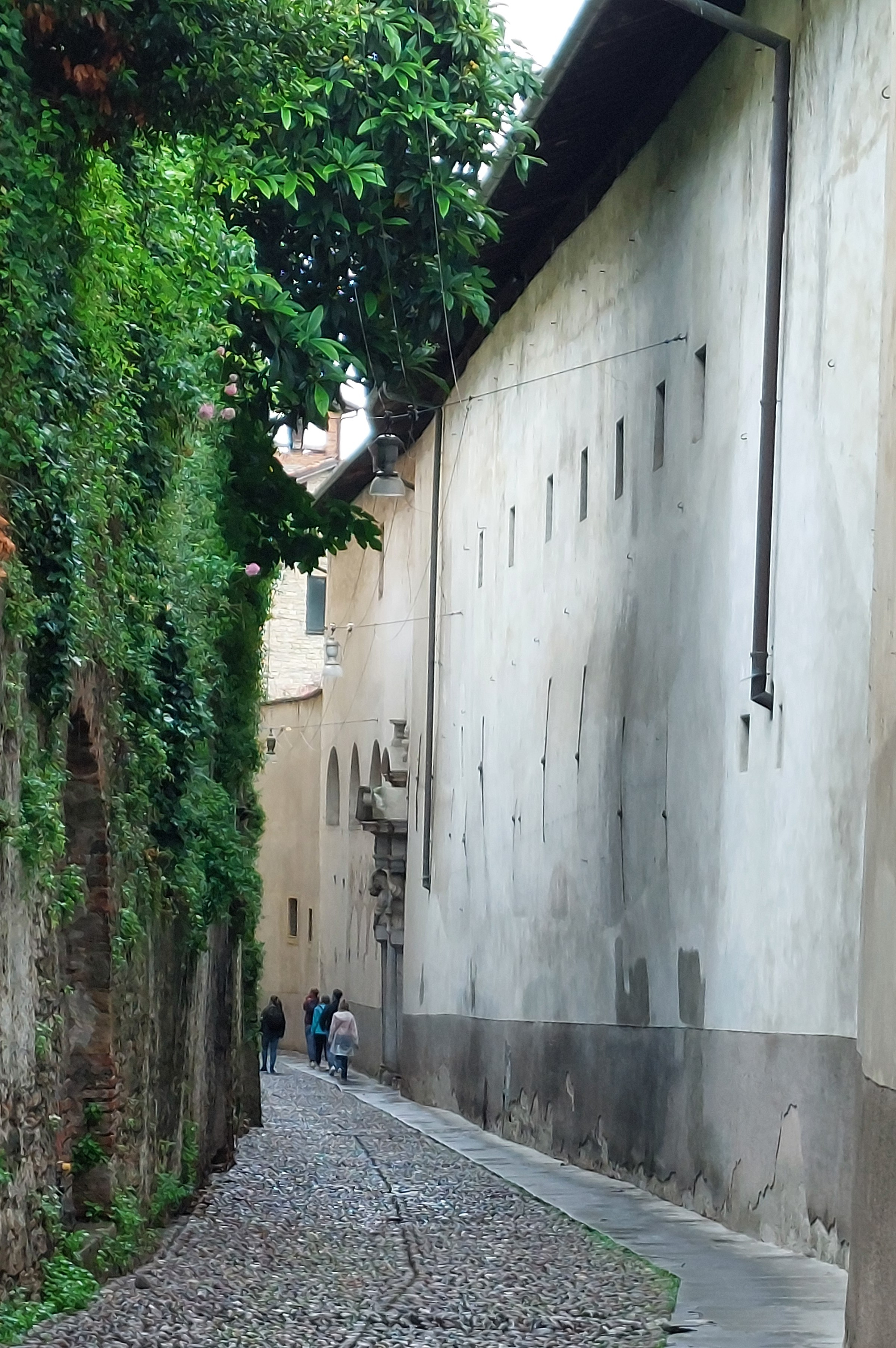
From the garden, it was a short walk through the arch to the Citta Alta, the famed upper city that draws thousands of tourists daily. Being Sunday, the narrow medieval streets and piazzas were mobbed with visitors, robbing the place of its charm.
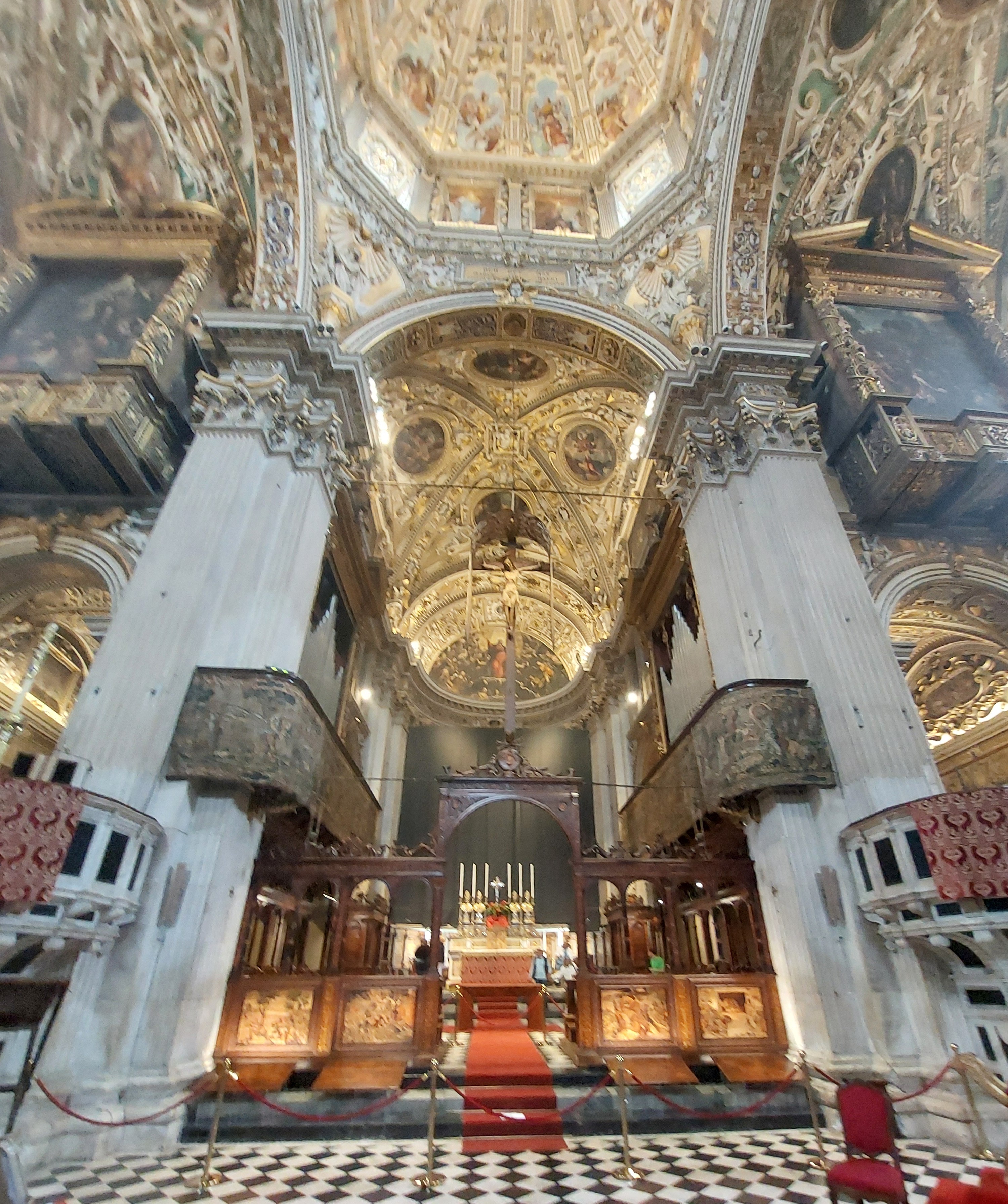
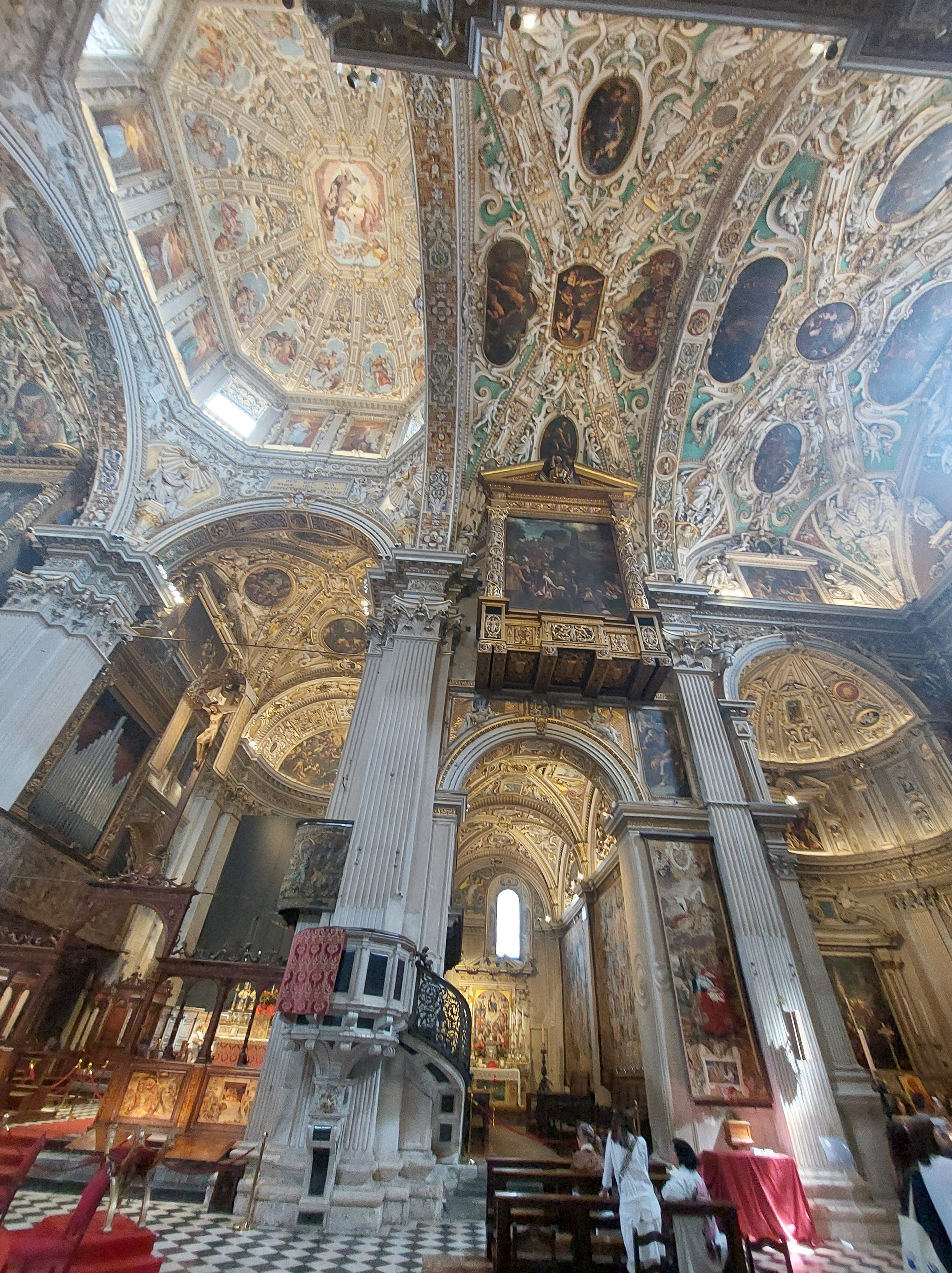
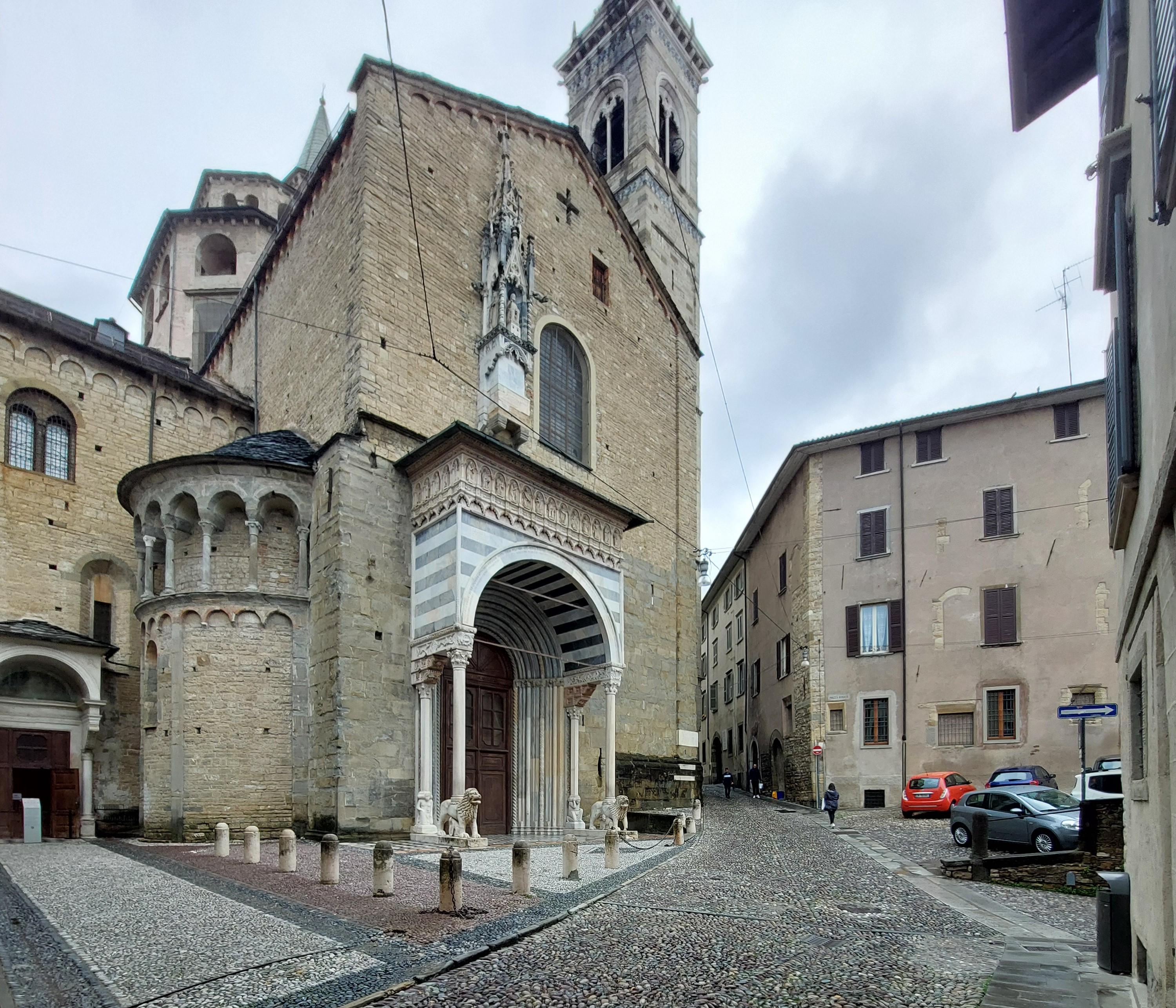
The Basilica of Santa Maria Maggiore stands out in the Piazza Duomo. It was begun in 1137 and it took decades to finish the lavish interior decorations. The interior walls and ceilings are adorned with magestic decorations added over the centuries. The elaborate wood-carved confessional was worthy of a photo, but I didn’t have an hour to spare even if it had been receiving penitents. The Duomo closes at 12:30 so I missed the interior. It was late before I found a table for one in the piazza and enjoyed a people-watching lunch. Afterward, worried about finding a cab, I was fortunate to see someone getting out of a taxi and grabbed it quickly to return to the hotel.




Spending hours prepping for this trip, I studied scores of hotels and sites to visit, and made one error by not reading more carefully. The Hotel Petronilla web description said it was 500 meters from the city center. But it turns out that was in the Cita Bassa, the lower city, a €20 cab ride each way to Citta Alta where I should have booked. But the boutique hotel is highly rated, has a great morning buffet, and the reception staff are exceptional in their kindness and eagerness to please guests. Nearby are numerous restaurants and outdoor cafes where I enjoyed my first evening.

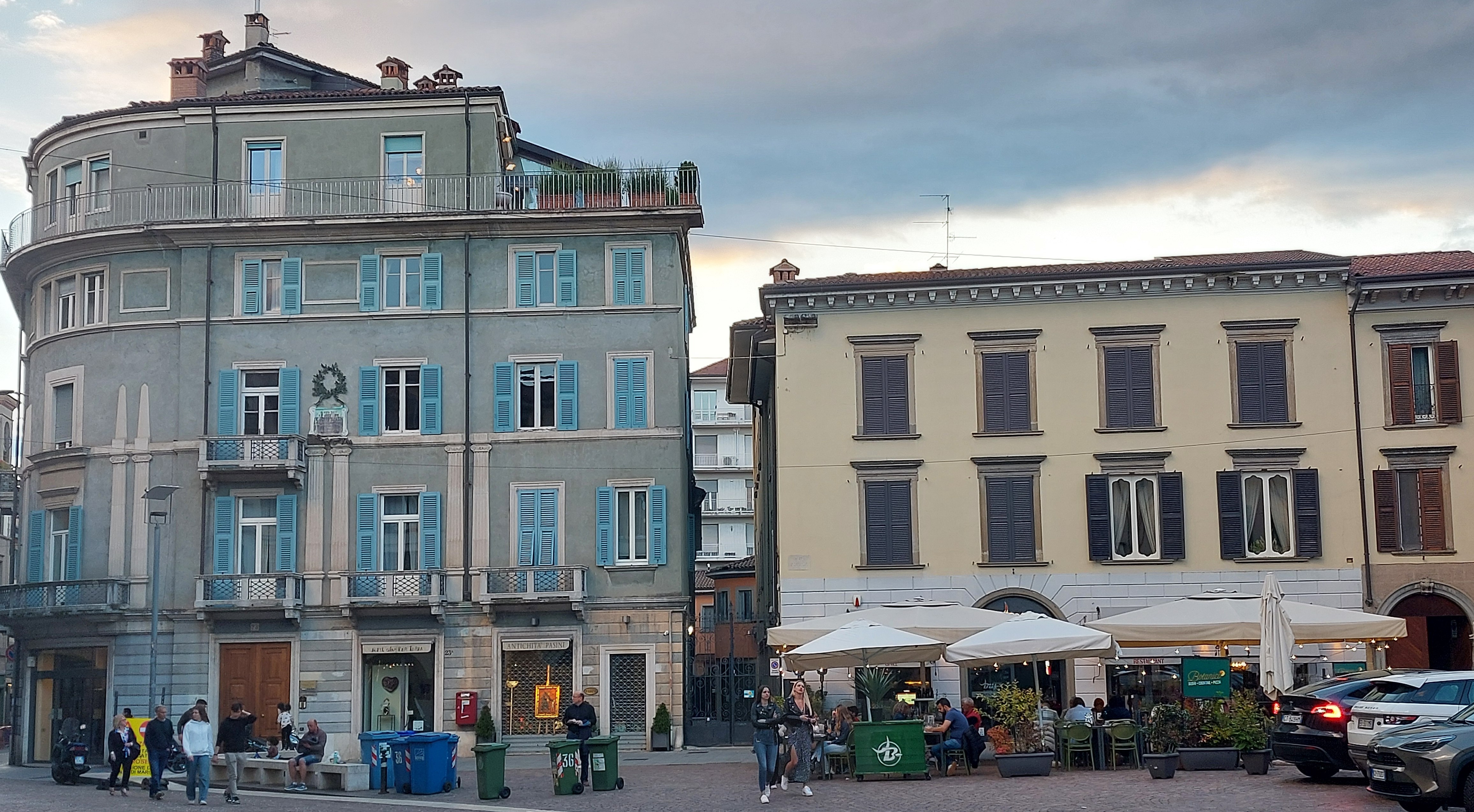
One cannot travel for two weeks without being somewhere on a Monday when most museums are closed. Add rain, discouraging further exploration of the Citta Alta, and I was at a loss what to do. Rebecca in reception told me there was a museum open on Mondays, the Accademia Carrara and it proved to be one of the highlights of my visit. It began as a private collection and drawing school, and was later donated to the city. Subsequent directors added to the collection over time to create a magnificent treasure of Gothic and Renaissance paintings. In addition, the museum featured a temporary exhibit of Neapolitan painters, especially Luca Giordano. I had stumbled on a truly world-class venue.
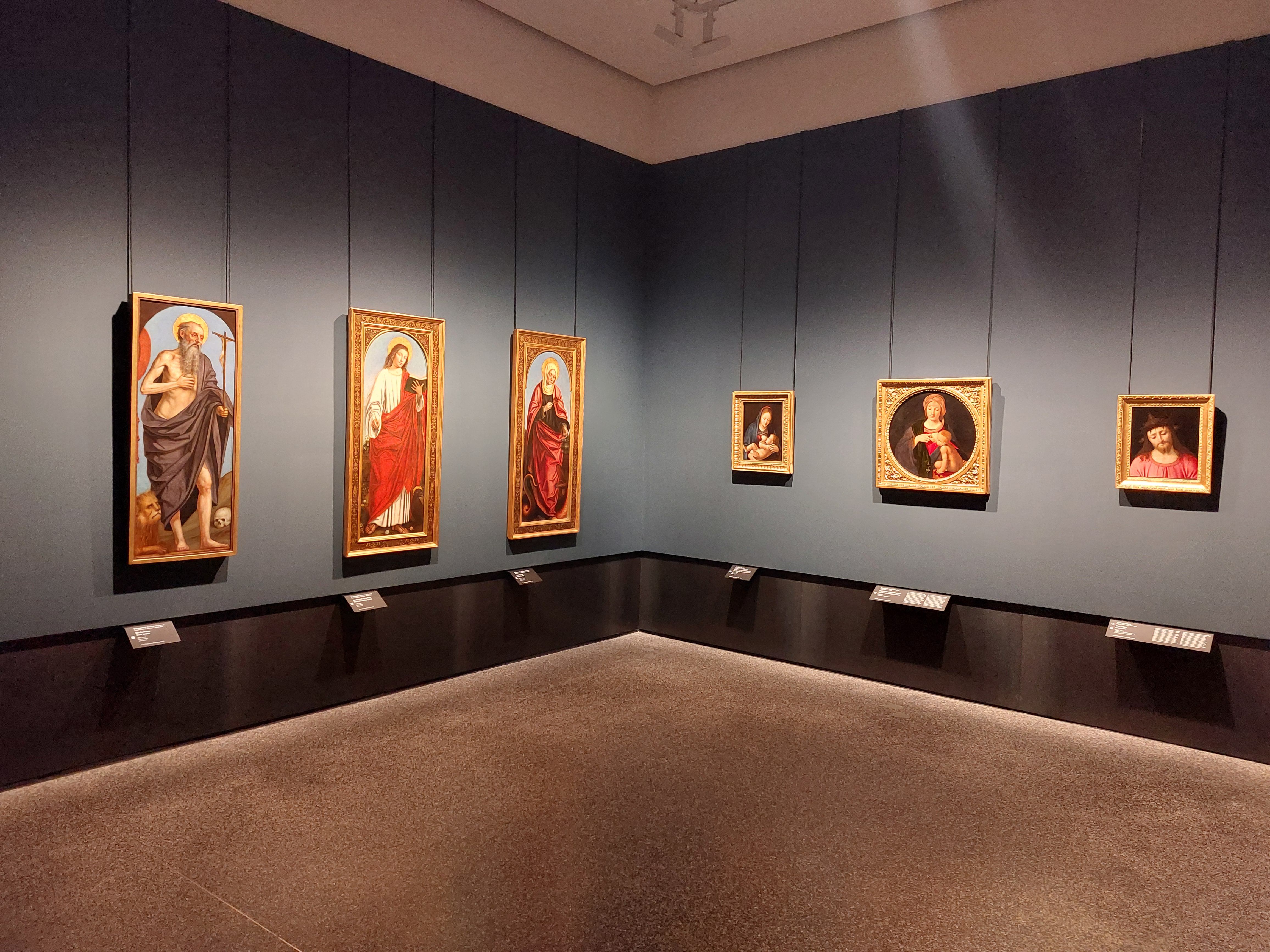


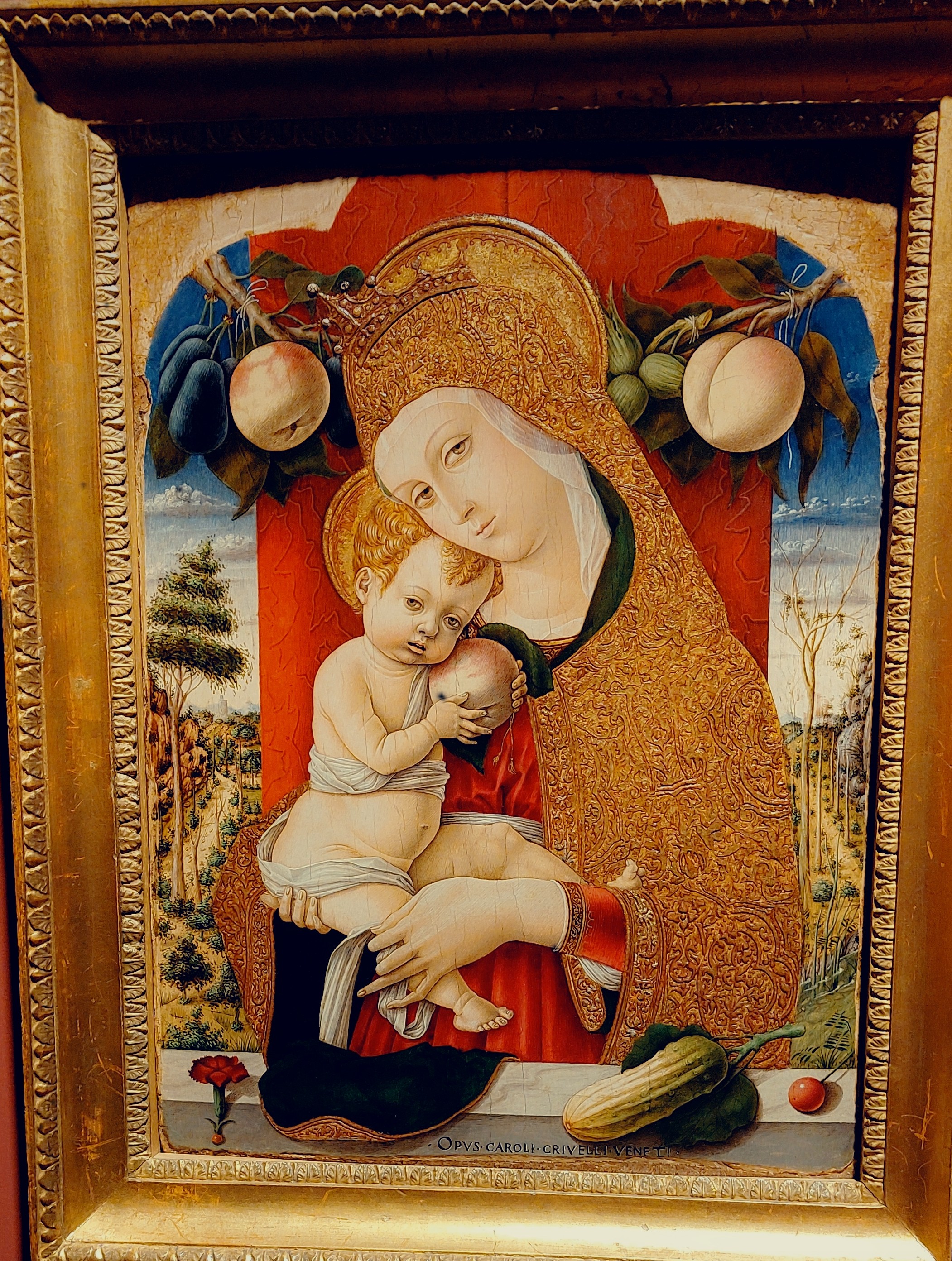

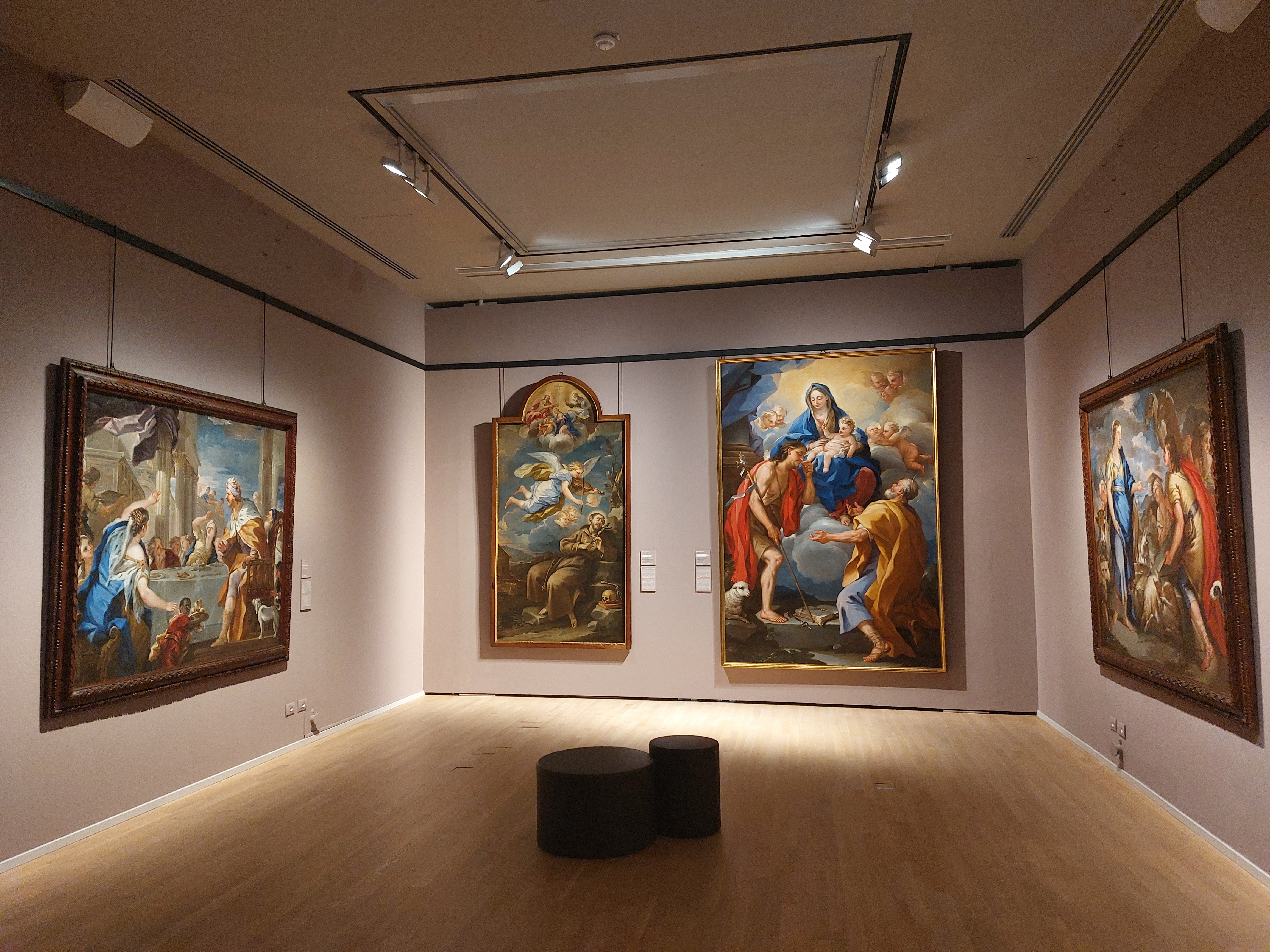

The teeming masses had made me cut short my Sunday visit to the Citta Alta. I thought a quiet Tuesday would be a good day to return, but I awoke to rain and a taxi strike against the threat of Uber coming to Bergamo. What a disaster for those who needed to get to the airport or some other urgent appointment. I didn’t want to spend the day in the hotel and Francesco in reception saved the day, explaining to me how to walk several blocks to find the stop for Bus number One to Citta Alta. He told me how to buy tickets, where to get off, and where to find the return bus. I mastered it all with just a little nervousness.
Near the bus stop at the entrance to the upper city are two museums: archaeology and natural science. The first is small with mostly relics of Roman times in Bergamo, statues from the first century BC, tomb stones, ancient pottery and the like.


The Natural Science building is huge and filled with fossils and minerals and scores of stuffed birds and animals. It would appeal more to youngsters, but it was a good place to wander until the rain stopped.
From the museum, I could fold up the umbrella and enjoy the overdue sunshine, walking to the 16th century Venetian walls, a Unesco World Heritage site. The tops of the walls are pedestrian with great views of the city and surrounding moutains. Four major arches pass through the walls to enter the Citta Alta. Over one of them is the lion of St Mark, a reminder of the many decades Bergamo was dominated by the Republic of Venice.

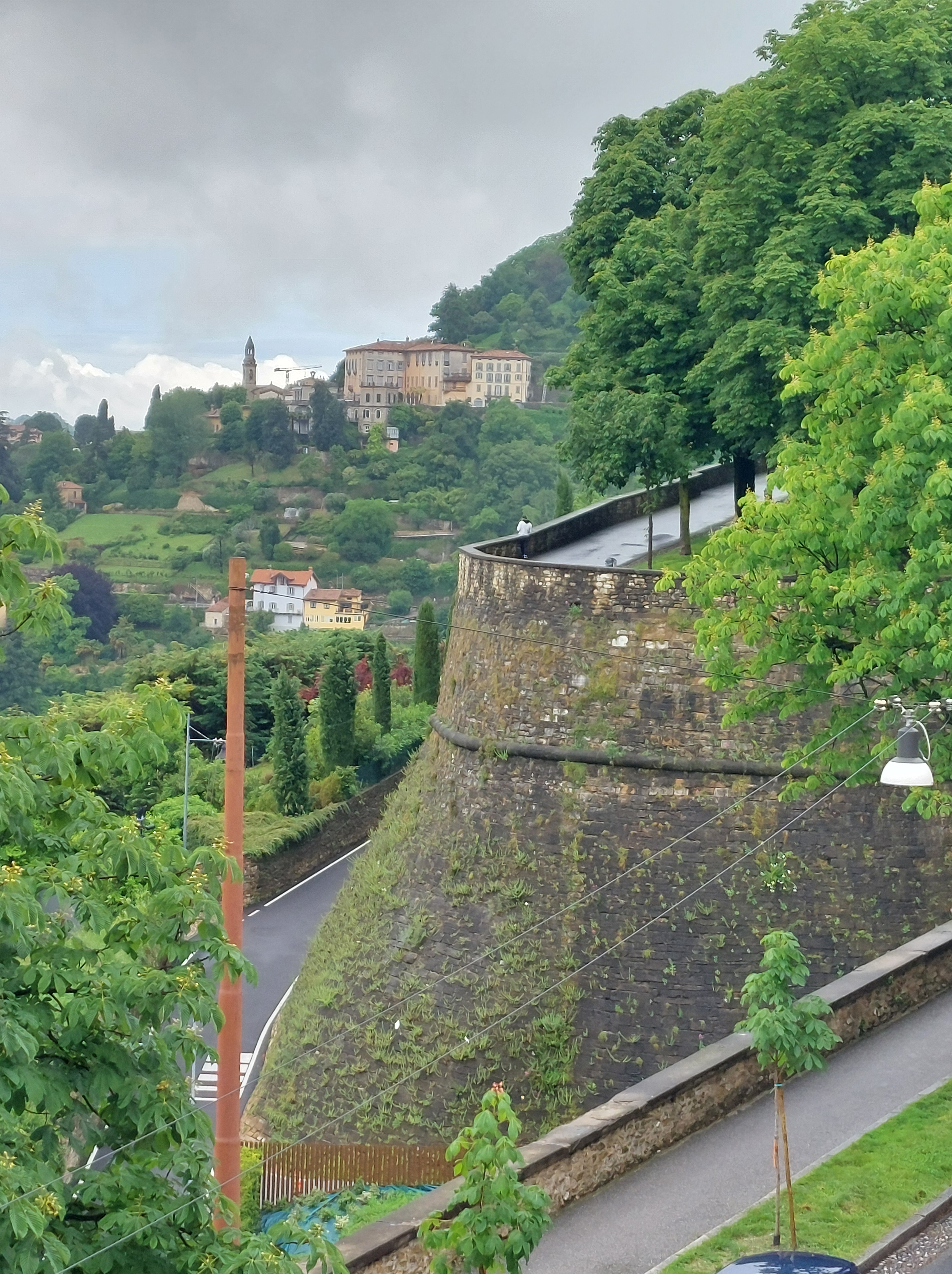

The narrow streets behind the Piazza Duomo are graced by significant architecture of the 1400s. The Venetian lions are part of the baldacchino at the back of Santa Maria Maggiore basilica. The 12th century fifty-meter tall Campanone or bell tower casts its shadow on the Piazza Duomo with its graceful fountain. Due to lines on Sunday, I had not entered the Cappella Colleoni, a late 15th century chapel with dazzling art and architecture. I was chastised for taking a forbidden photo. What a shame that such a magnificent masterpiece can be seen only by those who make the trek to Bergamo. I had a light lunch at a café in the piazza, then a stracchiatella gelato, the famous chocolate chip ice cream allegedly invented in Citta Alta at another shop. With taxis still on their one-day strike, I was glad I had only a short wait for the Number One bus to take me back to citta bassa and a ten-minute walk to Hotel Petronilla.



After a good rest at the hotel and working on notes and photos, I took receptionist Giovanna’s recommendation of a nearby restaurant, Al Vecchio Tagliere. The Bergamo region is famous for nine protected cheeses. Only four were included in my antipasto, a Tagliere (cutting board) that included an assortment of affettati misti (cold cuts), prociutto, cotto, salami, marinated vegetables, and polenta. That was followed by a house specialty, a homemade dumpling called casoncelli alla Bergamacca, original to the restaurant, stuffed with mixed beef and pork, served with a light sauce with pancetta, leaving no room for a dolce.
BELLAGIO, LAKE COMO. After a week in Lombardy, it was time for me to return to the Lake District. I had enjoyed a brief visit to Lake Como in 2001, staying at the beautiful Villa Tremezzo, sold out for my dates this time. I had thought about having one big splurge on this trip and looked into the famed Villa D’Este where the stars stay near George Clooney’s home. But I didn’t think I would get value for price at €1300 for the smallest room. I had visited charming Bellagio by boat excursion in 2001 and decided to make my splurge there at the Grand Hotel Villa Serbelloni. https://www.villaserbelloni.com/it/our-story.html. A young mother driving for the Bergamo taxi service took me to Bellagio and we had a nice conversation for the 90-minute drive.
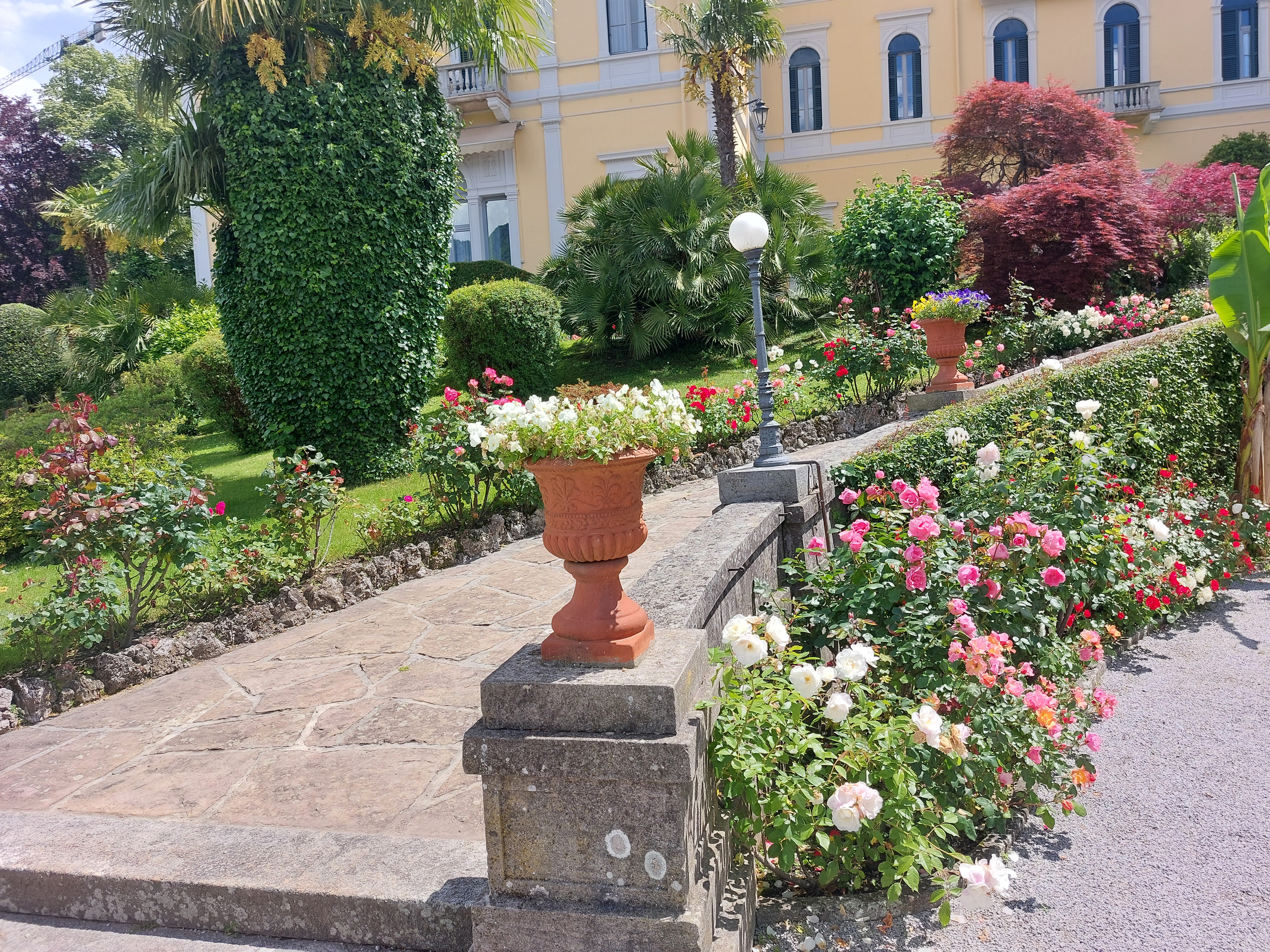


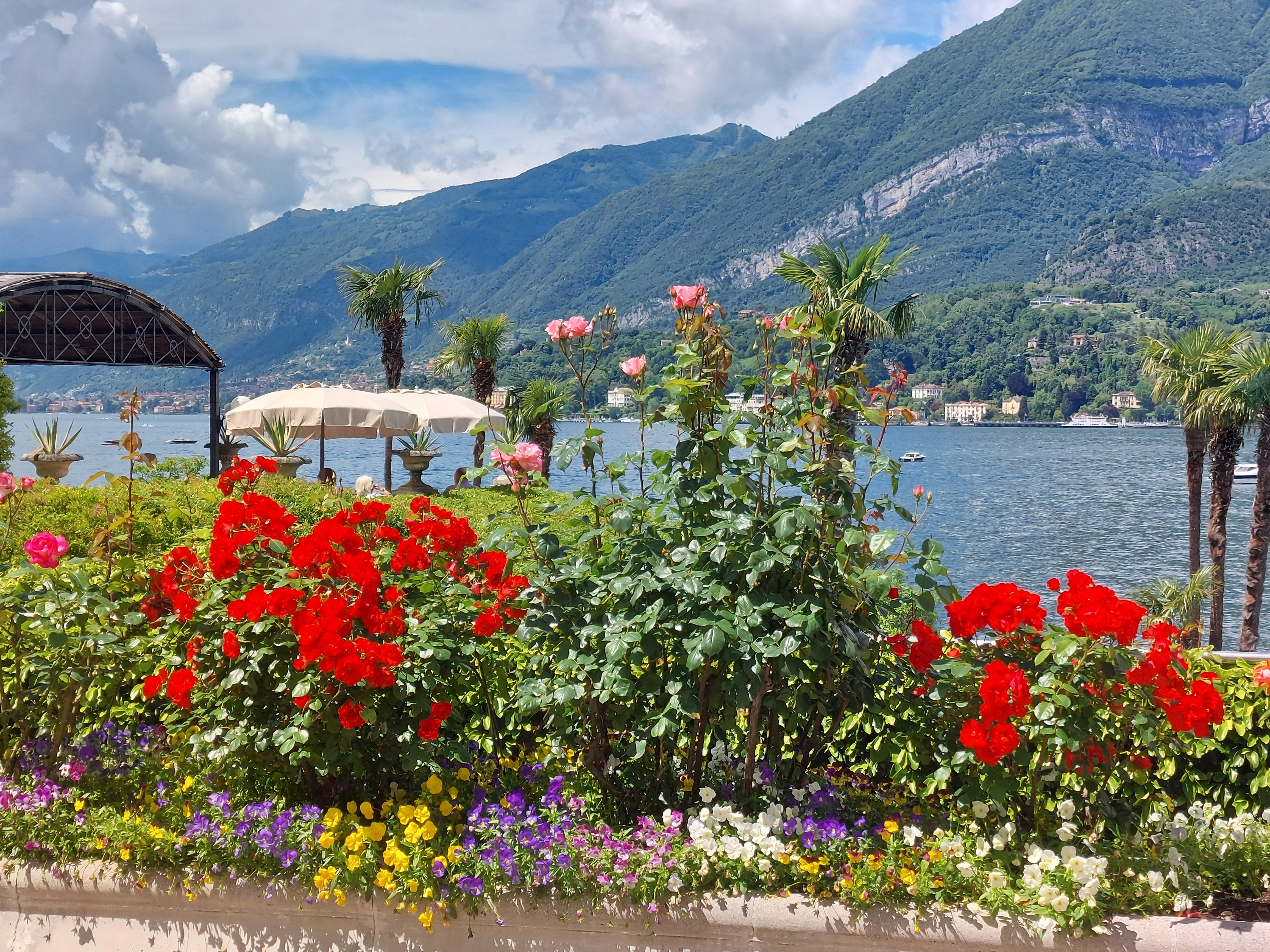
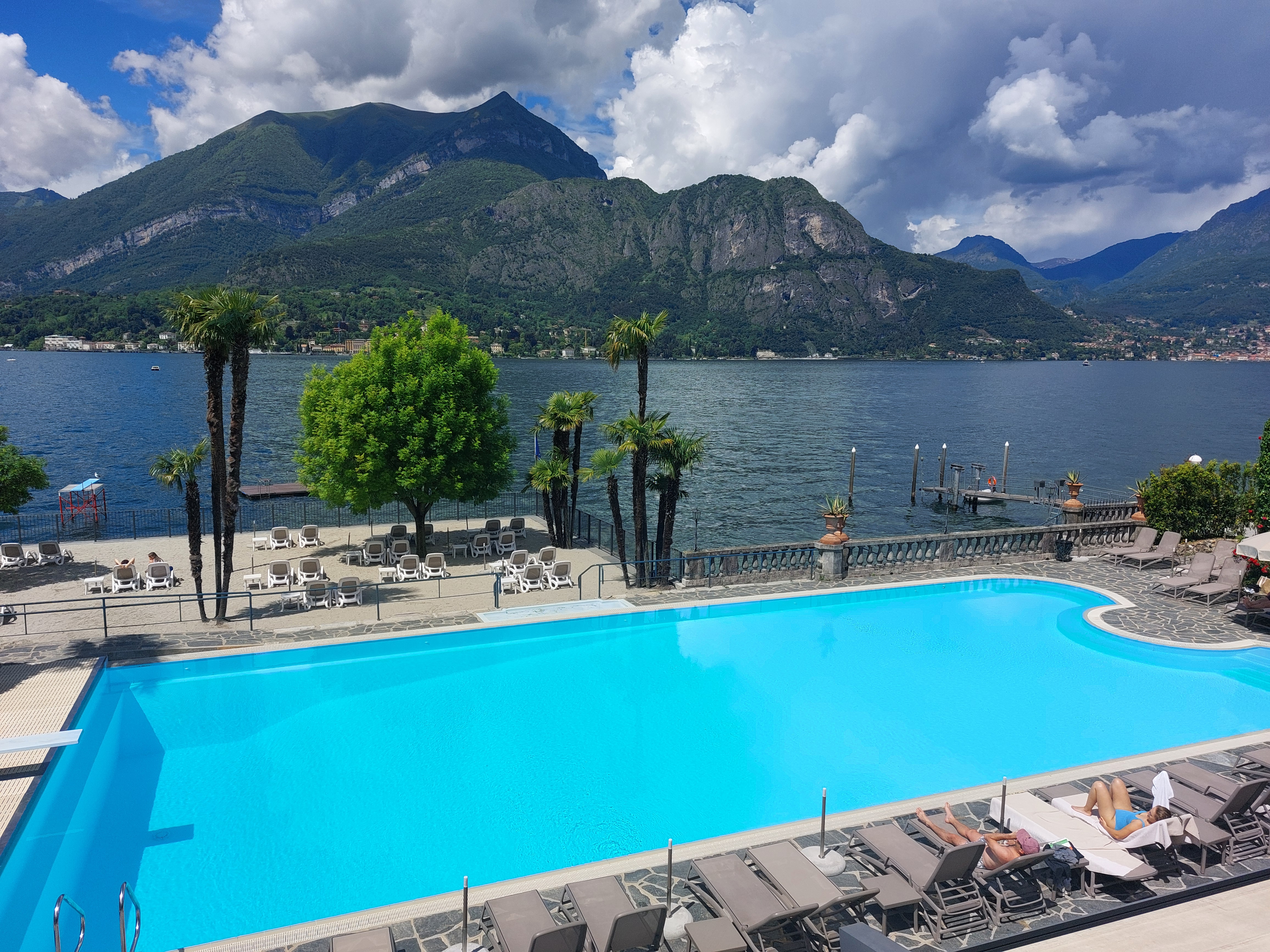
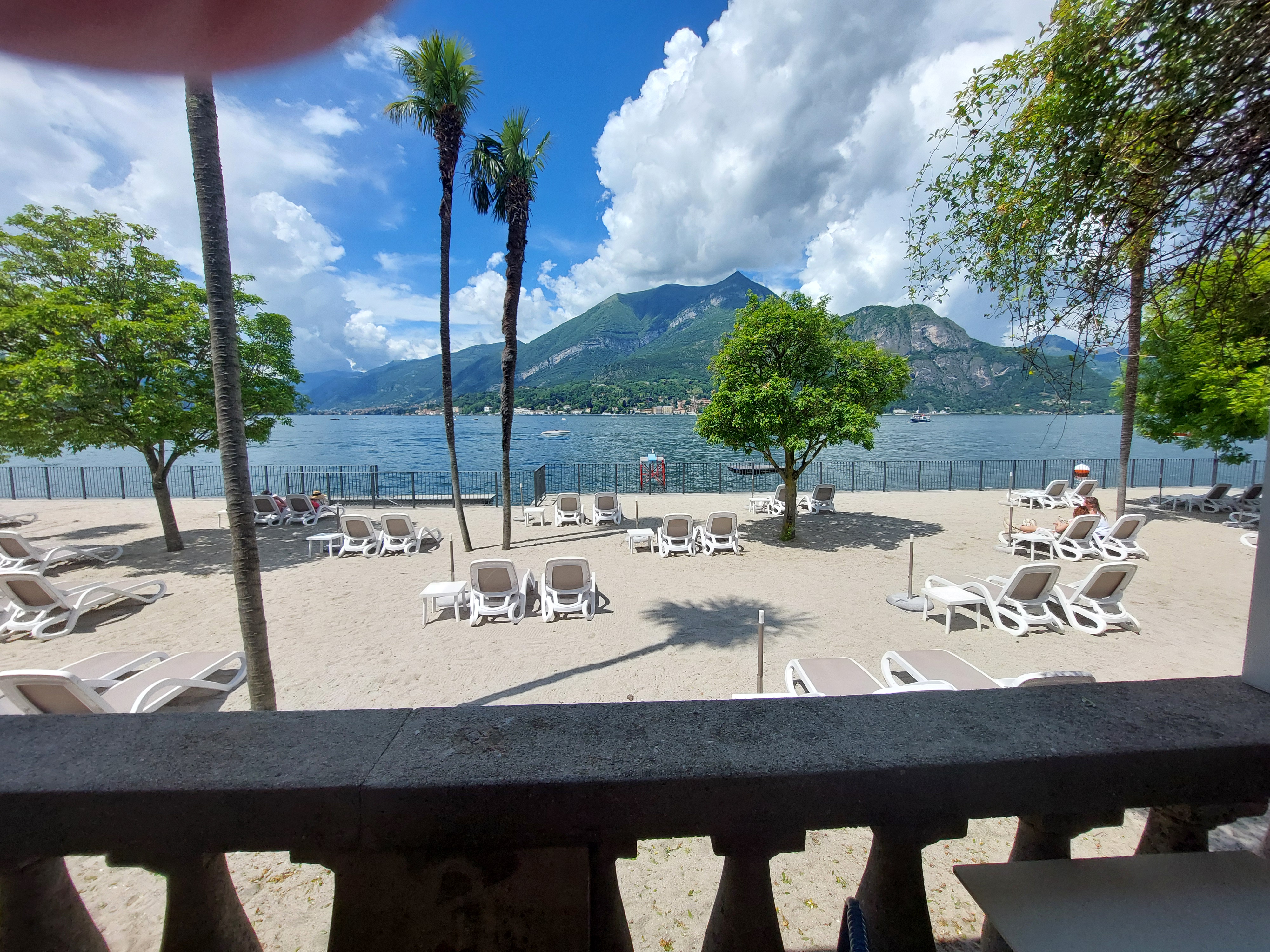


There was sun for just a few hours when I arrived in Bellagio, too early for my room to be ready, but I enjoyed a stroll in the hotel gardens and lunch in the lakeside bar. But black clouds came up soon after and it rained for the remainder of both days. I could not use the beautiful pool nor visit the two famous gardens, those of the Villa Melzi, and the Villa Serbelloni park. The latter are not part of the hotel but run by a private foundation by tour only, morning and afternoon, both canceled due to rain. The second day I joined scores of day-trippers crowding the narrow streets, pouting under their umbrellas, and filling the many small cafes. The weather discouraged me from taking a lake-boat excursion. No value for money in this splurge, no fault of the sensational hotel.

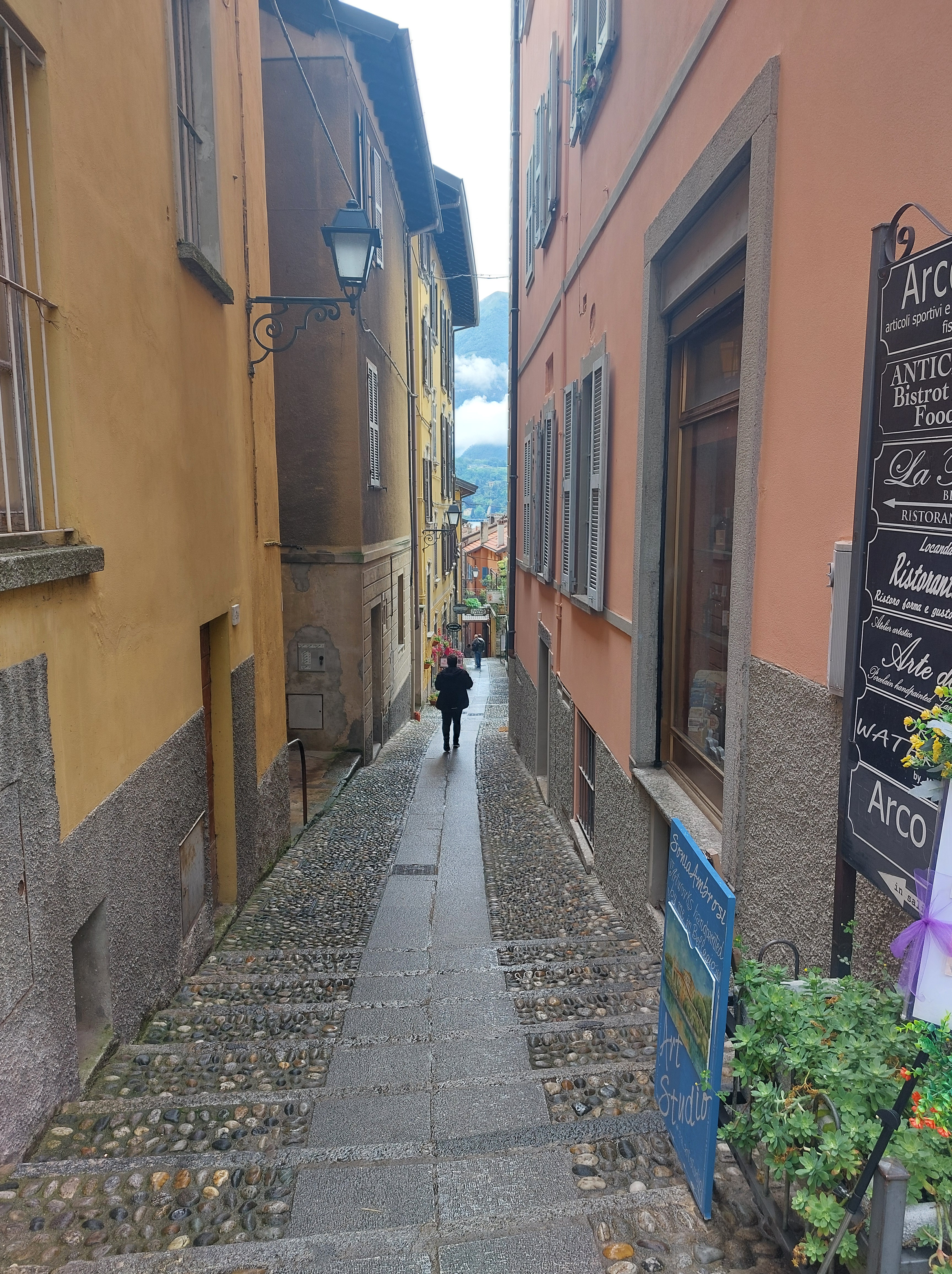
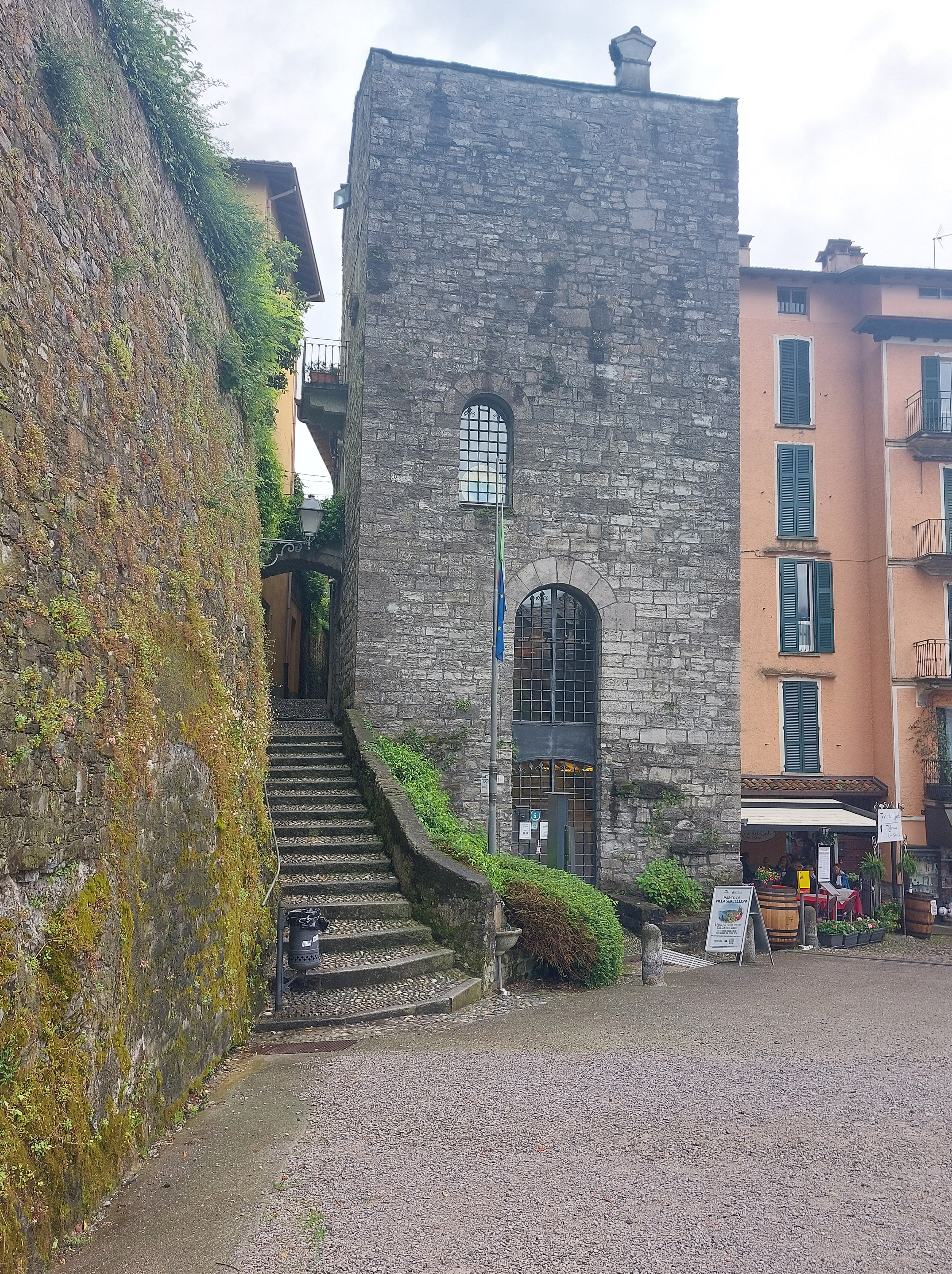


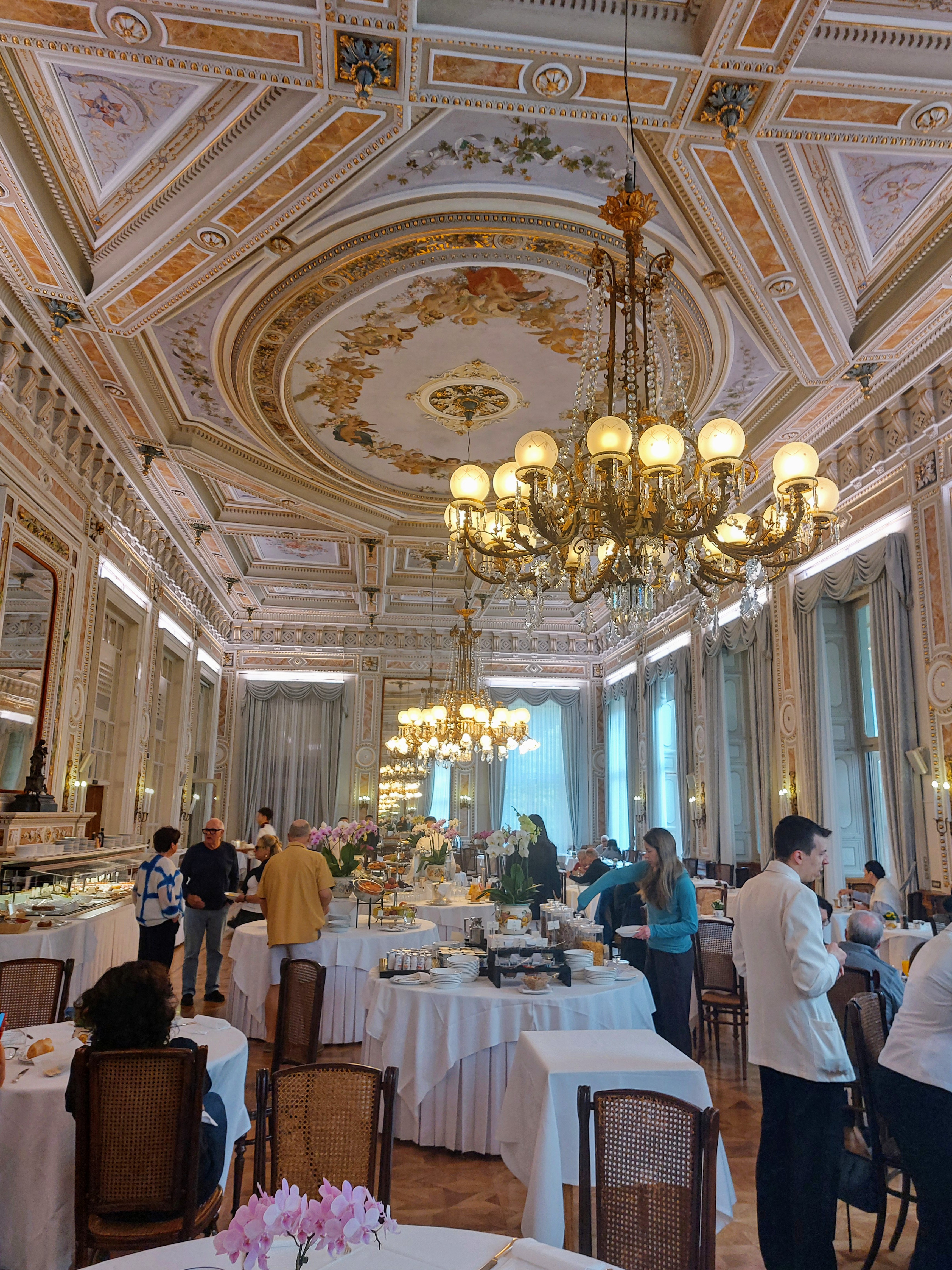
The splendid dining room at the villa provided a lavish breakfast buffet daily, offering an assortment of hot dishes, cold cuts, cheeses, fruits, and pastries, As expected, meals and drinks were a bit expensive given the palatial building and grounds. An Aperol Spritz that cost €7 in Pavia cost €21 in the bar and dining room, and dinners were pricey.

My problem in Bellagio was transportation. Unlike the previous cities where the local taxis provided metered service to my next destination at reasonable prices, the Villa Serbelloni drivers wanted €450 for airport and city to city transfers. I found driver Andrea on the web and contracted for him to drive me to Stresa, Lago Maggiore, for €400, the best price I could find. I recommend staying in cities on the lake with less exclusivity and visiting Bellagio as a boat excursion.
STRESA, LAKE MAGGIORE. Friday May 24, Andrea was waiting for me punctually at 10 am, and we had an excellent conversation for the two-hour drive to Stresa. I had paid a deposit online and Andrea accepted my Visa card for final payment. Stresa is arguably the most alluring resort town on Lake Maggiore. You can read about its history here: https://www.visitstresa.com/About_Stresa.htm
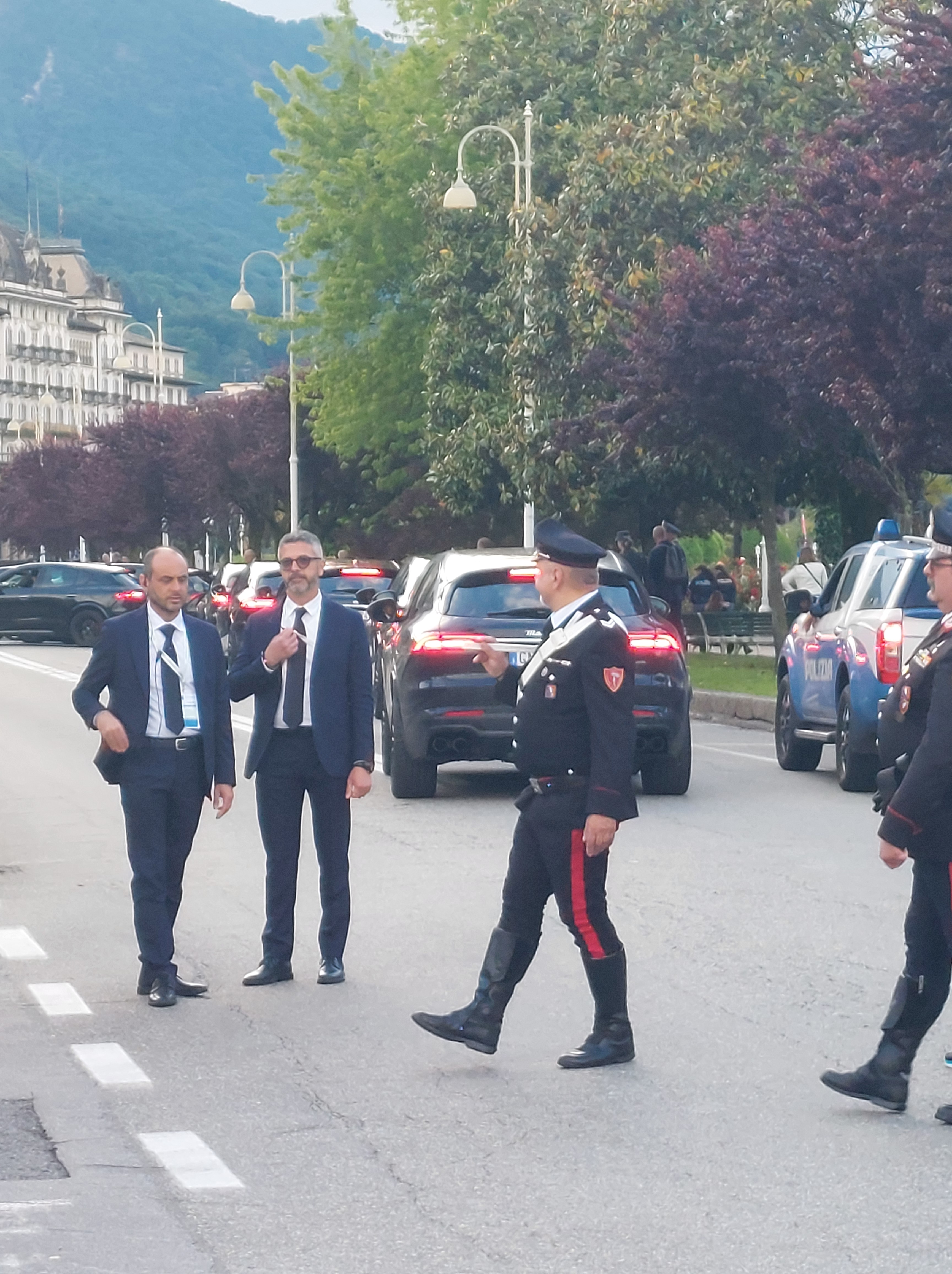
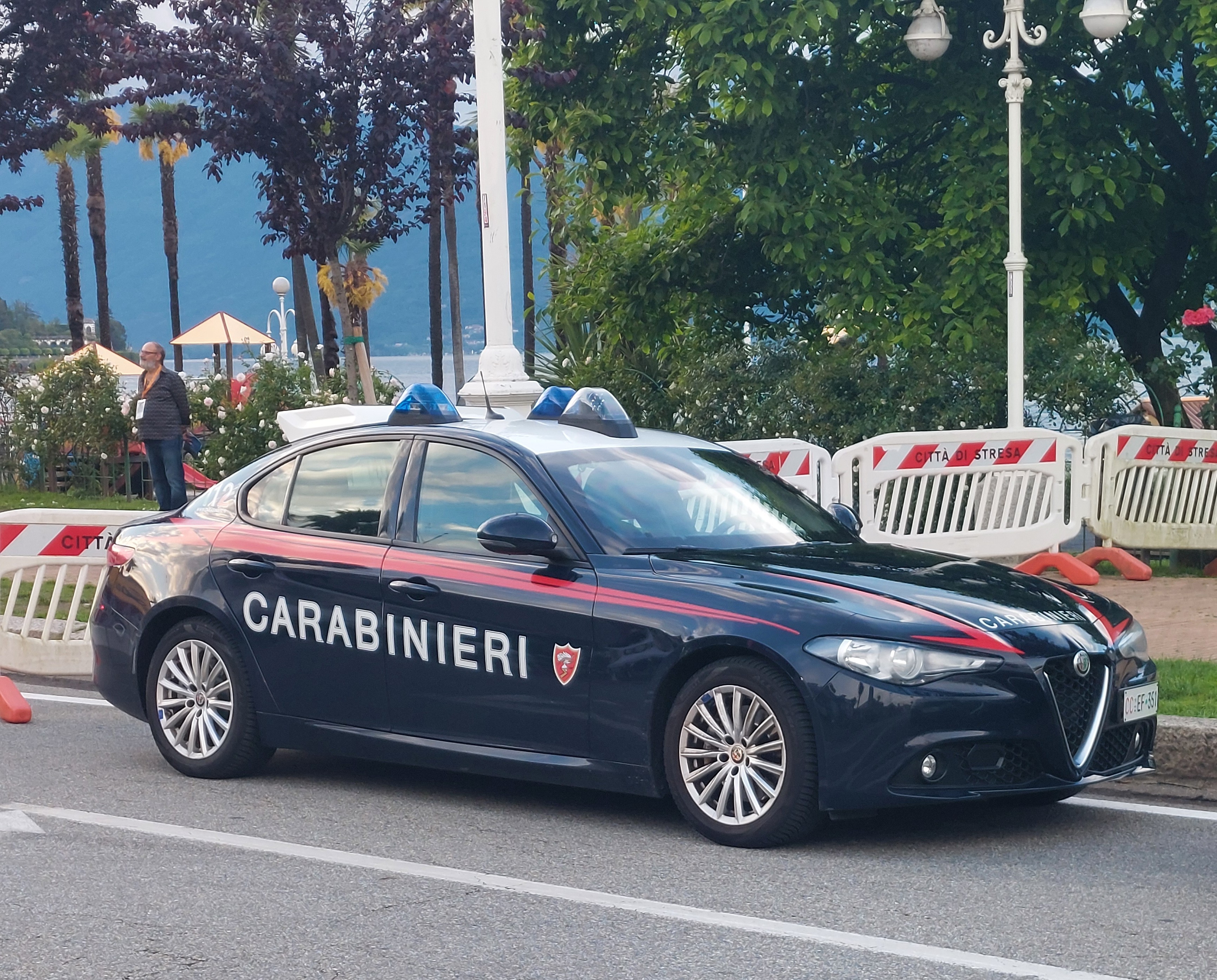
As expected, there was a security problem getting to my hotel. The G7 finance ministers were meeting in Stresa and the Astoria is located in the “red zone” requiring a pass to enter. The carabiniere who asked for my documents phoned the hotel to confirm my reservation. At the hotel I got a paper pass to be able to come and go as a pedestrian. The conference ended the next day and Janet Yellen and her colleagues no longer commanded such security. https://www.ansa.it/english/news/2024/05/24/g7-finance-meeting-gets-under-way-by-lake-maggiore_a0c0afd0-cc2d-4e97-9ca5-7e0ad886e5b8.html

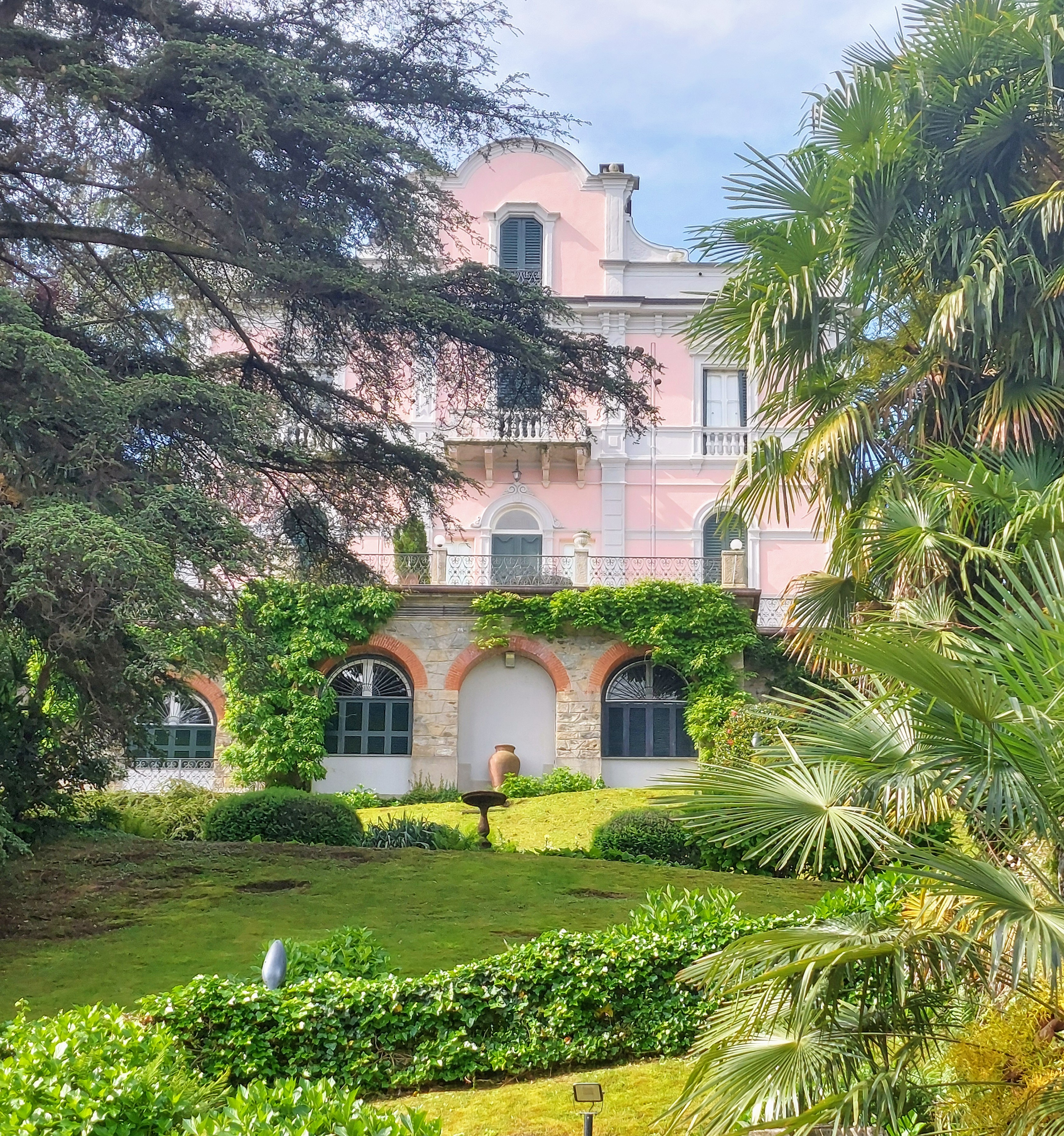
While I had been to Stresa as a solo traveler in 2016, I was unable to see all of the venues the resort town offers. This time, my friend Angela Thiene was in residence and offered to drive me to places tourists often miss. Angela is a widow with doctorates earned in France and Germany. She was born in Milan, but lives now in Stresa in a lovely 1870s villa overlooking the lake that has been broken up into apartments. Like so many worldly people who have traveled widely, Angela chose Cuernavaca as her winter residence and we have shared many pleasant dinners there. Our international expat community in Cuernavaca is a treasure of remarkable people.
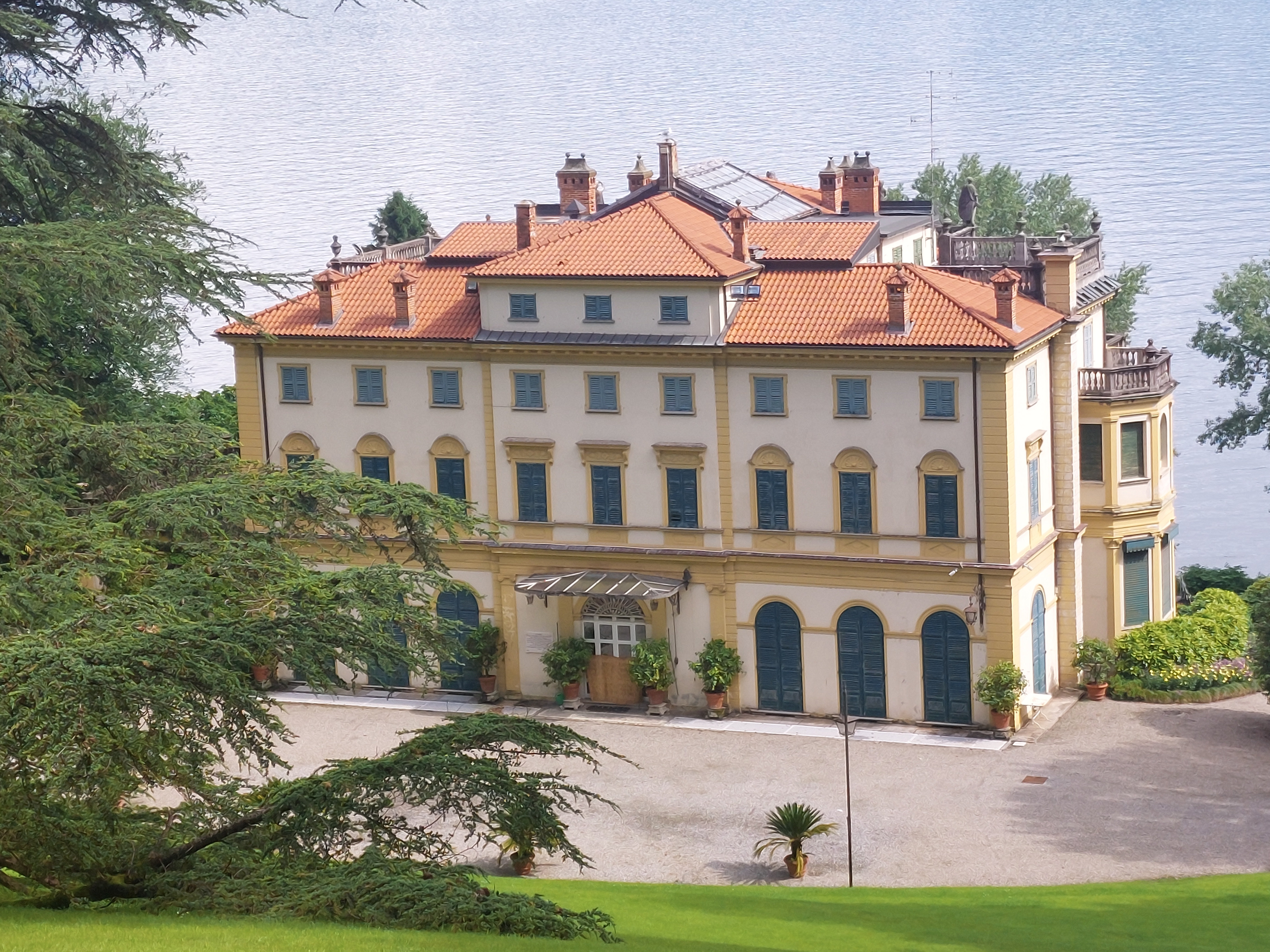
The Hotel Astoria is in the middle of a number of four and five-star hotels a short walk from the city center. I had a pleasant room with a small balcony overlooking the lake. I unpacked quickly and walked seven minutes to the restaurant Due Piccioni where Angela treated me to lunch and a great bottle of Nebbiolo. I was now in Piedmont, the famous wine country that I visited from Torino (Turin) in 2022. Then Angela drove me past her villa, showed me the Navigazione building where we would get the boat to Isola Pescatore, and pointed out the entrance to the gardens I would visit the next day. Angela’s villa shares a wall with the gardens of the Villa Pallavicino.
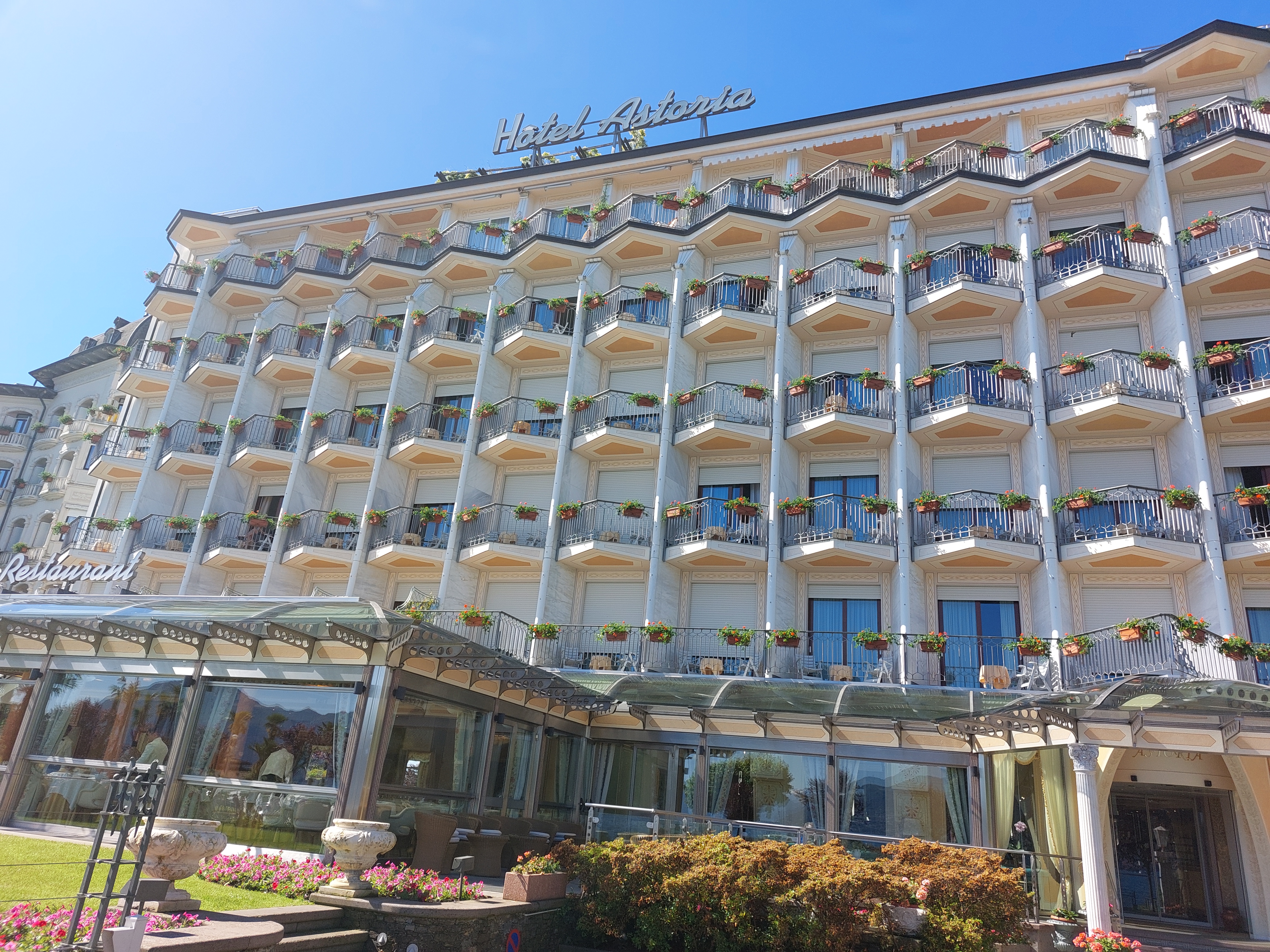


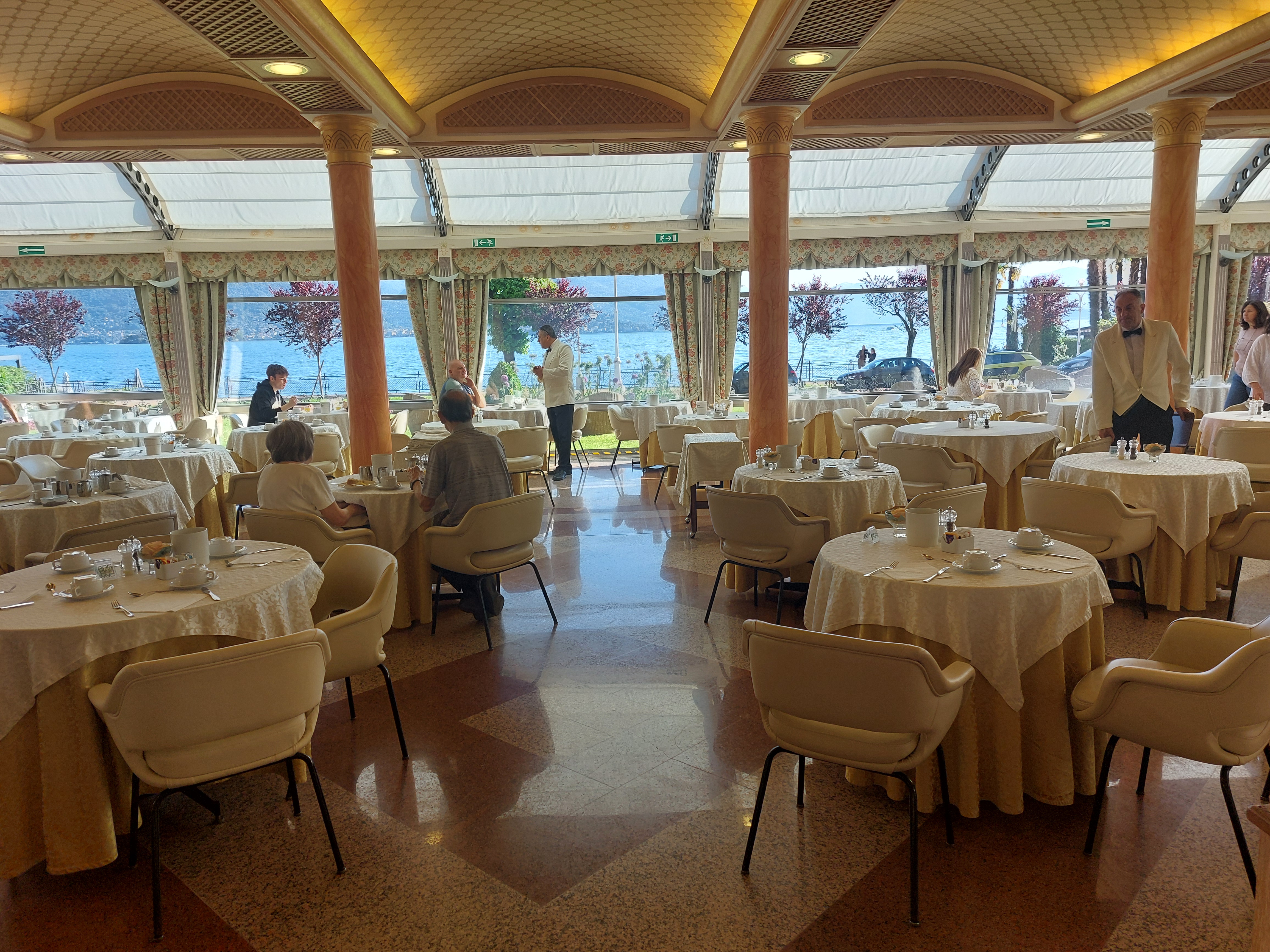
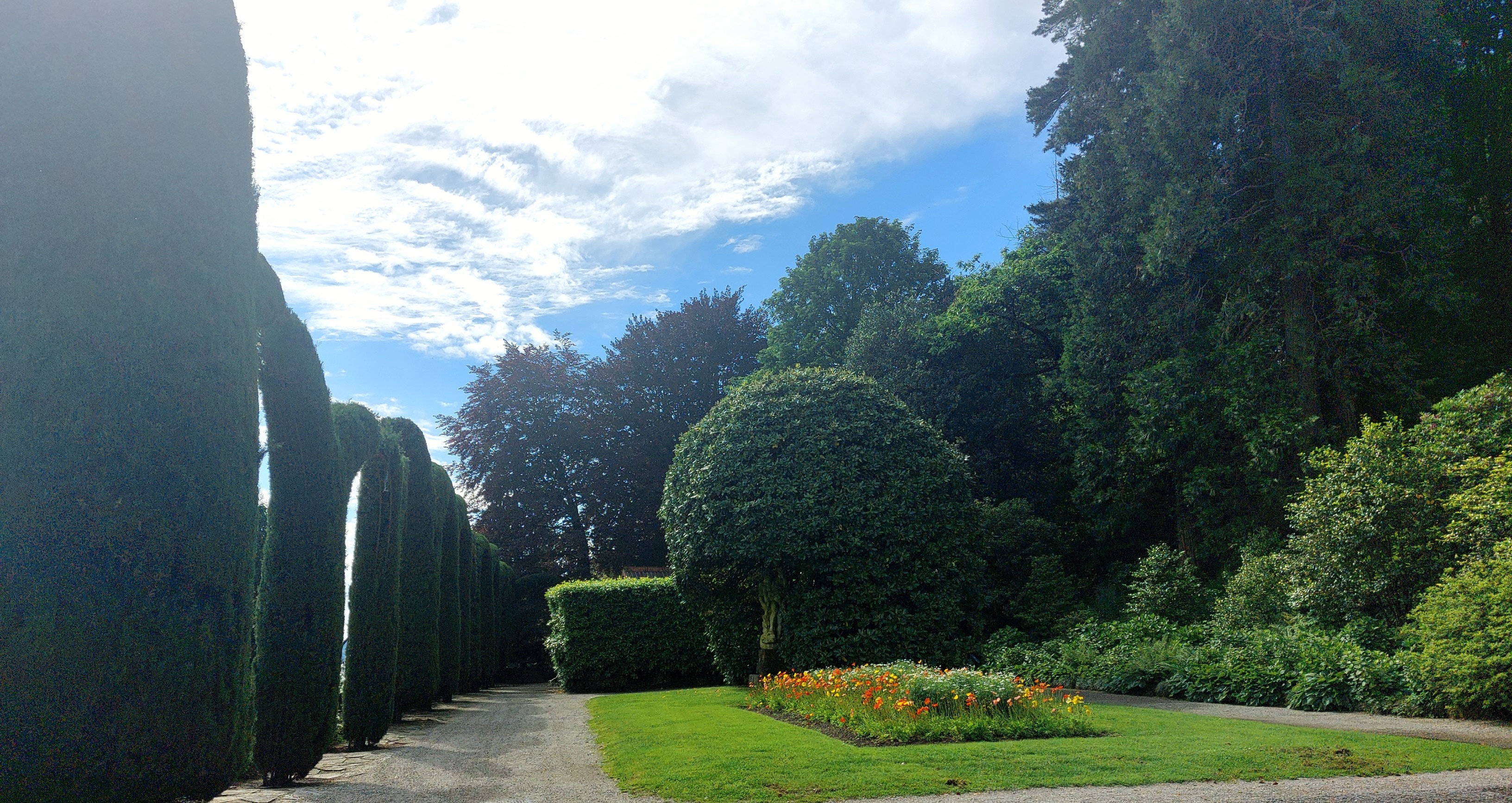
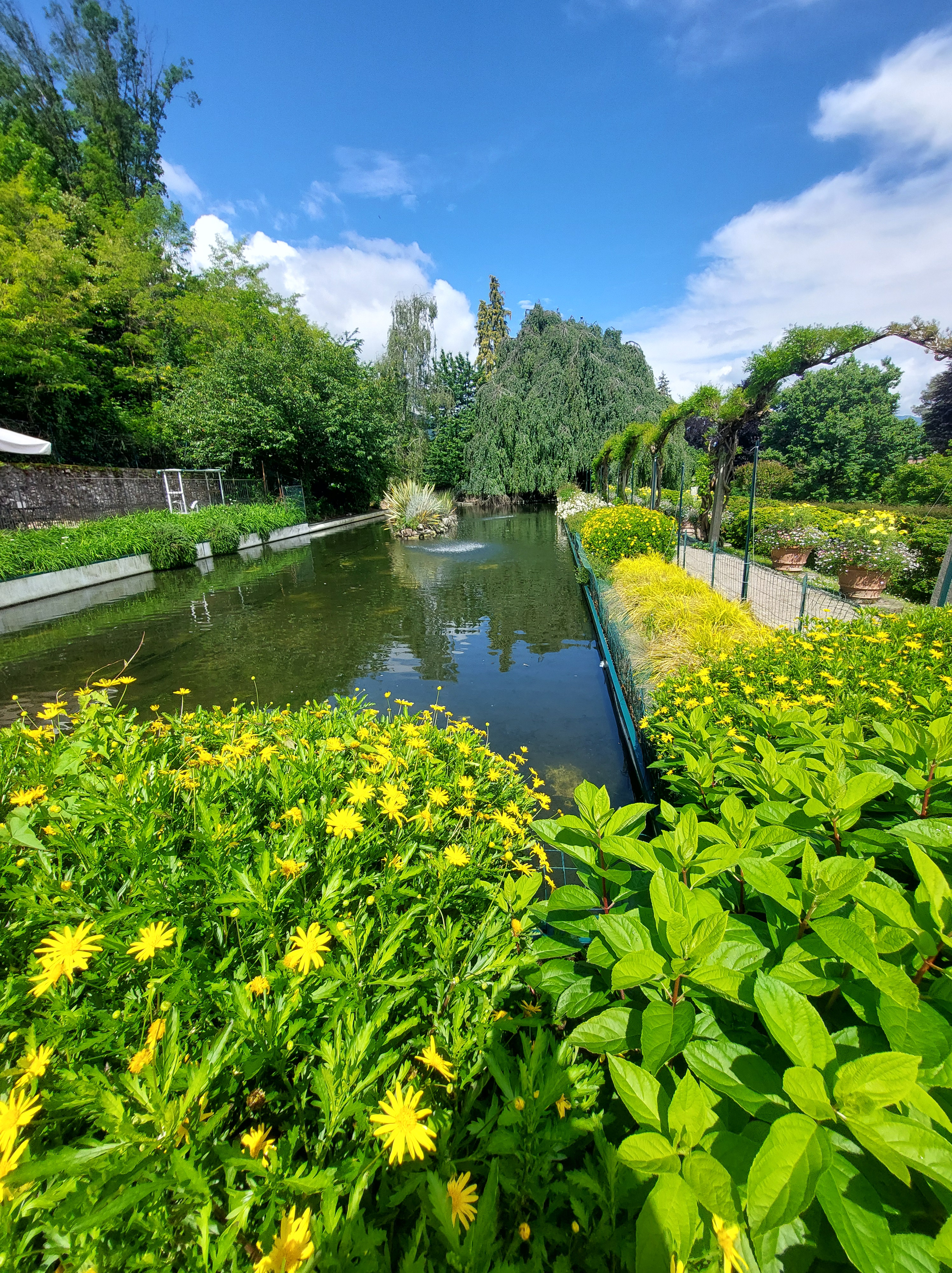
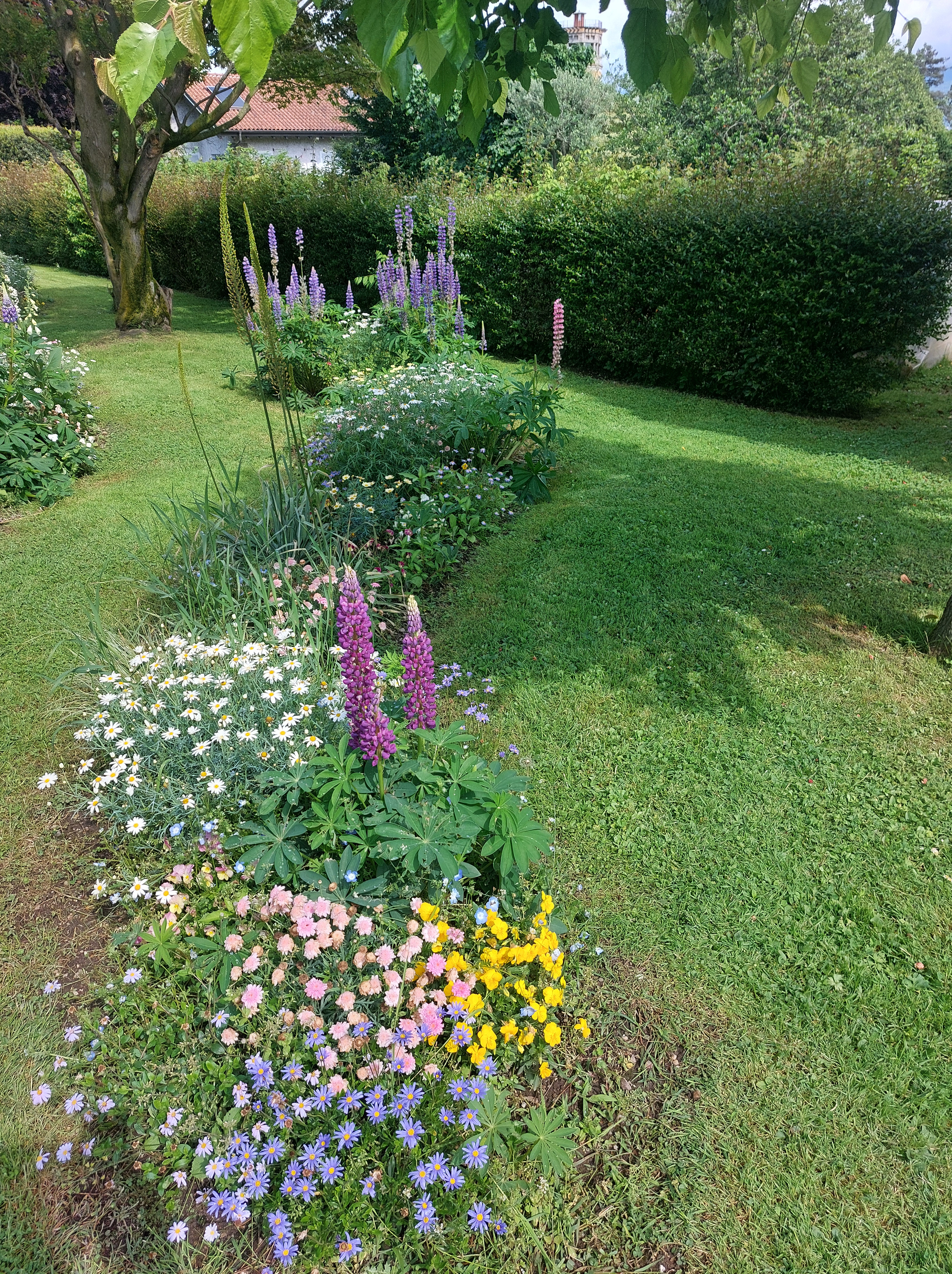
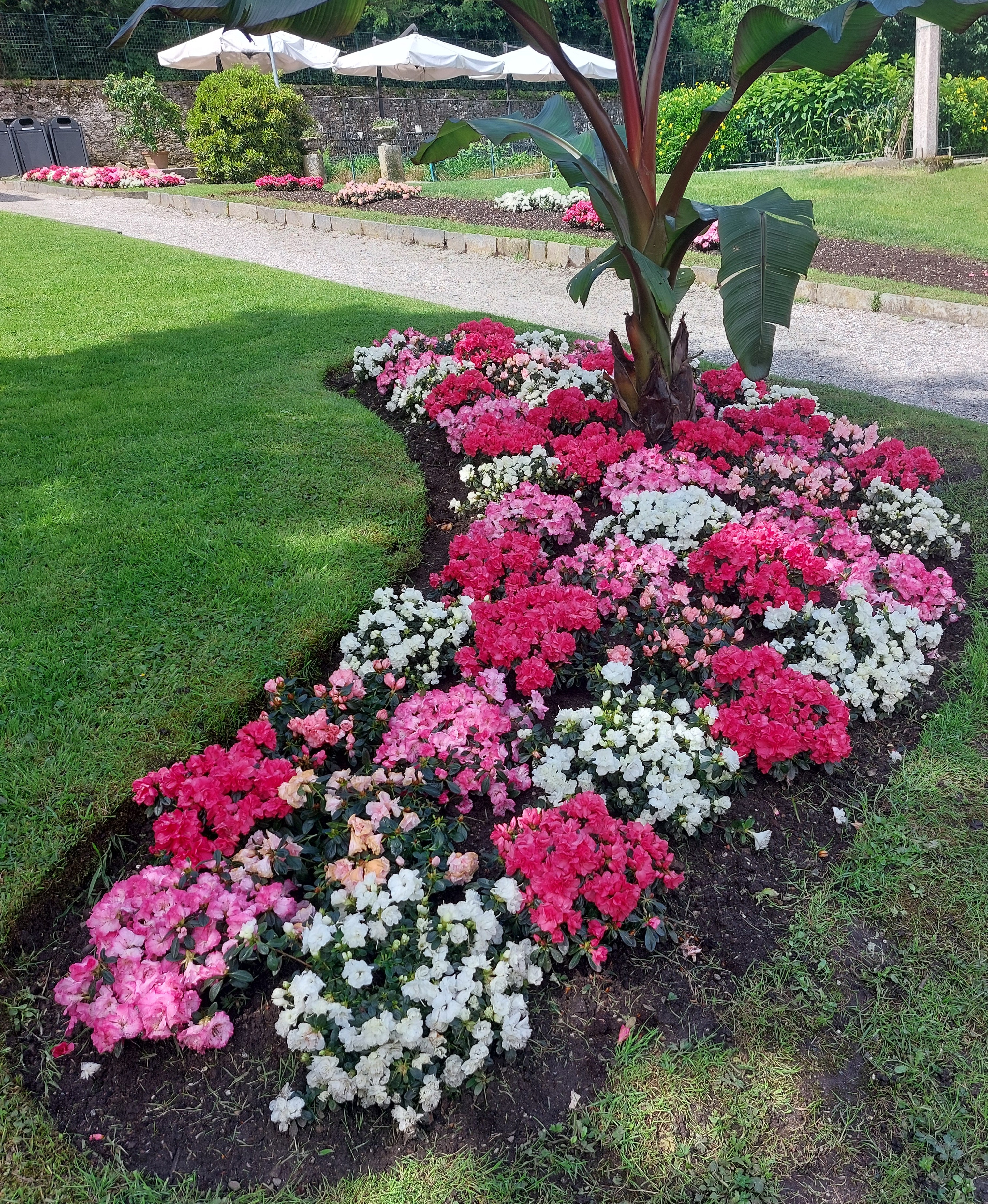
The dining salon at the Hotel Astoria is a cheerful place with a view of the lake and a lavish buffet. After over-indulging, I went online and bought my ticket for the gardens, €14.50. It turned out to be unnecessary since no one was in line at the ticket booth when I arrived. It took me twenty minutes for a leisurely walk along the lungolago to the Pallavicino gardens. More than a garden, the Villa Pallavicino is surrounded by a huge park with wild and domesticated animals: deer, llamas, sheep, pigs, ducks, geese, flamingos, and more. The flower garden is at the top of a steep hill, furthest from the entrance. I accidentally erased photos of the colorful rose garden.
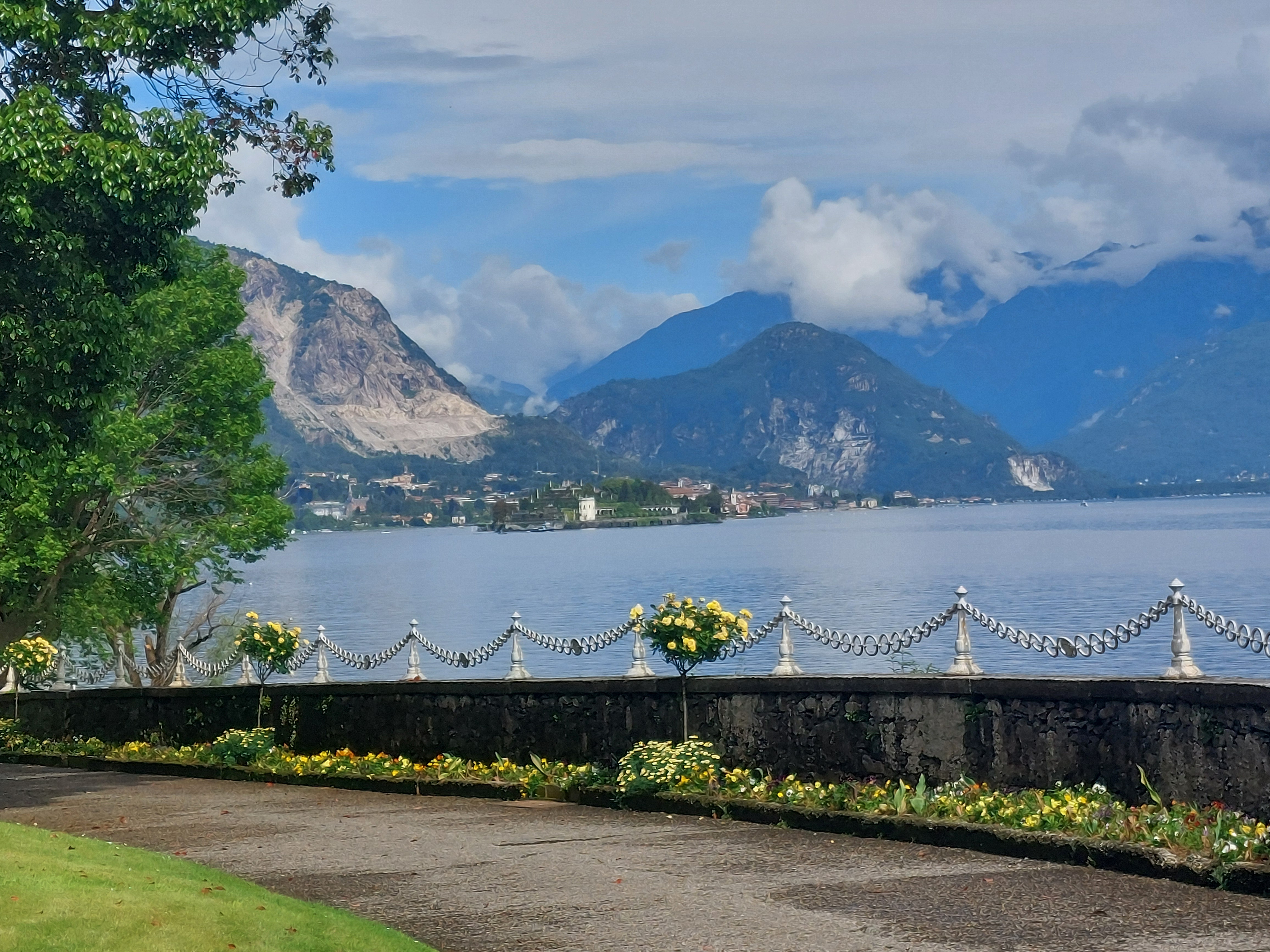

I had to walk briskly back to Navigazione to meet Angela for our 12:15 appointment for the boat to Isola Pescatore where I had offered to buy lunch. I had happy memories of a previous lunch there in 2016. The boat was very crowded with some passengers standing for the 15-minute ride to the island. We had a nice lunch and took the 2:45 boat back to Stresa.
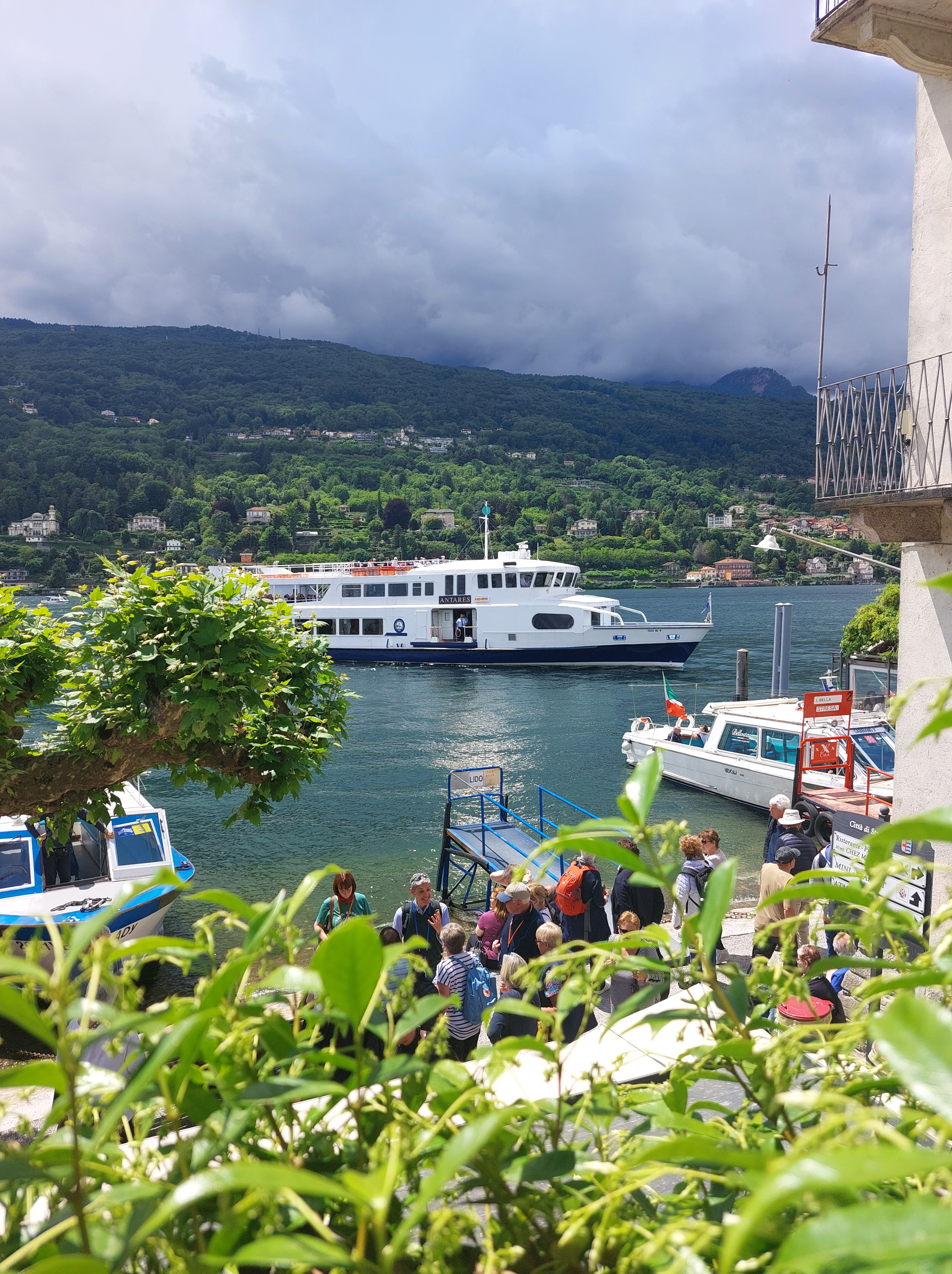

We walked to the parking lot to get Angela’s car and she drove the 16 kilometers to the nearby town of Arona where we walked the lungalago with different views of the lake. That was followed by a visit to a supermarket in Stresa. Although small, the displays of cold cuts and cheeses were fascinating to me. Angela bought the bounty we would share for supper back at her apartment, including my favorite, a creamy gorgonzola. One winds up a hill through a lushly landscaped area surrounding the villa. Her apartment has a wonderful view of the lake from her office and the outdoor patio. After dinner I could barely keep my eyes open as she drove me back to the hotel where I had photo-work to do before sleep.

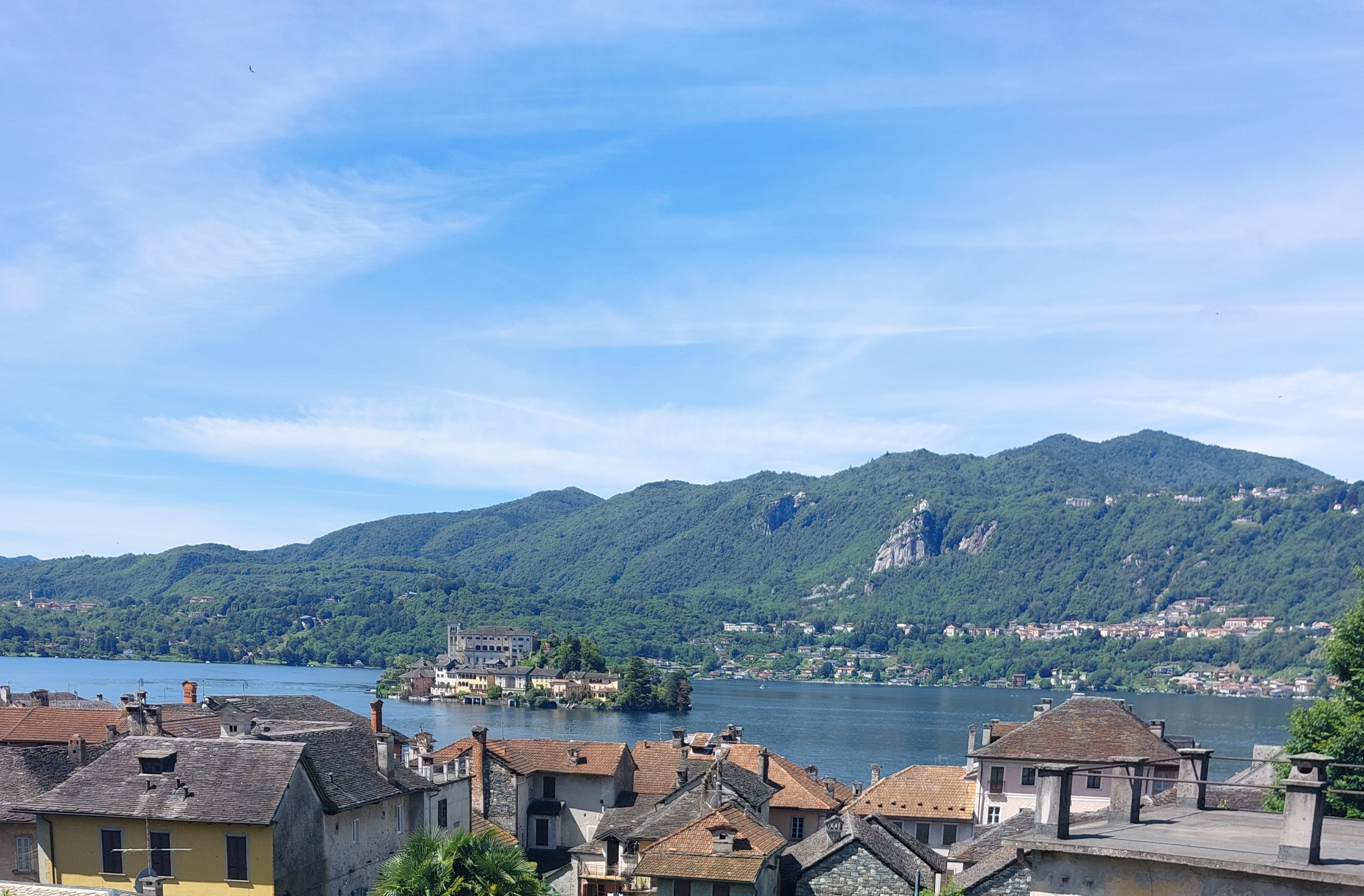
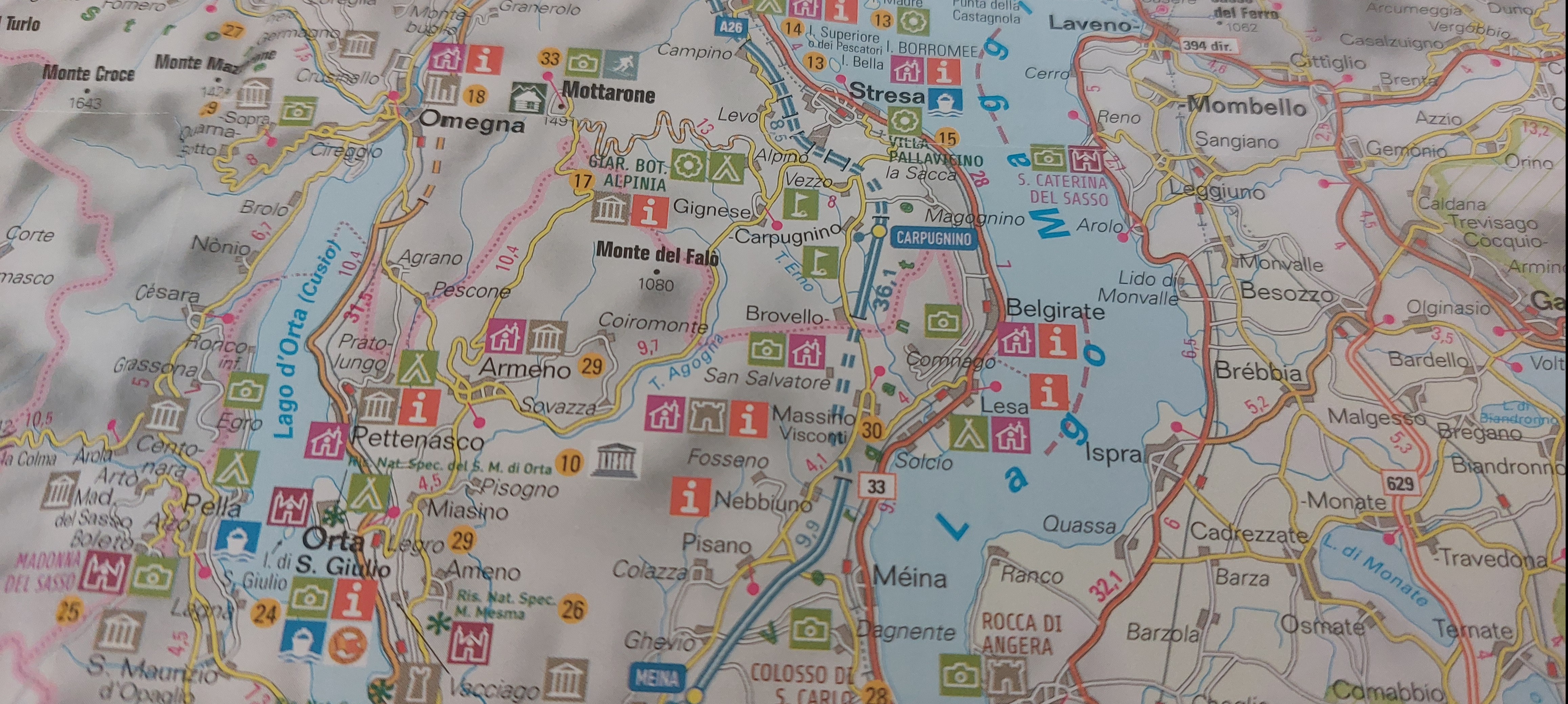
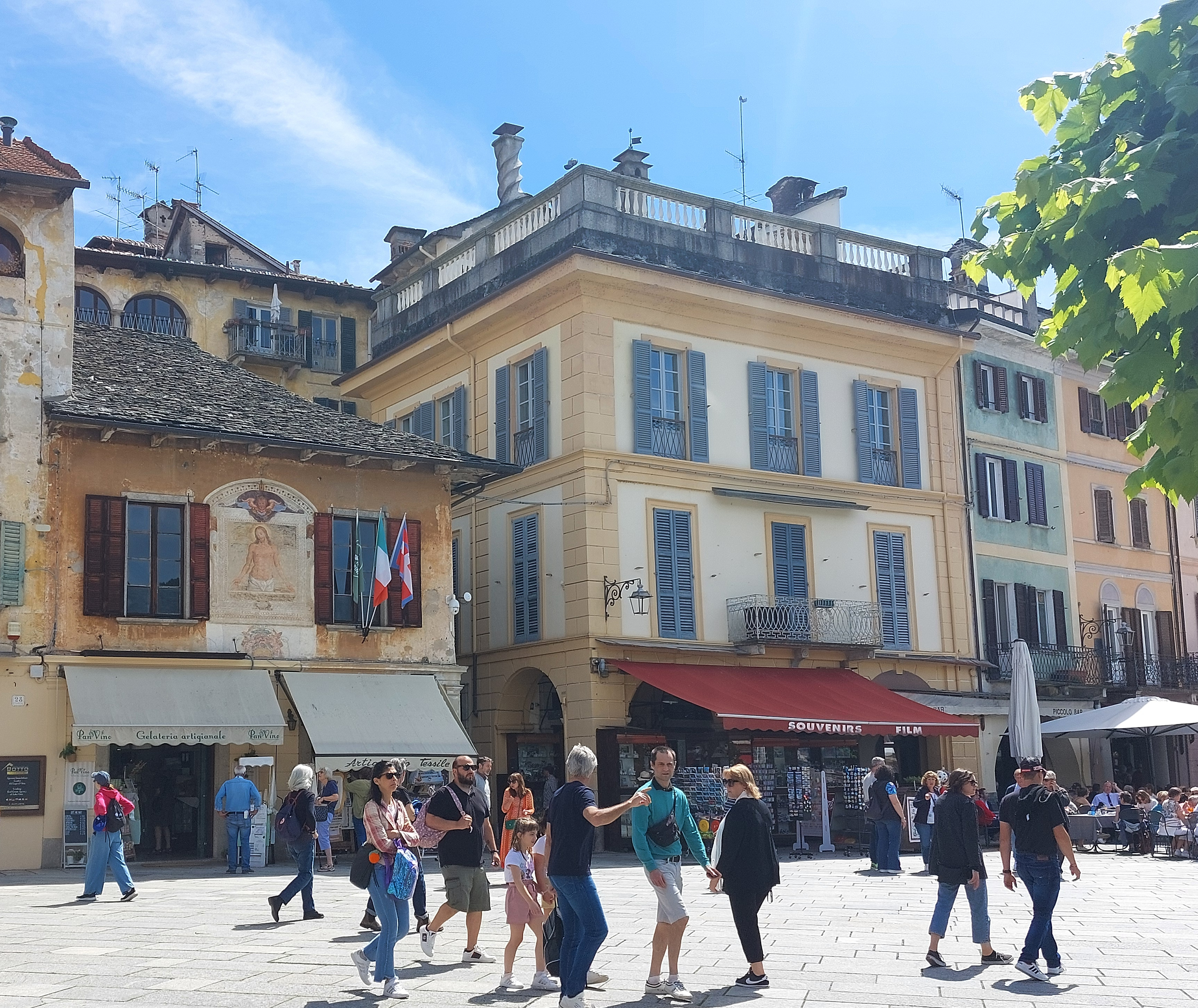
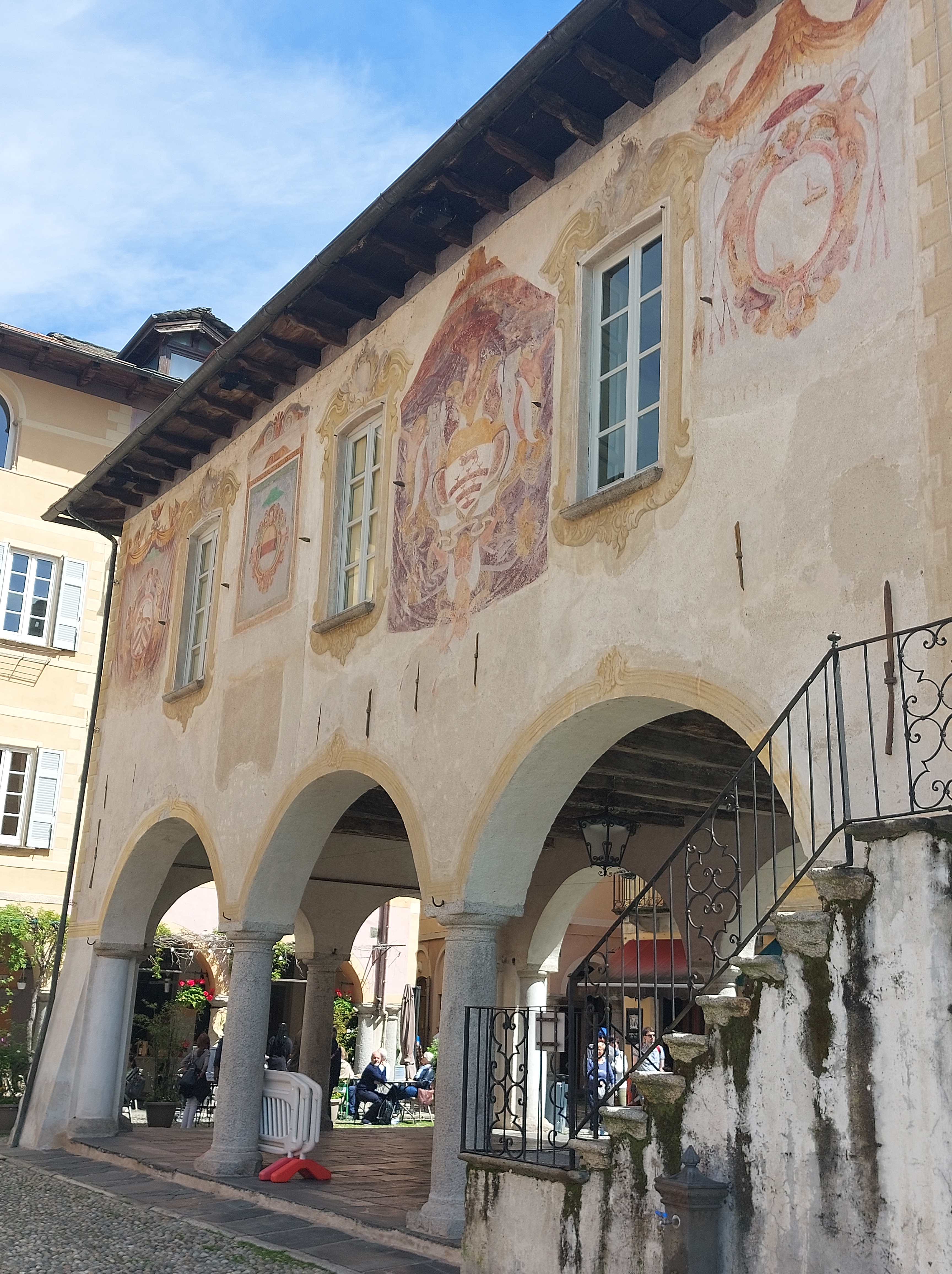
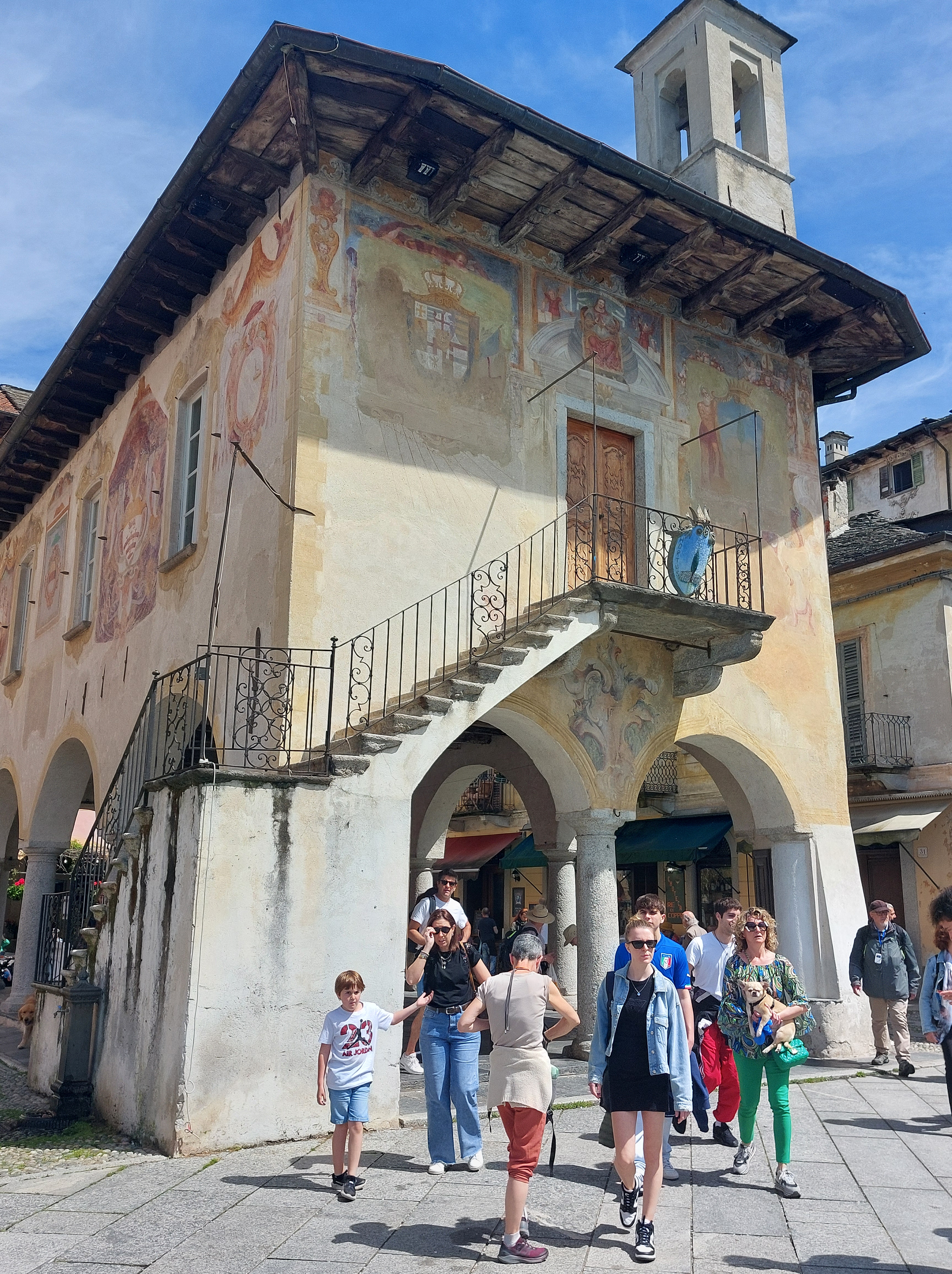
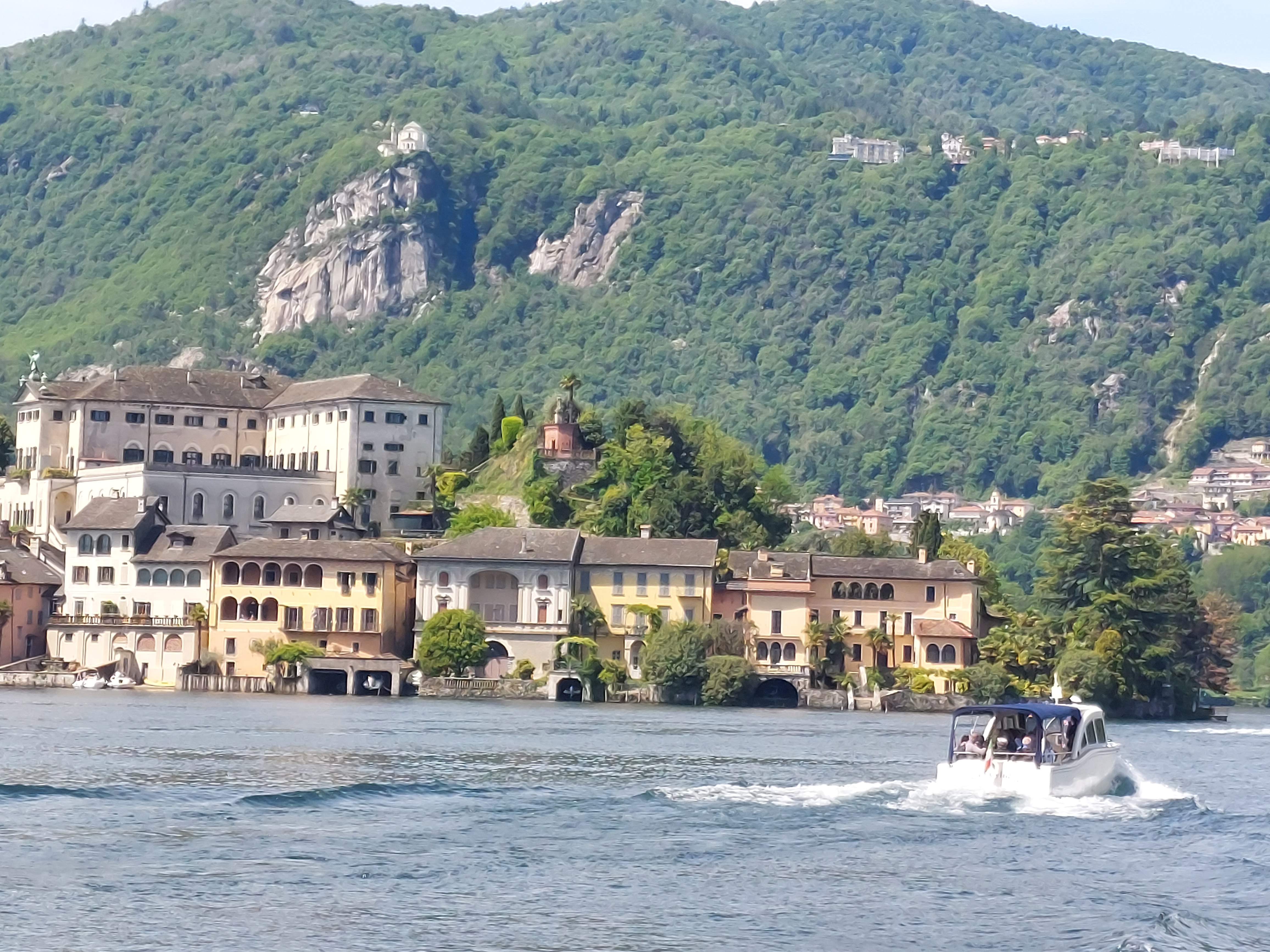
I had read that one of the most charming places near Stresa is Orta San Giulio, and Angela kindly offered to drive me there on Sunday. The drive over the mountain to Lago di Orta has spectacular views looking back at Lago Maggiore. The views on arrival at Orta were obstructed by forests. The drive took less than an hour, plus time to find a parking spot on a day when day-trippers arrive from Milan and surrounding villages. Angela made an immediate reservation at restaurant Venus to hold a table while we walked about the medieval town. She offered to accompany me by boat to Isola San Giulio and its ancient sanctuary but I had reached my quota of basilicas. Our lunch included an enormous caprese salad and spaghetti with a shrimp sauce, followed by gelato in the piazza.
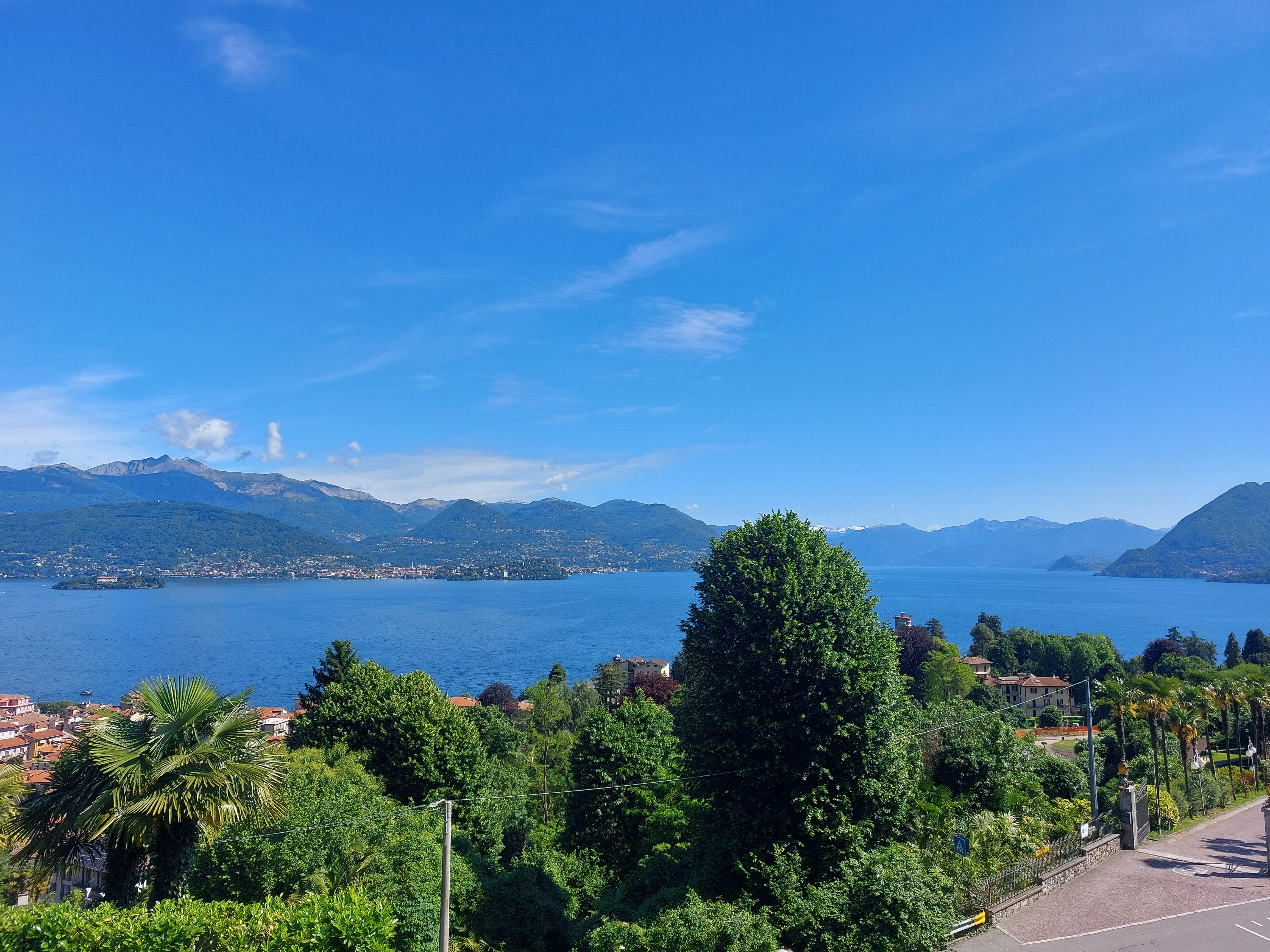

We were back in Stresa before 3 pm, leaving me time to rest, take notes, and sort photos. We met again in the evening to walk next door to the Hotel Palma, famed for its 7th floor roof-top bar and view of the lake. It was great to enjoy the view while the sun still shone, and then watch the lake darken and the lights come up around the shore. Drink prices were very reasonable for such a venue and they came with a small snack. What a great way to end a delightful day.


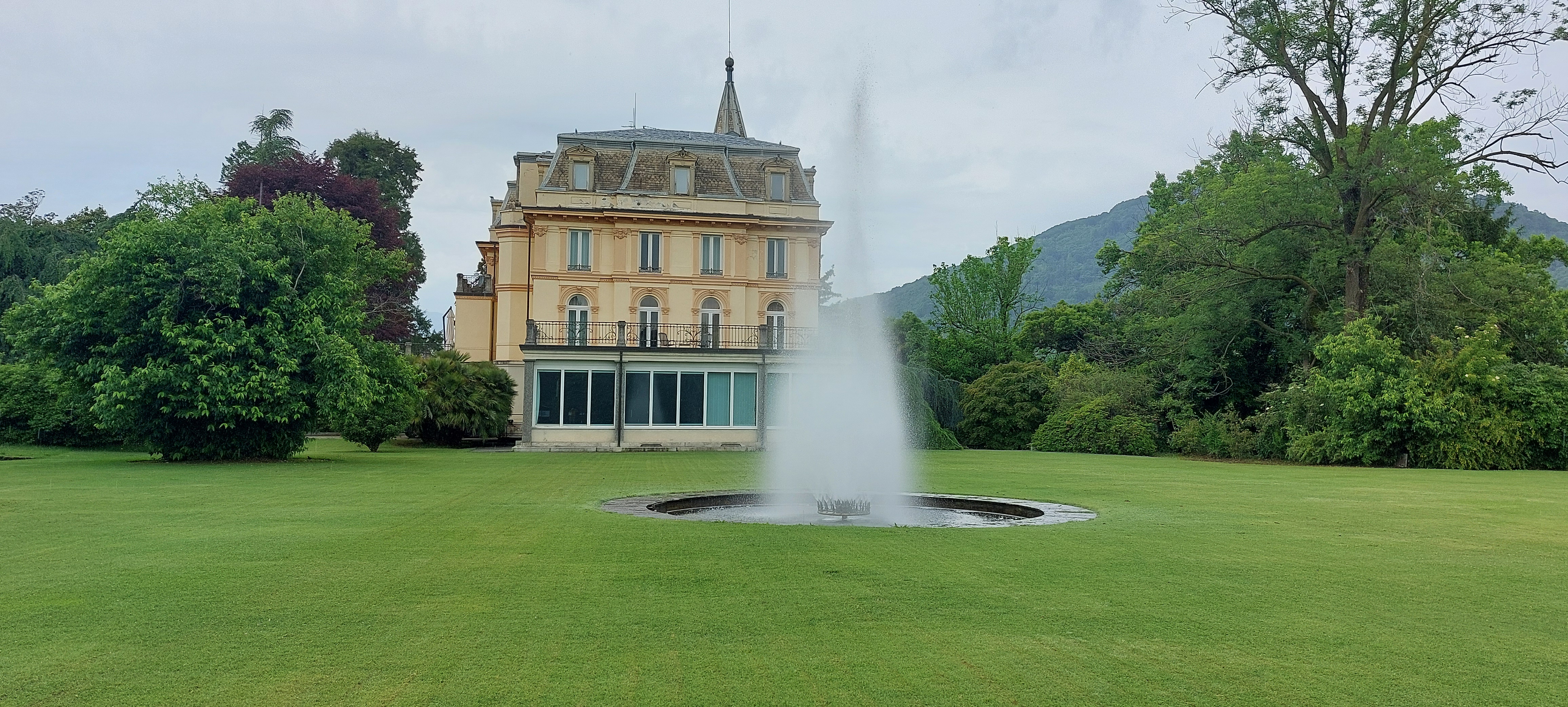
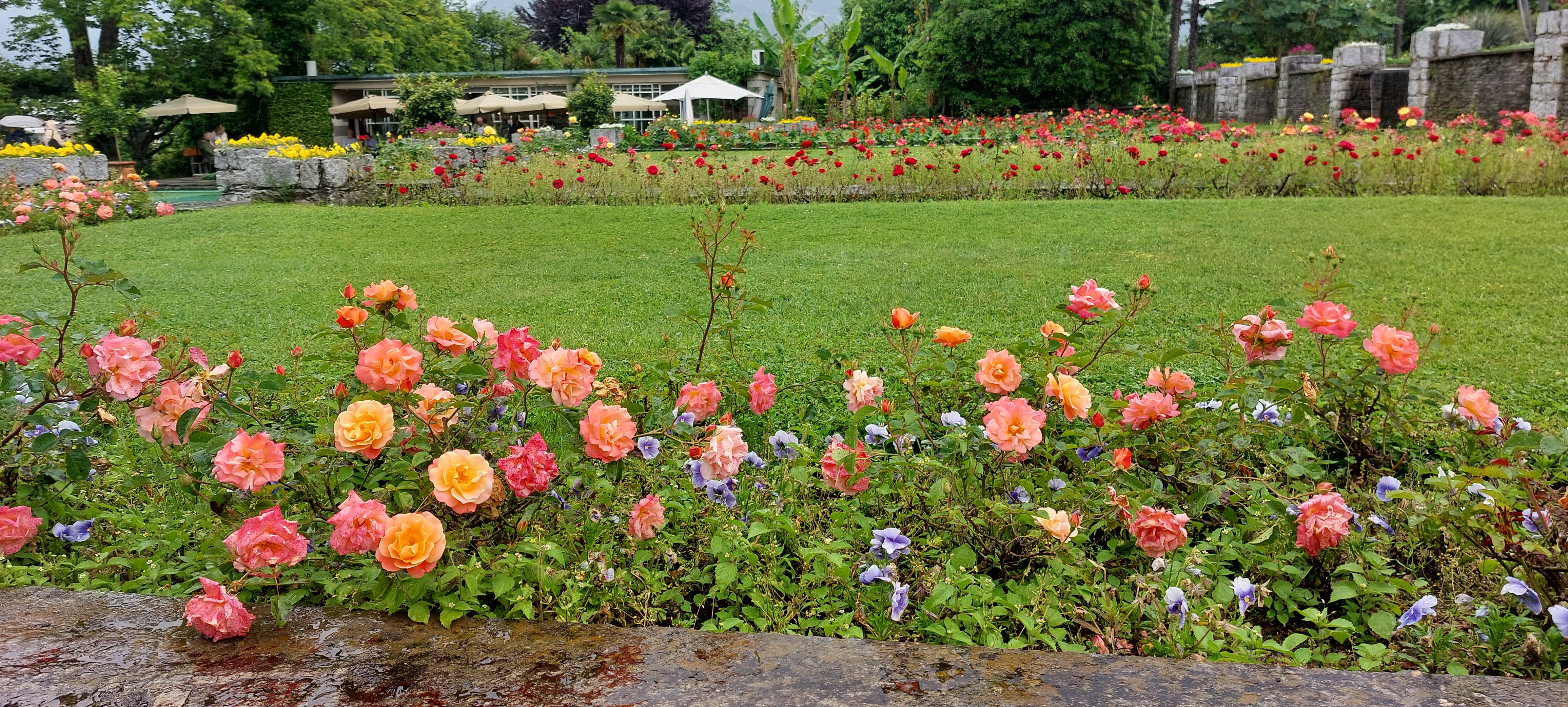
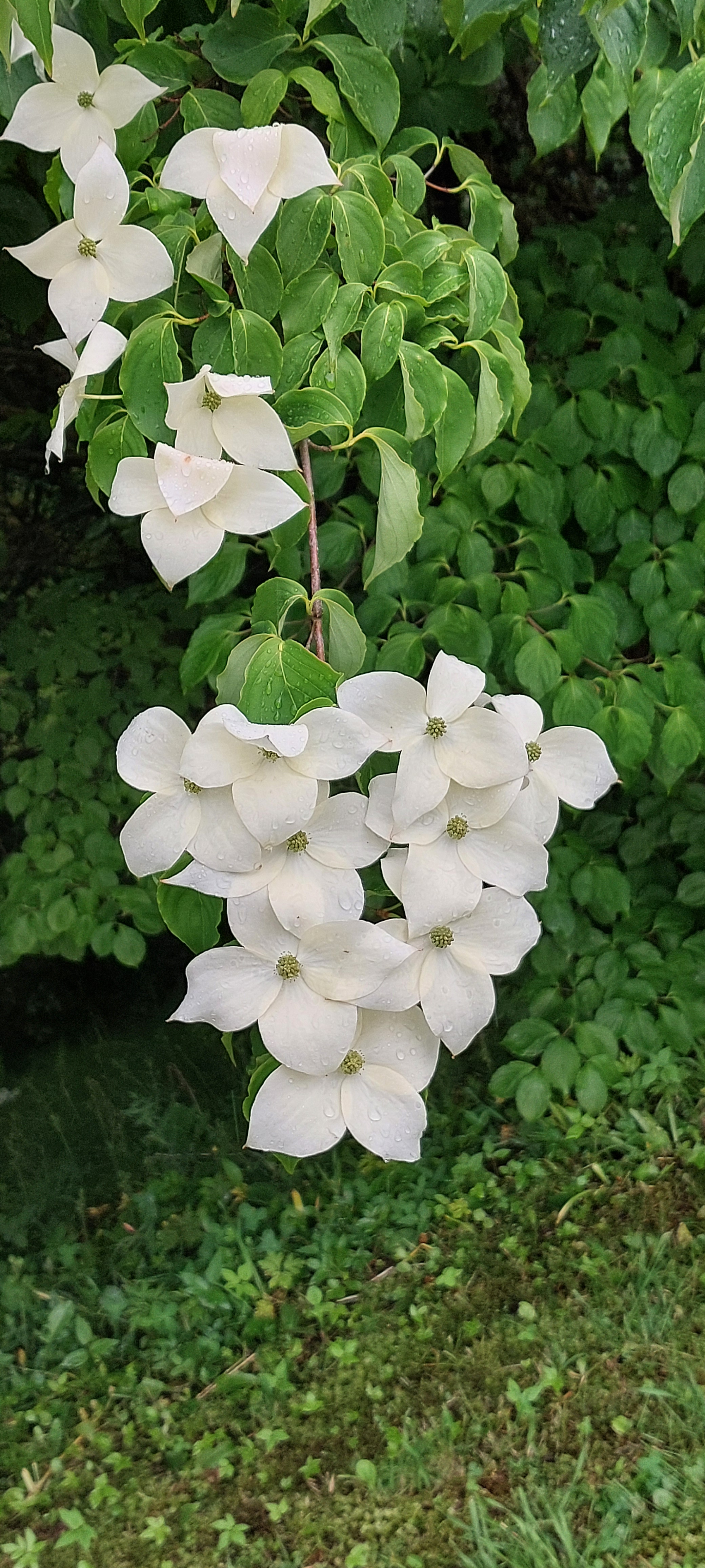
On my last day, May 27, Angela offered to drive me to another famous garden, the Jardini Botanici at the Villa Taranto, about a 20-minute drive that took much longer due to road repair. The day was overcast with a light drizzle from time to time, and the steep hills were too much for Angela to manage with her cane. She kindly waited an hour for me in the café while I moved briskly through the gardens, raising my umbrella at times. I didn’t cover all 45 acres alleged to hold 80 thousand or more blooming plants, depending on the season. Plants and bushes were well-marked with clear signs for the Latin and popular names.The rain and breeze made it a bit chilly, so I was glad to share hot tea with Angela in the café before she drove me to lunch in Stresa at the Osteria Il Mercado.


Angela offered to repeat the wine, cheese, and cold cut supper at her apartment, but I didn’t expect to be hungry again. I needed to pack for the next day drive to Milan airport and the long flight to NY JFK, then Buffalo. So, we said our good-byes and parted until Angela returns to Cuernavaca in November. The driver, from the same online company that took me to Pavia, (€110) arrived punctually at 9:30, a Ukrainian with no Italian. It took less than an hour to get to MXP and I had time to relax in the VIP lounge before my noon flight to JFK. I had already begun a runny nose and I froze on the flight despite a sweater, blazer, and a heavy blanket, arriving with a bad sinus condition that lasted for ten days. Not a happy ending, but many happy memories of two weeks in Bella Italia.
AFTERWORD:
Delta does not pay for a jetway in MXP and we had to step through the rain to a bus on arrival, and bus back to the plane for departure. Their desk at MXP is the last one, a long walk from the entrance to international departures. They share a modest VIP lounge with other airlines. The Boeing 767 business-class seats were narrow and the flat bed night flight was like sleeping in a coffin. The food was surprisingly mediocre for business class.
Gelato at most stores sold for €2.50 to €3.00 for a small cone, less than I pay for ice cream at most places in the US or Mexico.
Booking.com took my American Express card to hold reservations at all hotels, and I was not charged until arrival. Breakfast was included at all hotels.
Early spring is no longer low season in Italy. Many hotels in Bergamo and the Lake District were sold out months before my dates. Of course, the finance ministers affected availability in Stresa.
The exchange desk in MXP is abusive. With the interbank rate at $1.08 USD per €, the exchange charged $1.20 plus a commission, a real rip off. The airport ATM is not much better. Try to have a small amount of Euros to hold you until you can get to a Bancomat outside the airport.
Rechargeable hearing aids hold their charge for twenty hours. It took that long for me to to drive to the Buffalo airport, fly to JFK, fly to Milan, go through passport control, collect baggage, and transfer to Pavia. I took my old battery-operated hearing aids so I could hear at hotel reception in Pavia.
If you wish to recieve automatic delivery of future blog posts, look for the link “Follow” on your laptop or other device and add your email. You will not receive any advertising from me.


 Jim Horn News
Hi Jim,
Many thanks for both the usual excellent photo and the illuminating, informative text. I enjoy the vicarious experience of traveling with you. Wish I taken a group travel with you.
Thanks Pat, we all wish we had done something when we were younger. We can’t do it all. Cheers.
<
div dir=”ltr”>I was ab
?
Wonderful Jim, thanks a LOT! Alistair
Thank you for your fine, well-written travelogue, almost as good as being there. Sorry you had an injury and catching a cold.
What a beautiful trip.
So pleased you were able to visit with Angela for several days.
Terry Lea Elizondo.