A travel ad on a Magdalena River cruise from Cartagena, Colombia reminded me of previous visits to one of my favorite cities in South America. All the sailings before rainy season were sold out, but I decided a return visit would be a great getaway. I had also been looking for a way to reward Francisco (Pancho) Castro for his 30 years of loyal service at my Villa Golondrina in Cuernavaca. He has traveled multiple times to Rio de Janeiro and Cuba, but nowhere else south of Mexico, so a first-class trip to Cartagena seemed an ideal way to reward him.
Having visited Cartagena three times previously, I had no intention of repeating all the popular tourist sites, so this post is not intended to be as thorough as my previous essays on other destinations. I just want to share some thoughts and photos promoting this charming destination for those who have been deprived.
Understanding a bit of the city’s history will explain its importance and its popularity for tourists. As usual, Wikipedia.com presents a thorough summary of the city from its founding to the present day as well as information on climate, demography, and economy.
The city’s full name is Cartagena de las Indias It was founded by Spanish navigator Pedro de Heredia in 1533, over 100 years prior to the Puritan landing at Massachusetts Bay. Most of the sailors hailed from Cartagena in Murcia Spain, which in turn was named after the ancient city of Carthage in North Africa.
Spanish mixture with the indigenous natives created a mestizo population which became further mixed by the importation of African slaves for much of the labor since disease and overwork devastated the native population. Today one can see “the colors of the rainbow” in white, bronze, and black, and many combinations in a beautiful mixed-race population.
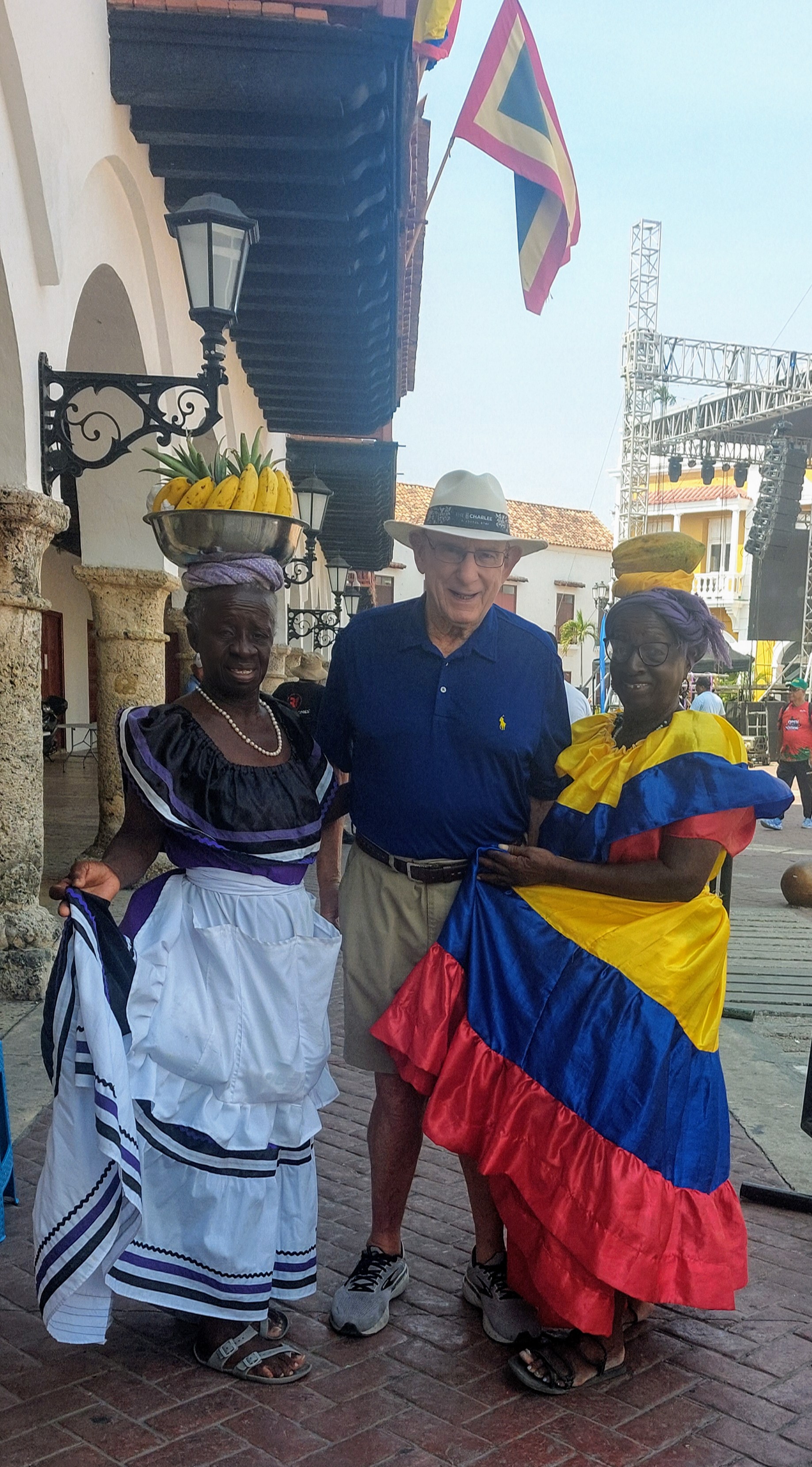
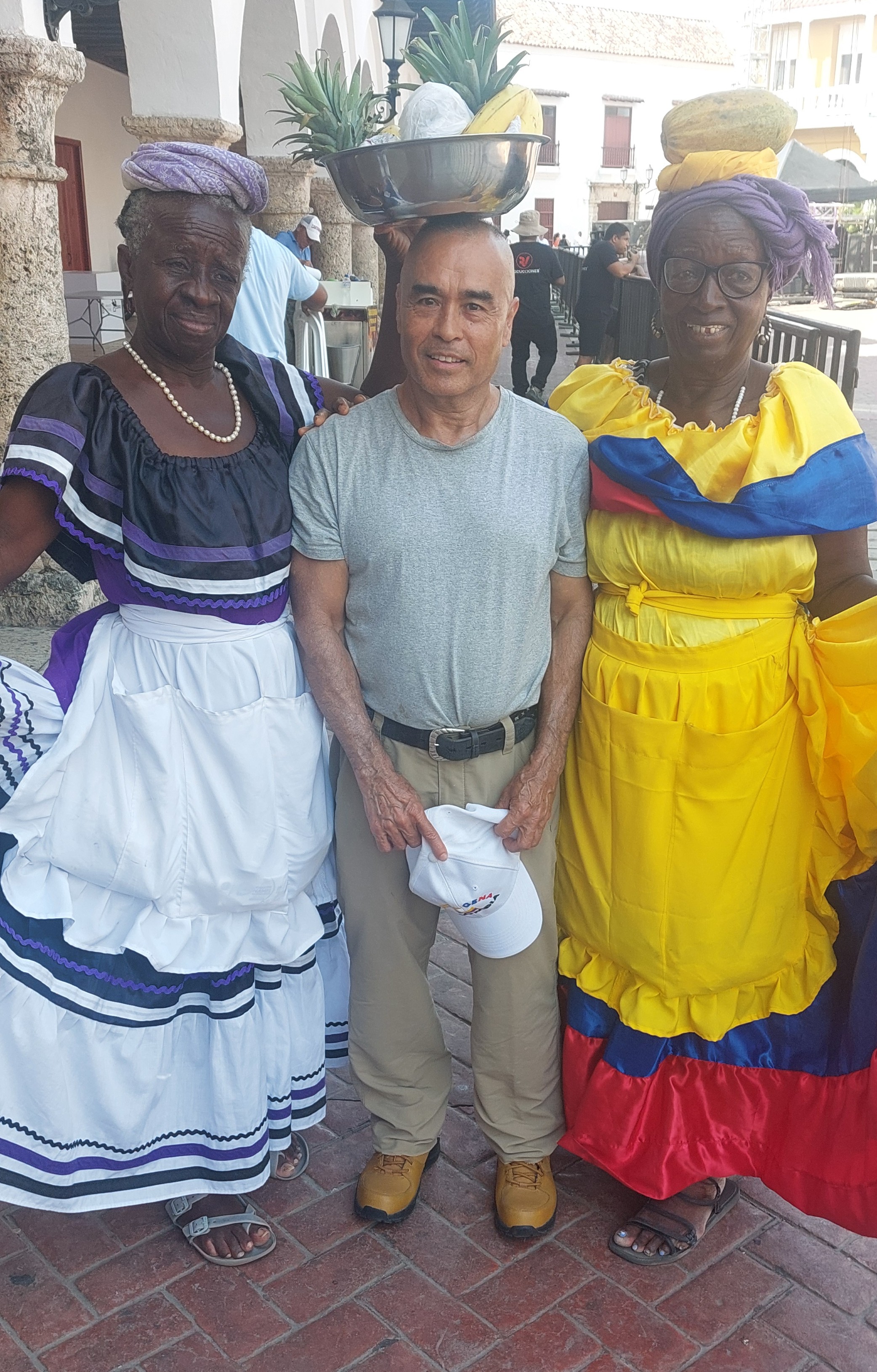
The discovery of enormous quantities of silver in Potosí, Bolivia made this largest colonial port in South America the center for export of silver, gold, and other exports to Spain for 300 years. That in turn made the port a target for privateers and pirates who often raided and sometimes sacked the city, the motivation for the construction of over two kilometers of city walls and numerous fortresses added over two centuries. They are now a United Nations World Heritage Site and tourists enjoy walking the ancient walls.
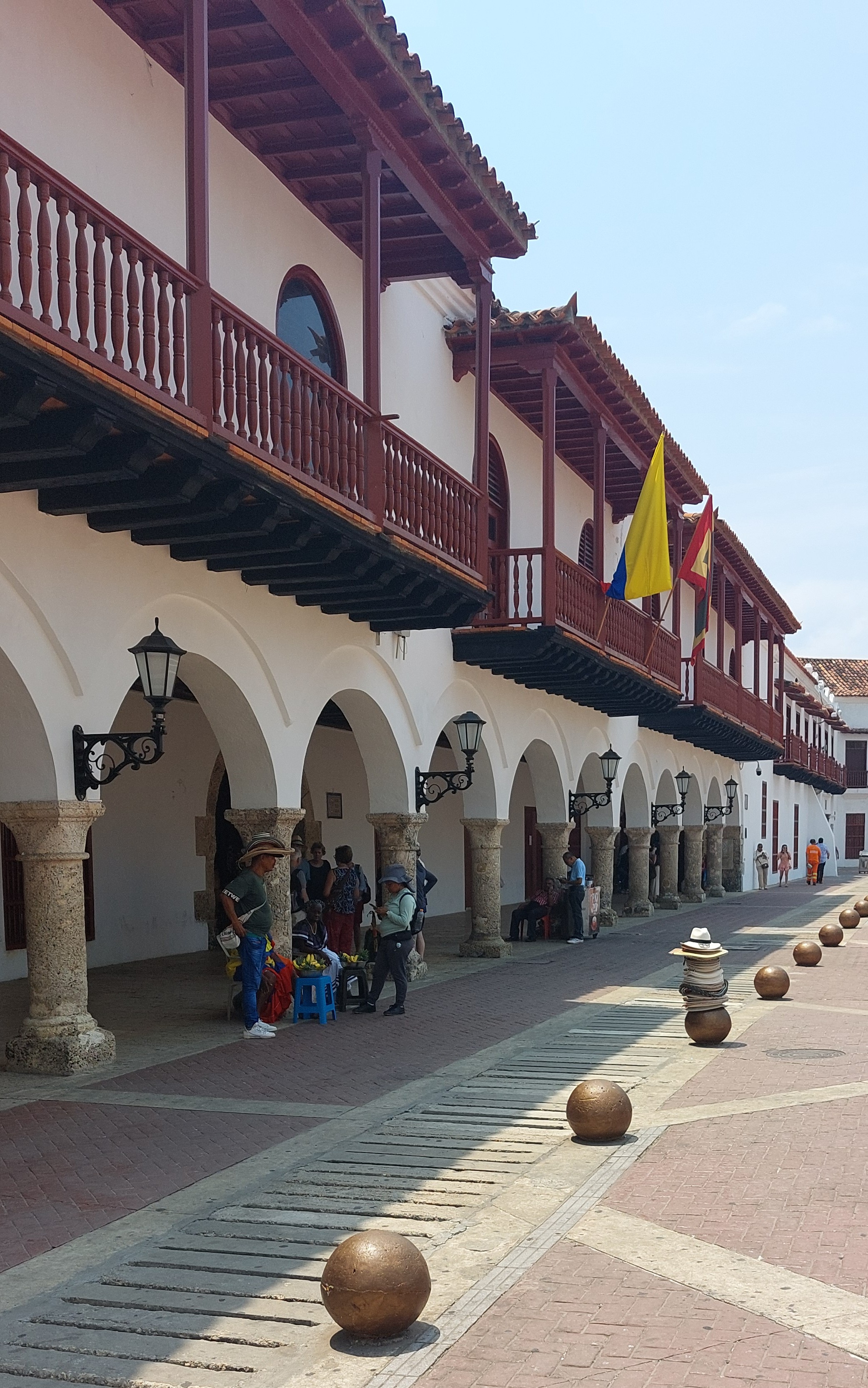
Most of the towering international tourist hotels are on the northern beach area of Bocagrande. The small, charming boutique hotels are within the walls in the historic center. This is the place to enjoy the enthralling colonial architecture, plazas, museums, and public buildings, and the scores of emerald and jewelry shops. Some beaches are within walking distance and others within a taxi ride costing about five dollars.
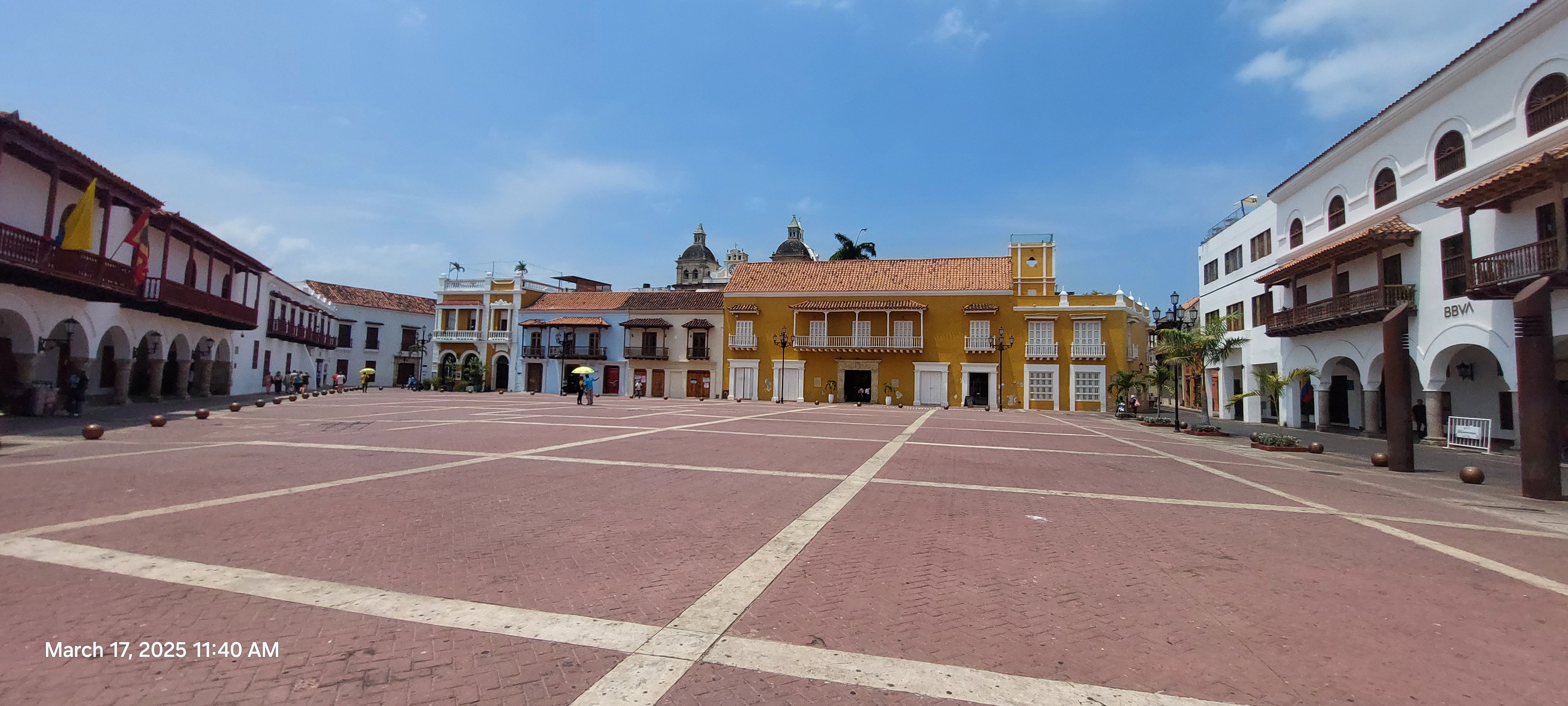
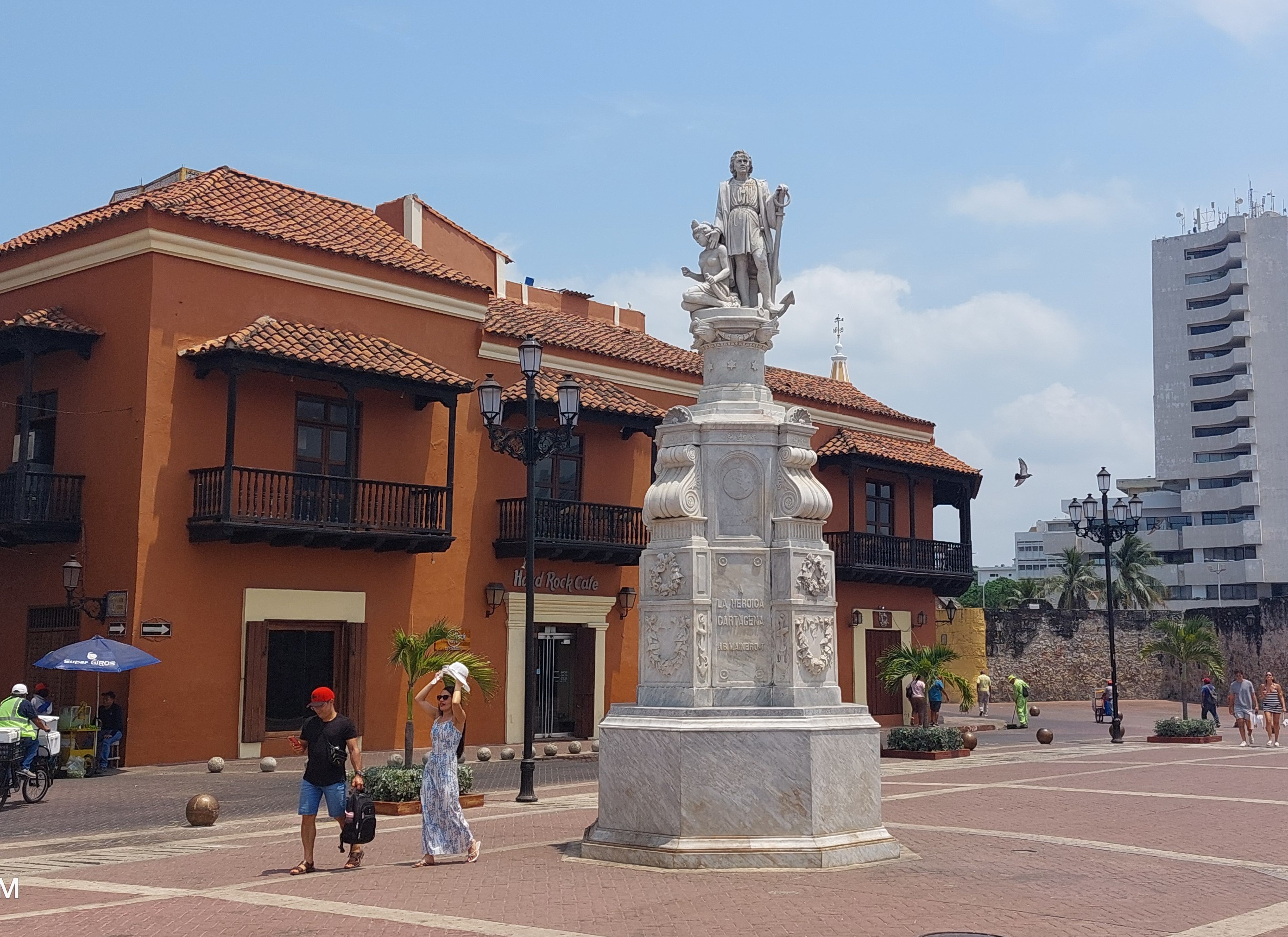
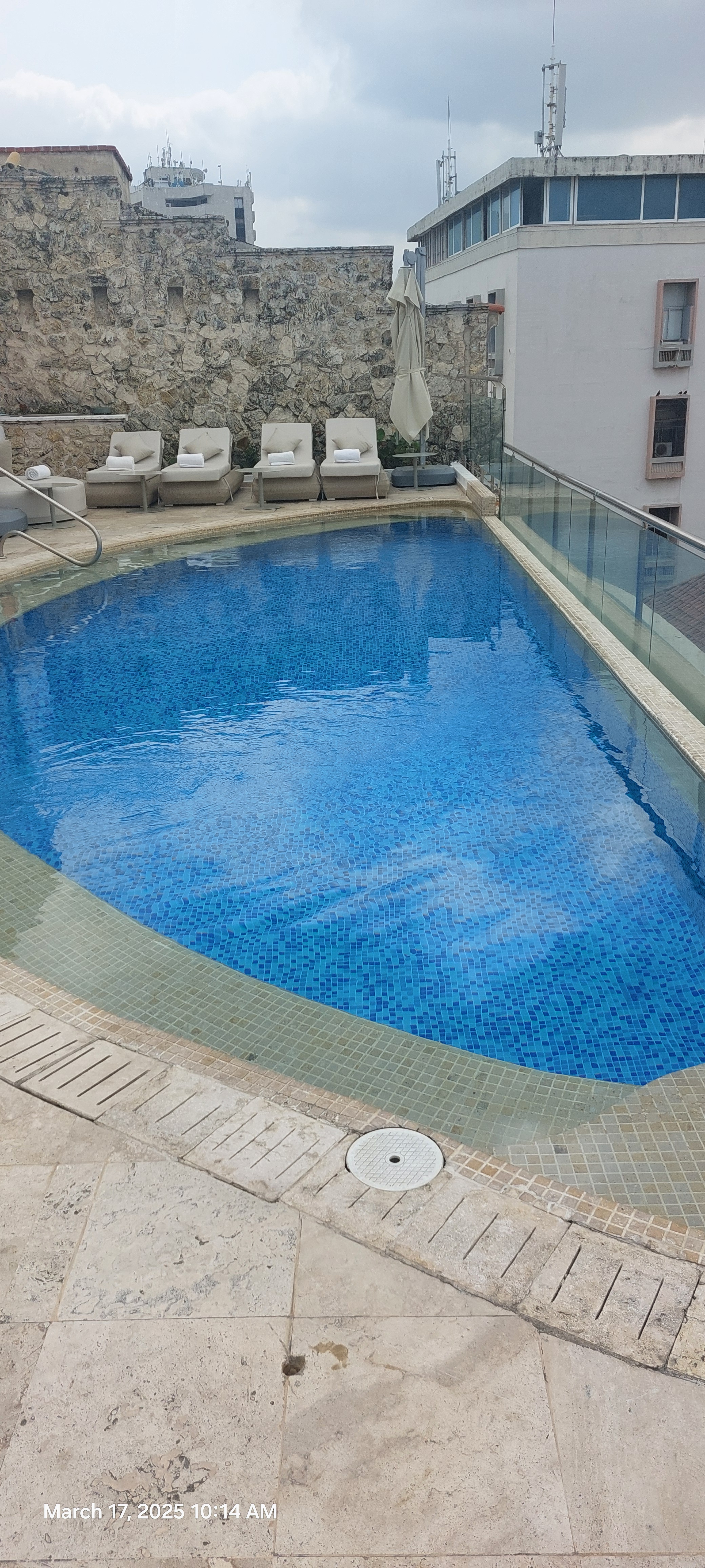
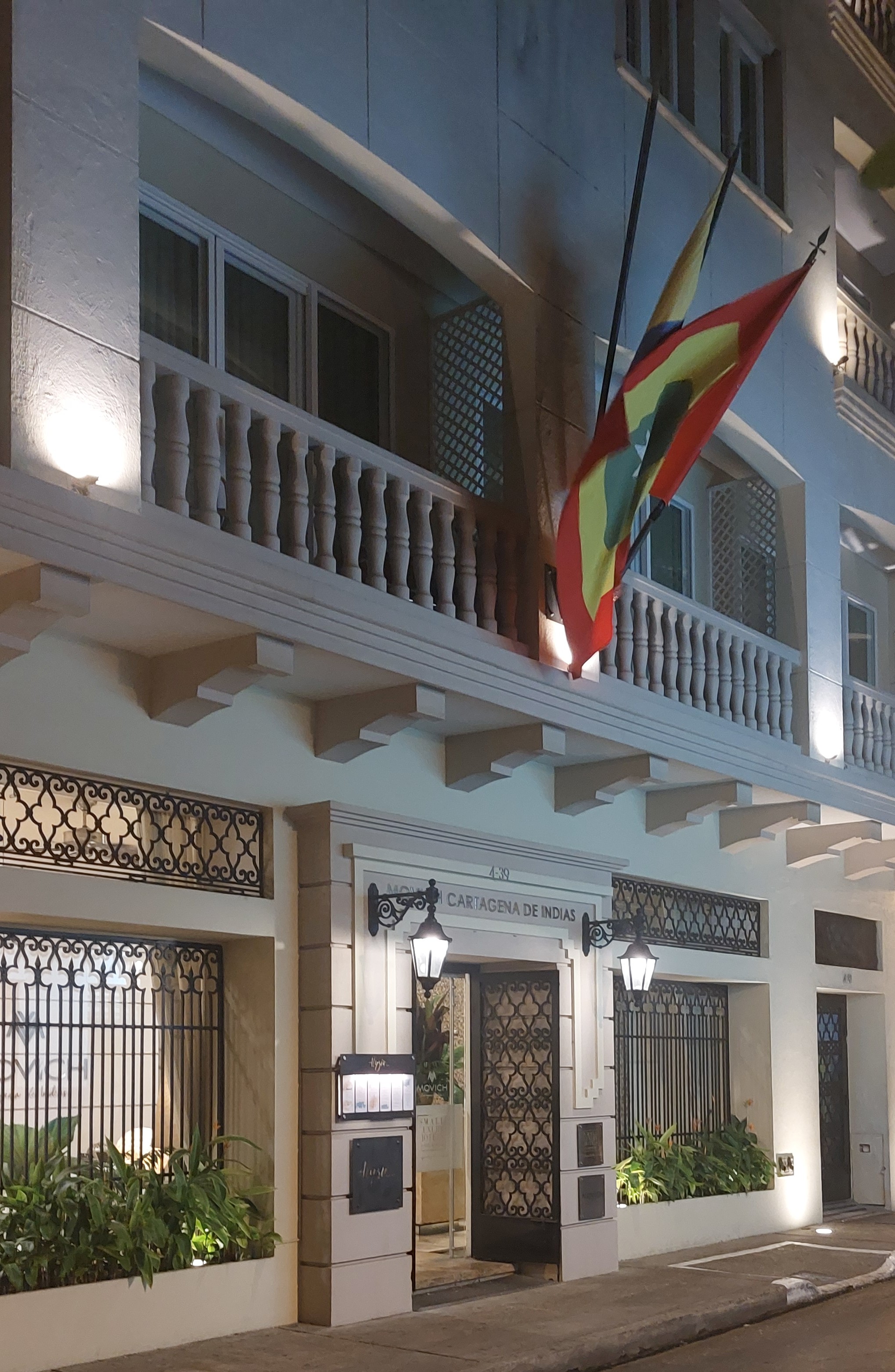
Arguably the most beautiful of the deluxe hotels is the Santa Clara where I was lucky to enough to score a time-share trade years ago. It had started to deteriorate and is now a renovated Sofitel property. I would recommend it for those with opulent budgets. I found a more modestly upscale hotel near Plaza Bolivar, perhaps the best location for touring the historic center. The Movich Cartagena de las Indias has lovingly preserved some of the walls of an ancient municipal building. I was attracted by its roof-top swimming pool and terrace/bar. The standard rooms are larger than one would find in most Manhattan or European hotels. Rates vary from standard rooms to deluxe suites. http://www.movichhotels.com
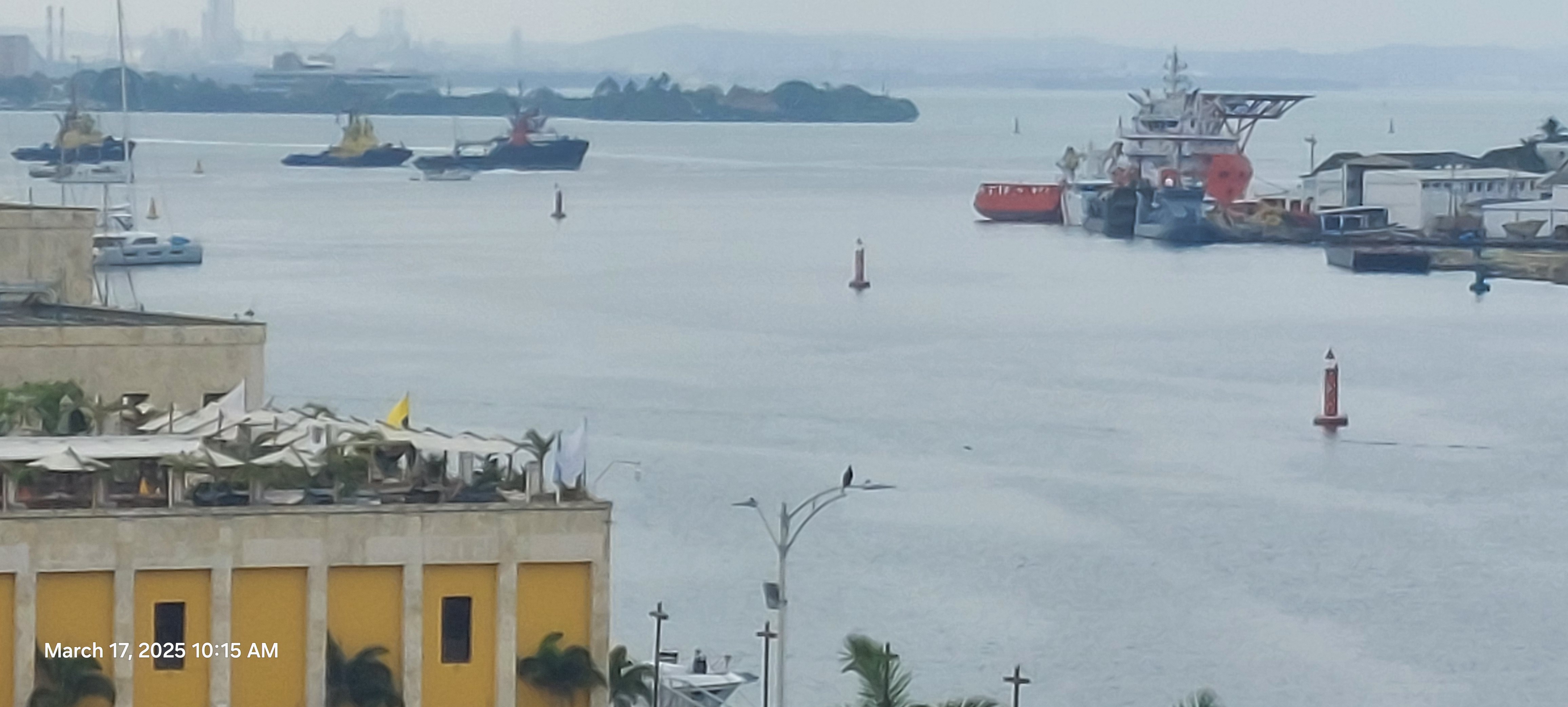
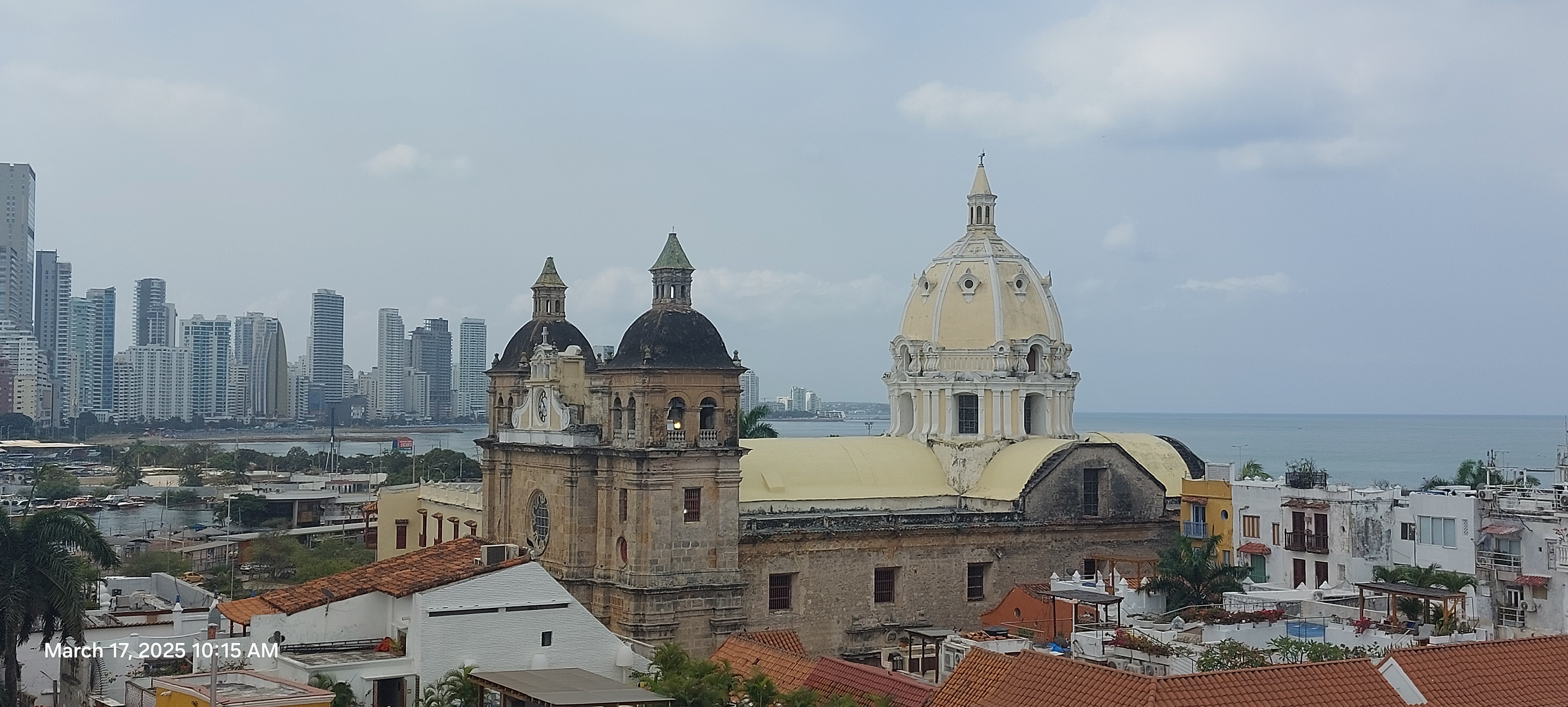
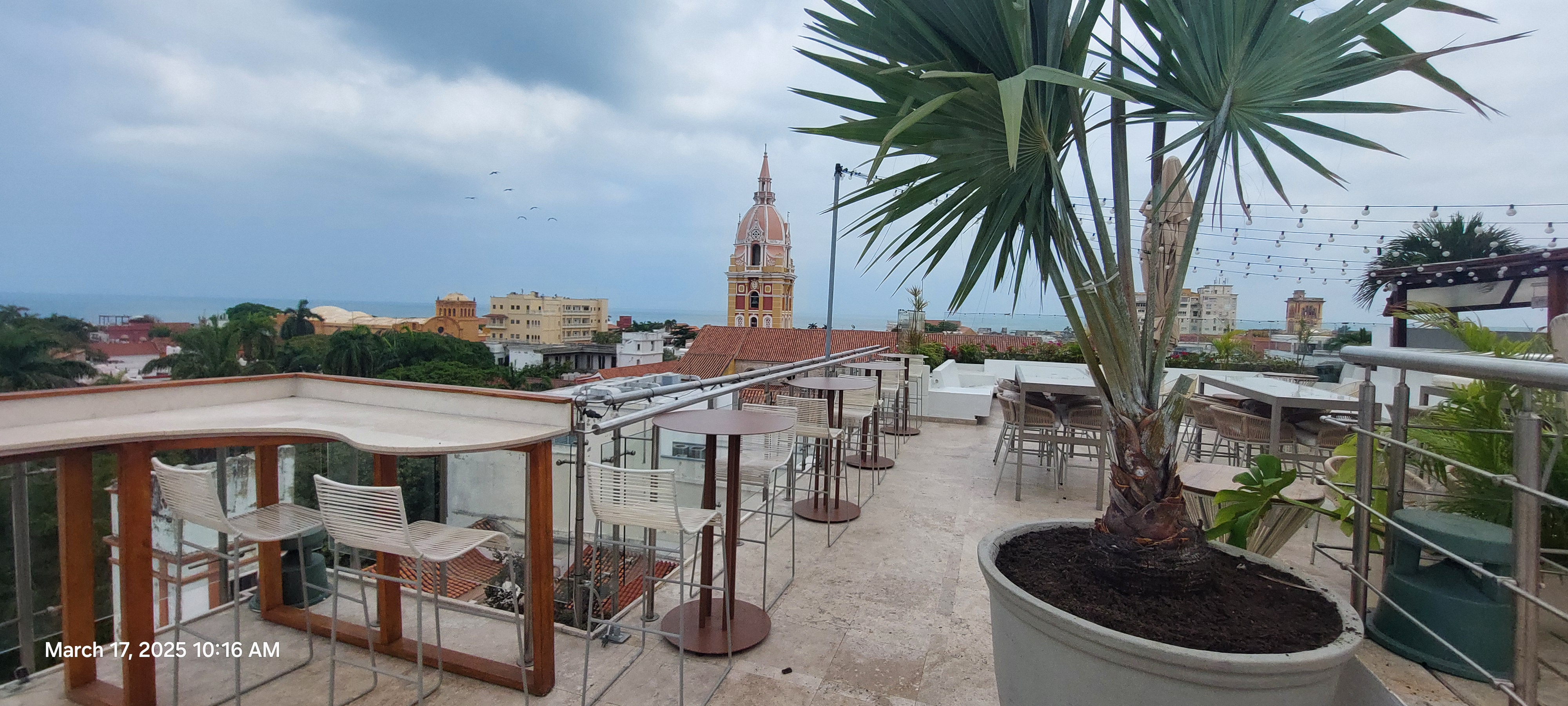
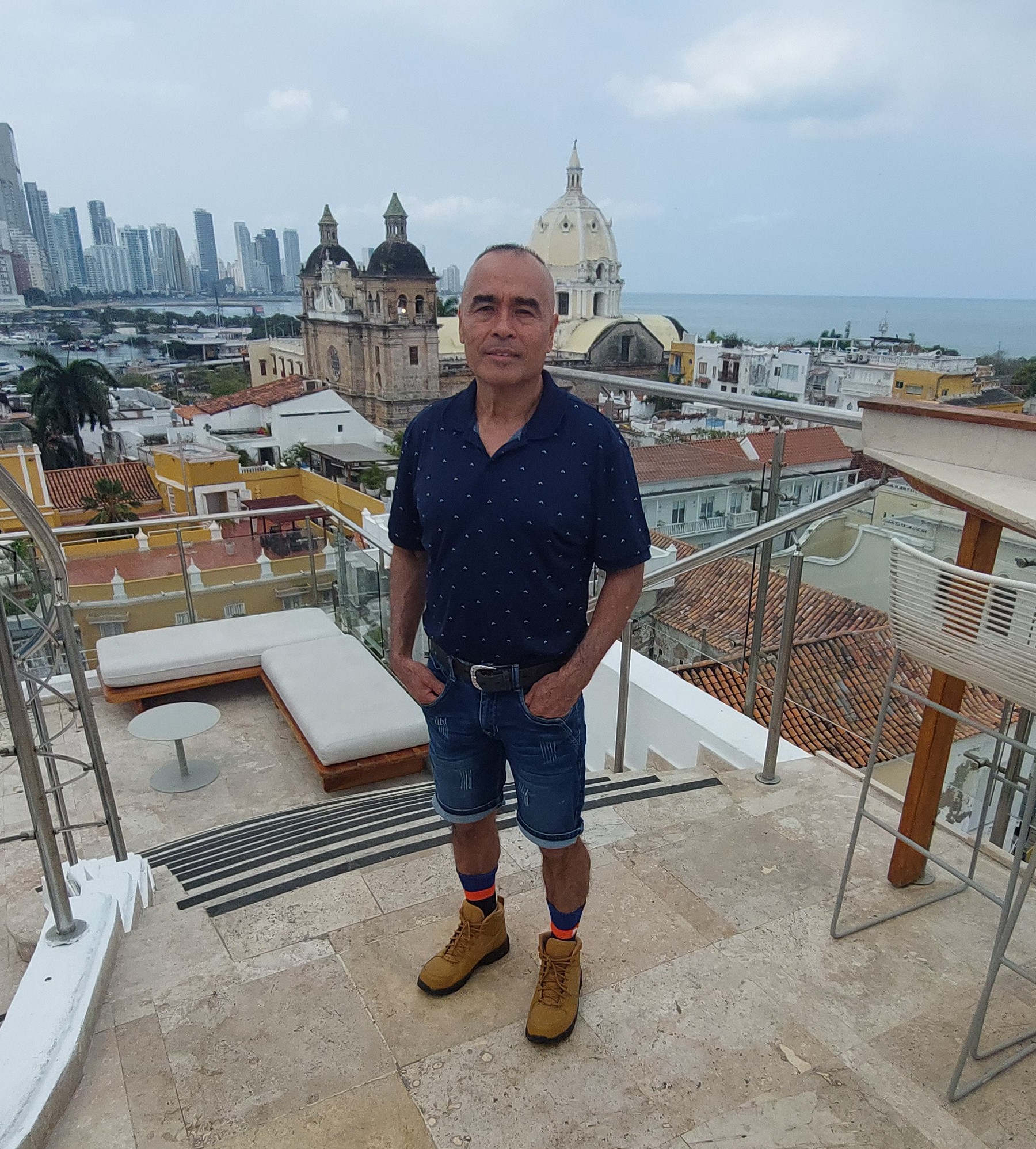
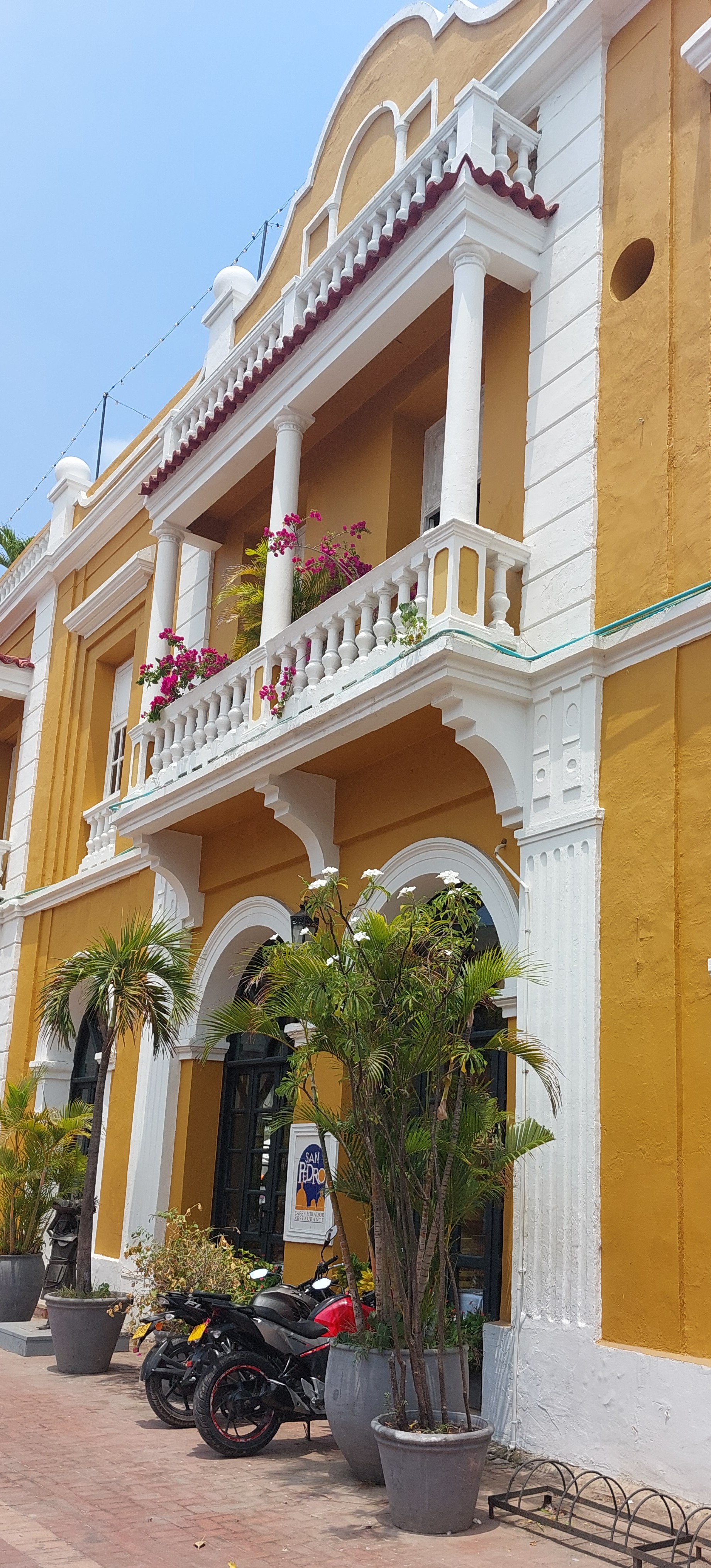
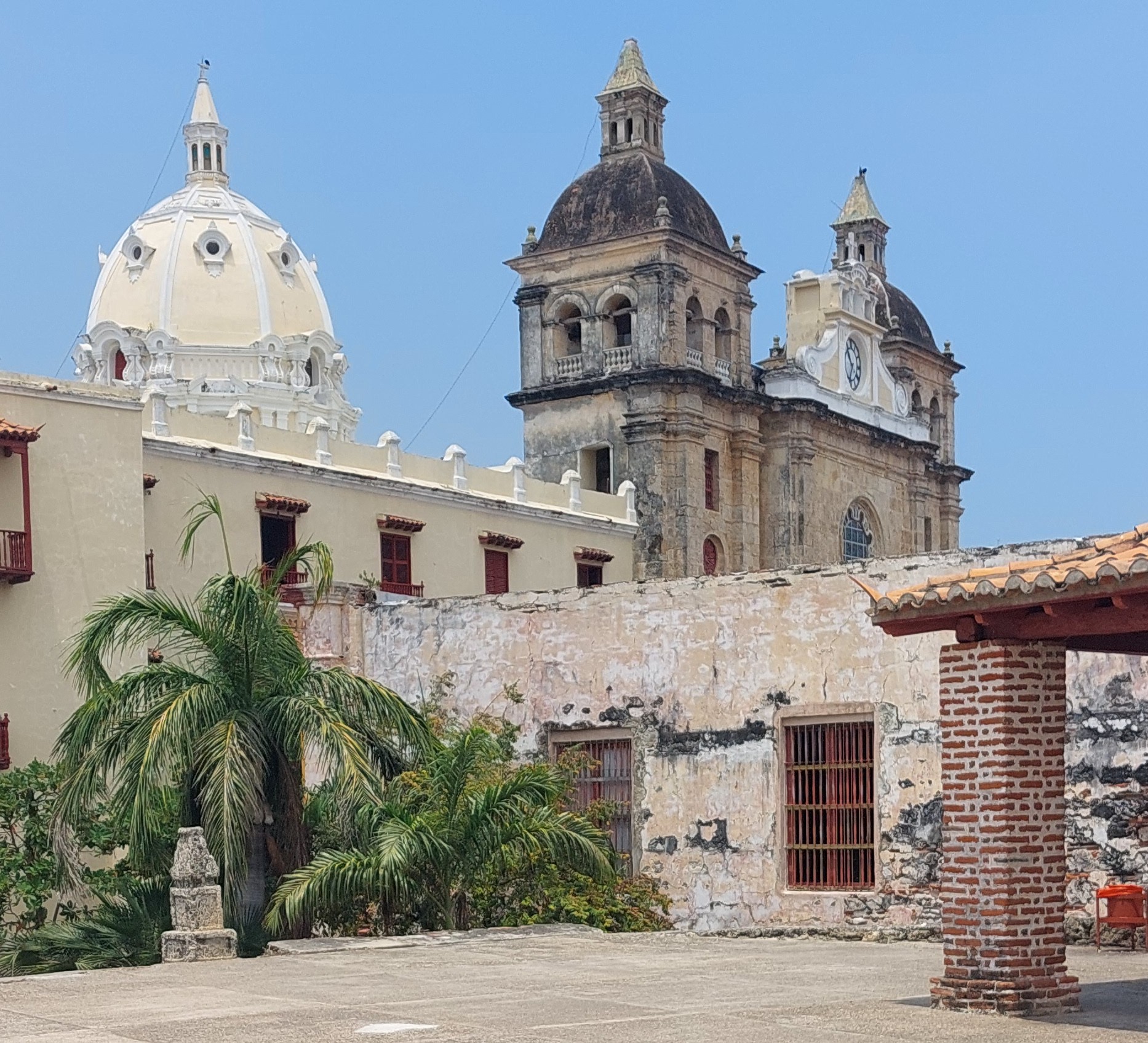
The first thing newcomers to Cartagena should do is stroll the alluring streets of the historic center and admire the exquisite colonial architecture with its multi-colored facades and inviting balconies. Many buildings house boutique hotels and roof-top restaurants and swimming pools.
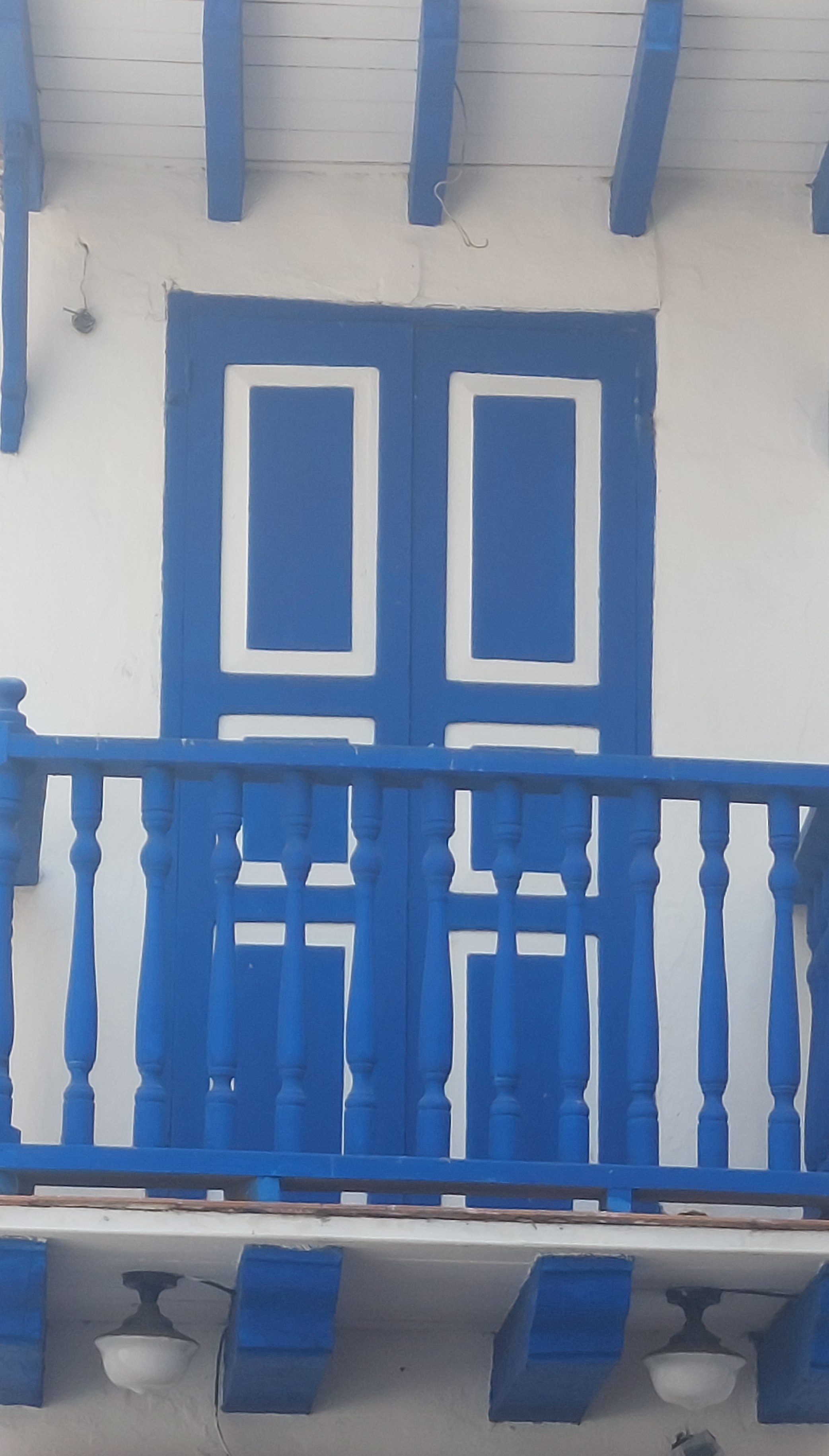
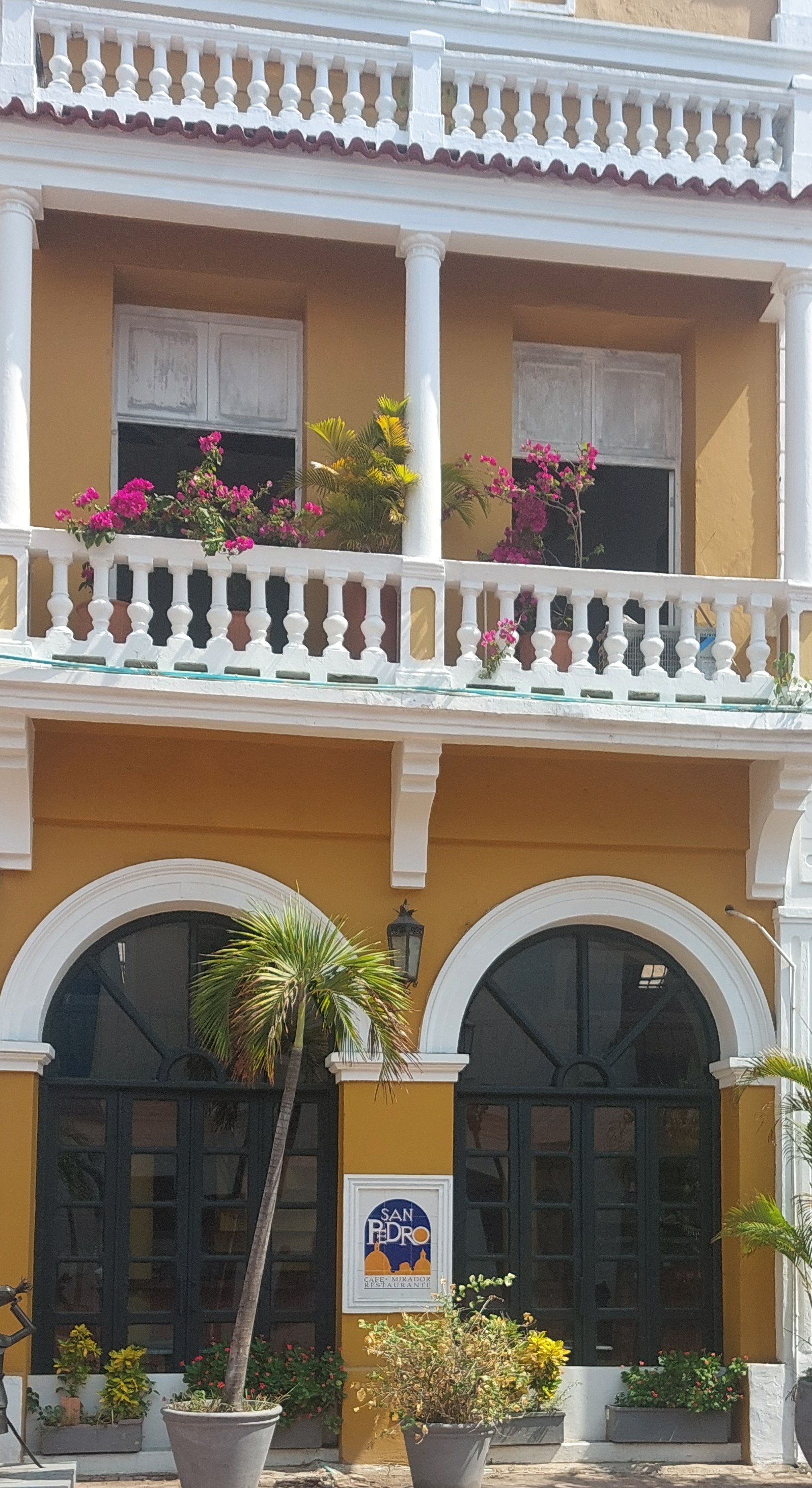
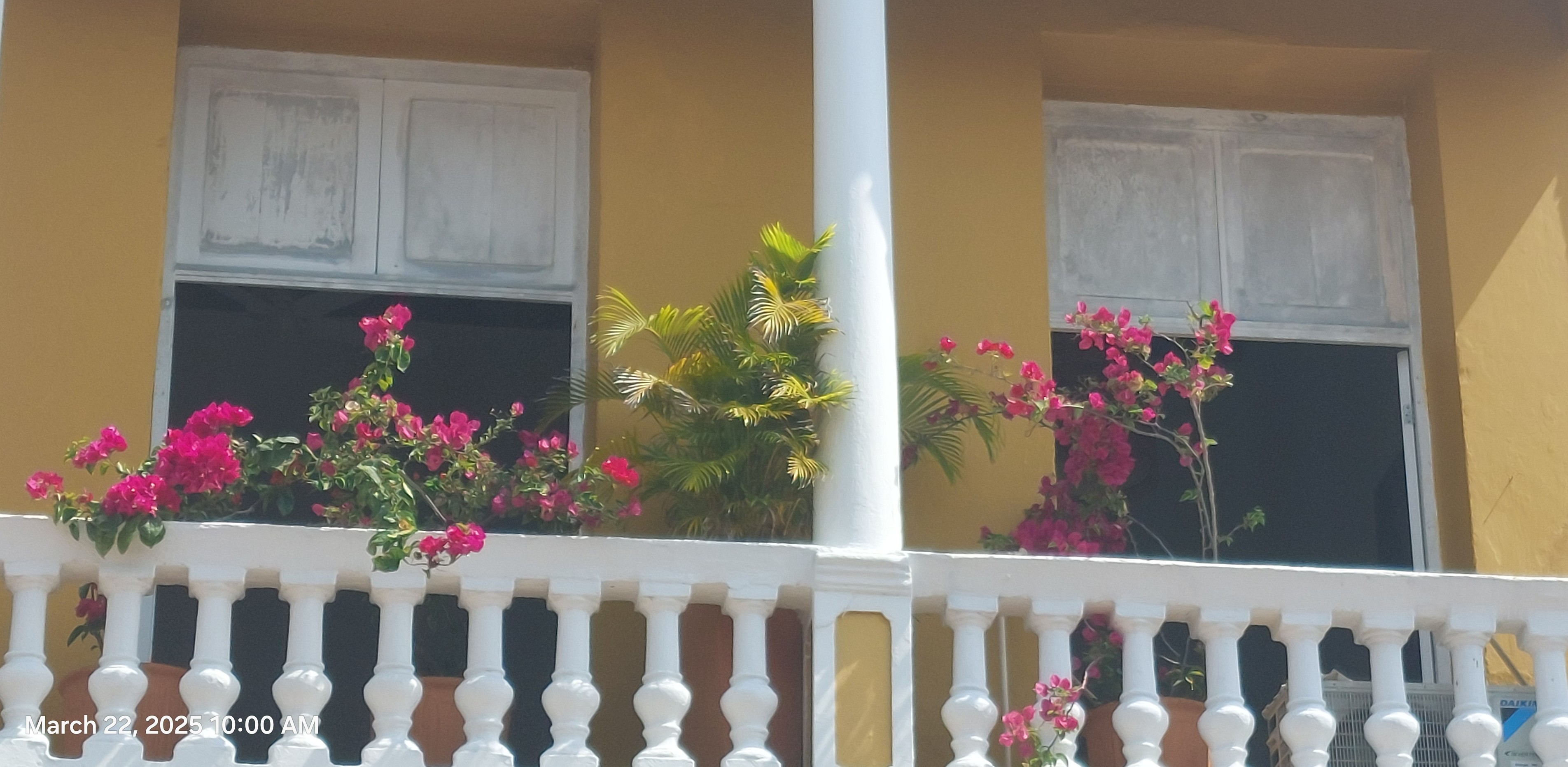
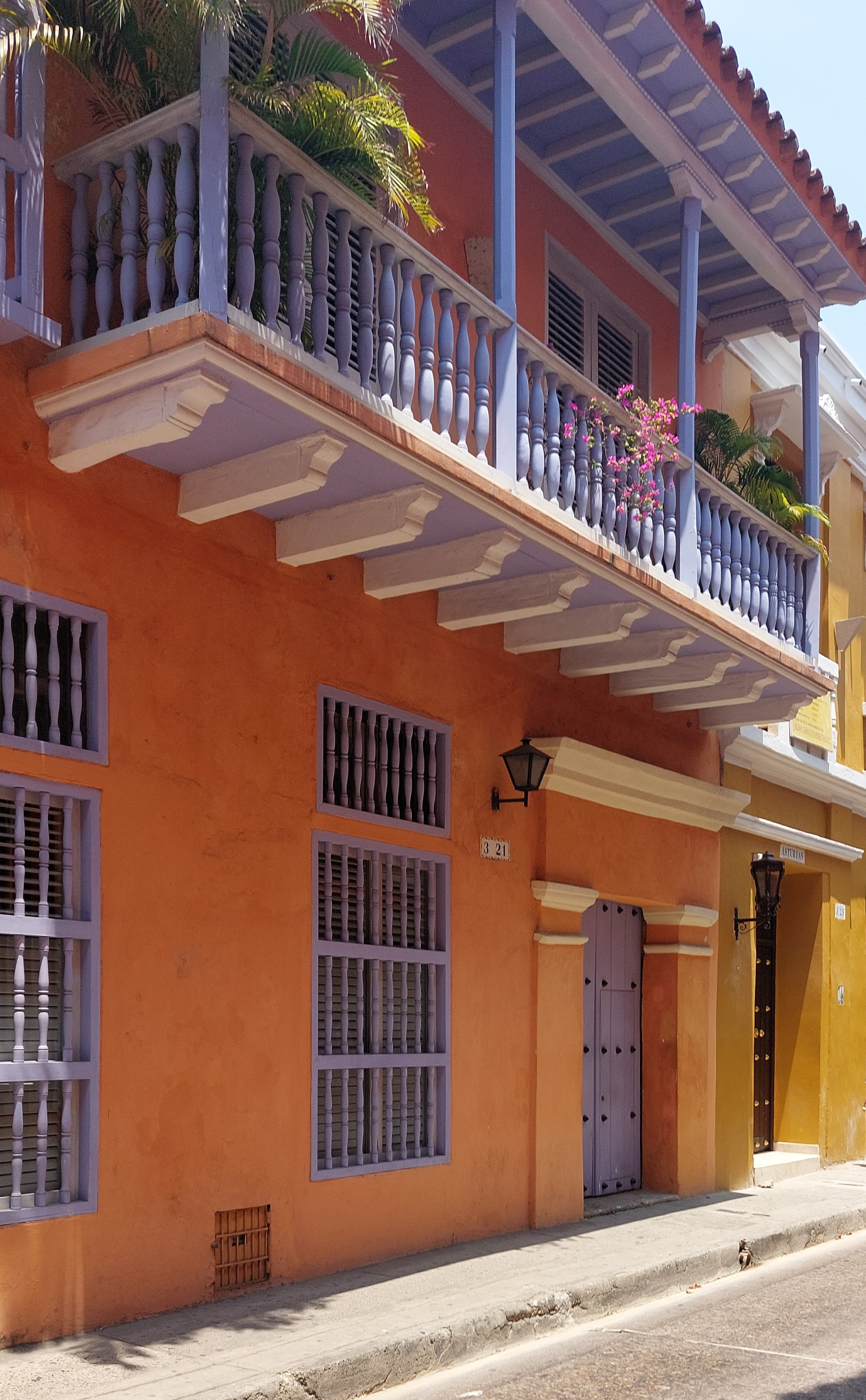
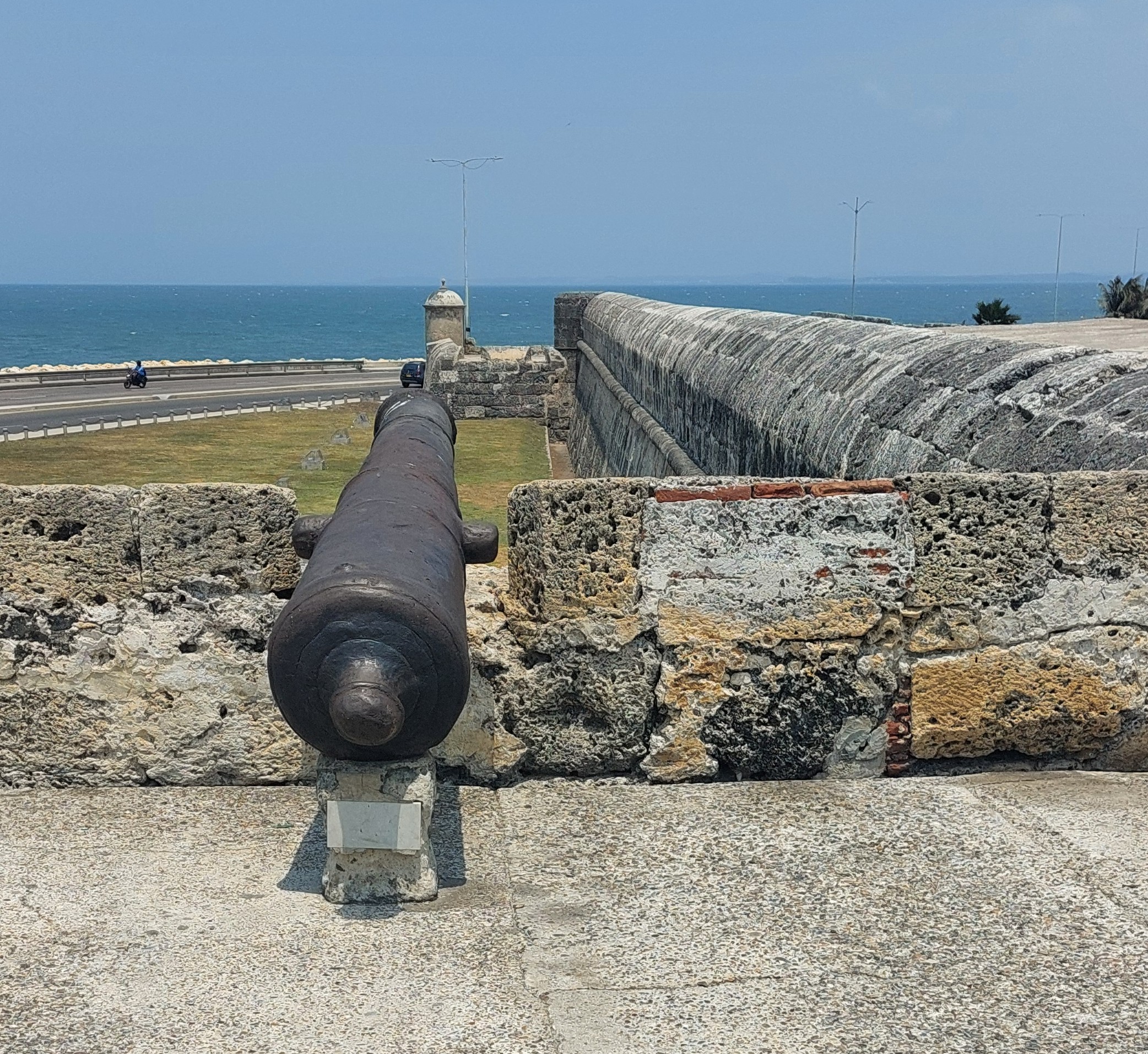
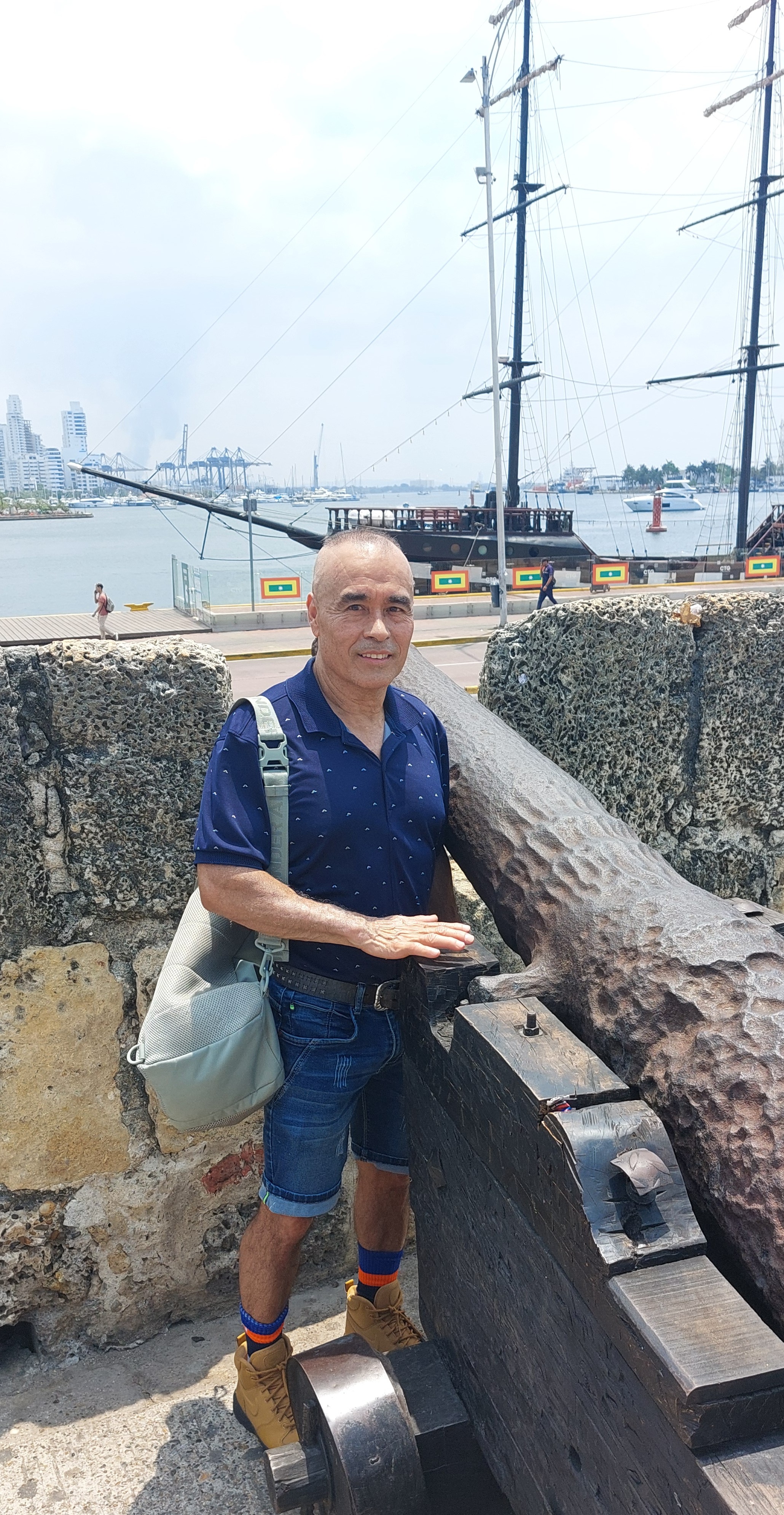
Walking the world-heritage walls provides scenic views with the Caribbean in one direction and the buildings of the city in the other. There are frequent ramps to enter and exit the wide walkways and numerous areas to photograph the bastions and cannons.
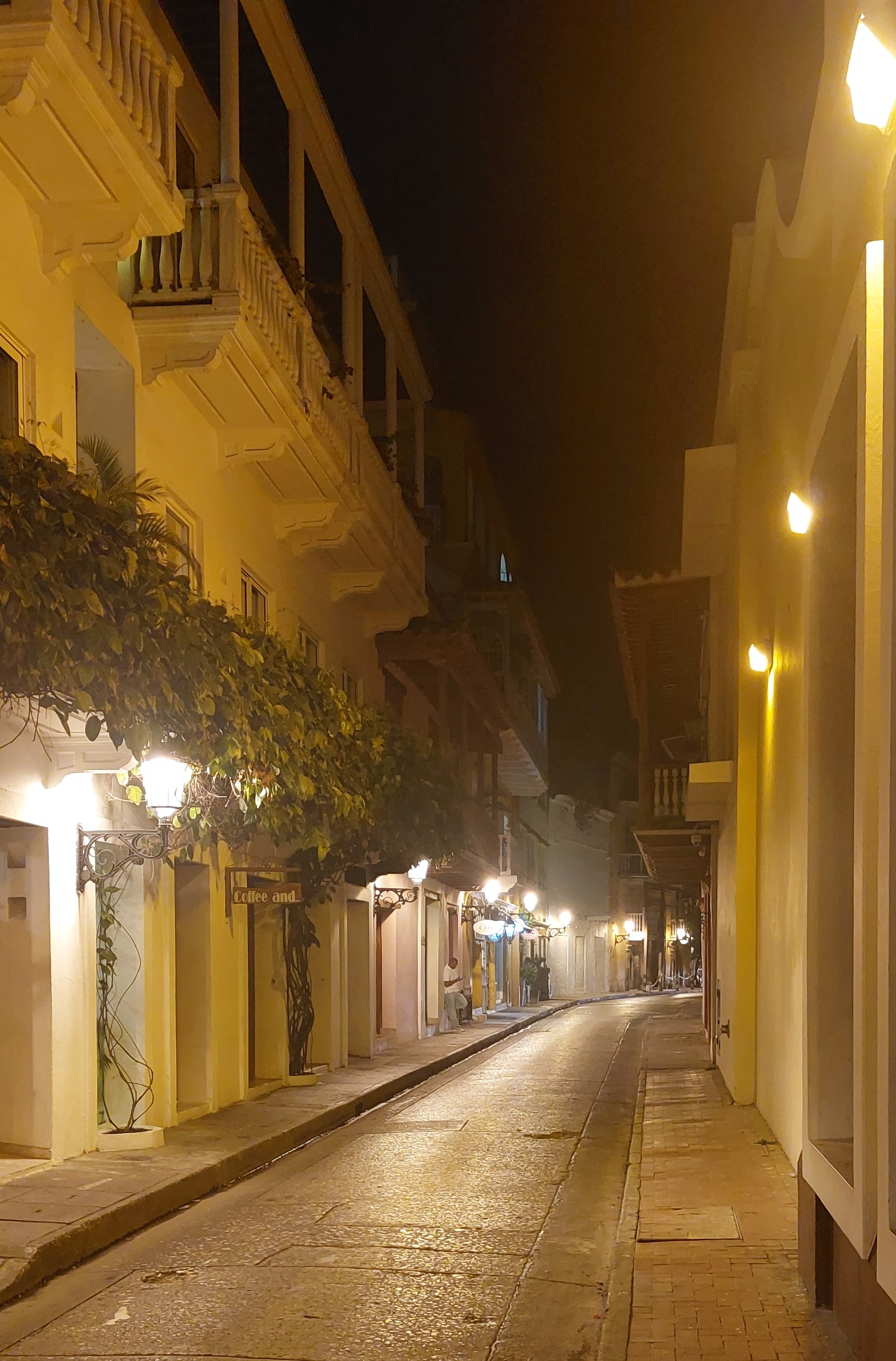
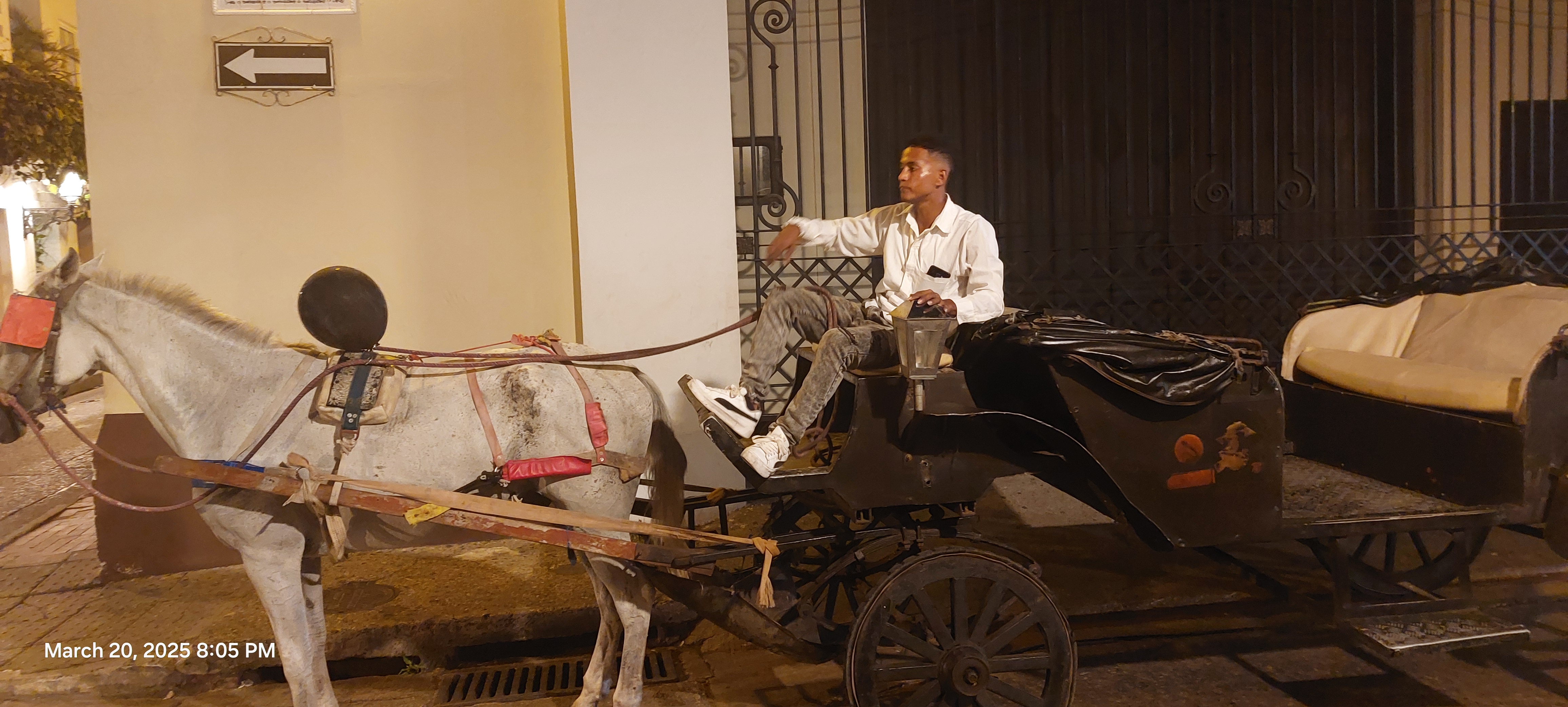
One should repeat the stroll through the historic streets at night. Many of the buildings are beautifully illuminated, often with colonial-style lamps. You can go farther afield hiring a horse-drawn carriage. The carriages are available around the public plazas and boutique hotels with a half-hour ride costing about 25 dollars. Some drivers act as guides and want to give a spiel in Spanish explaining the history of the buildings. You can ask for the ride “en silencio por favor.”
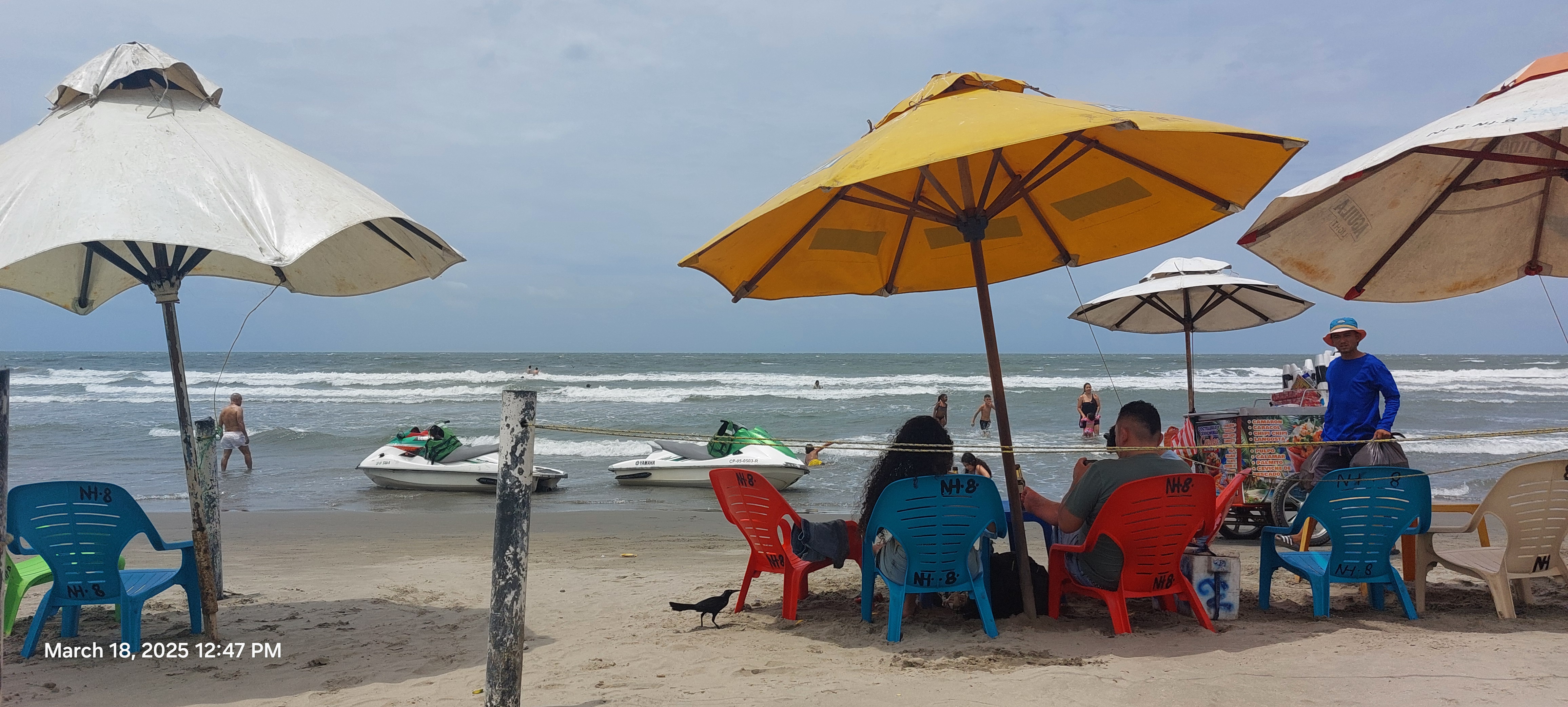
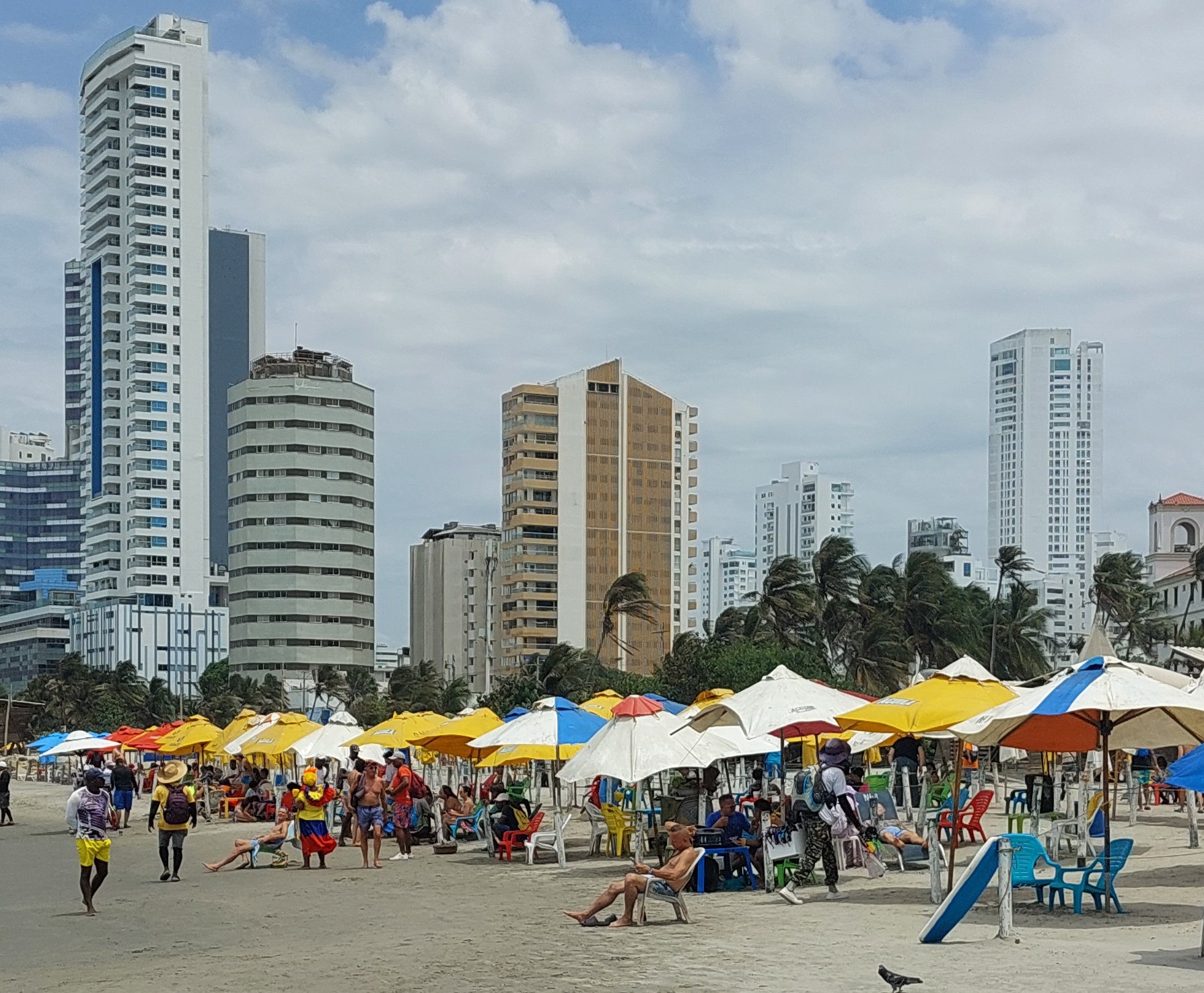
The beach does not hold much attraction for me after multiple times on the more-attractive beaches of Acapulco and the flour-like sands of the Riviera Maya. The volcanic sands roused by the constant wind and turbulence give the waters a grayish hue in contrast to the sparkling turquoise color of most of the Caribbean. But the waters are clean and no sewage is allowed to be discharged along the coast. Several beach clubs with pristine waters attract swimmers on islands off the coast, but the 45-minute cruise to get there and the day pass for food and drink can be quite pricey. It was Pancho’s first visit so we spent a morning at Bocagrande in a beach chair under an umbrella. There were fewer ambulantes (hawkers) than I recall from previous trips, but it was not a weekend. Pancho returned alone for a longer swim another day. I preferred the roof-top hotel pool; no sand in my cracks.
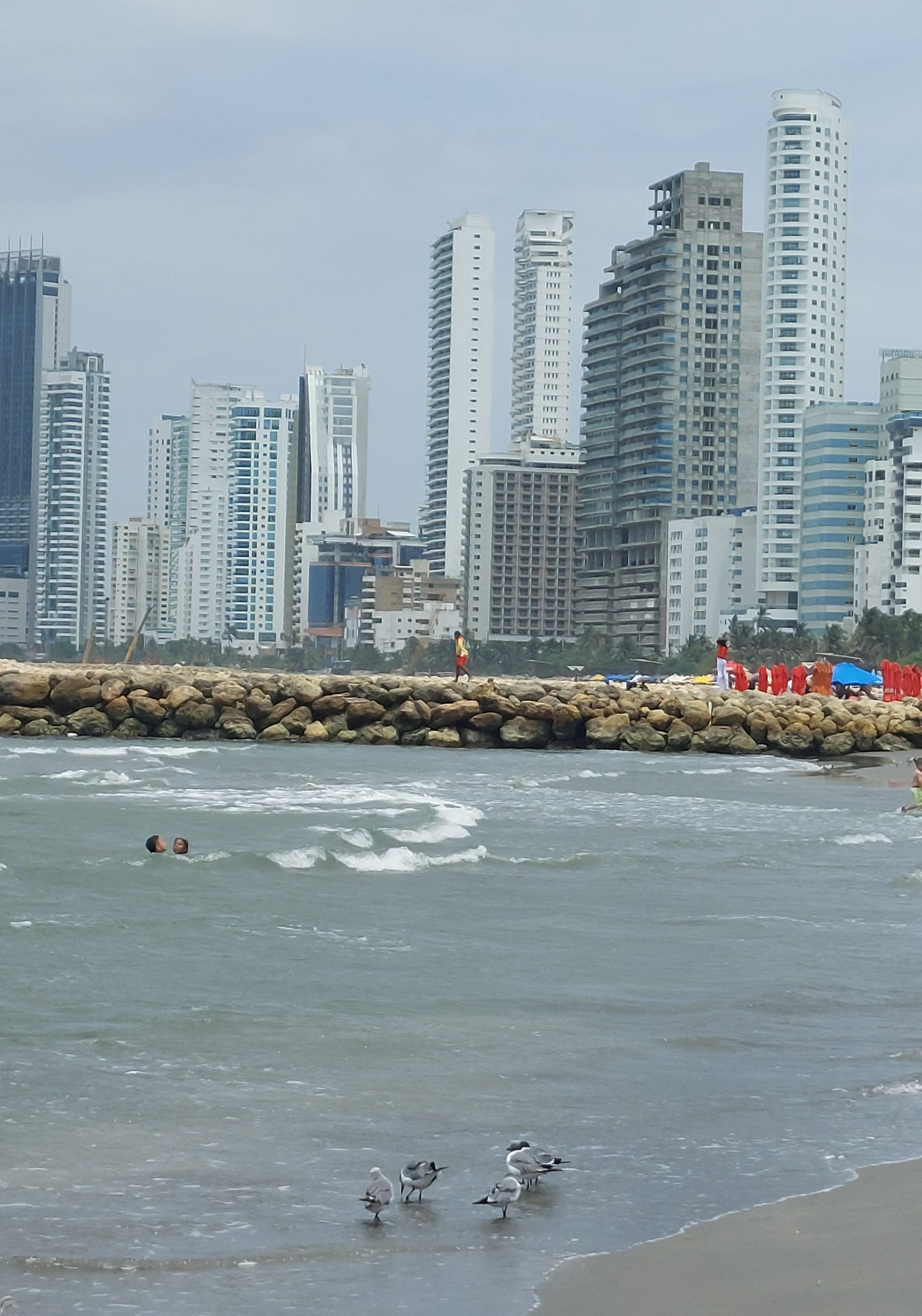
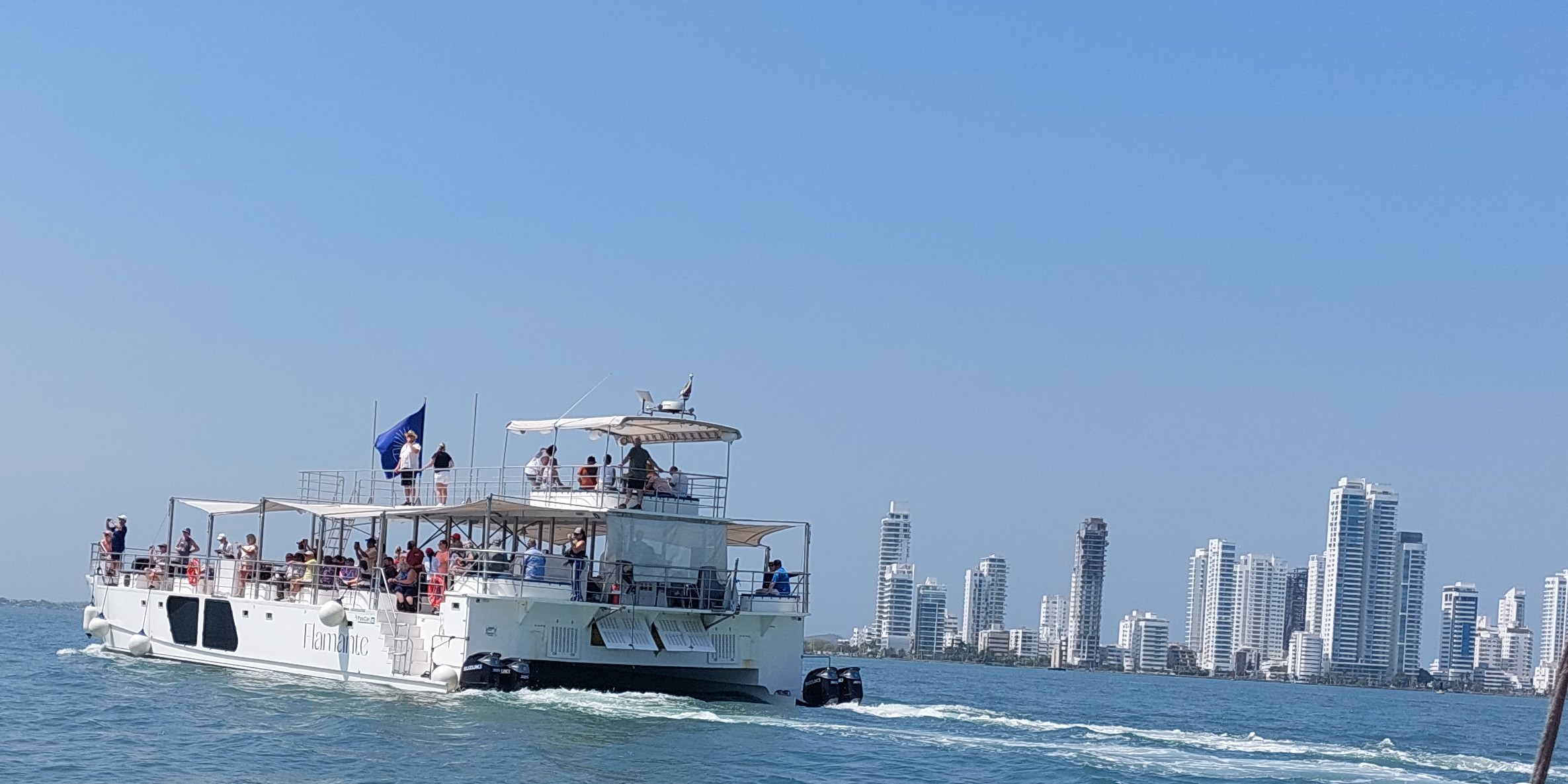
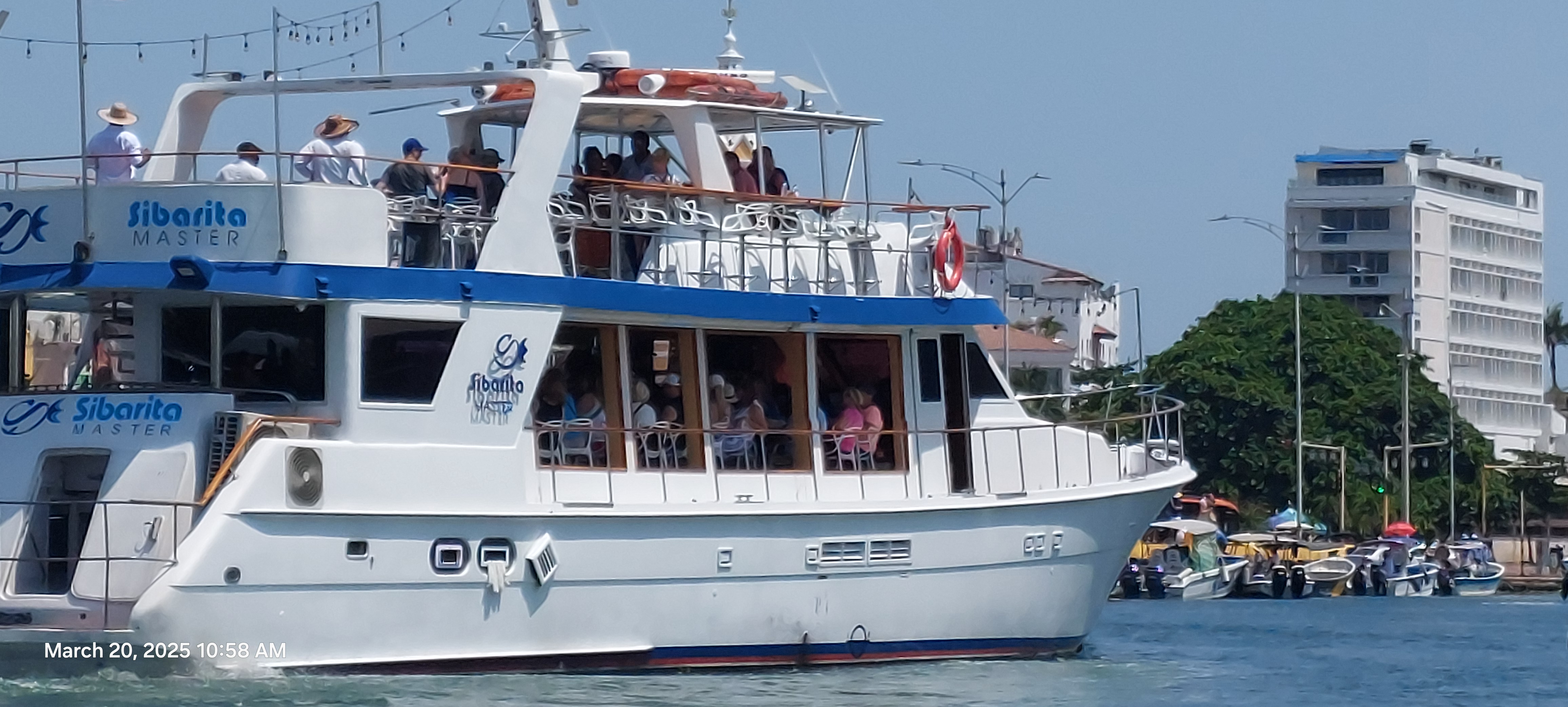
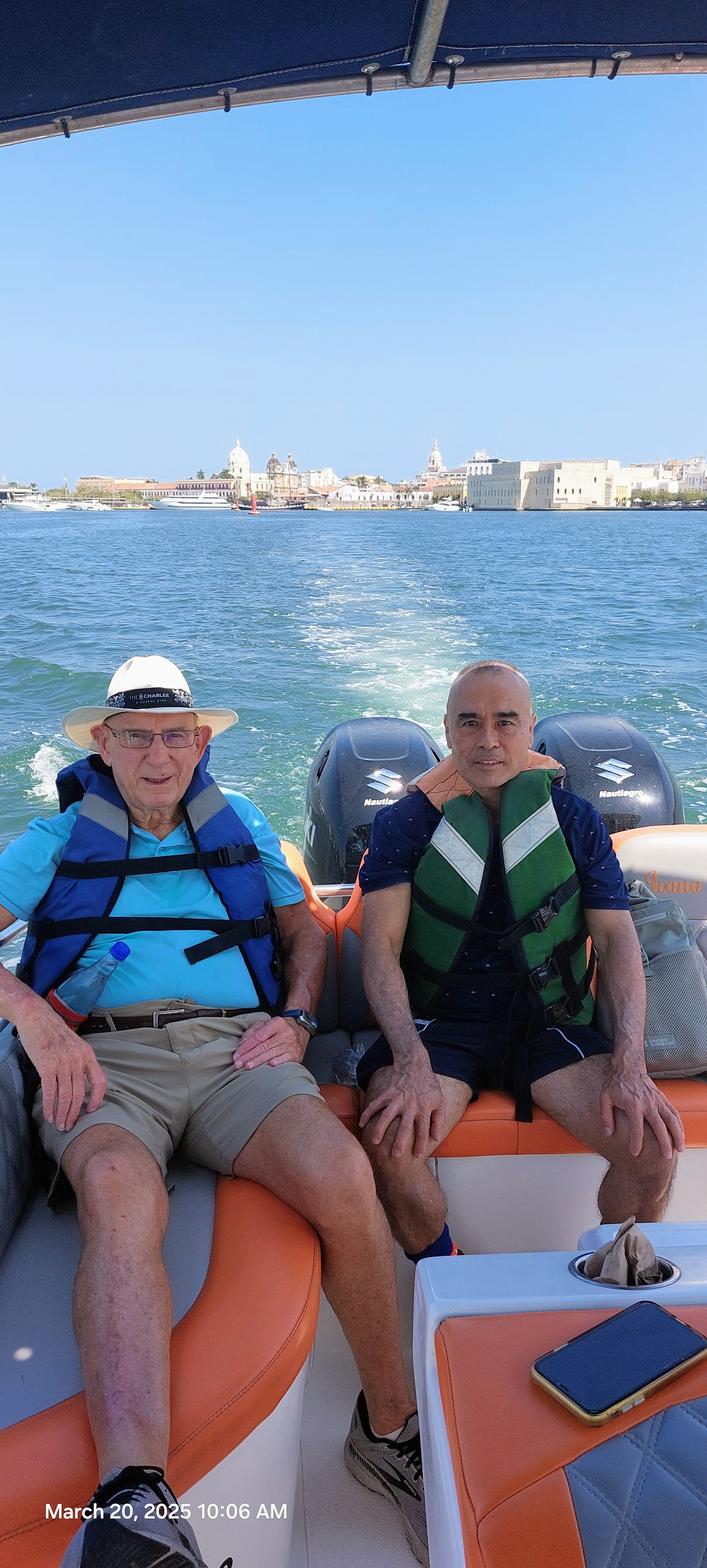
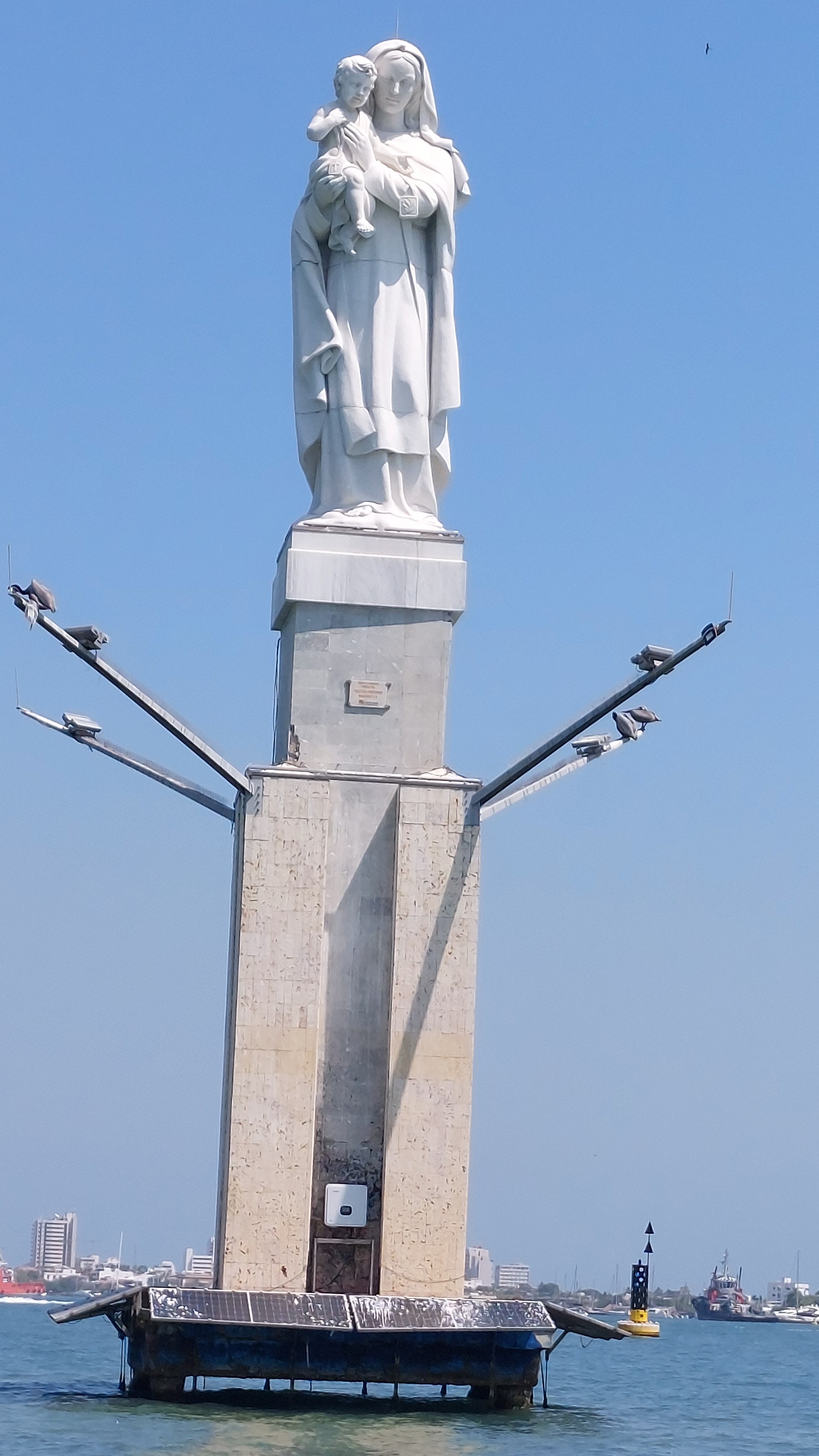
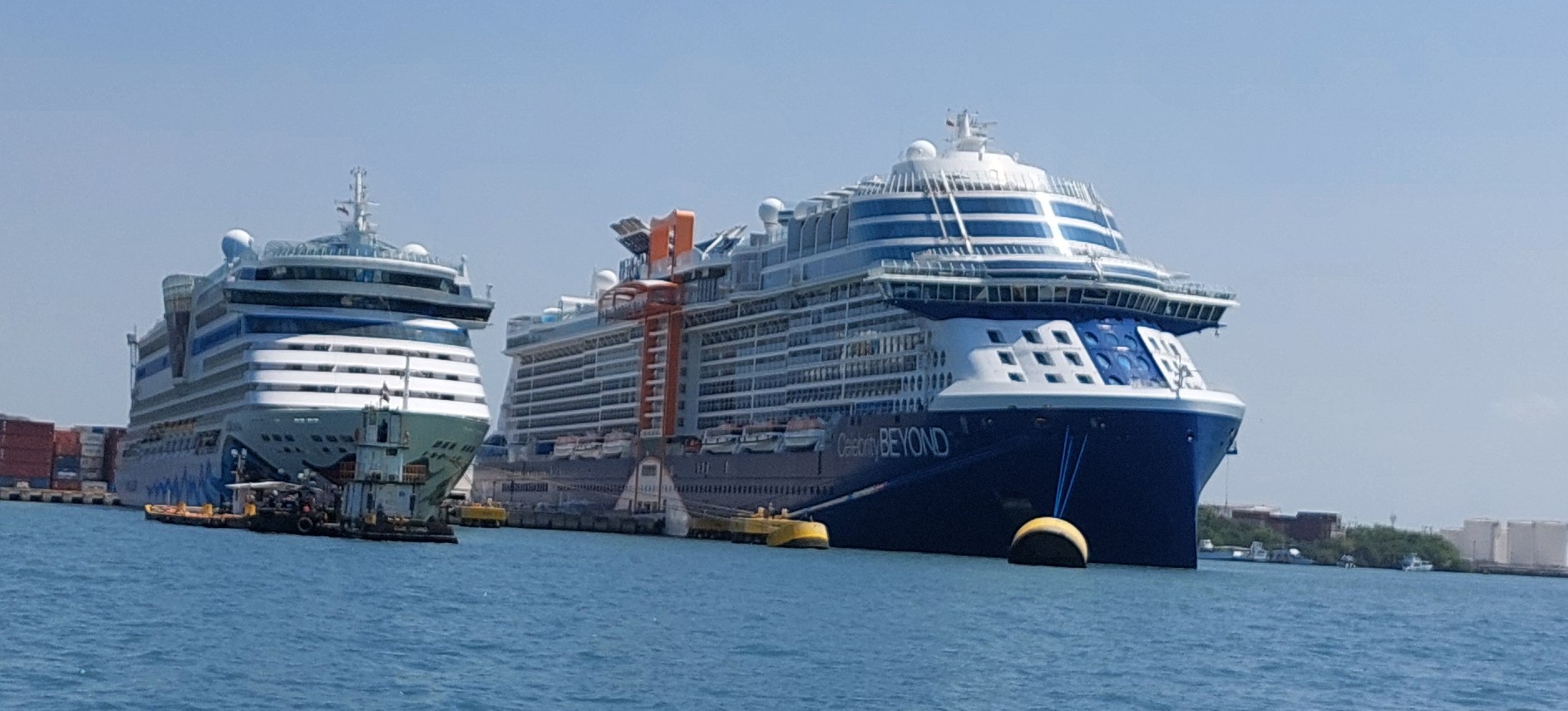
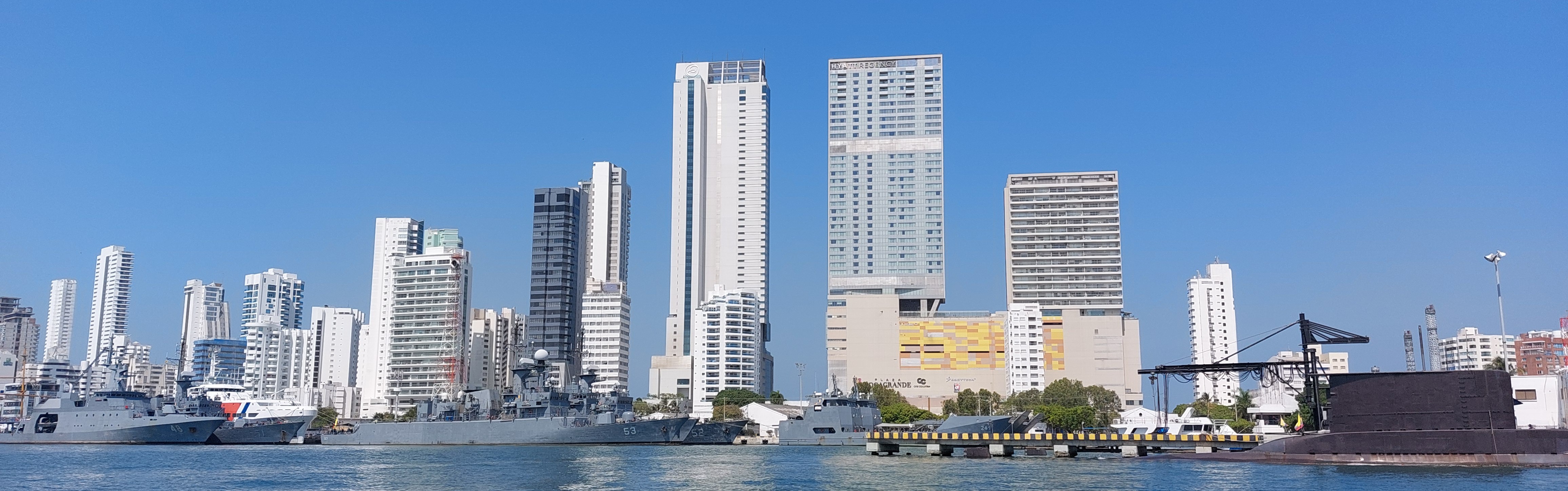
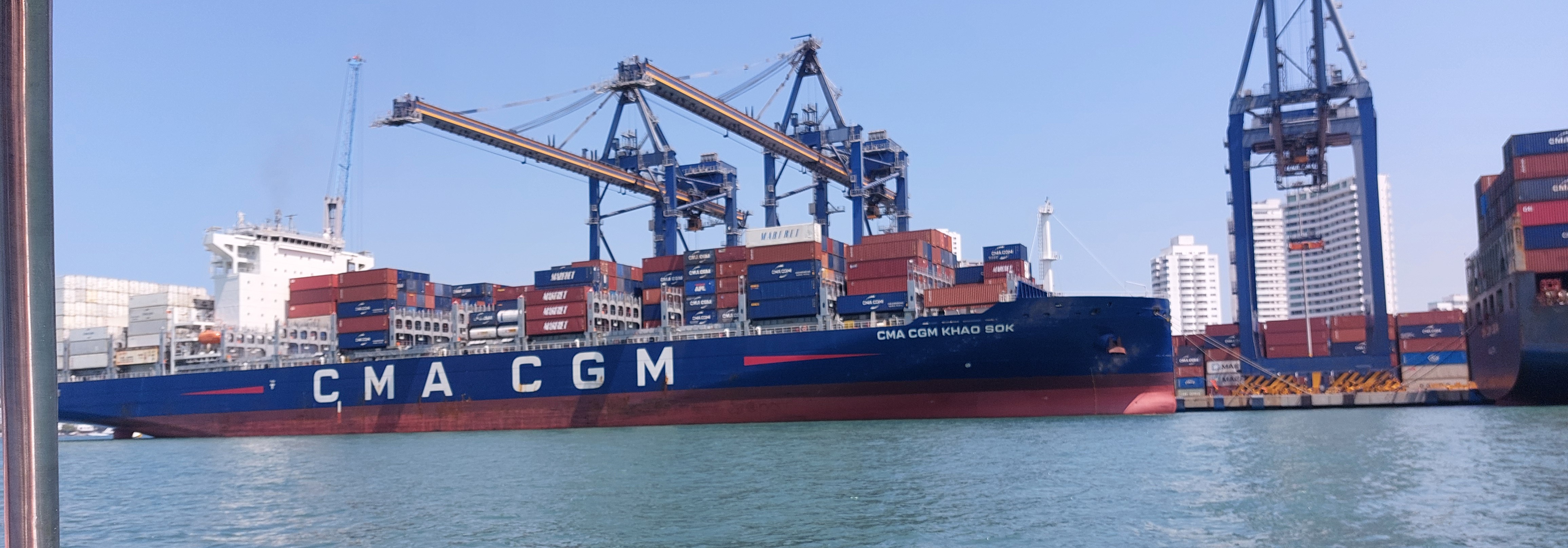
I love to explore ports by boat and searched for an ideal way to do that. The result was mostly party boats crowded with passengers listening to a DJ blast rock music, and quaffing watered-down beverages for about 70 dollars a person. Or one can opt for longer, exclusive yacht trips. I expected to be able to contract for an exclusive voyage with unoccupied local pilots as I have done in other coastal cities, and I was not disappointed. Walking along the embarkation, vendors were hawking assorted boat trips. Javier led me to a small speed boat crewed by his brother Juan Diego and an assistant. The price was less than 70 dollars for a leisurely hour around the bay. We passed the towering condos and hotels of Bocagrande, the cranes of one of the largest ports in South America, the terminal where two cruise ships were docked, and some enormous container ships. It was no surprise to find that the beacon was a statue of the Virgin with child.
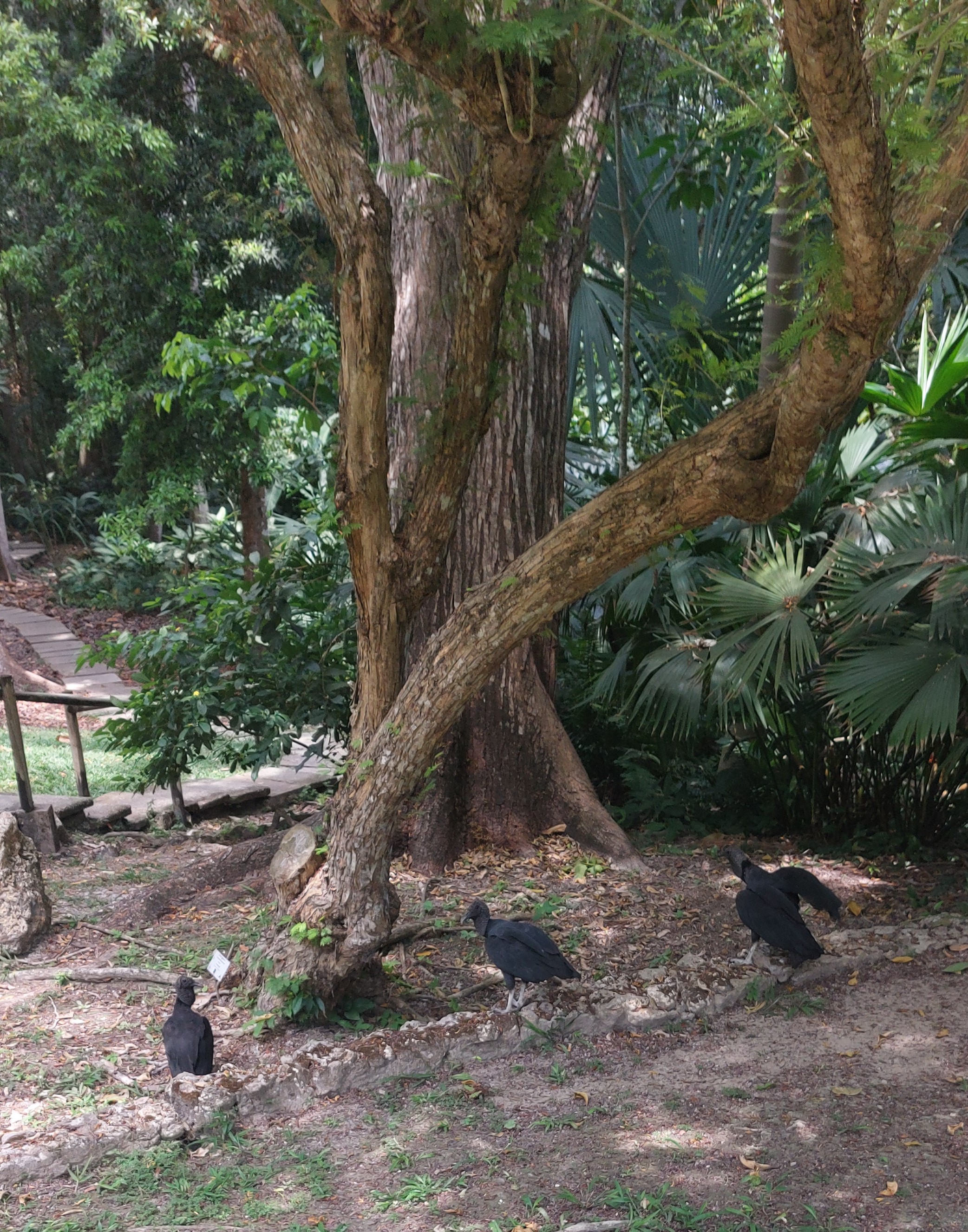
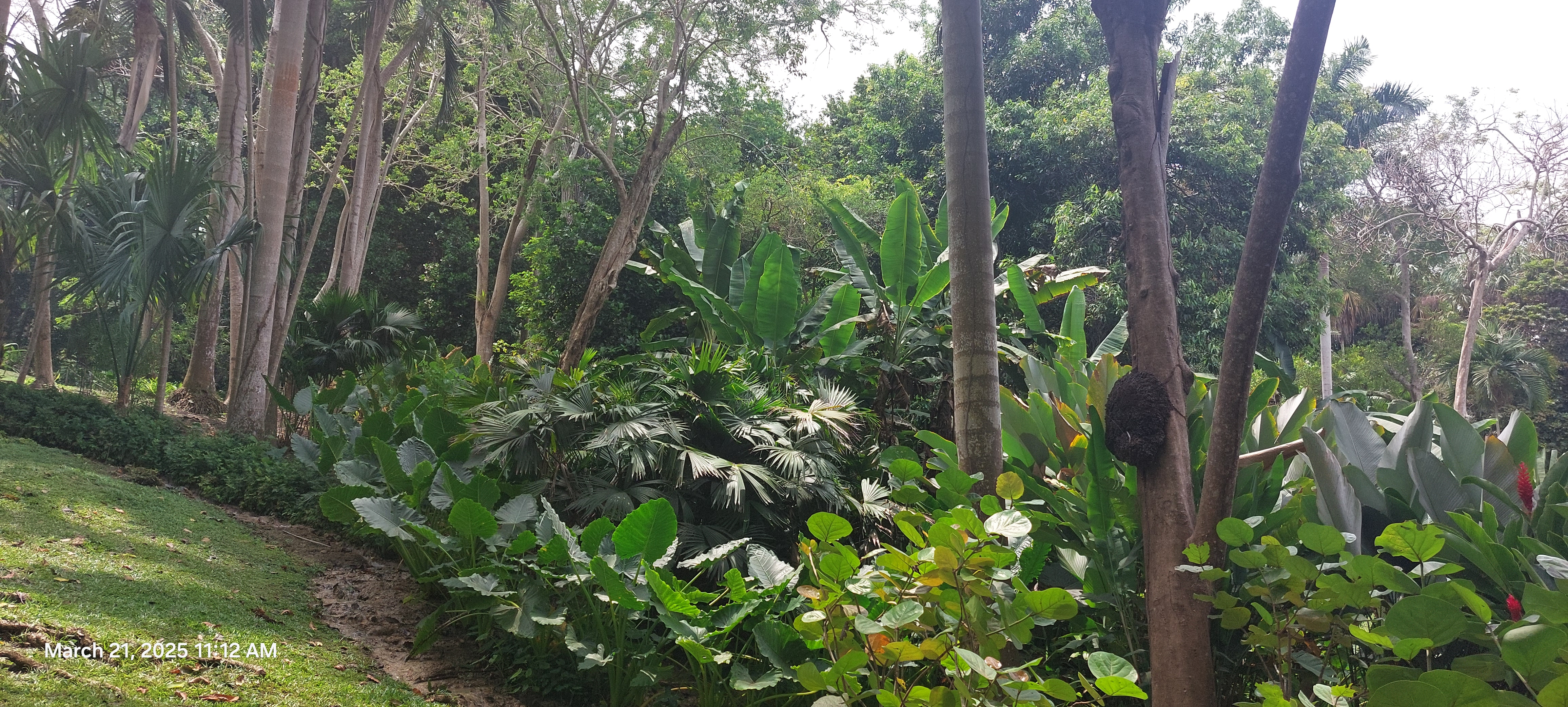
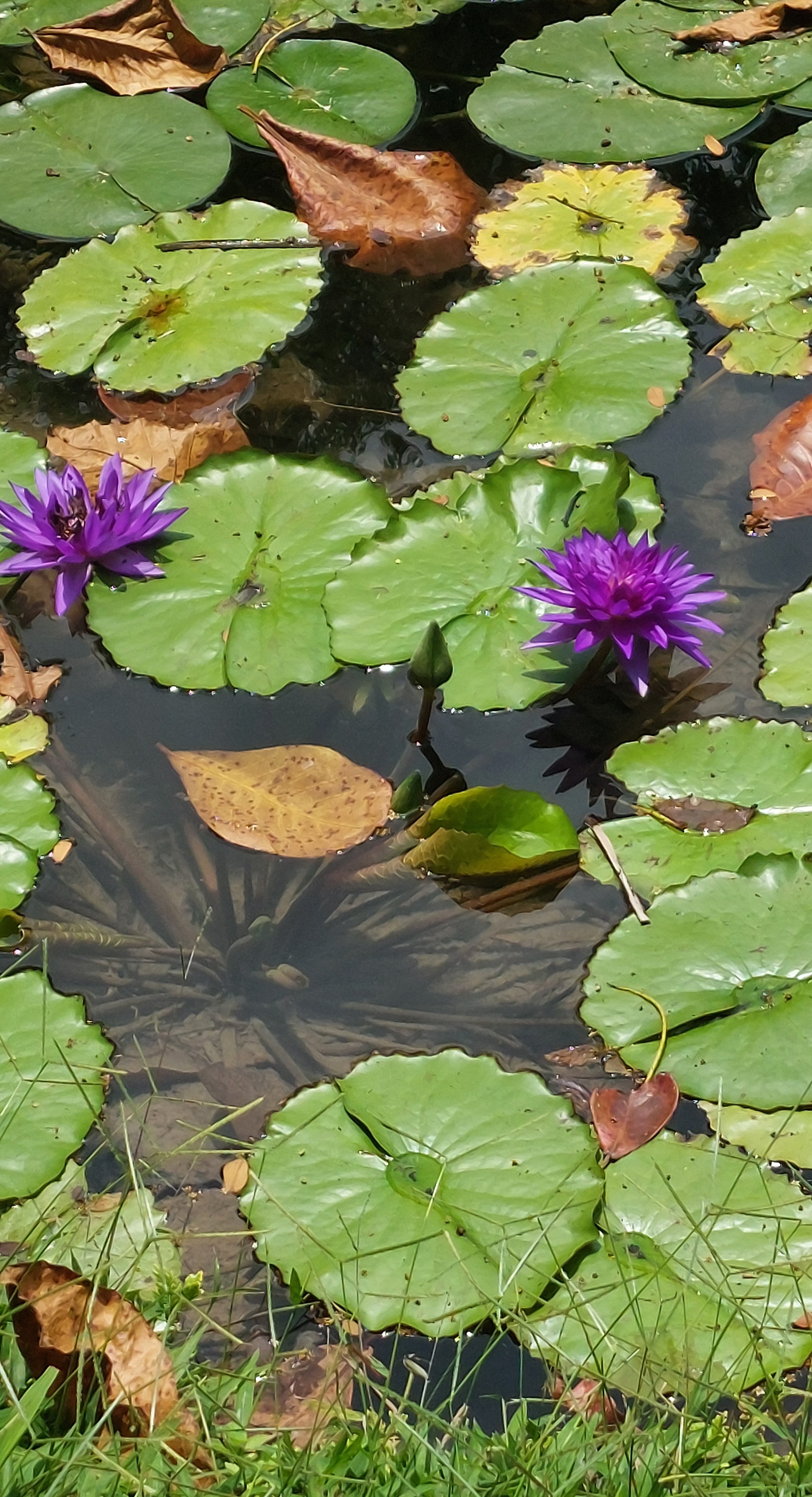
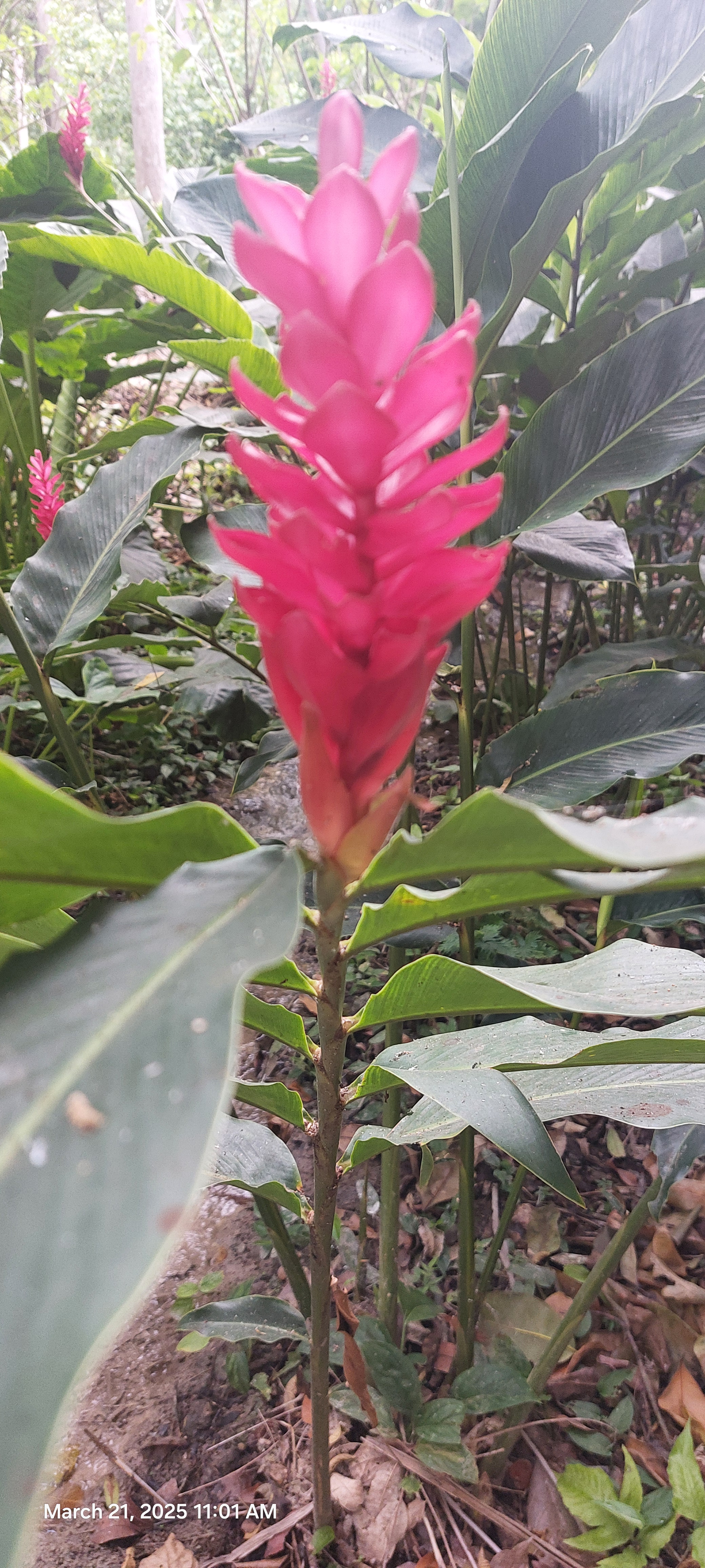
Readers of my previous posts are aware that I love botanical gardens and flower shows. Given Cartagena’s tropical climate, I expected I would be in for treat at the Jardín Botánico in nearby Turbaca. The web site featured a lovely tropical garden “about 30 minutes from Cartagena.” It estimated a taxi ride from the city to the garden with the driver waiting an hour for about 200 thousand pesos, about 50 dollars. Some drivers need permission from the taxi owner to leave the city, but the third driver I approached, Damian, offered the ride for 200 thousand pesos, and we were off at 9:30 am. He took us through industrial suburbs with intense traffic saying the autopista (toll road) was closed, in retrospect, a lie. It took an hour to arrive and I charged the modest entry fee to my Visa card. Six huge buses stood in the parking lot, and we soon discovered several clusters of school children, mostly toddlers, already finishing up their guided tours.
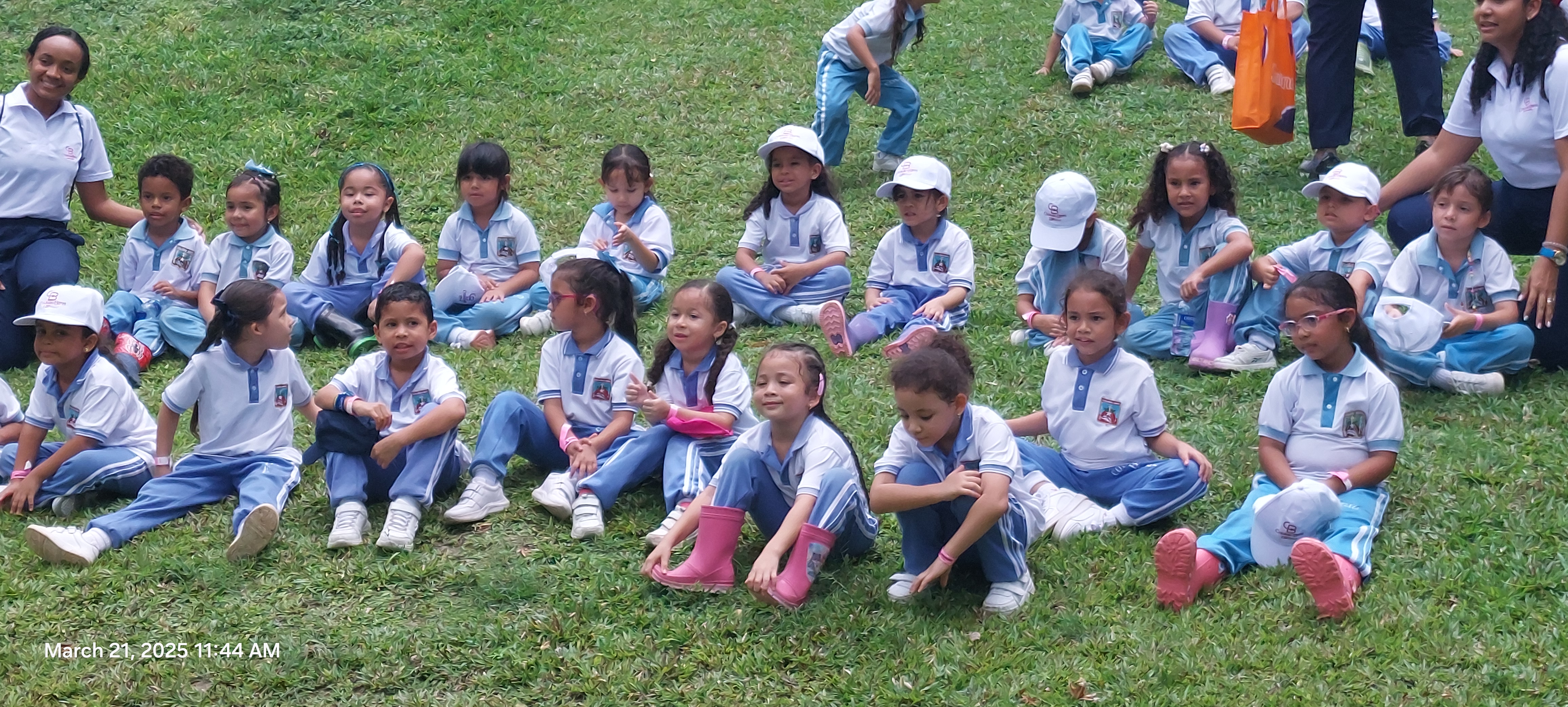
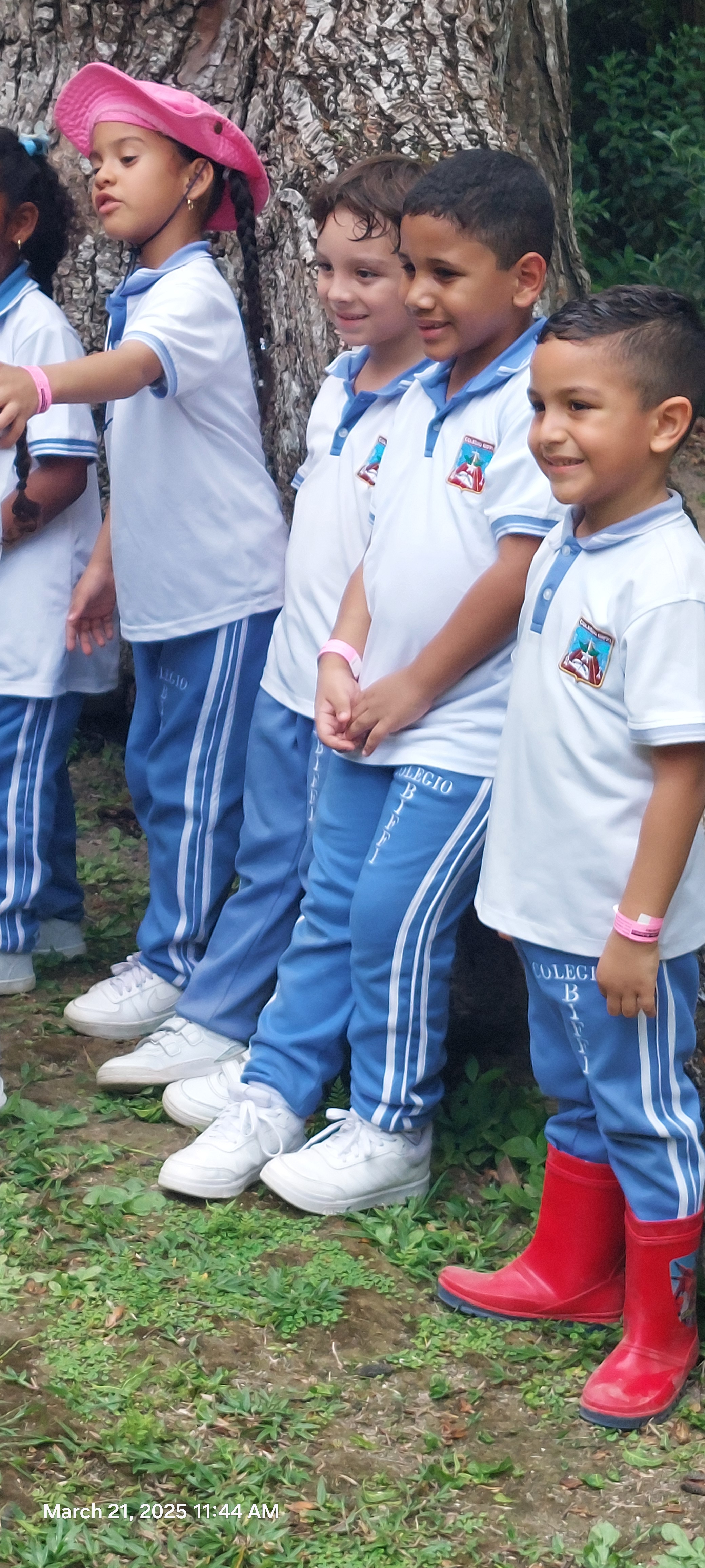
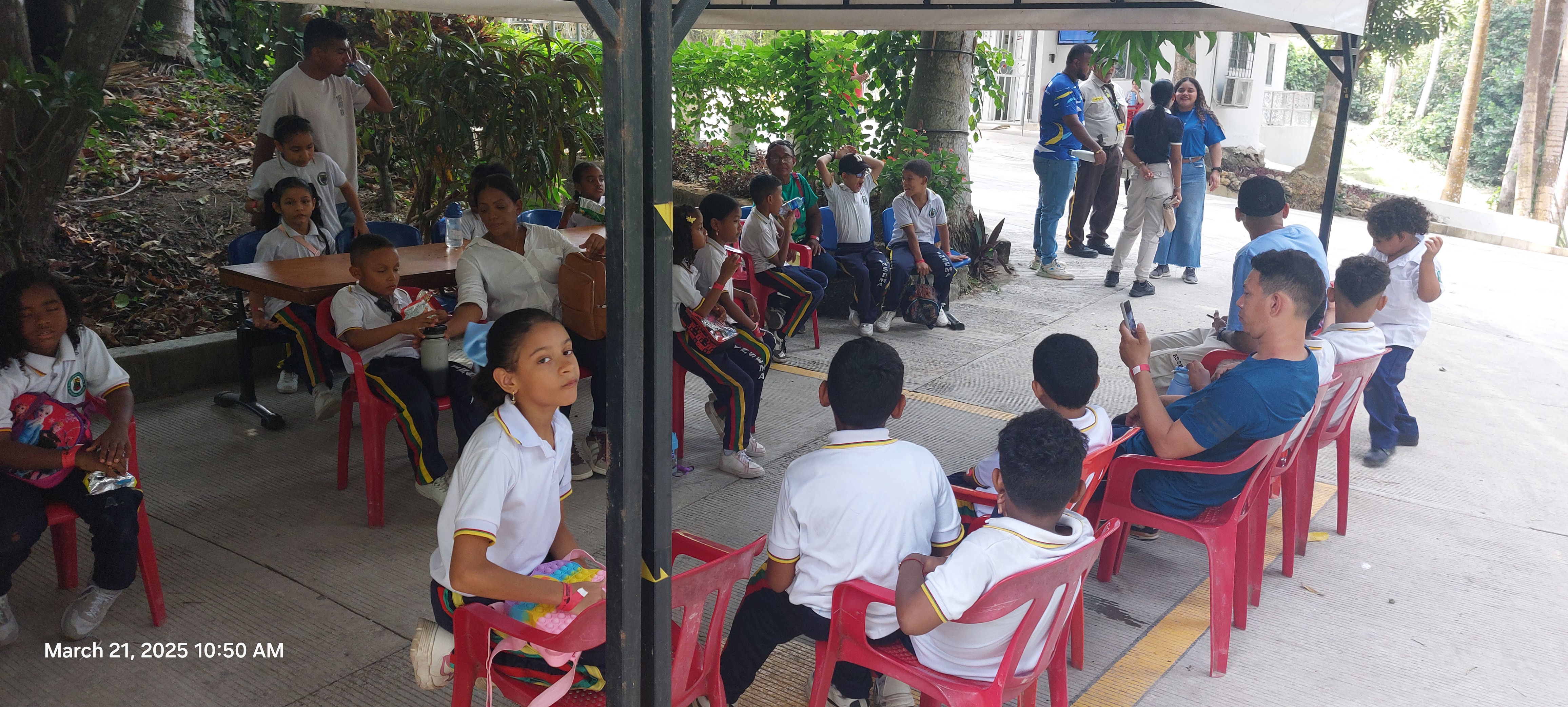
The paths through the gardens cover about 2 kilometers, mostly up and down hills on cement-block stairs. I’m glad we went before the afternoon heat. But it was disappointing to find that the place would be better called an arboretum with mostly trees and tropical plants like dieffenbachia and fewer flowers in bloom than my garden at home in Cuernavaca. Even the tiny orchidarium had only one wilted dendrobium in bloom. It took about an hour to follow the paths to the different areas, tropical, desert, herb, and so on. The restrooms were clean but crowded with dozens of children waiting to use them. There is a cafeteria but we didn’t walk that far to be able to comment. I was more than ready to leave after an hour.

Now the misadventure began. The driver said he could avoid traffic by taking a different highway to return to Cartagena. Ten minutes into the drive, a police redada (check point) pulled over cars randomly, and we were unlucky. While we sat in the airconditioned cab, Damian argued with the police. After twenty minutes I got out to inquire what the problem was and complain that this was an abuse of foreign tourists. It turned out that the driver did not have the proper credential to use that highway. Another long wait and the driver told us the police were impounding his car for five days and he would be fined. I felt sorry for the poor Damian who didn’t own his cab because he would lose money for this trip and for the next several days. The police said they would find us a vehicle but no taxis passed by and Damian, flagged down a bus to a crossroad where after a long wait in the hot sun, he finally flagged down an unofficial taxi. He asked for the full 200 thousand pesos and paid the new driver to take us to our hotel. By then, lunch-time traffic as abominable and it took over an hour to get to the city. Exhausted and hungry by 2 pm, we didn’t go straight back to the hotel but stopped in a small café with pizza by the slice. Soon after I collapsed in the hotel’s luxuriant air conditioning. By 4:30, I had the energy to do my daily water aerobics in the roof-top pool while Pancho did more exploring of the city. In some ways it was a lost day, but we did see enough to warn others to skip the botanical garden, and we experienced the seamy parts of the suburbs, and the heavy traffic on poorly maintained roads where hundreds of motor-bike drivers carried paid passengers clinging behind their seats. And it was an interesting learning experience on powerlessness in the face of capricious law-enforcement officials in poor countries.
The Dining Scene
Cartagena offers simple and fine dining in every category, arepa stands, pizza parlors, coffee shops, fast-food venues like KFC, and deluxe gourmet restaurants. One can find whatever one is looking for by online searches. We had a decent breakfast daily in the hotel, and a variety of quick lunches around the city, but I chose upscale restaurants every evening, my favorite nocturnal entertainment. One can dine well for about thirty dollars a person by limiting the alcoholic beverages. Cocktail and wine prices are nowhere near the 20 dollar and up charges of a Manhattan bar and closer to 8 to 10 dollars for a mojito, caparinha, spritz, or a glass of wine.
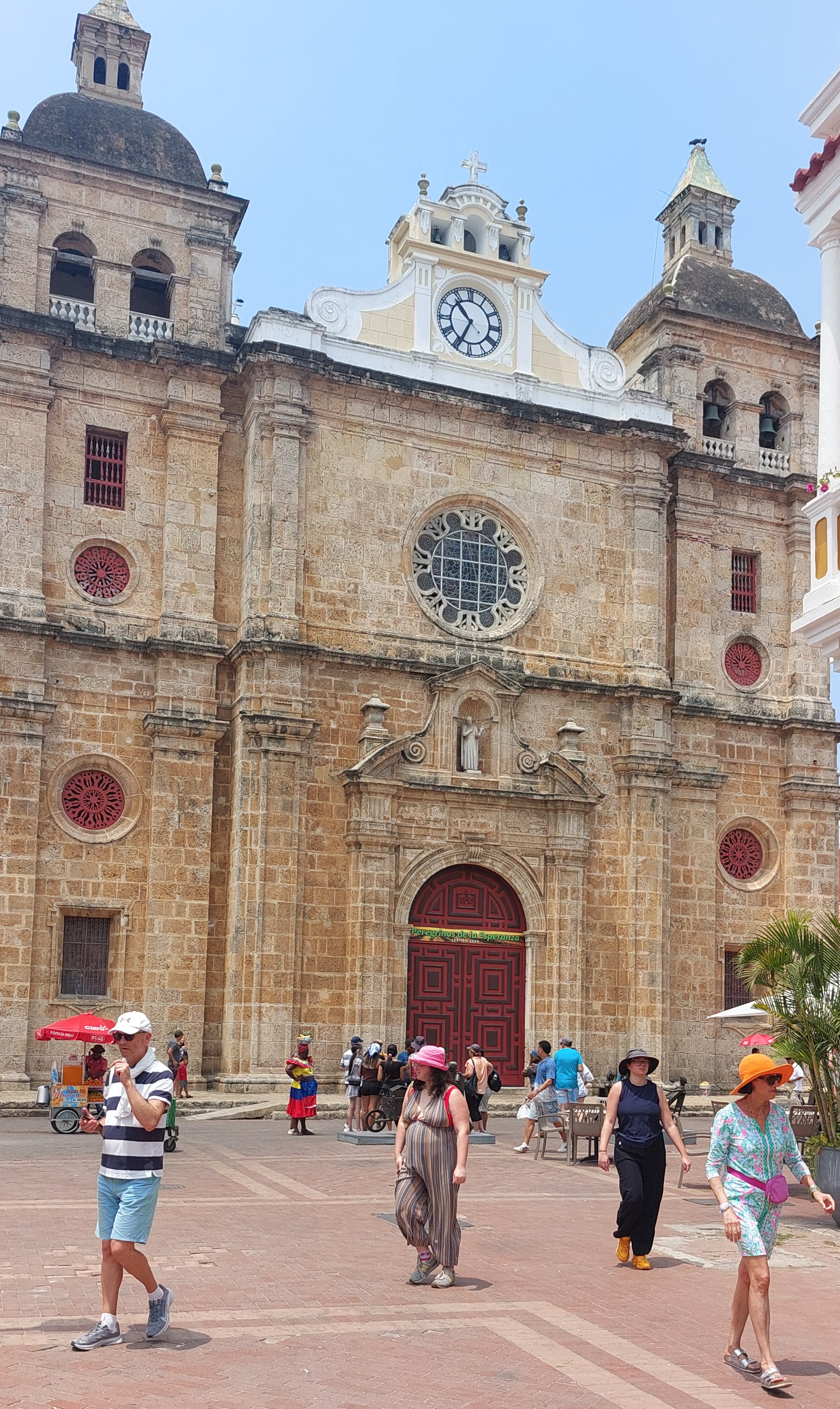
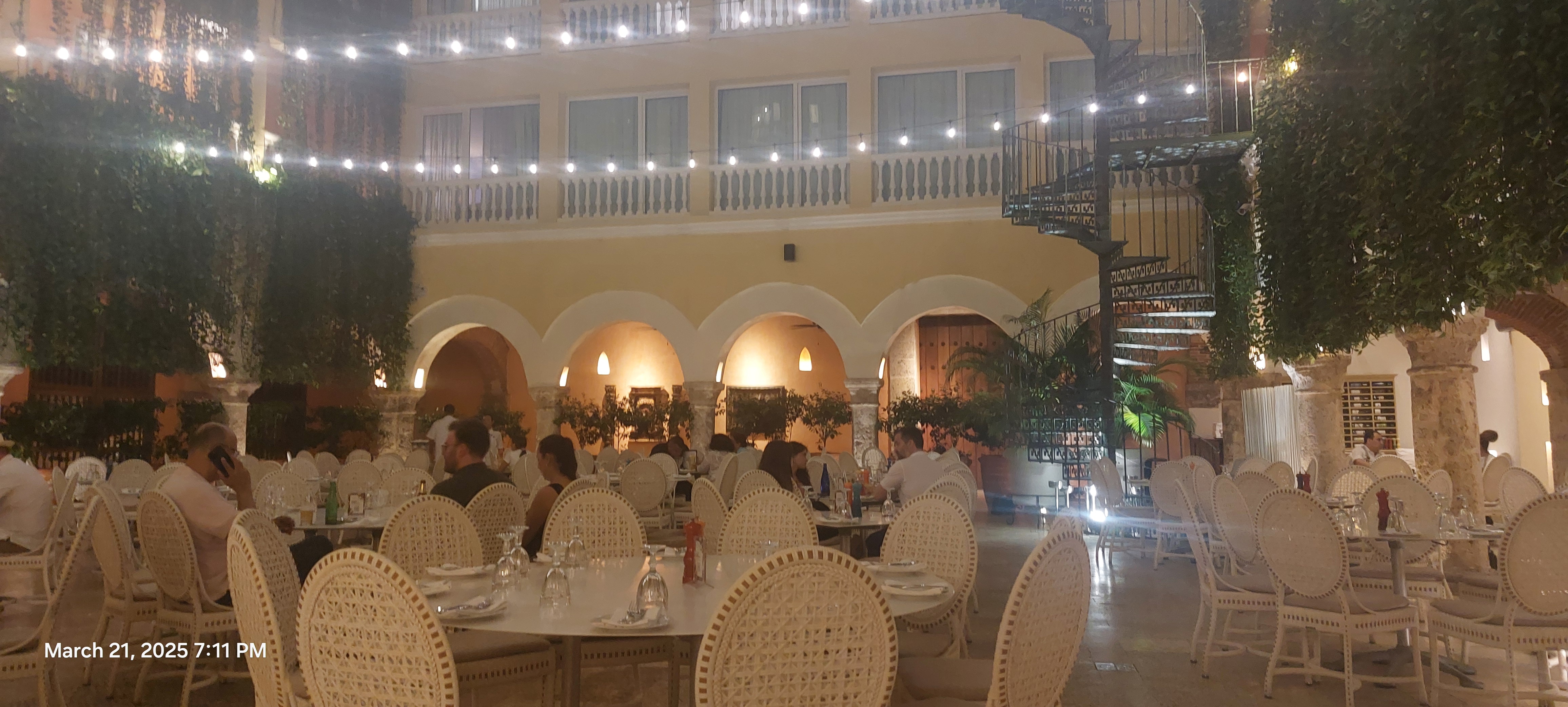
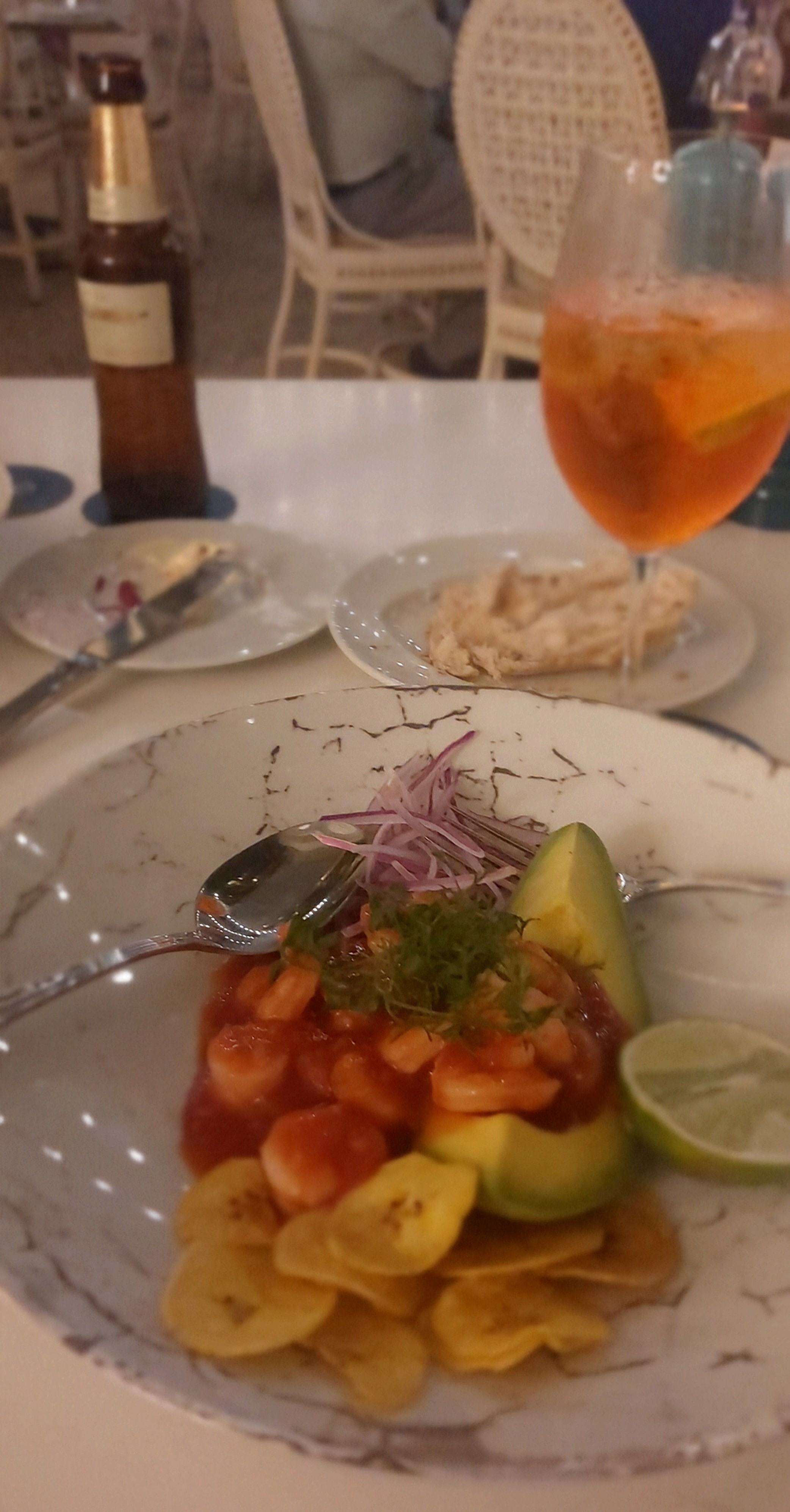
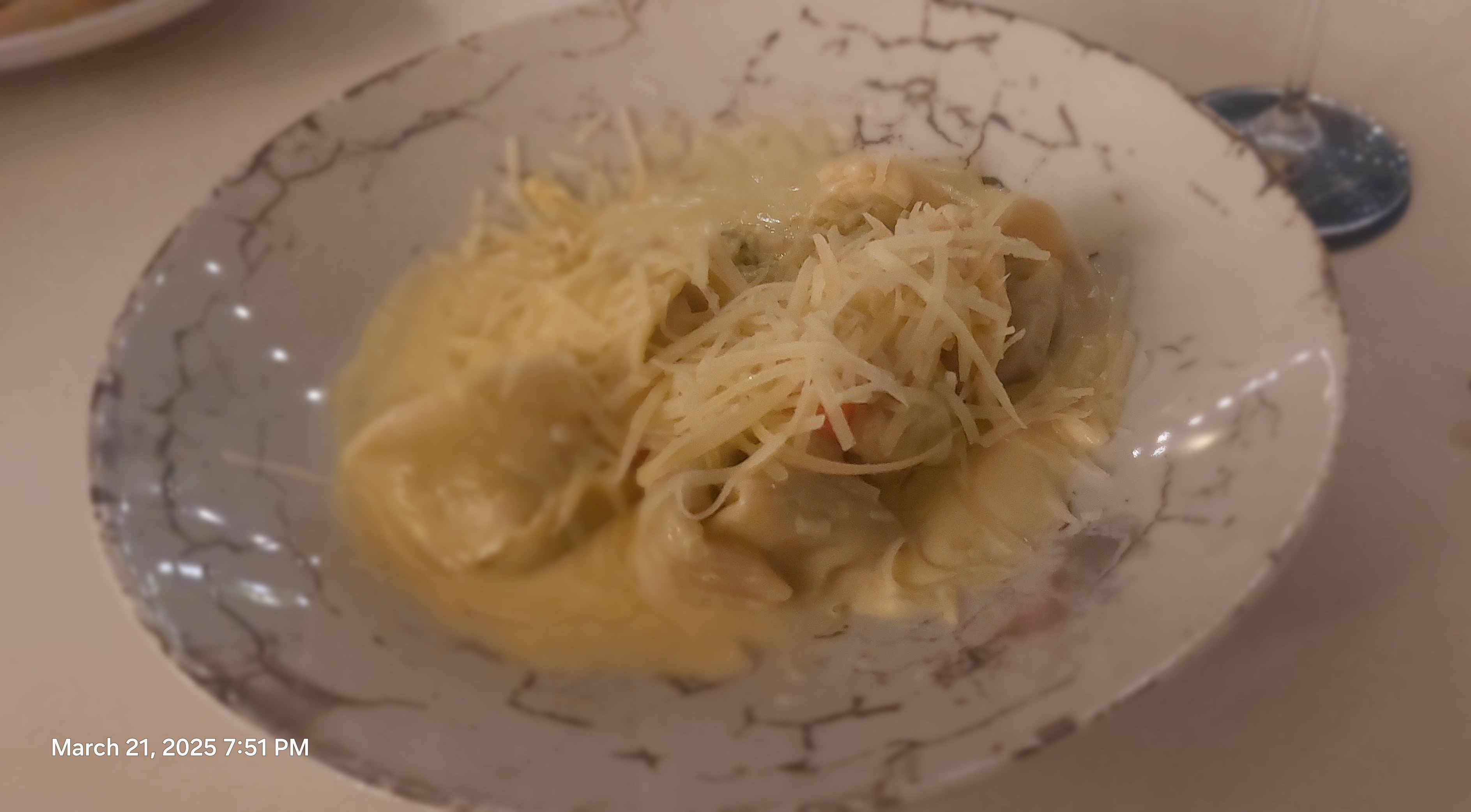
I had eaten several times before in a Cuban-style café La Vitrola. On arrival, the capitán offered a table either near or far from the music. One could enjoy the soft Caribbean vibe even in the back room, and the eclectic menu holds many delicious choices. I failed to reserve days in advance for the highly-touted Buena Vida roof-top restaurant, and a same-day attempt to reserve the roof-top Marina restaurant in Getsemane similarly failed. It appears the cruise ships reserve multiple tables for their passengers at the upscale venues. We enjoyed a seafood restaurant two blocks from the hotel, Mar de las Antillas. Lobster was on the menu at budget-busting prices but the langostinos were priced reasonably. Another favorite from previous trips is Don Pedro, with a large outdoor area facing the church of San Pedro Claver near the clock tower plaza. Tables seem to be available at whatever hour without a reservation and we enjoyed the people-watching and the street entertainers who passed a hat for funding. Our final dinner was a splurge at Harry’s Sasson in the Hotel Charleston, a short walk from the Don Pedro plaza. The elegant dining room was crowded but service was excellent and we reveled in enormous shrimp and avocado cocktails and crab and salmon stuffed ravioli.
Nightlife
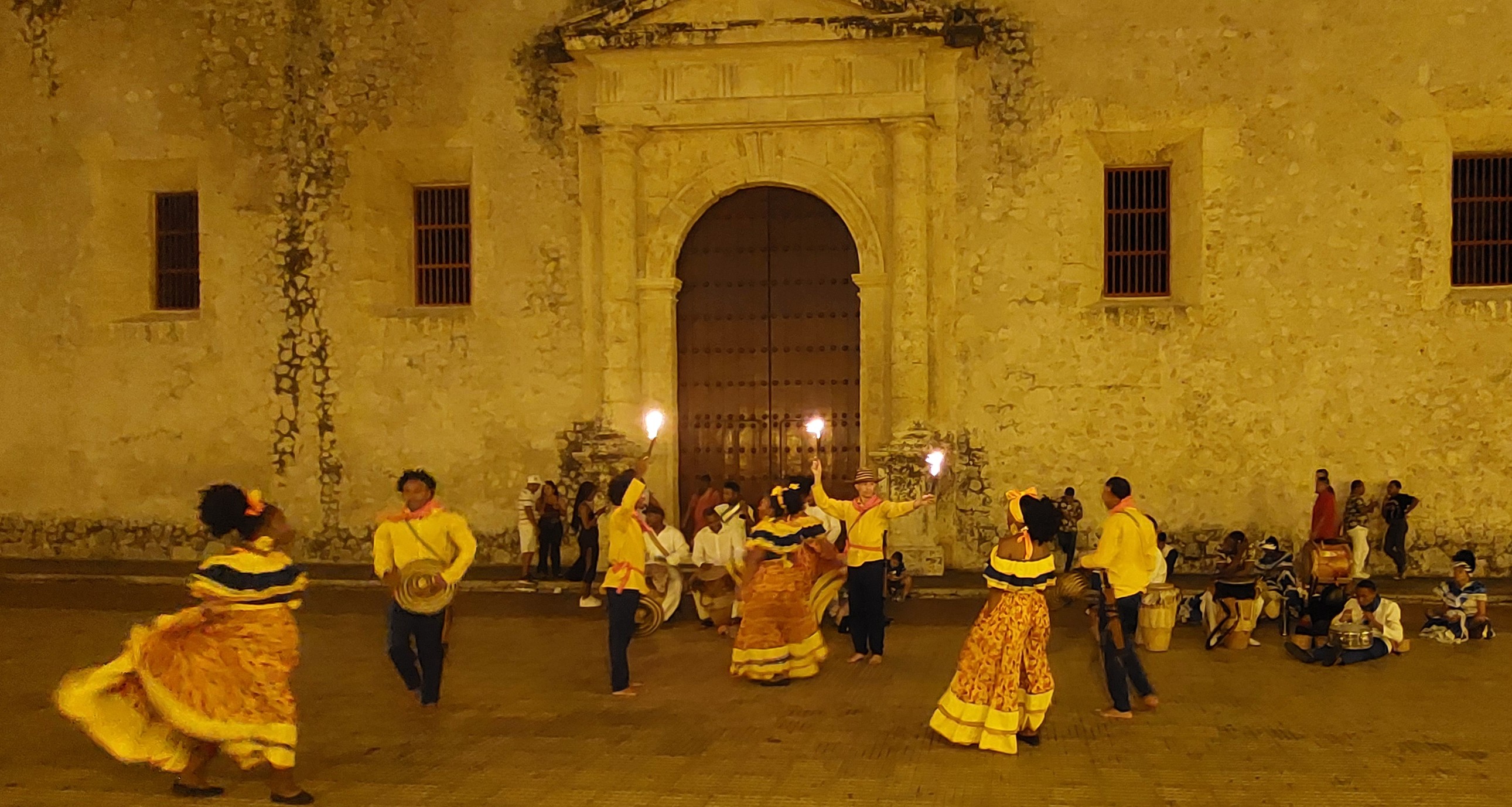
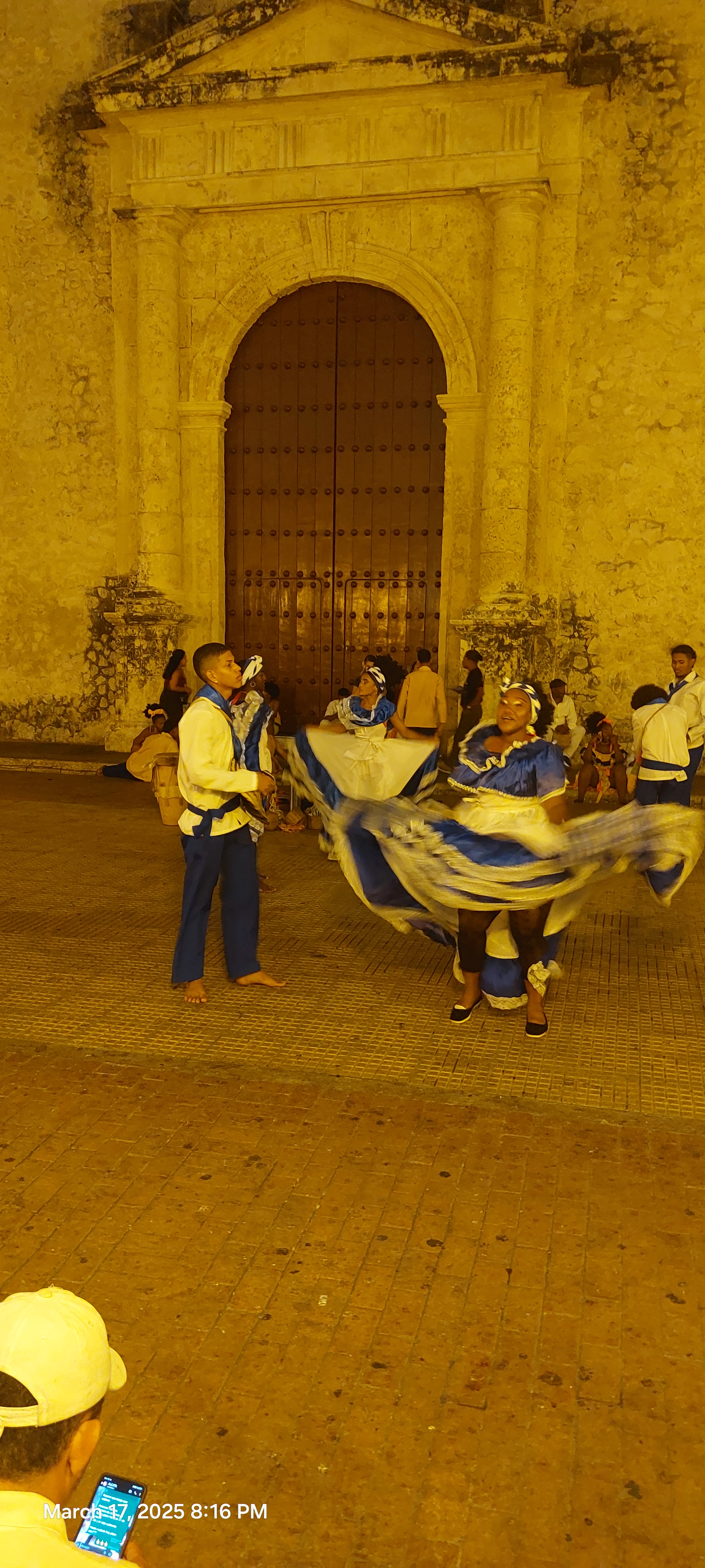
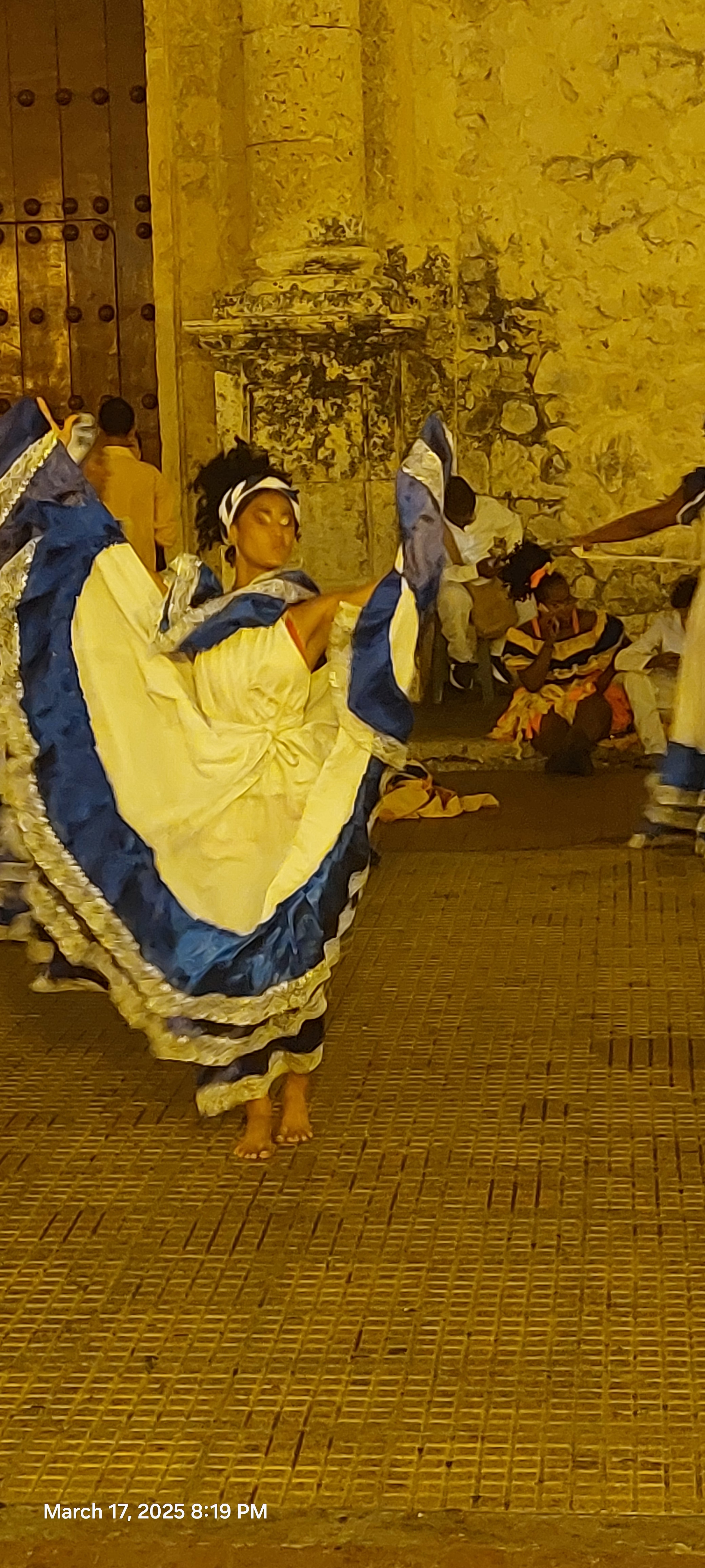
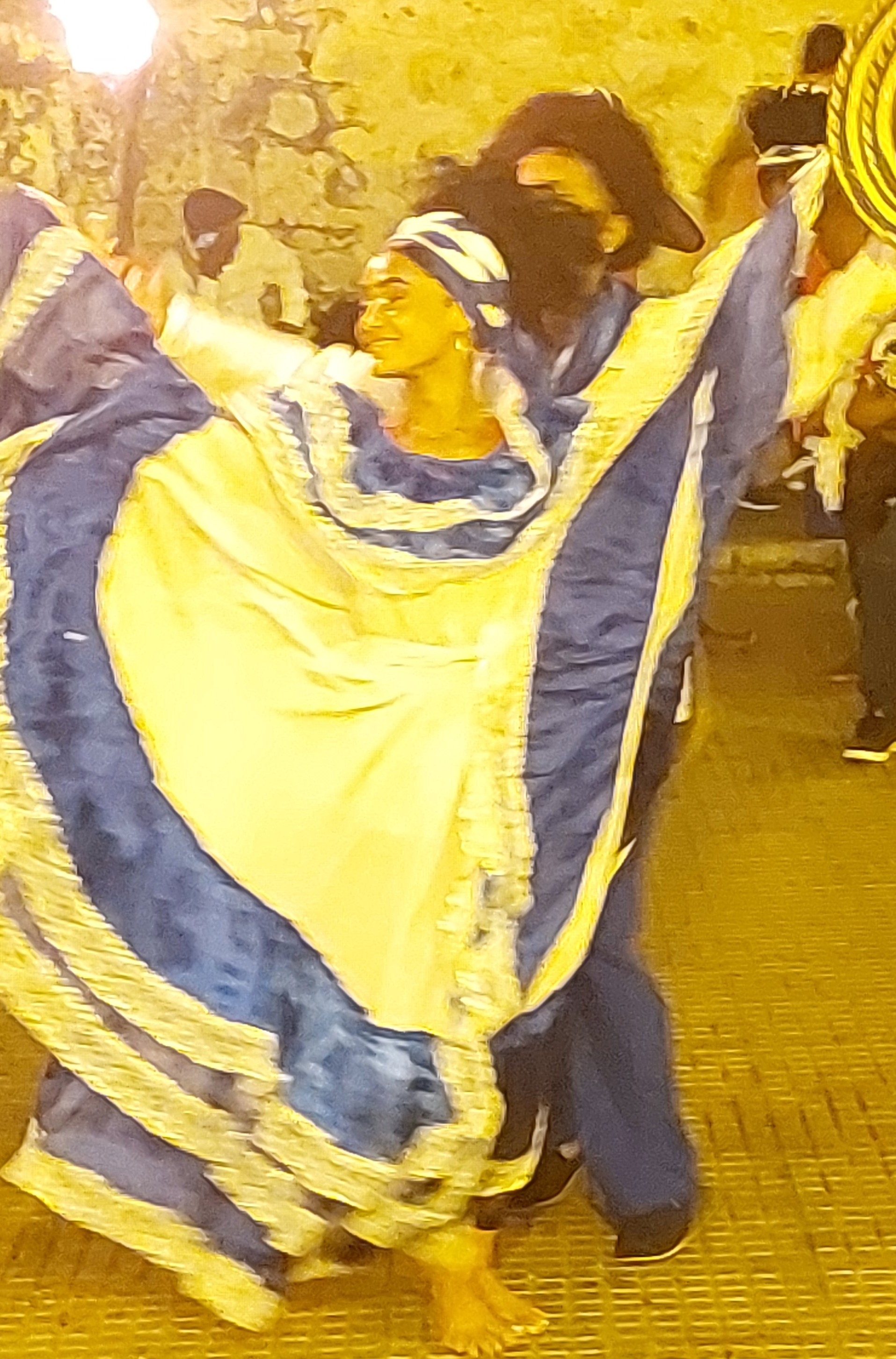
As an octogenarian, I am not the person to offer nightlife recommendations. The web is full of suggestions for dance clubs, tropical bars, rock bands, and a reportedly active gay scene. Our hotel’s roof-top bar proved to be one of the most attractive watering holes for whatever yuppies are called in Colombia. After dinner, we were satisfied to walk two blocks from our hotel to the plaza adjacent to the cathedral where different groups of Afro-Caribe dancers and drummers entertained barefoot in the street every night. Their incredible energy and dazzling moves delight the applauding crowds. One can find dozens of horsedrawn carriages with fixed rates all over the city center for a pleasant ride along the beautifully illuminated colonial streets.
WHAT’S MISSING HERE.
This being my fourth visit to Cartagena, I was not tempted to exhaust the principal tourist sites. No matter where I travel, I find abundant advice by a web search “what to do in______.” Expect to get pop-up ads on your laptop for the next month or more, especially if you choose Viator.
Museums in this port city are not world-class. The Museum of the Inquisition displays instruments of torture and will not occupy much of your time. Similarly, the Gold Museum is tiny compared to its stunning counterpart in Bogotá. The Modern Art Museum does not boast the magnificent collections of Botero’s fanciful paintings one finds in Bogotá or Medellin. I have seen so many naval museums I skipped this one altogether. I do recommend a visit to the Castillo de San Felipe de Barajas, one of the largest Spanish fortresses in South America. Constructed on a high hill in 1536, it resisted numerous attacks by Spain’s foreign enemies. Once was enough for me with the steep steps and endless walking.
Churches: You will find the most famous churches like the Cathedral and San Pedro Claver on google maps, and the best ones are always walking distance within the city center.
Shopping: Swarms from the cruise ships crowd the jewelry stores seeking bargains on emeralds and gold. The souvenirs are found in sidewalk stands on almost every street. Women will enjoy the window displays of elegant tropical frocks but you would have to live in Florida or California to wear them often. Men’s tropical shirts are also classy but there’s not much demand for them among American males whose dress-up doesn’t go much beyond a shirt with sleeves and a collar. But men will find a great choice in hats in many styles. Beware, genuine Panama hats are made only in Ecuador and cost nearly 100 dollars; the fakes don’t last.
Sadly, Cartagena has gained fame as a destination for sexual tourism. Beautiful young “escorts,” dressed in leopard-skin outfits or less, greet men arriving from Spain and Italy in the airport and spend several days with them. The men’s wives are told that the agency has organized a business convention. I watched such couples on a turibus pawing each other obscenely. U.S. Secret Service members were caught in a security scandal for spending the night with prostitutes the night before President Obama’s attendance at a Summit of the Americas in April 2016. Taxi drivers can tell you almost anything you want to know for misbehaving. I like to interrogate them for sociological enlightenment.
IF YOU GO
Weather: Cartagena has two seasons. It’s dry from December to April and rainy with mostly afternoon showers from May to November. You can google weather history for the month of your prospective travel to get average temperatures and rainfall records. In this mid-March trip, the temperature was in the 80s F by early morning and in the 90s and humid by late afternoon when a siesta is in order. If your budget allows, pick a hotel with good air-conditioning and a pool. I was able to do my water aerobics most afternoons around 4 pm. I would not have enjoyed the city in a cheap bed and breakfast.
Cruise ships: Most Americans who arrive in Cartagena debark from ships cruising the eastern Caribbean. It’s lamentable to experience this jewel of a city only on a shore trip.
Multiple airlines fly into the city. I saw on the tarmac Jet Blue from New York, Delta from Atlanta, American from Miami, Copa via Panama, and several discount airlines. I flew AeroMexico, four hours nonstop from Mexico City. El Aeropuerto Internacional Rafael Núñez is long overdue for an upgrade. There are no jetways; one climbs down a steep staircase from the plane (wheels on carry-ons are no help here), and then one walks outdoors nearly 100 yards to the terminal in intense heat. Have an umbrella in your carry-on if you arrive in rainy season.
Money exchange: The Colombian peso has averaged 4000 to the dollar during 2025. One can adjust quickly to calculating. For example, a 200 thousand restaurant bill divided by 4 is 50 dollars once you move the decimal point. There are exchange desks in the airport and on several streets in the city center. The airport ATMs are not in the arrivals but rather in the departure terminal. I used BBVA and was surprised to find a limit of 300 thousand pesos, usually about 78 dollars on my statement, and a fee of 25 thousand pesos, over six dollars, rather steep when you need more than one withdrawal. Luckily, my Schwab account refunds local fees.
Credit cards: Hotels, restaurants, and most shops accept international credit cards. You can even charge small amounts in coffee shops, fast-food venues, museums, and bars. You will need cash in pesos for taxis, carriage rides, and street vendors. Remember to notify your credit company for a foreign destination.
Taxis for the 15-minute ride from the airport to city center cost only about five to seven dollars. Cabs abound everywhere in the tourist areas of the city including the beaches with most local fares around five dollars; just ask cuantos pesos before getting in. There are no ride services like Uber.
There are so many wonderful destinations in Mexico and Central and South America. It’s a shame so many travelers only look at London and Paris if they go abroad at all. I hope my posts can broaden horizons. Thanks for reading this far. Feliz Viaje!


 Jim Horn News
Hi Jim – This sounds like a lovely city, though your trip certainly had its challenges! I had several international students in my ESL classes years ago who came from Cartagena, and they described it in glowing terms. Great that you are still traveling; until I decide whether to have knee replacement surgery or not, I’m limiting my trips.
Hugs – Susan *********************** Susan Ansara ansara@me.com 575-649-8786 ************************
>
Thank you, Jim, for sharing these beautiful pictures. I am so happy to see you having so much fun in Cartagena. Today is extremely cold here in the finger Lakes region. Cheers, Bolgen
Nice to hear from you Bolgen. I don’t go back to Western New York often due to the weather there, so I’m sorry I’ve missed seeing you for too long. All the best.