As much as I love Cuernavaca, Mexico, I find it more pleasant to leave the first week of September when the church adjacent to my home holds its annual fair in honor of a miracle of the Virgin 300 years ago. The Feria de Tlaltenango occupies one of the main streets of the city that is closed to traffic in both directions for the duration of the fair, causing chaotic traffic delays and rerouting. It begins early every morning with rockets that burst over my home causing the building to vibrate. Rockets and church bells day and night make sleep problematic. In addition, September is the rainiest month of the year, while it’s a beautiful month in much of the U.S. and Europe. So, it’s a no-brainer why I choose September for new travel adventures.
At over 6000 words, the text may be too verbose for some who might prefer to scroll directly to the photos. Double click on the photos to enlarge them. Word Press keeps changing my medium to small print. On a laptop, press control and + to enlarge.
This was my eighth tour with Tauck which sponsors high end tours all over the world. The tours are pricey, especially since I have to pay a single supplement, gladly ever since I traveled once with the roommate from hell; but there is no questioning the value for the price. The hotels and restaurants are usually the best in each destination. If you have never traveled with Tauck, and you have the funds, you will not regret it. And who deserves it more than you.
I did become disenchanted with Tauck large groups after taking the Canyonlands tour with over 40 guests. The small groups with a maximum of 24 guests often sell out a year in advance, so I had begun traveling independently to countries where I speak the language, or with competing small-group agencies. While trying to decide in June where to go in September 2025, I was surprised to get an e-mail from Tauck that there were openings on the small-group Yosemite & Sequoia tour. Evidently there had been several cancelations. I phoned immediately and signed up, delighted to receive an extra free night in the Palace Hotel in San Francisco, an incentive usually offered only to early-birds. When I compared airline prices, I was pleased to find that Aeromexico had a direct flight from Mexico City to SFO for considerably less than the competition. Within a few days of signing up, Netflix debuted a new series called Untamed (Indomable in Mexico) about a serial killer in Yosemite. When I saw the amazing scenery, I rejoiced that I would soon be there.
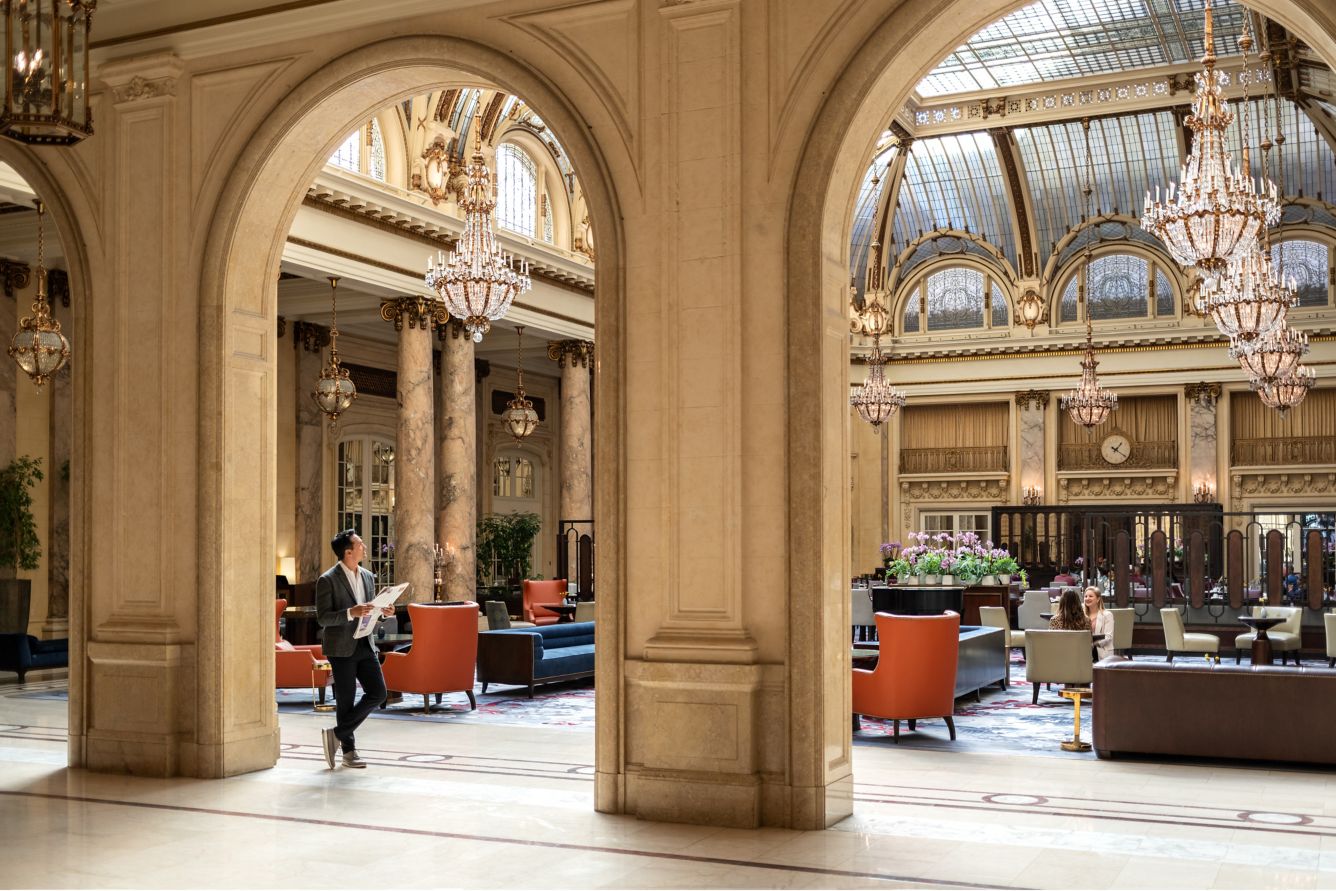
I arrived in San Francisco in the mid-afternoon August 31 to find the Tauck driver waiting as I exited the baggage claim area. He whisked me to the Palace Hotel in a bit over twenty minutes. I didn’t have to wait until the normal 4 pm check-in and was in my deluxe room by 2 pm. The Palace is one the most historic hotels in the city, opening in October 1875 as the largest hotel in the Western United States. Alas, while it survived the famous earthquake of 1906, it was destroyed by the ensuing fire. It was razed and rebuilt on the same site, opening in December 1909. Of course, it has been renovated several times during the ensuing years.


I hadn’t been to the Embarcadero or Fisherman’s Wharf in fifty years. Today they are regarded by many as over-touristed and tacky, but I wanted to see for myself, and there is usually a good reason why a place is popular. I started at the Ferry Terminal on the Embarcadero enjoying wonderful views of the bay. I hadn’t eaten since breakfast in flight, so I was glad to read the posted menus outside of crowded restaurants. The line to enter the famous Oyster Bar was 20 yards long so I gave up on a seafood lunch and settled for a Mexican restaurant because it had fish tacos on the menu, a Baja specialty popular in California. I wasn’t tempted by the “gourmet” food court inside the terminal except for ice cream, but I passed on the line that was about 30 yards long. I tired quickly since I had awakened at 3:30 am to get to the Mexico City airport for an early flight, so I booked an Uber back to the hotel by 4 pm for a siesta.

I had wanted to dine in the hotel’s famous Garden Court, but it isn’t open at night. Opting to stay in the hotel, my only choice for dinner was the Pied Piper Bar, named for a Maxfield Parrish painting that covers most of the wall above the bar. The room was very dark with loud music and the menu was limited. I couldn’t imagine drinking much here with cocktails priced at 23 dollars plus tax and tip. I enjoyed a bowl of chowder and a small pasta dish with a beer before an early bed.
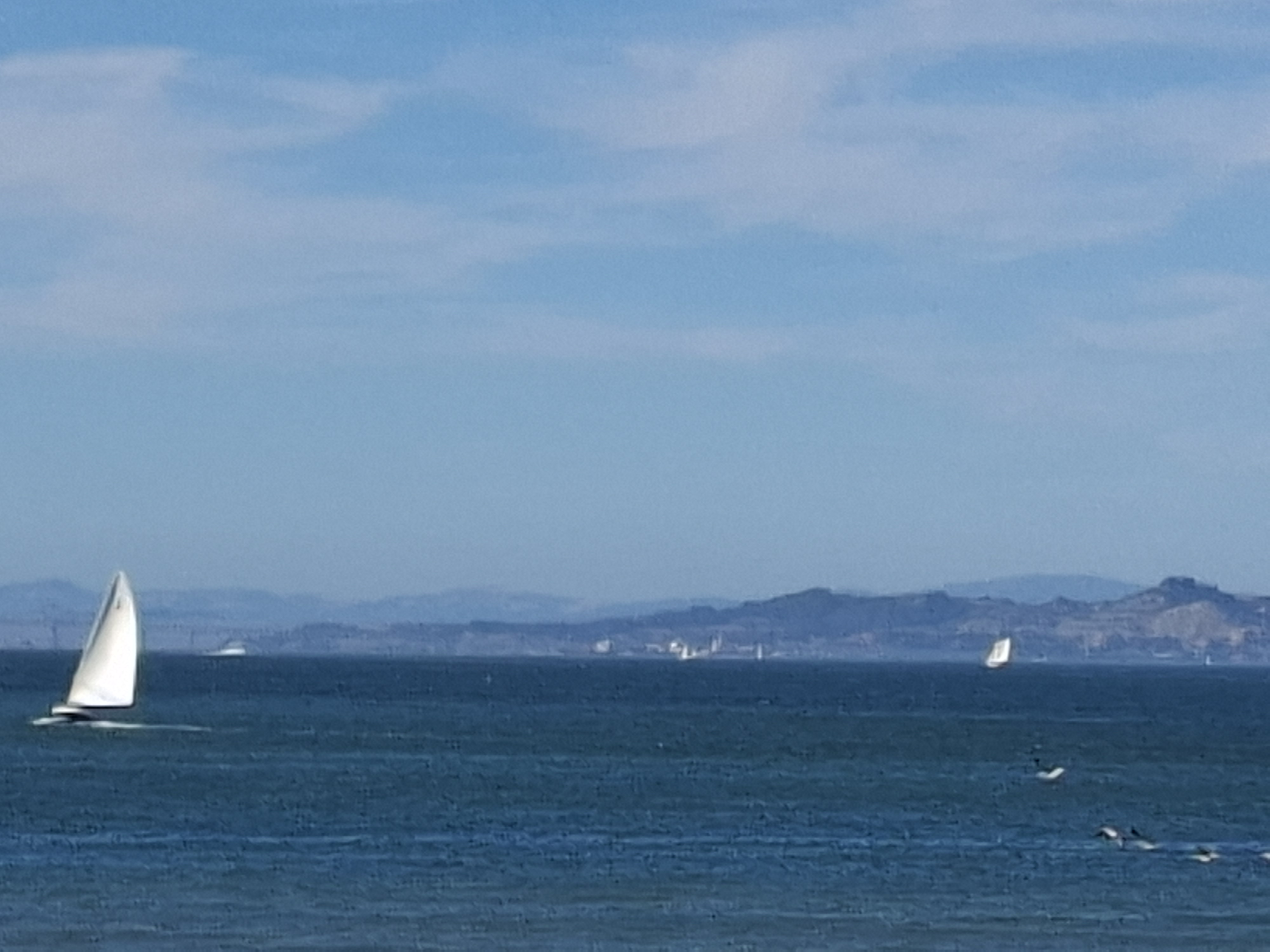
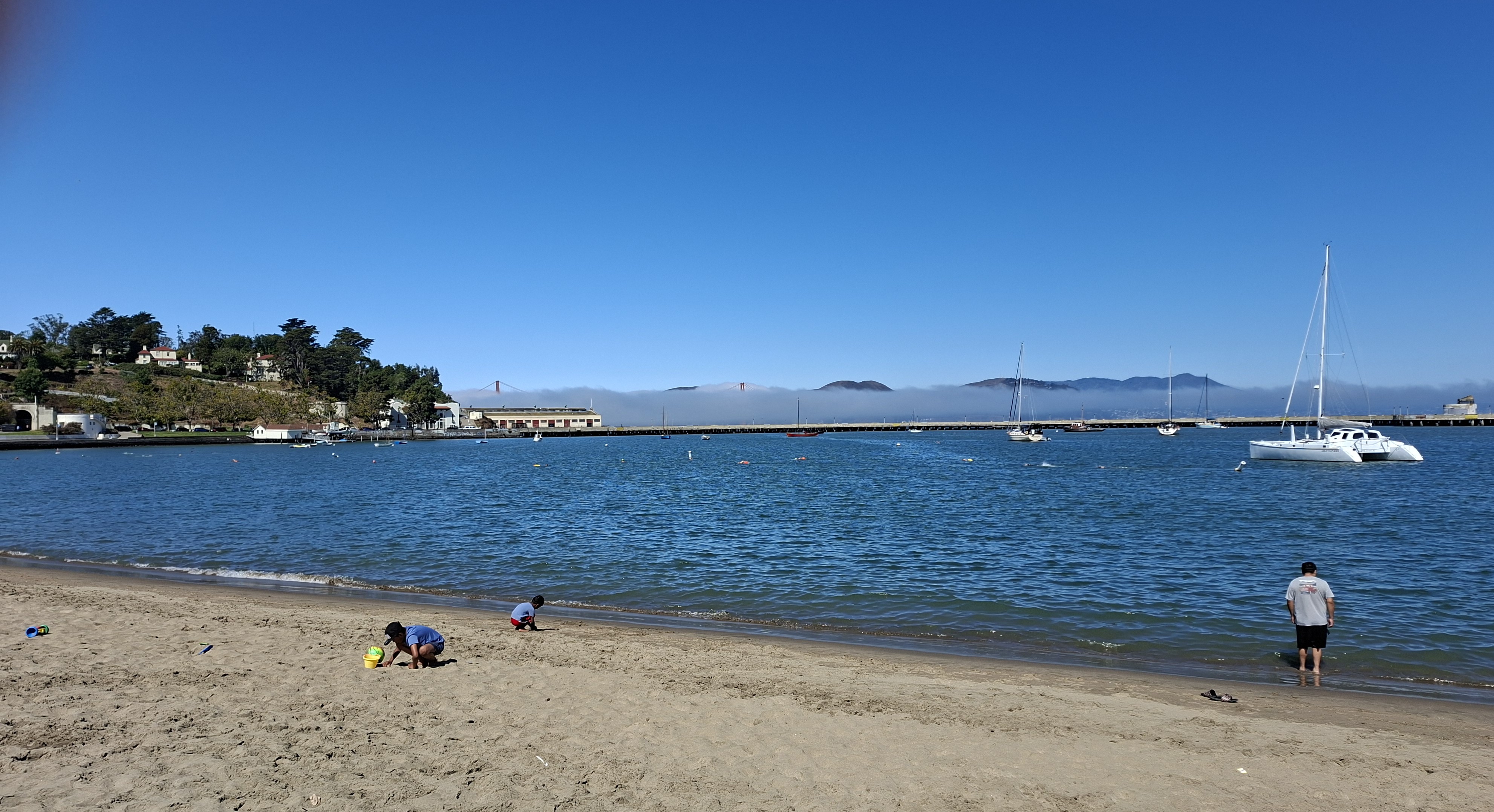
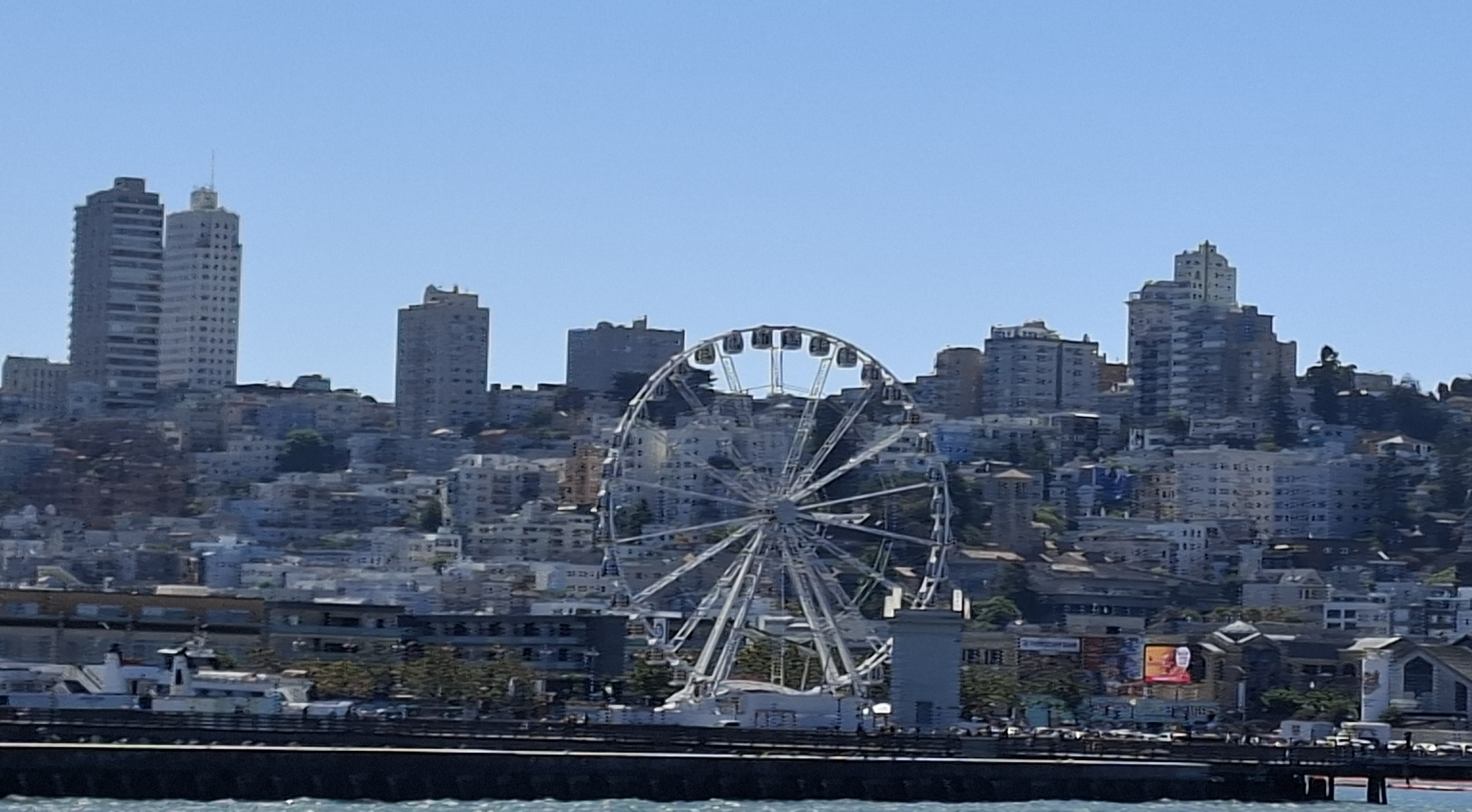
I had most of Monday September 1 (Labor Day) free until the first Tauck group event that evening. After an excellent buffet breakfast, I booked an Uber to Fisherman’s Wharf, expecting holiday crowds, but I was surprised to find it quite calm. I started at a small park below Ghiradelli Square with a small sandy beach. Temperatures were in the mid-60s due to the chilly breeze off the bay, so I was amazed to see people swimming in water that must have been icy, but no one had turned blue. I strolled the walkway along the piers finding many attractive shops and restaurants. I had read about voyages on the bay and recognized the sign for the Red and White Cruise Company offering sailings of 60 to 90 minutes. There was still space on a 90-minute cruise that began in half an hour, so I eagerly bought a ticket.


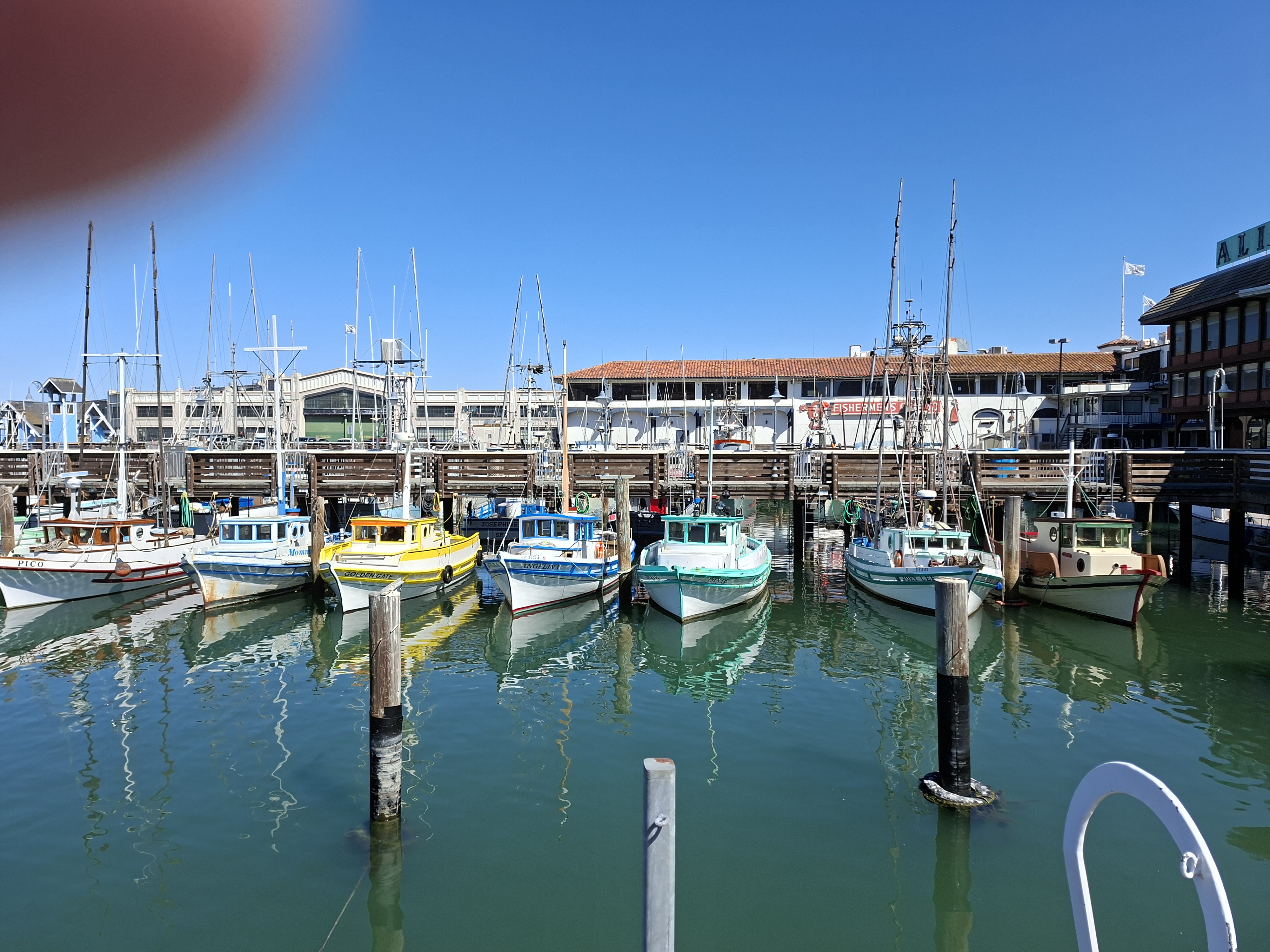
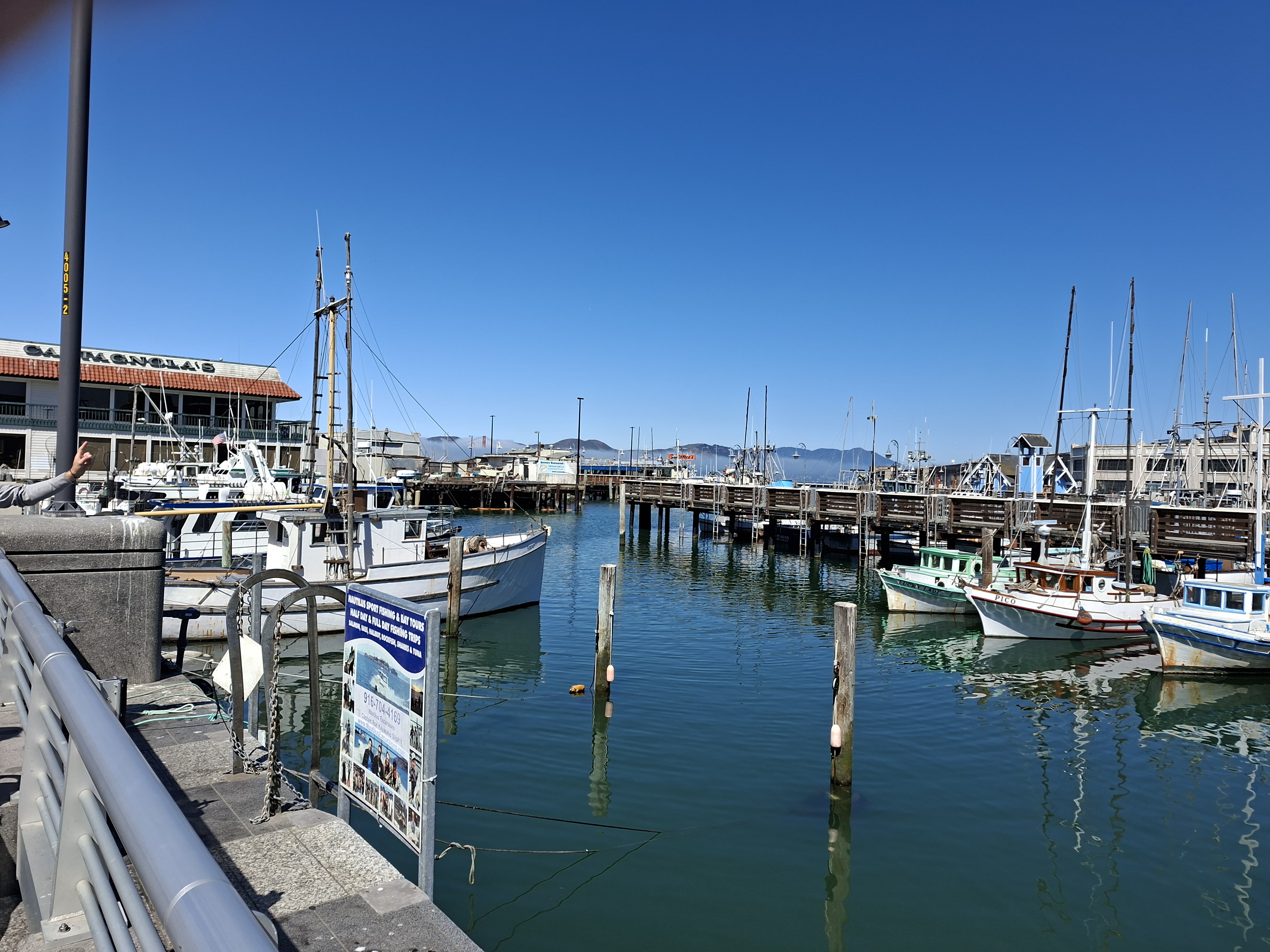

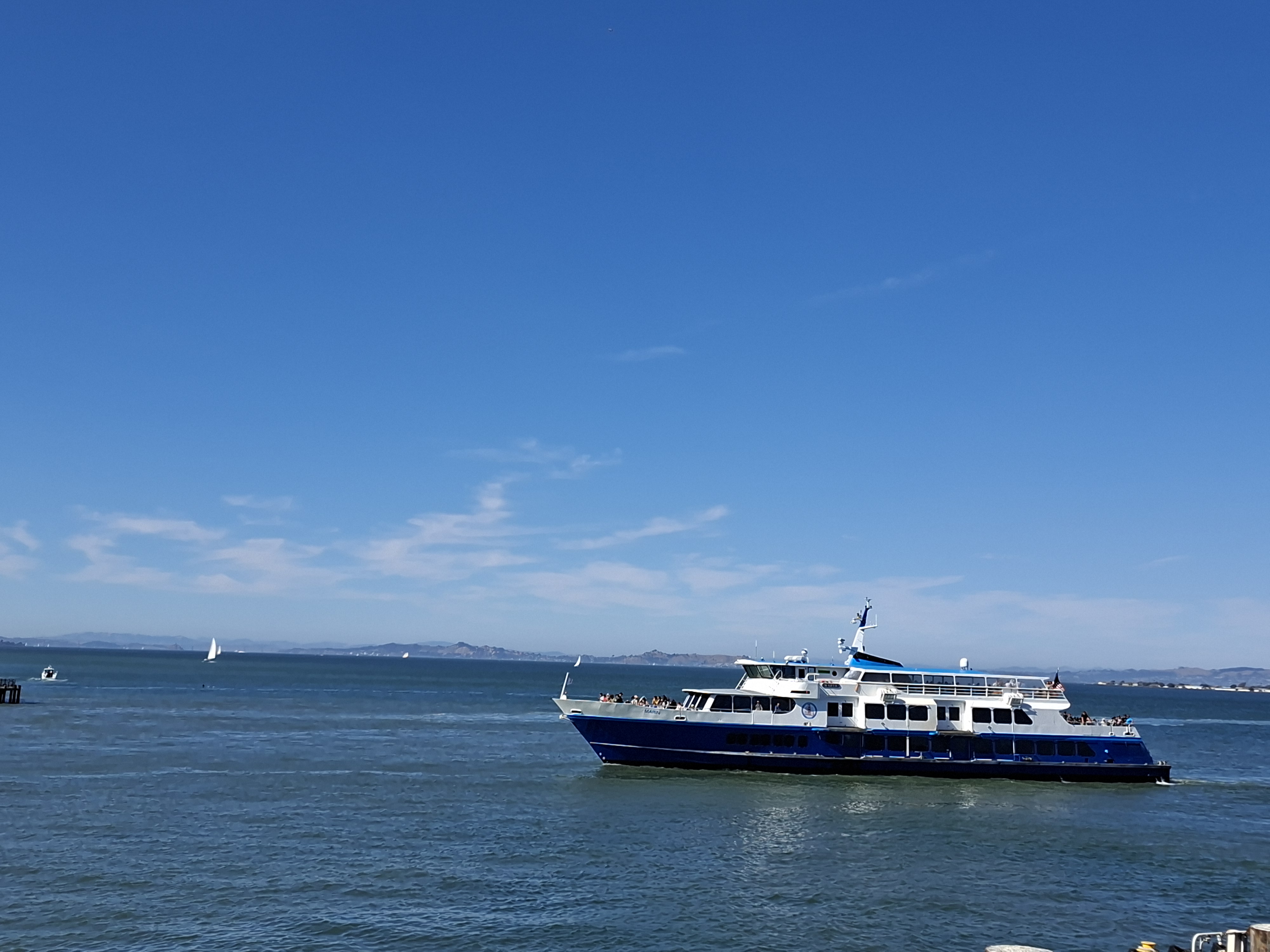
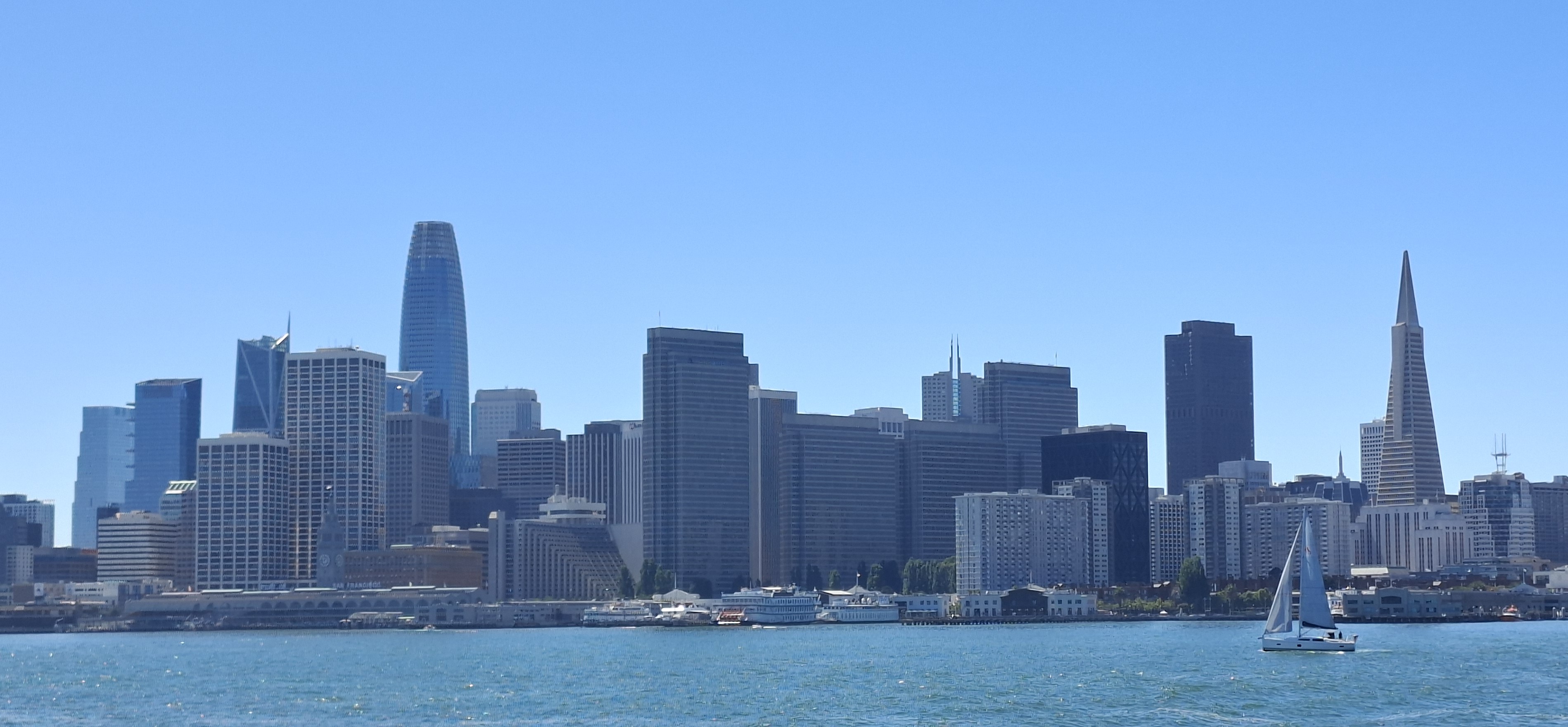
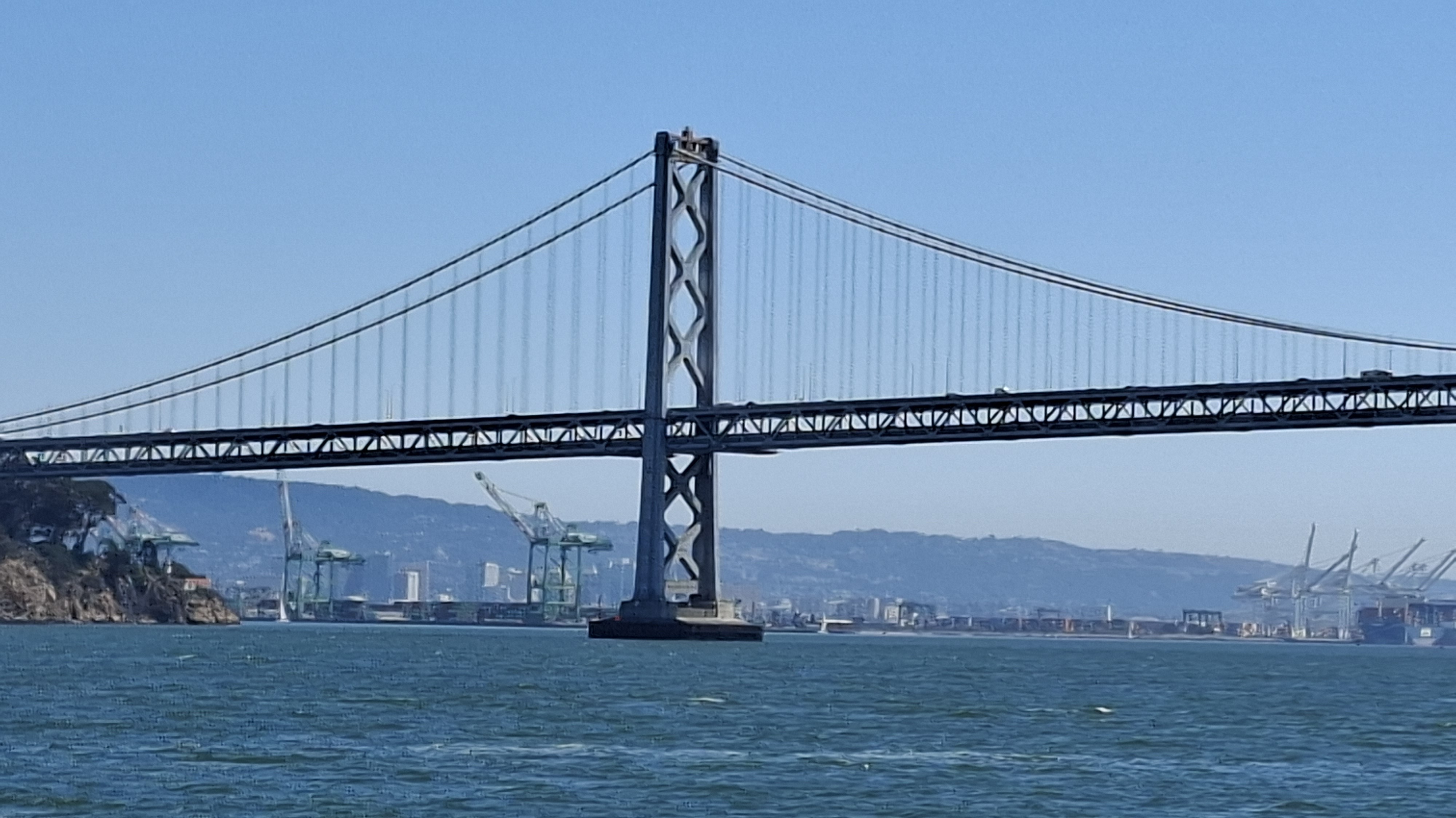
I was so glad I booked this cruise, one of the highlights of my trip. We sailed on calm waters to the Golden Gate bridge, then turned back and circled Alcatraz, slowing down for folks to take photos. Then we went on to the Oakland Bridge (also called the Bay Bridge), where the ship turned around again and returned to port. I enjoyed the splendid views of the city-scape and yacht docks along the way, and a huge Carnival cruise ship at port.




A group of Guatelmalan migrants whose Jefe gave them Labor Day off work.
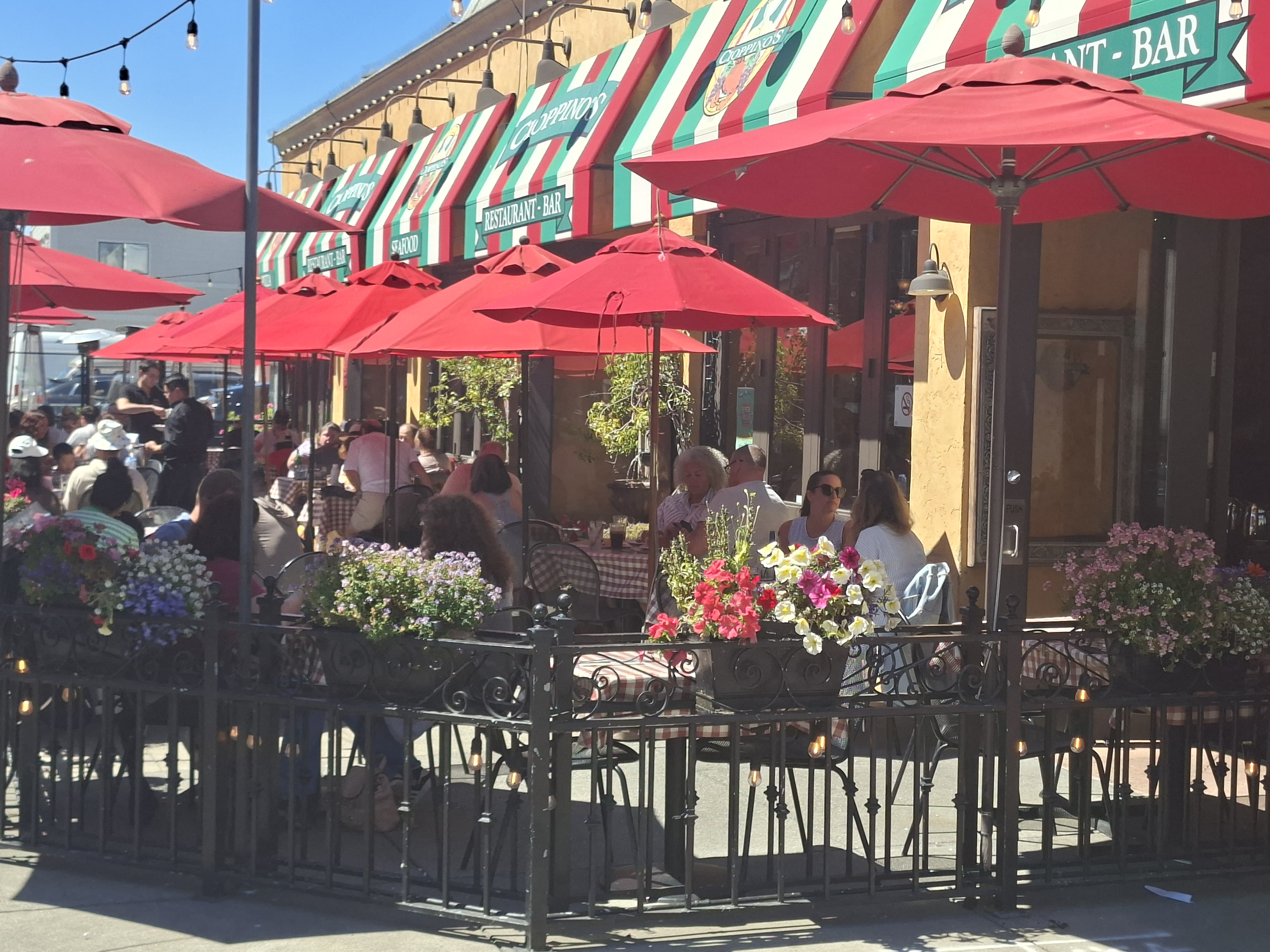
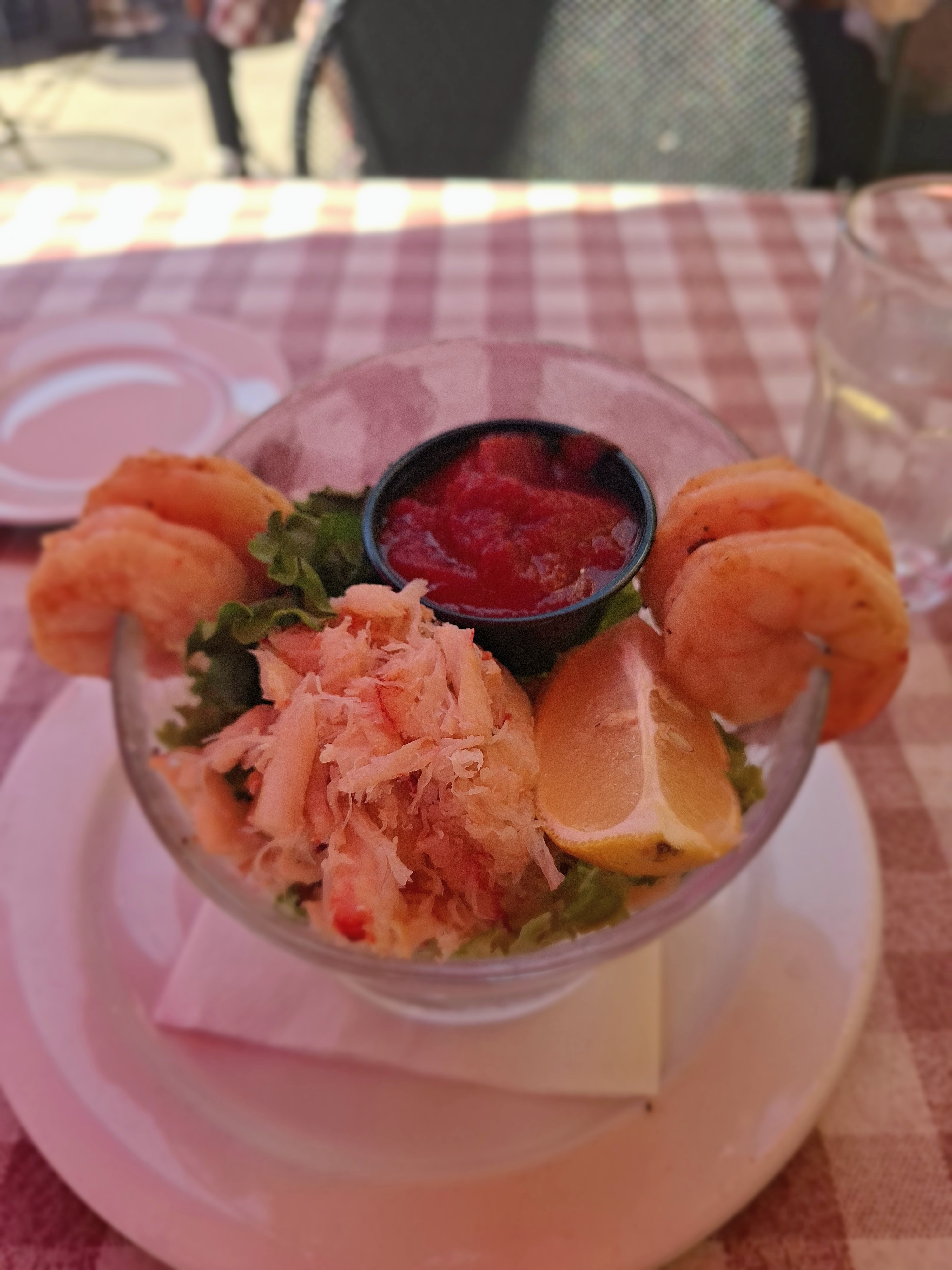
The cruise ended in time for me to walk back to an inviting restaurant I had passed earlier, Cioppinos (named for the delicious Italian seafood stew). There was plenty of shade outdoors and I had a great prawn and crab cocktail and steamed clams, not too much to spoil the large welcome dinner I expected in the evening. I got back to the hotel with enough time to post photos for family and friends on Facebook and fit in a siesta and some web news before freshening up to meet the group.
The Tauck welcome dinner for our 21 guests in a private salon off the Pied Piper bar started with a selection of beverages and a welcome talk by our Tour Director Trish Becker who lived for many years in the Bay area before moving to New Mexico. The dinner was as fine as expected with salad followed by seabass and fillet of beef, a chocolate mousse with fresh raspberries, and fine wines. This was the only time guests wore name tags so I began learning their names.
on the wharf.
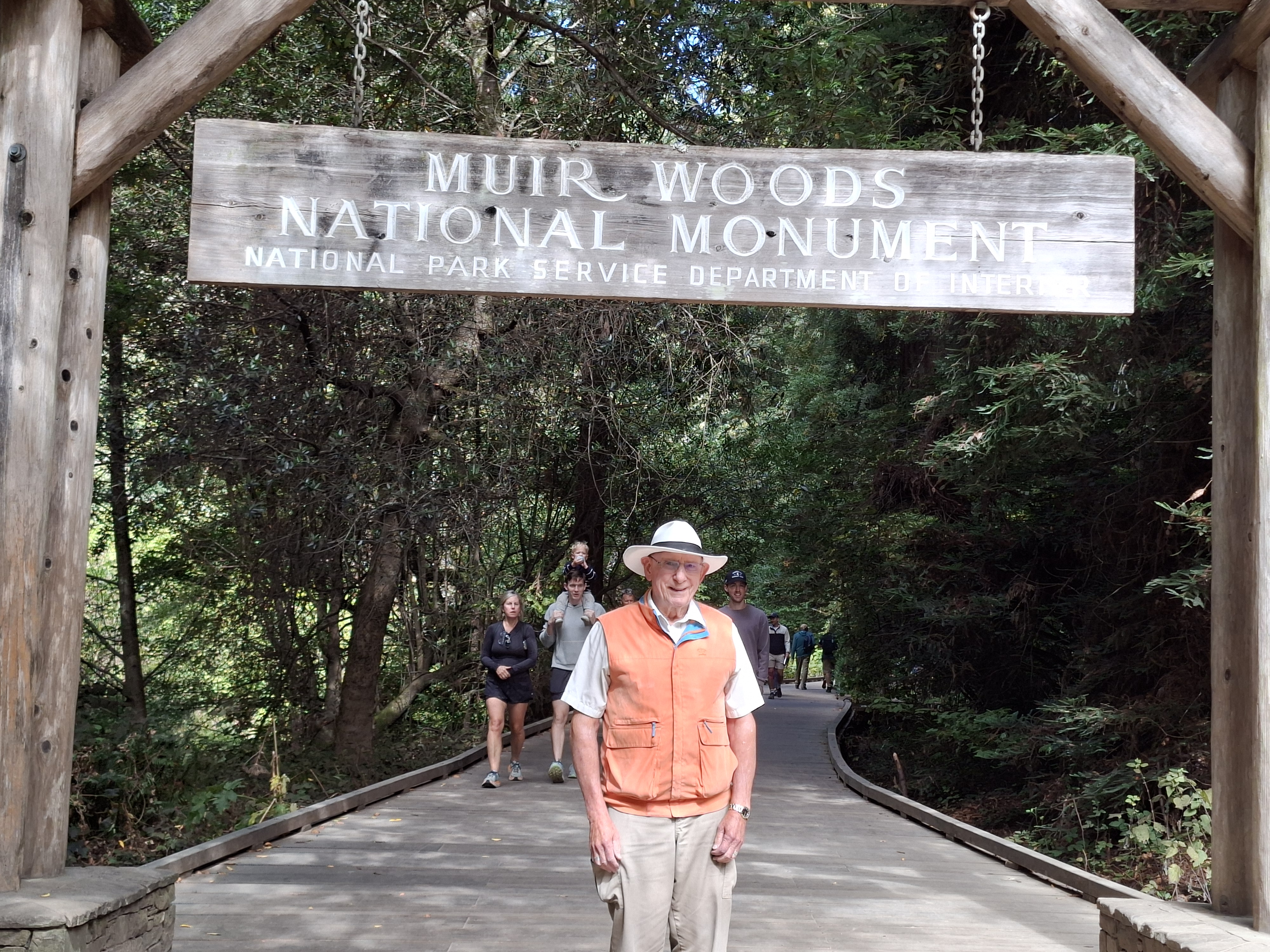
MUIR WOODS NATIONAL MONUMENT
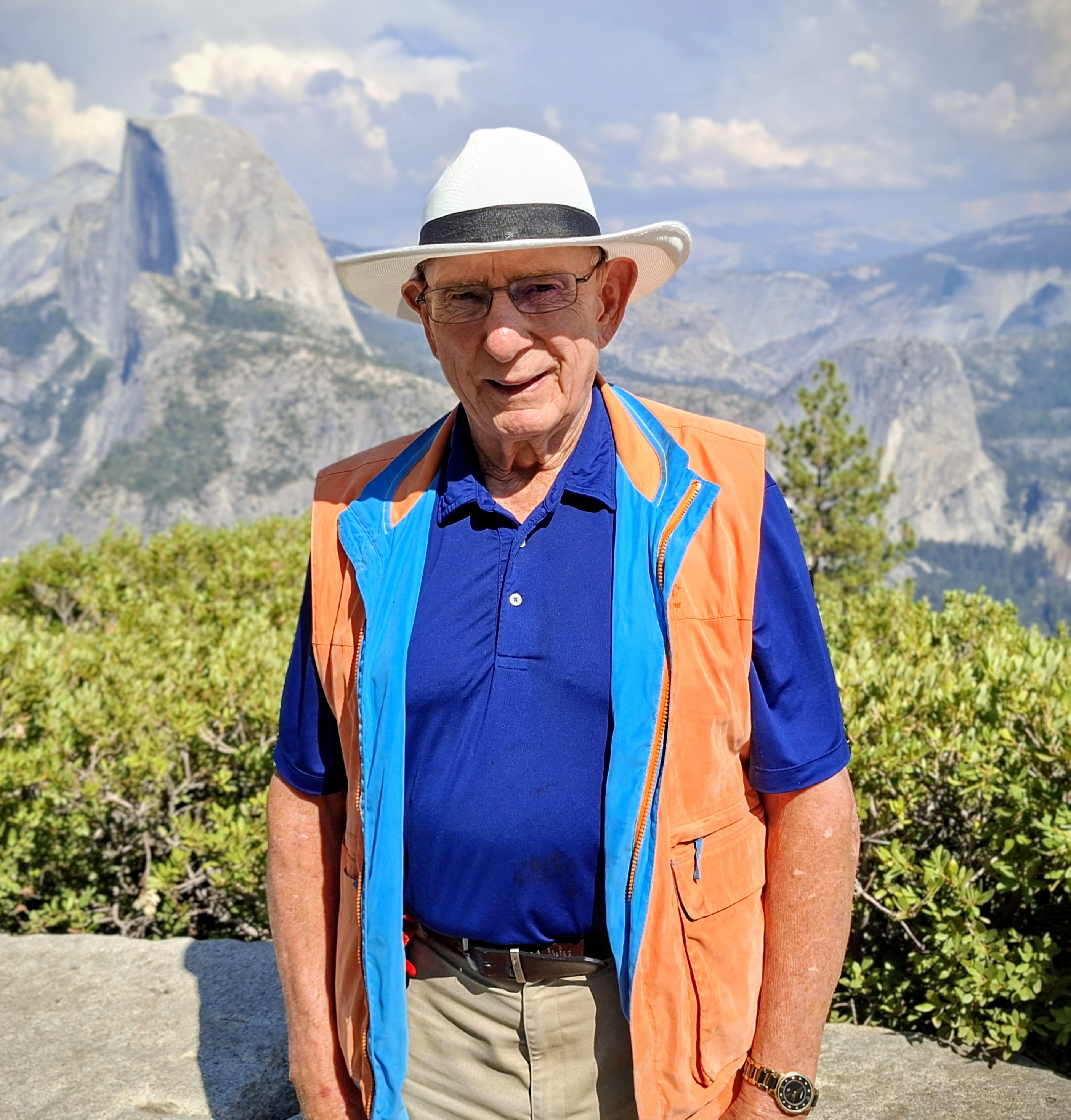
I had a modest breakfast the next morning, foregoing the many temptations of the buffet, hurrying to take care of personal issues before our 8 am departure for Muir Woods.. Trish pointed out landmarks as the coach passed through the financial and theater districts, China Town, Little Italy, and the Presidio, before crossing over the fog-covered Golden Gate Bridge. The long-term weather forecast had accurately predicted sun and warmth the whole week, but there was a chilly wind off the bay and I should have worn a warm jacket instead of the orange vest the other guests must have gotten tired of looking at.
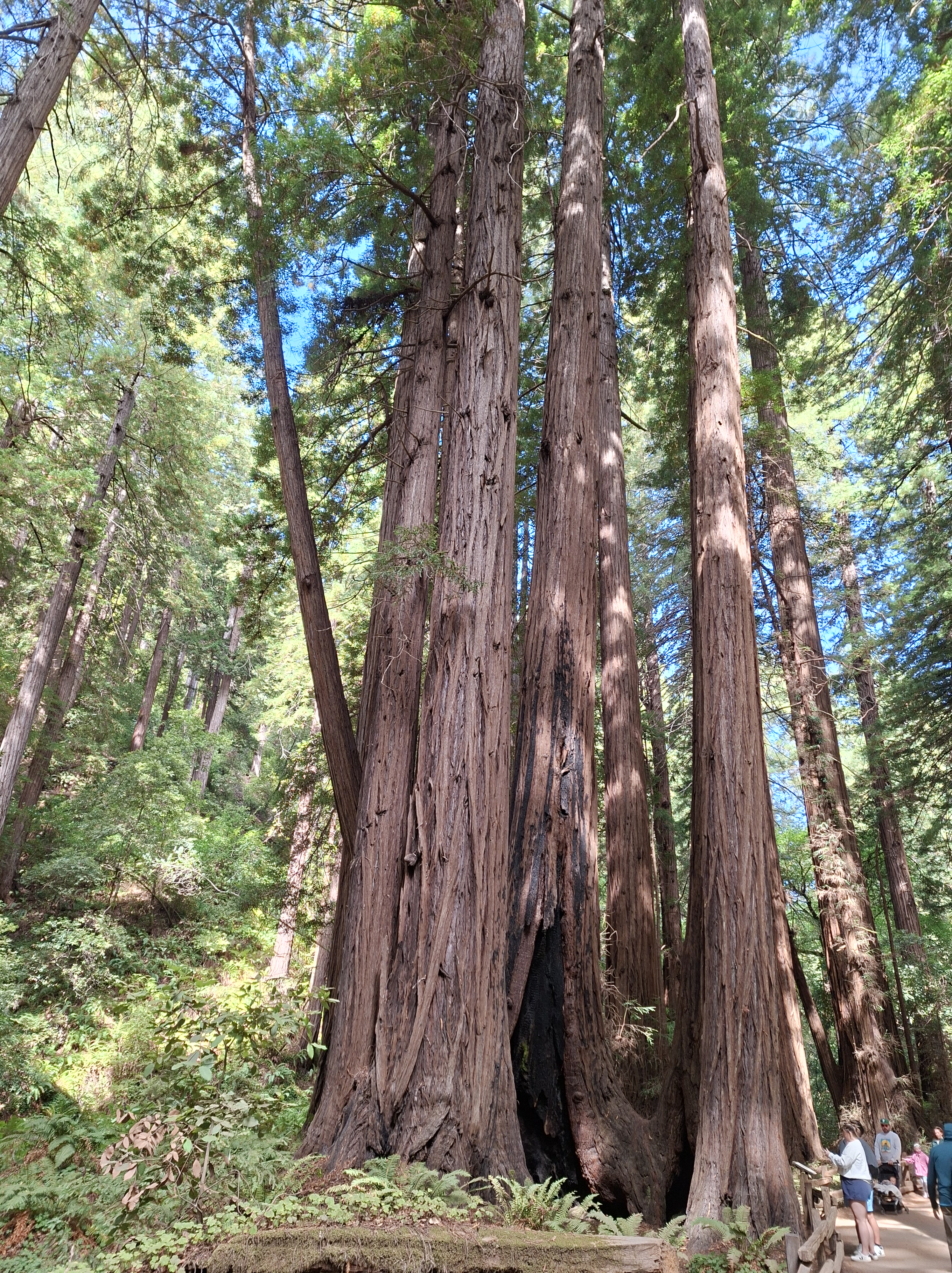
The naming of the woods as a national monument is entwined in significant moments of U.S. history during the time of President Theodore Roosevelt, whose legacy is that of conservationist president. He inherited assassinated President William McKinley’s Chief of Forestry Gifford Pinchot who encouraged his conservation efforts. When fear that encroaching development would harm the redwood forests in the bay area, local politician William Kent offered to donate 298 acres of forest to the U.S. government. Pinchot advised his boss to accept and, using a recently passed Antiquities Act, in 1908 Roosevelt created Muir Woods as the first National Monument. More donations added to the protected forest which now boasts 554 acres. The redwoods, some of which are 1000 years old, are the tallest living things on earth, the tallest reportedly 379 feet. The average age of the trees is 600 to 800 years, but some are as old as 1200 years.
William Kent urged that the forest be named for John Muir, a prominent naturalist writer and the foremost tree hugger in the country. Muir Woods is now one of the most important tourist attractions in the Bay area, with about a million visitors a year.
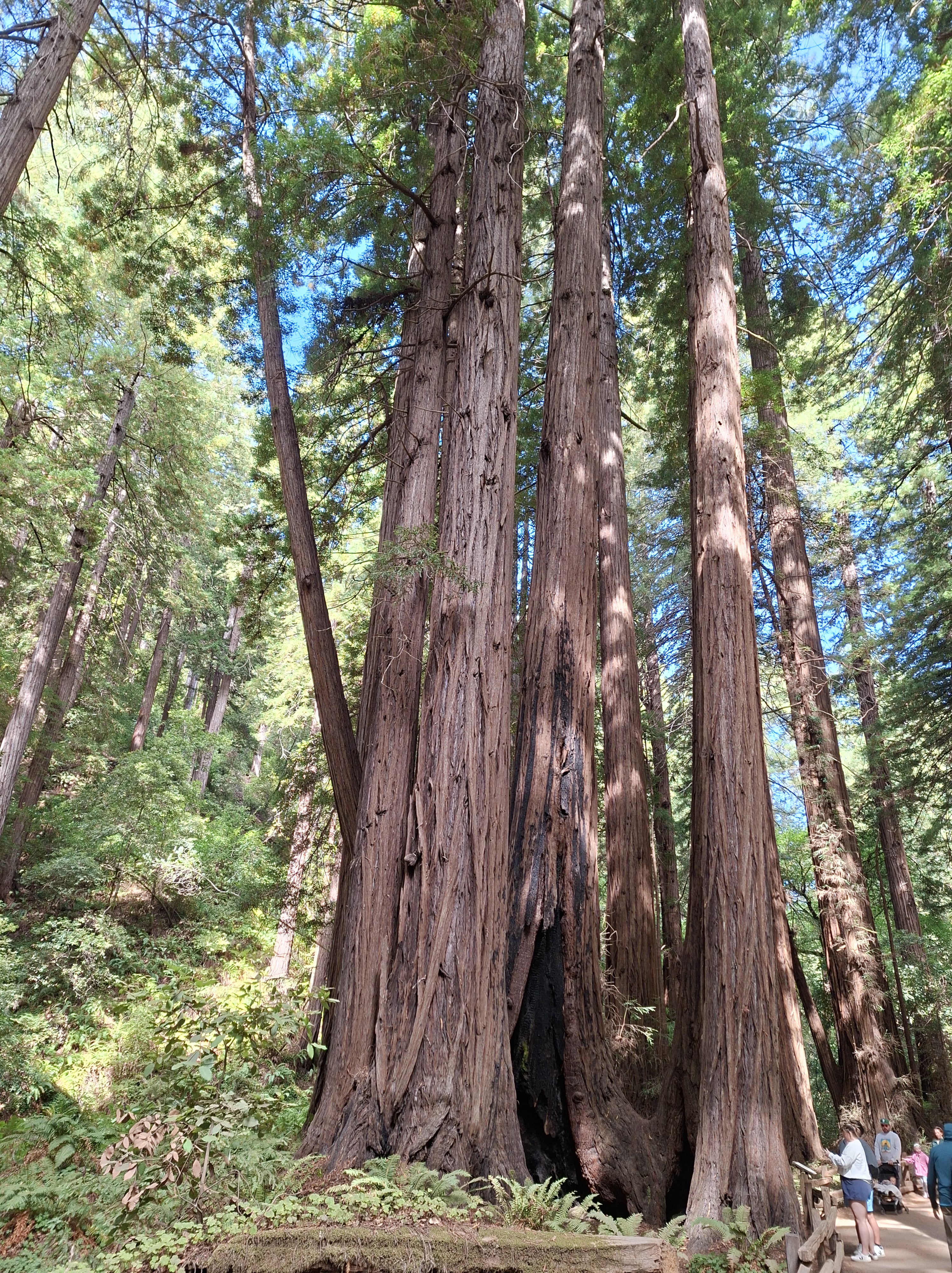

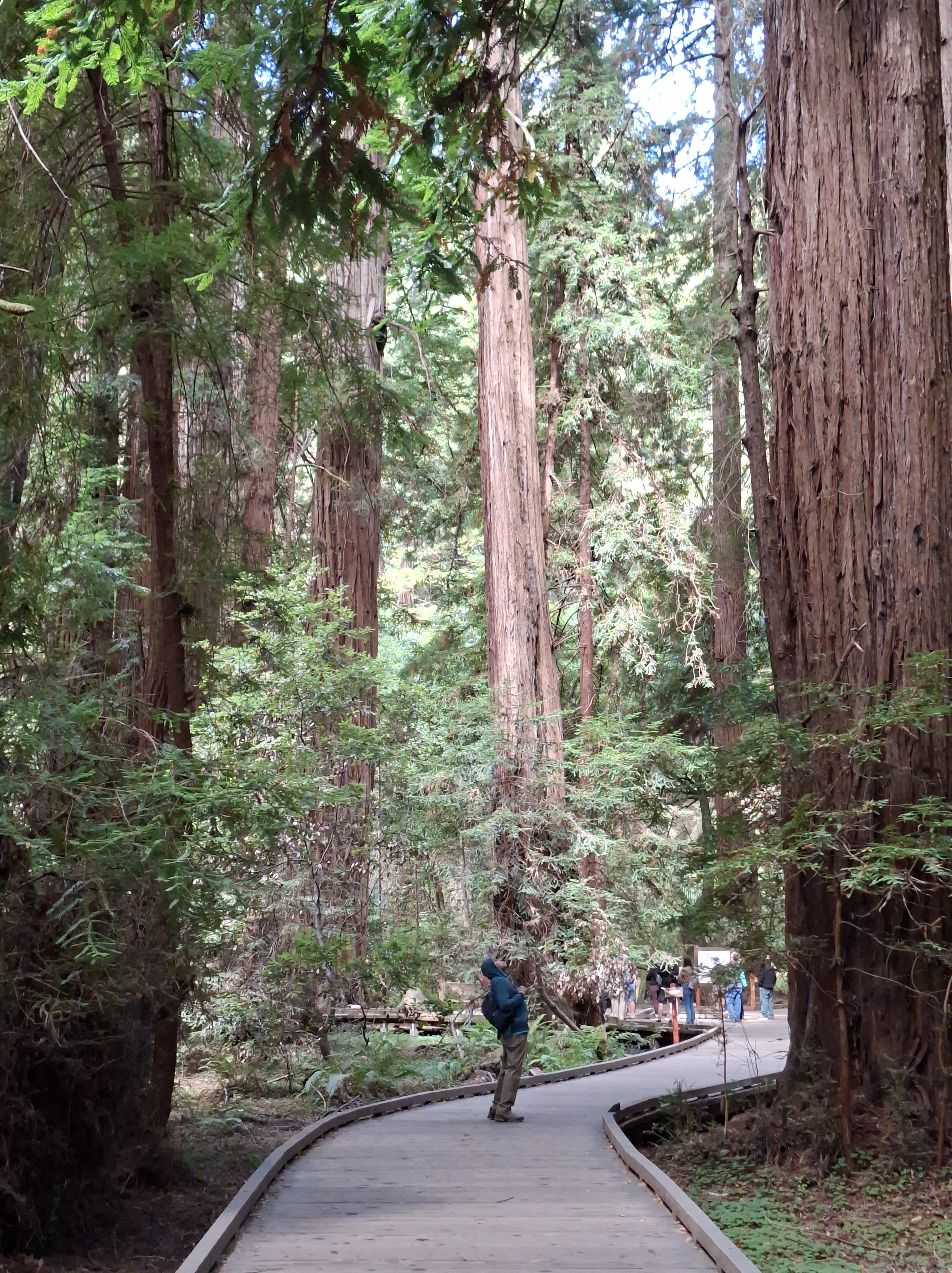
When Roosevelt was succeeded by William Howard Taft, naturalists accused his Secretary of Interior Richard Ballinger of betraying environmental values. When Ballinger fired Pinchot, Roosevelt broke with Taft and ran against him for president in 1912 as the candidate of the Progressive Party. He split the Republican vote resulting in the election of Woodrow Wilson, the first Democratic president since 1897. More history than you asked for, but you can always scroll down when my former profession leads me to be too wordy. (Sources: the National Park Service brochure on Muir Woods, Wikpedia, and my memory as a history teacher).
After a few hours strolling the planked trails in the forest, the coach took us to a fish-fry lunch in the Trident restaurant in Sausalito. After lunch, Trish led the group to the dock and provided tickets to return to San Francisco by ferry, to be picked up by the coach on the opposite shore. After a long ride on the water the day before, I chose to ride with driver Don Davison back to the hotel so I could do some shopping and work on photos and notes, read web news, and prepare luggage for an early departure the next day. Supper was on our own and I walked to the nearby Grove restaurant for a chicken pot pie and a beer.
SEQUOIA NATIONAL PARK
After a grand buffet breakfast in the Garden Court of the Palace, on September 3 we set off at 8:30 am for Sequoia National Park. Guest names are posted over the seats and rotated daily, although not as systematically as on previous tours I had taken. With only 21 guests in the group, I had learned all their names by mid-day. This time we left the city by the Bay Bridge into Oakland where we saw thousands of cars commuting into the city. We had a rest stop after 90 minutes, then arrived in Fresno two and a half hours later for lunch at the Lazy Dog restaurant. We had a choice of soups and sandwiches and I chose chicken tortilla soup and a turkey club.
It was a pleasant ride through California’s Central Valley, with endless orchards of almond and pistachio trees, citrus, grapes, and fields of corn, soy, and tomatoes, the source of about 50 percent of all U.S. produce. About 4 pm, we arrived in Sequoia on the western slope of the Sierra Nevada with over 404 thousand acres. It was declared a national park in 1890, along with King’s Canyon, a contiguous park of almost equal size not in our program. The NPS brochure says that 95 percent of the two parks is designated wilderness, inaccessible by vehicle. Elevations in the two parks range from 1360 to 14,494 feet.

Our base in the park was the Wuksachi Lodge, the Park Service’s signature hotel concession at Sequoia. The lodge is nestled in the forest at 7000 feet, with lovely views of the surrounding granite peaks. The lodge has a restaurant and gift shop, but the rooms are in three buildings about a 50 yard walk away. We listened to a brief talk about the lodge and park, then returned to the coach which dropped us off nearer the rooms since many of us had carryon bags. Trish had placed the room keys on our seats. As usual, our checked luggage was waiting inside the room. I was pleased to find a spacious suite with a king bed, a comfortable couch, two chairs, a work desk, closet, and safe deposit box. We had been warned that the internet signal might be iffy in the parks, but it was faster than at the Palace. We walked back to the lodge for a 6:30 small buffet dinner including delicious trout.
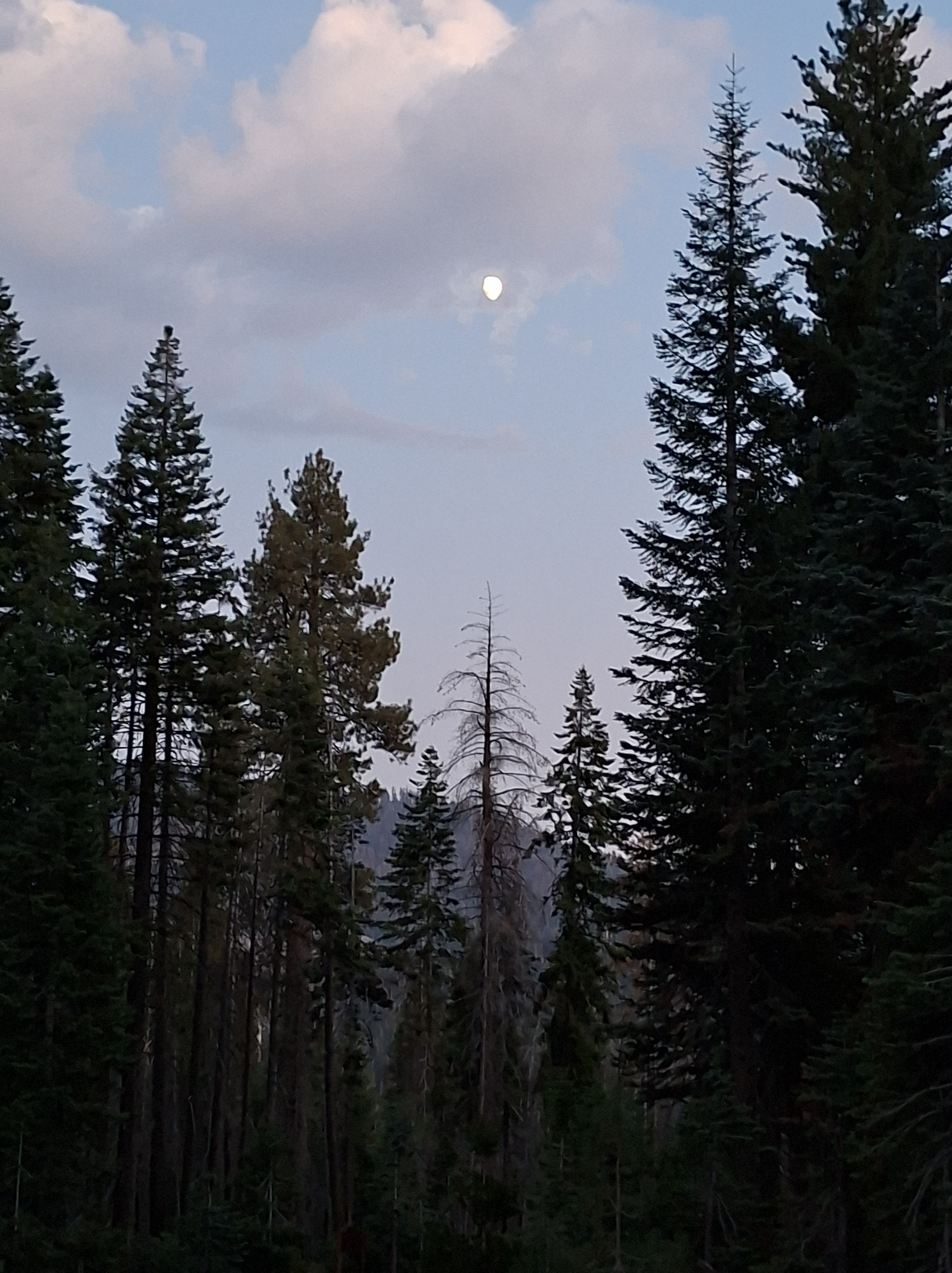
The program included an 8:30 walk to a dark area of the park for star gazing with a local guide. I opted out to edit photos, record notes, and read online newspapers. Guests told me that the moon was a bit too bright for good star gazing but the guide’s chat was enjoyable.

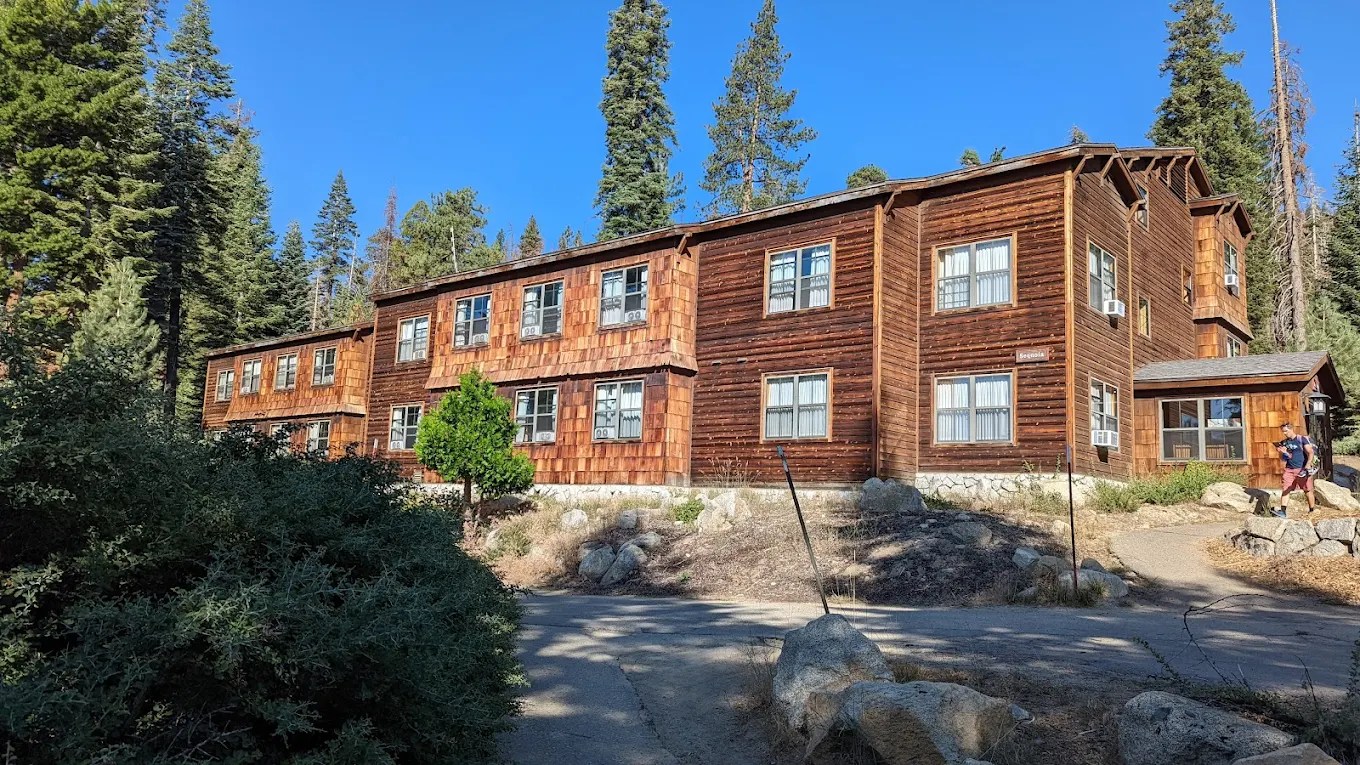
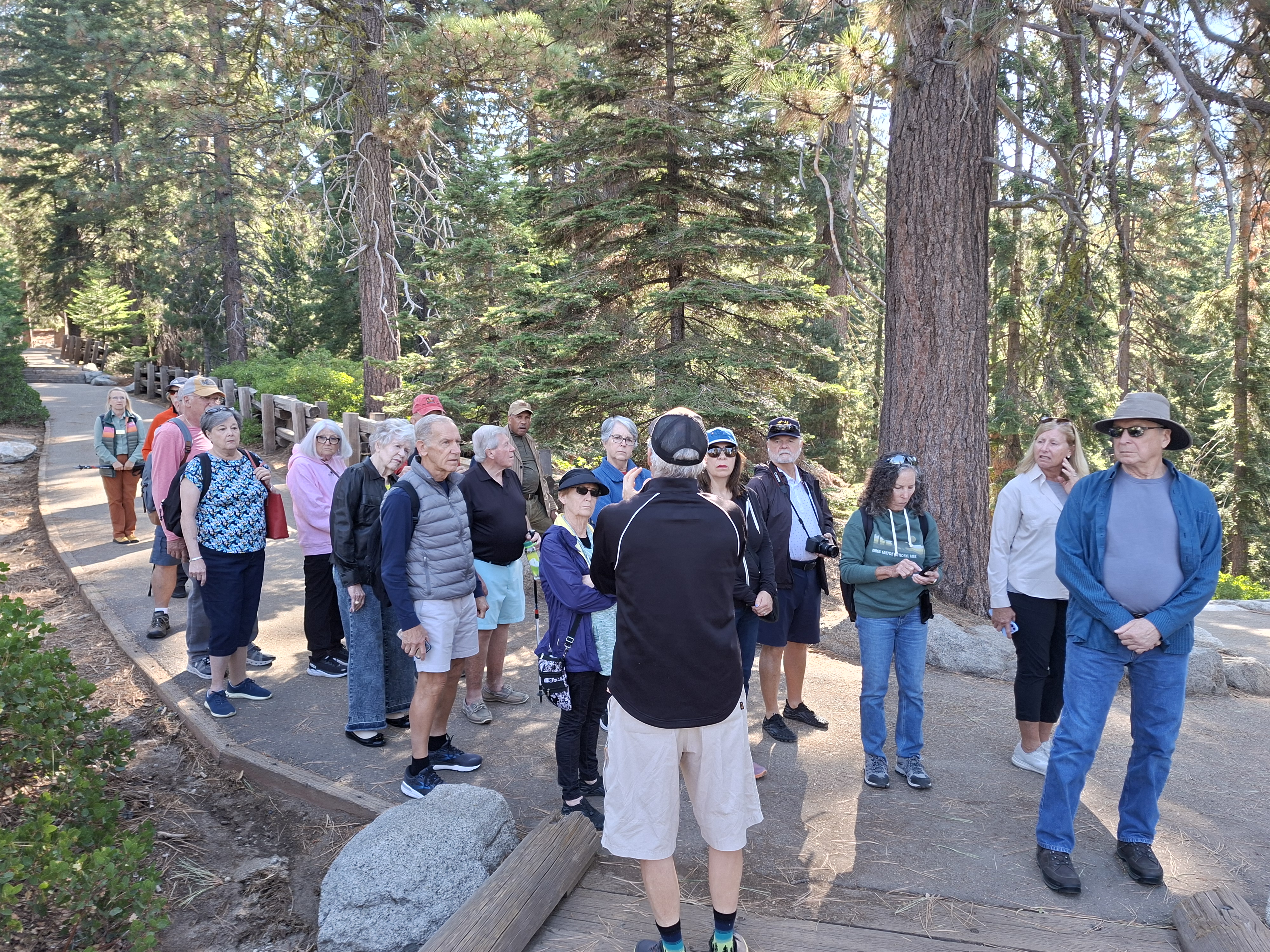
Breakfast on Thursday September 4 was either buffet or a la carte. I got there ten minutes after opening and the food on the buffet was no longer hot and some dishes had not been refilled. The coach didn’t leave until 8:30 so there was time for the web. At our first stop, we divided into two groups, both with superb guides. I went with Mitch, a former chemistry prof at UC Davis who shared his knowledge of the Giant Sequoias, ponderosa pines, Douglas firs, cedars, and other vegetation. I was startled to see in the distance two large bears running away from a park employee whose job was to keep bears away from the trails. Alas, there was no time for a photo. The bears in the park are not aggressive like those in Yellowstone, and no one carries bear spray.
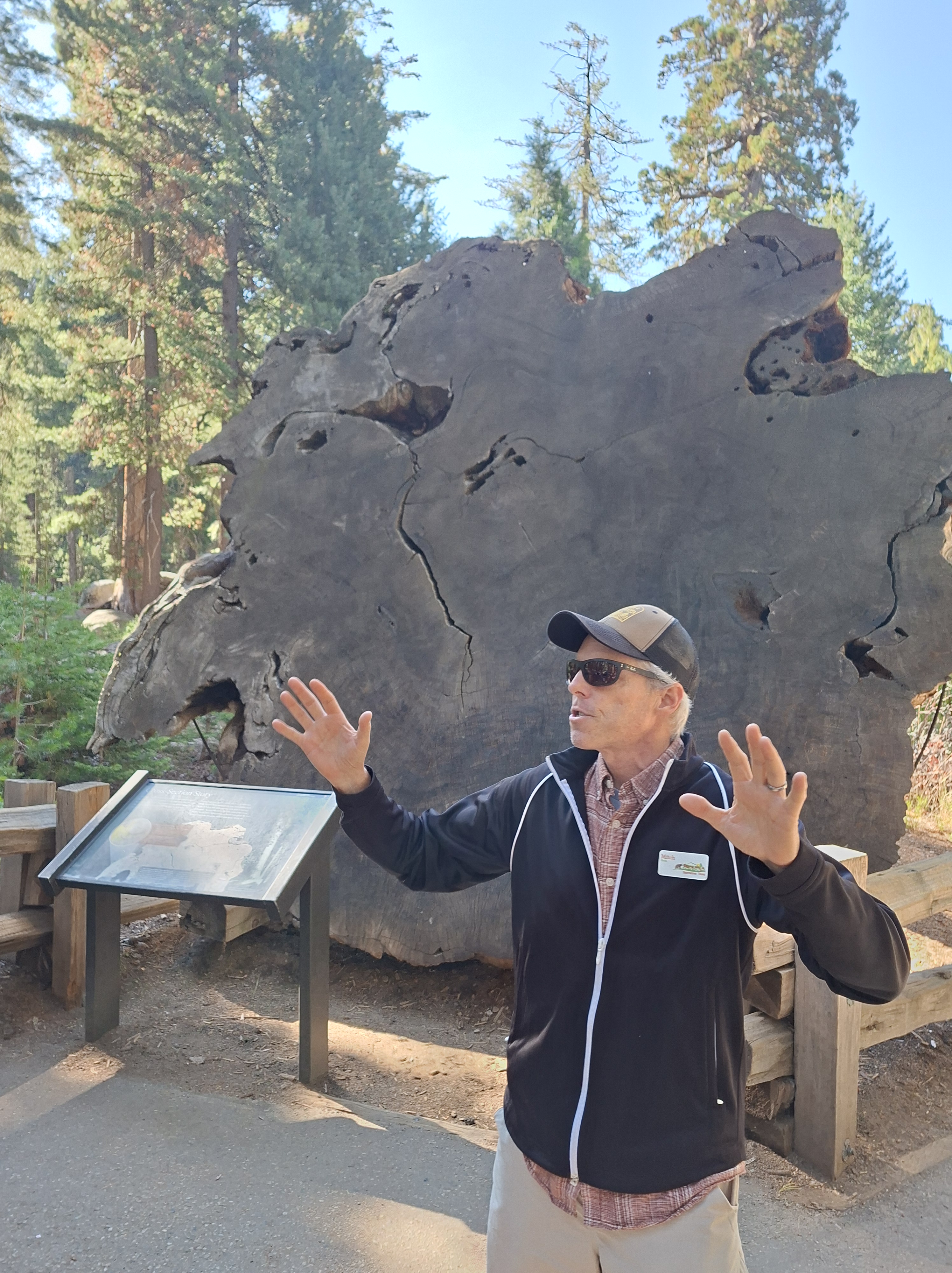

After an hour’s walk, we returned to the start of the trail where we split into two vans. I chose the one driven by Paul who grew up in the area, married a woman from Wales, and traveled widely in the UK and in Mexico. He and Mitch made a great team.The vans stopped where the trail begins into the Great Forest, so called because of the large number of Giant Sequoias there including 5 of the 10 largest trees in the world and the largest of all, the General Sherman tree. The forest, one of 36 Sequoia groves in the park, covers 1880 acres with 40 miles of hiking trails. We walked for an hour through this amazing forest that words cannot describe adequately.


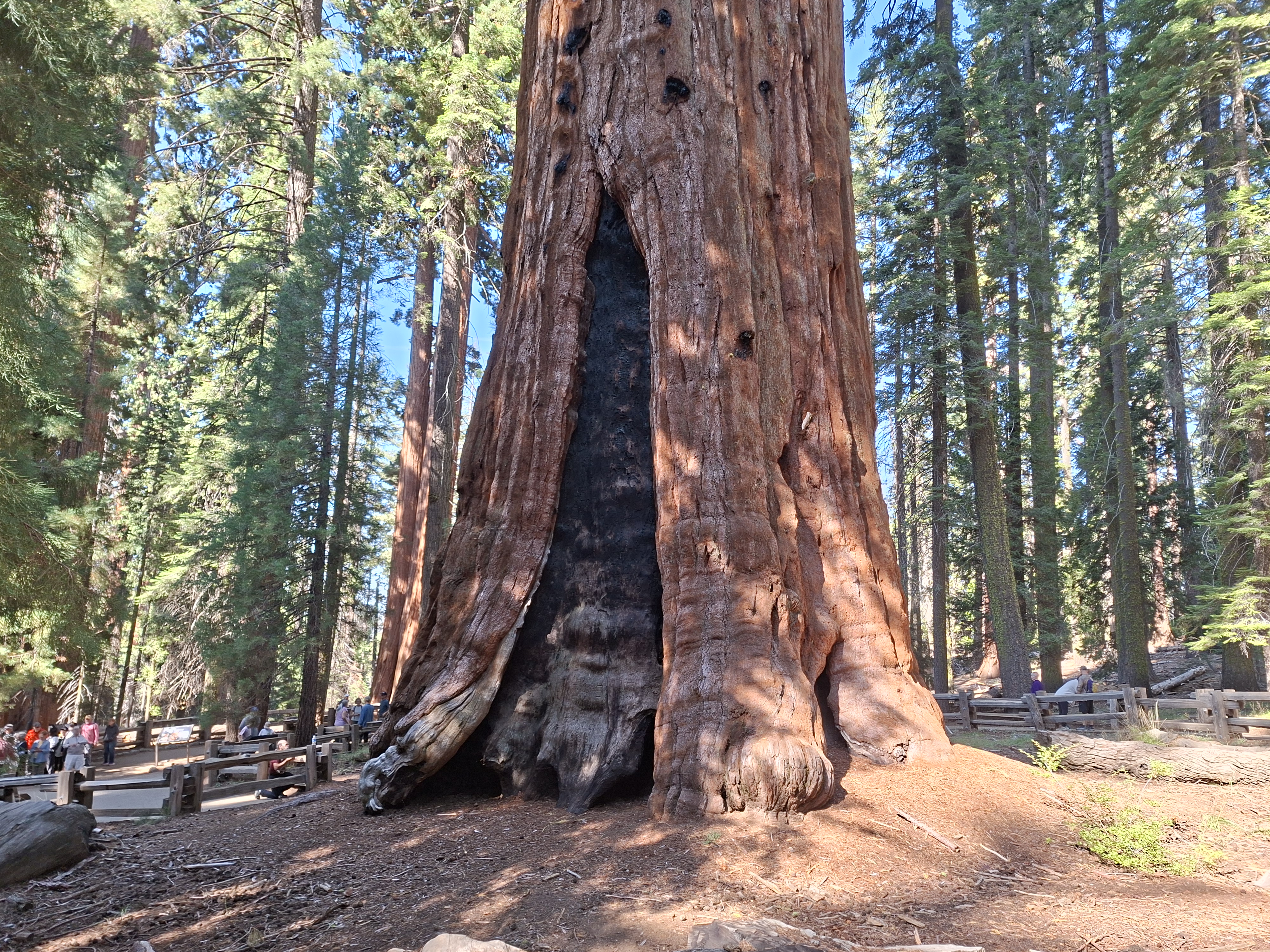
The General Sherman Tree (many are named for generals since the military were the first guardians of the park) is not the tallest but it is the largest living tree in the world by volume; its diameter at the base is 36.5 feet and it reaches a height of 275 feet. During the fire that raged through both parks in 2021, many trees were lost but the General Sherman was saved by an aluminum protective cover at the base. A few days after we left Sequoia, another major fire was raging in the park but firefighters saved the Giant Forest and General Sherman (“Ancient California sequoia trees appear to have survived wildfire,” Washington Post, September 9, 2025).


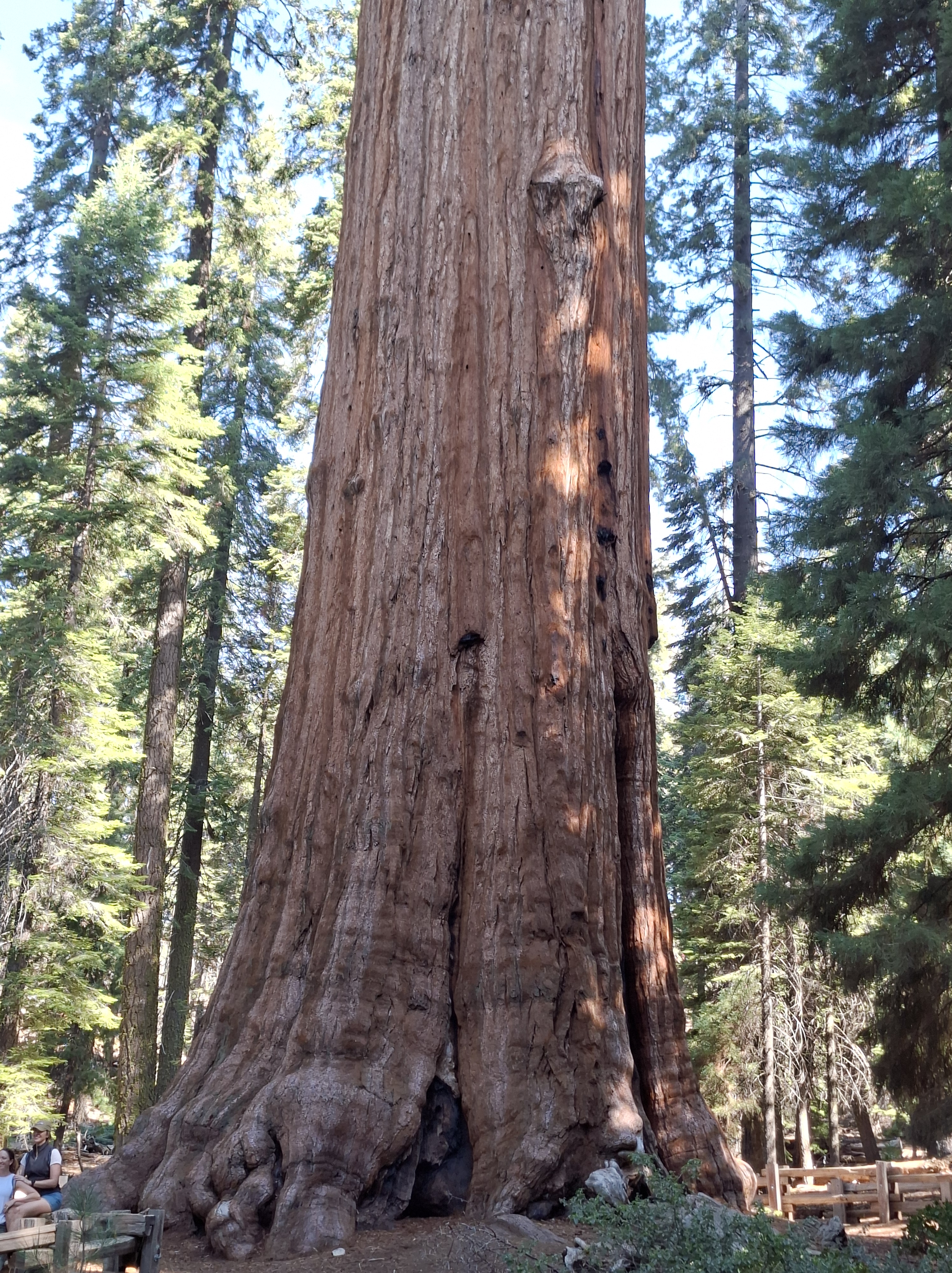
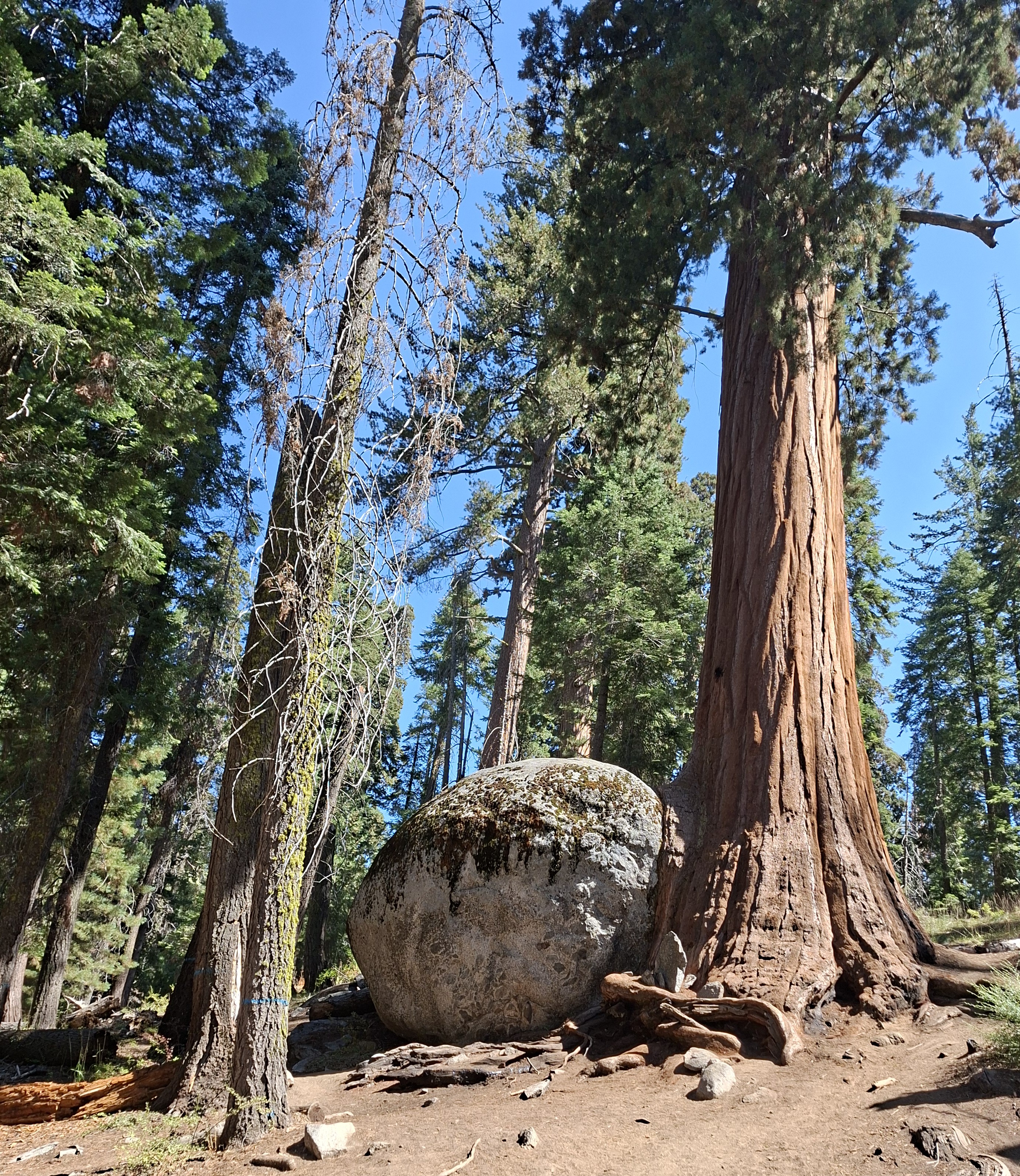


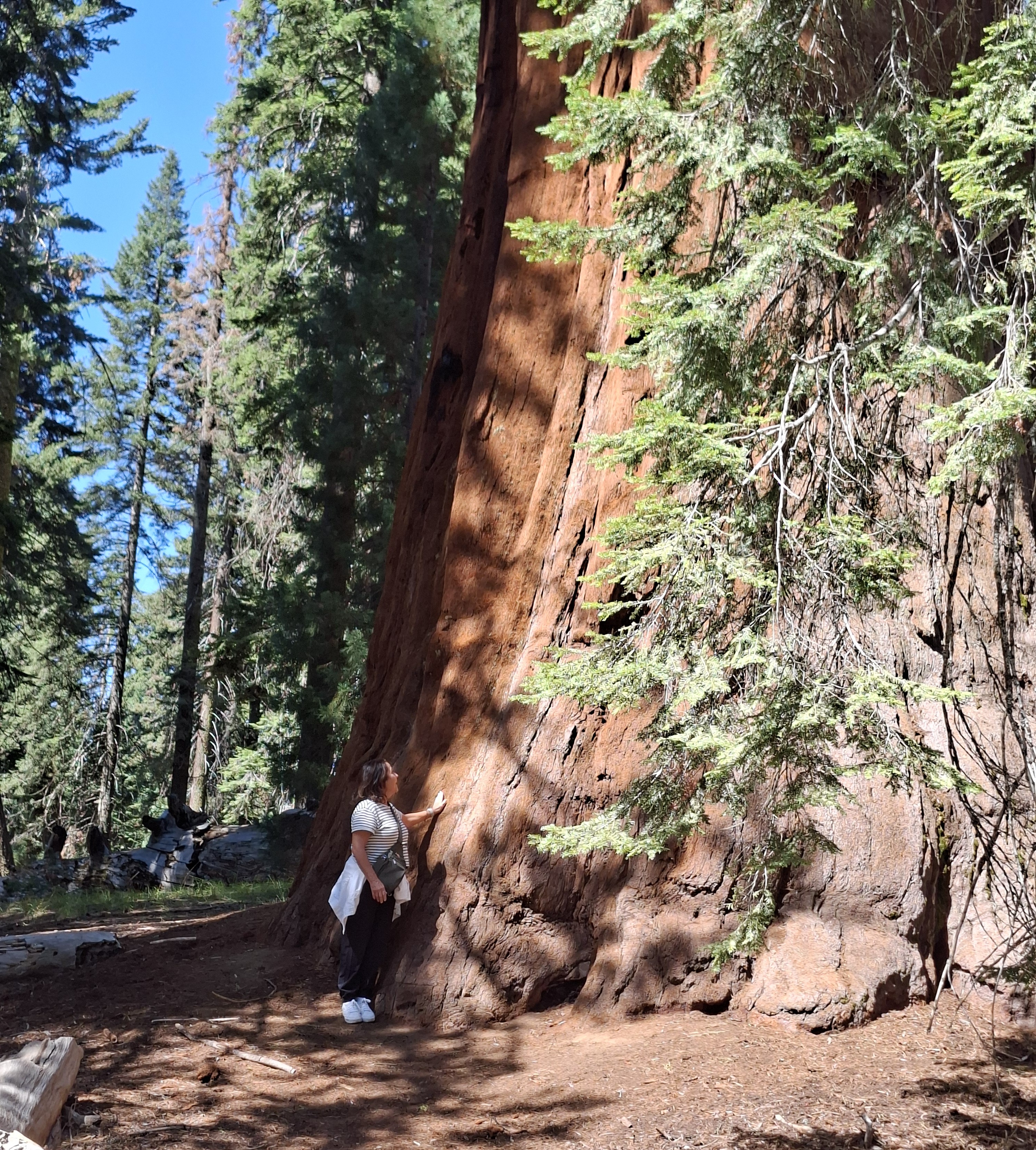
We were back at the lodge for a sandwich buffet by 12:15. At 1:30, most guests took the optional drive to Moro Rock, a 300-foot granite dome offering the best views over the park if you have the stamina for scores of steep steps with a railing only part way. Due to acrophobia and 83-year-old legs, I opted out.

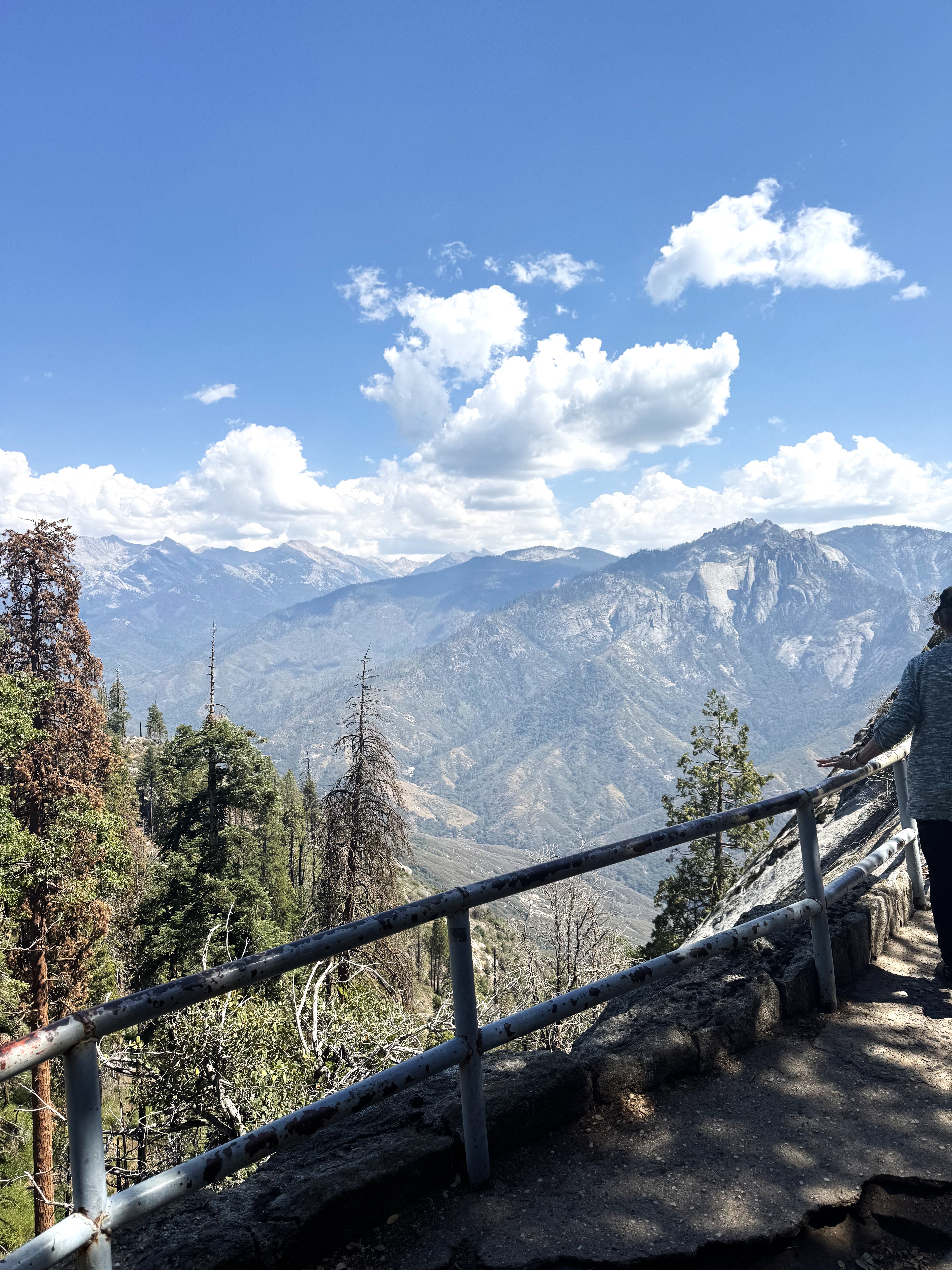
I spent the rest of the afternoon editing photos and researching information for the blog. Our supper times were spread out in the evening since it was a la carte and easier for the waitstaff if we didn’t all come in at the same time. I sat with Trish and driver Don and learned some about their interesting lives. Back in the room at 8, I was online only briefly, then relaxed with a novel and early bed time due to another early departure the next day.
This was such a delightful adventure, it was hard to believe that Thursday September 5 was already the fifth day of the tour. After another big breakfast, porters had picked up the luggage we left inside our room, the coach was loaded, and we were ready to leave at 8 am. It took almost an hour to get out of the park but the forested landscape was beautiful. We made a stop at a Mexican farm market where some guests bought fruit, then another break at a large rest stop in Oakhurst with a huge grocery store. Our lunch-stop at 12:30 was at the beautiful Tenaya Lodge on the outskirts of Yosemite park. The hotel looked like a great place to stay if there was no room in the park where hotels can sell out a year in advance.
YOSEMITE NATIONAL PARK
Yosemite National Park in the central Sierra Nevada is as large as the state of Rhode Island. It covers 1,187 square miles in four counties, 95 percent dedicated wilderness. The park’s elevation ranges from 2127 to 13,114 feet. In 1864, Abraham Lincoln declared it federal protected land. In 1890, John Muir was part of a lobbying group that led to Congress declaring it a national park. It gets about four million visitors a year, five million in a few recent years. (Source: Wikipedia and the NPS brochure)
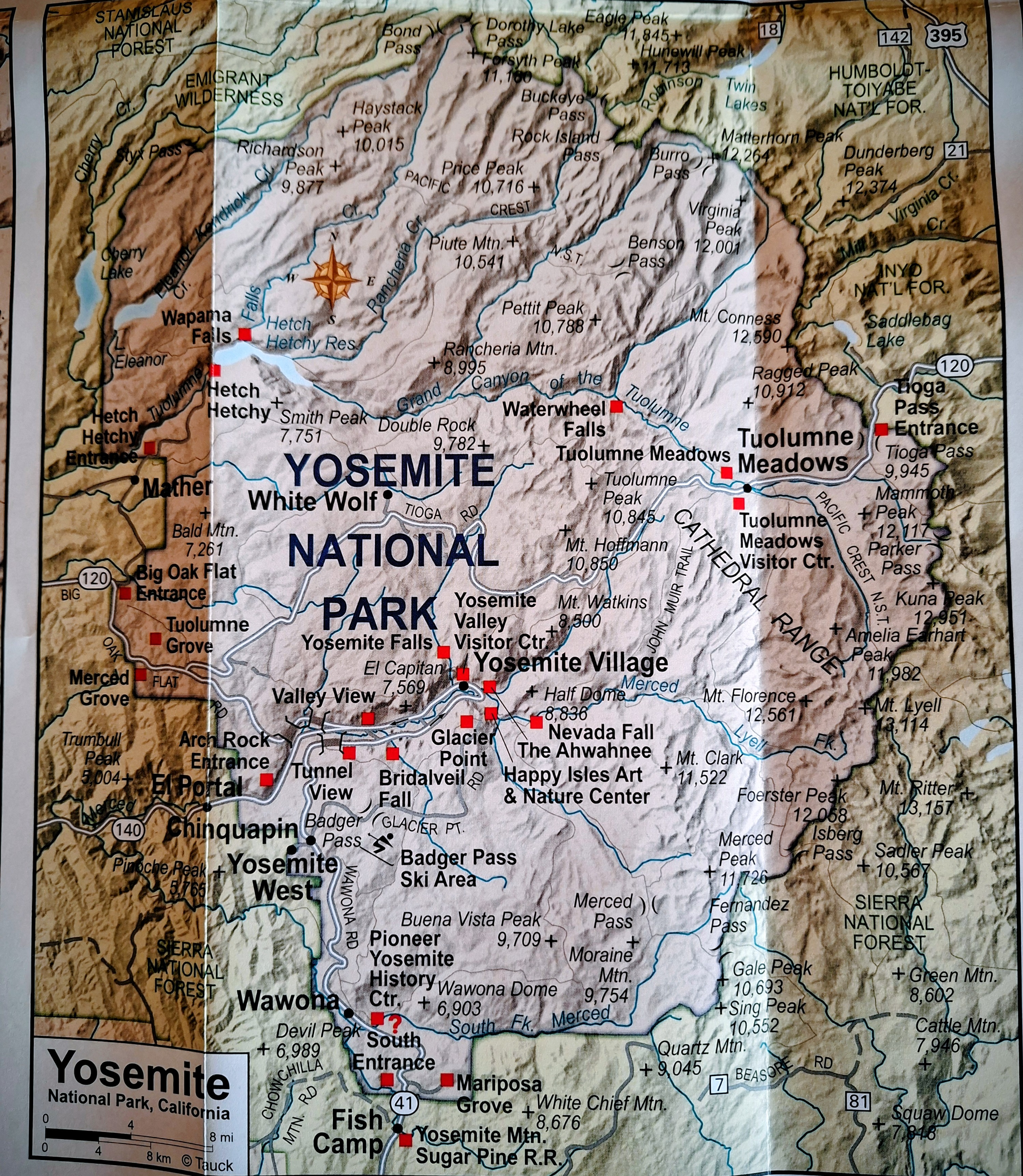
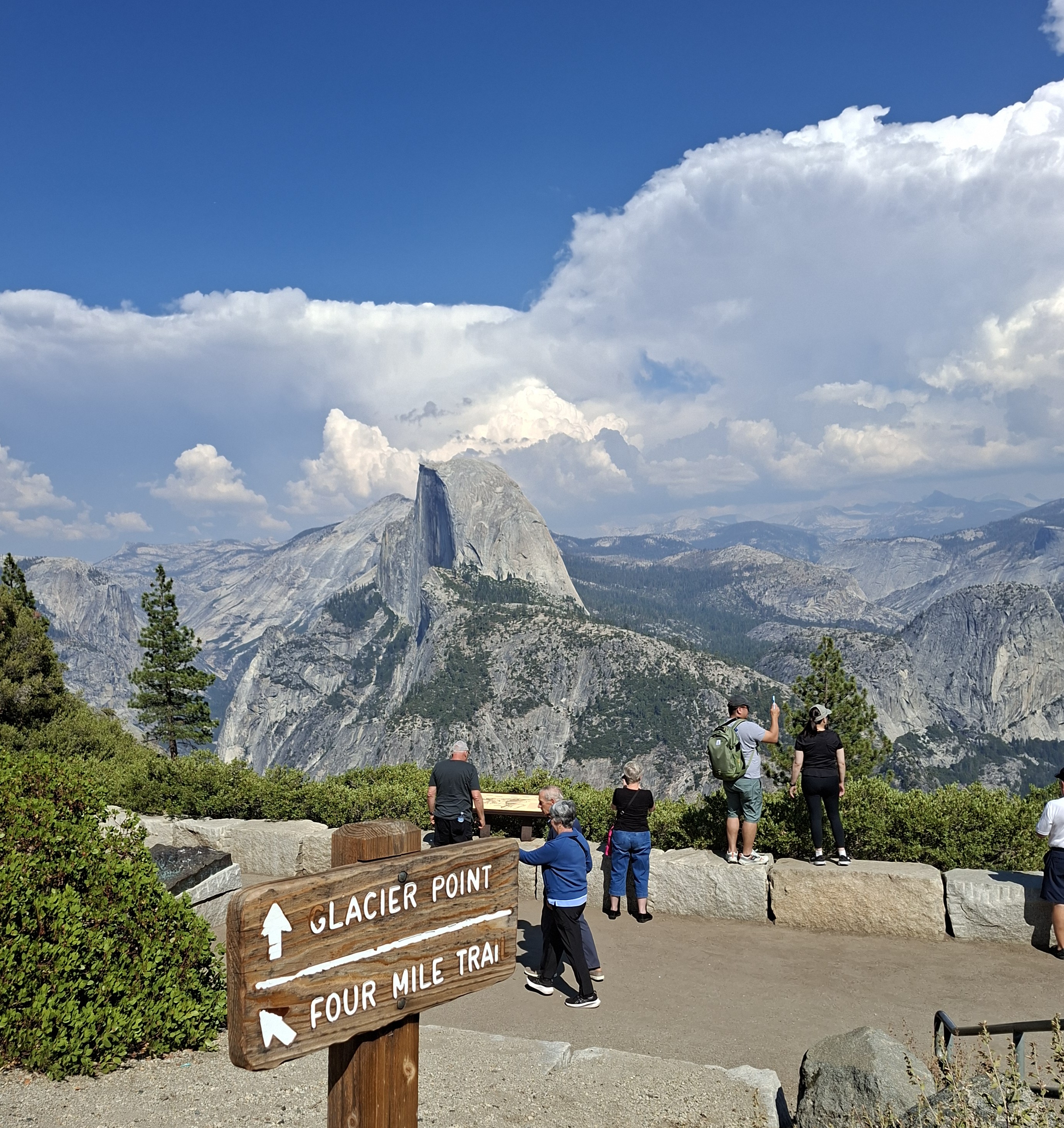
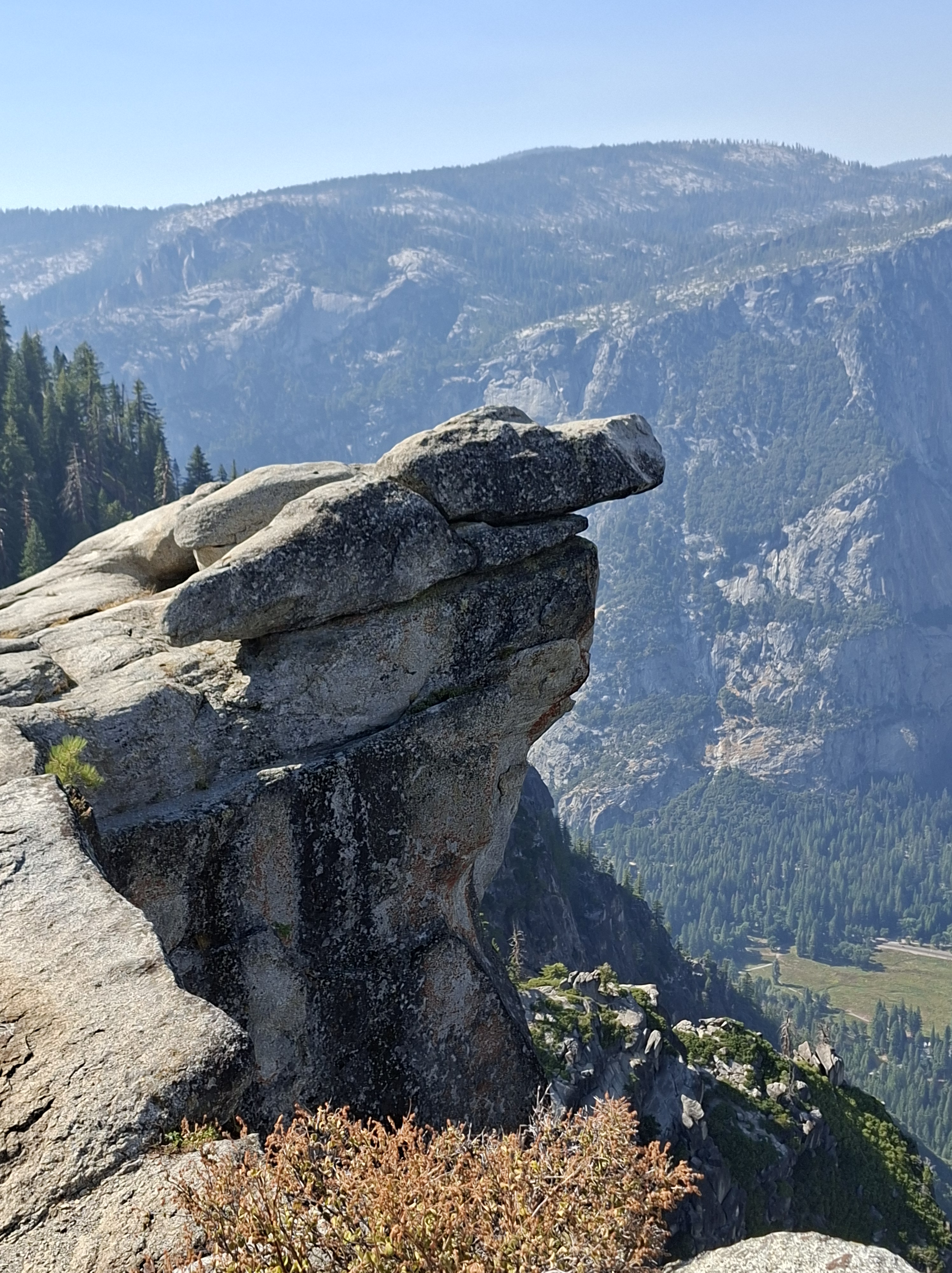
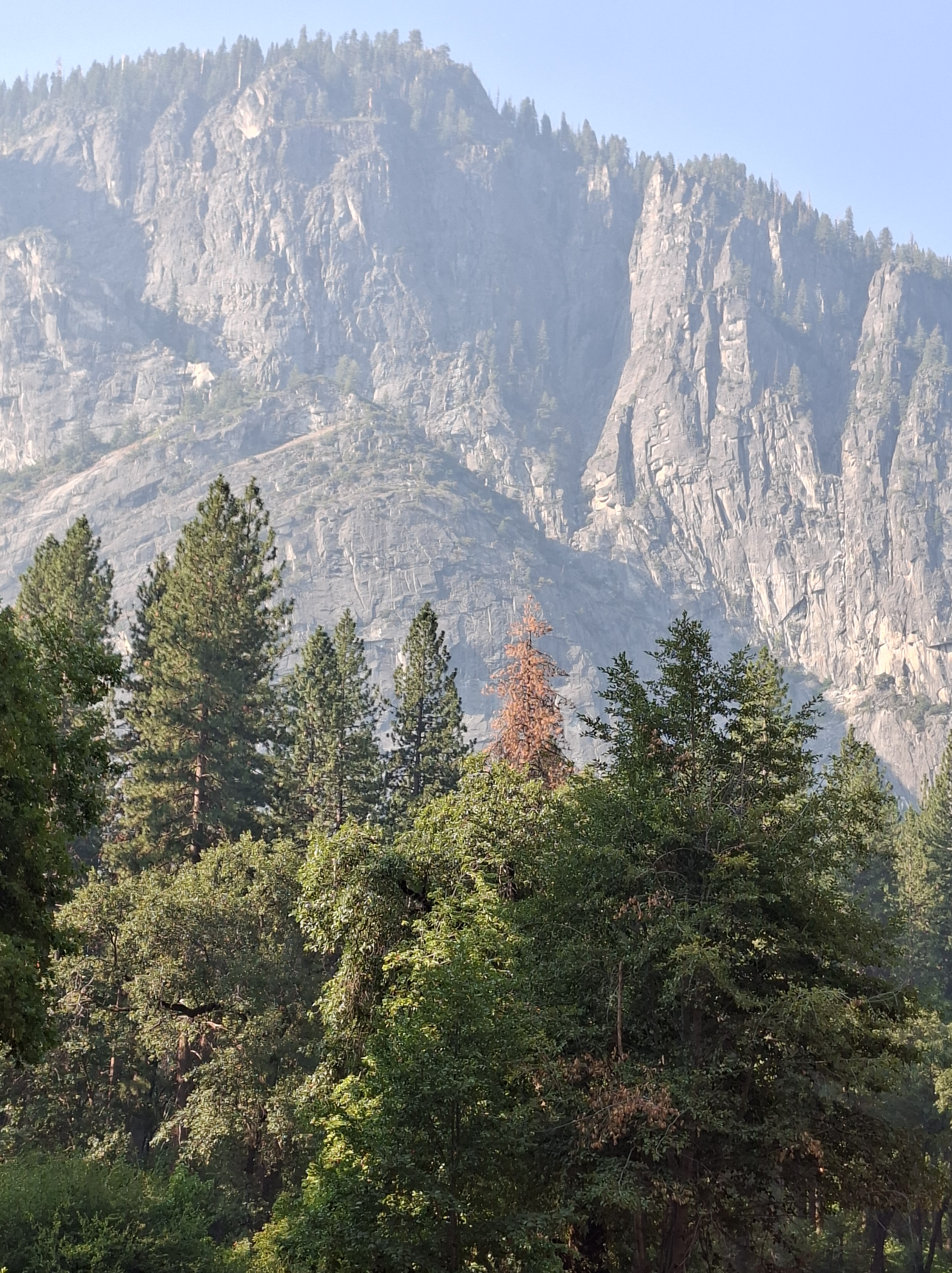
After lunch we boarded a minibus for our first entry into the park. The coach was too large for the sharp curves on narrow roads enroute to the first stop in the park, Glacier Point. The popular viewing site has restrooms of a sort and a concession stand and scores of tourists were enjoying views of an incredible landscape. There was even a wedding party preparing to bring their lives to a pinnacle. I felt sorry for the bridesmaids in their elegant gowns having to use the disgusting toilets. Glacier point at 7,214 feet elevation, provides a sensational view of the Half Dome, an enormous granite monolith created by glaciation and erosion. One can see in the distance the Bridalveil Fall and other granite peaks the park is known for. After 45 minutes, we regrouped at the minibus to reach another viewpoint that featured the renowned El Capitan which was on the program for more time the next morning.
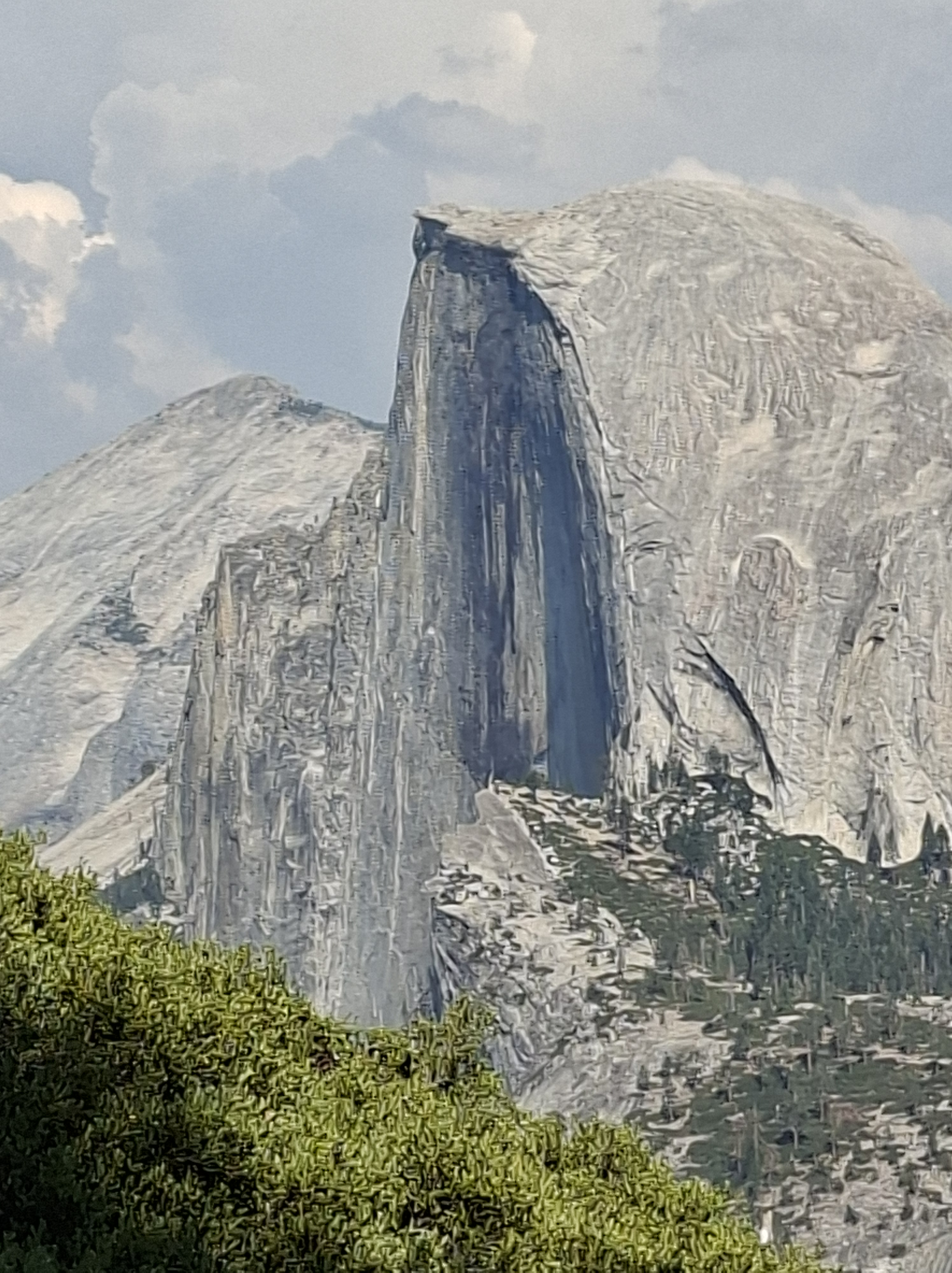


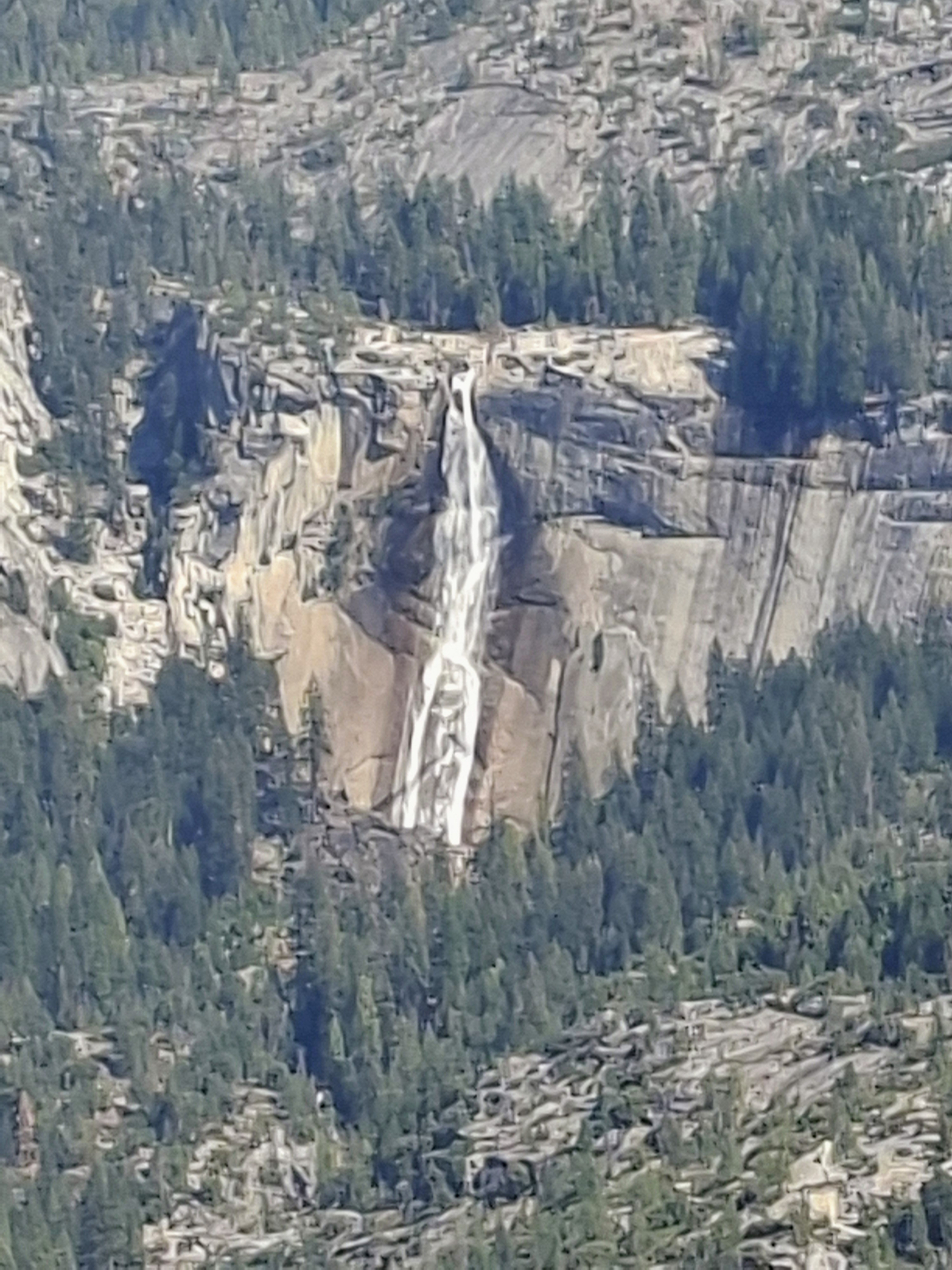
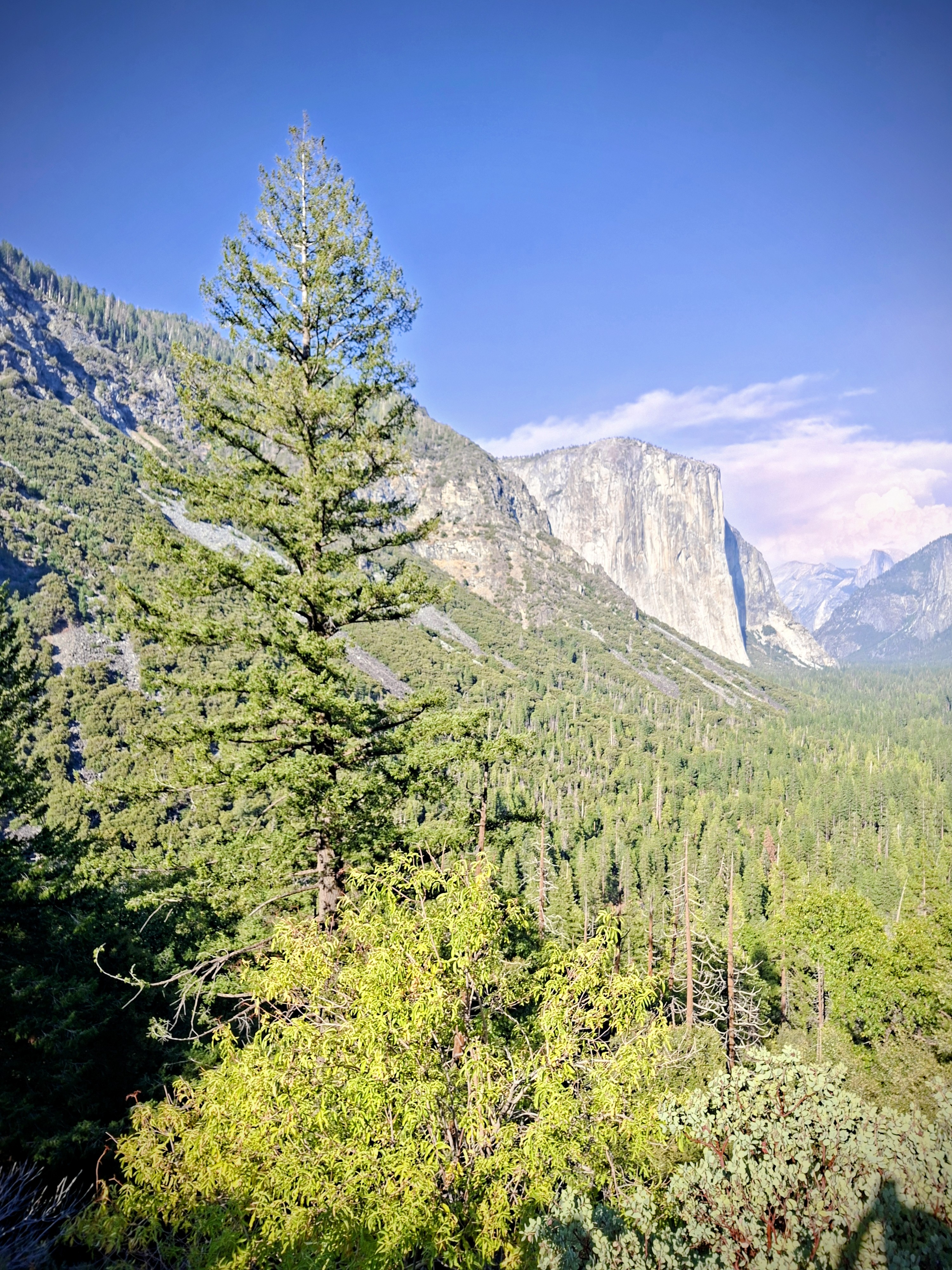


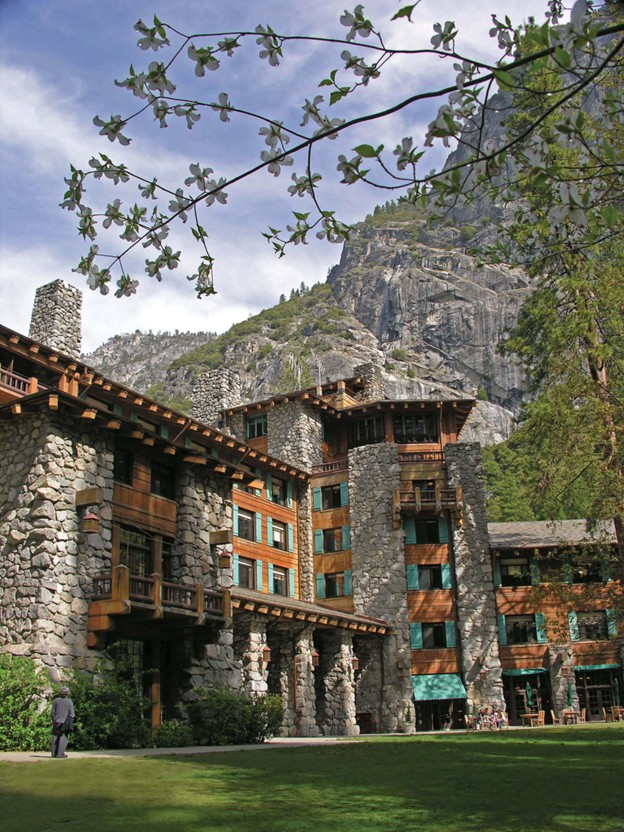
We reached our hotel at 5 pm with little time to spare before dinner at 6 pm. Trish had the room keys ready as we arrived, no need for check in. I was so pleased that Tauck chose the Ahwahnee Hotel for our stay in the park, since it has been labeled the crown jewel of NPS hotel concessions. Reportedly, one has to reserve as far as a year ahead for rooms during high season. My king double was quite pleasant with a sitting area and decent internet speed.
The Grand Dining Room at the Ahwahnee seats 350 diners and features a pianist with meals. It’s 130 feet long with vaulted ceilings 34 feet high. It is beyond elegant in keeping with the builders’ goal of attracting large numbers of elite guests. I joined a table of six and we could order anything we wished from the menu. For me that was a Crab Louie cocktail with avocado, lamb chops, and Crème Brule. While wines were included, I wanted a scotch before dinner and was surprised to find Dewars for only ten dollars. Most deluxe hotels now charge about 20 dollars for two fingers. I needed the remainder of the evening to recharge devices, edit photos, and check out a few news stories.
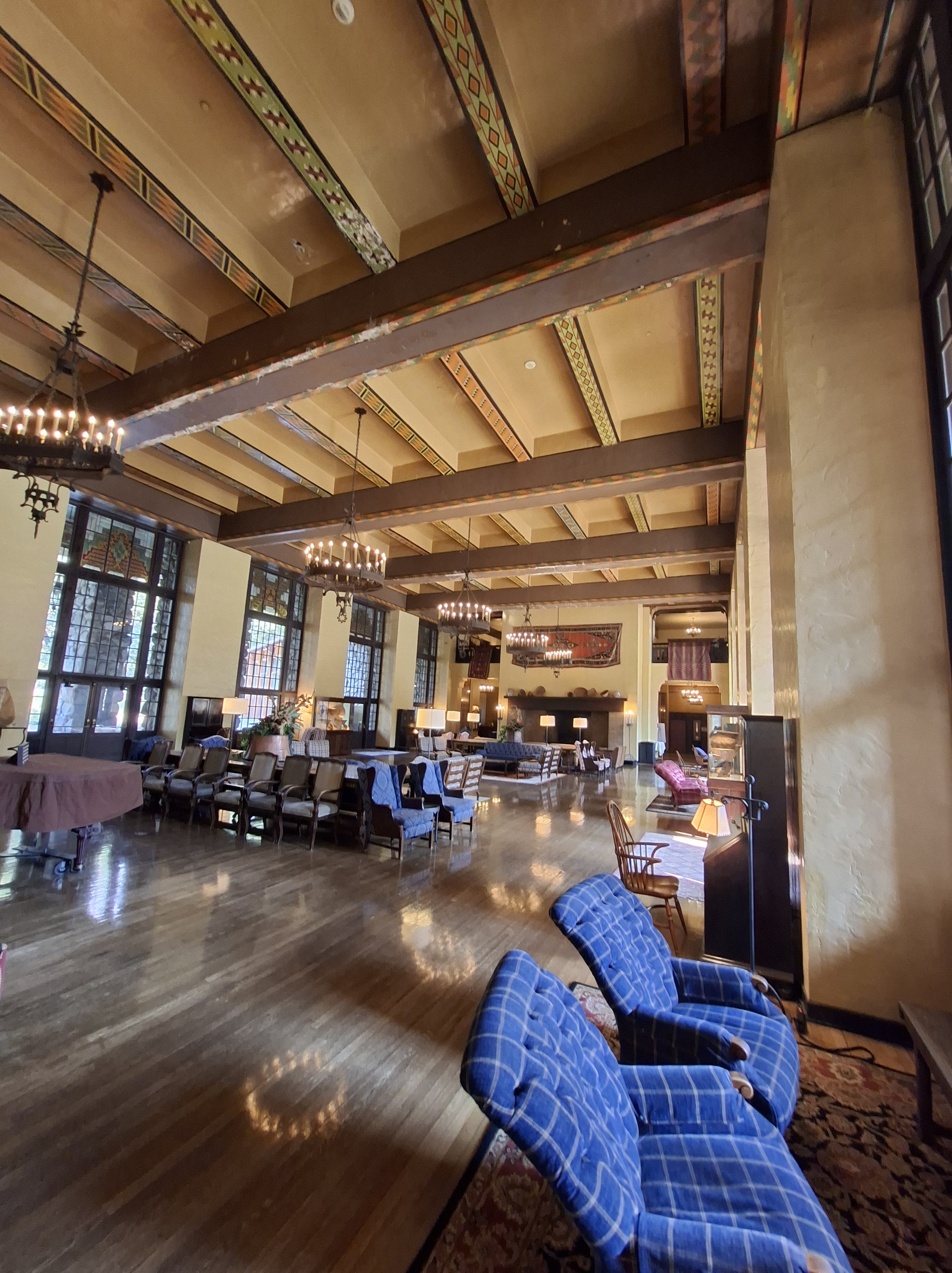
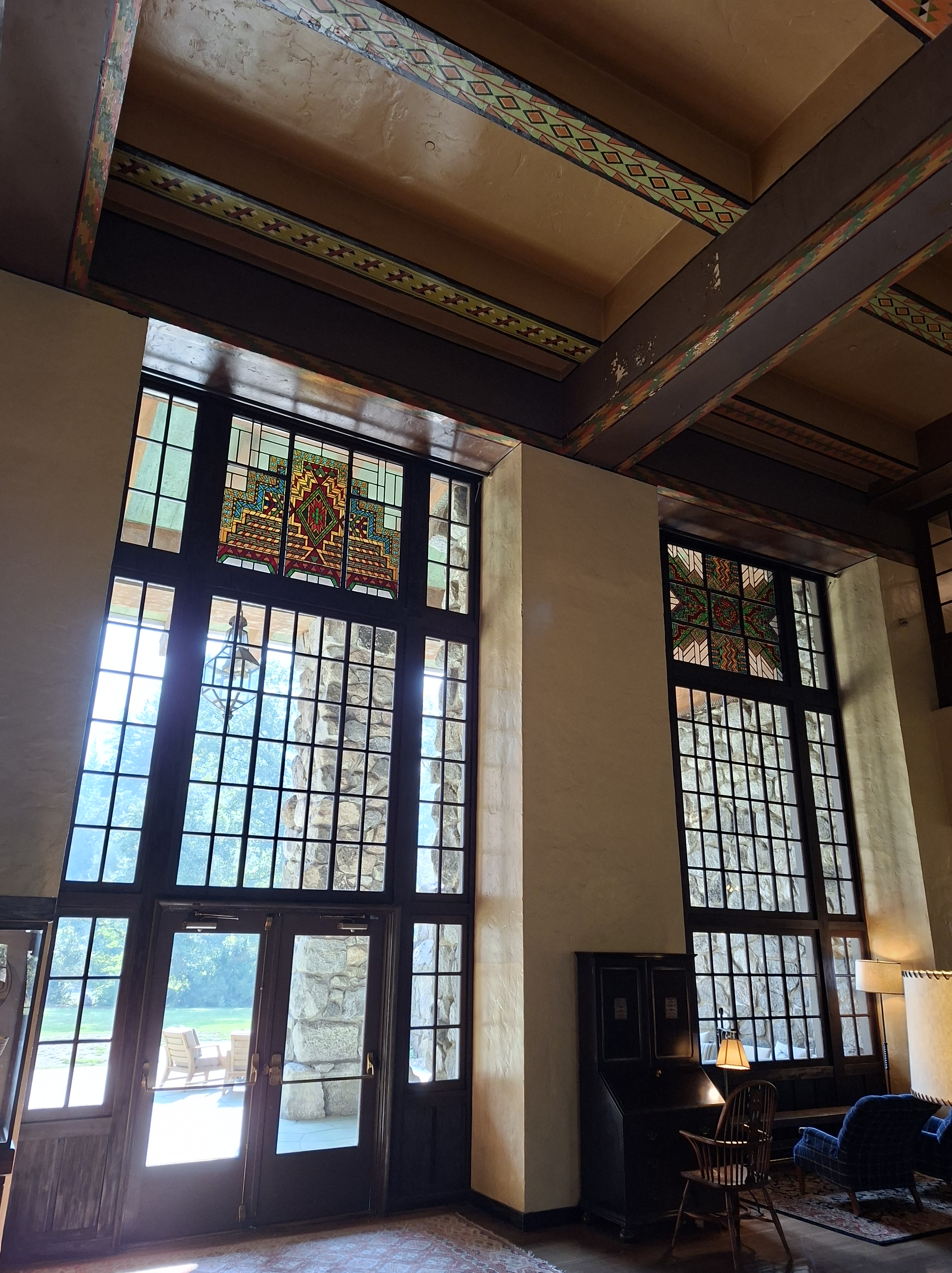
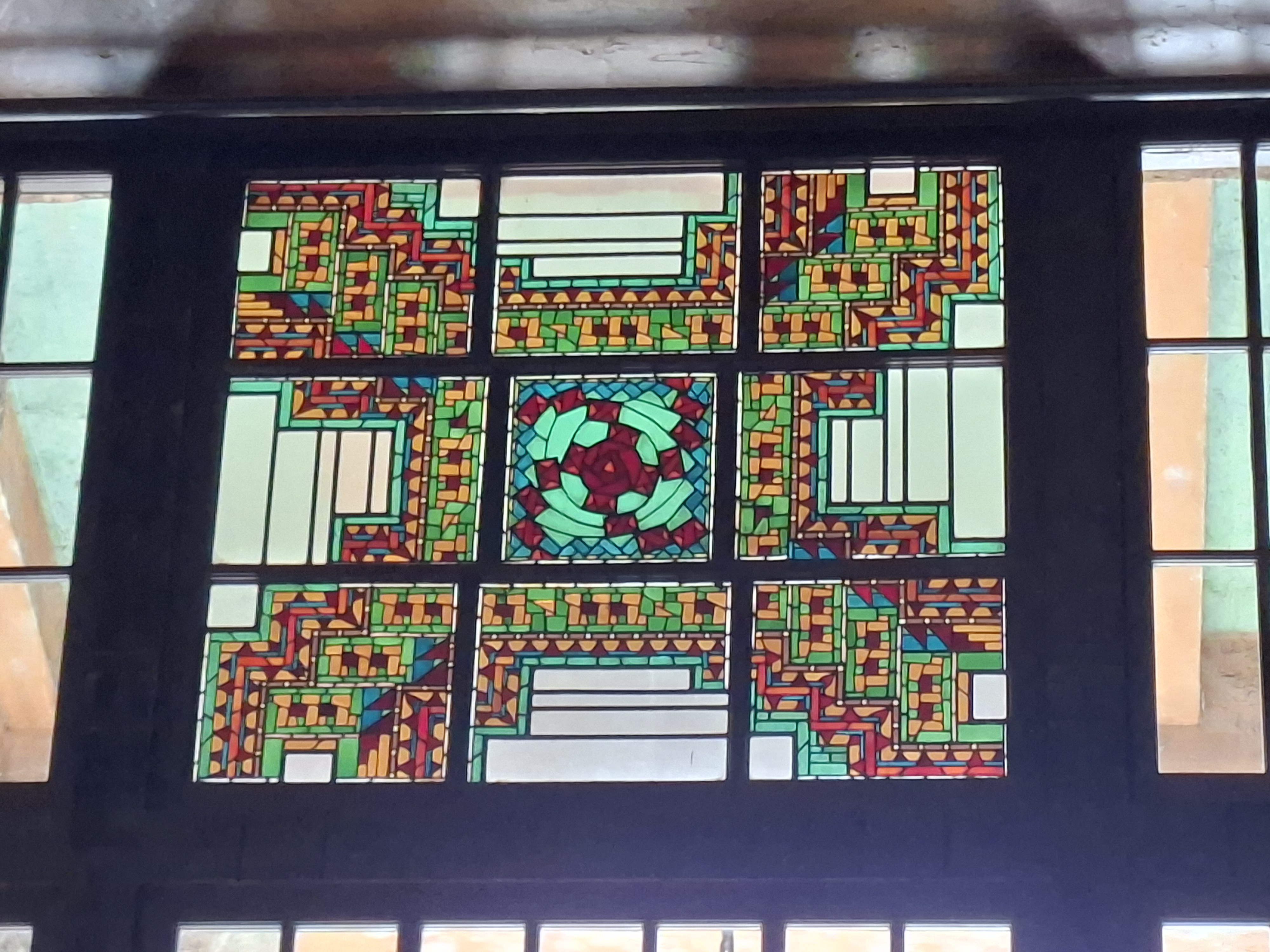
On Saturday morning, we met in the lobby at 9 am for a guided tour of the building and grounds. Guide Ashley had such a soft voice my hearing aids failed to pick up some of her commentary, but I learned a lot more later online. The hotel opened to the public in 1927 and was declared a national historic monument in 1987. It replaced other more primitive lodging in the park in hopes of drawing more guests. The National Park Service granted the concession that hired an outstanding architect and interior designer. The building is set in a meadow surrounded by granite cliffs 130 million years old like Glacier Point, in a forest that includes 3000 year-old giant Sequoia trees. Its 150 thousand square feet include 97 rooms, with 24 cottages added later. The Great Lounge features floor-to-ceiling windows ornamented at the top by stained glass. Its famous guests include Queen Elizabeth II, most US presidents since Eisenhower, and scores of celebrities from Charlie Chaplin and Judy Garland to contemporaries like Steve Jobs and Stanley Kubrick.



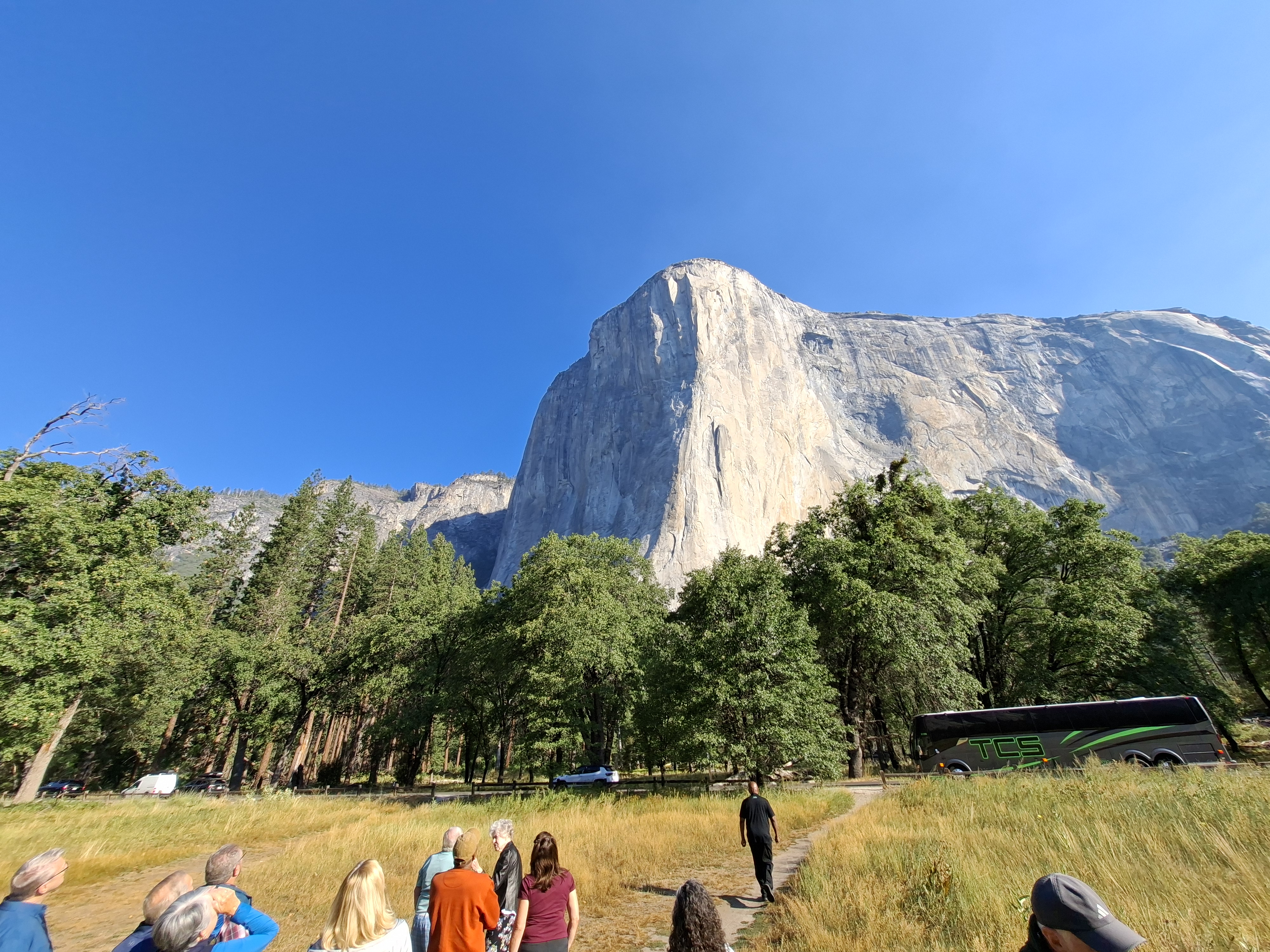
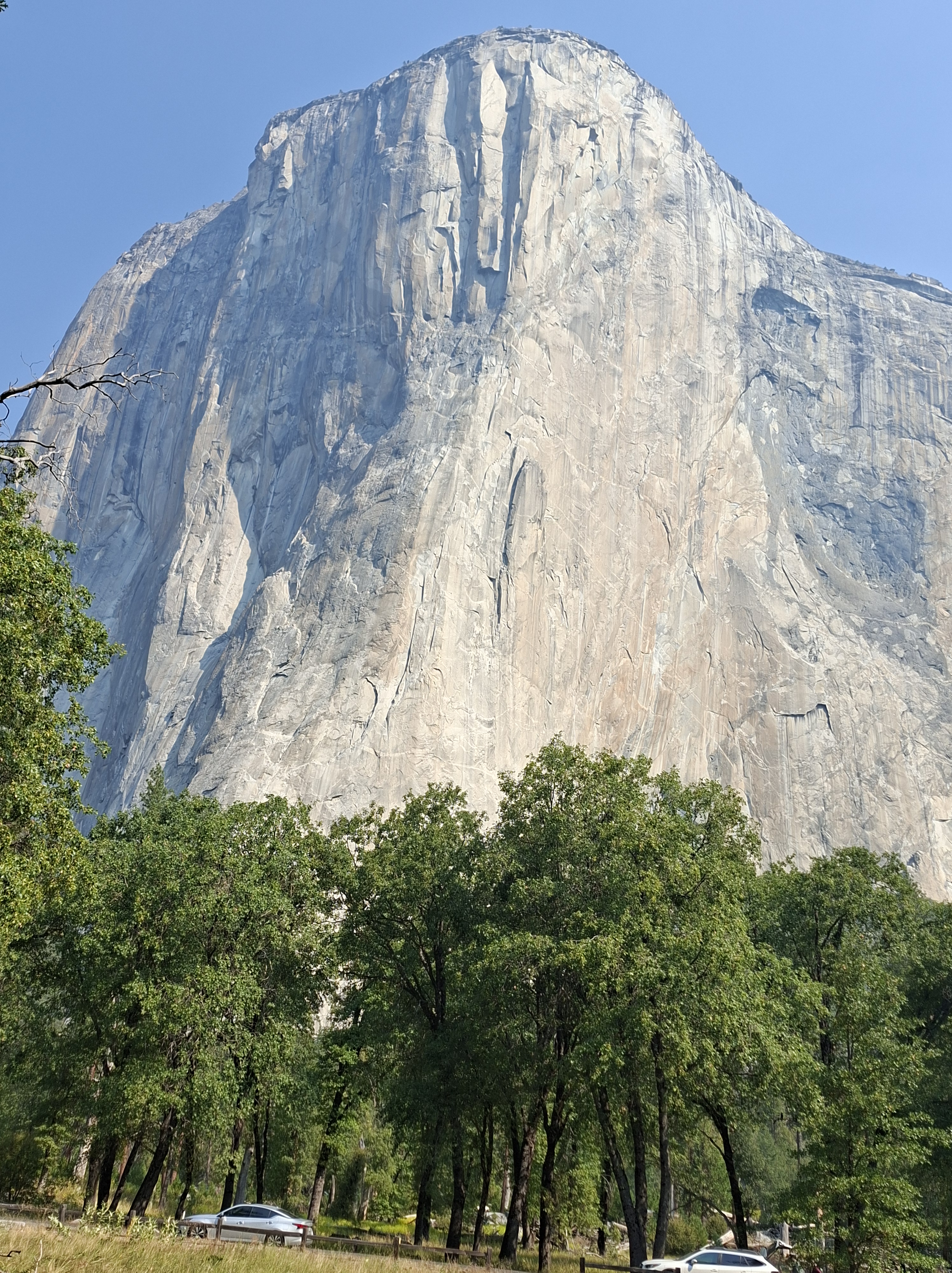
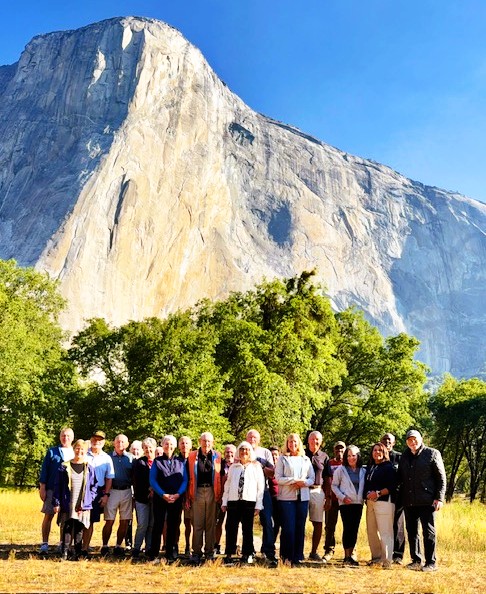
After a break, we boarded the coach at 10 am to view some of the Yosemite Valley. The first stop was in a meadow facing El Capitan, a million year-old, 3,330 foot monolith, the most distinctive of the park’s granite hallmarks. It has become one of the most popular sites for rock climbers, an activity seen in popular culture in Star Trek V, The Final Frontier, where James Kirk (William Shatner) is seen in a solo climb. Don’t miss the beautiful scenes of El Capitan and the rest of the park in the Netflix show Untamed.
Guide Ashley demonstrated some of the equipment climbers use, ropes, clamps, harnesses, and even a urine bottle. She showed a map of the several routes climbers follow, all of them challenging. I can’t even imagine the daring involved in such a dangerous sport. Most climbers take 3 to 4 days for the ascent, sleep in a sling, pee in a bottle (or not), and wear a device with kitty litter in it for number 2. The record time to reach the peak is one hour 58 minutes in 2018. . That set off a race recently with more and more climbers concentrating on speed. Even more startling is the trend to more solo climbing without ropes or harnesses. Both trends have increased the mortality rate at El Capitan. (Wikipedia)

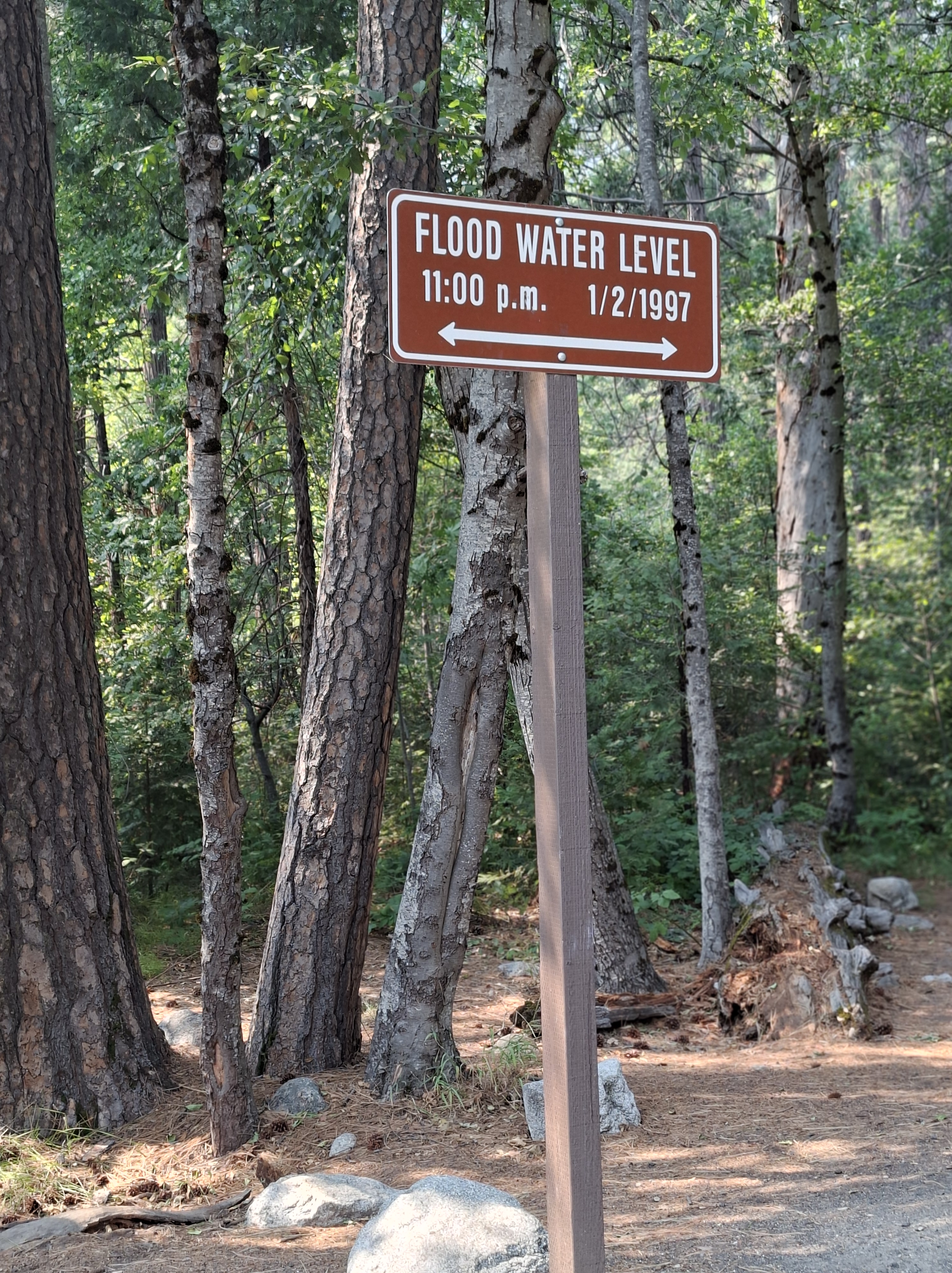
We moved on to a pleasant site along the Merced river with views of El Capitan in the distance. The area had been flooded in 1997 and a marker showed the water’s high mark. At another stop we were able to walk to a spot with a good view of Bridalveil fall. The water hits the rocky cliff causing it to splash out like a veil, but the low water level didn’t provide a very impressive spectacle. Web photos show that several falls in the park a present a dazzling show in the spring with the snow melt.


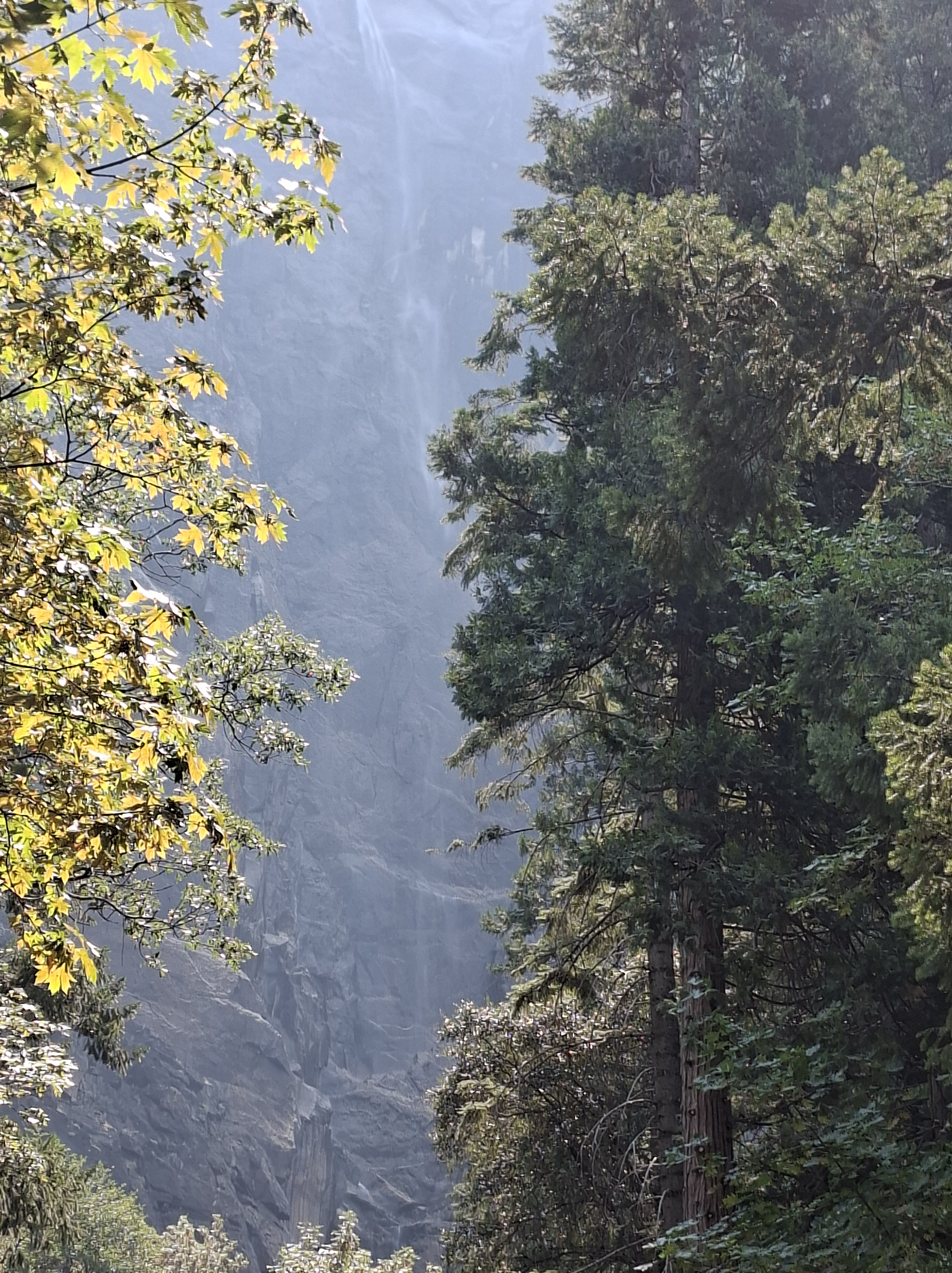
We returned to the hotel just before noon. That was a real disappointment for me and several guests I spoke with. A two-hour tour of such an enormous park, with a half hour learning about rock climbing was a big letdown. The coach was there, the driver too, and there was so much more we could have seen. We were free to explore on our own, using the park’s free but crowded shuttle buses. But we had no idea how long it would take to get to different sites, how much walking was involved, and how much time we needed to allot at each stop. Traveling with a guide, I didn’t do the kind of research I do when traveling independently. I didn’t find out until post-tour reading that Yosemite Falls, not included in the tour, is only 0.6 miles one way from the Falls shuttle stop.
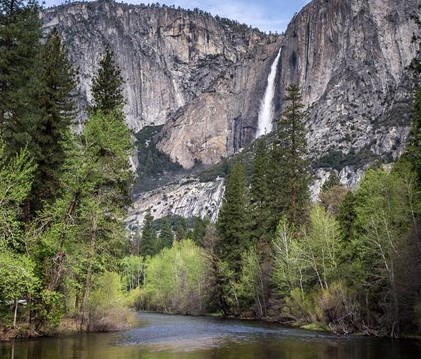
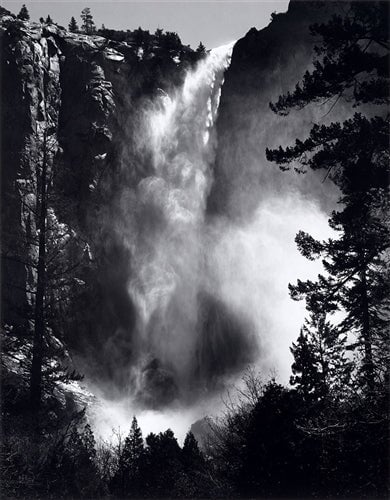
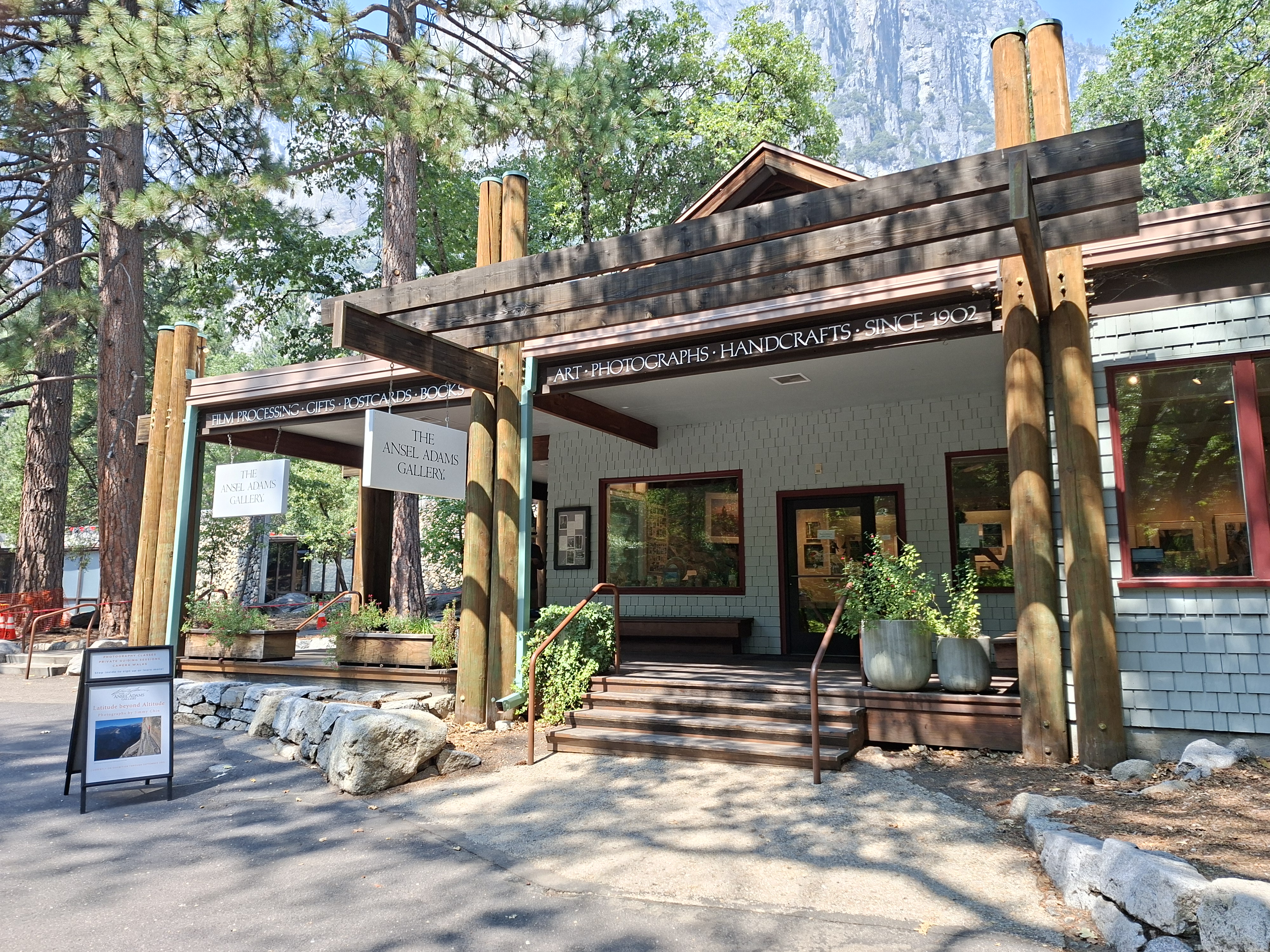
During our afternoon free-time , I skipped Ashley’s 3 pm lecture on rock climbing and took the shuttle to Yosemite village where I admired the photos in the Ansel Adams gallery. The village was quite crowded and I had to wait quite a while in line for a sandwich in the deli. I walked back to the Ahwahnee in about 15 minutes and collapsed for an hour. I hadn’t realized I was dehydrated. Then I edited photos and read web news. I had failed to make plans to join anyone for dinner on our own that night. I checked out the Grand Dining Room and the more casual bar, but the other Tauck guests had evidently chosen dining venues away from the hotel. I ended up with a beer and meatballs in the bar, then returned to my room to repack for the next day’s departure for San Francisco.
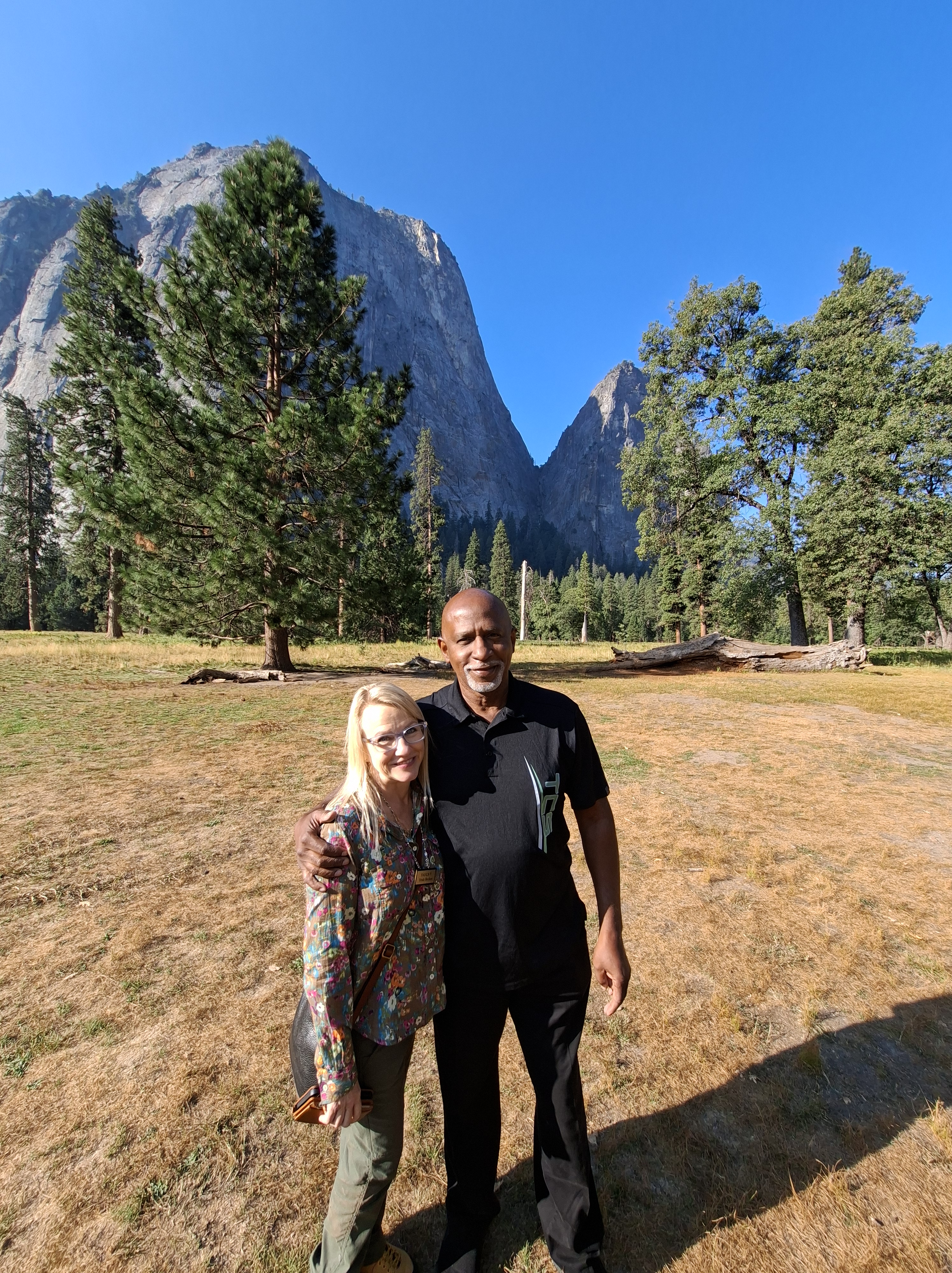
At breakfast Sunday morning September 7, I skipped the buffet and ordered an omelet instead. I had to hurry to check mail and headlines online before boarding the coach for our 8:30 departure. I was sad to leave Yosemite feeling I had seen too little of the enormous park. We stopped briefly for Trish to take a group photo in front of El Capitan, then drove on again through the central valley.
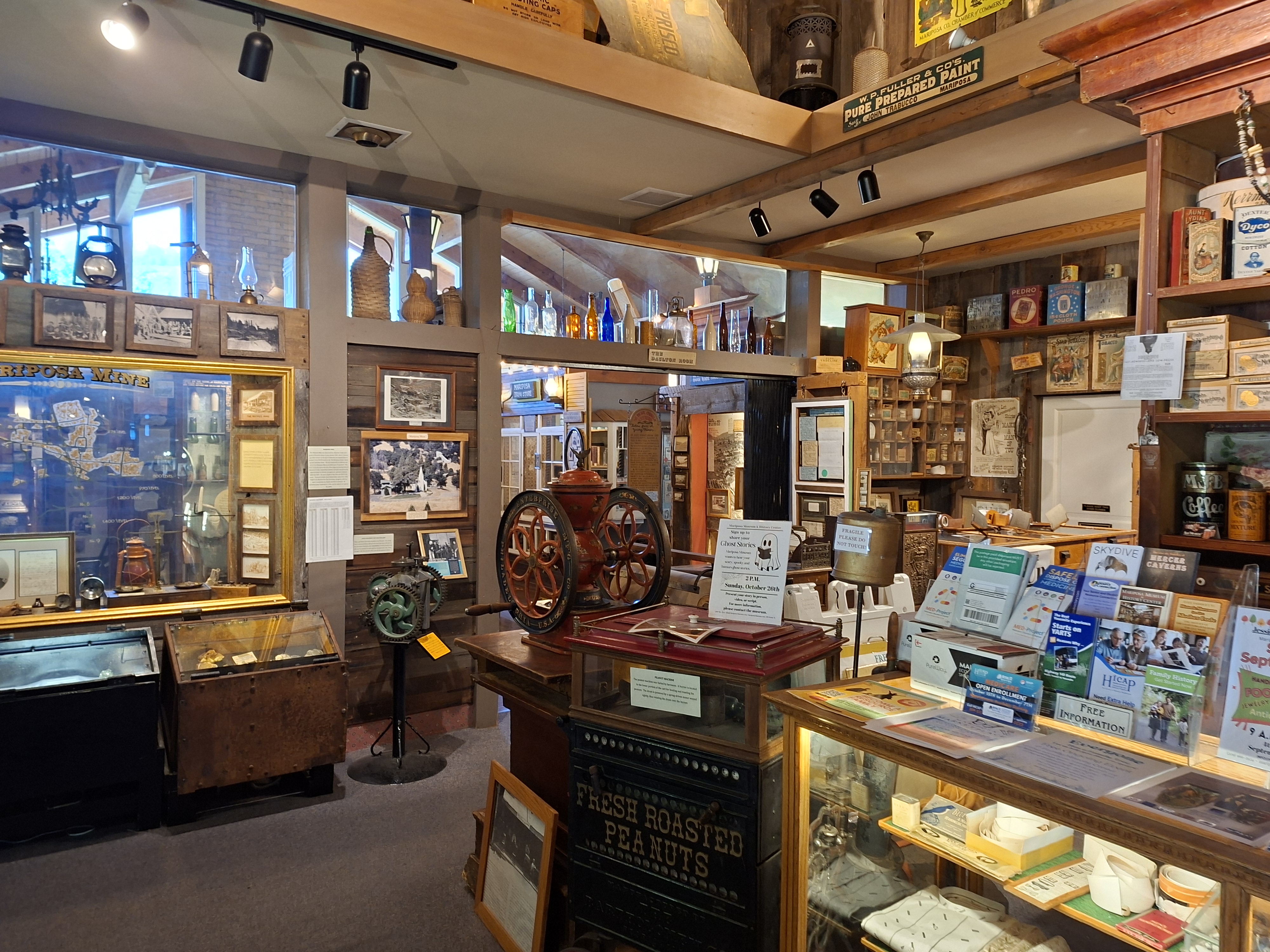
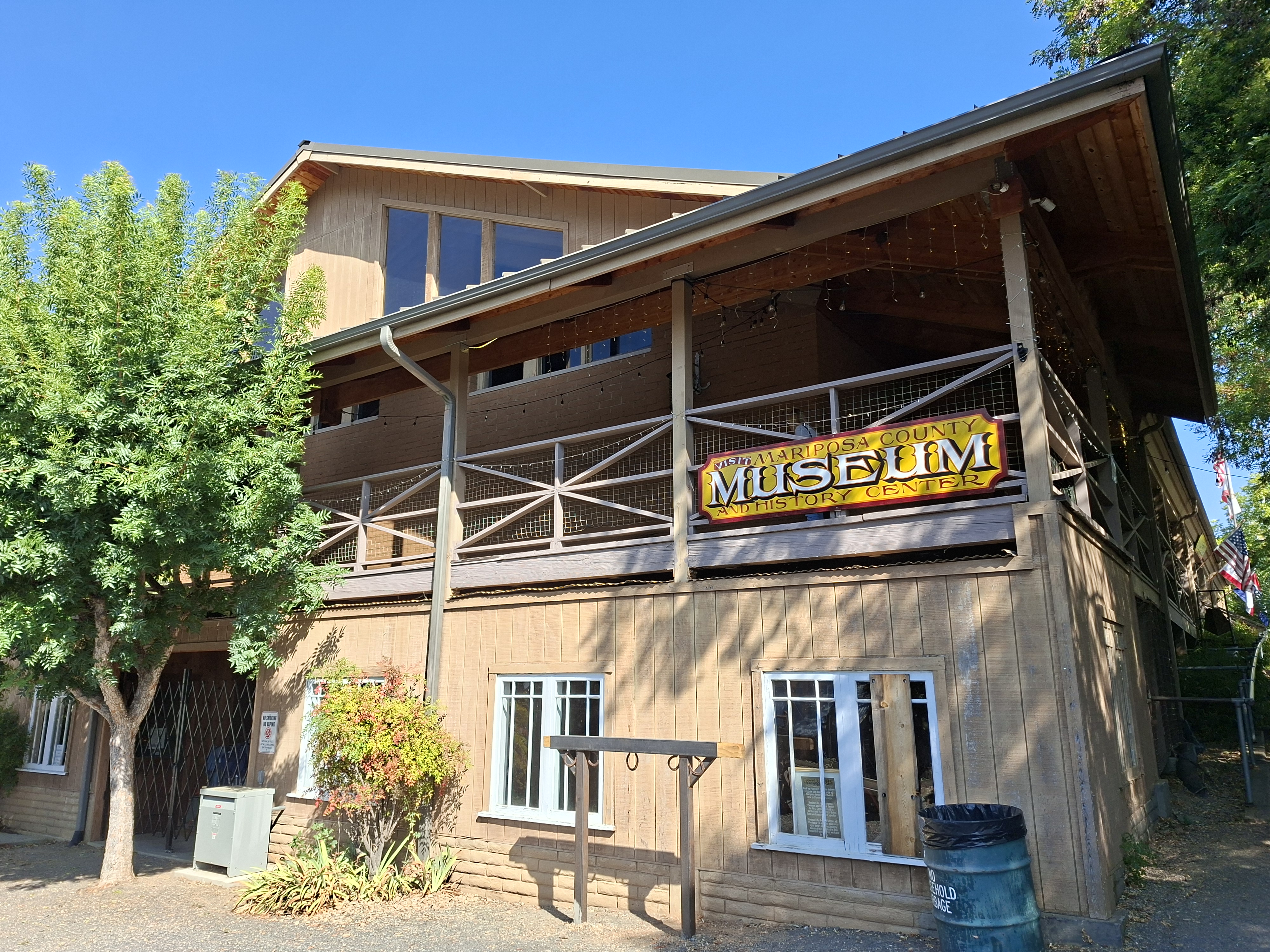
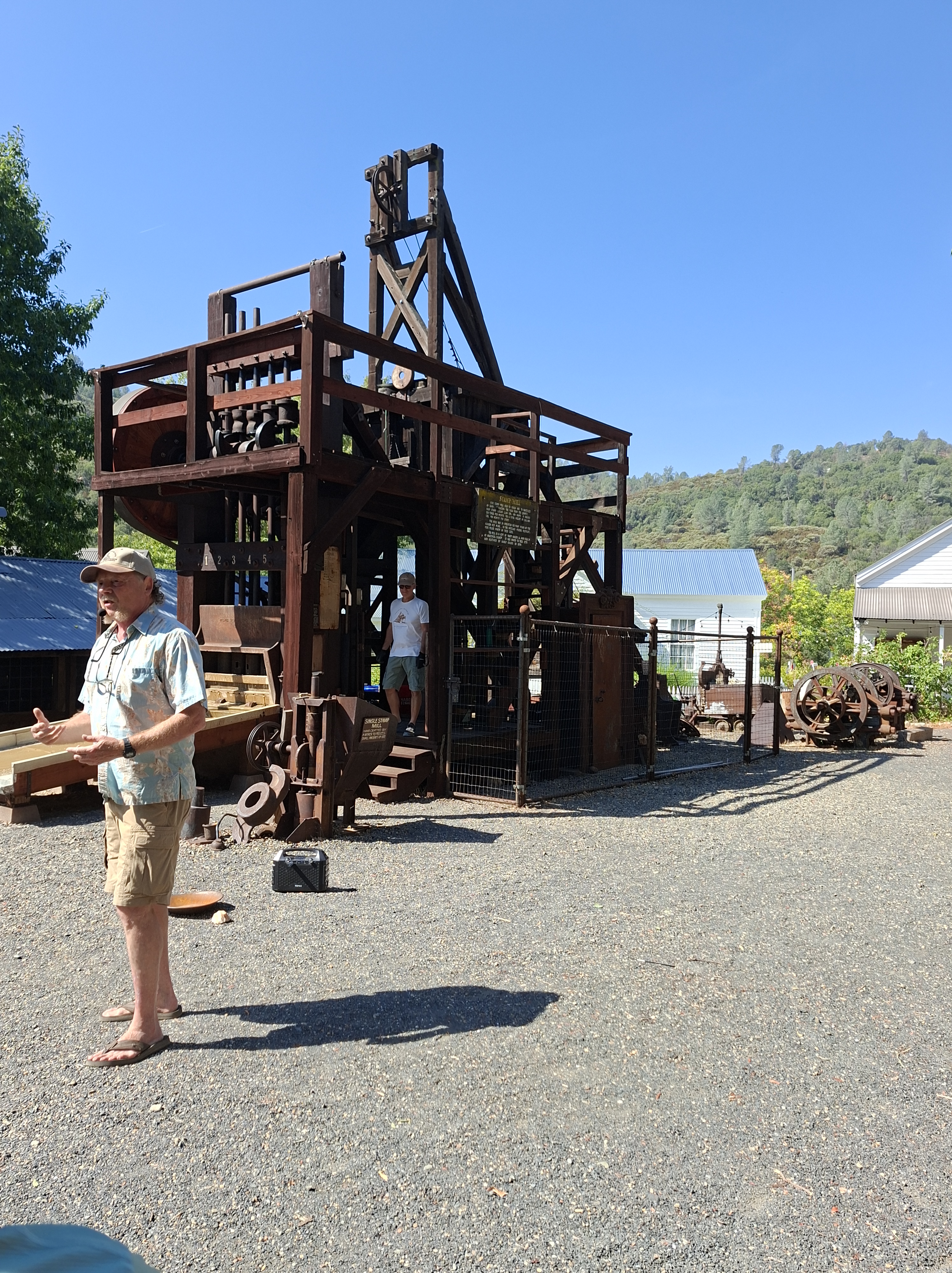
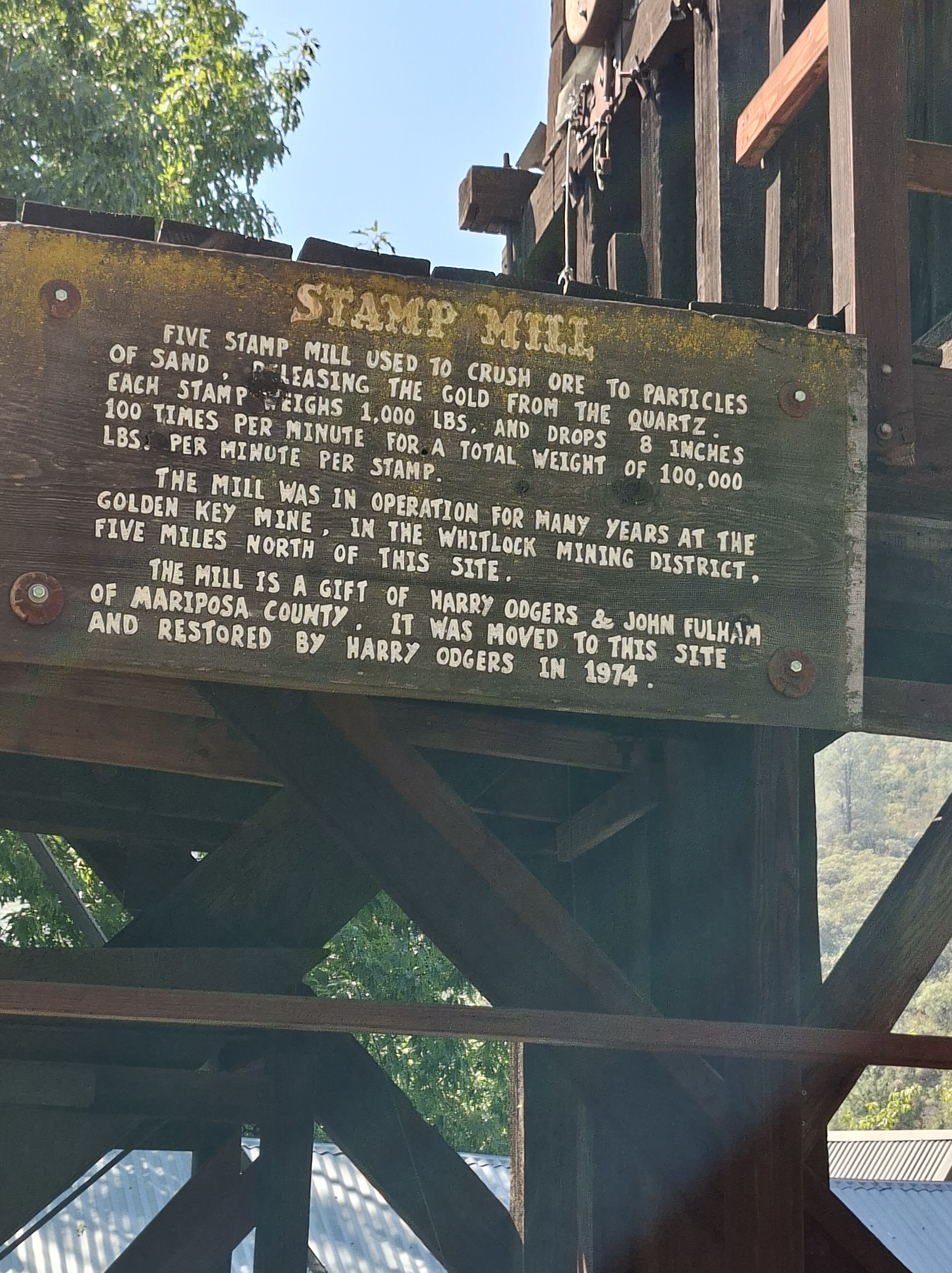
We stopped enroute at a gold mining museum in Mariposa. The displays held all sorts of antique furnishings, mining equipment, photos, and memorabilia of the Forty-Niners. Outside, we got a demonstration of an enormous stamp mill used to crush rocks to extract gold. The stop was a bit of a letdown after such memorable scenes in the park. A few people who had not added time in San Francisco before or after the tour wished for an earlier arrival in the city. Trish played an interesting video cassette on the history of the gold rush. On other long drives, we were treated to Ken Burns American Journeys videos featuring the parks. After the tour, Tauck sent all the participants free copies of the whole series to download.

For lunch, we got off the freeway in lovely Merced and walked a few blocks to family-owned restaurant, Bella Luna. The town seemed so peaceful on a Sunday morning, and it looked like a place with a pleasant quality of life. When I saw signs like “Maria’s Homemade Enchiladas,” I imagined I could be very happy in such a place. The restaurant is normally closed on Sunday but opened for us and for a later bridal shower. The soup, sandwich, pasta buffet was more than we needed given the farewell dinner in the evening.
There was one final break at a rest stop with a gas station and a large convenience store. By mid-afternoon the coach was crossing the Oakland Bridge again with stunning views of the towering buildings overlooking the beautiful bay.
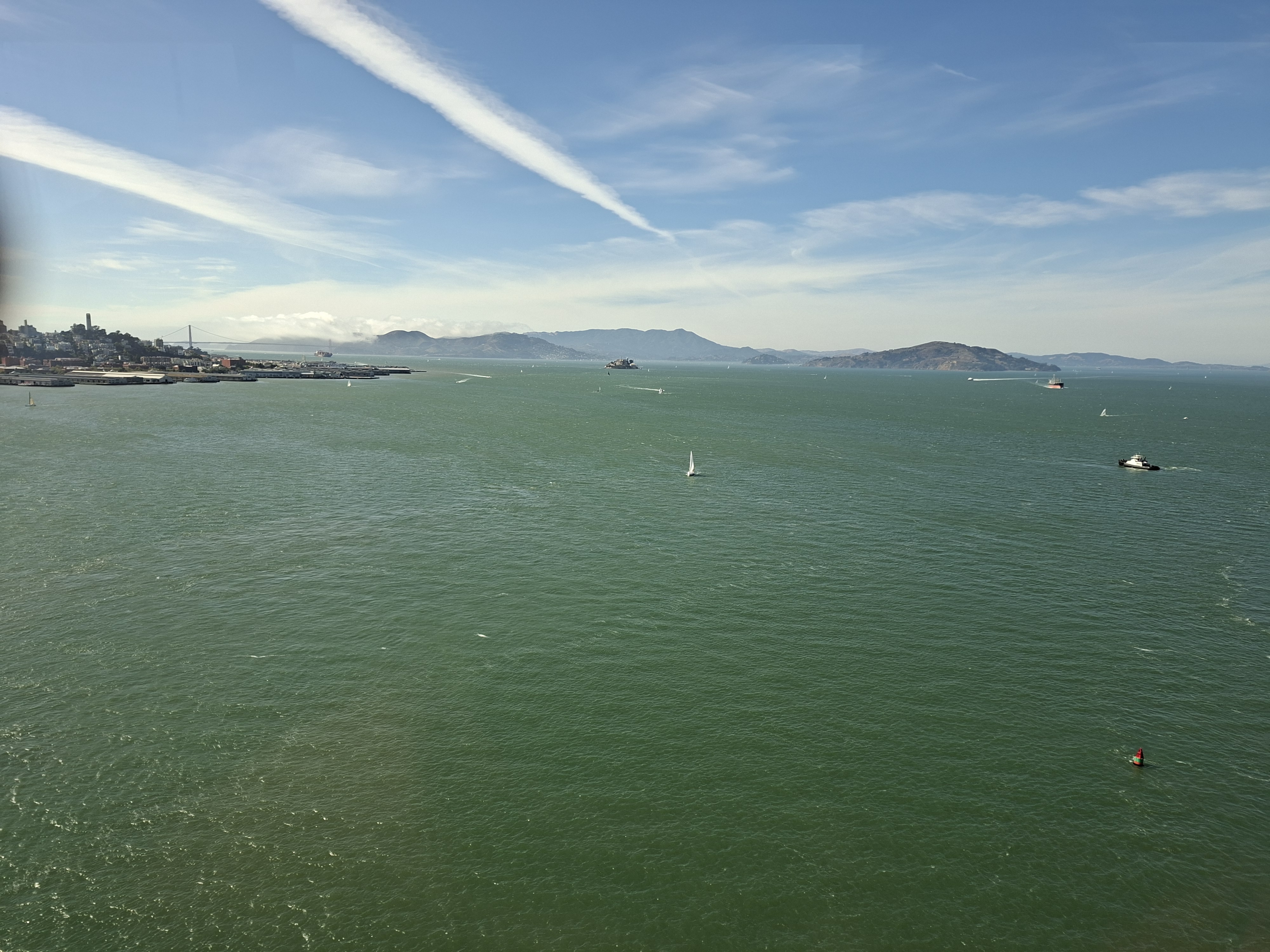

Oakland Bridge
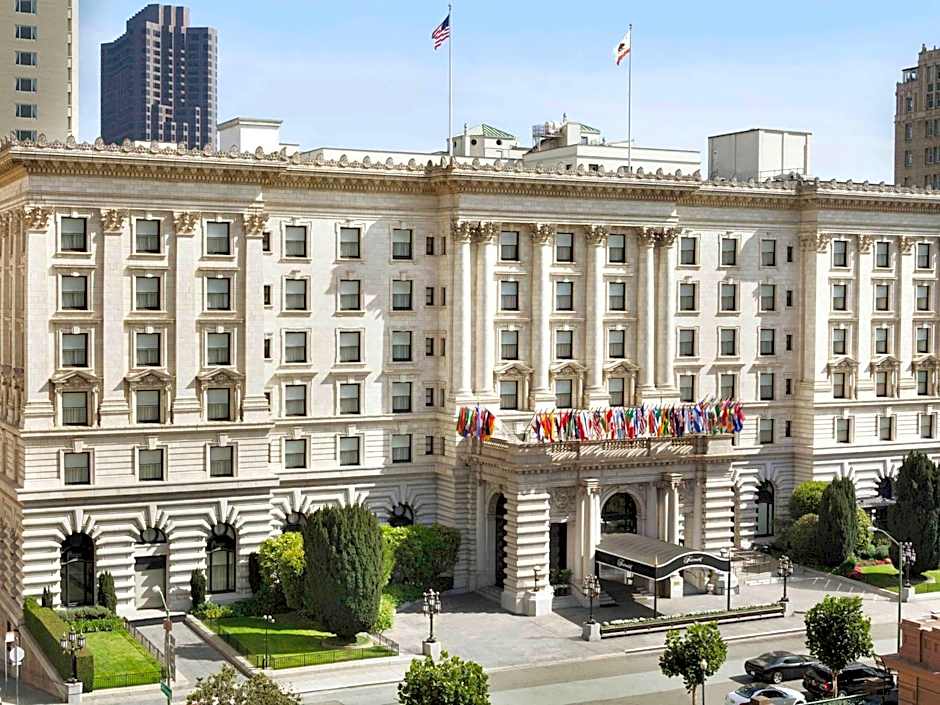
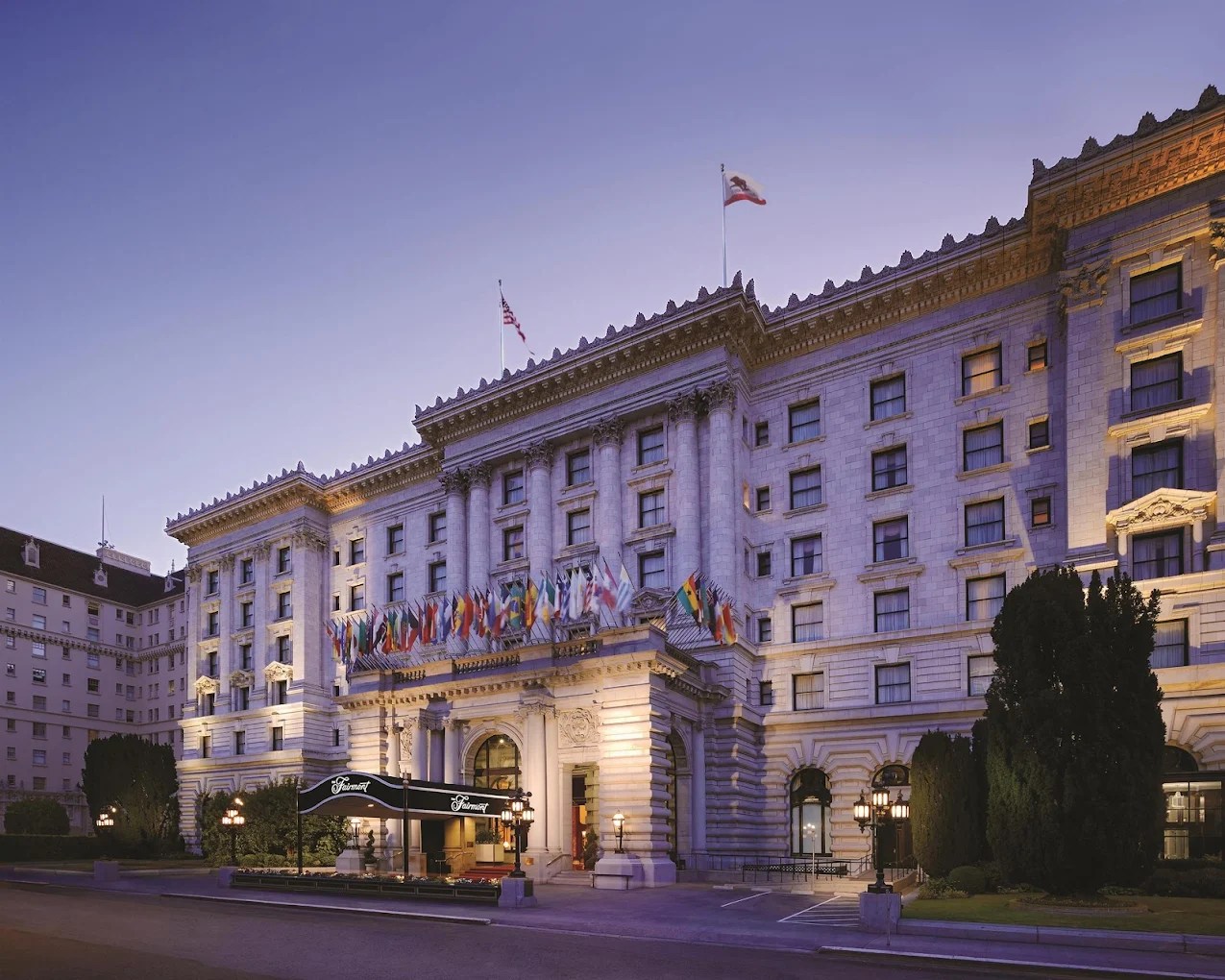
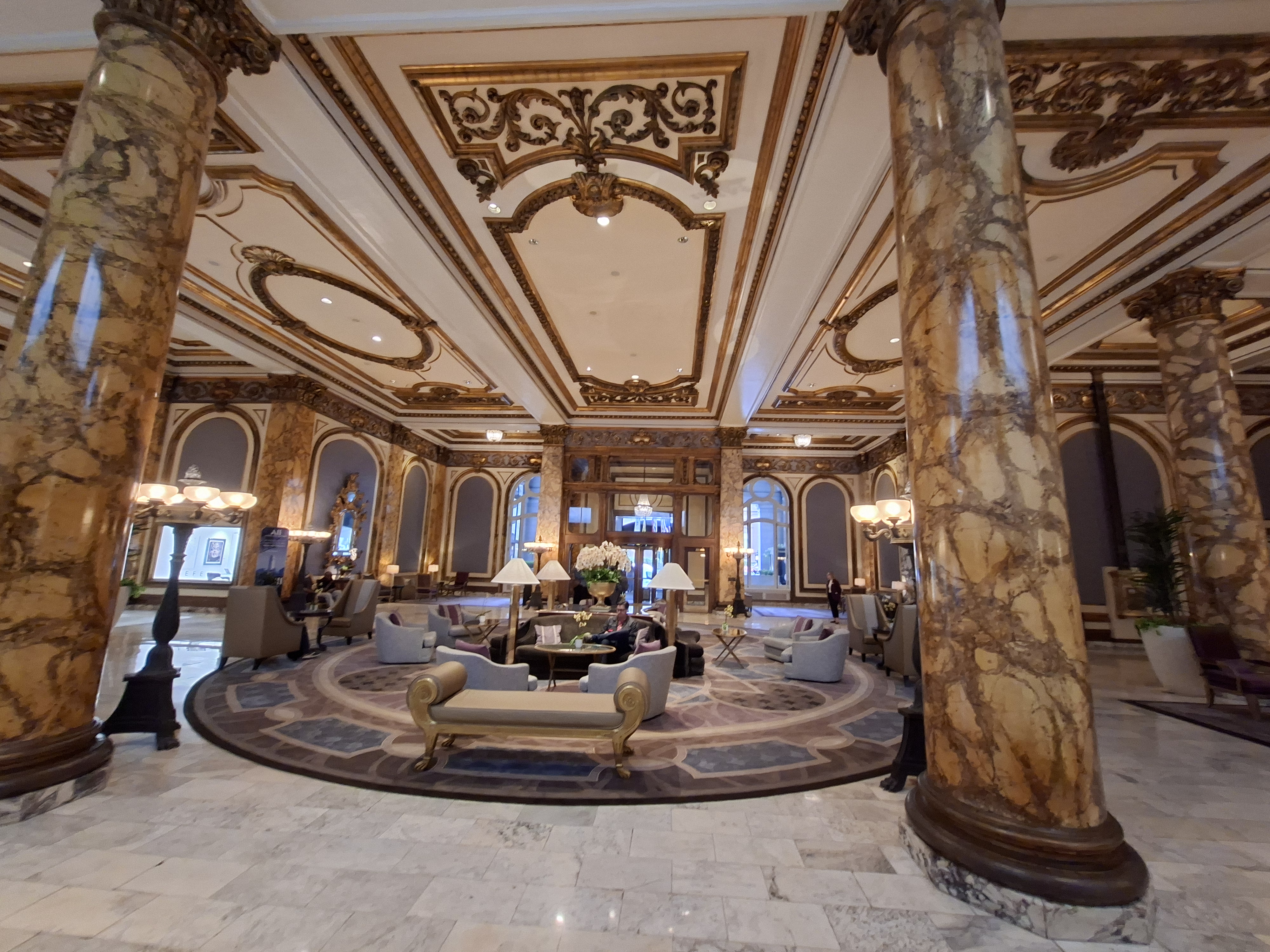
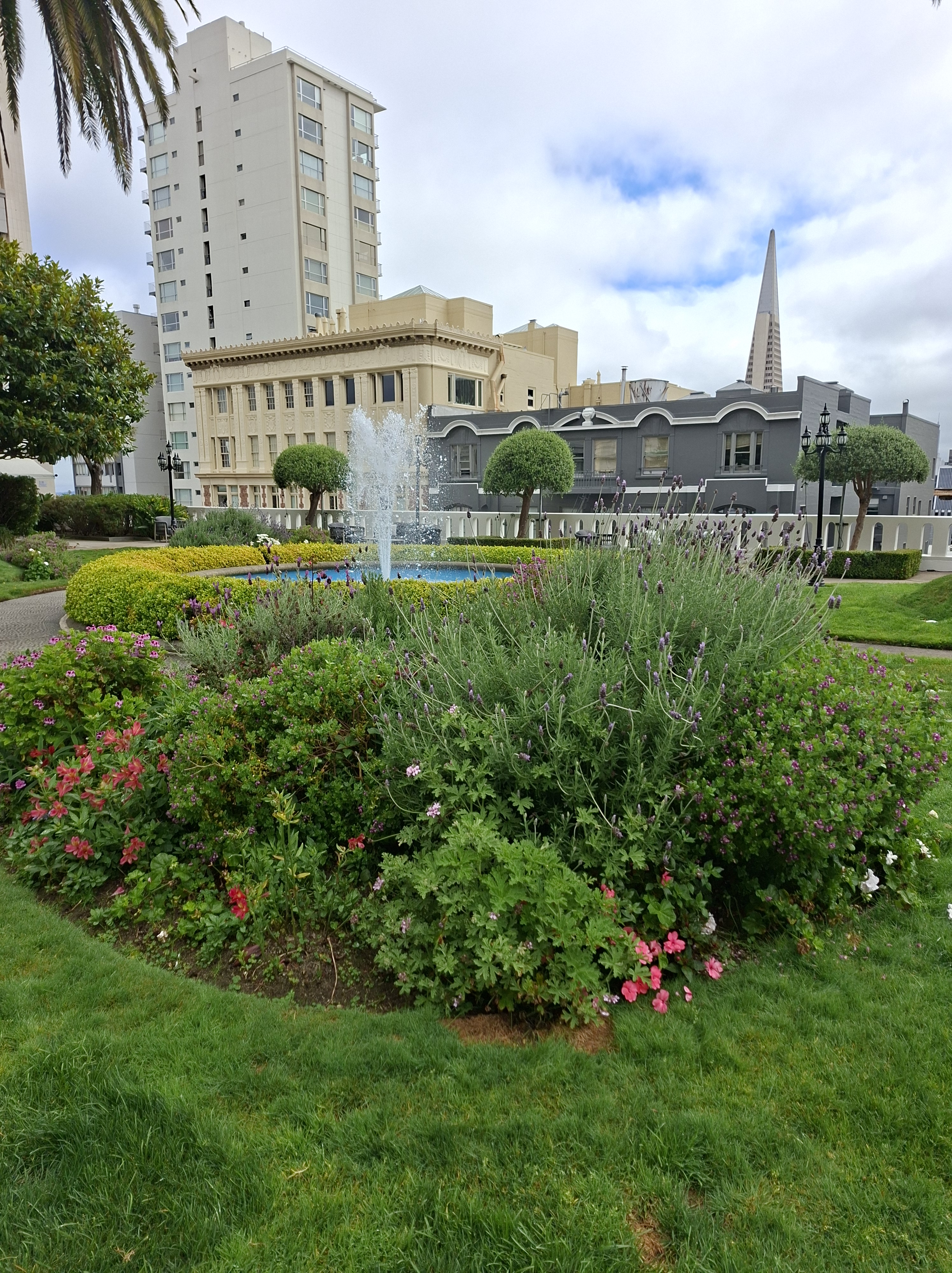
We arrived at the opulent Fairmont Hotel on Nob Hill at 3:40 pm. Trish handed out room keys and a staff member gave a brief introduction to the hotel history and amenities. The public rooms were equal in beauty to the Palace Hotel and my deluxe double was the best of the tour, including a view of the hotel’s interior garden.
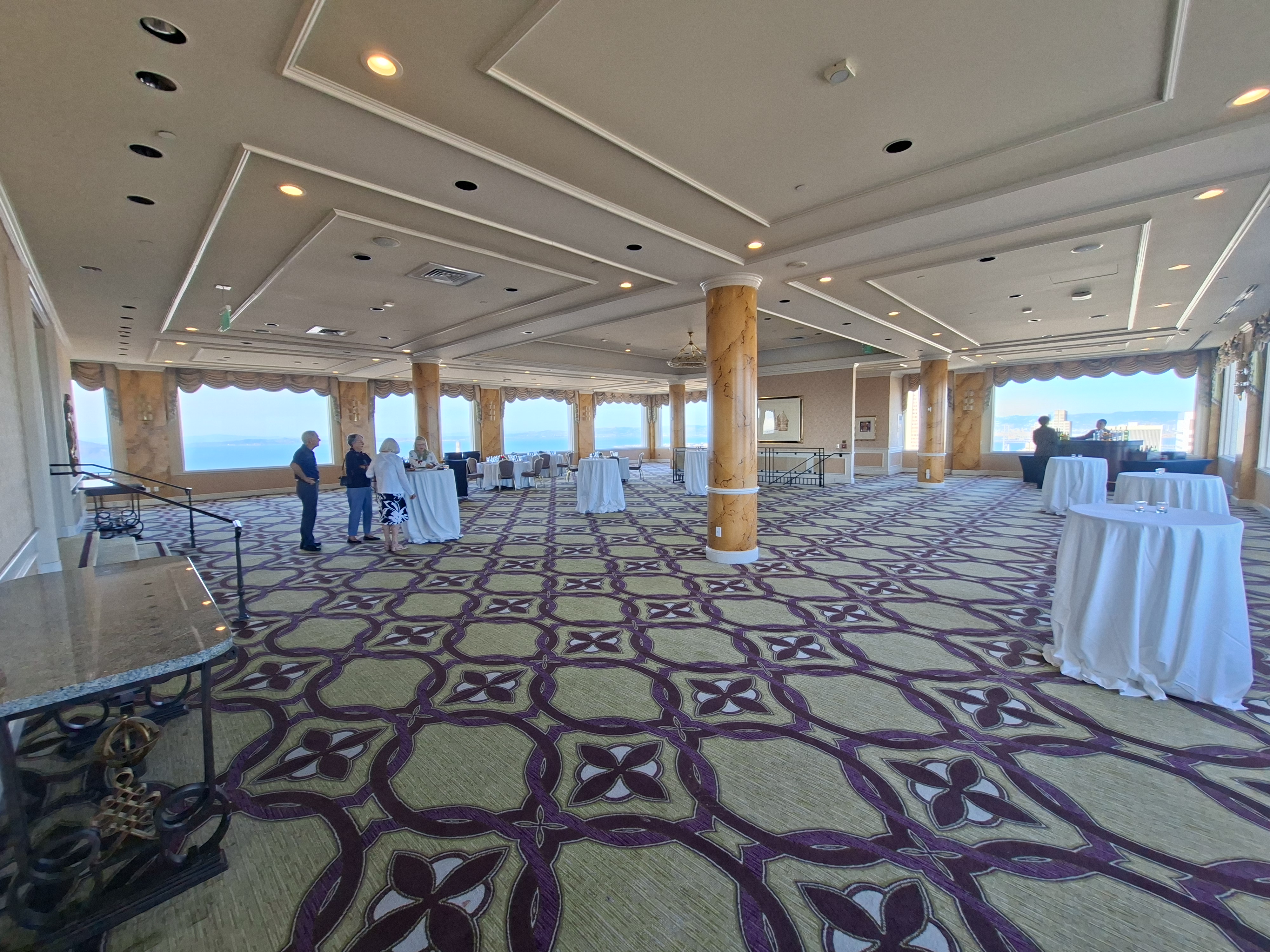
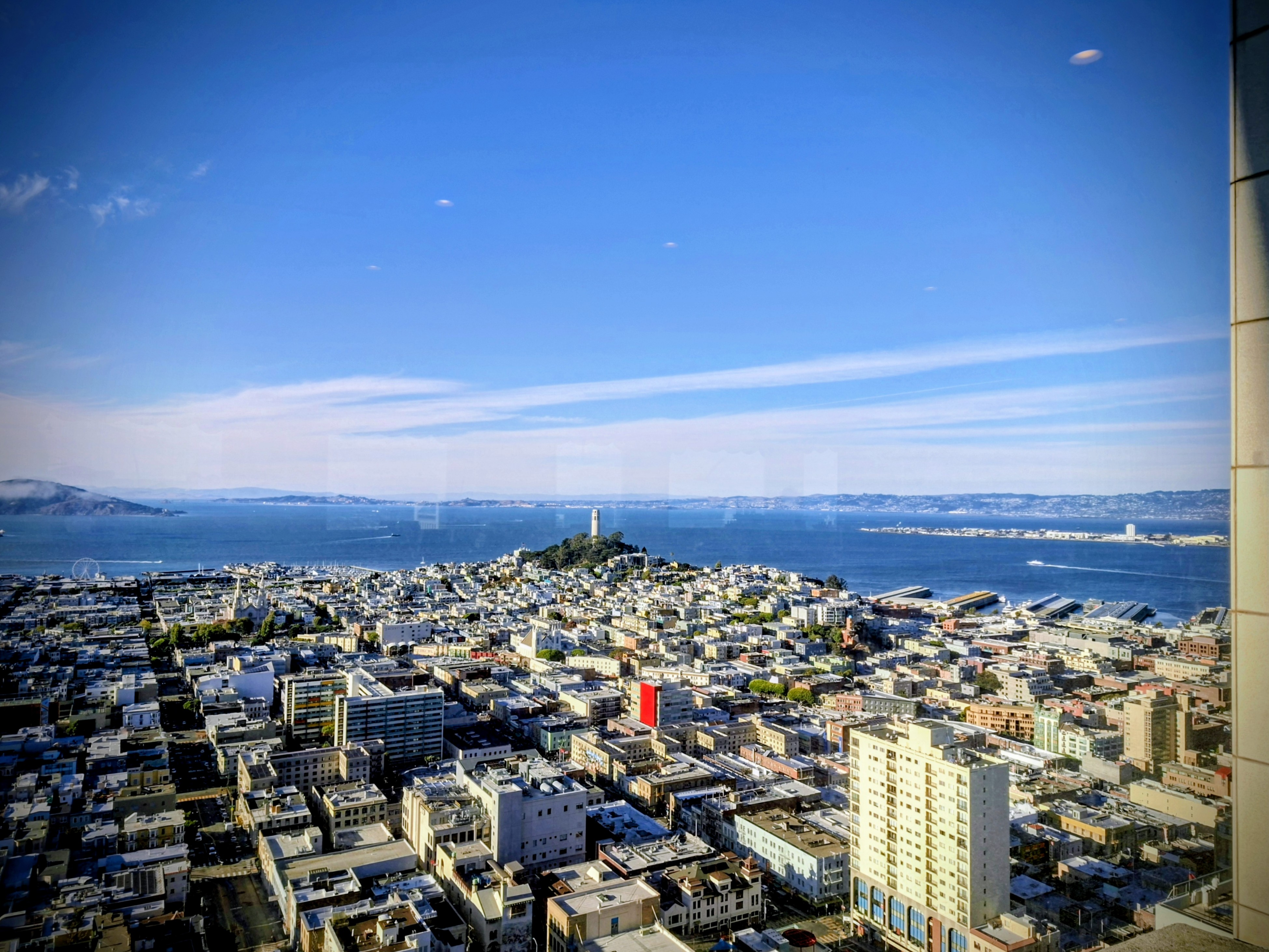
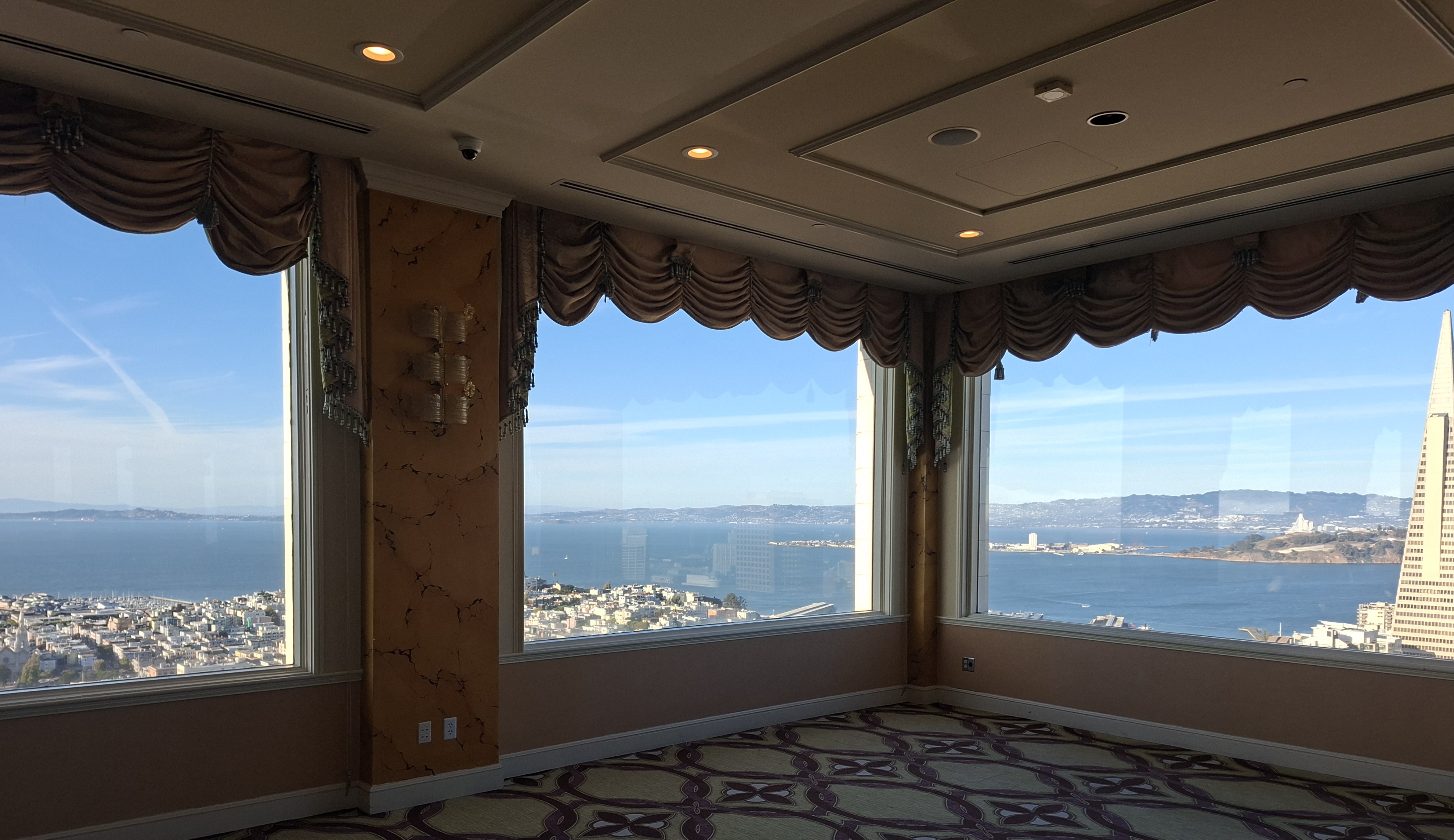
Some guests took time to walk around Nob Hill before dinner. I edited photos and researched online for the eventual blog text. I freshened up and went to the stunning 23rd floor Crown Room for our reception and farewell dinner. The salon was breathtaking with floor-to-ceiling windows offering stunning views of the surrounding city. We were treated even to a full moon rising between two skyscrapers.The barman had a full complement of beverages and a waiter passed a tray of canapes. The dinner was served at round tables that facilitated conversation and I sat with some new friends whose company had made the trip more enjoyable. I had chosen seared salmon as my entrée and it was superb. The hotel, the reception, and the dinner certainly lived up to Tauck’s fame for high-end indulgence. After dinner I asked Trish to let me say a few words of thanks for a great trip. As the only person in the group who had led tours, I knew how much work went into preparation and execution, dealing with early wakeups and late-night tasks, all of which Trish did with the competence and efficiency expected of a Tauck tour director. I’m sure all the guests were thrilled with this spectacular finale. The many hugs and warm good wishes of goodbye were demonstrative of the friendly bonding of guests during our adventure.




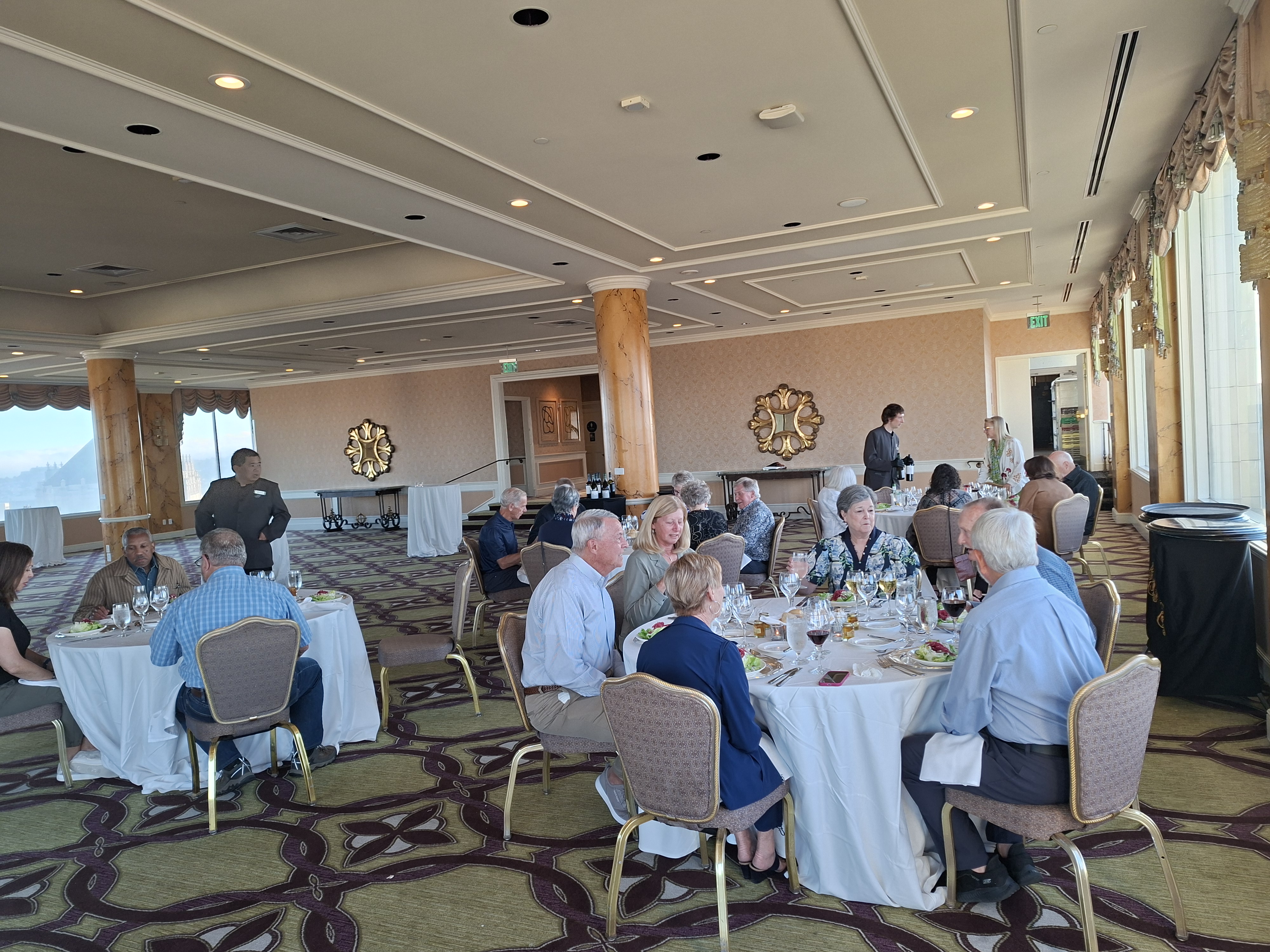

Tauck’s choice of hotel was superb, the very first in the Fairmont’s deluxe chain of hotel/resorts. It was operating in 1906 and survived the quake but fire damage required its closure until 1907. Improvements included quake-resistant reinforcements. Its placement in the National Registry of Historic Places is well-deserved. In 1945, distinguished statesmen and women met in the Garden Room to finalize the Charter of the United Nations. A photo of Harry Truman with his celebratory smile hangs on a wall lined with photos of distinguished guests including Queen Elizabeth II, almost all presidents since Eisenhower, Hollywood celebrities, and musical performers. Tony Bennett performed often in the Venetian Room where, in December 1961, he debuted his most famous song “I Left My Heart in San Francisco.” His statue stands in the interior garden, and the street facing the hotel has been renamed Tony Bennett Way. Other famous performers in the Venetian Room include Ella Fitzgerald, the Supremes, Chita Rivera, and Dionne Warwick, to name just a few. The hotel stopped presenting performers in 1989, but independent producers bring in shows occasionally. (Sources: the hotel web site and Wikipedia). The hotel’s public areas are jaw-dropping beautiful, especially the astonishing Crown Room on the 23rd floor, the stately lobby with its marble columns, and the posh Laurel Court dining room with its colorfully painted walls.

The downside of staying in high-end hotels: 59 dollars plus tip for orange juice, coffee, and eggs benedict. The upside: the Tauck tour package picked up the bill. Of course, Tauck’s frequent bookings earn a generous discount on the price of rooms. (My own tour clients received at least a 25 percent discount on room costs). Booking independently, rack rates indicate the hotel caters to high-end clients. The other drawback if considering a stay there, it is not in an easily walkable area unless you remain on Nob Hill. It’s a steep, exhausting climb up from Chinatown or Little Italy. Of course, if you can afford to stay at the Fairmont, you can afford the many taxis waiting outside. For the Tauck guests, the stay was an inimitable immersion in opulence.
Many guests flying east had to rise as early as 5 am for their Tauck drivers to the airport. My flight to Mexico was mid-afternoon so I could enjoy a leisurely a la carte breakfast in the splendid Laurel Court dining room. I had time to walk down the steep street for about ten blocks to a Walgreens. I couldn’t make an appointment for the new Covid vaccine because the online format requiring a phone number for confirmation would not accept more than ten digits and my Mexican cell requires +52 before the ten digits. I got to the pharmacy window five minutes before opening and was relieved to get the Covid and the extra-strength influenza vaccines without an appointment. Walking back up Nob Hill would have been exhausting so I booked an Uber. I still had time to edit more photos and read some newspapers before the Tauck driver arrived punctually for my 11:30 am transfer to the airport. My flight was two hours late, the flight to Mexico City over four hours long, and the drive to Cuernavaca 90 minutes. Getting home at midnight made for an exhausting day, lightened by the joy of a welcome return to home sweet home.
Happy Travels, Jim Horn
If you wish to receive new blog posts automatically by e-mail, some devices will display “Follow” (“Seguir” in Spanish). Just enter your e-mail address.


 Jim Horn News
Fantastic pictures and narration, Jim. It brings back so many pleasant memories of our visit to an stay in the parks when our son was little…. many years ago!
Jim,
This is a great post. It does a wonderful job of capturing the beauty of the parks we visited on the trip. It was a pleasure meeting/traveling with you and our fellow Tauck guests.
Ed Simmons
Thanks Ed, I enjoyed your company as well.
So glad to bring you pleasant memories John.
Beautiful photos Jim. Thank you so much for sending. I just sat down to enjoy them.